 |
by Tim Dowling on (#1EW18)
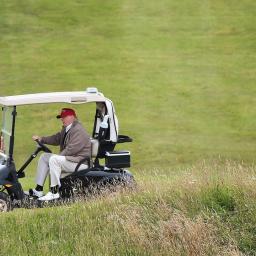
The Republican candidate has been dismissive of global warming. But when it comes to his golf course in Ireland, he seems to be taking the threat seriouslyA golf-and-hotel complex on the west coast of Ireland has applied to construct extensive dune erosion defences to mitigate the effects of erosion “due to sea level rise and increased Atlantic storminessâ€. An investigation by the US news website Politico found that the environmental impact statement included with the application specifically uses climate change to justify the defence scheme. “If the predictions of an increase in sea level rise as a result of global warming prove correct … it is likely that there will be a corresponding increase in coastal erosion rates,†it says.Why is this interesting? Because the resort in question is the Trump International Golf Links and Hotel. The golf course, for as long as it remains above water, is owned by a US presidential candidate, who has dismissed global warming as a “total hoaxâ€. He’s also called it “bullshit†and a con, and although he now claims it was a joke he once tweeted that global warming was invented by the Chinese to make US manufacturing less competitive. Continue reading...
|
| Link | http://feeds.theguardian.com/ |
| Feed | http://feeds.theguardian.com/theguardian/science/rss |
| Updated | 2026-10-01 00:15 |
 |
by Lindsey Fitzharris on (#1EVG0)
Holy items – such as the fragment of Becket’s bone returned to England – attract thousands. But ‘secular relics’ carry as much weight for the devotees of science and the artsThis week, a fragment of bone believed to come from the body of Thomas Becket returns to England for the first time in more than 800 years. The relic, which survived the Reformation, will go on a tour through London and Kent before returning to the Basilica of Esztergom in Hungary, where it has resided since the Middle Ages.There are many secular relics around the world that carry as much, if not more significance for their devotees Continue reading...
|
 |
by Tom Dart on (#1EV8W)
Facilities across the US are offering angry people the chance to smash things to their heart’s delight – but experts warn that any satisfaction is only temporaryShawn Baker had an entrepreneurial epiphany years ago when she saw a group of young people outside a concert venue throwing junk out of a truck and pulverizing the trash with a bat. It looked fun. She wondered: could there be a way of monetizing our appetite for mindless destruction?Baker, though, had a good, steady career as manager of a hydraulic shop for a large oil company in Houston. So she put the idea on hold. Continue reading...
|
 |
by Dean Burnett on (#1ETW9)
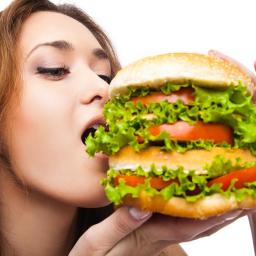
The debate over whether fat is actually bad for our health overlooks a more fundamental issue: if we know something is bad for us, why can’t we stop eating it? The weird relationship between our brains and digestive systems holds the answer
|
 |
by Zoe Williams on (#1ESRW)
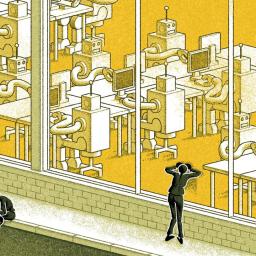
We need to rethink our view of jobs and leisure – and quickly, if we are to avoid becoming obsoleteRobin Hanson thinks the robot takeover, when it comes, will be in the form of emulations. In his new book, The Age of Em, the economist explains: you take the best and brightest 200 human beings on the planet, you scan their brains and you get robots that to all intents and purposes are indivisible from the humans on which they are based, except a thousand times faster and better.Related: The Guardian view on artificial intelligence: look out, it’s ahead of you | Editorial Continue reading...
|
 |
by Ian Sample Science editor on (#1ES0D)
Sir Venki Ramakrishnan says risks and benefits of germline therapy, which is banned in Britain, should be debatedThe genetic engineering of humans has great potential to help those destined to inherit serious, incurable diseases, according to one of Britain’s most prominent scientists, who says the risks and benefits should be debated by society.The invention of powerful new genome editing tools means researchers can now make precise changes to genetic material, and so consider correcting faulty DNA in human sperm, eggs and embryos. Continue reading...
|
 |
by Nicola Davis on (#1ER8J)
Chinese find suggests barley was used for booze before being grown for food - and that beer could have played a role in the development of societyChinese villagers could have been raising a pint 5,000 years ago, according to new research.Archaeologists studying vessels unearthed in the Shaanxi province of China say they’ve uncovered beer-making equipment dating from between 3400 and 2900 BC - an era known as the late Yangshao period - and figured out the recipe to boot.
|
 |
by Maev Kennedy on (#1EQVD)
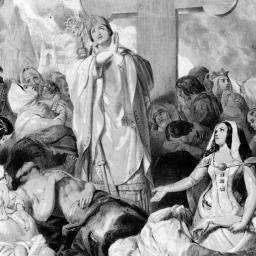
Thousands of volunteers have helped to uncover the full and devastating extent of the population collapse caused by the epidemicScraps of broken pottery from test pits dug by thousands of members of the public have revealed the devastating impact of the Black Death in England, not just in the years 1346 to 1351 when the epidemic ripped Europe apart, but for decades or even centuries afterwards.The quantity of sherds of everyday domestic pottery - the most common of archaeological finds - is a good indicator of the human population because of its widespread daily use, and the ease with which it can be broken and thrown away. By digging standard-sized test pits, then counting and comparing the broken pottery by number and weight from different date levels, a pattern emerges of humans living on a particular site. Continue reading...
|
 |
by Alex Bellos on (#1EQN8)
Answers to today’s network puzzleEarlier today I set you the following dot-to-dot puzzles. You had to draw lines between the dots, with the constraint that the number by the dot determines the number of lines joining that dot. Continue reading...
|
 |
by Nicola Davis on (#1EQCB)
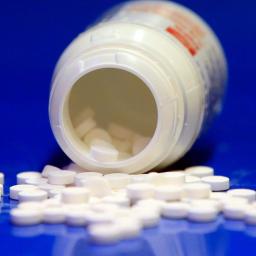
The UK’s influence over regulation could be reduced and waiting times for new drugs and medical devices to become available increased, warn scientistsLeaving the EU could mean it takes several months longer for new drugs and medical devices to become available in the UK, and reduce Britain’s influence in how such products are regulated, experts have warned.At present, the European Medicines Agency (EMA), which approves new medicines and medical devices across Europe is based in London. Continue reading...
|
 |
by Filippa Lentzos and Nicholas Evans on (#1EQ7D)
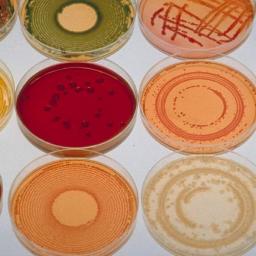
Trust in biologists is in a precarious position. Secrecy, safety breaches and controversial experiments are risking the reputation of biomedical science. Ahead of a key meeting in the USA, Filippa Lentzos and Nicholas Evans outline steps to earn back the trust of citizens.18-months of deliberation on how to regulate research enhancing the transmissibility and virulence of viruses will end when the National Science Advisory Board for Biosecurity (NSABB) meets on 24 May 2016. The modified pathogens created through so-called ‘gain-of-function’ experiments could, if accidentally released from labs or deliberately misused, cause man-made pandemics. A new regulatory framework for gain-of-function research could set a significant precedent by creating a new standard for oversight in the life sciences.Scientists and innovators assure us that biological technologies will ultimately be beneficial, but trust in biologists is currently in a precarious state. Last week it was revealed that a handful of labs operated by the Centers for Disease Control and Prevention (CDC) faced serious and repeated sanctions, and even secretly had their permits suspended for serious safety violations while working with bioterror pathogens. The CDC’s lab operations have been under scrutiny since 2014, after a series of safety incidents at the agency’s headquarters in Atlanta involving Ebola, anthrax and a deadly strain of bird flu. At the National Institutes of Health (NIH), 30-year old live smallpox virus was found in a disused refrigerator, when it was meant to be safely locked away in only two laboratories in the world. Then the US military mistakenly sent shipments of live anthrax from its highly restricted 800,000-acre site in the Utah desert to nearly 200 labs around the world, including labs in the UK. Continue reading...
|
 |
by Raksha Dave on (#1EQ2F)
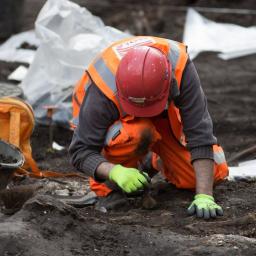
Archaeology classrooms are becoming more representative, but we need practitioners with more varied backgrounds and perspectivesAs a British Asian woman, I am one of a small handful of black, Asian and minority ethnic (BAME) people to carve out a lengthy career in the archaeology sector. This is a problem.In 2013, the Chartered Institute for Archaeologists (CIfA) published its Profiling the Profession (pdf) report, which included a section on ethnicity. We are 99% white, with a miserly 1% “other†ethnicities. There are about 6,000 people employed in the archaeology sector in the UK. Of the 837 respondents, seven described themselves as non-white – and one of those was me. Continue reading...
|
 |
by Mona Chalabi on (#1EPP2)
As a second generation immigrant, the way I pronounce my name is different to how my parents say it. But it’s my choice, and I refuse to feel guilty about itLike most people, I did not get to choose my name. It was my parents who decided that ‘Mona’ was a befitting title for their generic but sentimentally special latest offspring. I didn’t get a say about the noun that I will carry around for the rest of my life. But I do get to choose the pronunciation.I could pronounce my name ‘MO-nah’ to rhyme with such classy words as ‘boner’ and ‘loner’. Or I could pronounce it ‘Mu-na’, which said aloud, rhymes with nothing that I can think of in the English language. That’s because ‘Mu-na’ is the way that Arabic speakers (like my parents) would say my name. Now we get to the tricky waters which I, along with many second generation immigrants, must navigate – which phonetic version of my name should I present to the world? Continue reading...
|
 |
by Gustav Milne on (#1EPN0)
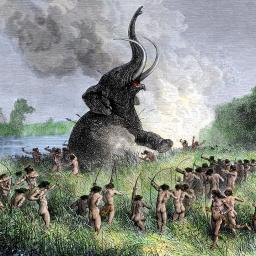
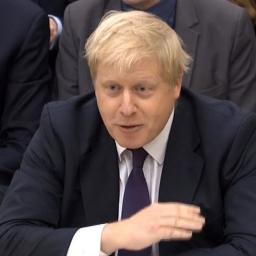
However ‘civilised’ we may now consider ourselves to be, biologically we remain much as we were before we began farming and moved into cities. Can we create a healthier future by returning to our paleolithic past?The city is not our natural habitat. For the last three million years, we evolved as hunter-gatherers, living in small tribal societies, breathing fresh air, drinking fresh water and eating fresh foods. But more than half of us now live in cities. Culturally, our society is transforming, but anatomically, our genetic evolution is slower: we remain much as we were even before large-scale farming was adopted 5,000–10,000 years ago.However “civilised†we may now consider ourselves to be, biologically we are much closer to our stone age ancestors. There is a major mismatch between our modern urbanised world and our “paleolithic genomeâ€, the genetic material encoded in our DNA, which supports an ancient hunter-gatherer lifestyle.
|
 |
by Stephen Curry on (#1EPKQ)
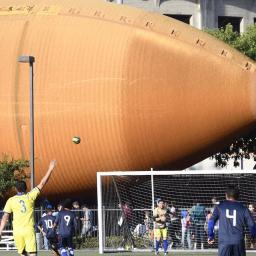
Being wrong is easier than you think. So how can you be sure you will make the right choice in the EU referendum?I have to start with a confession: I don’t think I’m wrong about Britain’s membership of the EU. I’ve weighed up the pros and cons and in the referendum on 23 June I will in all likelihood be voting to remain. And nor do I think that you will feel you have erred in determining your position on the Brexit debate, whatever that may be.But both of us are wronger than we think – probably – and not just because it is so difficult to establish the facts amid the noise of the ill-tempered, ill-informed and often mendacious debate on the rights and wrongs of the EU – to say nothing of the intrinsic biases of news reporting. There’s also the deeper matter of our built-in and rather slippery aptitude for error, a topic explored in all its intriguing dimensions in Kathryn Schulz’s Being Wrong, which I turned to last week in the midst of my struggles with the EU referendum. Continue reading...
|
 |
by Gene Blevins / Zuma / Rex on (#1EPFH)
Photographs from the Eyewitness series Continue reading...
|
 |
by Nicola Davis on (#1EPC9)
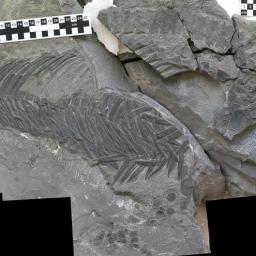
Fossilised skeleton of a toothless animal that lived 247 million years ago opens a window to a time of remarkable diversity on Earth after the ‘Great Dying’ eventThe discovery of a toothless animal with a short snout and a long tail that roamed the seas around 247 million years ago, suggests early marine reptiles evolved more rapidly than previously thought after the the most devastating mass extinction event the planet has ever experienced, scientists have revealed.Dubbed Sclerocormus parviceps, a name that nods to its rigid body and small skull, the ichthyosauriform was unearthed by fossil hunters in China. Continue reading...
|
 |
by Amy Fleming, Richard Vine, Michael Tait, Troy Grig on (#1EPKS)
Colour, sound and shape are just as important as sugar and salt in determining how food tastes. Why do senses combine in our brains - and will a red light bulb really make cake sweeter? Tamal Ray takes us on a scientific tour of gastrophysics Continue reading...
|
 |
by Linda Geddes on (#1EP4X)
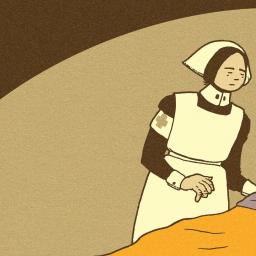
Despite 100 years of medical advancement, old-fashioned infections are creeping back into Britain. Should we be worried?The notice pinned to the door of my son’s nursery in Bristol made me start: “A child at this nursery has been diagnosed with scarlet fever.†Googling the symptoms, I found images of peeling, strawberry-red tongues and blotchy rashes, but it was the name that really gave me the shivers. Charles Darwin lost two of his children to scarlet fever; it just seemed so, well, Victorian.A few days later, the nursery informed us of a second case. However, this localised outbreak is far from unique: as of 8 April, a total of 10,570 cases of scarlet fever had been reported to Public Health England since the season began in September 2015, up from 9,379 during the same period in 2014-15. Continue reading...
|
 |
by Luisa Dillner on (#1EP1B)
While it hasn’t been proved that physical activity mitigates your likelihood of getting the disease, the evidence shows a strong link – so get movingJust in case you haven’t got the message that exercise is good for you, two huge research studies this week shout it louder than ever. Which is just as well, since almost one-third of adults are classified as “inactiveâ€. Exercise is already known to reduce the risk of breast, colon and endometrial cancer (cancer of the lining of the uterus) by between 10% and 40%. Now, a pooled analysis of data from studies looking at 1.4 million adults between the ages of 19 and 98 has found that exercise reduces the risk of an additional 10 cancers, including oesophageal, stomach, bladder and kidney. What’s more, for many cancers, exercise reduces the risk even in overweight people. This is particularly interesting, because the mechanism by which exercise is thought to protect from cancer is weight reduction.It seems that exercise may work its magic in a variety of ways. Dr Marilie Gammon, an epidemiologist from the Gillings School of Global Public Health in Chapel Hill, North Carolina, who wrote an editorial to accompany the paper in the peer-reviewed journal JAMA Internal Medicine, says that exercise may help to repair DNA when it is damaged by cancer-promoting substances. Exercise may also alter hormone levels and reduce inflammation. Continue reading...
|
 |
by Alex Bellos on (#1EP04)
Come on join the networkHello guzzlers,Today we’re drawing lines between dots. Continue reading...
|
 |
by Kate Ravilious on (#1EN03)
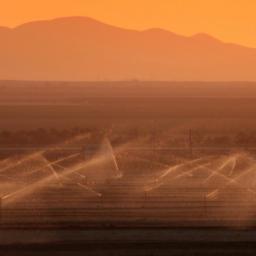
Farmers can keep those raindrops falling by turning their sprinklers on
|
 |
by Editorial on (#1EMRM)
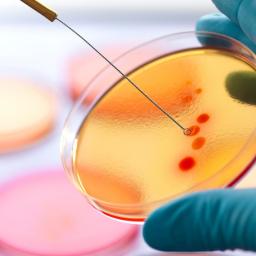
Preserving the drugs that have extended life expectancy by 20 years by only using them to save lives is a matter of urgency. The drug companies can’t do it. A prize just mightThe Longitude Prize is a very smart idea. The prize is a handsome £8m and it awaits the first individual or (more probably) team that develops a quick, cheap and reliable way of stopping overuse or misuse of antibiotics. The diagnostic – it might be a strip of sensitised paper or it might be a mobile phone app – must be capable of being used anywhere in the world. Next week another round of assessment of ideas begins from the 138 teams so far registered.A prize is smart economics to encourage smart science. It counters the lack of a strong market incentive to develop a diagnostic for which there is an overwhelming need – while reminding the rest of us to remember, next time we see the doctor, the urgency of the crisis. Antibiotics, it is reckoned, add 20 years to life expectancy; resistance is growing so fast that already 700,000 people die each year from untreatable infections. From the exotic, like typhoid, to the all too domestic Clostridium difficile, the pathogens that once succumbed swiftly to penicillin and other antibiotics now fight back. They are becoming killers again. Continue reading...
|
 |
by Andrew Anthony on (#1EKFT)
It’s a mind-bending concept with the potential to change the world, and Canadian tech company D-Wave claims to have cracked the codeEver since Charles Babbage’s conceptual, unrealised Analytical Engine in the 1830s, computer science has been trying very hard to race ahead of its time. Particularly over the last 75 years, there have been many astounding developments – the first electronic programmable computer, the first integrated circuit computer, the first microprocessor. But the next anticipated step may be the most revolutionary of all.Quantum computing is the technology that many scientists, entrepreneurs and big businesses expect to provide a, well, quantum leap into the future. If you’ve never heard of it there’s a helpful video doing the social media rounds that’s got a couple of million hits on YouTube. It features the Canadian prime minister, Justin Trudeau, detailing exactly what quantum computing means. Continue reading...
|
 |
by Ben Ambridge on (#1EPGK)
What do crowds, a social life and intelligence have in common? Take this test and find outMost IQ tests involve answering a whole load of difficult questions. But here’s one with just two. Best of all, they’re simple:1. Does living in a crowded area get you down?
|
 |
by Daniel Keltner on (#1EK3J)
Being grateful is one of the best ways to hold on to power that otherwise might slip awayFor the past 20 years I’ve put two ideas about power to the scientific test. The first is Machiavelli’s: “It is better to be feared than loved.†This thesis has not fared well in studies looking at who rises to power in organisations, schools, communities and military units. It isn’t the coercive, manipulative Machiavellian who rises to power. Instead it is the empathetic, generous person who reaches out to others who gains esteem and rises up the ranks.Lord Acton’s observation that “power tends to corrupt, and absolute power corrupts absolutely,†however, is confirmed time and time again. As we enjoy elevated power, we are more likely to eat impulsively, have sexual affairs, violate the rules of the road, lie, cheat, shoplift, take sweets from children and communicate in disrespectful ways. Continue reading...
|
 |
by Robin McKie Observer science editor on (#1EHAH)
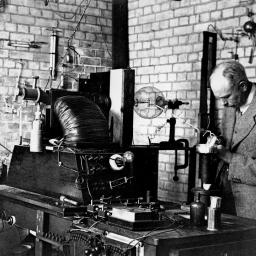
Francis Aston, Edwardian scientific genius, surfer and motorcycling pioneer, was awarded the Nobel in 1922 for his discovery of isotopes. Now his medal is up for auctionThe Nobel prize awarded to one of the world’s most colourful scientists – Francis Aston, an Edwardian surfing fanatic and early pioneer of motorcycle racing – is to be auctioned in London next month.The medal, a 200g disc made of 23-carat gold, was given to Aston in 1922 in recognition of the British chemist’s discovery of isotopes, elements with the same chemical properties but different atomic masses. His Nobel prize for chemistry is being sold by his family and is expected to fetch between £200,000 and £400,000, Bonhams said. Continue reading...
|
 |
by Ashifa Kassam in Toronto on (#1EGV6)
New research takes aim at the fanged portrayal of the T rex, suggesting enamel on its teeth was probably kept moist by thin, scaly lips much like those of lizardsIts image is one of a fierce predator who towered over most others, baring dozens of jagged, bone-crushing teeth.But new research out of Toronto seeks to challenge depictions of the Tyrannosaurus rex, suggesting that its fearsome incisors might have been hidden behind a pair of lips. Continue reading...
|
 |
by Simon Usborne on (#1EGKJ)
The seaside town is the frontrunner in an unlikely UK space race. Could a spaceport launch a new era of prosperity, or is it a galactic dream too far?There is only one gate at Newquay Airport’s departure lounge, where the planes park as close as cars to a petrol station, and the wireless broadband doesn’t work. At the coffee shop’s “Destination Cornwall†display, you can buy clotted cream shortbread, clotted cream fudge and, if your lily required further gilding, Poldark-themed Cornish ale.There’s a newspaper rack, too, which has run out of this week’s edition of the Cornish Guardian. It was published on Wednesday and, next to a voucher for a two-for-one “coffee and traybake†offer at Warrens Bakery, carried a startling front-page story. Continue reading...
|
 |
by Darian Leader on (#1EGKM)
Doctors predict that our increasing use of computers and mobile phones will permanently alter our hands. What will this mean for the way we touch, feel and communicate?The new era of the internet, the smartphone and the PC has had radical effects on who we are and how we relate to each other. The old boundaries of space and time seem collapsed thanks to the digital technology that structures everyday life. We can communicate instantly across both vast and minute distances, Skyping a relative on another continent or texting a classmate sitting at the next table. Videos and photos course through the web at the touch of a screen, and social media broadcast the minutiae of both public and private lives. On the train, the bus, in the cafe and the car, this is what people are doing, tapping and talking, browsing and clicking, scrolling and swiping.Philosophers, social theorists, psychologists and anthropologists have all spoken of the new reality that we inhabit as a result of these changes. Relationships are arguably more shallow or more profound, more durable or more transitory, more fragile or more grounded. Continue reading...
|
 |
by Nicola Davis and agencies on (#1EDZD)
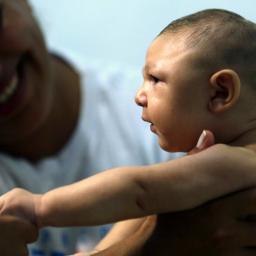
Type of virus blamed for South American birth abnormalities found in Cape Verde, which has had three cases of microcephalyTests show an outbreak of Zika virus on the African island chain of Cape Verde is of the same strain as the one blamed for birth abnormalities in Brazil, the World Health Organisation (WHO) said on Friday.“The findings are of concern because it is further proof that the outbreak is spreading beyond South America and is on the doorstep of Africa,†said WHO’s Africa director, Matshidiso Moeti. Continue reading...
|
 |
by Ian Sample Science editor on (#1EDSF)
Smarter artificial intelligence is one of 21st century’s most dire threats, writes Yuval Noah Harari in follow-up to SapiensIt is hard to miss the warnings. In the race to make computers more intelligent than us, humanity will summon a demon, bring forth the end of days, and code itself into oblivion. Instead of silicon assistants we’ll build silicon assassins.The doomsday story of an evil AI has been told a thousand times. But our fate at the hand of clever cloggs robots may in fact be worse - to summon a class of eternally useless human beings. Continue reading...
|
 |
by Jenny Rohn on (#1EDR3)
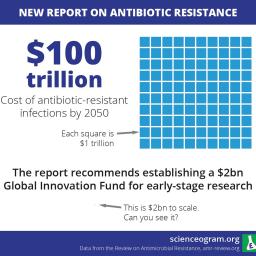
The long-awaited O’Neill Review on Antibiotic Resistance paints a sobering, dystopian picture of our future. So what are we doing about it? Continue reading...
|
 |
by Chris Garrard on (#1EDHY)
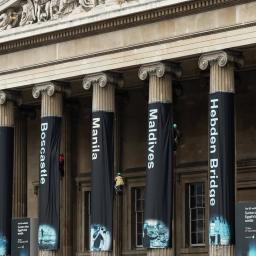
A new report shines a light on the links that BP has developed with leading cultural institutions. Does this limit their ability to speak out on climate change?“I’d prefer the wording not to focus on environmental damage†– those were the words used in an email by the company Shell, as it attempted to muscle in on the Science Museum’s curatorial decision making. In 2014, Shell had been a sponsor of the museum’s climate science exhibition but once that controversial email had been unearthed – as the result of a freedom of information request – there was no going back. The museum’s reputation was damaged and the end of Shell’s sponsorship became inevitable.Earlier this month, the campaign group, Art Not Oil, published a damning report into the “corrupting influence†of another fossil fuel giant – BP – on the museums and galleries it sponsors. Once again, it places the Science Museum in the spotlight. Continue reading...
|
 |
by Olivia Maynard on (#1ECYV)
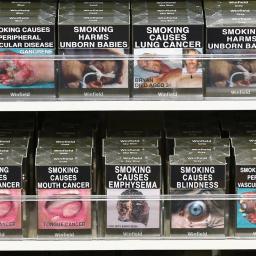
UK legislation introduced today bans the tobacco industry from using branding on their cigarette packaging. But will it change the number of smokers?From today, brightly coloured branding will be stripped from tobacco packs when standardised (or ‘plain’) cigarette packaging legislation comes in to effect.Cigarette packs will now be a single colour - ‘Pantone 448 C opaque couché’ (according to market research the ‘world’s ugliest colour’), and the brand name will be written in a standard font, size and location. New health warnings covering 60% of the pack will also be introduced. All cigarette packs and tobacco pouches manufactured for sale in the UK from now on will have to comply with these regulations, and within a year there should be no branded packs on shelves at all. Ireland and France are also introducing this legislation today. Continue reading...
|
 |
by Ian Sample, Iain Chambers and Claudia Hammond on (#1ECXE)
How does money change our thinking, feelings and behaviour? Claudia Hammond joins the podcast team to teach us how to take control of our cashMoney brings opportunities, but whether it brings happiness is another question. Claudia Hammond, author of Mind Over Money, joins Ian Sample in the studio to explore our psychological relationship to money.
|
 |
by Agence France-Presse on (#1ECN1)
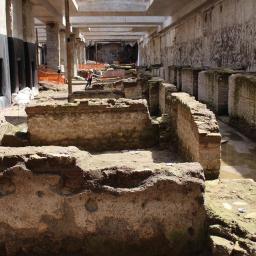
The living quarters and stables of the emperor’s bodyguard will be incorporated into a station on the city’s new metro lineFrescoed barracks which once housed the cavalry of the Emperor Hadrian’s bodyguard have emerged into daylight after 19 centuries during excavations for a new underground train line in Rome.
|
 |
by Ashifa Kassam in Toronto on (#1EBSZ)
|
 |
by Paul Karp on (#1EBG9)
Party says it will pay for policy by abolishing fossil-fuel subsidies which would raise $7bn a yearThe Greens have announced plans to increase research and innovation spending to 3% of GDP by 2025 and 4% by 2030.The party leader, Richard Di Natale, and the science and industry spokesman, Adam Bandt, are set to announce the policy on Friday in Melbourne. Continue reading...
|
 |
by Nicola Davis on (#1EB0J)
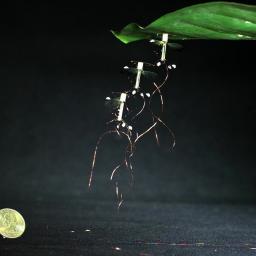
Flying robots could be invaluable in emergencies, but there’s a hitch: flying takes a lot of energy. Robobee’s ability to perch could make a big differenceFlapping two tiny wings, the small, thin robot wobbles its way towards the underside of a leaf, bumps into the surface and latches on, perching motionless above the ground. Moments later, its wings begin to flap once more and it jiggles off on its way.The little flying machine, dubbed a “RoboBeeâ€, has been designed to perch on a host of different surfaces, opening up new possibilities for the use of drones in providing a bird’s-eye view of the world, scientists say. Continue reading...
|
 |
by Press Association on (#1EAKR)
Project with chemicals company BASF will look at mulch, slug pellets and nematodes to find best method of fighting the pestsA study is being launched to discover the best way to tackle what many gardeners see as their ultimate foes – slugs and snails.The one-year research project will examine the use of mulch, slug pellets and nematodes, a form of biological control of slugs and snails. It is being conducted by the Royal Horticultural Society (RHS) and the chemicals company BASF, the only UK producer of nematodes. Continue reading...
|
 |
by Brendan Carroll and Philip Sams on (#1EAHQ)
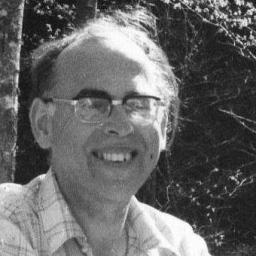
Our friend and colleague Jaap Lucassen, who has died aged 84, was a Dutch scientist working mainly in the UK, who made a distinguished contribution to physical chemistry.The great Anglo-Dutch food and soap company Unilever provided the platform for Jaap’s scientific career. Unilever Research spawned in the early 1960s two small basic science groups, at Vlaardingen (Rotterdam) and Port Sunlight (Merseyside), each scrutinising fundamental properties of soap-related materials (surfactants). These groups rapidly gained international respect. Jaap and his wife, Emmie Reynders, joined Vlaardingen in 1961. Continue reading...
|
 |
by Giles Fraser on (#1EA6T)
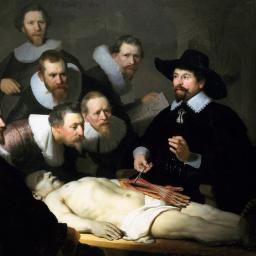
The selflessness of those who have donated their corpses for students to learn from will be honoured at Southwark cathedral this FridayThe dissecting room at Guy’s hospital in London is located at the top of the building so people can’t peer in through the windows. Quite rightly, the hospital preserves the dignity of those who have given their bodies to be dissected. But it’s common enough for people to want to rubberneck, maybe for some ghoulish thrill, maybe out of deep existential curiosity.Personally, I have spent enough time around dead bodies to have got past all of that. And by the time I get up all those stairs I’m puffing away like a 20-a-day asthmatic and already sufficiently in touch with my mortality. Continue reading...
|
 |
by Julia Kollewe on (#1E8YR)
German pharmaceuticals giant approaches world’s biggest seed firm over ‘negotiated acquisition’ set to be worth at least $40bnThe German drugs and chemicals group Bayer has pounced on Monsanto, the world’s biggest seed company, with an unsolicited takeover offer likely to be worth more than $40bn (£27bn).Bayer, which invented aspirin in the 19th century, said executives from both companies had met to “privately discuss a negotiated acquisition of Monsanto Company†to create a “leading integrated agriculture businessâ€. Continue reading...
|
 |
by Nicola Davis on (#1E9J5)
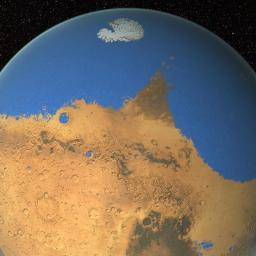
Giant waves, possibly triggered by two meteorite impacts, may have shaped Mars’s coastline and could hint at whether the red planet was once habitableMega-tsunamis in an ancient ocean on Mars may have shaped the landscape and left deposits that hint at whether the planet was once habitable, researchers say.The giant waves, thought to have reached up to 120 metres in height as they raced over the land, could have been triggered by two large meteorites slamming into the surface. Continue reading...
|
 |
by Suzi Gage on (#1E9AA)
Fortnightly for the next two months, I’ll be investigating different drugs, busting some myths and explaining potential harms and benefits. This week: cannabisCannabis is the most widely used illicit drug in the UK. It’s the resin of a plant, and is consumed by smoking (sometimes with, sometimes without tobacco), eating, and more recently, vaping. Despite some suggestion that cannabis might be linked to poor mental health and educational outcomes, it is popular because it’s seen as less harmful than some other illicit drugs, and not necessarily that different to smoking cigarettes. But does the evidence back this belief up? Continue reading...
|
 |
by Nicola Davis on (#1E91V)
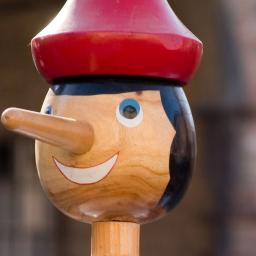
Study uncovers genes which help control the shape of our noses, a finding researchers believe will offer insights into our evolutionary pastA collection of genes that underpin the shape of the human nose have been discovered in a study into our facial features.Scientists scanned the genomes of around 6,000 individuals to unpick why some people have narrow, pointy noses, while others have broad bridges or wide nostrils. The upshot was the discovery of four genes which are involved in controlling the shape of our nasal apparatus, with another gene found to affect how much the chin juts out. Continue reading...
|
|
by Press Association on (#1E8YP)
Urgent treatment with blood-thinning drug greatly reduces risk of subsequent fatal or disabling stroke, research findsDeath and disability can be averted by quickly taking aspirin after a minor stroke, a study has found.The blood-thinning drug is already given to people who have suffered a transient ischaemic attack (TIA), or “mini-strokeâ€, after they have been assessed in hospital. Continue reading...
|
 |
by Pete Etchells on (#1E8S8)
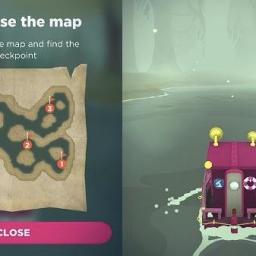
By understanding how healthy people steer around their environment, scientists hopes to pin down how spatial navigation goes wrong in Alzheimer’s diseaseIf there’s one thing that I’ve learned in the few short years that I’ve been a fully-fledged scientist, it’s that time is one of the most valuable commodities that you can give a researcher. In all its myriad forms, time is invaluable to the scientific process – time to develop ideas, time to write grants. The time that you need to run an experiment. Critically, the time that participants are willing to give you in the pursuit of knowledge. It’s a precious thing, for everyone involved.Like with many things we take for granted, it’s easy to forget the importance of time until it’s gone. This is a point that becomes acutely salient in the case of Alzheimer’s disease. Once a definitive diagnosis has been made, the average life expectancy for patients with the disease is around six years. It robs people of their future, but more than that, Alzheimer’s disease robs them of their past – short term memory loss is a common indicator, and as the disease progresses, it can eat into memories from earlier in life. Continue reading...
|
 |
by Dean Burnett on (#1E8PD)
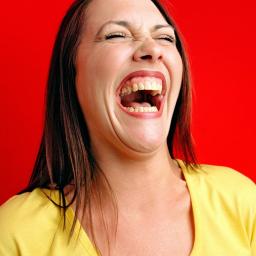
It’s a common belief that funny men have more luck with the opposite sex. So does a GSOH really make you more attractive, or does it still come down to looks?In a recent guest post, Girl On The Net looked at the assumption that women “love a bad boyâ€, the cliché that women are attracted to more rebellious, undisciplined, aloof characters who play by their own rules like “treat them mean, keep them keen†etc.But never mind the bad guy, what about the funny guy? It’s an equally common cliché that women are often charmed by a guy who can make them laugh. It certainly pops up in the media often enough. How many sitcoms have you seen where the at-best-average-looking bloke ends up with a woman who’s clearly “out of his leagueâ€, purely because he’s wacky, or witty, or cuttingly sarcastic? Continue reading...
|