 |
by Ian Sample Science editor on (#1D66D)
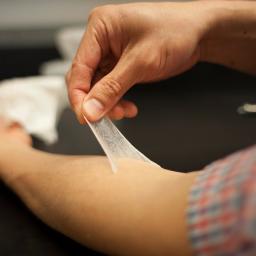
Wearable film improves skin’s elasticity, reduces appearance of wrinkles and could be used to cover birthmarks or treat conditions such as eczemaFor those concerned about wrinkly old skin, it might be an ingenious solution: a stretchy “second skin†that can be smoothed on to make aged tissue look more youthful.The wearable film developed at Massachusetts Institute of Technology has shown promise in a series of small trials where it was applied to wrinkles, under-eye bags and patches of dry skin.
|
| Link | http://feeds.theguardian.com/ |
| Feed | http://feeds.theguardian.com/theguardian/science/rss |
| Updated | 2026-10-01 00:15 |
 |
by Alan Connor on (#1D5E6)
Cryptic puzzles are a lot more mathematical than you might have thoughtGood news, everyone: it’s New Research Time!There’s an article in the open-access journal Frontiers about the solvers of cryptic crosswords. It’s by Kathryn Friedlander and Philip Fine of the University of Buckingham and it’s titled The Grounded Expertise Components Approach in the Novel Area of Cryptic Crossword Solving. Continue reading...
|
 |
by Alan Pickup on (#1D4AF)
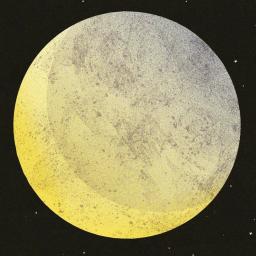
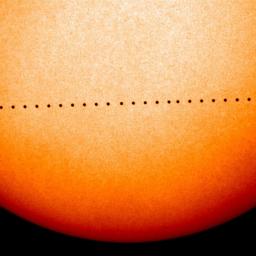
The smallest planet passes the face of the sun today. Here’s what you need to know and how you can watch it safely.The transit of Mercury across the face of the Sun on Monday 9 May is the first for the planet since 2006 and the first to be visible from Britain since 2003. Our next occurs in 2019, but we must wait until 2049 for a more favourable one than this.We might think that the little innermost planet would cross in front of the Sun every 116 days or so, every time it swings around the near side of its orbit of the Sun. However, that orbit is tilted at 7° to that of the Earth, so Mercury usually sweeps unseen above or below the Sun when it is closest, at its so-called inferior conjunction. The next most inclined orbit is that of Venus at 3.4°. Continue reading...
|
 |
by Karl Galle on (#1D57K)
A manuscript note in the Royal Society Library hints at an observing program that would eventually transform our ability to predict the motions of the planets.“Today I saw Mercury.†This terse remark scrawled inside a 16th-century almanac could reflect anyone watching today’s transit of Mercury across the Sun. The winding path this observation took after it was recorded, however, traces a century-long story leading through the transformation of both our understanding of the cosmos and the practice of astronomy itself.Mercury’s observer in this case was Willibald Pirckheimer, a German humanist who made diary notes in a set of astronomical tables by Johannes Regiomontanus, which are now preserved in the Royal Society Library. Pirckheimer almost certainly wasn’t alone, as the same Mercury sighting (early in the evening of 18 March 1504) was recorded in more detail by his friend Bernhard Walther, who had inherited Regiomontanus’ observation program and copious manuscripts. Perhaps it was solely an observing session, or perhaps it preceded one of the festive banquets Nuremberg’s humanists were known for. We may not know the evening’s full itinerary, but it’s a reminder that science was rarely a solo activity even back then. Continue reading...
|
 |
by Alex Bellos on (#1D54E)
Sharpen your neurons with the maths test just taken by 300,000 UK school pupilsHow did you do? Click here for the answers and results.Hello guzzlers.Today you’ll be attempting questions from a maths test that 300,000 Britons aged 11 to 13 took just over a week ago. (That’s years 7 and 8 in England and equivalent years in Scotland and Northern Ireland). Continue reading...
|
 |
by Robert McCrum on (#1D4ZH)
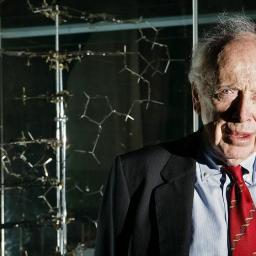
An astonishingly personal and accessible account of how Cambridge scientists Watson and Francis Crick unlocked the secrets of DNA and changed the worldJim Watson was just 24 when, in collaboration with Francis Crick, he decoded the structure of DNA, “the molecule of lifeâ€. This was a 20th-century watershed, the solution to one of the great enigmas of the life sciences that would revolutionise biochemistry. In human history, without exaggeration, nothing would ever be the same again.Watson arrived at the Cavendish Laboratory, Cambridge University, during the autumn of 1951 looking for success, fame and the love of women. He was brash, brilliant and American; a graduate zoologist from the mid-west who dreamed of winning the Nobel prize. Watson, as arrogant as he was obscure, found himself working with an equally self-possessed but somewhat overlooked older man at the Cavendish, Francis Crick, a 35-year-old would-be biophysicist who had seen service as a scientist in the second world war. In his breezy, tactless way, Watson describes his new colleague as “totally unknown [and] often not appreciated. Most people thought he talked too much.†Continue reading...
|
 |
by Ian Sample Science editor on (#1D4JQ)
Ewa Wybacz, 36, is mother of first baby born in UK from trial of more precise embryo screening techniqueA woman who was told she would never have children has given birth to a baby boy after doctors used a new DNA procedure to screen her embryos.Ewa Wybacz, 36, gave birth to her son, Biagio Russu, in January despite a history of medical problems that had led her to believe she would never conceive.
|
 |
by James Walsh on (#1D4FS)
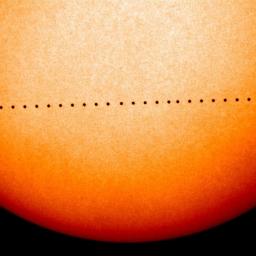
If you’re observing the transit of Mercury - with appropriate equipment, we stress - share your photos and stories with us
|
 |
by Letters on (#1D49G)
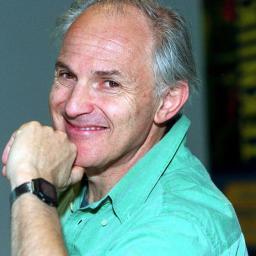
In a year when we mourn the loss of many national treasures, I reflect with great sadness on the passing of Nobel prize-winning chemist Harry Kroto.Harry was an alumnus of Bolton School, where I was studying when I had the good fortune to hear him accept the Dalton Medal at Manchester University in 1998. His story of scientific discovery and down-to-earth demeanour inspired me to pursue a career in science, but something he said that night has stuck with me even more. He spoke about the value, indeed the necessity, of communicating complex science to public audiences: “Scientific discoveries matter much more when they’re communicated simply and well – if you can’t explain your work to the man in the pub, what’s the point?†Continue reading...
|
 |
by Editorial on (#1D484)
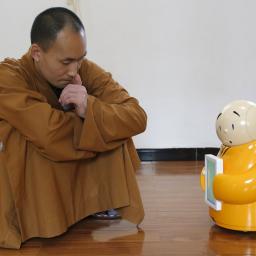
There is a tendency to see intelligence where it does not exist. But it is just as wrong to fail to see where it is emergingGoogle artificial intelligence project DeepMind is building software to trawl through millions of patient records from three NHS hospitals to detect early signs of kidney disease. The project raises deep questions not only about data protection but about the ethics of artificial intelligence. But these are not the obvious questions about the ethics of autonomous, intelligent computers.Computer programs can now do some things that it once seemed only human beings could do, such as playing an excellent game of Go. But even the smartest computer cannot make ethical choices, because it has no purpose of its own in life. The program that plays Go cannot decide that it also wants a driving licence like its cousin, the program that drives Google’s cars. Continue reading...
|
 |
by Deborah Orr on (#1D40J)
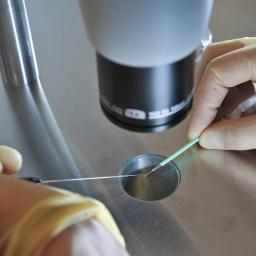
Researchers want to reassess the 14-day limit, but this will happen only after a sensitive and wide-ranging ethical discussionScientists have maintained the life of human embryos outside the womb for 13 days. Or, as they might put it, have grown blastocysts on an “in vitro implantation platform†to the brink of mesoderm formation. Whatever. It’s a big deal.Related: It’s time to extend the 14-day limit for embryo research | John Harris Continue reading...
|
 |
by Eugenio Mercuri on (#1D3SS)
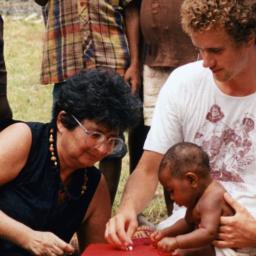
Paediatrician, neurologist and author whose work revolutionised the assessment of newborn babiesIn the early 1970s, a husband and wife team developed two novel clinical tests that revolutionised the way newborn infants are assessed in clinical and research practice around the world. One was for determining gestational age; the other for the systematic neurological examination of the newborn. The scientists were Victor and Lilly Dubowitz. Lilly, who has died aged 85, was a leading figure in the field of neonatology, and her pioneering work spanning more than 40 years is internationally recognised. The Dubowitz score and the Dubowitz neonatal examination have been used by generations of neonatologists and paediatric neurologists.The assessment of gestational age in the newborn infant, developed with Victor and published in 1970, was immediately adopted worldwide as a way of distinguishing small babies who were mature but malnourished from those who were premature and of appropriate small size. It measured some neurological signs, such as the infant’s ability to flex and extend its joints and limbs, and also some superficial signs, examining the skin, eyes, ears, genitals and other physical characteristics for signs of maturity. From these, after the examiner had matched the infant’s responses with the options on an illustrative chart, came the Dubowitz score. The beauty of the test was that it was simple and easily recorded through clinical observation. Continue reading...
|
 |
by Peter Fowler on (#1D3E0)
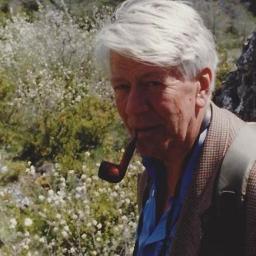
Archaeologist with a particular passion for the history of his native CornwallCharles Thomas, who has died aged 87, was an outstanding scholar of early Britain, with an international reputation. He researched and published widely about Cornwall, its local history, its archaeology and religion, its language, dialect, customs, folklore and humour, its art and artists, its military history and its relationship with other Celtic nations. He was also a nonconformist in every sense: a committed Methodist and a founding member of Mebyon Kernow, the Cornish nationalist party.I first met Charles in July 1955, when I was mistakenly the first volunteer to arrive on an archaeological excavation. Charles seized the moment, gave me a yard-broom, peremptorily told me to clean up one of the dilapidated Nissen huts in which we were to live – and disappeared. I later appreciated that this was typical Thomasian behaviour, and why some found him abrupt and even arrogant; in fact he was shy. Above all, he was kind and a marvellous encourager, especially in the field. Continue reading...
|
 |
by Jon Butterworth on (#1D3AD)
Stop what you’re doing! ESFRI has spoken. Including probably the best list of major science acronyms on the planet
|
 |
by Interview by Nicola Davis on (#1D36S)
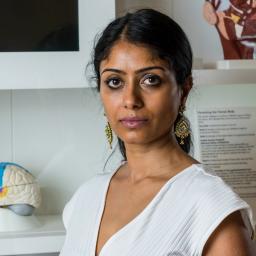
In a fascinating book about medicine in India, Aarathi Prasad describes a push to integrate the modern ‘western’ approach with many traditional systems, from ayurveda to yoga. But is this truly desirable – or even possible?With a PhD in molecular genetics, author Aarathi Prasad works in interdisciplinary research at University College, London. Her first book, Like a Virgin: How Science Is Redesigning the Rules of Sex, was published in 2012, exploring how inventions such as the silicone womb could change the future of reproduction. Her latest book, In the Bonesetter’s Waiting Room: Travels Through Indian Medicine, examines the diverse treatments on offer in the country’s cities and rural communities, and the future of Indian healthcare.In India there are two broad approaches to medicine: conventional “western†medicine and traditional practices, which go under the banner of Ayush. What are these practices?
|
 |
by The Observer on (#1D31T)
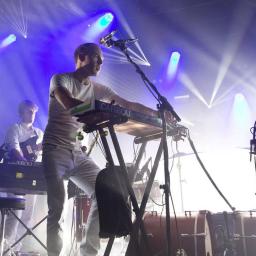
Brian Eno and Underworld are just two of the highlights of Bluedot, a festival of discovery at Jodrell Bank, also featuring an Observer science and tech stageThe Observer is to host a stage at a brand new festival – Bluedot – in July. Taking place at the Jodrell Bank observatory in Cheshire, Bluedot is a three-day festival of discovery that aims to fuse a complex mix of music, artists, speakers, scientists and performers into a unique event.Jean-Michel Jarre, Underworld and Caribou will headline three days of music, featuring diverse acts from DJ Shadow to Mercury Rev. Continue reading...
|
 |
by Michael Puett and Christine Gross-Loh on (#1D2ZB)
There is no such thing as the ‘essential self’ because we change all the time
|
 |
by Vicki Arroyo on (#1D2X1)
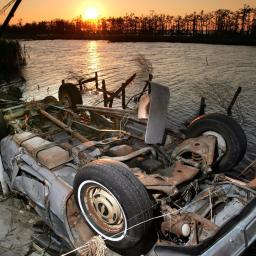
Louisiana’s sinking Isle de Jean Charles shows the urgent need for measures to combat climate changeAs seas rise, as floods and droughts become more extreme, as crops fail and as storms intensify, the world will increasingly face a new challenge – climate refugees.In the US, witness the recent plan by the federal government to resettle a Native American tribe before their Isle de Jean Charles home in Louisiana vanishes underwater – an example that hits close to home. I have deep family roots in south Louisiana: my mother, sister and brother-in-law, aunt and uncle were refugees from a weather disaster exacerbated by climate change, losing their homes in New Orleans during Hurricane Katrina in 2005. A year before, a heart condition killed my father in the aftermath of a stressful evacuation from Hurricane Ivan. Continue reading...
|
 |
by Toby Helm Observer political editor on (#1D29Q)
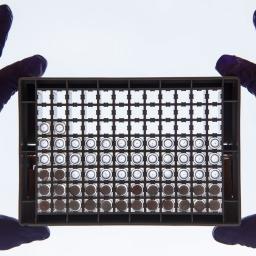
Letter from top drugs companies offers boost to David Cameron and remain campaign in EU referendumBritish people benefit at the earliest opportunity from the best medicines produced by “cutting-edge†research because the UK is part of the EU, 93 business leaders and organisations from the life-sciences industry say.The group, which includes executives from the top trio of companies – GlaxoSmithKline, AstraZeneca and Pfizer – says EU funding for research and Europe-wide regulations help produce new, more effective drugs more quickly. Continue reading...
|
 |
by Tom Stafford on (#1D188)
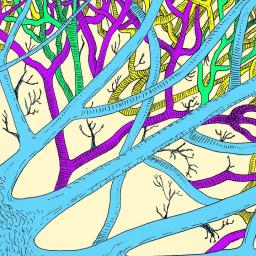
Most people practise the wrong tasks, reveals a psychologist. Take your head out of those textbooks for a few minutes and read his adviceEven the most dedicated study plan can be undone by a failure to understand how human memory works. Only when you’re aware of the trap set for us by overconfidence, can you most effectively deploy the study skills you already know about.
|
 |
by Eric Allison and Simon Hattenstone on (#1D18A)
Sam Johnson is schizophrenic, in prison, and now dependent on synthetic cannabis. As inmates like him contend with violence and debt, and overdoses spiral, observers are warning that the system is facing a drugs crisisThe Johnson family used to think nothing could shock them. Then they received a short video on Snapchat of 38-year-old Sam Johnson being beaten up by fellow inmates at Guys Marsh prison, Dorset.Johnson, who is serving a 32-month sentence for robbery, is schizophrenic and has learning disabilities. He is also a drug addict. After his latest stint in jail, it would appear he is now dependent on synthetic cannabis, a family of legal highs that are wreaking havoc in Britain’s jails. Sold under dozens of brand names, synthetic cannabis is known generically as Spice, after an early market leader. Continue reading...
|
 |
by Nicola Davis on (#1D011)
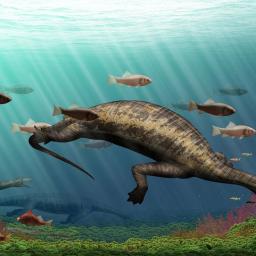
Find changes previous view of Atopodentatus unicus, revealing the 244-million-year-old creature to be the earliest known plant-eating marine reptileAn ancient creature with a skull the shape of a vacuum attachment could have been one of the first plant-eating marine reptiles, researchers say.Dug up in Luoping County in the Yunnan province of China, the newly discovered fossils of the sea-dwelling creature Atopodentatus unicus, thought to have lived around 244 million years ago, suggest it had a “hammerhead†skull, with two very different sets of teeth that allowed it to feed on underwater plant matter. Continue reading...
|
 |
by Staff and agencies on (#1CZPM)
|
 |
by John Harris on (#1CZMV)
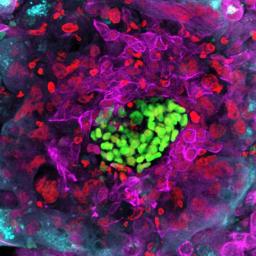
A switch to a 21-day deadline would allow scientists to better understand miscarriages and the possibilities of using stem cells to treat diseasesThe 14-day rule for permissible embryo research was conceived by the philosopher Mary Warnock as an answer to the question, always raised in relation to controversial science, of “where to draw the lineâ€.The somewhat curious reason for this cut-off was that the individual soul could not be bestowed by God on an individual who might turn out to be two individuals. Fourteen days was the point at which an embryo could no longer split into two identical twins, requiring two souls and not just one soul between them. This was said to be the point at which the individuality of an embryo is assured, because it can no longer become two people. Continue reading...
|
 |
by Ian Sample Science editor on (#1CZHY)
Monday’s transit of Mercury will see the solar system’s smallest, fastest planet cross the face of the sun, watched by astronomers worldwideAstronomers around the world are making final preparations for the transit of Mercury on Monday when the smallest and fastest planet in the solar system crosses the face of the sun.Though little more than a slow-moving dot, the celestial event has enormous historical importance. When the English astronomer Edmund Halley observed the 1677 transit in the skies above St Helena, he saw a way for scientists to measure the cosmos.
|
 |
by Oliver Burkeman on (#1CZDM)
You probably think you got where you are today through willpower and elbow grease. But what about chance, asks Oliver BurkemanDo you feel lucky? The answer, well known to psychologists, is that you probably don’t. You probably think you got where you are today through willpower and elbow grease. We chronically underestimate luck’s role, and this seems to get worse the richer we get; surveys show that the wealthiest are least likely to attribute their fortunes to, well, good fortune. They also seem to be meaner: one ingenious study found drivers of luxury cars were more likely to cut others off than those in cheaper vehicles.It’s hardly surprising many such people oppose taxation and government spending: why should others get a handout if they didn’t need one? The ironic result is that they vote against the very policies that helped them get lucky to begin with. In a recent Atlantic essay, Robert Frank, an economist who has studied attitudes to chance, quoted EB White: “Luck is not something you can mention in the presence of self-made men.†Continue reading...
|
 |
by Karl Mathiesen on (#1CYZ9)
Unregulated traders are using the sites to sell some of the world’s most invasive plants, with potentially devastating impacts on ecosystemsAmazon and eBay appear to have openly broken the law by hosting listings to ship banned invasive species to the UK, the Guardian can reveal.Both eBay and Amazon have previously been criticised for hosting ivory traders, but the UN Convention on Biological Diversity (CBD) rates invasive species as a more significant threat to biodiversity than poaching for animal parts. In February, the CBD said there was an “urgent need†to control the vast, unregulated network of online traders who buy and sell these pests across the globe. Continue reading...
|
 |
by Martin Robbins on (#1CYZN)
Is a picture made by an artificial intelligence ‘art’ if there’s no emotion involved? And what happens if you train a neural net to make music using only the Friends theme tune?Jonathan Jones is unhappy about artificial intelligence. It might be hard to tell from a casual glance at the art critic’s recent column, “The digital Rembrandt: a new way to mock art, made by fools,†but if you look carefully the subtle clues are there. His use of the adjectives “horrible, tasteless, insensitive and soulless†in a single sentence, for example.
|
 |
by Stuart Clark on (#1CYWW)
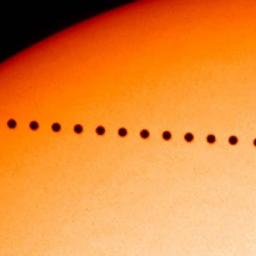
Inner planet Mercury will drift across the face of the sun during Monday afternoon, 9 May. Here is how to see its small black silhouetteMercury will pass directly in front of the sun during the afternoon of 9 May. It will begin its transit at 12:12 BST and complete the passage at 19:42 BST.Providing that clear skies prevail, all or part of the transit will be visible from much of the planet. Only Australia and far eastern Asia will miss out on seeing at least part of the transit this time around. Continue reading...
|
 |
by Nadia Khomami on (#1CYRQ)
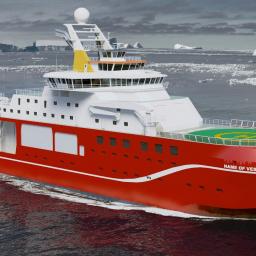
Polar research ship is named after naturalist and broadcaster, despite public vote for Boaty McBoatfaceBritain’s new polar research ship is to be named RRS Sir David Attenborough, despite Boaty McBoatface topping a public vote.The decision to name the £200m state-of-the-art vessel after the naturalist comes days before his 90th birthday, and is in recognition of his legacy in British broadcasting. Continue reading...
|
 |
by Nicola Davis and Iain Chambers on (#1CYEH)
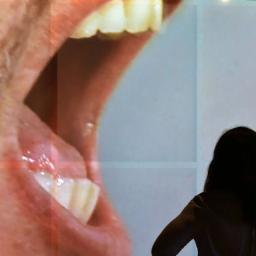
What makes our speaking voices so distinctive and so recognisable? How can we transform the way we use our voice?Coinciding with a new exhibition at the Wellcome Collection, This Is A Voice is a book by Jeremy Fisher and Gillyanne Kayes offering 99 exercises to train, project and harness the power of your voice.
|
 |
by Oliver Milman in New York on (#1CY8M)
Goodall leads coalition calling for Yellowstone’s grizzlies to stay on endangered species list, as Montana hunters set to be offered $50 licenses to shoot themA coalition of scientists headed by renowned conservationist Jane Goodall has implored the federal government to re-think its decision to strip protection from Yellowstone’s grizzly bears, as hunters in Montana are set to be offered $50 licenses to shoot the hulking predators. Continue reading...
|
 |
by Elle Hunt on (#1CY7W)
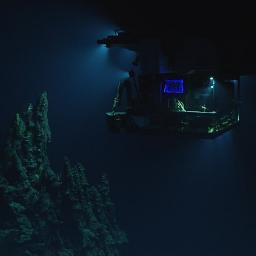
Rare footage from 11km underwater streams on Youtube from National Oceanic and Atmospheric Administration vesselA live video feed of the Mariana trench – the deepest place on Earth – is proving engrossing viewing for those above sea level.The Mariana trench plunges about 11km (seven miles) deep under the Pacific – further down than the summit of Mount Everest is above sea level. Because of the difficulties in reaching such depths, little is known about the area. Continue reading...
|
 |
by Associated Press on (#1CY1W)
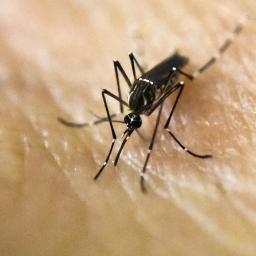
Biotech company Oxitec hopes to repeat a technique used in Brazil to reduce the population of Aedes aegypti mosquitoesThe British biotech company Oxitec and the Cayman Islands government announced plans on Thursday to release millions of genetically modified mosquitoes in the fight against a species that spreads Zika and other diseases.Deployment of the mosquitoes against the Aedes aegypti species in the Cayman Islands is a major advance for Oxitec, which has promoted the method heavily as an environmentally safe way to combat the vectors of mosquito-borne illnesses while confronting public concerns about the technology. Continue reading...
|
 |
by Guardian Staff on (#1CXR5)
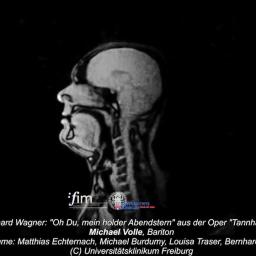
An MRI scan on Wednesday, produced by the Freiburg Institute for Musicians’ Medicine, shows opera singer Michael Volle performing a song from the German composer’s opera ‘Tannhäuser’ in real-time. The MRI was produced as a part of ENT (Ear Nose Throat) research project and is part of a study to see what happens inside an opera singer’s mouth when they perform Continue reading...
|
 |
by Lisa O'Carroll on (#1CX4K)
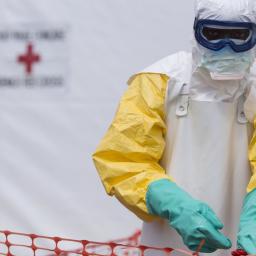
Recognising difference in immune response between survivors and fatalities raises hope that current anti-cancer drug could be used to treat Ebola patientsScientists have identified a key feature in the human immune system that determines whether someone will live or die from Ebola.The breakthrough research brings hope that existing anti-cancer treatments could be used to treat the virus, which killed almost 12,000 in the recent epidemic in West Africa. Continue reading...
|
 |
by Alan Walker on (#1CX24)
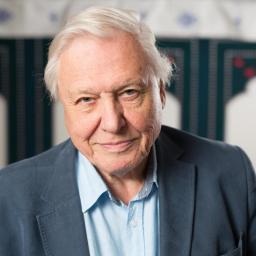
The great television presenter and the Queen are celebrating becoming nonagenarians. But there’s nothing random about their health and longevityDavid Attenborough is wrong (a sentence I thought was impossible to write). But when he told the Guardian earlier this week that the reason he had reached the age of 90 was down to luck, he was very wide of the mark.Of course, being Attenborough, he could not be completely mistaken, and he did put his finger on a defining feature of later life: inequality. “When you think, I have relatives and friends who are 90 and they can’t remember what day it is and they can’t walk – this is not Christian virtue, just luck.†Well, it isn’t. Continue reading...
|
 |
by Ian Sample Science editor on (#1CX26)
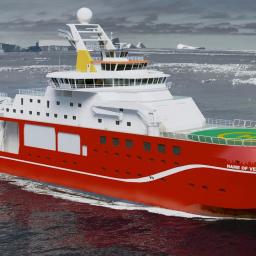
With the final decision on vessel’s name imminent, a Commons committee will question NERC chief as part of an inquiry into science communicationMPs are to quiz the head of the Natural Environment Research Council on one the most contentious issues the organisation has ever faced: whether to call its £200m state-of-the-art research vessel RRS Boaty McBoatface.More used to pondering the state of the polar ice caps and humanity’s grave impact on the planet, Professor Duncan Wingham, a prominent climate scientist and chief executive of NERC, will spend Tuesday before the Commons science and technology committee fielding questions about NERC’s unexpectedly popular Name Our Ship competition.
|
 |
by Daniel Freeman and Jason Freeman on (#1CWNY)
The results of our experiment paint a very striking picture of the power of therapy involving VR in treating patients with persecutory delusionsIf you haven’t yet heard about Oculus Rift, chances are you soon will. Virtual reality (VR) headset technology – in the form of the Oculus and its main competitor the HTC Vive, both of which have just been launched on the consumer market – is about to make the leap into the mainstream. For the gaming industry, big bucks are in the offing. Facebook paid £2 billion to acquire Oculus Rift ; the returns, one imagines, could swiftly dwarf that figure.VR may be about to transform gaming, but the technology dates back to the late 1960s and the so-called Sword of Damocles. Bulky and relatively unsophisticated though it was, the main elements of VR were all present in the Sword. A computer generated an image, a display system presented the sensory information and a tracker fed back the user’s position and orientation in order to update the image. For the user, sensory data from the natural world was superseded by information about an imaginary world that changed in response to their actions. The result was what you’d experience with Oculus Rift or the Vive today: a “sense of presence†in an interactive, three-dimensional virtual world.
|
 |
by Hazel Cox and Geoff Cloke on (#1CWEY)
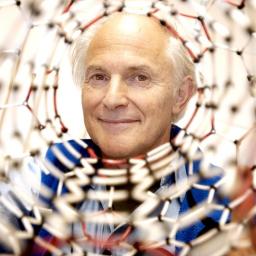
Chemist who won the Nobel prize for his role in discovering buckminsterfullerenes, also known as ‘buckyballs’Sir Harry Kroto, who has died aged 76, was awarded the Nobel prize in chemistry in 1996 for his part in the discovery of buckminsterfullerenes, also known as “buckyballs†– carbon atoms found in the form of a ball. In 1985 Harry, then professor of chemistry at the University of Sussex, had teamed up with Rick Smalley and Robert Curl, both professors of chemistry at Rice University, in Houston, Texas, to laser-vaporise carbon in laboratory experiments designed to simulate the chemistry of stars and interstellar space. Their experiments appeared to indicate that they had made an unexpected molecular species comprising 60 carbon atoms. This was amazing. Carbon had long been known to exist as diamond or graphite, but carbon as a small molecule required completely new thinking.This was where Harry drew on his artistic side and a knowledge of graphic design: he proposed that C was made up of a mixture of pentagons and hexagons, a structure known in ancient times, and now ubiquitous in footballs and in the work of the US architect and inventor Buckminster Fuller. But at first nobody could prove it, and many were openly sceptical. Continue reading...
|
 |
by Guardian Staff on (#1CW20)
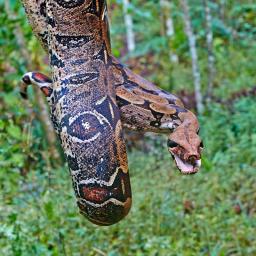
Komodo dragon tops poll, compiled by scientists using Wikipedia page view data, that reveals our favourite reptiles are also among the scariest Continue reading...
|
 |
by Ian Sample Science editor on (#1CSGY)
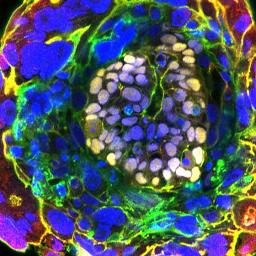
Research gives glimpse of critical period of human development, sparking calls for debate on current 14-day legal limit for embryo experimentationResearchers have broken the record for growing human embryos in the lab, keeping them alive and active beyond the stage when they would naturally implant in a mother’s womb.The feat has been hailed as a milestone in the field, but the work by two teams of researchers in the US and the UK puts scientists into direct conflict with a decades-old law that prohibits donated embryos from being grown in the lab for more than 14 days. Continue reading...
|
 |
by Adam Kucharski on (#1CVB2)
Gambling is the vice that helped make the modern world. Here mathematician Adam Kucharski explains how casinos and card games inspired many ideas that are now fundamental to science.1. Dice games and the birth of a new scienceIn the 16 Century, there was no way to quantify luck. If someone rolled two sixes during a game of dice, people thought it was just good fortune. Gerolamo Cardano, an Italian physician with a lifelong gambling habit, thought otherwise. He decided to tackle betting games mathematically, and wrote a gamblers manual that outlined how to navigate the ‘sample space’ of possible events. For example, while two dice can land in 36 different ways, only one of these produces two sixes. Continue reading...
|
 |
by Associated Press in Hartford, Connecticut on (#1CT3H)
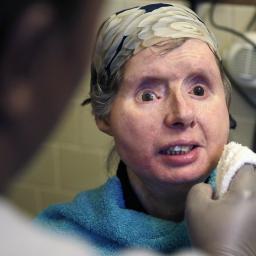
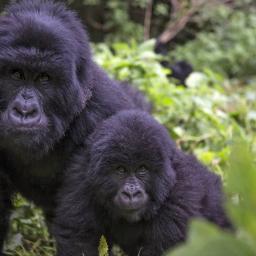
Charla Nash, who was mauled in 2009, returns to hospital where doctors hope ending experiment to wean her off anti-rejection drugs will reverse processA Connecticut woman who underwent a face transplant five years ago after being attacked by a chimpanzee is back in a Boston hospital after doctors discovered her body is rejecting the transplant.Related: Firefighter receives full face transplant in surgery called 'historic' Continue reading...
|
 |
by Ian Sample Science editor on (#1CSR9)
A shift in metabolic gear in our ancient ancestors means that humans burn calories much faster than any other primate, giving us energy for larger brainsThe hefty brains that set humans apart from other apes came into being when our ancient ancestors massively ramped up their metabolism, scientists say.The shift in metabolic gear, after the human lineage split from other primates, gave humans enough energy to run larger brains, have children in rapid succession, and live longer lives, the researchers found. Continue reading...
|
 |
by Peter Misra and Shanti Vijayaraghavan on (#1CSA1)
Our former teacher Noshir Wadia, known to us as “Profâ€, who has died aged 91, was a pioneering figure in Indian neurology.He was born in Surat, Gujarat, one of five children of Hormusji, a timber merchant, and his wife, Dinamai. He attended St Xavier’s school and obtained his medical qualification from the Grant Medical College in Mumbai (then Bombay). In 1951, after completing an MD, he travelled to the UK to train in neurology, spending four formative years as registrar to the pioneering neurologist Lord (Russell) Brain at the London hospital. Continue reading...
|
 |
by Tim Radford on (#1CRYY)
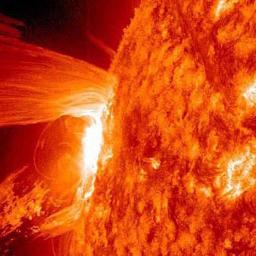
Why does the sun shine? How does the star work? Why is it mostly plasma, not gas? Green gives us the latest mind-stretching facts, and tells the story of the heroes of solar scienceWe rarely look directly at it but we miss it when we can’t see it. If it wasn’t there at all, we’d be gone too. It delivers the food we eat, the air we breathe, the clothes we wear. We read by its light – on a screen, on paper, indoors or out – because it is the ultimate energy source: indeed, the only energy source. It powered the primeval forests of carboniferous ferns and conifers that became our fossil fuel just as it drives the winds for the electrical turbines that must one day replace coal and oil. Even the radioactive elements whose decay and fission keep the planet alive and self-renewing are stellar confections: fragments first forged in, and then recycled by supernovae, exploding giant suns.That lucky old sun, the great Louis Armstrong sang, “has nothing to do but roll around heaven all dayâ€. In fact, it is the only thing in the solar system that really works hard: every second it converts 600m tonnes of hydrogen to 596m tonnes of helium and those missing 4m tonnes become the energy released by the thermonuclear reaction: a bonus of electromagnetic radiation distributed across the entire solar system. Continue reading...
|
 |
by Guardian Staff on (#1CRZ0)
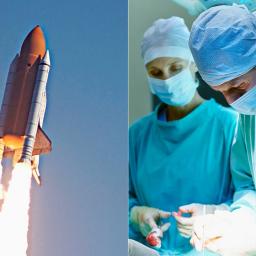
Readers answer other readers’ questions on subjects ranging from trivial flights of fancy to profound scientific conceptsWhich is more complicated, rocket science or brain surgery?
|
 |
by Jon Butterworth on (#1CRX2)
Perimeter Institute public lecture by Tim Palmer of Oxford University
|
 |
by Sarah Cefai on (#1CRKR)
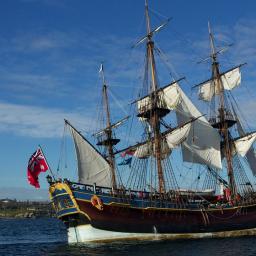
Rather than display James Cook’s ship in a traditional museum, why not entrust it to a First Nations co-operative?News has emerged confirming the whereabouts of the wreckage of HMS Endeavour, a ship sailed by Captain James Cook. Reports invariably contain images of the ship in its pomp, proudly reminding the reader of its British origins and its voyage to the Pacific Ocean, where Cook took possession of Australia. But where should Cook’s ship go? Once we dredge it up, or rather, once the Rhode Island Marine Archaeology Project dredges it up, where should it be put? And will Cook’s ship be allowed to take us beyond our colonial past?It must be remembered that it is our cultural attachment that will be doing the dredging, our obsession and fascination with these objects that circulate as evidence of the all-powerful histories of empire. Where we decide to put Cook’s ship and its contents will shape where it takes us. Through its presentation we will relate to it culturally; as an object of desire or fascination for some, and boredom for others. We will tell a new story and it will make us feel something. Continue reading...
|