 |
by Eliza Anyangwe on (#M0MV)
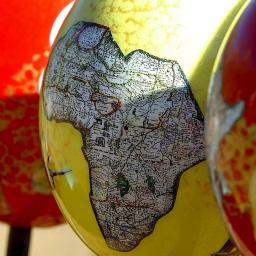
Du café à la polyrythmie, des greffes de pénis aux plus vieux objets mathématiques du monde, voici mes 10 choses favorites en provenance du continent
|
| Link | http://feeds.theguardian.com/ |
| Feed | http://feeds.theguardian.com/theguardian/science/rss |
| Updated | 2026-10-01 03:45 |
 |
by Ian Sample Science editor on (#M0B8)
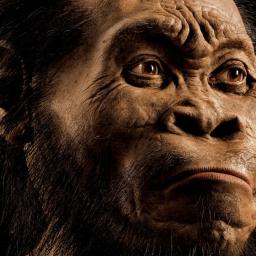
Bones found in South African cave are Homo naledi, a new species of ancient human relative, say researchers, but some experts are sceptical of findA huge haul of bones found in a small, dark chamber at the back of a cave in South Africa may be the remnants of a new species of ancient human relative.
|
 |
by David Barnett on (#M0DZ)
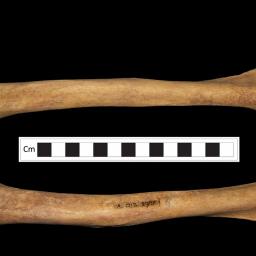
Remains of woman buried in the Hebrides 5,000 years ago show signs of disease caused by malnutrition and lack of sunlight
|
 |
by Ian Sample on (#M0CS)
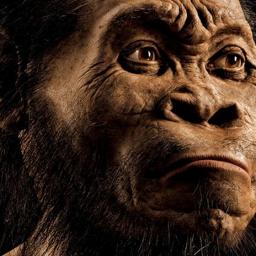
Homo naledi is the single largest fossil hominin to be found on the African continentScientists from University of the Witwatersrand in Johannesburg have discovered a new species of human relative - Homo naledi - in a cave in South Africa's Cradle of Humankind World Heritage Site, northwest of Johannesburg.The discovery consists of more than 1,500 numbered fossil elements from at least 15 individuals of the same species, laying in a chamber 90 metres from the cave entrance, accessible only by a very narrow chute. It becomes the best-known fossil member of our lineage - a hugely significant find. Continue reading...
|
 |
by Guardian Staff on (#M01V)
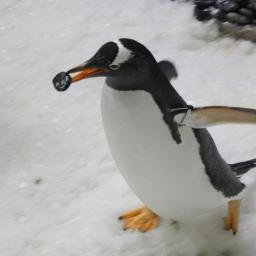
Move over The Bachelor, because these male Gentoo penguins have romance down to a fine art. They know that the key to a their potential partner’s heart is a pebble. While the female Gentoo penguins sit patiently, males scour the ice in search of the smoothest looking pebble they can find to present as a love token, even if it means stealing pebbles from neighbouring nests Continue reading...
|
 |
by Taylor Glenn on (#M00E)
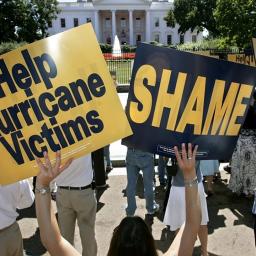
The relentlessly bleak media coverage of recent weeks has shown a depressing theme of victim blaming. What makes people do this?Like millions of others, I’m sure recent media coverage will be the kind I will never forget. Along with the heartbreaking coverage of the refugee crisis, I also found myself drawn to articles about Chrissie Hynde’s rape comments and the now-retracted Loose Women “are women ever at fault for rape†poll. Two different issues which, depending on your news source and perspective, share an unfortunate common theme: victim blaming.In his 1971 book Blaming the Victim, William Ryan coined a term that would be debated and deconstructed in a variety of contexts for the next 40+ years. That “victim blaming†is as relevant today as it was then (and for centuries before) speaks volumes about our psychological and social tendency to displace responsibility onto victims instead of perpetrators. From sexual assault and rape victims seeking understanding and justice, to refugees and asylum seekers seeking safety and stability, both groups remain vulnerable to our suspicion and blame.
|
 |
by Australian Associated Press on (#KZX1)
Scientists have established a link with bacterial infections, meaning that existing drugs could be repurposed to treat the mosquito-borne virusExisting drugs could be repurposed to create a world-first treatment for dengue fever, according to scientists.Researchers from the University of Queensland in Australia have found the body reacts to dengue fever and bacterial infections in a similar way. Continue reading...
|
 |
by Reuters on (#KZVA)
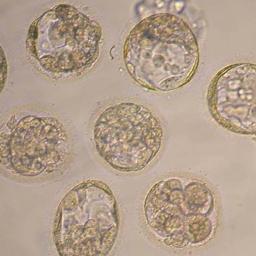
Controversial research has ‘tremendous value’ to science, say members of Hinxton Group, although they are not in favour of allowing GM babies to be bornResearch involving genetic modification of human embryos, though controversial, is essential to gain basic understanding of the biology of early embryos and should be permitted, an international group of experts said on Wednesday.The statement was issued by members of the so-called Hinxton Group, a global network of stem cell researchers, bioethicists and policy experts who met in the UK last week. Continue reading...
|
 |
by Alex O'Brien on (#KZVW)
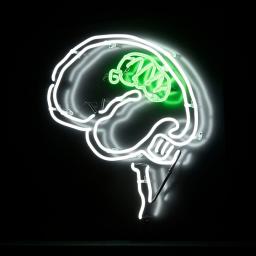
For decades, brain surgeons have struggled to identify cancerous tissue precisely. Could one of the world’s most deadly scorpions come to their aid?In 2004, Dr Richard Ellenbogen prepared to operate on a 17-year-old girl. The operation, to remove a brain tumour, was particularly challenging because it was in the frontal lobe, close to important areas for movement, speech and learning. It lasted nearly 20 hours. Dr Ellenbogen ended up leaving a big piece of the tumour behind, mistaking it for normal brain tissue. Less than a year after the surgery, the cancer came back, and the girl died.A few days after his young patient’s death, Ellenbogen presented the case at his team’s weekly meeting at Seattle children’s hospital. The failure had left him deeply frustrated. “There’s got to be a way to take more of the tumour out and leave more of the normal brain intact,†he said. The nagging feeling that he could have removed more of the cancerous tumour would not leave him alone. Scalpel in hand, Ellenbogen had faced a dilemma: if he had removed more tumour, he might also have removed normal brain tissue, with the risk that the girl would have been left severely disabled. Neurosurgeons have to be aggressive and sometimes push themselves to go further and deeper than they would like, but they all operate under the principle “do no harmâ€. Continue reading...
|
by Oliver Milman on (#KZJX)
Discovery by opal miners in 2005 finally identified by palaeontologists as seven-metre long predator equipped with giant talons that roamed 110m years agoAustralia’s largest carnivorous dinosaur, dubbed “lightning claw†due to its terrifyingly large talons, has been identified from fossilised bones found in opal in the New South Wales outback.The dinosaur would have been around 7m in length – larger than the Australovenator, a dinosaur found in Queensland that was previously thought to be Australia’s largest meat-eating ancient beast. Continue reading...
 |
by Press Association on (#KZ7B)
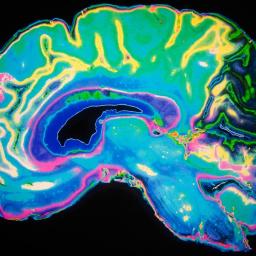
‘Seeds’ of brain abnormalities can be passed from person to person as a result of medical procedures, research suggests
|
 |
by Guardian Staff on (#KYFA)
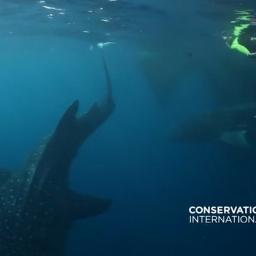
Video from Conservation International shows a marine scientist swimming with whale sharks in Cenderawasih Bay National Marine Park in Indonesia. Whale sharks were first identified in the 19th century by Dr Andrew Smith and are the largest known breed of shark Continue reading...
|
by Ian Sample Science editor on (#KY2Z)
Concern that tiny pieces of harmful proteins could be spread via surgical instruments leads scientists to call for more research into possible transmissionFragments of sticky proteins found in the brains of people with Alzheimer’s disease could potentially be spread to others via contaminated surgical instruments and other medical procedures, scientists warn.
 |
by David Barnett on (#KXJB)
UK company Sofmat and University of Bradford create process that imprints tiny pinpricks on pills so they can be identified as genuineA 3D barcode that is invisible to the naked eye and cannot be detected by touch may be stamped on pills to prevent the widespread counterfeiting of medicines.
|
 |
by Stuart Dredge on (#KWKZ)
Ballantine’s reveals ‘space glass’ prototype, but what gets put in it may taste of ‘antiseptic lozenges and rubbery smoke’In space, no one can hear you scream. But on the plus side, you may be able to sip your glass of whisky without splashing it all over the cabin.The alcohol brand Ballantine’s has revealed a prototype design for “space glassâ€, a whisky glass designed to be used in a galaxy not so far away. Continue reading...
|
 |
by Associated Press in Beijing on (#KWKQ)
Chang’e 4 mission to far side of moon is planned for sometime before 2020, leading engineer saysChina’s increasingly ambitious space programme plans to attempt the first-ever landing of a lunar probe on the moon’s far side, a leading engineer said.The Chang’e 4 mission is planned for sometime before 2020, Zou Yongliao, from the Chinese Academy of Sciences’ moon exploration department, told state broadcaster CCTV in an interview broadcast on Wednesday. Continue reading...
|
 |
by Brian Switek on (#KW9K)
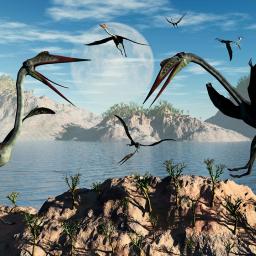
Every day, millions of internet users ask Google life’s most difficult questions, big and small. Our writers answer some of the commonest queriesLet’s clear something up right away. Dinosaurs aren’t extinct. Not entirely. Every magpie, pigeon, penguin, and ostrich alive today – every single bird – is a dinosaur. They’re all descendants of small, toothy, feathery dinosaurs that hopped and fluttered around from the Jurassic era onwards, meaning that birds are dinosaurs in the same way that bats are mammals. The Archaeopteryx laid out under glass at London’s Natural History Museum was the first of its ilk, and the only reason today’s birds seem so different is because the last of their close dinosaurian relatives trailed off into extinction about 66 million years ago.But why did the most spectacular dinosaurs become extinct? Why don’t we have to worry about descendants of velociraptor tipping over garbage cans, and why can’t I feed a baby sauropod at the petting zoo? What happened to all those dinosaurs that inspire our dreams and fuel our nightmares? Continue reading...
|
 |
by Guardian Staff on (#KW56)
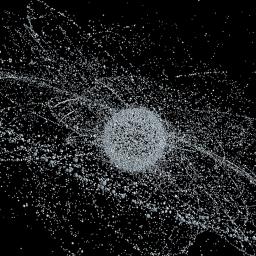
Michael Najjar has gone to the edge of tomorrow and captured what the future of space travel might look like. His project Outer Space was created while he trained for the so-far ill-fated Virgin Galactic project, flying at twice the speed of sound in a MIG-29. The results are a study in the possibilities of 21st-century celestial flight. He will travel into not-so-deep space later this year, Branson-permitting Continue reading...
|
 |
by Ian Sample Science editor on (#KVE1)
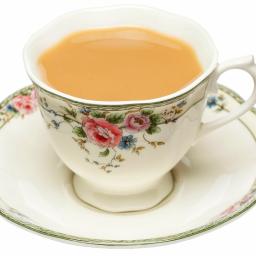
People who consumed flavanols saw modest reduction in blood pressure and drop in cholesterol
|
 |
by Jules Montague on (#KTHY)
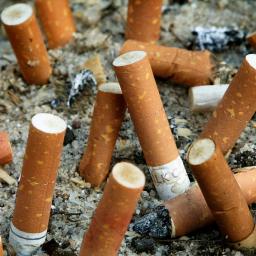
Getting the ‘all clear’ can provide false reassurance – meanwhile, positive results can lead to needless investigationsThese days, even the most defiant smoker is unlikely to be ignorant of the health risks associated with a 40-a-day habit. But what if you could have an annual Cat scan of your lungs for cancer? To catch out nodules twisting into shadows of malignant cells. If that scan was clear, would you stop smoking? Or would you light up outside the hospital and take your chances for another year?In a study published in JAMA Internal Medicine this week, almost half of smokers (49% of 35 participants) who received the all-clear for lung cancer said screening lowered their motivation to give up. Dr Steven B Zeliadt, its lead author, stated: “If we want to save lives from smoking, we should take all this money being spent on screening and double down on smoking cessation efforts.†These things are hardly binary: it does not have to be either screening or cessation. Nonetheless, screening was found in one study to reduce lung cancer deaths by 20% – prompting a US screening programme. Continue reading...
|
 |
by Associated Press in Cape Canaveral, Florida on (#KTFT)
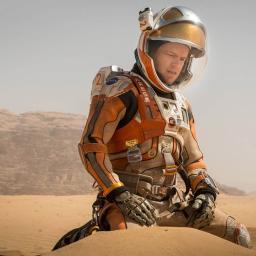
US crew are on board International Space Station as part of a year-long mission seen as vital preparation for a future mission to the red planetThe book The Martian is earning high praise from space, and the astronaut-reviewer can’t wait to see the soon-to-be-released movie.Nasa astronaut Kjell Lindgren said on Tuesday from the International Space Station that both he and crewmate Scott Kelly have read the novel by Andy Weir. Lindgren told reporters he really enjoyed the book and hopes to get a copy of the film beamed up to orbit on 2 October, the day of release, or shortly thereafter. Continue reading...
|
 |
by David Barnett on (#KSY2)
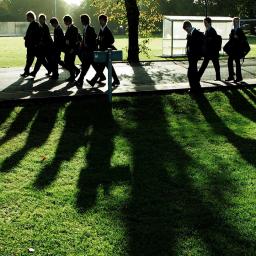
Paul Kelley says young people are losing 10 hours’ sleep a week, and calls for 8.30am starts for primary pupils and 10 or 11am for teenagersSchool start times should be put back to as late as 11am to combat a sleep-deprivation crisis among young people, a scientist has suggested.
|
 |
by Ranjana Srivastava on (#KSCK)
As a doctor I meet women who believe gynaecological cancer can be caused by promiscuity, and people who don’t know how to take their pills. Education is the remedyIt was late afternoon when I walked in to rescue my intern from a heated conversation with a man demanding antibiotics.“Lifelong antibiotics shouldn’t be taken lightly,†the intern implored. The man countered: “When my friend lost his pancreas in an accident the doctors said he could get meningitis if he didn’t. You want me to die?†Continue reading...
|
by Joshua Robertson on (#KRB4)
Queensland scientist Jeff Johnson, who identified species from photos, formally christens combative reef fish Plectorhinchus caeruleonothusThe “blue bastardâ€, an elusive and uniquely combative reef fish from northern Australia, long known only in fishing folklore, has been recognised officially by science.Queensland Museum scientist Jeff Johnson, who identified the species from photos taken last year by a Weipa fisherman, has formally christened it Plectorhinchus caeruleonothus – a direct Latin translation of the colloquial name anglers bestowed on a fish famously difficult to land. Continue reading...
by Gabrielle Chan on (#KQX9)
Exclusive: report has implications for proposed Shenhua coalmine after researchers found changing water table levels can affect the ecosystem several kilometres beyond mine boundariesRelated: Uncertainty over Shenhua mine's effect on groundwater a 'huge risk'A new study has found open-cut mines that modify groundwater levels can affect trees and ecosystems several kilometres away from mine sites. Continue reading...
 |
by Caroline Davies on (#KQRX)
Public asked to submit names for worst storms as British and Irish meteorologists aim to raise awareness with practice long-established in USBritain’s storms may lack the ferocity and intensity of the most devastating of Atlantic hurricanes. But no longer will they be nameless.From this autumn, forecasters will be personalising the most severe weather for the first time in UK meteorological history by naming the biggest, windiest and wettest gales in the hope of giving urgent warnings extra oomph. Continue reading...
|
 |
by Ian Sample, science editor on (#KQS0)
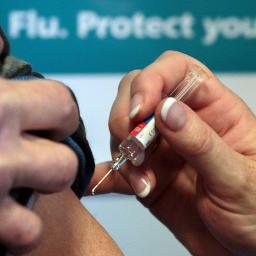
Findings show that the severity of infection can be partially governed by a person’s genetic make-up, and opens the door to new types of anti-viral drugsPeople who are at risk of falling seriously ill with the flu could be identified by a genetic test and encouraged to have the seasonal vaccination, researchers say.The NHS offers flu jabs for people who are known to be most in danger from the virus, including the over-65s, pregnant women, and those with underlying health problems, such as asthma. Continue reading...
|
 |
by Rebecca Smithers on (#KQ3M)
Smaller trees whose fruit is easier to pick, grown in polytunnels with a consistent Mediterranean-style climate are the secretBritish cherry farmers are poised to celebrate their biggest annual harvest for more than 30 years after improved growing methods boosted quality and extended the season.Related: Why fruit and vegetables have become their own brand Continue reading...
|
 |
by Zofia Niemtus and Sarah Marsh on (#KPTE)
Here’s a collection of ideas and resources for teaching everything from genetic mutation to cloning mice, just in time for Jeans for Genes DayGenetics is often in the news – and always a safe bet to spark fierce debate in the classroom as well as round the dinner table. But how much do your students really understand about what’s going on inside them?Next Friday, 18 September, is Jeans for Genes Day, which aims to raise awareness of genetic disorders, as well as funds for those who live with them. It’s a complicated subject so we’ve found a selection of engaging ways to introduce it to students of all ages and abilities.
|
 |
by Guardian Staff on (#KPG1)
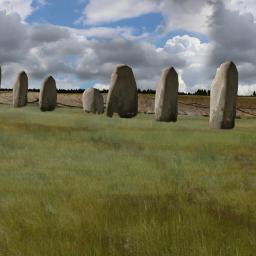
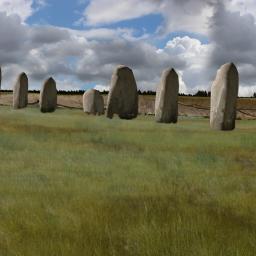
A virtual rendering of the latest discovery near Stonehenge, called Durrington Walls, is imagined using digital imagery Ludwig Botzmann Institute of Virtual Archaeology. The monument was discovered using the latest multi-sensor technologies that found evidence of at least 150 standing stones. The site is less than 3km from Stonehenge Continue reading...
|
 |
by Ian Sample on (#KP2R)
How new technology is enabling monuments and sites to be recorded in incredible detailAs some of the world's key historical sites continue to face attack, we look at the attempts to safeguard our greatest archaeological treasures from theft and destruction.We find out how new technology is enabling monuments and sites to be recorded in incredible detail, and how vulnerable objects can be tracked globally. Continue reading...
|
 |
by Stephen Curry on (#KNZA)
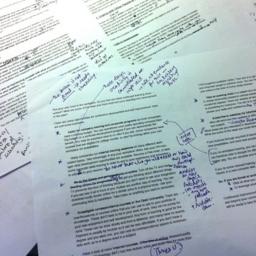
Peer review is often claimed to be the guarantor of the trustworthiness of scientific papers, but it is a troubled process. Preprints offer a way outA few weeks ago my collaborators and I submitted our latest paper to a scientific journal. We have been investigating how noroviruses subvert the molecular machinery of infected cells and have some interesting results. If it passes peer review, our paper could be published in three or four months’ time. If it’s rejected, we may have to re-work the manuscript before trying our luck with another journal. That will delay publication even further – it’s not unheard of for papers to take a year or more to get out of the lab and into the world, even in the digital age.But you can read our paper today, for free, because we have uploaded it as a preprint to the bioRxiv (pronounced ‘bio-archive’). This was an unusual thing for us to do. Preprints are a relatively new thing for life scientists, though the arXiv (‘archive’) preprint server has been in use in many fields of physics, mathematics and computer science for over 20 years. To be honest, it felt odd to be publishing without the comfort blanket of peer review. We went ahead anyway because preprints are part of the solution to the troubled state of research publication and we want to see more scientists publishing by this route. Continue reading...
|
 |
by Guardian Staff on (#KNV5)
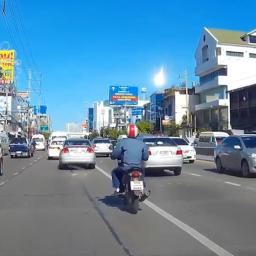
Dashcam footage appears to show a fireball over the Thai capital Bangkok. Video from Porjai Jaturongkhakun, Mesapong Poojeenapun and Raweewat Tuntisavee shows the fireball’s speedy descent before it increases in size and burns out. Despite the apparent size of the fireball, which was visible 200km from the capital, meteorologists say the event is not a major incident Continue reading...
|
 |
by Guardian Staff on (#KNPT)
Speaking on the BBC’s Today programme on Radio 4, the University of Bradford’s professor Vincent Gaffney, the leading archeologist on the discovery, explains the significance and scale of Durrington Walls, near Stonehenge. Archeologists have discovered the remnants of a huge stone monument two miles from the standing stones. The new discovery covers about 1.5km in circumference, dwarfing its famous neighbour
|
 |
by Ann Robinson on (#KNDK)
Studies show that brighter people live longer – and the basis is largely genetic. Does this mean that DNA trumps factors such as smoking, diet and exercise?How long will I live? It’s more than just an existential question – think how useful the knowledge would be: we could decide whether to save, stick or blow our savings in one mad rampage. It’s only once we go into noticeable decline that can doctors help with predictions of how long we have left, and even then it’s a notoriously inexact science as they try to apply population data to an individual case.So what do we actually know about longevity? Who will live and who will die at a given age? Is it all in the genes or do the life choices we make trump any genetic advantage? And how do we make sense of a new study that confirms that bright people live longer and that the difference in intelligence is genetic and not related to upbringing? Continue reading...
|
 |
by Ian Sample Science editor on (#KMV2)
Technique developed by comparing gene activity from healthy 65-year-olds with youngsters could also be used for other age-related conditionsA test that can track how well a person is ageing could help doctors identify patients who are most at risk of dementia and other age-related conditions.Those picked out as ageing fast could be referred onto clinical trials for treatments that try to prevent neurodegenerative diseases or slow the ageing process itself. Continue reading...
|
 |
by Press Association on (#KMR8)
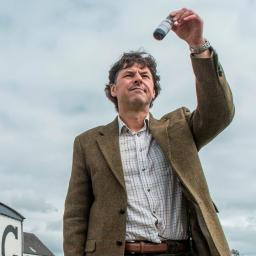
Distillery toasts ‘space whisky’ experiment as malt returns to Earth after four-year journey tasting out of this worldWhisky fired into space almost four years ago as part of an experiment has returned to Earth with enhanced flavour and character, according to its creator.A vial of unmatured malt from the Ardbeg distillery on Islay, Scotland, was sent to the International Space Station in a cargo spacecraft in October 2011, along with particles of charred oak. Another vial of the same whisky was kept at the distillery for comparison. Continue reading...
|
 |
by Ian Sample Science editor on (#KMRA)
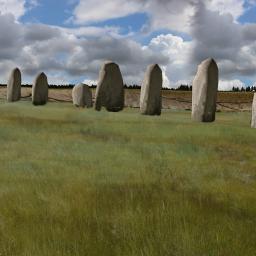
Researchers find hidden remains of massive Neolithic stone monument, thought to have been hauled into position more than 4,500 years agoArchaeologists have discovered the remains of a massive stone monument buried under a thick, grassy bank only two miles from Stonehenge.The hidden arrangement of up to 90 huge standing stones formed part of a C-shaped Neolithic arena that bordered a dry valley and faced directly towards the river Avon.
|
 |
by Denis Campbell Health policy editor on (#KMNG)
Leading doctors call on medical bodies such as Nice to do more to promote healthy lifestyles rather than relying on cardiovascular drugsPeople at risk of a stroke or heart attack should reduce that risk by adopting the Mediterranean diet rather than necessarily taking statins, leading doctors are urging.
|
by Jon Butterworth on (#KJZ4)
New and improved measurements of the heaviest quark. Also, in what sense do protons get bigger as they go faster, and how do we know?
 |
by Lucy Siegle on (#KJS7)
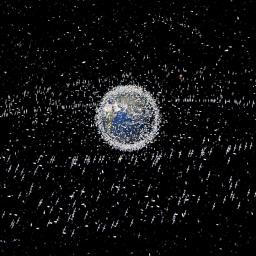
Thousands of satellites orbit the Earth adding to the growing problem of space junk. What can be done?When astronauts describe looking down on earth from space, they sound like the ultimate hippies. Gazing down on their fragile yet beautiful home they generally experience an eco-epiphany, fully appreciating how we are all children of the Earth. Fair enough. It must be quite a trip.But what’s the plan for ensuring a sustainable space when mars-one.com aims to send a crewed mission to the Red Planet by 2026 while, elsewhere, there are plans to mine some of the 12,000 space rocks orbiting earth? There are big questions to answer. Who makes sure that this happens ethically and equitably, in a way that doesn’t trash space for future exploration? I’m taken with the New Scientist’s idea of a Martian Magna Carta. Continue reading...
|
 |
by Sarah Norcross on (#KJ9F)
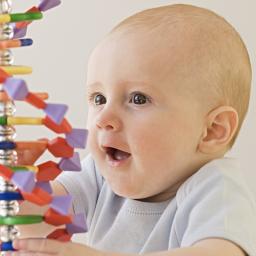
The director of the Progress Educational Trust says that only continued research will tell us what we can – or cannot – do with this powerful new technologyHistory is dotted with a long line of milestone discoveries that are widely recognised as turning points in science. The advent of a powerful technique for editing the genome – called CRISPR-Cas9 – is certain to go down as one of those defining moments.Even though the technique was developed only three years ago, progress has been rapid. This has led to much excitement, in the scientific community and beyond, about its potential to transform the research landscape, our understanding of disease and even how we treat it. But there have also been concerns about the future applications of this technology – even before the revelation this year that Chinese researchers had used the technique for the first time to edit the DNA of non-viable human embryos. Continue reading...
|
 |
by Robin McKie on (#KJ3Q)
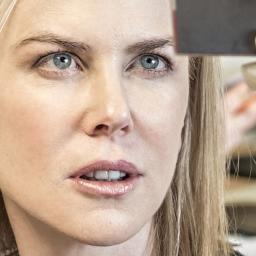
Star will fulfil vow to her father when she plays Rosalind Franklin, whose work was vital to cracking the genetic codeIt is rated by some as one of the greatest injustices in scientific history. For others, it is a storm in an academic teacup, a distraction from the real story of the uncovering of the structure of DNA, the stuff from which our genes are made.However, for Nicole Kidman the opportunity to play one of the search’s chief protagonists, Rosalind Franklin, in Anna Ziegler’s play Photograph 51 – which opens in London’s West End next week – provides her with a special challenge: a chance to fulfil a pledge to her late father, Antony Kidman. Continue reading...
|
 |
by Kathryn Harkup on (#KGQY)
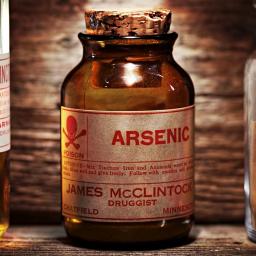
The queen of crime is known for her obscure plots and fiendish clues, but her expertise with poisons often goes unnoticedIn the drawing room of an English country house a little old lady sits knitting and discussing the dangers of prescription drugs. Upstairs, a blue poison bottle containing several lethal doses of strychnine is hidden in a drawer. Outside in the kitchen garden some unusual plants are growing among the herbs. On the hall table sits a bag full of pills left behind by the visiting nurse. In the kitchen what looks like sugar has been spilt on a tea tray, or are the small white crystals something else? At the front door a man in a pair of immaculate patent-leather shoes pauses to brush an invisible speck of dust from his lapel before ringing the bell. We are, in all likelihood, in Agatha Christie-land.Related: Ten of the best poisonings in literature Continue reading...
|
by Crispin Halsall on (#KGM2)
Stay alert, make lots of noise, and if all else fails, carry a big gunThis piece was originally published on The ConversationThe case of Russian scientists trapped in their remote Arctic base by a group of inquisitive yet hungry polar bears does not come as a surprise. By late summer, Arctic sea ice is at a minimum and polar bears are effectively landlocked in coastal areas eagerly awaiting the return of ice during the autumn freeze and the chance to hunt seals again. Continue reading...
 |
by Reuters on (#KGAW)
CST-100 Starliner spaceships will be used to fly crews to the International Space Station, with a test flight targeted for 2017Boeing Co took the wraps off an assembly plant on Friday for its first line of commercial spaceships, which Nasa plans to use to fly crews to the International Space Station, officials said.
|
 |
by Will Self, Andrew Solomon, Sue Halpern on (#KECD)
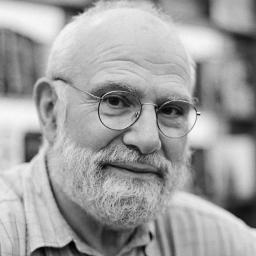
The death of Oliver Sacks this week made headlines, some of them surprising. Three writers pay tribute to an ardent observer, whose literary portraits of his patients are rich in compassion, insight and humourHaving met the late Oliver Sacks, neurologist and writer, only twice in my life, the occasions separated by some 36 years, I certainly cannot pretend to any friendship or even acquaintance. Nonetheless, I think I can speak for hundreds, if not thousands, who, while not especially close, nevertheless felt physically touched by the life of this extraordinary man. And touched is surely the right word: on the second occasion I met Oliver, in April of this year, he spoke of what a dreadful anatomy student he had been, barely able to conceive of all the convolutions within – yet, and he laughed at this, he’d always been a whizz at doing lumbar punctures, which can be notoriously difficult and excruciatingly painful. “How did you manage it?†I asked, and he said: “Touch, I could just feel where the needle should go.†Continue reading...
|
 |
by Alex Hern on (#KE3D)
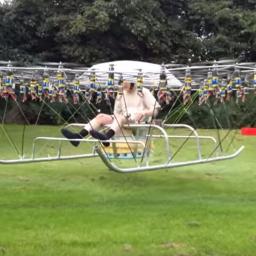
YouTuber gasturbine101 flies in a 54-rotor homemade vehicleStop the search: the greatest Briton in history has been found – sitting astride a makeshift helicopter comprised of 54 drone rotors dressed like one of Monty Python’s Gumbies.YouTuber gasturbine101 built the world’s first pentacontakaitetracopter (that’s a vehicle with 54 blades), and flew it almost three meters above the ground, alarming his cameraman in the process.
|
by Martin Robbins on (#KE11)
I weighed myself every hour for the entire bank holiday weekend. Here’s what I found out.For a long time now I’ve been weighing myself daily, but I realised early on that the numbers you see when you step on the scales are almost always nonsense. Weight measurements are like opinion polls – individual results don’t tell you anything because there’s just too much random noise, error and variation. It’s only when you have a few dozen that you can start to reliably pick out a trend.But that noise made me curious. It’s easy to chalk up weight gains and losses to hidden forces or semi-scientific concepts like ‘starvation mode’, but when you do that you lose a sense of control. Understanding is power, and I wanted to understand what my body did over the course of a single day that caused my weight to vary so much from one morning to the next.
by Howard Swains on (#KDV2)
One in 50 of us are victims, left feeling like robots – and yet even doctors have to Google it. Now one sufferer is intent on helping millions out of their torment