 |
by Melissa Davey on (#MFAH)
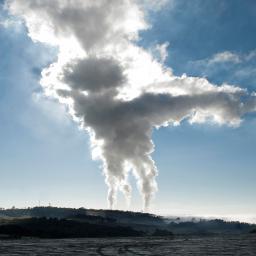
From business to health to the environment to domestic violence, the new prime minister faces long wishlists from industry and policy groupsAs Malcolm Turnbull prepared to be sworn in on Tuesday, industry and policy groups were busy outlining their list of policy priorities for the new prime minister.Related: Malcolm Turnbull promises new style of leadership after overthrowing Abbott Continue reading...
|
| Link | http://feeds.theguardian.com/ |
| Feed | http://feeds.theguardian.com/theguardian/science/rss |
| Updated | 2026-10-01 03:45 |
 |
by Mark Cocker on (#MFC8)
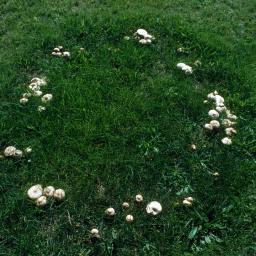
Claxton, Norfolk They process the hard lignin and resistant woody tissues, converting it into elements that trees and flowers can re-useIt seems apt that mushrooms are made from the same stuff as insects – chitin – because, like insects, they have a gift for sudden appearance. One moment nothing, then, as if on wings, they descend everywhere. We must acknowledge that this fungal sense of the dramatic relies partly on us. We simply fail to notice something so lowly, so brown, so inhuman, and yet so fundamental to life, until it does something eye-catching.In our garden the best display has been mounted on the back lawn. Despite a fey hint of Gallic artistry or culinary sophistication in the name – and they are said to be delicious – some of these fairy ring champignon look like small crumpled turds. Continue reading...
|
 |
by Oliver Milman on (#MF5N)
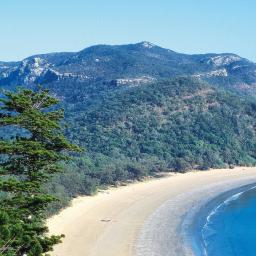
The 2000km-long chain, which started forming 33m years ago, runs along the country’s east from the Whitsundays in Queensland to near MelbourneScientists have discovered the world’s longest chain of continental volcanoes, stretching 2,000km along eastern Australia.
|
 |
by Agence France Presse in Moscow on (#MEDF)
|
 |
by Letters on (#MEAS)
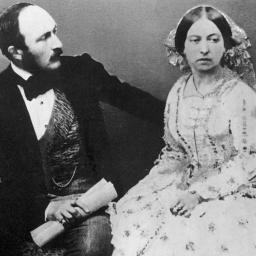
Queen Victoria did not enjoy a silver jubilee (Who is the UK’s queen of queens?, 5 September). Apart from her not being in a condition to enjoy anything in 1862, a few months after Prince Albert’s death, the concept was unknown. “Jubilee†still meant a 50-year event, as in Leviticus, or an occasional year decreed by the pope for particular purposes. The first royal “silver jubilee†was that of Kaiser Wilhelm I in 1886; the next noted by the Times was that of the King of Siam in 1893; the first British royal “silver jubilee†was that of George V in 1935.
|
by Guardian Staff on (#ME68)
Speaking on BBC Radio 4’s Today programme, former-astronaut Buzz Aldrin says the world should start pursuing polices to make a Mars landing, and even settlement, possible. He suggests July 2019 to be the ideal time for a landing and explains the need for international co-operation for this to be fully realisedListen to the full interview on the BBC’s website hereWatch the full clip on the BBC’s website hereRead more about Buzz Aldrin’s plans for Mars on the Guardian Continue reading...
 |
by GrrlScientist on (#ME0R)
A new study finds that birds who freely choose their own mates have 37 percent more offspring than those which were paired up by researchers in a sort of avian ‘arranged marriage’ — findings that have far-reaching implications for conservation and captive breeding practicesBirds who freely choose their own mates produce 37 percent more offspring than those which were paired up by researchers in an avian “arranged marriageâ€, according to research published today in the peer-reviewed journal, PLoS Biology. Additionally, cross-fostering experiments revealed that embryo mortality depended upon the compatibility of the genetic parents, whereas chick mortality depended upon the the behavioural compatibility of the foster parents. Further, although parents that freely chose their own mates had similar rates of embryo mortality to that of birds in “arranged marriagesâ€, those birds that had freely chose their own mates were much better at raising their chicks. This suggests that birds may be choosing mates based on behavioural compatibility -- a finding that has important implications for conservation of animals that form pair-bonds. Continue reading...
|
 |
by Ian Sample, science editor on (#MDS1)
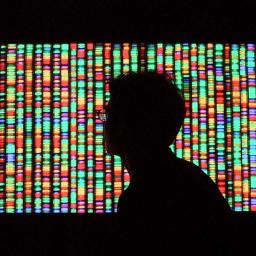
The genomes of thousands of Britons have been used to identify rare genetic varients that raise the risk of illnesses including heart disease and obesityThe DNA of thousands of British people has been read and made available to researchers around the world to boost the search for genetic causes of disease.The genomes of 4,000 healthy people are being shared with international scientists, along with detailed information on the participants’ height, weight, blood pressure, cholesterol levels and 60 other medical measurements.
|
 |
by Alex Bellos on (#MDP3)
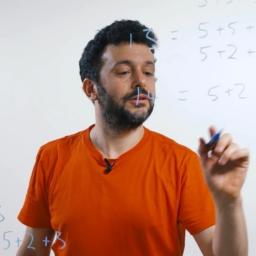
The solution to today’s rugby points problemEarlier today I asked you three questions about rugby scores1) What is the highest score that can be made in only one way? Continue reading...
|
 |
by Maev Kennedy on (#MDP5)
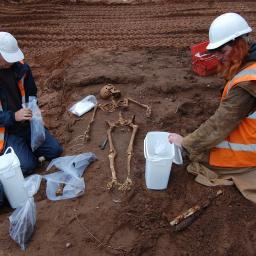
Fifty well-preserved skeletons of travellers hoping for miracle cures discovered on former hospital site during work to build flatsThe skeletons of scores of medieval pilgrims who came to the shrine of St Chad in Lichfield but died without receiving the miracle healing they hoped for are being excavated on the site of an ancient hospital that provided accommodation for travellers.At least 50 startlingly well preserved and neatly buried skeletons were uncovered during development work to build apartments on the site of the 12th-century St John’s hospital, which still provides sheltered accommodation for elderly people. Continue reading...
|
 |
by Alex Bellos, Ian Anderson, Tash Reith-Banks and Pa on (#MDP7)
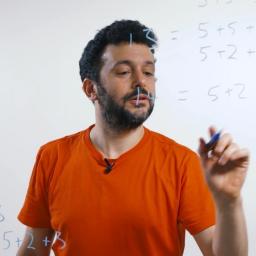
Here’s the solution to this week’s puzzle, which tied in with the Rugby World Cup. The question was: What is the highest rugby score that can be made with only one possible combination of penalties, tries and conversions? Did you work it out? How many tries did it take you?
|
 |
by Helen Snaith on (#MDK7)
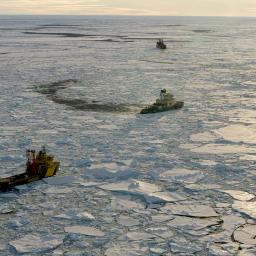
Researchers who plan for natural disasters and climate change are stuck with the public sector pay freeze, while our colleagues in universities enjoy risesThis week, on 14 September, I walked out of my job for a half-day of strike action, alongside my colleagues at the Natural Environment Research Council (NERC).I’ve worked within the council and its precursors for 23 years and this is the first time we’ve ever balloted members about taking action on pay. It’s not something that’s generally a big motivator. NERC members – scientists and researchers – enjoy their work and are proud to contribute to the likes of the British Antarctic Survey, the Geological Survey, the National Oceanography Centre, the Sea Mammal Research Unit. Continue reading...
|
 |
by Samuel Gibbs on (#MCMP)
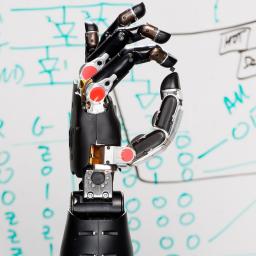
Advanced prosthetic allows paralysed man to control movements and register when the robotic hand is touchedA new advanced robotic hand that is wired directly into the brain has been successfully tested, allowing paralysed man to “feelâ€.
|
by Pete Etchells on (#MCMT)
A new website from the founder of Digital Science aims to make it easier for a range of school stakeholders to sift through the huge amount of data about education performance across EnglandThe problem with big data is that it’s not always that easy to wade your way through it. The UK Department for Education, for example, provides a mammoth amount of information about schools – average class sizes, absence levels, details on how many pupils are eligible for free school meals (and how many are actually having them), and a wealth of measures that aim to assess how well children are performing across the school years. But trying to make sense of a sea of numbers in spreadsheets and tables doesn’t always help you to get a sense of what’s actually going on in schools around the country.This is where Timo Hannay comes in. “About 18 months ago some local schools where I live in East Finchley asked for help in data analysis. Being the slightly obsessive geek I am, I ended up downloading reams of data from the DfE website and building a huge database covering every school in the countryâ€, he says. Hannay has an eye for data. He has a PhD in neuroplasticity, and for a number of years was the director of web publishing for Nature Publishing Group. He then went on to found Digital Science, a startup company focusing on software and services aimed at scientists and research administrators. Now, he can add educational cartographer to the list. Continue reading...
 |
by Kathleen Brady on (#MCMV)
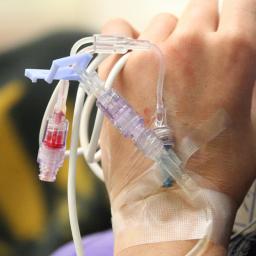
I’ve been forced to pause my life before it’s barely begun. Facing the unknown is petrifying – but facing my friends is almost as hardWhile it’s fair to say that a cancer diagnosis at any age seems unfair, to be diagnosed in your 20s goes against everything we expect. You’re supposed to be getting started in life, finally finding a job you enjoy, learning how to scrape together some savings, maybe finally moving in with a partner. Perhaps you’re buying a home, trying new things and meeting likeminded people. You’re meant to be healthy: healthy enough to hold down a good job, go out every weekend, travel at a whim and generally enjoy your life.The most frustrating and isolating thing is that no one knows how to react. I’m the first Continue reading...
|
 |
by Holly Young in Sicily on (#MCK3)
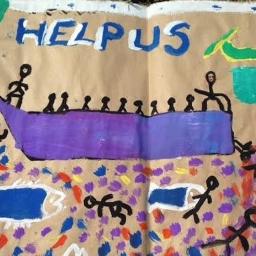
After months of fear and uncertainty, even refugees who have reached safety face a psychological battle to get back on their feet
|
 |
by Stephen CurryJenny RohnRichard P Grant on (#MCKJ)
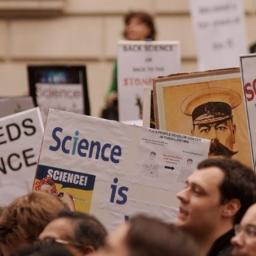
Failure to commit to a reasonable level of public investment in research is bad for science – and bad for Britain. Here’s what you can do about itIn September 2010 the Government threatened cuts to the UK’s research budget, igniting the Science is Vital campaign and rallying thousands to protest against policies that would harm the floundering economy. Five years later – incredibly – we appear to be facing exactly the same predicament. So Science is Vital is campaigning once again, calling on scientists and supporters of science to join us at a public event (in London and online) next month.Back in 2010 our efforts, along with that of many others, resulted in a ring-fence for the publicly funded science budget – a freeze rather than a cut. Continue reading...
|
by Jon Butterworth on (#MCJB)
As new data continue to be collected at CERN, another look at some of the straws in the wind, otherwise known as “hints of new physicsâ€, that might develop into exciting breakthroughs
 |
by Alex Bellos on (#MC2K)
To prepare for this week’s World Cup, here’s the rugby points puzzleHello guzzlers,The Rugby World Cup kicks off this Friday. So here’s a puzzle that could come in handy over the next few weeks, especially if you are a rugby commentator. Continue reading...
|
 |
by Nicola Davis on (#MC2N)
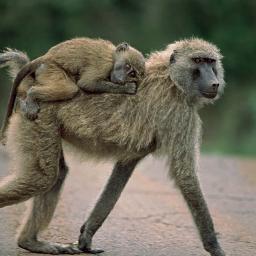
Animal sex expert Carin Bondar on baboons who use contraception and the strange habits of hermaphroditesHow did you get into the topic of animal sex?I was at home having my children. I was in a very small Canadian town with nothing but babies and an internet connection, so I started blogging. I talked about a lot of things that were interesting to me, but whenever I talked about sex, the audience was like “Ooh! What?!â€. People love hearing about sex because we are all so driven by it. Continue reading...
|
 |
by Alex Bellos, Ian Anderson, Tash Reith-Banks and Pa on (#MC1J)
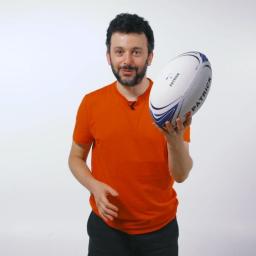
To get you ready for the start of the Rugby World Cup, this week’s puzzle involves the intricacies of rugby scores. Here’s a written version of the puzzle if you’d prefer Continue reading...
|
by Guardian Staff on (#MC0H)
In 2013, Bryan Chan and a group of fellow university students in Arizona launched a weather balloon near the Grand Canyon. In a Reddit post, Chan explains their onboard GPS tracker lost its signal as it came in to land. It took two years for the team to recover the footage, after a woman spotted the balloon and its payload while out on a hike in the desertWatch the full video here
by Australian Associated Press on (#MBBY)
Report by Kirby Institute says a quarter of people who test positive for the virus have had it for at least four years without realisingThe number of Australians contracting HIV has stabilised but about a thousand people a year are still returning positive tests, and about a quarter of those people have had the virus for at least four years without realising it.The latest report card on the nation’s sexual health, by the University of New South Wales’s Kirby Institute, is a mixed bag.
 |
by Radmila Topalovic (Royal Observatory, Greenwich) on (#MB5K)
This month we will be treated to a total lunar eclipse, a Harvest Moon and a supermoon – a hat-trick of celestial phenomena all linked to our only natural satellite. Continue reading...
|
 |
by Ben Ambridge on (#M9RQ)
Take the Observer personality quiz and find out who you – or your partner – really areCongratulations! You’ve just won a prize in a lottery. It’s a rather unusual lottery – you’ve been offered the choice of £750 now, or £1,000 in one year. (Don’t worry, the lottery is government-backed, so there’s no chance of the organiser going bust or failing to pay out.) So which prize would you prefer?a) I’ll take the £750 now, thanks
|
 |
by Chris Stringer on (#M8Z0)
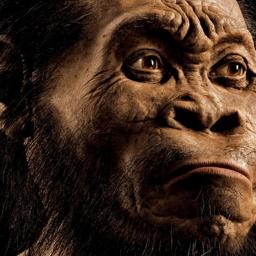
The discovery of at least 15 individuals’ bones in a South African cave has been hailed as a major findMore than 1,500 fossils from the Rising Star cave system in South Africa have been named as a new human species, Homo naledi, one which displays a unique combination of human and non-human traits throughout the skeleton.In September 2013, two cavers discovered bones in an almost inaccessible chamber deep within the Rising Star cave system, about 25 miles from Johannesburg in South Africa. Two months later a team led remotely by palaeoanthropologist Lee Berger of the University of Witwatersrand (remotely because only excavators much slenderer than Berger could squeeze themselves into the chamber) was recovering a haul of fossil human bones. The extraction of the remains was widely publicised, along with numerous videos and live feeds, and I’m sure I wasn’t the only one who thought that the coverage had more hype than substance. Continue reading...
|
by Joanna Walters in New York on (#M7S9)
US had its 12-hottest summer but seven of the warmer seasons were in last 15 years. With ocean temperatures rising, scientists warn: ‘It’s definitely not good’New data showing that the US had its 12th-hottest summer on record may not, at first glance, appear particularly significant or alarming.
 |
by Nick Chater on (#M7HE)
Mental manipulation can be backed by good intentions – but when used with stealth, it is deceitful and wrongA couple of decades ago, a class of psychology undergraduates played a mean trick on their lecturer. The students on the right side of the room gently nodded, smiled, and looked thoughtful, while those on the left seemed bored and glum. Before long, the unsuspecting lecturer was addressing the “right†students with enthusiasm, with only the odd uncomfortable glance to the rest. On some secret sign, the students changed roles – and the lecturer duly switched to addressing students to the left. Memories are vague on how often the hapless lecturer was pushed to and fro.The students’ hilarity was no doubt considerable, especially as the trick used one of the key principles they were being taught: that pigeons, rats or lecturers do more of what is rewarded, and less of what is punished. But how did the lecturer feel when the trick was revealed? In his shoes, I imagine myself trying to summon a brave laugh, but feeling pretty dreadful. Even where no malice is intended, the sense of having been manipulated is hurtful indeed. Continue reading...
|
 |
by Sarah Kaplan for the Washington Post on (#M7DD)
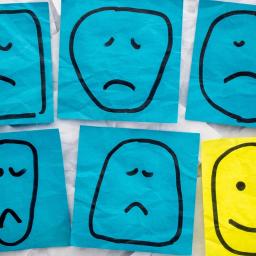
Dopamine, which stimulates the pleasure centre in the brain, is also involved in transmitting visual information“Feeling blue†might be more than just a metaphor. Indeed, how we feel about the world can play a huge role in how we see it, according to a study in the journal Psychological Science. Feeling sad can keep us from seeing in certain colours, as though we live in Dorothy’s Kansas. But a good mood can bring those colours back into the world, just like a tornado trip to Oz.Related: How we all could benefit from synaesthesia Continue reading...
|
 |
by Reuters on (#M6ER)
Gennady Padalka, who has racked up 879 days in orbit, returns to Earth with two rookie spacemen
|
by Mo Costandi on (#M5R4)
The Mexican tetra lost its eyes - as well as a significant portion of its brain - to ensure survival in a subterranean environmentAt some point back in deep time, a group of fish were washed into a limestone cave somewhere in northeastern Mexico. With no way out and little more than bat droppings to eat, the fish began to adapt to their new troglodytic lifestyle. Unable to see other members of their group in the dark, they lost their colourful pigmentation. Then they lost their eyesight, their eyes gradually got smaller, and then disappeared altogether.This was accompanied by a dramatic reduction in the size of the brain’s visual system. Yet, the question of why the blind cave fish lost its eyes and a large part of its brain remains unresolved. Now, biologists in Sweden believe they have found the answer. In new research published today, they report that loss of the visual system saves the fish a substantial amount of energy, and was probably key to their stranded ancestors’ survival. Continue reading...
 |
by Julian Baggini on (#M5MK)
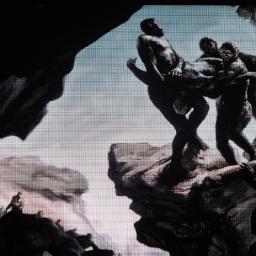
If ancient hominids really buried their own dead, it could transform attitudes to our evolutionary presentOne of the curious features of science news is that the excitement it generates bears little or no relation to our ability to understand it. Kudos to you if you can explain to me what a Large Hadron Collider actually is, but anything more precise than “a huge ring under a mountain for smashing particles into each otherâ€, and you’re a member of the cognoscenti. Yes, I know it resulted in the discovery of the Higgs boson, but just because I can say it doesn’t mean I understand it.A similar kind of uncomprehending buzz has greeted the discovery of the bones of at least 15 individuals in a South African cave system. These may be members of a hitherto unknown species, Homo naledi – perhaps our earliest ancestor, living as long as 4 million years ago. Continue reading...
|
 |
by Allan Hennessy on (#M5HP)
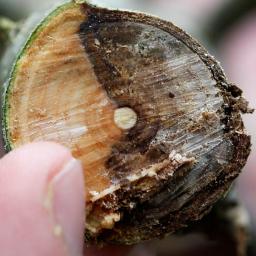
Sites affected by Hymenoscyphus fraxineus fungus include areas of woodland near Ambleside and Keswick, with disease already widespread across EuropeTrees at four different sites in the Lake District have been found infected with ash dieback disease, according to the Forestry Commission. The sites include areas of woodland near Ambleside and Keswick.It is not known how the trees became infected with the Hymenoscyphus fraxineus fungus (which was originally called Chalara fraxinea). Charlton Clark, a spokesman for the Forestry Commission, said: “The disease can be spread either by spores of the fungus being carried by the wind or by movement of infected ash plants, whose spores can then be blown to neighbouring trees. It could have arrived in the Lake District by either or both these means.†Continue reading...
|
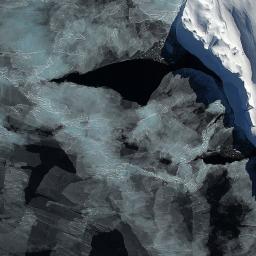 |
by Damian Carrington on (#M5GX)
Oceans would rise by over 50m sinking land inhabited by a billion people and changing the face of planet Earth, say scientistsBurning all the world’s coal, oil and gas would melt the entire Antarctic ice-sheet and cause the oceans to rise by over 50m, a transformation unprecedented in human history. The conclusion of a new scientific study shows that, over the course of centuries, land currently inhabited by a billion people would be lost below water.“For the first time we have shown there is sufficient fossil fuel to melt all of Antarctica,†said Ricarda Winkelmann, at the Postdam Institute for Climate Impact Research in Germany, who led the research published in the journal Science Advances. “This would not happen overnight, but the mind-boggling point is that our actions today are changing the face of planet Earth as we know it, and will continue to do so for tens of thousands of years to come. If we want to avoid Antarctica to become ice-free, we need to keep coal, gas and oil in the ground.†Continue reading...
|
by Ewan Birney on (#M599)
A recent scientific paper claiming that the children of Holocaust survivors showed evidence of inherited stress was deeply flawed - here’s whyRecently, the Guardian published a story based on a scientific paper that claimed the stress experienced by Holocaust survivors somehow was detectable in their children through a process known as epigenetics. The paper was riddled with flaws: the scientists studied blood, which is a mixture of cell types, meaning there are any number of causes for the changes reported. The scientists only looked at a tiny subset of genes. They had an absurdly small sample size of 32 people, a tiny eight-person control group, who didn’t really look like good controls, and produced a contorted argument for why their data supported their original hypothesis. The paper probably shouldn’t have made it through to the scientific literature, and it certainly shouldn’t have made it to your Saturday breakfast reading. I don’t believe it and I’ll outline some reasons why below.The scientific paper and newspaper story point to a rising interest in epigenetics. This is a seductive but rather slippery word that has come to mean a variety of things in relation to how molecular structures close to DNA work, in particular modification of DNA bases by methylation. It is certainly exciting, and has become a leading mechanism to explain how the environment communicates with our genes. But it’s also easy to oversimplify, and has been set up by some people as an inaccurate alternative to genetics.
 |
by Guardian Staff on (#M54T)
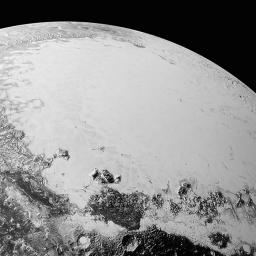
Nasa’s newly-released sequence of images show detailed views of Pluto taken by the New Horizons spacecraft mission in July. The video begins with the spacecraft approaching the dwarf planet before gradually revealing its detailed surface. The probe then passes behind the celestial body and briefly captures an atmospheric glow before the sun disappears behind Charon, one of Pluto’s five moons Continue reading...
|
by Stuart Clark on (#M50A)
New close-up images of dwarf planet Pluto have ‘scientists reeling’ because of the bewildering variety of surface features revealed.As celestial bodies go, Pluto is far more surprising than anyone could have expected.“Pluto is showing us a diversity of landforms and complexity of processes that rival anything we’ve seen in the solar system,†said New Horizons Principal Investigator Alan Stern, of the Southwest Research Institute (SwRI) in Boulder, Colorado, in the official Nasa announcement that also claimed scientists were ‘reeling’ from seeing the new pictures. Continue reading...
 |
by Alexandra Harris on (#M53F)
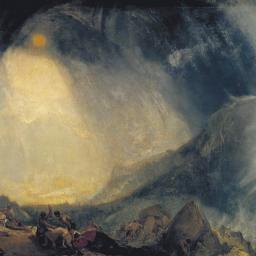
From icy ground gleaming in early literature to our idea of a data cloud … the portrayals of weather in different eras are full of surprisesOn the last night of the 18th century, the heroine of Virginia Woolf’s Orlando leans out from her London window. In the cool, clear air she surveys the smooth domes and magnificent vistas of the city. All is “light, order, and serenityâ€. But then, as she watches, a rapid gloom starts to close in. Within moments, there comes a dramatic meteorological alteration. “A turbulent welter of cloud covered the city. All was darkness; all was doubt; all was confusion. The 18th century was over; the 19th century had begun.â€This is how time passes in Woolf’s historical pageant: the atmosphere of English life in different eras is established through changes in the air. It is a masterstroke of literalism. Life changes in accordance with the newly Victorian weather: skirts are worn to the ground and tablecloths follow suit; ivy grows in profusion; in the muffled gloom, evasions and concealments are bred almost as quickly as children. Continue reading...
|
 |
by Oliver Burkeman on (#M50B)
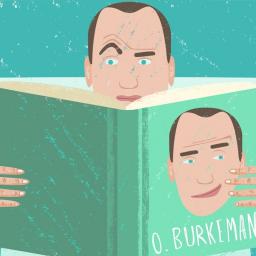
‘There’s a huge gulf between grasping something intellectually and really feeling it in your bones’“Why is it so hard to take your own advice?†the psychology writer Melissa Dahl asked in a New York magazine essay some months ago, and the question’s been bugging me ever since. I have the towering arrogance to imagine that if you followed some of the suggestions made each week in this column, you might be moderately happier or more productive, with a little less relationship drama, a little more inner calm. (From my email inbox, I know this happens at least occasionally.) But were you to infer from this that I follow such advice flawlessly myself, you’d be hilariously mistaken. When friends mention their difficulties with partners or bosses, Dahl wrote, she always tells them to talk to the person involved. Just say something! “And probably, this is good advice,†she mused. “I wouldn’t know, as it’s something I rarely do myself.†I can relate. I suspect most of us can. As the old wisecrack has it: “Take my advice – I’m not using it.â€The cynical take on this is that we ignore our own advice because it’s rubbish: we dispense it to seem wise, when in fact it’s glib nonsense. (All exhortations to “try harder†or “snap out of it†or “look on the bright side†fall into this category: if the recipient could do so, he or she already would have, without your so-called help.) Continue reading...
|
 |
by Fiona Harvey, environment correspondent on (#M45K)
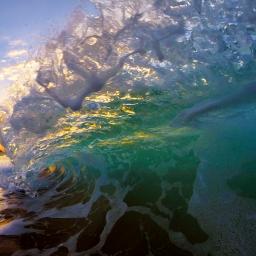
Major study of plankton shows warmer seas could have a huge impact on the marine food chainThe dangers posed by global warming to the world’s oceans must be a key part of any future international climate change agreement, a group of marine research scientists are insisting, as up to now the role of the planet’s biggest ecosystem has been largely ignored at the long-running UN climate talks.
|
 |
by Carole Cadwalladr on (#M410)
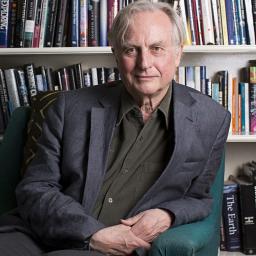
Richard Dawkins has always been a figure of controversy. Part two of his autobiography, now out, picks up from the publication of The Selfish Gene. A combative presence on Twitter, he is a surprisingly much quieter personality behind the scenes, writes Carole CadwalladrBritain’s most famous atheist is surprisingly low-key. The public Richard Dawkins – combative, outspoken, relentless – is, it turns out, a different beast from the private one.Anyone who’s witnessed a Dawkins intervention – on television, in print, or in 140 characters or fewer on Twitter – will have experienced him on fighting form: sure of his facts and opinions, unflinching in his deployment of both. In the flesh, in a room in New College, Oxford, his base for pretty much his entire working life (though he is now theoretically retired), he’s quieter, less bombastic, more human. He’s reflective, weighing up answers and expressing that most un-Dawkins-like sentiment: doubt. When I bring up his Twitter controversies, he cringes. It’s not deliberate, he says. “I genuinely and honestly don’t want to annoy people. I do want to clarify and it’s true that clarifying sometimes backfires, but my aim is always to clarify.†Continue reading...
|
by First Dog on the Moon on (#M3RX)
The discovery of whole new human species has prompted Professor Onthemoon to compare Homo sapiens, Homo naledi and Steve, a wallaby
by Stuart Clark on (#M2MD)
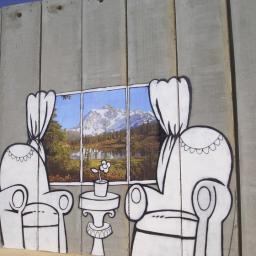
Tomorrow, satellites of Europe’s Galileo navigational system are scheduled for launch into space atop a Russian-build Soyuz rocket, taking off from the spaceport in Guiana, South America.These are the 9th and 10th such satellites – launching at 3.08am BST on Friday 11 September – and two more in the constellation are planed for launch by the end of the year. By 2020 the full system will consist of 26 functioning satellites, and six spares in orbit. The first navigational services will be offered to customers next year. Continue reading...
 |
by Peter Kimpton on (#M2CF)
Rivers to roadblocks, brick walls to tall orders, whether literal, metaphorical, psychological or cultural, raise up songs about barriers for this week’s playlist
|
by Emma Howard on (#M1Z4)
Unexpected findings show oceans’ potential to absorb CO2 fluctuates more over time than previously thought, researchers sayThe Southern Ocean, which acts as one of the natural world’s most effective sponges for absorbing carbon dioxide, is showing signs of an unexpected revival in its ability to do so, according to scientists.The oceans absorb around a quarter of emissions caused by human activities, such as the burning of fossil fuels, reducing the speed of climate change. About 40% of this occurs in the Southern Ocean, which surrounds the Antarctic, making it the planet’s strongest ocean carbon sink.
 |
by David Smith at the Cradle of Humankind, South Afri on (#M1NT)
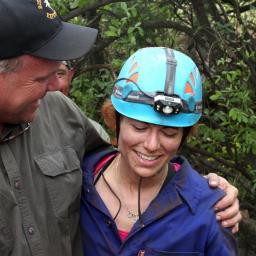
The skeletons found in a South African cave were retrieved by six scientists with a hard-to-find combination of skillsThe advertisement on social media called for “tiny and small specialised cavers and spelunkers with excellent archaeological, palaeontological and excavation skillsâ€. And there was a catch: they would work for no pay.“Why wouldn’t you apply, with an advert like that?†recalled successful applicant Elen Feuerriegel, speaking at the Cradle of Humankind world heritage site in South Africa after scientists claimed the discovery of a new human ancestor. “How could you not? It was the thrill of discovery.†Continue reading...
|
 |
by David Barnett on (#M1JV)
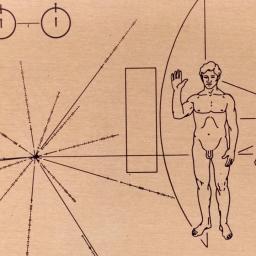
The UK entrants to a Breakthrough Initiative competition agree on one thing: any missive to extraterrestrials must be an up-to-date portrayal of humankindMessages sent into space to tell extraterrestrials about the nature of humankind should be updated to reflect gender equality and the diversity of life on Earth, scientists say.At a conference in Leeds this week, a group of British astronomers and philosophers who form the UK research network for SETI - the Search for Extraterrestrial Intelligence - agreed to enter a competition organised by the Breakthrough Initiative to devise a message to send out to space on behalf of the world to whoever might be listening.
|
 |
by Ben Fagan-Watson on (#M1BD)
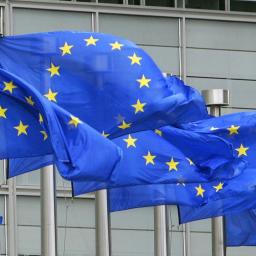
Investors have written to corporate members of influential EU trade lobby groups accused of undermining action on climate changeA group of 25 investors with €61bn in assets has written to a number of multinational companies, including BP, EDF, Glencore, Johnson Matthey, Procter & Gamble, Rio Tinto, Statoil and Total asking them to justify their membership of prominent EU trade associations.The letter, coordinated by responsible investment charity ShareAction, sets out a number of concerns about the lobbying activities of these trade groups on EU climate policy, based on research my colleagues and I carried out earlier this year. We investigated eight influential trade associations including BusinessEurope, which has argued that EU climate targets undermine industrial competitiveness, and the European Chemical Industry Council (Cefic), which has stated that strengthening the EU emissions trading system would force businesses to move overseas because of high energy costs in Europe. Continue reading...
|
 |
by Josie Le Blond in Berlin on (#M0TE)
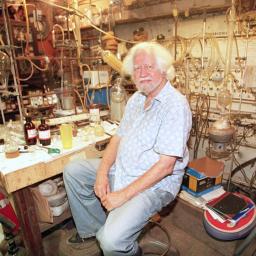
Police unsure if the incident, where 29 homeopaths were found to be intoxicated with LSD-like drug, was an accident or experiment gone wrongPolice investigating a mass intoxication of a homeopathy conference in Germany with psychedelic drugs have said they still do not know nearly a week later whether it was an accident or an experiment gone wrong.Emergency services called to the meeting in Handeloh, south of Hamburg, last Friday afternoon found a group of 29 alternative healers hallucinating, staggering around, groaning and rolling on the grass. Continue reading...
|
 |
by Guardian Staff on (#M0P0)
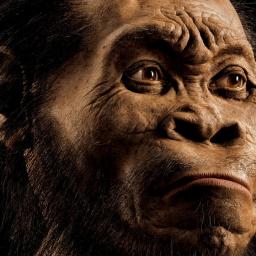
Lee Berger, a paleoanthropologist at the University of Witwatersrand, discusses the significance of finding what may be the bones of a new species of ancient human relative in Johannesburg. His team have named the creature Homo naledi. But other experts on human origins say the bones look similar to those of early Homo erectus, a forerunner of modern humans who wandered southern Africa 1.5m years ago Continue reading...
|