 |
by Adam Zeman on (#JWWT)
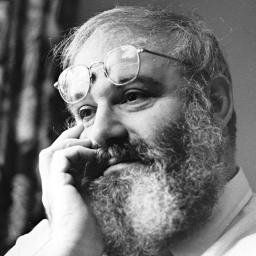
Neurologist and writer best known for his books The Man Who Mistook His Wife for a Hat and AwakeningsWith his absorbing and accessible yet profound accounts of neurological cases and conditions, Oliver Sacks, who has died aged 82, brought the clinical science of the brain to life for countless readers. Although his first book, Migraine (1970), marked a relatively conventional beginning, Sacks’s decision to write about a neurological disorder with complex psychological precipitants and concomitants, and one from which he himself suffered, pointed in the direction of his future interests.His second book, Awakenings (1973), crucially encouraged by his publisher Colin Haycraft at Duckworth, appeared when Sacks was 40 and brought his work to a wide audience. Effusively praised by the critics, it describes the effects of L-Dopa, then recently recognised as an effective treatment for Parkinson’s disease, in a group of patients who had lived in something close to suspended animation since the epidemic of the “sleeping sicknessâ€, encephalitis lethargica, swept the world at the end of the first world war. Continue reading...
|
| Link | http://feeds.theguardian.com/ |
| Feed | http://feeds.theguardian.com/theguardian/science/rss |
| Updated | 2026-10-01 03:45 |
 |
by Guardian Staff on (#JWTR)
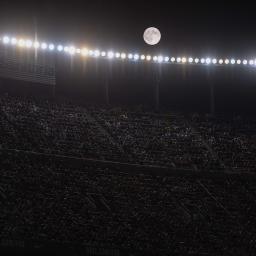
The sight of a perigee moon happens when the moon is full and makes its closest approach to Earth. The next supermoons will be on 28 September and 27 October Continue reading...
|
by Guardian Staff on (#JWSE)
Eminent neurologist and writer Oliver Sacks, who died from terminal cancer on Sunday, describes the pleasure writing gives him. In the video posted on his YouTube channel, he says it ‘takes him to another place’ where he lets go of worries and forgets about the passage of time. Sacks was a prolific writer, publishing 13 books throughout his life, including his most famous work, Awakenings, which was made into an Oscar-nominated film
 |
by Press Association on (#JWGJ)
Findings are explained as a possible result of women tending to be older when they suffer heart attacks and the fact that they are more likely to be diabeticWomen are more likely to die following heart attack treatment than men, research has found.
|
 |
by Jon Butterworth on (#JTNZ)
I’ve been on holiday, and my son read a book I liked, so here’s an idle bit of logrolling which might be of interest. Back to business shortly
|
by Miho Janvier on (#JT3T)
The astronauts living on the ISS get to experience the wonders of the universe’s natural phenomena like no one elseThis piece was first published on The ConversationImagine seeing the lights of cities spreading around the Nile Delta and then in less than an hour gazing down on Mount Everest. The astronauts on the International Space Station(ISS) are among the lucky few who will have this humbling, once-in-a-lifetime experience of seeing the beauty of Earth from space.
by Jenny Turner on (#JSY7)
Fifteen years ago, when Steve Silberman broke the story of Silicon Valley’s autism ‘epidemic’, he saw it as a problem. Now he’s changed his mind and has published a book about understanding and accepting autism spectrum disordersFifteen years ago, Steve Silberman was working as a journalist for Wired magazine in San Francisco, as the digital revolution was really taking off. He was sitting in a cafe, telling a friend how he’d recently met two Silicon Valley power couples, each with a profoundly autistic child, when a teacher at the next table overheard and butted in: “There’s an epidemic of autism in Silicon Valley. Something terrible is happening to our children.†Silberman’s story on the topic, The Geek Syndrome, was published by Wired in 2001.Back then, it was not uncommon to hear autism spoken about in this way. But understanding and acceptance have since progressed in leaps and bounds. Silberman’s new book, Neurotribes: The Legacy of Autism and How to Think Smarter About People Who Think Differently, tells the story of how this transformation happened – the research, the parents and therapists, and above all, the information networks that allowed everybody interested to share what they were finding out. Continue reading...
 |
by Colm TóibÃn on (#JRRD)
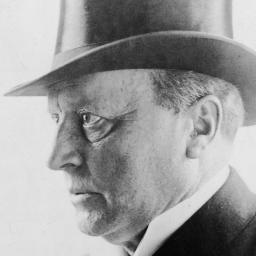
The complexities of The Ambassadors made me see that there’s no need to settle for anything smallOn 23 January 1895, after his play Guy Domville had failed on the London stage, Henry James, in his early 50s, wrote in his Notebook: “I take up my old pen again – the pen of all my old unforgettable efforts and sacred struggles. To myself – today – I need say no more. Large and full and high the future still opens. It is now indeed that I may do the work of my life.â€I like these words. For anyone approaching middle age, or wading through it, they may be the most useful words anyone has written, words that if we repeat often enough we may even start to act upon. Words that could change our lives, or the long sweet stretch of it that is left. Continue reading...
|
 |
by David Marsh on (#JR4D)
The term is badly tarnished after years of abuse by those who seek to strip refugees of their humanityWhat do the following people have in common: Mark Carney, governor of the Bank of England; the former England cricketer Kevin Pietersen; Nigel Farage’s wife, Kirsten; Chelsea’s new striker, Pedro; and Sir Bradley Wiggins?Yes, they are all migrants – or, if you prefer, immigrants. Having moved to the UK to further their careers, some of them might perhaps be described as “economic migrantsâ€. Except that this term is reserved exclusively by politicians and the media to describe people who – unlike bankers or sports stars – they don’t like: people who, in the words of our foreign secretary, are “marauding†across Europe. Continue reading...
|
 |
by Dan Crossley on (#JQV7)
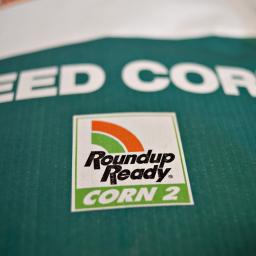
Rather than debating genetically modified food, we should be discussing the problems it is intended to solveJust mentioning genetic modification (GM) creates division. The anti-GM lobby sees red mist, the pro-GM lobby seemingly wants to roll out the red carpet and others see GM as a red herring, a distraction from other (more easily acceptable) solutions to our huge food challenges.
|
 |
by Zoe Jewell on (#JQQ0)
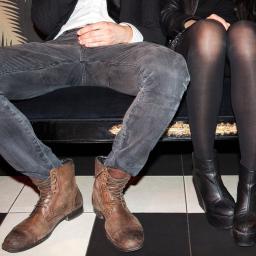
This word is now in the Oxford Dictionary – and as a woman who finds this sitting position rather comfortable, I think it’s an unnecessarily gendered issueYesterday, the term “manspreading†was added to the online Oxford Dictionary. It made the news and I felt surprisingly pissed off about it. On the way to work, I counted three women participating in fine examples of “manspreadingâ€. Ever since I was a teenager, it has always irritated me that sitting with your legs open was seen to be the preserve of men. It seemed to be based on the outmoded assumption that women always wear skirts and that even in trousers they should be making themselves small and polite in public spaces. In an admittedly minor rebellion, I started to sit like that too.Related: Quiz: do you know your bants from your manspreading? Continue reading...
|
 |
by John Ioannidis on (#JQN2)
Let’s not despair about these findings. There are many reasons why psychology research is hard to replicate, and the beauty of science is it tests and retests itselfScience is the best thing that has happened to humankind because its results can be questioned, retested, and demonstrated to be wrong. Science is not about proving at all cost some preconceived dogma. Conversely religious devotees, politicians, soccer fans, and pseudo-science quacks won’t allow their doctrines, promises, football clubs or bizarre claims to be proven illogical, exaggerated, second-rate or just absurd.Despite this clear superiority of the scientific method, we researchers are still fallible humans. This week, an impressive collaboration of 270 investigators working for five years published in Science the results of their efforts to replicate 100 important results that had been previously published in three top psychology journals. The replicators worked closely with the original authors to make the repeat experiments close replicas of the originals. The results were bleak: 64% of the experiments could not be replicated. Continue reading...
|
by Dorothy Bishop on (#JQFC)
A new Science study has highlighted a potential problem in reproducibility in psychology. But, as Dorothy Bishop points out, it’s also the starting point for the revitalisation and improvement of scienceEver since Brian Nosek and his colleagues first set up the Reproducibility Project in 2011 many psychologists have been twitchy. The aim of the project was simple: recruit an army of experimenters, with the aim of trying to reproduce results from 100 articles published in three well-established journals in 2008. Why would anyone want to do that? Well, because in psychology, as in many other fields, there have been growing concerns that scientific results are often not reproducible, but there was no hard evidence as to how serious a problem it was.A notable feature of the study was the care taken to liaise with authors of the original studies to ensure methods and materials were comparable. Also the researchers adopted transparent and audited methods for depositing data and summarising results. In addition, all replication studies had to have a sample size large enough to give convincing results – in many cases these were substantially larger than in the original study. Continue reading...
by Mo Costandi on (#JQBA)
New clinical trial data suggest that nerve growth factor gene therapy is safe for extended periods of timeAn experimental gene therapy reduces the rate at which nerve cells in the brains of Alzheimer’s patients degenerate and die, according to new results from a small clinical trial, published in the current issue of the journal JAMA Neurology.Targeted injection of nerve growth factor into the patients’ brains rescued dying cells around the injection site, enhancing their growth and inducing them to sprout new fibres. In some cases, these beneficial effects persisted for 10 years after the therapy was first delivered. Continue reading...
 |
by Associated Press in Salt Lake City on (#JP6J)
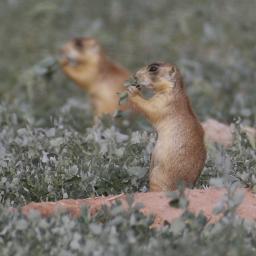
Fourth fatality out of 12 cases adds up to highest death rate in 15 years, but health authorities say risk remains very small overallRelated: California child diagnosed with plague after camping at YosemiteA man in his 70s in Utah has died after contracting the plague, bringing to four the number of deaths from the disease reported in the United States this year, health officials have said. Continue reading...
|
 |
by Nigel Williams on (#JPTM)
Six million people visited the Crystal Palace to see cutting-edge science and technology. The vast profits generated continue to pay for innovations todayMore than three million people visit the Science Museum every year, and the site is UK’s most popular destination dedicated to science, technology, engineering. Yet this figure seems almost modest when considering the six million visitors who attended the Great Exhibition in Hyde Park between May and October of 1851 – equivalent to a third of the population of Britain at the time.Visitors to the Crystal Palace, a marvel in its own right, were treated to demonstrations of cutting-edge technology of the day, including electric telegraphs, microscopes, a prototype facsimile machine, a revolving lighthouse light and an early submarine. This was the first, and perhaps the only time that such a large scale effort was made to promote technology to the masses. The event, masterminded by Prince Albert, made a profit of £186,000 (equivalent to tens of millions today). Continue reading...
|
 |
by Michael Halpern on (#JPQW)
The bankruptcy filings of a Virginia coal firm have shone a rare light on a murky web of corporate attacks on climate science.
|
 |
by Itai Palti and Moshe Bar on (#JPQY)
Rapid developments in behavioural science and data technology offer the prospect of urban streetscapes helping to alleviate ailments such as stress, anxiety and boredom – and even reducing the likelihood of crowd troublePicture yourself on a habitual walk through town, perhaps to work or a local grocery store. Consider how much thought has gone into planning the streets and spaces you pass on this journey to maximise its efficiency. For transit, a successful street is above all one that saves us time – or, in other words, exists less.As a result, we have created a shared urban environment that is, on the whole, oblivious or “numb†to necessities other than movement. Yet increasingly, research in the behavioural sciences is exposing the undesirable effects of this order of priorities, while highlighting a range of psychological issues linked to different urban conditions. Continue reading...
|
 |
by Dean Burnett on (#JPNX)
Work and pension’s secretary Iain Duncan Smith recently stated that work is good for your health. Predictably, this claim caused anger and upset, but the science doesn’t lie. Work is good for you, hard work even better. Logically, hard work cures all illness, and prevents death itself. Right?In a recent speech, work and pensions secretary Iain Duncan Smith said:Work is good for your health. Work can help keep people healthy as well as help promote recovery if someone falls ill Continue reading...
|
 |
by Guardian Staff on (#JP7J)
Giant panda Mei Xiang shows proper maternal care to her surviving cub a day after the smaller twin died. It is common for a mother to favour the stronger cub, decreasing the other’s chance of survival. The births at Washington DC’s National zoo captured international attention as giant pandas are among the world’s most endangered species with about 300 in captivity and roughly 1,600 in the wild
|
 |
by Guardian Staff on (#JP54)
Josh Willis of Nasa explains the space agency’s announcement that a long-term satellite imaging study has shown a dramatic rise in sea levels due to climate change. He says the findings that sea levels worldwide rose an average of nearly 3 inches (8 cm) since 1992 could indicate how strongly impacted coastal populations will be in the coming century Continue reading...
|
 |
by Agence France-Presse in Paris on (#JP28)
Researchers find increased tendency towards clinical depression and self-harm, but it is unclear whether membership of subculture is a cause or a symptomTeenagers who identify as goths have a three times higher risk of depression than non-goth peers, researchers have said.
|
 |
by Sarah Boseley on (#JNX0)
Meningitis B vaccine campaign launched by Public Health England with advice to parents to give babies analgesic to ward off high temperatures after jabParents are being advised to give paracetamol to babies who have been given the new meningitis B vaccine, to avoid the fever that follows the injection.But Public Health England, launching the national immunisation campaign which begins on 1 September, stressed that the fever was short-lived in most babies and that the side-effect was far outweighed by the protection the vaccine offered against meningitis and septicaemia, which can kill or lead to amputations in babies. Continue reading...
|
 |
by Associated Press in Melbourne, Florida on (#JNVN)
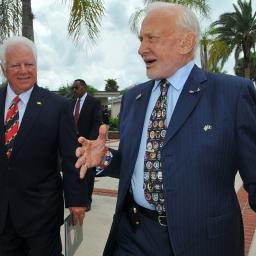
Aldrin and the Florida Institute of Technology are pushing for a Mars settlement by 2039, the 70th anniversary of his own Apollo 11 moon landingBuzz Aldrin is teaming up with Florida Institute of Technology to develop “a master plan†for colonizing Mars within 25 years.The second man to walk on the moon took part in a signing ceremony Thursday at the university, less than an hour’s drive from NASA’s Kennedy Space Center. The Buzz Aldrin Space Institute is set to open this fall. Continue reading...
|
 |
by Graham Southorn on (#JNJ5)
High-energy cosmic rays from across the galaxy will be detected on the International Space Station, thanks to a new observatory delivered on Monday.The CALorimetric Electron Telescope (Calet) was delivered by the fifth flight of the Japan Aerospace Exploration Agency’s HTV, or Kounotori (“white storkâ€) spacecraft, and will now be attached to an external platform on Kibo, the Japanese experiment module, using a robot arm. Continue reading...
|
 |
by Peter Kimpton on (#JNAJ)
Bittersweet, articulate, beautiful or bold? Suggest selections for a special form of sadness in songs in this week’s sorrowful but strangely uplifting topic
|
 |
by Letters on (#JN7H)
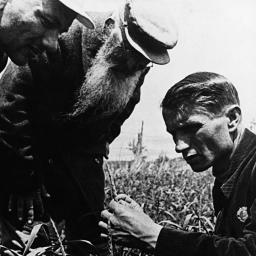
The exchange of views on epigenetics (Letters, passim) must be causing some turning in graves: Lamarck hearing that maybe he was on the right track, Darwin thinking that maybe he was too exclusive and Trofim Lysenko with maybe a wry smile. Lysenko, by using Lamarckian ideas, destroyed Soviet genetics research between 1937-64. Stalin praised him and Khrushchev supported him, but Andrei Sakharov, with Zhores Medvedev, finally had him removed. The communist party aim at the time was to create the “New Soviet Manâ€. Lysenko’s philosophy involving the use of environmental influences on heredity fitted their dogma. As a result, hundreds of Soviet geneticists were dismissed, including Nikolai Vavilov, then one of the world’s leading plant breeders, who died in prison. The period was one of the most bizarre, and saddest, chapters in the history of science. Possibly now, epigenetics or neo-Lamarckism may be actually extending Darwinism, in a totally unexpected direction.
|
by Ian Sample Science editor on (#JN34)
Of 100 studies published in top-ranking journals in 2008, 75% of social psychology experiments and half of cognitive studies failed the replication testA major investigation into scores of claims made in psychology research journals has delivered a bleak verdict on the state of the science.An international team of experts repeated 100 experiments published in top psychology journals and found that they could reproduce only 36% of original findings.
by Emily Mobley on (#JN35)
Weakened form of polio from childhood immunisations lived on in subject’s gut, mutating into a strain which could cause paralysis in the unvaccinatedA British man with an immune deficiency has been shedding a highly virulent, mutant strain of polio virus for nearly 30 years as a result of childhood vaccinations.The discovery has prompted scientists to warn of other patients who could unwittingly trigger fresh outbreaks of the disease in regions where people are not sufficiently protected against the illness.
 |
by Tomas Chamorro-Premuzic on (#JMBT)
More successful societies are cooperative and prosocial. Is new tech driving our inherent narcissistic tendencies beyond a healthy level?It is just over 100 years since Sigmund Freud’s polemical claim that narcissism is not only a normal, but also an ubiquitous, personality trait. “Loving oneself,†he argued, is the “libidinal complement to the egoism of the instinct of self-preservationâ€. In other words, we have evolved as selfish animals because our self-love is part of our adaptive survival toolkit. The survival of the fittest is also the survival of the self-obsessed, and in the age of modern celebrity, who needs science to evaluate Freud’s now not-so-controversial claim?Related: The distraction economy: how technology downgraded attention Continue reading...
|
 |
by Emily Mobley on (#JM16)
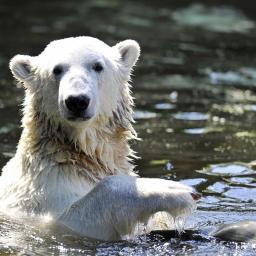
Knut died suddenly at Berlin zoo in 2011, but the cause of the illness was a mystery until a researcher noticed similar symptoms in human patientsWhen a four-year-old celebrity polar bear named Knut died suddenly at Berlin zoo in 2011, vets were at a loss to explain the death.Knut rose to fame as bear cub when he was rejected by his mother at birth, along with his twin brother who died within days. Continue reading...
|
 |
by Taylor Glenn on (#JKXQ)
Is your child too affectionate or expressive? Does this worry you? Worry no longer. Here are some tips to ensure your children grow up with a level of emotional suppression that would do any Victorian aristocrat proud.American psychologist and author of several parenting books Charlotte Reznick has reportedly advised parents that kissing children on the lips is “too sexual.†Speaking to the unfailingly respectable publication The Sun, Reznick allegedly explained that children are likely to be confused by the “stimulation†of kissing and the fact that their parents (and perhaps also their pets, dollies, and the entire cast of Friends) also kiss.Although it’s possible Reznick has been misquoted for effect, I’m going to stamp out that boring ambiguity by shouting Right on, Reznick! Just the other day as I was dutifully wiping my two-year old’s crotch with a cold, wet wipe and avoiding eye contact, I was thinking how disgusting it is that parents have gotten away with this blatantly inappropriate form of physical contact for so long. What’s next – letting them eat from boobs? Blech. Bring me an air sickness bag and a copy of The Stranger, stat. Continue reading...
|
by Simon Copland on (#JKW7)
Genes and the Bioimaginary, by Professor Deborah Lynn Steinberg, investigates whether the foundations of much genetic research are scientifically soundThe last few decades have seen what some describe as a “genetic revolutionâ€. Advances in genetic science have seen genes become all-encompassing in political and scientific discussion.Do a quick survey of recent stories, for example, and you will find research that claims “intelligence, creativity and bipolar disorder may share underlying genetics†and a much-reported story that found that Holocaust survivors may have passed ontrauma to their children through their genes. Genetics has come to explain almost everything about our identities, whether it is our weight, our sexuality, or even if we are likely to become a criminal. Continue reading...
 |
by Carmen Fishwick on (#JKSH)
An online dictionary has released a list of 1,000 new words – how many do you know? Test your knowledge of contemporary EnglishWords and phrases that have widespread currency in English have been added to the the online dictionary oxforddictionaries.com in its latest quarterly update. How many of the 1,000 new words do you know?Fiona McPherson, senior editor of Oxford Dictionaries, said the addition of multiple slang words did not represent a dumbing down of English, but showed creative use of language. Continue reading...
|
 |
by Julian Baggini on (#JM8H)
From GM crops to antidepressive drugs, there is a lot of public scepticism that science is never value-free …The physicist Richard Feynman once remarked that “philosophy of science is about as useful to scientists as ornithology is to birdsâ€. Some of his colleagues have not been so kind. When Stephen Hawking pronounced philosophy dead in 2011, it was only the fame of the coroner that made it news.Good scientists, however, are willing to revise their theories on the basis of new data, and Tim Lewens’s wonderful addition to the excellent Pelican Introductions series, The Meaning of Science, is all the evidence any open-minded inquirer needs to demonstrate the worth of philosophy of science. Continue reading...
|
by Martin Robbins on (#JKHW)
The Shoreham plane crash has prompted calls for a review of airshow safety. But everyday safety on Britain’s A roads is an issue receiving little attentionSince the Shoreham Airshow crash, which claimed at least eleven lives, many have called for a review of airshow safety. They question the level of risk in having vintage jets fly acrobatic manoeuvres, and many displays have now been grounded. By focusing on the aircraft though, these people have failed to recognize the most dangerous element in the crash: not the Hawker Hunter jet, but the road it crashed into.
by Philip Hoare on (#JKFQ)
Eighty-five-year-old twins from Brooklyn are setting off on what they say will be their final voyage. Their plan to die at sea has an undeniable romanceThe endlessness of the sea offers an eternal alternative. Perhaps if we just pushed off into it, we could escape death itself – as if its amniotic waters might be a return to a universal womb. After all, the sea is where we came from in the first place. There’s a definite romance to saying goodbye to the land, and setting sail for that last adventure.Van and Carl Vollmer, 85-year-old twins from Brooklyn, certainly think so. The brothers are about to embark on the handsome 158ft, three-masted barquentine, the Peacemaker, on a round-the-world voyage in search of remote islands and sunken galleons, from the Panama Canal to the Great Barrier Reef, the Philippines, and on to the Mediterranean. Continue reading...
by Press Association on (#JKAX)
Free online dictionary releases list of 1,000 latest words added to its database – with new entries also including Grexit, Brexit and beer o’clockBritons are offending commuters by manspreading, revelling in bants with their friends at beer o’clock, and being charged cakeage for bringing a birthday dessert into a restaurant, but it’s NBD.
by Alexander Hall on (#JK7Q)
The BBC’s recent announcement that its weather forecasts will no longer be provided by the Met Office has triggered widespread debate, but has this partnership always been solid, and are we right to fear the end of cooperation between these two cherished public services? Alexander Hall investigatesOn Sunday it was announced that after a 93-year relationship, the UK’s national weather service, the Met Office, would no longer be providing weather forecasts for the UK’s public service broadcaster, the BBC. The Met Office will no longer supply forecast data or weather presenters across all of the BBC’s platforms*, as Auntie Beeb looks to secure best value for money for license fee payers by tendering the contract to outside competition. Despite the seeming omnipresent nature of Met Office-presented weather on the BBC, the history of the special association between these two cherished British institutions suggests that there is nothing inevitable or straightforward about their relationship.On Monday, as people woke up to the news, the internet reacted with the usual cacophony of guffaws, outrage, “I told you soâ€s and conspiracy theories. Amongst the reasons put forward as to the real cause of the split the full spectrum of political agendas were evident, from blaming the EU for forcing the BBC to openly tender for the contract, to questions of the current government’s penchant for privatisation of public services, through to the usual Met Office bashing from climate change sceptics. Continue reading...
by Reuters on (#JJS2)
Scientists say warming waters and melting ice were to blame for levels rising faster than 50 years ago and ‘it’s very likely to get worse’Sea levels worldwide have risen an average of nearly eight centimetres (three inches) since 1992 because of warming waters and melting ice, a panel of Nasa scientists said on Wednesday.
by Press Association on (#JJGF)
Highly sensitive test can accurately predict relapses several months before new tumours show up on hospital scans
by Press Association on (#JJDW)
US study shows sharp drop in memory awareness about two years before the development of symptoms
by Paul Simons on (#JJ1E)
Himalayan balsam is in bloom, its stunning helmet-shaped flowers giving off a heady fragrance unlike any other plant. It is also spectacular, standing up to over 10ft tall and growing in dense clusters. But this is a highly contentious plant that can spread rapidly and colonise damp ground, and with no natural enemies in the UK it has become a widespread weed.Himalayan balsam was brought here in 1839 from the western Himalayas and made a magnificent garden plant. But it didn’t take long before it escaped and began colonising the banks of waterways across the country. It grows at astonishing speed, up to 1.5 inches a day, and so tightly packed that it smothers most other plant life. And each plant produces up to 800 seeds that are flung into the air and can land up to 35ft away when the seedpods explode, helping spread the plants. Continue reading...
by Ellen Brait in New York on (#JHT5)
American and Russian astronauts use separate water filtration systems on ISS, as Nasa astronauts also collect Russian urine when available to increase supplyWhat’s the difference between American and Russian astronauts on the International Space Station? The Americans drink their urine, the Russians don’t.“It tastes like bottled water,†Layne Carter, water subsystem manager for the ISS at Nasa’s Marshall Space Flight Center told Bloomberg. “As long as you can psychologically get past the point that it’s recycled urine and condensate that comes out of the air.†Continue reading...
by Press Association on (#JHQ4)
A fossilised dinosaur foot found by a student on a Welsh beach could be from the earliest known ancestor of Tyrannosaurus rex, experts sayA dinosaur foot found by chance on a Welsh beach could be from the earliest known ancestor of Tyrannosaurus rex.Palaeontology student Sam Davies made the discovery while searching for fossils on Lavernock Beach, near Penarth, South Wales. Continue reading...
Why Rick Guidotti turned his back on Cindy Crawford to challenge our perceptions of genetic diseases
by Stephanie Nimmo on (#JGK6)
Previously in the business of snapping supermodels, a chance meeting at a bus stop made this fashion photographer look again at young people affected visibly by genetic disease.See a gallery of Guidotti’s Positive Exposure pictures.I’m in a hotel in Seattle watching photographer Rick Guidotti at work. Amid high fives and shouts of “awesome†a group of young people are laughing and posing as he clicks away, capturing the wide smiles and infectious enthusiasm in the room. This is not an average photo shoot, however, and Rick is not your average photographer. Each of the young people has Costello Syndrome, a rare genetic syndrome, characterised by very distinct physical features, varying degrees of learning disability and an increased risk of cancer.A few years ago, Guidotti was a successful fashion photographer, flying between New York, Paris and Milan working on high-profile campaigns for YSL, Revlon, Elle, Vogue and Marie Claire, photographing some of the most beautiful women in the world.
by Duncan Green on (#JG9A)
Surprisingly enough complexity turns out to be complicated to handle - but here two physicists offer a set of principles for where to startJean Boulton is a onetime theoretical physicist turned consultant, and one of her passions is complexity and systems thinking, and their implications for how organisations, including development agencies, go about their work.She’s teamed up with fellow lapsed physicist Peter Allen, and Cliff Bowman (a “theorist and practitioner of strategy,†whatever that is) to write Embracing Complexity: Strategic Perspectives for an Age of Turbulence, a smart, 250-page introduction to complexity and its implications for action. Continue reading...
by Suzi Gage on (#JG2G)
Despite our marquee not surviving the Welsh rain, science is a strong part of Green Man’s identity, and what makes it specialThis weekend I took part in one of the more unusual science-communication events I’ve ever done. I, along with other researchers in my lab group, risked both sunburn and trench foot to bring a science stall to Green Man.Despite being predominantly a music festival, Green Man takes its science seriously. There is a whole area called Einstein’s Garden, with science stalls run by academics, and a programmed stage and tent operating throughout the whole festival. Science-themed activities include singing, stand up comedy, plays, interactive shows for kids, demos, skeletons, even 4-hour taxidermy workshops! Continue reading...
by Press Association on (#JFWD)
Scientists say there is a formula for winning the stick-throwing bridge game made famous by Winnie the Pooh and friendsPoohsticks, the timeless game made famous by Winnie the Pooh, Piglet and Christopher Robin, is not a game of chance, according to scientists – and there’s even a formula to win.The game, in which competitors drop sticks into a river upstream off a bridge and see which comes out downstream first, is first mentioned in the book The House At Pooh Corner by AA Milne published in 1928. Continue reading...
by Press Association on (#JE63)
Physicist says information sucked into a black hole may emerge in another universeAll is not lost if you fall into a black hole – you could simply pop up in another universe, according to Stephen Hawking.