 |
by Ian Sample Science editor on (#KCDW)
Leading physicist Dame Athene Donald says toys aimed at girls emphasise passivity, and that early influences affect academic choicesToys aimed at young girls are steering them away from science and engineering before they even reach school age, according to a leading British researcher.Dame Athene Donald, professor of experimental physics at Cambridge University, said that toys marketed at girls often lead to passive play, instead of stoking the imagination and encouraging the children to develop more creative skills.
|
| Link | http://feeds.theguardian.com/ |
| Feed | http://feeds.theguardian.com/theguardian/science/rss |
| Updated | 2026-10-01 03:45 |
 |
by Sally Weale Education correspondent on (#KCDT)
Cambridge University study suggests that 14-year-olds who spend even an hour a day watching TV or online fall behind peers
|
by Bruce Watson on (#KBY6)
Gathering for a summit on green chemicals, industry leaders and academics discussed how to solve the problems that threaten to stall 20 years of good intentionsChemistry is having “an innovation crisisâ€, according to John Warner, co-author of the 12 Principles of Green Chemistry. “We need to ask if the way we’re training future scientists is fitting the need of society.â€The push for green chemistry began over two decades ago, and Warner has been part of the movement the whole time. On Wednesday, he presented one of two keynote speeches at a Guardian conference on green chemistry. Continue reading...
 |
by Peter Kimpton on (#KBVK)
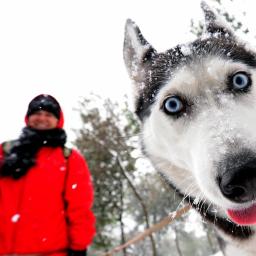
Wild wolves to whippets, fleet foxes to patient pointers, fluffy, ferocious or faithful, give your canon of canine songs a walk - it’s time they had their dayWoof! Their eyes roll, they wag and wriggle, they have expressive eyebrows and massive mouths. They run, jump, lie down, roll and sniff everything in sight. Their primary aim is to make us feel wanted and good about ourselves. What’s not to like? Well, they can be, messy, dribbly, a bit barking and smell like an old rug when wet. But that’s enough about the owners …
|
 |
by Sally Weale Education correspondent on (#KB7Y)
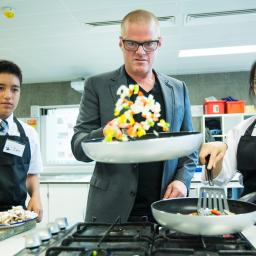
The number of pupils taking home economics GCSE has dropped by 20% since 2004, so star chef has been brought in to stir things upIt is just after 5am and pupils at St Michael’s Catholic College in Bermondsey, south London, are starting to arrive at school for an early morning cooking lesson.Their teacher is the award-winning chef Heston Blumenthal, famed for dishes like snail porridge and Sound of the Sea, a seafood medley accompanied by a soundtrack of crashing waves. Continue reading...
|
by GrrlScientist on (#KB80)
Portraits of some tropical bird species in Colombia’s Chocó-Andes region that will be agriculture’s winners and losers when their cloudforest neighbourhood is converted into cattle pastureRead more here. Continue reading...
by GrrlScientist on (#KB81)
Conversion of tropical forests to farms is a big driver of wildlife extinctions. But a new study shows that some farming practices have the potential to simultaneously protect natural habitats and boost farm yieldsOne of the main drivers of extinction is habitat loss that arises when tropical rainforests are converted to farms -- a trend that is escalating at a dramatic rate. But are some farming practices less harmful to local birds and other wild animals? This was the question asked in a study published today in the journal Current Biology. In this study, the authors recorded the overall diversity of bird species living on land-sharing cattle farms -- these appear to be wildlife-friendly because they include isolated trees and forest patches -- and compared it to land-sparing cattle farms that lack trees and forest patches and to neighbouring contiguous forest. The researchers found that land-sharing cattle farms retain less total bird biodiversity than do more intensive land-sparing cattle farms -- but only if the neighbouring contiguous forest is protected from human exploitation. Additionally, they found that overall avian biodiversity drops off faster for land-sharing cattle farms that are located farther away from contiguous forest. Continue reading...
by Tash Reith-Banks on (#KACK)
Faced with learning anatomy for his medical degree at Glasgow University, Mike McCormick turned to the corner shop for help ... and Candy Anatomy was born Continue reading...
 |
by Guardian Staff on (#KATQ)
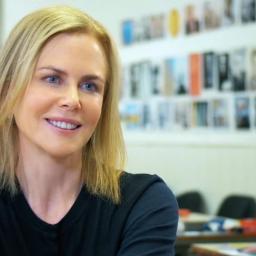
Nicole Kidman is returning to London’s West End to star in Photograph 51, a new play by Anna Ziegler about Rosalind Franklin, whose contribution to the discovery of DNA was overlooked by a sexist academic fraternity. She discusses the relevance of the story today, her attraction to the stage, and how she grew up around science
|
 |
by Athene Donald on (#KA1R)
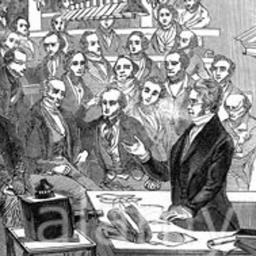
It’s the time of year for academic conferences, but for seasoned attendees and freshers alike, potential pitfalls aboundDavid Lodge is an author well known for his campus novels; his dissection of the people who populate our universities, and the vagaries of academic life. These include that September regular, the academic conference (e.g. Small World), with associated out-of-hours hijinks.
|
 |
by Phil Gates on (#K9B2)
Hollingside Wood, Durham: New life is erupting from the humus – the toadstool season has begun early this yearPapery seed capsules are the only sign of the bluebells which carpeted this woodland floor in the spring. Now, in the humid aftermath of torrential rain, among deep green shadows and sun flecks flickering through the tree-leaf canopy, new life is erupting from fallen branches and humus: the toadstool season has begun early this year.The outer ranks of a troop of several hundred fairy inkcaps, Coprinellus disseminatus, encircling a coppiced hazel stool, are already deliquescing into gooey black spore-laden ink that will soon be carried away on the feet of beetles and flies. Continue reading...
|
by Editorial on (#K84G)
Replacing faulty coding in DNA offers giddying potential to banish diseases. But editing embryos is fraught with perils that must be considered with great careMore than 10,000 diseases result from mutations in one or other of the 20,000 genes in the human genome. The disorders are rare. But across the world they affect millions of people. They are responsible for a heavy loss of life. Scientists have worked for decades to perfect gene therapies that might treat some of these conditions. The latest weapon in their armoury is a technique called Crispr-Cas9, a form of genome editing. It works like the find and replace function on a word processor. Instead of correcting clumsy typos, it cuts out faulty DNA and replaces it with the right genetic lettering.Researchers are using Crispr-Cas9 to learn how genes control development, and how they affect health and disease. Radical therapies are on the cards. Scientists hope to draw immune cells from cancer patients, and rewrite their genomes, so that when the cells are put back they destroy the patients’ tumours. Separately, trials are under way to make people resistant to HIV by writing natural immunity into the DNA of their blood cells. It is early days, but the medical potential is breathtaking. Continue reading...
by Adam Vaughan on (#K7RA)
Most accurate count to date is over seven times higher than last estimate – but almost half have been cut down since the start of civilisation, say scientistsScientists have already calculated how many fish there are in the sea (230,000 species), and how many species there are on the planet overall (8.7m). Now they have had a crack at counting all of the world’s trees.Using a combination of satellite and ground measurements, researchers estimated that there are just over 3tn trees on the planet, over seven times as many as the current, non peer-reviewed reckoning that relied on satellite images alone.
 |
by Hannah Jane Parkinson on (#K7BR)
German researchers find computers can use algorithm to copy famous painting styles, including Picasso’sComputers: they make everything so easy these days. They check our spelling for us and help with maths, and now machines have added painting to the list of things they are better than us at.Researchers in Germany have found that an algorithm can accurately copy the painting style of artists as disparate as Pablo Picasso and Vincent Van Gogh – and in just 60 minutes. Continue reading...
|
 |
by Eurasianet.org and The Calvert Journal, part of th on (#K6S5)
State media says the name honours the country’s contributions to space study, but critics have dismissed the award as a PR stunt
|
 |
by Sean Farrell on (#K6R7)
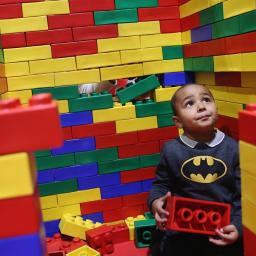
Toymaker, whose products are accompanying the first Danish man in space, says profits rose by 27% in the first six months of the yearAs Lego toys were blasted into the cosmos to accompany Denmark’s first man in space, the plastic bricks maker reported a surge in its first-half profits.The Danish company said operating profit for the six months to the end of June rose 27% from a year earlier to 4.6bn kroner (£455m). Excluding currency movements, revenue rose 18% to 14.1bn kroner. Continue reading...
|
 |
by Emma Howard on (#K6NJ)
Irreversible changes to trichodesmium microorganisms could effect species from plankton to whales that depend on products it consumes or produces, say scientists
|
 |
by Mark Brown on (#K6NY)
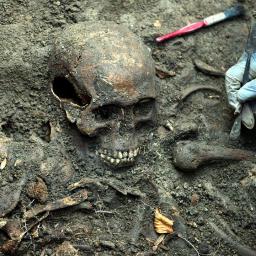
Archaeologists shed new light on 365-year-old mystery by identifiying remains of one of bloodiest battles of English civil warSkeletons found in two mass graves next to Durham cathedral have been revealed to be the remains of Scottish soldiers taken prisoner on the orders of Oliver Cromwell in one of the bloodiest battles of the 17th-century civil wars.
|
 |
by Renlau Outil on (#K6P0)
The suggestion that the UK’s donor shortage could be met by urging men to ‘prove themselves’ introduces unhelpful ideas of shame and failureThis week Britain’s national sperm bank revealed that it currently has only nine registered donors. Laura Witjens, the chief executive of the bank, suggested that they will seek to boost numbers by urging potential donors to prove themselves to be a man. Apparently, this is how it’s done in Denmark. “If I advertised saying ‘Men, prove your worth, show me how good you are’, then I would get hundreds of donors,†said Witjens.Related: UK sperm bank has just nine registered donors, boss reveals Continue reading...
|
 |
by Patrick Barkham on (#K6ED)
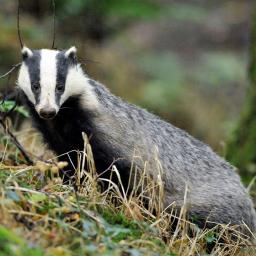
Three top scientists who lead the government’s research on badger control join experts condemning cullThree senior scientists who collectively produced two decades of government research on controlling badgers to reduce bovine TB are among a group of eminent experts to call for an immediate halt to the badger cull. The intervention comes as figures reveal the government has spent nearly £7,000 killing each badger so far.Professor Lord Krebs, Professor John Bourne and Professor Ranald Munro write of their disappointment that the Department for Environment, Food and Rural Affairs (Defra) has extended the controversial cull to Dorset and called on it to immediately reconsider its decision to continue culling badgers. Continue reading...
|
 |
by David Shariatmadari on (#K5X7)
Every day, millions of internet users ask Google life’s most difficult questions, big and small. Our writers answer some of the commonest queries
|
by Paul Evans on (#K5K4)
Wenlock Edge, Shropshire The thrush’s gaze was defiant, proud – but I wondered if I read into it what I wanted to seeThe thrush held its prize in its beak, a worm plucked from the hedge, like a dog with a stick in its mouth. To me its gaze was defiant, ferocious and proud, but then I wondered if I was just reading into it what I wanted to see.I had spent the day talking to writers wandering in Rectory Wood, in Church Stretton. The wood contains remnants of plantings influenced by Capability Brown, and relics of grottos and vistas of the Picturesque garden movement. Continue reading...
 |
by Ian Sample Science editor on (#K50A)
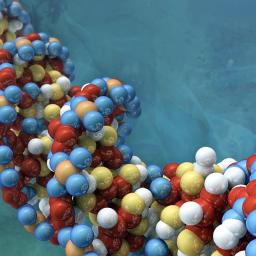
Wellcome Trust, Medical Research Council and others call for debate on potential of altering DNA to prevent diseases – and risk of ‘designer babies’Leading UK research funders are calling for an urgent national debate on the ethics of genetically modifying human embryos and other tissues to prevent serious diseases.The plea has been prompted by scientists’ rapid progress in developing a powerful tool called genome editing, which has the potential to transform the treatment of genetic conditions by rewriting the DNA code of affected cells. Continue reading...
|
 |
by Ian Sample on (#K50Z)
Is it time for a debate on whether there are any circumstances where there is an ethical case for ‘editing’ human embryos?The biggest funders of scientific research in the UK have called for a renewed debate on the ethics of genetically modifying human embryos and other tissues, in an effort to prevent serious diseases. There has been rapid progress in developing a powerful tool called genome editing, which has the potential to transform the treatment of genetic conditions by rewriting the DNA code of affected cells. Scientists believe that a debate should be had about the ethics of modifying human embryos, before the science gets ahead of public opinion. Here’s the background to the story. Continue reading...
|
by Sarah Boseley Health editor on (#K4YN)
Unexpectedly large numbers of people with learning disabilities treated with drugs normally reserved for those with severe mental illiness, study findsUnexpectedly large numbers of people with learning disabilities are being prescribed strong psychiatric drugs, possibly as a “chemical cosh†to quieten those with challenging behaviour, according to new research.A study published online by The British Medical Journal found that the number of people registered with GP practices with an intellectual or learning disability, who are being treated with psychotropic drugs far exceeds those with mental illness. Continue reading...
 |
by Helen Russell in Aarhus on (#K46A)
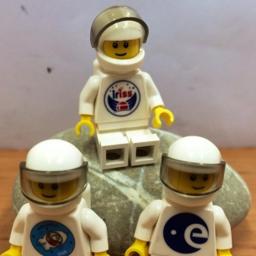
Andreas Mogensen will take 26 specially designed toys on his mission to the International Space StationDenmark is sending its first man into space – along with 26 Lego toys to keep him company on the journey.Andreas Mogensen, a 38-year-old aerospace engineer from Copenhagen, will leave for the International Space Station on 2 September. The specially designed plastic toys joining him will bear the official logo of his mission for the European Space Agency (ESA) and will be given to schoolchildren as a competition prize once the mission is complete. Continue reading...
|
 |
by Press Association on (#K3TT)
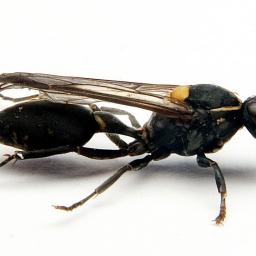
Research has found a Brazilian wasp’s venom could destroy tumours of leukaemia, prostate and bladder cancer without harming healthy tissueThe venom of the Brazilian wasp Polybia paulista contains a powerful “smart†drug that selectively targets and destroys tumour cells without harming normal cells, a study has shown.In laboratory tests, the poison has been shown to suppress the growth of prostate and bladder cancer cells, as well as leukaemia cells resistant to a range of drugs. Continue reading...
|
 |
by Tom Holland on (#K3KQ)
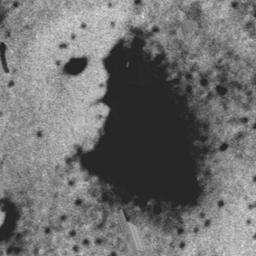
The temple was a treasure of incalculable value that stood as a monument to religious accommodation. No wonder Isis hated itSomething incalculably precious has been wiped off the face of the Earth. Satellite photos have confirmed that the temple of Bel, a monument that for almost 2,000 years had stood resplendent amid the ruins of Palmyra, is no more. Scholars had been dreading the worst since the fighters of Islamic State annexed the ancient city back in May.Few had put much faith in the initial assurances of the conquerors that they would spare the archaeological site: too much ruin had already been visited on the antiquities of the territory under their control for that. And sure enough, at the end of June, the militants demolished the iconic statue of a lion sacred to Allat – a goddess who had suffered the signal misfortune of being condemned by name in the Qur’an. Then last month they destroyed a temple dedicated to Baal Shamin, a deity often paired with Allat. That was tragedy enough. Continue reading...
|
 |
by Pete Etchells on (#K2TT)
When something bad happens, our pattern-seeking tendencies sometimes make us look for answers where there probably aren’t any. This time around, it’s given me an irrational annoyance about Friday nightsI was having a conversation with my wife yesterday, about which word is more heartbreaking: ‘dead’ or ‘died’. She suggested ‘dead’, given its sense of finality. For me, ‘died’ seems much worse, as it evokes a sense of recency; of immediate, raw pain that hasn’t had a chance to kick in yet, let alone subside.We were travelling back from seeing my aunt and my nana, and we were having the conversation because my uncle has just died, of an unknown liver complication. It was unexpected and sudden. He was only 66. Continue reading...
|
by Jenny Rohn on (#K2PP)
The NHS can’t afford to protect everyone from this rare but often fatal bug: babies over six months miss out. Here’s what you need to know if your child is not eligible for the vaccineBacterial meningitis is the worst nightmare of every parent roused by a screaming child at three in the morning. And with good reason: although relatively rare, affecting about 3,200 people in the UK each year, it kills one in ten of those infected. Although it can kill at any age, babies are the most common victim.So it’s great news that the NHS will start offering a vaccine against meningitis B this month to all babies in England, Scotland and Wales born after June 2015 (Northern Ireland may soon follow suit). And there will be a one-off catch-up for any baby born after March 2015 who will have missed the first jab in the series. Particularly vulnerable people, such as the immunocompromised, can already get the jab on the NHS. Continue reading...
by Boris Jardine on (#K28T)
The original Cavendish Laboratory – the crucible of modern science – is under threat. Boris Jardine explains why it’s important and why it should be saved.Amidst a chaotic jumble of museums, offices and laboratories in the centre of Cambridge there is one building that can legitimately claim to have changed the world: the Cavendish Laboratory, designed by the great Scottish scientist James Clerk Maxwell, where atoms were split, sub-atomic particles discovered and DNA unravelled.But the Cavendish may not survive in its current form for long. The ‘New Museums Site’ in which it lies is about to undergo a dramatic renovation: the scientific departments – in search of space and up-to-date facilities – have largely moved out of the city, and so the university wants to ‘create a window into the site’s history’. A noble aim, especially when the history of the place is so rich. But, bizarrely, the Cavendish Laboratory is slated for partial demolition. In the name of commemorating past achievement, we are about to lose some of the country’s most important scientific architecture. Continue reading...
 |
by Ian Sample on (#K24F)
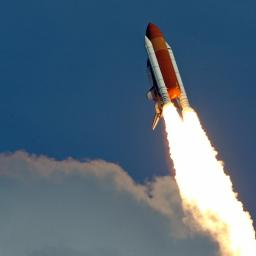
Royal Institution lecture series by Kevin Fong, an expert in space medicine, will include live video chat with British astronaut Tim Peake on ISSThe delicate art of lobbing people into space and keeping them alive as they fall around the planet at 17,500mph for months on end will be this year’s theme for Britain’s most prestigious public science lectures.
|
 |
by Associated Press in Washington on (#K21Z)
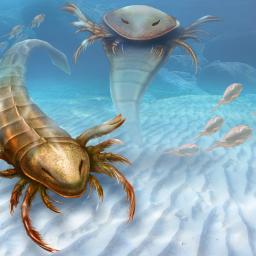
Fossils of Pentecopterus decorahensis, which hunted in the oceans half a billion years ago, discovered in Iowa river bedEarth’s first big predatory monster was a giant underwater scorpion that reigned in the ocean almost half a billion years ago, well before the dinosaurs, scientists have discovered.The creature grew to 170 centimtres (5ft 7in) and had a dozen claw arms sprouting from its head, as well as a spiked tail. Geologists at the Iowa Geological Survey found 150 pieces of fossils about 18 metres under the Upper Iowa river, part of which had to be temporarily dammed to allow them to collect the specimens. Continue reading...
|
 |
by Associated Press on (#K1RR)
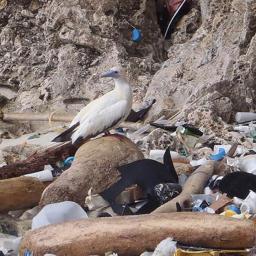
Birds are eating ‘astronomical’ amount of marine debris they mistake for fish eggs, with the biggest problem areas near Australia and New ZealandRelated: Full scale of plastic in the world's oceans revealed for first timeAs many as nine out of 10 of the world’s seabirds are likely to have pieces of plastic in their guts, a new study estimates. Continue reading...
|
 |
by Jack Stilgoe on (#K172)
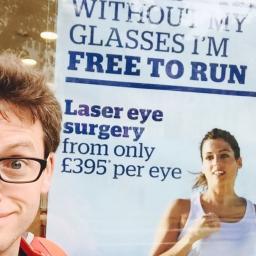
In the spirit of self-experimentation (and perhaps a mid-life crisis), Jack Stilgoe bravely gets his eyes lasered.
|
 |
by Ian Sample Science editor on (#K0SB)
Tests on men and women reveal those who sleep six hours or less a night are more than four times as likely to contract virus as those resting for seven or more hours
|
 |
by Jessica Elgot on (#K0DG)
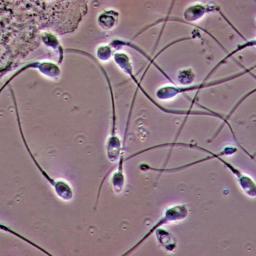
Chief executive announces drive to recruit new donors with ‘superman’ message based on successful campaign in Denmark
|
 |
by Simon Bowers on (#K0BG)
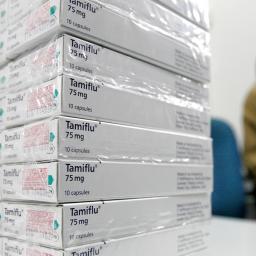
Independent researchers studying findings say drug carries side-effects and fails to reduce need for hospital treatment
|
 |
by Alex Bellos on (#K08N)
Did you cross the line to a correct answer? Read the solution to the coin and the chessboard puzzleEarlier today I set you this puzzle:The coin and the chessboard
|
 |
by Alex Bellos, Ian Anderson, Tash Reith-Banks and Pa on (#K08Q)
Pencils down! Here’s the solution to today’s problem, or the written version here if you’d prefer. See you in two weeks for the next one ... Continue reading...
|
by Simon Bowers on (#K0HS)
US drug maker says disclosure of all historical trial data offers little value to patients, but critics say lack of information paints distorted picture of safetyPfizer, one of the world’s largest pharmaceutical groups, has said it will resist demands from investors and transparency campaigners that it disclose results from all historical drug trials.A powerful group of 85 investors, representing more than £2.5tn of assets, recently joined forces with medical research campaigners to press for greater transparency from the 25 largest pharmaceuticals groups in the world. Continue reading...
 |
by Fay Schopen on (#JZ7V)
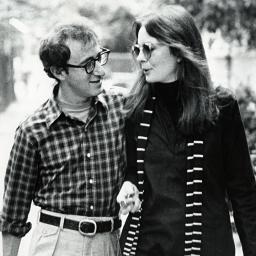
Studies that link anxiety with creativity should be taken with a pinch of salt. But as a card-carrying neurotic, I’ll happily take the rebrandingIf, like notorious neurotic Woody Allen, you feel that life is divided up into the horrible and the miserable, you may be cheered (or not, of course) by news of a study linking the misery of anxiety with the reward of a fertile imagination.How nice it would be to go on holiday and not spend the majority of my time wondering if the cat has unexpectedly died Continue reading...
|
 |
by Alex Bellos on (#JYQJ)
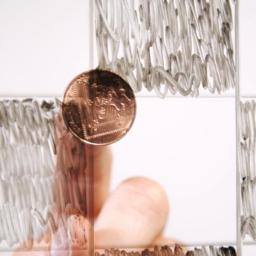
To solve the puzzle of the coin and the chessboard you need to throw money at the problemHello guzzlers,This week’s puzzle is purloined (with permission) from the recently-published prime paperback, Professor Povey’s Perplexing Problems. Continue reading...
|
by Gary Nunn on (#JYQM)
A new book aims to illustrate all the eccentricities of international onomatopoeia“I want Meryl Streep crying in five different accents.â€
 |
by Alex Bellos, Ian Anderson, Tash Reith-Banks and Pa on (#JYQN)
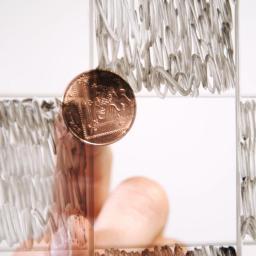
Take one coin and one infinite chessboard and what do you get? A perplexing mathematical puzzle, that’s what! Click here for a written version of the puzzle. Continue reading...
|
 |
by Mark Brown Arts correspondent on (#JYKW)
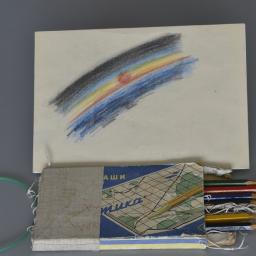
Sunrise sketch by Alexei Leonov, the first man to walk in space, is part of ‘once-in-a-lifetime’ Science Museum exhibition on Russian space programmeThe first artwork created in space, a small yet remarkable view of a sunrise drawn as Alexei Leonov was hurtled around Earth on board a tiny Voskhod 2 spacecraft, is to leave Russia for the first time.Leonov’s coloured pencil drawing will be among 150 artefacts going on display at the Science Museum in London when it opens a major exhibition on cosmonauts later this month. Continue reading...
|
 |
by Press Association on (#JY1W)
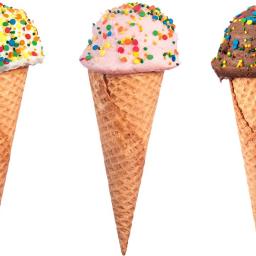
A protein to make the frozen dessert melt more slowly has been discovered by physicists at Edinburgh and Dundee universitiesResearchers have discovered a protein that can be used to create ice-cream that melts more slowly than conventional products. It works by binding together air, fat and water – creating a pudding with a super-smooth consistency.Related: The future of Cuba’s socialist ice-cream cathedral | Jason Motlagh Continue reading...
|
 |
by Alan Pickup on (#JXSR)
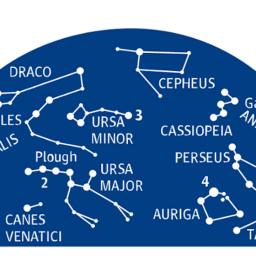
September’s only bright evening planet, Saturn, stands low down in the SW at nightfall where it shines at mag 0.5. It sets 30 minutes before our star map times to leave the sky devoid of bright planets until Mars and Venus appear in the E before dawn, soon to be joined by Jupiter. Continue reading...
|
 |
by Mark Tran on (#JWJT)
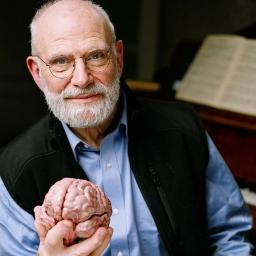
Sacks, who also wrote The Man Who Mistook His Wife For a Hat, revealed in February that he was in the late stages of terminal cancerOliver Sacks, the eminent neurologist and writer garlanded as the “poet laureate of medicineâ€, has died at his home in New York City. He was 82.The cause of death was cancer, Kate Edgar, his longtime personal assistant, told the New York Times, which had published an essay by Sacks in February revealing that an earlier melanoma in his eye had spread to his liver and that he was in the late stages of terminal cancer. Continue reading...
|
 |
by Guardian Staff on (#JX5P)
Sixty of the best aerobatic pilots gather in Chateauroux, France to compete for the title of FAI world champion. The winner in the men’s category was French military pilot Alexandre Orlowski, taking part in the competition for the first time, while the women’s title was taken by the reigning champion, Aude Lemordant of France Continue reading...
|