Lawyers dispute claims over Pandemrix swine flu vaccine which was withdrawn after doctors noticed rise in narcolepsy casesGovernment lawyers are seeking to block compensation payments to people who developed the devastating sleep disorder, narcolepsy, as a result of a faulty swine flu vaccine.
According to a new study, ‘a non-invasive brain-to-brain interface (BBI) can be used to allow one human to guess what is on the mind of another human’Mind reading might not be as far-fetched as many people believe, says a study published by researchers at the University of Washington.
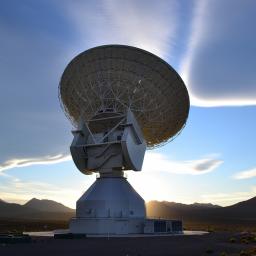
The European Space Agency (ESA) has embarked on an ambitious upgrade of its deep space tracking network. By 2018, communications will be possible with some spacecraft at urban fibre optic broadband speeds, a huge improvement on what is now possible.Currently, ESA’s Mars Express spacecraft communicates at just 228kbps from its orbit around the Red Planet. That’s about 200-450 times slower than many homes can access the internet using fibre optic cables, which run at between 50-100Mbps. Continue reading...
Hey baby ... it’s time to define what gender means through the medium of music. Slip us your suggestions, and in title, lyrics or style, it might be a sexy week …What makes a man a man? Does he have to be big and strong? Is that enough to turn you on? How about bold and brave? Humorous and humane? Moody and mysterious? How about pretty and boyish, or patient and perceptive? But then again, some of these qualities are equally attractive in a woman. So what defines gender? Beauty is in the eye and other senses of the beholder, and sometimes the beer-holder, for these definitions are constantly evolving, thanks to cultural shifts, fashion and hormones. And few genres address this perception so directly, and effectively as that of song. So where do you start?So is it best, in evolutionary terms, to a big hairy hunk of ape with a smooth, strong voice? Perhaps a Tom Jones type, a big Barry White or a hellraising Oliver Reed? Or, with film so much in parallel with popular music, how about a dashing David Niven? Or someone with fleet-footed finesse – Fred Astaire, or discreet charm of James Stewart, the bad boldness of Robert Mitchum, or show a quietly subtle and humorous style, like that of Alec Guinness? How aping a bare-chested Vladmir Putin on a horse? Careful - he might be reading this. Or a very different man of the people like the Boss himself, Bruce Springsteen? Or do girls simply prefer Justin Bieber, David Essex, or indeed George Michael? And then there’s the Bee Gees. Manly chest wigs and medallions, anyone? Those tight trousers certainly did the trick with the vocals.
Adventures in the Anthropocene, a study of human plundering of Earth’s resources, makes Gaia Vince first female outright winner of Royal Society Winton prize in award’s 28-year historyThe most prestigious science book prize in Britain has been won by a solo female writer for the first time in its 28-year history.Gaia Vince, a journalist and broadcaster based in London, was named the winner of the 2015 Royal Society Winton prize for Science Books at a ceremony in London on Thursday evening.
Amount spent on cancer research by the government-funded organisation has fallen sharply since David Cameron became prime minister, figures revealSpending by the Medical Research Council (MRC) on cancer research has fallen by a third since David Cameron became prime minister, according to figures released on Thursday.The amount spent by the organisation on projects relating to the treatment of cancer has fallen from a peak of £112m in 2011 to £76.2m in 2014, according to the data released by the Department for Business Innovation and Skills. Continue reading...
by Chaired by Ian Sample with Maggie Aderin-Pocock, M on (#NEC3)
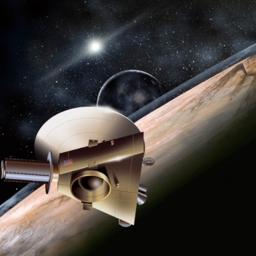
In July, after travelling for 3bn miles and nine and a half years, Nasa's New Horizons spacecraft flew past Pluto, giving us our first ever glimpse of the dwarf planet. What else is in store during this exciting year of space exploration?This special edition of Science Weekly is a recording of our Guardian Live event 'New Horizons - Pluto and beyond' which took place in London on Monday 21 September. To become a Guardian member and to find out more about all our events go to our member site.Guardian science correspondent was joined by an expert panel of scientists, including Maggie Aderin-Pocock, Andrew Coates, Kevin Fong and Monica Grady, to discuss the latest findings from the Rosetta mission and to ask what's next for New Horizons and other groundbreaking missions planned for the coming decade. And as Major Tim Peake, the first official British astronaut, prepares for his five-month mission to the International Space Station, the panel will discuss the future of human spaceflight. Continue reading...
Boss of controversial pharmaceutical company that increased price of life-saving drug overnight claims being forced to slash price again may force him to cut research and fire staffMartin Shkreli, boss of the controversial pharmaceutical company that increased the price of its life-saving drug 50-fold overnight, has claimed slashing the price of the drug may lead him to cut research for “lethal diseases†and force him to fire staff.
Although our digital identity is fragmented, research suggests that our various online personas lead back to the same personalityOur habits define us. But how true is this for our digital habits? Are we the same online as offline? In the early days of the internet, it was probably safe to assume that our online behaviours did not reveal much about our real-world personas. This notion was popularised by the “on the internet, nobody knows you’re dog†caption of a famous New Yorker cartoon.As the internet gained prominence in our lives, we gave up anonymity and also the desire to mask our real identity online. Indeed, online activities are no longer separable from our real lives, but an integral part of it. According to Ofcom, UK adults are now spending over 20 hours a week online: twice as much as 10 years ago. Similar metrics have been reported for the US, with the biggest chunk of online time (around 30%) devoted to social networking. Continue reading...
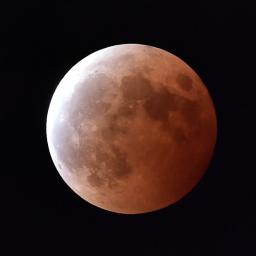
Rare arrangement of Earth, moon and sun has not occurred since 1982 and will not happen again until 2033The moon will loom large and turn coppery red on Sunday night as its closest approach to Earth coincides with a total lunar eclipse.The rare arrangement of the Earth, moon and sun has not occurred since Survivor topped the charts with Eye of the Tiger in 1982, and the same orbital display will not happen again until 2033.
A new survey from L’Oreal looks at the public’s perception of female scientists with shocking results. Particularly if you live in ChinaIf you ask a kid to draw a scientist, they will draw a “mad scientist†with sticking up hair in a white lab coat, probably holding a test tube containing some evil-looking smoking liquid: an amalgam of Einstein and Frankenstein. Oh yes, and they’ll be male. Based on new research, this stereotype isn’t going anywhere. The L’Oreal Foundation have just published the results of a survey they carried out across Europe, asking around 5000 people their views and perceptions of scientists. The answers shocked me.Based on the responses recorded in the study, it would seem that overall 67% of Europeans think that women do not possess the required skill set in order to achieve high-level scientific positions (the figure is 64% specifically for the UK). Meanwhile, in China an absolutely staggering 93% believe that women aren’t cut out to be scientists. Continue reading...
Sandy, Bedfordshire The toadstools’ undersides showed delicate beauty, black-threaded gills striking against white capsSummer ended months too soon for the north-facing hedge beyond Old Warden church. Bramble bushes were laden with berries, plentiful, shiny, and resolutely green, as if the calendar were still set at July. A few desultory wasps and flies drifted along, seeking juice from this unharvestable harvest.Elder trees hung out unprepossessing bunches; half the berries were green, the other half were stuck on the ends of stalks, shrivelled and as black as peppercorns. The sun-kissed south-facing side of the hedge, nourished by warming rays at dawn, presented a contrast of abundance. Full and swollen hawthorn, rose, elder and blackberries all tempted the hedgerow jam maker. Continue reading...
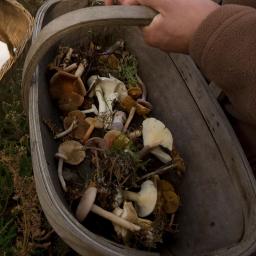
Harmful foraging? So long as there’s cash in harvesting wild fungi they face being stripped away, so they need protectingPlenty of rain has brought out lots of mushrooms, including giant puffballs, psychedelic red and white fly agaric, field mushrooms and many more.One of the most prized edible fungi is the penny bun or cep, the classic mushroom with a brown cap and stumpy beige stalk you expect gnomes to sit on. Continue reading...
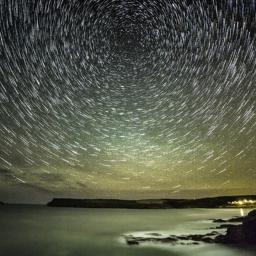
Spectacular views of the universe have been unveiled at the Insight Astronomy Photographer of the Year 2015 awards ceremony, held at the Royal Greenwich Observatory. Which astronomy photograph are you most proud of taking this year? Continue reading...
Experimental physicist and founding member of the physics faculty at Sussex UniversityThe experimental physicist Mike Pendlebury, who has died aged 78, loved building equipment, making precision measurements and understanding their theoretical relevance. A founding member in 1962 of the faculty at the University of Sussex, he worked there for 50 years and was an early enthusiast for the use of new technology in general, and of computers for research and teaching in particular.At an early stage his Sussex research group transferred its expertise from atomic beams to neutrons, basic constituents of the nucleus that have no electric charge but do possess a magnetic moment. Norman Ramsey of Harvard University, a future Nobel laureate with whom Mike collaborated extensively, had suggested in 1950 that neutrons might also have an electric dipole moment (EDM), corresponding to the separation of positive and negative charges within an overall neutral system (analogous to the separation of north and south poles in magnetism). Continue reading...
We put the ‘inhibitory spillover effect’ to the test: first by telling porkies on an empty bladder, and again after two pints of waterA person who needs the toilet is the purest person you’ll ever meet. Stripped of all niceties and social conventions, and assigned with a task that simply cannot be allowed to fail, you briefly get to witness them for who they really are. Aggression, contrition, frustration and cowardice; these are all attributes that come to the fore when someone is consumed by the urge to urinate as quickly as possible. Plus, it turns out that they’re scientifically better than you at lying.In a study conducted by California State University, researchers concluded that needing a pee triggers something called the “inhibitory spillover effectâ€, where the self-control required to prevent you from wetting yourself begins to aid the self-control required for you to lie. Continue reading...
Gaia Vince’s ambitious, all-embracing, compelling journey holds a mirror up to humanity’s epoch to reveal all we have destroyed, but may yet be able to save
Turing increased price of Daraprim from $13.50 a pill to $750, but now says it will make it more affordableTuring Pharmaceuticals, a small company that generated outrage by raising the cost of an old anti-infective drug by more than 5,000%, said it would roll back that increase to make sure it remains affordable.Turing and its chief executive officer, Martin Shkreli, became the new face of the US drug pricing controversy this week, after the New York Times reported that the company had raised the price of Daraprim, a 62-year-old treatment for a dangerous parasitic infection, to $750 (£488) a pill from $13.50 (£8.79) after acquiring it. The medicine once sold for $1 a pill. Continue reading...
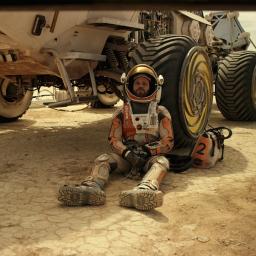
Ridley Scott’s Toronto hit centres on a mission to the red planet which goes awry, leaving astronaut Matt Damon stranded and alone in spaceCritically acclaimed Ridley Scott science fiction thriller The Martian has been screened for astronauts on board the International Space Station.Related: Space experts challenge accuracy of The Martian Continue reading...
From ‘feefle’ to ‘flindrikin’, Scottish words for the white stuff put longstanding Inuit claim of 50 words for snow in the shadeThe claim that the Inuit have 50 words for snow has endured for decades, but it now looks as if the Scots have beaten that figure. Researchers on a new Scots thesaurus say they have found more than 400 Scots words for the white stuff, from “feefle†to “flindrikinâ€, “spitters†to “snaw-poutherâ€.Academics compiling the first Historical Thesaurus of Scots, which will include every word in the Scots language from earliest records until today, claim they have found 421 Scots words for snow. Other examples include “snaw†and “sneeslâ€, meaning to begin to rain or snow, and “skelfâ€, a large snowflake. Continue reading...
University of Glasgow researchers have compiled 421 words relating to snow for a Historical Thesaurus of Scots, ranging from ‘snaw’ to ‘flindrikin’The Inuit of the Arctic know a lot about snow, and their wide vocabulary for the white stuff is legendary. But they may face a challenge in snow-describing ability – from Scotland.Researchers at the University of Glasgow have compiled 421 words relating to snow for a new Historical Thesaurus of Scots. They range from “snaw†– plain old snow – to “spittersâ€, small drops of wind-driven snow, and “flindrikinâ€, a slight snow shower. Continue reading...
Wenlock Edge, Shropshire Blackberries, earthy, gritty or fermenting into wine – the scrub is bearing fruit as a reward for neglectBlackberries: they dangle temptingly, insinuating themselves. Wild fruit is evocative. What was once a donkey paddock between two arms of woodland has, over the past 10 years or so, become a bramble patch.There are also tangles of dog rose, thickets of hawthorn and scattered poles of ash saplings among the grass. The paddock is being reclaimed by woodland. There are irresistible forces at work here that make all those years of human labour count for nothing. Continue reading...
Study of 12,000 UK women found fidgeters could be protecting themselves against effects of sitting for long periods at workPeople who spend most of the day sitting down could undo some of the damage to their health by having a good fidget, say researchers.The harmful effects of sitting down for too long are well established, with a series of studies now showing that spending hours in a chair each day can take years off a person’s life.
Latest finding supports a theory of a ‘lost world of dinosaurs’ that lived in a far cooler climate than most people associated with the creaturesFossils from a unique plant eating dinosaur found in the high Arctic of Alaska may change how scientists view dinosaur physiology, Alaska and Florida university researchers have said.A paper published on Tuesday concluded that fossilized bones found along Alaska’s Colville river were from a distinct species of hadrosaur, a duck-billed dinosaur not connected to hadrosaurs previously identified in Canada and the Lower 48 states. Continue reading...
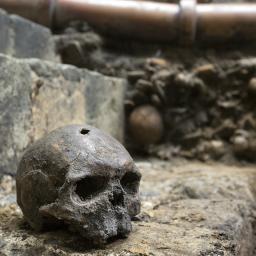
Remains of at least 50 people, all believed to date from 11th and early 12th century, discovered during demolition work to make space for new towerThe bones of men who may have witnessed the tumultuous events of 1066 in Westminster Abbey, when one king was buried and two were crowned in a year, have been discovered along with the skeleton of a three-year-old child buried under Victorian drainage pipes just outside the wall of Poet’s Corner.“What the child is doing there is one of the many unanswered questions,†abbey archaeologist Warwick Rodwell said, “but it is a feature of many ecclesiastical sites that you find the remains of women and children in places where you might not quite expect them.†Continue reading...
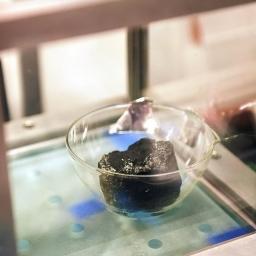
The Natural History Museum, London, will be displaying a piece of the Ivuna meteorite, which dates back some 4.6bn years to before the Earth was formedAn extremely rare meteorite that has the same make-up as the primordial solar system goes on public display for the first time on Friday at the Natural History Museum in London.The Ivuna meteorite landed in Tanzania in 1938 and has since been broken up into samples, the rest of which remain in the hands of private collectors. The Natural History Museum bought the largest lump in 2008 from a private enthusiast in the US.
The Nazca booby is a snazzy bird with a white glossy body and a Zorro-like mask around its eyes. Is it hiding something? Yes.Nazca boobies (Sula granti) are beautiful birds, but with a very dark side.A female lays two eggs days apart, the second as insurance against the death of the first. But if both eggs hatch, chick A will expel chick B from the nest to face certain death. Continue reading...
Children get told a lot of things that aren’t exactly true. Generally, there’s no harm in that. But some are so scientifically inaccurate it’s potentially traumaticYesterday, allegations surfaced that Prime Minister David Cameron once inserted a private part of his anatomy into the mouth of a dead pig. Among the veritable supernova of pig-based mockery that occurred on Twitter and beyond, many referenced Peppa Pig, Piglet, Miss Piggy and more. So now countless people have associations between beloved childhood characters and the Prime Minister’s private regions, souring many a fond memory.But you don’t need debauchery of world leaders to soil happy childhood memories, not when you’ve got science. And with that blatant shoehorning of a topical reference into a preconceived article, here are seven popular things aimed at children that are absolutely ruined by the application of scientific reality. Continue reading...
by Laurence TophamAlok JhaMustafa KhaliliAlex Purcell on (#N50P)
The Nevada Test Site was established a few years after the end of the second world war, against the fear of an all-out nuclear attack from the Soviet Union. As the cold war took hold, America needed a convenient place to design and build its nuclear arsenal. From 1951, over four decades, the US government carried out almost a thousand nuclear tests at this test site, earning it the nickname of the “most bombed place on Earthâ€. Continue reading...
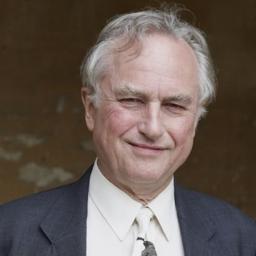
Evolutionary biologist says boy’s arrest was wrong, but questions whether he really invented an alarm clockThe evolutionary biologist Richard Dawkins found himself at the centre of controversy on Sunday when he questioned the motives of Ahmed Mohamed, the 14-year-old boy who was arrested and detained in Texas when a teacher thought a clock he had made was a bomb.Dawkins did not dispute that Mohamed should not have been arrested, but questioned whether the boy had truly “invented†the clock, as has been reported. He tweeted: Continue reading...
My friend and colleague Andrew Townsend, who has died of cancer aged 54, was a construction professional who switched career to become an archaeologist. He thus bridged a gap between the two fields and benefited both. In addition to distinguished academic achievement, he initiated the world’s only published form of contract for archaeological investigations, for the Institution of Civil Engineers.Andrew had a peripatetic childhood. Born in Germany to Nova and John, who were there with the armed forces, he spent his early childhood spare time “excavating†prehistoric and Roman settlements in Cyprus with his sister, Helen. Continue reading...
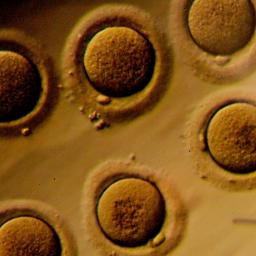
Kathy Niakan’s application to use a new gene-editing technique on embryos is controversial because we lack a clear moral framework for such science“It is up to society to decide what is acceptable: science will merely inform what may be possible.†This statement made by Kathy Niakan, a stem cell researcher at the newly opened Francis Crick Institute in London, seems eminently reasonable, but it raises as many questions as it allays.Related: UK scientists seek permission to genetically modify human embryos Continue reading...
David Wootton's new book challenges the notion that knowledge is culturally relative and truth is simply consensusWhy did the scientific revolution come about when it did? Why could previous generations not make the great strides made during the Enlightenment? And why is the scientific revolution still a cause for debate, even today?Ian Sample talks to David Wootton, Anniversary professor of history at the University of York. His new book, The Invention of Science, seeks to tell the story of the revolution that gave birth to modern science, and challenge the prevailing orthodoxy of this history. Continue reading...
Researchers studying the genetic transmission of early onset Alzheimer’s hope their work will result in new treatments that will help people such as Sophie Leggett, whose mother and aunt both developed the diseaseAt the University of Washington’s School of Medicine there is a computer database that states with certainty – albeit heavily encrypted – whether or not Sophie Leggett will develop a form of genetically inherited early onset Alzheimer’s disease. But she has chosen not to find out what it says.A blood test is available to adult children and siblings of those who develop Alzheimer’s at a young age and have a family history of the disease. It identifies whether they carry one of the three faulty genes known to cause familial early onset Alzheimer’s, presenilin 1 (the mutation affecting Leggett’s family), presenilin 2 and amyloid precursor protein. All result in the overproduction of amyloid, a protein that builds up into the plaques on the brain which are the hallmark of Alzheimer’s. Continue reading...
The Red Cross publishes a manual on first aid in chemical warfareAnyone to whom the words “chemical warfare†convey no vivid or specific meaning might do well to look at a little book just published by the British Red Cross Society on “First Aid in Chemical Warfare.†It can be had from Messrs. Cassell and Company for sixpence. It is written without heroics or sentiment of any kind; in curt and lucid language it tells one what to do if attacked by chlorine, lewisite, tear gas, mustard gas, phosgene, and various other weapons in the chemical armoury, as calmly as if it was a case of treating a burn or making a splint for a broken leg. The implication is, one may deduce, that if and when the next important war breaks out first-aid for injuries by gas will be as commonplace a matter as first-aid for broken legs. Continue reading...
The wanton killing of 10 wombats at the weekend reflects our fear of the bush along with our fundamental ignorance about this particular marsupialThis weekend’s hideous killing of 10 wombats at a large and popular public campground, in the back country behind Nowra on the NSW south coast, reflects a primal Australian fear of the outback combined with a fundamental national misconception about one of our favourite marsupials.There has a been a national outpouring of rage on social media since the incident because it was essentially, and if the alleged facts are correct, a case of Ruth Park’s Muddle-headed Wombat meets Wolf Creek. Continue reading...
Hurricane-force blast depicted in Matt Damon film would not happen in thin atmosphere of red planet according to space policy authoritySpace experts have challenged the accuracy of a science fiction film starring Matt Damon that depicts life on Mars for a stranded astronaut, claiming the movie is tainted by a few space oddities.The Martian, directed by Ridley Scott and due in cinemas next week, received extensive consultation from the US space agency, Nasa, to boost its scientific credentials. Continue reading...
The ATLAS and CMS collaborations, at CERN’s Large Hadron Collider, have combined their data to produce our most precise view to date of the Higgs boson
Take the Observer personality quiz and find out who you – or your partner – really areThink the music you love is part of your identity? You might be right. According to a study at the University of Texas which gave people questionnaires about their musical taste and a battery of personality and intelligence tests, what you listen to reveals a surprising amount about you. So which of these four ‘super genres’ best describes your musical taste?a) Blues, classical, folk, jazz
Feeling blue? Get yourself a mood-changing gardeniaIt might feel increasingly cold and grey as we slide into autumn, but one species is in its full glory right now: the blowsy ivory flowers of gardenia (Gardenia jasminoides). Yet this exotic houseplant has much more to offer than mere visual appeal. Its creamy-white petals house structures that generate sweetly scented compounds which not only fill a room with their rich, jasmine-like fragrance, but according to recent trials may also have a profound effect on your mood.Research on mice cells at Heinrich Heine University and Ruhr-Universität in Germany found that two of the compounds responsible for the scent of gardenia flowers could have a similar mechanism to commonly prescribed barbituates and anaesthetics such as propofol. They may even be of a similar strength under laboratory conditions. Continue reading...
The cliche of the reclusive composer who loses their mind over manuscript is unhelpful. But, says pianist James Rhodes, there is a link between music, creativity and mental health that is both real and beneficial to people’s well-beingThe mad composer. Note after excruciating note dragged out on to manuscript paper, 2 stone in weight lost while composing his latest opera, bronchial infections from the cold, absinthe on a drip. Mumbling to himself, shouting at strangers, scribbling bar lines on restaurant napkins, sitting at a piano, freezing and alone in a garret with “it doesn’t have to be mad to work here but it helps†written on the wall. In his own shit.It’s a cliche as erroneous as it is widespread and it is, forgive me, quite maddening and completely false. Continue reading...
Dr Paul Kelley says children are losing 10 hours of sleep a week – and it’s all down to a clash between school start times and teenage body clocksSleep expert Dr Paul Kelley sounds a bit tired. He’s a morning type, which means he wakes at 6am after about eight hours of sleep. It’s lunchtime when we speak; he’s been up almost seven hours and he may seem weary because he’s being pursued by the world’s media who all want to speak to him about sleep – and the lack of it.Last week, Kelley, American-born but now based in Tyneside, gave a thought-provoking speech to the British science festival in which he called on schools to let teenagers lie in and suggested that lessons should be put back to as late as 11am to address a crisis in sleep deprivation among young people. Continue reading...
Relatives of Suzanne Wolffe, 75, who died in hip cement operation, query surgical ‘default option’ that could ‘kill hundreds’The family of a fit and active primary school teacher, aged 75, who died of a heart attack on the operating table because of the cement used to fix her hip implant, are calling for more research to establish whether the procedure should be routinely used.Suzanne Wolffe had returned to work part-time as a French teacher while she was in remission from acute myeloid leukaemia. Born in Morocco, she was multilingual, had taught herself Mandarin and was very active, walking six miles daily. Continue reading...
Dismayed at the dearth of detonation in regular pub quizzes, Robin Ince and The Incomplete Map of the Cosmic Genome have decided to host their own ...The problem with pub quizzes is that they just don’t have enough things exploding.Obviously, there are tempers exploding when the landlord’s answer to “Who played the character Benson in the TV series Soap and Benson?†doesn’t match reality. This happened to me in a pub in Plymouth, where it turned out the answer was Bill Cosby, as opposed to the real one that I put down, which was Robert Guillame. It was made even more infuriating as I was the only person in the pub to get the question wrong by dint of actually being right. Continue reading...
Five science (fiction) reasons why you should get to know Doctor Who.This piece was first published on The ConversationThe new series of Doctor Who is just about upon us. You’ll either be resolutely uninterested, or jittering with anticipation at the thought. For those who adore it (such as myself), it’s an intrinsic part of Christmas, a long lost friend, a world in which anything might happen. But for everyone else, the Doctor seems to invoke feelings of naffness, as something slightly embarrassing that your younger brother once watched. Continue reading...
The director of the first authorised stage dramatisation of Aldous Huxley’s dystopian novel Brave New World reflects on why its human-centred vision is more relevant than ever in today’s selfish, technology-led consumer societyAldous Huxley wrote Brave New World in 1931 in the shadow of the first world war, the Wall Street Crash and a devastating flu virus that had claimed millions of lives. The Treaty of Versailles had carved out a new Europe, while electricity, the automobile, production lines, new mass media and aeroplanes were changing the world. England was in the grip of a depression, but science and technology promised a better future: a world where disease, drudgery and poverty might no longer exist. Very few writers were bold enough to challenge this naive optimism but in Brave New World, Huxley certainly did; now his work, adapted by Dawn King for the stage and premiering at Royal and Derngate, Northampton, challenges audiences to do the same.Related: Margaret Atwood on Brave New World Continue reading...
‘We realised we were reacting to something we’d eaten, but as we tried to work out what, we became confused’I went to Sicily to learn about Mediterranean horticulture as part of my degree. I’d agreed to work in an ornamental garden on a huge estate for six months, helping to grow crops for the local culinary school to use in their experimental Sicilian cuisine. One night a couple of months in, though, things got more experimental than I had bargained for.I was sharing a cottage in the grounds with two other foreign students, an American and a Canadian. One evening, they returned from a foraging trip with some leaves they’d found on the estate, which they had identified as chard. They were already cooking when I got in from the garden. It was late and I was ravenous, and I ate at least twice as much of the boiled greens as either of the others. It was a good meal, slightly bitter, but that’s not unusual in the region and, seasoned with salt and a little lemon juice, it went down a treat. Continue reading...