 |
by Anna Bradley on (#MV0F)
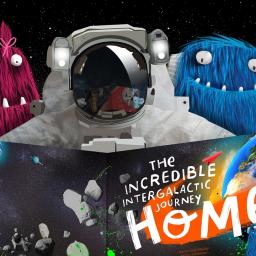
Are you obsessed with space? Always wanted to travel the universe? Enter this new competition from Story Time From Space and Lost My Name!The Incredible Intergalactic Journey Home is out of this world – or at least it soon will be. Lost My Name’s new book The Incredible Intergalactic Journey Home
|
| Link | http://feeds.theguardian.com/ |
| Feed | http://feeds.theguardian.com/theguardian/science/rss |
| Updated | 2026-10-02 09:00 |
by Sue Blackmore on (#MTWM)
Google’s Demis Hassabis suggests we can mitigate the dangers of artificial intelligence by instilling values, but even now it’s evolving for its own benefit, fed by our phones, drones and CCTVStephen Hawking, Bill Gates and now Demis Hassabis of Google’s DeepMind have all warned of the dangers of artificial intelligence (AI), urging that we put ethical controls in place before it’s too late.But they have all mistaken the threat: the AI we have let loose is already evolving for its own benefit. Continue reading...
by John Abraham on (#MTWN)
Four separate studies have now demolished the myth of a global warming ‘pause’
 |
by Guardian Staff on (#MTGD)
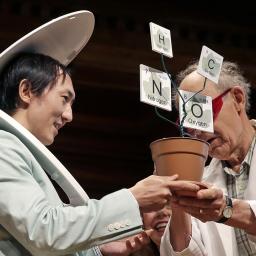
Researchers who studied the average length of animal urination, the consequences of intense kissing and how badly bee stings hurt on different parts of the body were among the winners of this year’s Ig Nobel prizes for comical scientific achievements on Thursday evening. The ceremony, at Harvard University, traditionally also includes two designated ‘paper airplane deluges’
|
by Melissa Davey on (#MTG1)
Australia has the highest incidence of cancer in the world, and the committee has been examining how to keep drugs affordable and available to patientsRelated: Leaked trade deal terms prompt fears for Pharmaceutical Benefits SchemeA Senate committee has called on the government to undertake a comprehensive review of its system for subsidising medicines to taxpayers, as the increasing number of new and expensive drugs being listed on the Pharmaceutical Benefits Scheme is becoming unsustainable. Continue reading...
 |
by Gareth Wynn Owen on (#MTDD)
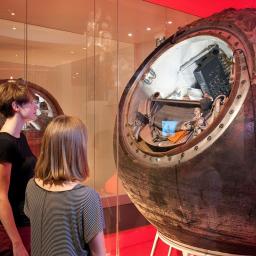
For us at the British embassy in Moscow, the Science Museum’s Cosmonauts exhibition became a massive exercise in relationship-building, Russian styleThe capsule flown by the first woman in space and the five metre-high lunar lander designed to take a single cosmonaut to the Moon are among 150 items showcased at the London Science Museum from today (18 September). Cosmonauts: birth of the space age is an exhibition about the Soviet space industry – and the culmination of four years of hard work and cooperation between British and Russian museums and governments. Continue reading...
|
 |
by Alan Yuhas in New York on (#MSQP)
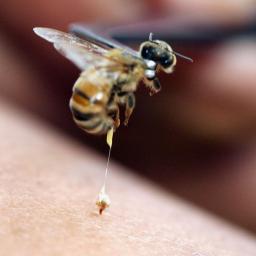
Awards parodying Nobel prizes given out for most unusual or trivial achievements in scientific researchA man stung dozens of times by bees, mathematicians who wanted to know whether a man could physically be able to sire 600 sons, and chemists who unboiled an egg were honoured on Thursday night with one of science’s most storied awards, the Ig Nobel prize.Professors, researchers, students and actual Nobel laureates from around the world gathered at Harvard University at the 25th First Annual Ig Nobel Prize Ceremony, the absurdist celebration of science that “makes you laugh, then thinkâ€. Continue reading...
|
 |
by Guardian Staff on (#MSZ2)
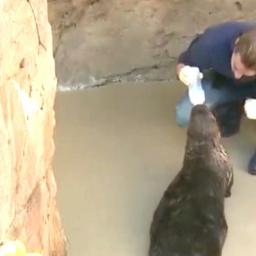
One-year-old Mishka has asthma and is the first sea otter to be diagnosed with the disease. Cats and horses are two other animals that more commonly get asthma. A King 5 TV news report explains that Mishka began having trouble breathing when smoke from wildfires moved into the Puget Sound area last month and has since been taught by Seattle aquarium’s Sara Perry to push her nose on the inhaler and take a breath
|
 |
by Stuart Clark on (#MSJK)
Eerie picture taken on Svalbard wins astrophotography’s top prize with Omega Centauri and galaxy M33 also starringAn awe-inspiring landscape featuring a total eclipse of the sun has secured the title of astronomy photographer of the year for Luc Jamet.Announced at a ceremony at the Royal Observatory Greenwich on Thursday night, the French photographer beat more than 1,000 amateur and professional photographers to win the £2,500 prize. Continue reading...
|
by Stuart Clark on (#MSJN)
Spectacular views of the universe have been unveiled at the Insight Astronomy Photographer of the Year 2015 awards ceremony, held at the Royal Greenwich Observatory
 |
by Ian Sample Science editor on (#MSJP)
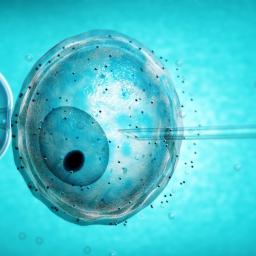
Researchers apply for licence months after Chinese team become first to announce they have altered DNAScientists in Britain have applied for permission to genetically modify human embryos as part of a research project into the earliest stages of human development.The work marks a controversial first for the UK and comes only months after Chinese researchers became the only team in the world to announce they had altered the DNA of human embryos.
|
 |
by Peter Kimpton on (#MRZH)
Readers recommend has now been going for a whole decade! Celebrate with us by nominating songs that refer to any joyful coming together in lyrics or title
|
 |
by Associated Press on (#MRZK)
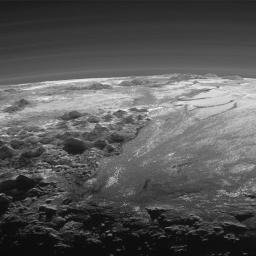
The pictures, gathered by the New Horizons spacecraft that swept past the dwarf planet in July, shed new light on Pluto’s mountains, glaciers and plainsThe newest pictures of Pluto are so up-close and personal that the mission’s top scientist says it “makes you feel you are thereâ€.Nasa released the photos on Thursday. The images were gathered by the New Horizons spacecraft that swept past the dwarf planet in July. Continue reading...
|
 |
by Denis Campbell Health policy editor on (#MRZN)
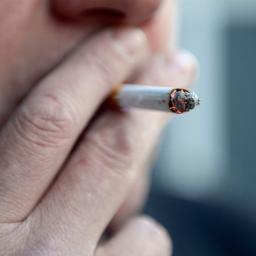
Lancet journal’s meta-analysis says chance of diabetes for non-smokers inhaling ‘secondhand’ smoke raised by 22%Non-smokers who breathe in other people’s cigarette smoke are at significantly higher risk of developing type 2 diabetes, research published on Friday shows.“Passive smoking†increases a non-smoker’s chances of becoming a diabetic by 22% compared with the chances for those who have never inhaled tobacco smoke, the study says. Continue reading...
|
 |
by Letters on (#MRXY)
The prime minister’s acknowledgement in parliament of the importance of people being able to access psychological therapies for mental ill-health was heartening (Corbyn answers critics by asking the questions in a different way, 17 September). In response to the leader of the opposition’s question about mental health, David Cameron singled out cognitive-behavioural therapy (CBT), which is just one of the talking treatments recommended for depression and anxiety by the National Institute for Health and Care and Excellence. Evidence shows that patients respond best and recover more frequently if they are able to have some choice about the kind of help they receive.While the increasing availability of psychological therapy is to be lauded, we must press on with ensuring that we deliver help that meets the needs of all patients, as we are still failing to help nearly half the people being treated. Surveys also indicate that patients would welcome a greater choice of psychological therapies, so we would urge the government to ensure that choice of treatment is made a key priority for the coming parliament, which is reflected with additional funding in the forthcoming comprehensive spending review.
|
 |
by Letter from Dr Kersten Hall on (#MRY0)
Following the opening of the new play Photo 51 (Kidman proves drama is in DNA of science, 15 September), the figure of Rosalind Franklin will rightfully receive much public interest for her long neglected but nonetheless crucial role in the story of DNA. Her x-ray image of B-form DNA, after which the play is named, is hailed on a plaque outside King’s College London as being “one of the most important photographs in the world†and James Watson famously said in his memoir The Double Helix that, on seeing this photograph, his mouth fell open and his pulse began to race.One can only wonder how differently the history of science might have unfolded had the British scientist William Astbury reacted with similar excitement to James Watson. For nearly a year before Franklin and her PhD student Raymond Gosling took Photo 51, Astbury and his research assistant Elwyn Beighton had obtained an almost identical x-ray image of DNA. Continue reading...
|
 |
by Ian Sample Science editor on (#MRV3)
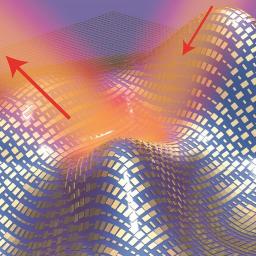
Ultra-thin skin created by US scientists can be laid over 3D shapes to make them look flat using thousands of nanoscale dots to reflect light
|
by Henry Nicholls on (#MR8E)
Carefully directed films could help scientists explore the inner workings of the animal mindJapanese researchers have made two short films, both involving a gorilla suit. They have shown them to a bunch of bonobos and chimpanzees. Why? By tracking the animals’ eye movements, they claim to have got inside the minds of apes.The two films are certainly the highlights of this study, “half-minute movie clips depicting novel and potentially alarming situations for the participant apes.†These apes, captive animals at the Kumamoto Sanctuary in Japan, “have some experience watching commercially available films and TV programs since youth,†the researchers write in Current Biology. Continue reading...
by Mo Costandi on (#MR51)
A hitherto unknown form of neuroplasticity discovered by researchers at King’s College London helps to resolve a long-standing crisis of neuronal identityIt is often said that the human brain is the most complex object in the known universe, and for good reason. Even the apparently simple task of compiling a census of the different types of cells it contains has proven to be extremely difficult. Researchers still can’t agree on the best way to classify the numerous sub-types of neurons, and different methods produce different results, so estimates range from several hundred to over a thousand.Basket cells illustrate this neuronal identity crisis perfectly. They are currently sub-divided into multiple different types, according to their electrical properties and molecular profiles. After nearly ten years of detective work, researchers at King’s College London now reveal them to be masters of disguise. In a surprising new study, they show that these cells can dynamically switch from one identity to another in response to neuronal network activity. Continue reading...
by Alex Bellos on (#MR26)
These mathematical patterns, by Alex Bellos and illustrator Edmund Harriss, are intended to engage the brain as well as provide a moment of stress-free satisfaction. Print off this page, get out your felt tips and start colouringWhen people say that maths is “beautiful†it is usually meant in the abstract sense, such as to describe a theorem whose power, depth and concision provoke feelings of awe. Bertrand Russell called this “a beauty cold and austere … sublimely pure, and capable of a stern perfectionâ€.Yet humans have traditionally also found aesthetic, sacred beauty in mathematics. Islamic and Hindu cultures, for example, are rich in stunning images based on geometric design. It was reflecting on the role of maths as a meditative and contemplative medium that I decided to compile a colouring book. Continue reading...
 |
by Maev Kennedy on (#MQX7)
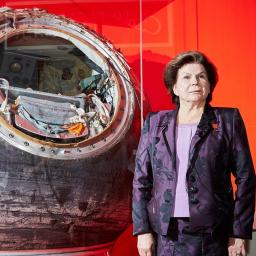
Valentina Tereshkova travelled into space in 1963 in a craft programmed to ascend but not descend. This was compounded by the fact she had no toothbrushOn 16 June 1963, within hours of Valentina Tereshkova becoming the first woman in space, she realised that the scientists and engineers who had worked for years on the project had made two mistakes, one small but enraging, one possibly terminal.
|
 |
by Dee Kyne on (#MQEA)
Dee Kyne walked the length of Jamaica discovering a deep sense of hopelessness among the people. She believes the island nation needs to cast off the shackles of the IMF and World BankJamaica is a small country full of clever, intelligent people who are being poorly served by the world that historically shaped it. Remarkably, this painful past has somehow led to an ability for it to punch far above its weight.In February 2015 I had the opportunity to experience first hand the mood and feeling of the people by walking Jamaica from east to west accompanied by 10 local people on the One-Love One-Step walk. We hiked from Morant Point to Negril, through the most neglected parishes over the mountains and into farming communities. This is a country full of stories and folklore and to understand the people, it is critical to listen to them. Continue reading...
|
 |
by Press Association on (#MPVJ)
Caffeine consumed before bedtime delays rise in sleep hormone and rewinds body clock by nearly an hour, scientists discoverDrinking the equivalent of a double espresso three hours before bedtime can turn the body clock back nearly an hour, replicating the effects of jet lag, scientists have discovered.Coffee consumed late in the evening resets the internal body clock, which regulates a host of biological functions and genes, according to a natural day/night cycle. The evidence suggests that the effects of caffeine go much further than simply making it harder to sleep. Continue reading...
|
by Karen McVeigh on (#MN1W)
Home Office regulator’s examination of forensic strategy comes as scientists warn criminal justice in the UK could be compromisedThe forensic science regulator is reviewing a series of sexual assault cases to examine whether poor evidence gathering at crime scenes may be compromising criminal justice in the UK, she has told the Guardian.Dr Gill Tully, whose remit is to establish quality standards in forensic science and ensure compliance with them, said her review was prompted by a number of cases where she had been told that “the scientific opportunities don’t appear to have been maximisedâ€. These included examples where scientific analysis was not carried out at all, she said. Continue reading...
 |
by Sasha Rospopina for the Calvert Journal, part of t on (#MPRG)
As the Science Museum in London explores the birth of the space age, The Calvert Journal looks back at the Soviet Union’s cult-like love of all things cosmic
|
 |
by Phil Gates on (#MPJX)
Egglestone, Teesdale Looking at wildflowers and seeing an image of ourselves implies an empathy with the natural worldLethargy seemed to have settled over the landscape after the harvest. There was barely enough wind to stir the thistledown and willowherb seeds around the field margin. On an uncomfortably humid afternoon that threatened a downpour, crows feeding in the stubble field rose as we passed but settled only a short glide away after a few desultory flaps of their wings.When we crossed the stile into a field where a broad margin, perhaps 20 metres wide, had been allowed to lie fallow for birds and insects, we found ourselves walking into a late blooming of wild flowers. Continue reading...
|
 |
by Oliver Milman on (#MPFY)
An open letter signed by 6662 students, teachers and alumni rejects any plan for the university to host a Lomborg-run research centreClimate activists and academics are scaling up their opposition to Flinders University hosting a Bjørn Lomborg-run research centre in an attempt to shut down the last avenue apparently open to the project.It is understood that the heads of three of the four Flinders faculties that could host the “consensus centre†have rejected the idea, leaving just one, the school of social and behavioural sciences, available. Continue reading...
|
 |
by Sarah Boseley Health editor on (#MNXN)
Experts who re-analysed data say study is still referred to in medical literature and needs to be retractedAn influential study which claimed that an antidepressant drug was safe for children and adolescents failed to report the true numbers of young people who thought of killing themselves while on it, re-analysis of the trial has found
|
 |
by Guardian Staff on (#MNEG)
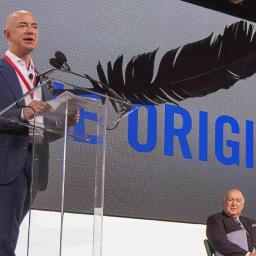
Amazon founder Jeff Bezos is going head-to-head with Tesla Motors’ Elon Musk - in space. Bezos’s space venture, Blue Origin, has said it will build a rocket manufacturing plant and launch site in Florida. Blue Origin will spend more than $200 million on the facility. That will put it into competition against Elon Musk’s company, SpaceX, and United Launch Alliance, a partnership of Lockheed Martin and Boeing Continue reading...
|
 |
by Viv Groskop on (#MN51)
Even the Sex and the City star dwells on ageing. Which leads the rest of us to realise we must be old, while she is still – well, very like SamanthaThe French call it a coup de vieux: that jolt in the stomach when you realise it’s not that everyone else has become suddenly freakishly young. No – you have become unavoidably old. Never mind policemen looking like schoolboys. This is far worse – Samantha from Sex and the City is knocking on 60 (next year). Sixty. When did that happen? The actor Kim Cattrall guest-edited BBC Radio 4 Woman’s Hour this week, contributing with aplomb: all honey voice, playful soundbites and clever questions. A lot of the focus was on not having children and how she resents the label “childlessâ€, as if it’s supposed to make you “less thanâ€.But she also dwelt on the ageing process. Which was refreshing, as looking like her you wouldn’t imagine she has to give it a second thought. She talked about hurting her knee during rehearsals for a play, and hearing the words “at your age†for the first time: “It might never go back to how it was. You know, at your age … †And there it was. Bam: the coup de vieux. Continue reading...
|
 |
by Ian Sample Science editor on (#MN52)
Swearwords account for two of the top ten words used by left-leaning tweeters, while those on the right show a preference for “God†and “psalmâ€An analysis of nearly a million tweets has found that liberals distinguish themselves from others online by letting rip with profanities.While right-leaning tweeters displayed more caution in the language they used, the reds were more blue, as liberals peppered their 140-character missives with a hefty helping of “shits†and “fucksâ€.
|
 |
by Adam Vaughan on (#MN54)
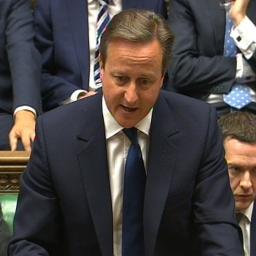
Officials will work to transfer ex-circus tiger from Belgium to Isle of Wight zoo after topic came up during Jeremy Corbyn’s first PMQs as Labour leaderGovernment officials have said they will work to help the Isle of Wight zoo import a tiger held in isolation in Belgium after David Cameron promised his support when the topic unexpectedly came up during Jeremy Corbyn’s first appearance at prime minister’s questions as leader of the opposition.Andrew Turner, Conservative MP for the Isle of Wight, used the first question after Jeremy Corbyn’s PMQs debut to plead with the prime minister to aid the zoo in breaking through a “bureaucratic logjam†to import the tiger. Continue reading...
|
 |
by Maeve Shearlaw and Sergei Krikalev on (#MJXD)
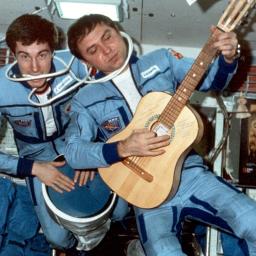
Record-breaking cosmonaut Sergei Krikalev answers your questions on the twists and turns of the global space race6.29pm BSTI’m afraid that’s all we have time for, here’s a parting note from Sergei:Thank you so much for all your wonderful questions! I have just arrived in London (greeted by particularly London weather) and really look forward to spending the next few days here. Do svidaniyaMembership Event: Guardian Live | New Horizons - Pluto and beyond6.26pm BSTThe Soviets vs the USGood Day Sergei,
|
by GrrlScientist on (#MMS3)
Researchers reveal that, under certain circumstances, the process of evolution can be highly predictable, especially when there are limited solutions to a particular problem, such as resistance to dangerous toxinsA research paper that was published a few days ago in the journal, Proceedings of the National Academy of Sciences, reports that evolution can follow predictable pathways when available solutions to a particular problem are severely limited. This new study found that resistance to heart-stopping cardiac glycoside toxins produced by some plants and animals for defensive purposes has independently converged across several lineages of insects, amphibians, reptiles, and mammals, after following a highly predictable evolutionary pathway. Continue reading...
by Ian Sample, science editor on (#MMHW)
A radical demonstration of quantum theory could see a bacterium suspended in an uncertain state similar to that famously endured by Schrödinger’s catPhysicists have drawn up plans to put a living organism in two places at once in a radical demonstration of quantum theory.The scientists aim to suspend a common microbe in an uncertain state similar to that endured by Schrödinger’s cat, which is portrayed in the Nobel laureate’s famous thought experiment as dead and alive at the same time. Continue reading...
 |
by Guardian Staff on (#MMAR)
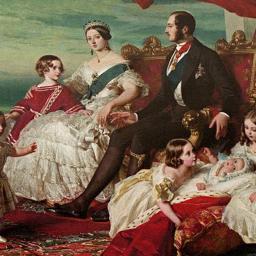
Readers answer other readers’ questions on subjects ranging from trivial flights of fancy to profound scientific conceptsUntil recently, the predominant European royal families felt compelled to maintain their primacy by marrying relatives such as first and second cousins. Is this form of inbreeding not, genetically speaking, a bit dodgy?Paul Gribbin, London SW11 Continue reading...
|
 |
by Rebecca Rego Barry on (#MHPR)
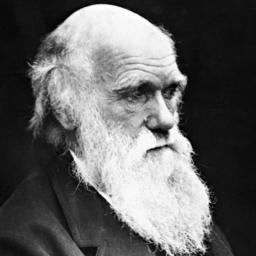
Blunt note stating that he did not believe the Bible was ‘divine revelation’ nor that Jesus was the son of God could fetch $90,000: ‘It is the ultimate piece’In November 1880, Charles Darwin received a request from a young barrister named FA McDermott. “If I am to have the pleasure of reading your books,†McDermott wrote, “I must feel that at the end I shall not have lost my faith in the New Testament. My reason in writing to you therefore is to ask you to give me a Yes or No to the question Do you believe in the New Testament.â€Darwin’s reply, penned on 24 November 1880 – exactly 21 years after the publication of On the Origin of Species – was blunt: Continue reading...
|
 |
by Brian Switek on (#MKWC)
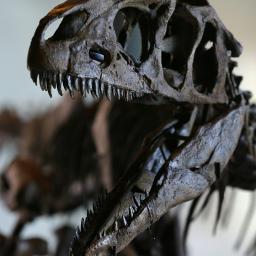
An allosaurus is expected to fetch more than £300,000 when it comes up for auction in November. Turning this fossil into a status symbol is a loss for scienceWhen I was a fossil-crazed kid, all I wanted was my very own dinosaur. A living one, like a small apatosaurus I could ride to school, was what I desired most, but I would have happily settled for a fossil one. As I’ve grown older and helped palaeontologists dig up ancient bones around the American west, though, I’ve had a change of heart. The living room is no place for any dinosaur, and I fear that is where a juvenile allosaurus due for auction might end up.Related: Why are dinosaurs extinct? You asked Google – here’s the answer | Brian Switek Continue reading...
|
 |
by Stephen Curry on (#MKWE)
Anna Ziegler’s new play, starring Nicole Kidman as scientist Rosalind Franklin, is a sophisticated and rewarding treatment of the impact of the human frailties on the process of scientific discovery
|
 |
by Ian Sample, science editor on (#MKV3)
The best views yet of a planet moving around a star 63 light years away, have been photographed by the Gemini South telescope in Chile
|
 |
by Jess Zimmerman on (#MKG5)
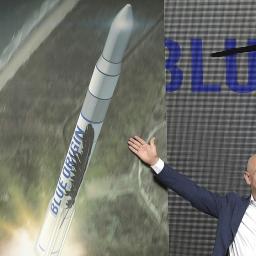
The early capitalists once had to breathe the air that they polluted in pursuit of their wealth. Now, perhaps, they can escape it by leaving the planetAmazon founder Jeff Bezos is the latest tech billionaire to invest his money in spaceships: on Tuesday, he debuted his space travel company Blue Origin’s newest rocket. Now, those who want to cruise the galaxy can choose between the sleek new rocket and the stubbier model Bezos announced in April – or they can opt to ride with Tesla founder Elon Musk on a SpaceX ship, or hop on Richard Branson’s Virgin Galactic.At this rate, would-be space travelers will be able to choose their favorite tech company, find its richest guy and buy a ticket on his craft of choice. Why does everyone who achieves economic dominance over the planet immediately turn around and try to get off it? Continue reading...
|
 |
by Damian Carrington on (#MJZ0)
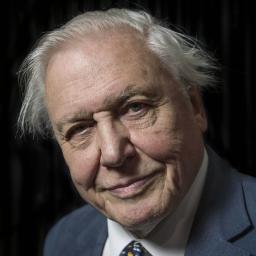
Naturalist says 10-year public research and development programme, that would emulate race to put men on the moon, could halt climate changeAn Apollo-style research programme to make renewable energy cheaper than fossil fuels has won the backing of Sir David Attenborough, who says this alone would be enough to halt climate change.
|
 |
by Reuters on (#MJG3)
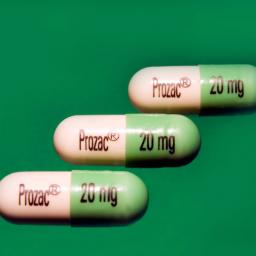
Prozac and Seroxat may also make 15-24 year olds more likely to be involved in non-violent crime and to have alcohol problemsYoung people taking antidepressants such as Prozac and Seroxat are significantly more likely to commit violent crimes when they are on the medication, but taking higher doses of the drugs appears to reduce that risk, scientists said.In research published in the PLoS Medicine journal, the scientists said that while their finding of a link does not prove that such drugs cause people to be more violent, further studies should be conducted and extra warnings may be needed in future when they are prescribed to people aged 15 to 24. Continue reading...
|
 |
by Emma Howard on (#MJ9F)
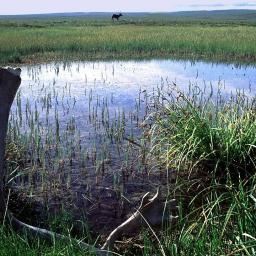
Increase of more than 50% in flies’ survival rate will cause problems for caribou and indigenous people who live off them, researchers warnMosquitoes will appear in much greater numbers in the Arctic as it warms because of climate change, with negative consequences for caribou and the indigenous people who live off them, researchers warn.
|
by Letters on (#MHR2)
We, the undersigned, believe that global warming can be addressed without adding significant economic costs or burdening taxpayers with more debt. A sensible approach to tackling climate change will not only pay for itself but provide economic benefits to the nations of the world.The aspiration of the Global Apollo Programme is to make renewable energy cheaper than coal within 10 years. We urge the leading nations of the world to commit to this positive, practical initiative by the Paris climate conference in December. Continue reading...
 |
by Sam Thielman in New York on (#MHDZ)
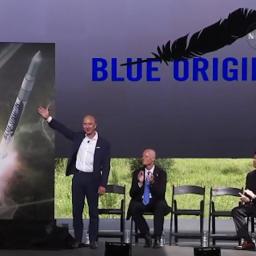
Amazon founder reveals details about unnamed new rocket, produced by his space travel company Blue Origin, to compete with Space X and Virgin GalacticJeff Bezos unveiled his space travel company Blue Origin’s brand new rocket on Tuesday morning at Cape Canaveral, Florida.The rocket, which Bezos did not name, appears to be a completely different model from the company’s New Shepard rocket, which launched in April. The new model is long and bullet-shaped, whereas New Shepard is squat and blunt. Continue reading...
|
 |
by Zofia Niemtus and Sarah Marsh on (#MHE1)
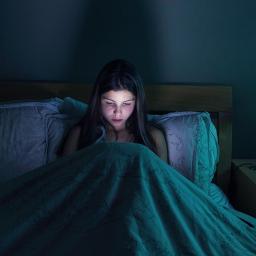
Psychologists discuss how parents and teachers can limit the impact of smartphones on young people’s wellbeing and learningTeaching talk turned to smartphones this week, with the announcement of a new government study into the impact of mobile devices on behaviour and the news that a fifth of secondary school pupils are using social media in the middle of the night, with predictable consequences for sleep quality and concentration at school.The majority of teachers did not grow up in the digital era. That’s not to say that behaviour and bedtimes were trouble-free before smartphones – hands up if you ever got told off for reading under the duvet with a torch – but it does mean they’re facing an unfamiliar issue. We spoke to educational psychologists to get their ideas and advice on the way to approach this 21st-century problem. Continue reading...
|
 |
by Ian Sample, science editor on (#MH9F)
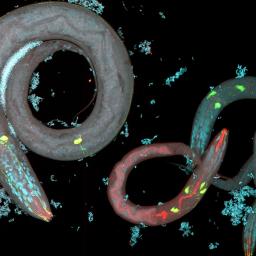
Scientists have used genetically modified worms to show that ultrasound can be used to activate brain, heart and muscle cells from outside the bodyScientists have bred worms with genetically modified nervous systems that can be controlled by bursts of sound waves.The tiny nematodes change direction the moment they are blasted with sonic pulses that are too high-pitched for humans to hear.
|
 |
by Robert Kitson on (#MGR9)
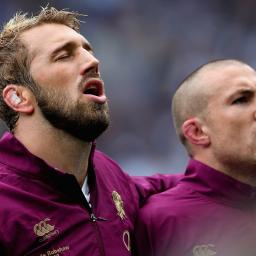
Experts say hosting the World Cup ‘could be an extraordinary advantage’ for England – but only ‘if they’ve managed the psychology in the right way’It’s World Cup anthem time. There is a red rose on your chest and you are standing on the pitch at Twickenham. Up in the stands all you can see are tense English faces. Failure is unthinkable. As the New Zealand coach, Steve Hansen, correctly observed the other day: “The big thing England have to cope with is the massive expectation on them at home … the English will expect them to win.â€If anyone understands the pros and cons of home advantage it is the All Blacks. Four years ago they lifted the Webb Ellis Cup despite knowing an entire nation would never forgive them if they fell short. Brazil’s footballers, in a similar situation last year, coped rather less well. Playing at home only takes you so far, as England will shortly discover. “This World Cup has several potential winners which means the quality of their mental preparation could make all the difference,†says Jeremy Snape, the former England cricketer turned performance coach. Continue reading...
|
 |
by Zach Stafford on (#MFX3)
Research shows that focusing on the attainment of happiness is actually self-defeating
|