 |
by Andrew Pulver on (#NX2C)
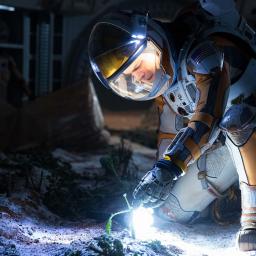
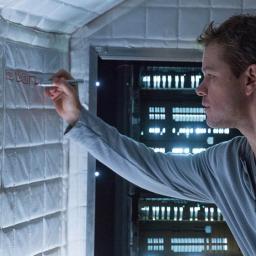
Director of The Martian was shown photographs of water flows by Nasa ‘about two months ago’, but by then it was too late to include the information in the plot of the Matt Damon filmRelated: The Martian and Nasa – a coincidence too good to be true?On one level, The Martian may be functioning as a giant advertisement for Nasa, but the close collaboration between the space agency and Ridley Scott’s film-making team has resulted in the director remaining blasé about the dramatic announcement of evidence of flowing water on Mars. “I knew that months ago,†he said in response to the news. Continue reading...
|
| Link | http://feeds.theguardian.com/ |
| Feed | http://feeds.theguardian.com/theguardian/science/rss |
| Updated | 2026-10-02 07:16 |
by Peter Bradshaw on (#NTP2)
The announcement that water has been found on the Red Planet just happens to have emerged at the same time as the Matt Damon film, with Nasa branding all over it, is released. Spooky, or what?It could hardly have come at a more spookily appropriate time: just when film-fans and the media are getting excited about the entertaining new sci-fi movie The Martian, about a troubled Nasa mission to Mars, released this week in the UK and the US. Matt Damon’s lovely chops in his space-helmet are all over the airwaves and the billboards, promoting a film with which Nasa has cooperated, with generous use of their branding. And now Nasa itself has chosen this moment to get us all excited about some news about the red planet.They’ve offered an answer to David Bowie’s famous question about whether there is life on Mars. Well … yes! Or rather … not exactly! But there is water. Water that could sustain life! Possibly! Nasa has now revealed that there is evidence of stain-marks on Mars’s canyons and crater-walls: water is trickling downhill before drying up in the valleys and plains. The water flows could lead Nasa or another country’s space agency to potential sites where life on Mars could be found. Continue reading...
 |
by Sarah Boseley Health editor on (#NVHN)
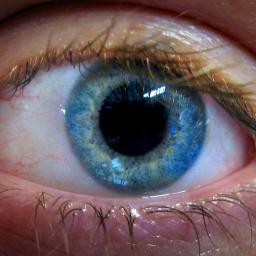
Experimental transplant uses eye cells grown in a lab and if successful could be used to treat hundreds of thousands of macular degeneration sufferers in UKA patient has become the first in the UK to receive an experimental stem cell treatment that has the potential to save the sight of hundreds of thousands of Britons.
|
 |
by Maev Kennedy on (#NWJ4)
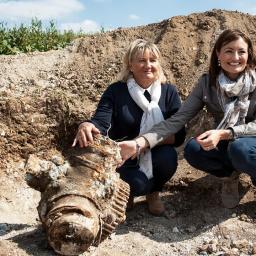
Daughter and granddaughter of Polish pilot Kaziemierz Wünsche involved in digging up remains of Hurricane fighter near Beachy Head, BrightonSeventy-five years ago a young Polish pilot crashed into the hills near Beachy Head, Brighton, after his Hurricane fighter plane was shot down by a German Messerschmitt during the Battle of Britain. Now, the late pilot’s daughter and granddaughter have joined archeologists in uncovering the aircraft’s remains.
|
by Nick Clarke on (#NWAC)
Data isn’t just about retail analysis – when used in scientific applications it has bigger uses from targeted personal health treatment to tackling poverty and disease
 |
by Press Association on (#NVMZ)
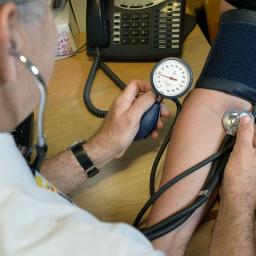
Oxford University research on 4 million people found sufferers have 60% greater chance of developing type 2 diabetesPeople who have high blood pressure are almost 60% more likely to develop diabetes, according to research on 4.1 million people.
|
 |
by AFP Bangalore on (#NVKJ)
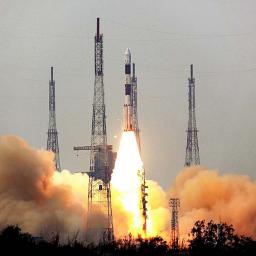
Mini space observatory will orbit 400 miles above Earth, cost £17.7m and has a lifespan of five yearsIndia successfully launched its first hi-tech telescopes into space to study the stars, as New Delhi seeks to take another step in its ambitious space programme.A rocket carrying the 1.5-tonne mini space observatory, called Astrosat, along with six foreign satellites, blasted off on schedule from India’s main southern spaceport of Sriharikota on Sunday. Continue reading...
|
 |
by Amanda Holpuch in New York on (#NV2A)
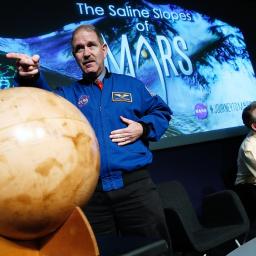
Nasa released evidence of water on the red planet, raising the odds of finding extraterrestrial life, and Earthlings took to Twitter to celebrate
|
 |
by Guardian Staff on (#NTQ5)
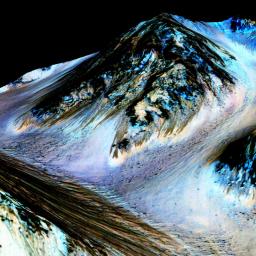
Nasa announce that there are watery flows on the surface of Mars during the red planet’s summer months. Scientists say they’re still trying to figure out the chemistry and source of the water on the red planet, the discovery has them now rethinking whether Mars can support present day microbial life Continue reading...
|
 |
by Patrick Barkham on (#NTP3)
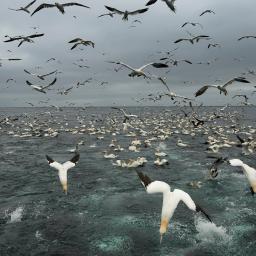
Swooping birds are under threat from wind turbines. Clean energy is good for us, bad for themA gannet flying low over the ocean is an awesome sight. In a big swell, these brilliant-white seabirds seem to hug the contours of the waves on their epic, effortless-looking quest for fish.So it is a shock to learn that up to 12 times more gannets could be killed by wind turbines than current figures suggest because GPS devices fitted to gannets have shown they actually fly at an average of 27 metres when searching and diving for prey. Such a height puts them on collision course with the blades of offshore windfarms. Continue reading...
|
 |
by Stuart Clark on (#NSN4)
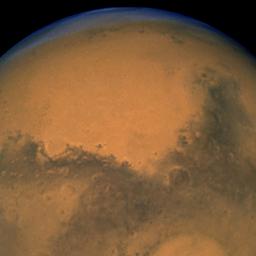
Nasa confirm discovery of summer watery flows on planet’s surface down cliffs and crater walls raising odds of finding life on red planet
|
 |
by Alex Bellos on (#NTE8)
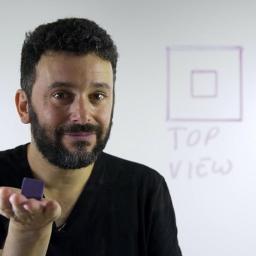
Here’s the solution to the woodblock puzzle – were you able to correctly draw a side view of the three-dimensional object?
|
 |
by Alex Bellos, Tash Reith-Banks and Paul Boyd on (#NTEA)
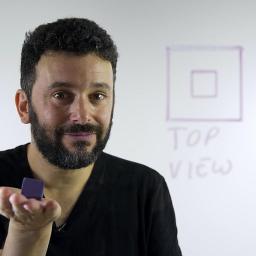
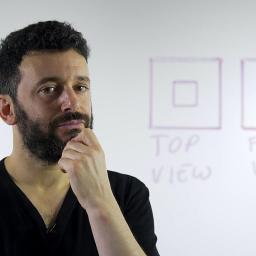
What’s the solution? The woodblock puzzle is a problem shared with Alex by readers from Singapore and Uzbekistan. Alex presents a drawing of a top view and a front view of a wooden three-dimensional object. Did you manage to to draw the side-view of the object, firstly where you are only allowed flat surfaces and secondly when you’re allowed curved surfaces too? Continue reading...
|
 |
by Sean Clarke, Finbarr Sheehy, Paddy Allen and Cath on (#NT9K)
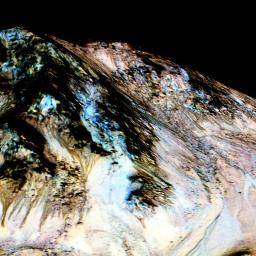
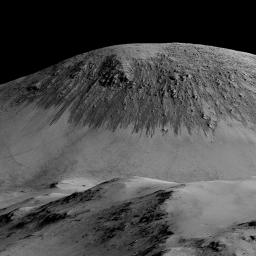
Nasa has announced the discovery of long rivulet-like streaks on the cliffs and crater walls of Mars, saying they are evidence of flowing water in the present day. The streaks, running hundreds of metres long in places, had suggested flowing liquids, but new techniques have allowed researchers to confirm the presence of briny liquid water
|
by Guardian Staff on (#NT7A)
View images of Martian briny flows of water from analysed spectral data from the CRISM instrument onboard Nasa’s Mars Reconnaissance Orbiter
 |
by Ian Sample Science editor on (#NT6N)
Researchers say discovery of stains from summertime flows down cliffs and crater walls increases chance of finding life on red planet
|
 |
by Gayatri Devi on (#NS98)
Lean in to boredom, not your smart phone screen. You’ll learn more about yourself and the world around you than you thinkConfessing to boredom is confessing to a character-flaw. Popular culture is littered with advice on how to shake it off: find like-minded people, take up a hobby, find a cause and work for it, take up an instrument, read a book, clean your house And certainly don’t let your kids be bored: enroll them in swimming, soccer, dance, church groups – anything to keep them from assuaging their boredom by gravitating toward sex and drugs. To do otherwise is to admit that we’re not engaging with the world around us. Or that your cellphone has died.But boredom is not tragic. Properly understood, boredom helps us understand time, and ourselves. Unlike fun or work, boredom is not about anything; it is our encounter with pure time as form and content. With ads and screens and handheld devices ubiquitous, we don’t get to have that experience that much anymore. We should teach the young people to feel comfortable with time. Continue reading...
|
 |
by Damien Gayle on (#NS6K)
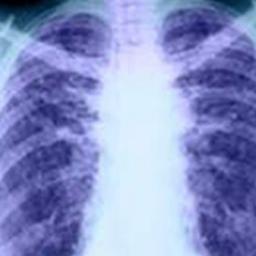
British scientific team have identified certain DNA profiles at lower risk of a range of lung diseases and hope their findings might lead to better treatmentsThe genetic factors that explain why some people seem to maintain healthy lungs despite a lifetime of smoking have been uncovered by British scientists.A team funded by the Medical Research Council say their investigations into smokers who survive their habit into old age could hold the key to better treatment for diseases such as chronic obstructive pulmonary disease (COPD). Continue reading...
|
by Guardian readers and Carmen Fishwick on (#NS6N)
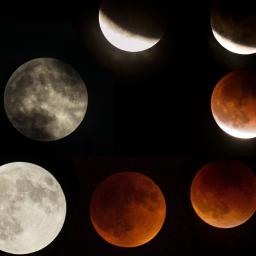
A rare astronomical event – in which a lunar eclipse combines with the closest full moon of the year – caused the moon to appear to redden in the night. Sky-watchers from North and South America to western Europe share their photographs Continue reading...
 |
by Matthew Weaver on (#NS2M)
What is a ‘blood moon’? Why is it red? Key questions answered about the latest lunar phenomenon
|
by Tracey Brown on (#NRYQ)
Ahead of her Sense About Science lecture, Tracey Brown digs around the evidence with some uncomfortable concerns about accountability in public life
 |
by Guardian Staff on (#NRWV)
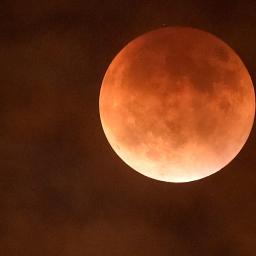
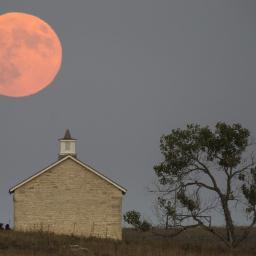
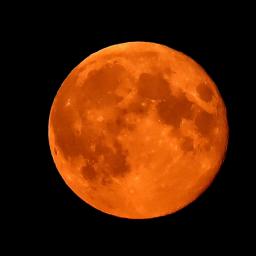
On Sunday night and Monday morning, millions of people around the world are treated to the sight of a ‘blood moon’, as a lunar eclipse and a ‘supermoon’ – a full moon that is particularly close to earth – combine to make our natural satellite appear red. It happens specifically when the Earth’s shadow completely covers the moon, causing it to dim and take on a yellowish hue.Click here to contribute your photos Continue reading...
|
 |
by Jonny Weeks on (#NREM)
Sky-watchers from the Americas to western Europe enjoy a rare astronomical event in which the moon appears to redden in the night sky – a ‘blood moon’. It is the result of a rare combination of an eclipse with the closest full moon of the year
|
 |
by Guardian Staff on (#NRV0)
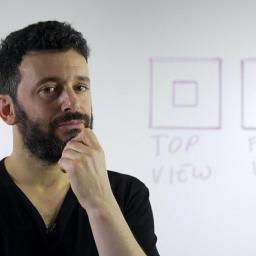
This geometric woodblock puzzle will twist and draw your brain into another dimension – but in a good way!Hello guzzlers!I do my best to bring you the best puzzles I can source from around the world. So far I have brought you puzzles from Japan, Vietnam, Israel and the US. Continue reading...
|
by Oliver Wainwright, Imogen Fox, Ian Sample and Tom on (#NRSV)
Architecture, opera, fashion, parapsychology … this year’s contenders are taking contemporary art into exciting new territory. We sent our experts to meet the artists on the shortlist Continue reading...
 |
by Alex Bellos, Tash Reith-Banks and Paul Boyd on (#NRSW)
A modern take on a classic – the woodblock puzzle. This problem was shared by readers from Singapore and Uzbekistan. Alex presents a drawing of a top view and a front view of a wooden three-dimensional object. The challenge is to draw the side-view of the object, firstly where you are only allowed flat surfaces, and secondly when you’re allowed curved surfaces too Continue reading...
|
 |
by Suzi Gage on (#NRRZ)
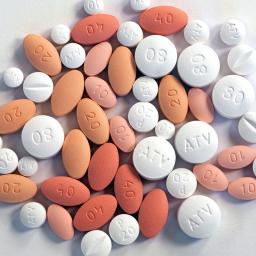
On Sunday the Express front page warned us that ‘statins age you faster’. But what does the research really show?A lot of people are on statins. The British Heart Foundation state on their website that they are the most commonly prescribed drug in the UK. They’re taken predominately by middle aged men, some who have already suffered heart problems, and some who haven’t but fit in to an ‘at risk’ category that predicts cardiovascular disease. But there are often scare stories around statins (I’ve written about this before), perhaps because they’re so widely prescribed, so it can be hard to work out what’s really known, or not known about them.On Sunday, the Express’ front page claimed that ‘Statins age you faster’. The study it was referring to was published in July this year in the journal Cell Physiology. The research involved taking fat tissue biopsies from healthy people and extracting stem cells, and then exposing the stem cell samples to one of two types of statin. Stem cells are special cells that are found in fat tissue (and various other tissues), that can differentiate in to a variety of other specific types of cells, and are involved in tissue repair in adults. Continue reading...
|
 |
by Kevin Rawlinson on (#NRQB)
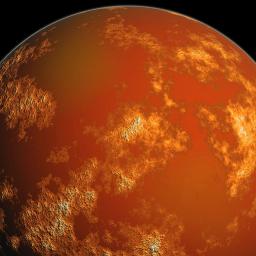
US space agency has promised a solved mystery, and invited guest who discovered possible signs of water while a studentNasa is to reveal a “major science finding†from its Mars exploration mission, giving rise to rumours that the US space agency has found traces of liquid water on the red planet.It has invited reporters to a press conference at 11.30am ET (3.30pm GMT) on Monday, which will be attended by Lujendra Ojha, who discovered possible signs of water on Mars as an undergraduate student. Continue reading...
|
 |
by Alexandra Topping and agencies on (#NR2N)
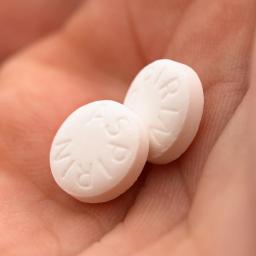
Study of 14,000 people with cancer in gastrointestinal tract finds regular users of drug twice as likely to be alive after four yearsA daily dose of aspirin can double the life expectancy of patients with cancers affecting the gastrointestinal tract, according to a study.It was already known that that frequent use of aspirin can prevent bowel cancer, but the most recent study also suggests that men and women with a range of cancers who take the anti-inflammatory painkiller experience a significant survival benefit compared with those who do not. Continue reading...
|
 |
by Alan Pickup on (#NQXH)
The Summer Triangle still dominates the high meridian at nightfall as Saturn, like a yellowish bright star of mag 0.6, hovers low in Britain’s SW sky where it is swamped by the evening twilight later in October. Continue reading...
|
 |
by Jason Burke in Delhi and Sandya Ravishankar in Che on (#NPZA)
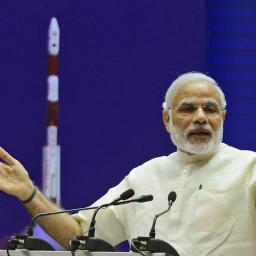
AstroSat may be 10 times smaller than Hubble but will be first space telescope launched by a developing countryIndia is to launch a mini Hubble-type space observatory, a major step forward for the emerging power’s increasingly capable space programme.Last year, the south Asian nation became the first country to launch a successful Mars orbital mission on its first attempt. At £50m, the robotic probe, which is still circling the red planet, cost a fraction of earlier similar missions by the US, Russia and European countries. Continue reading...
|
 |
by Adam Gabbatt in New York on (#NPSC)
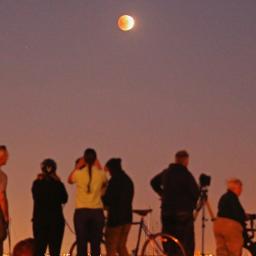
Overlapping lunar eclipse and supermoon have some religious leaders warning of a major turning point on Earth, though the details varyOn Sunday, millions of people around the world will enjoy the sight of a “blood moonâ€, as a lunar eclipse combined with a “supermoon†combines to make our natural satellite appear red in colour.Related: Mormon church issues call for calm as 'blood moon' sparks apocalypse fears Continue reading...
|
 |
by Colin Conwell on (#NPSE)
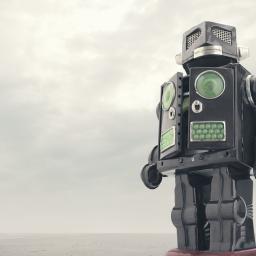
Computers are immensely capable, but certain things we humans do almost effortlessly an artificial intelligence has immense difficulty achievingArtificial intelligence seems to be the neighborhood menace these days: in the presence of responsible adults, it smiles, is polite and offers to do the dishes. With a less responsible crowd – of the Pentagon or Volkswagen variety – it firebombs your flowerbed and sabotages your environmental fundraiser. And just when you think the menace could not be any more existential, you realize it’s inextricably implicated in the fabric of your life, so much so that you’ll likely never be rid of it.The menace of artificial intelligence is very real in most respects. As a lock pick for the infiltration of the private sphere, a method of control in the public sphere or a weapon, artificial intelligence poses a substantial threat. But there is at least one aspect of that threat that our dystopian generation, including the most elite of our technocratic vanguard, may tend to exaggerate: namely, the ability for artificial intelligence to become “self-aware†to the extent that it could, as Elon Musk suggests it might “press the delete key†on humanity. Continue reading...
|
 |
by Guardian readers on (#NPJB)
Are you going to be observing the supermoon lunar eclipse on Sunday night? Share your images via GuardianWitness
|
 |
by Ben Ambridge on (#NPHA)
Take the Observer personality quiz and find out who you – or your partner – really areRead the paragraph below – imagining Alex to be the same gender as you – then answer the questions that follow. (Fair warning: the results might be incendiary if you’re with your partner at the time.)Alex is a 20-year-old student at your local university. She (or he) is studying English and is thinking of also taking a couple of history modules. She lives in a house share with three other people near the university and has a part-time job working at the students’ union. One of her favourite things is trying new food; she also enjoys TV, the gym, and live music. Alex is single. Today is Valentine’s Day. Continue reading...
|
 |
by Elizabeth Day on (#NPH8)
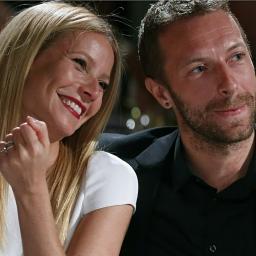
Breaking up can be devastating, but there are ways to limit the damage. Elizabeth Day hears from an expertKatherine Woodward Thomas was on a yoga retreat last March in Costa Rica, trying to get away from it all to work on a new book proposal. What she didn’t know was that, thousands of miles across the globe, Gwyneth Paltrow and Chris Martin were in the process of announcing their divorce. As Woodward Thomas was perfecting her downward dog, a statement was being posted on Paltrow’s Goop website outlining the couple’s decision. It was headed “Conscious Uncouplingâ€.Woodward Thomas, a psychologist based in Los Angeles, had never met Paltrow or Martin, but she had coined that same term some years earlier when the experience of going through her own divorce had led her to examine the ways in which separation could be made as amicable as possible. Continue reading...
|
 |
by Catherine de Lange on (#NPE1)
Nutricosmetics are dietary powders, pills and drinks designed to reverse signs of skin-ageing. It’s predicted to become a £5bn industry by 2020 – but is it just a spoonful of pseudoscience?For the past few weeks my breakfast has taken an unusual twist. Before I crack on with work, I unscrew a small glass vial with a gold lid and down the contents. The bottle has the air of Alice in Wonderland’s “drink me†potion, but the only thing it promises to shrink is my wrinkles. Continue reading...
|
by Jon Butterworth on (#NPD8)
Two years ago, a huge magnet made its way from Brookhaven, New York to Fermilab, Illinois, via Florida and the Mississippi. And that’s not the strangest thing about it.
 |
by Adam Rutherford on (#NP9F)
Science is often misrepresented in the movies, but The Martian is an exception, and the hero’s a botanist to boot“Movies are entertainment; if you want a message, call Western Union,†as the Hollywood golden age producer Samuel Goldwyn said. Actually, he almost certainly never said it, which kind of illustrates the point. But I am interested in the message. Everyone thinks their own profession is the least well represented in Hollywood, as if films have some obligation to tell the truth. Scientists frequently bleat that movies don’t get scientists or science right. Spoiler alert: there’s no engine noise in space. There’s no such thing as truth serum. We can’t resurrect dinosaurs. Wormholes, so heavily relied upon by screenwriters for interstellar travel, don’t exist.I mostly don’t care. Mostly. Tell a good story. Explore ideas. Entertain us. Movies do profoundly influence how we think about things and can become culturally ubiquitous. The flat-headed, neck-bolted image of Frankenstein belongs entirely to Universal Studios and Boris Karloff, and not to Mary Shelley. There’s a robust body of research about the perception of science and scientists, some of which indicates children form negative images young, and then develop them. The results of the Draw a Scientist Test – which is fairly self-explanatory – are always disappointing. Children draw white, white-coated, bespectacled, crazy-haired men. Girls very occasionally draw women, but boys only draw men. There’s a paucity of data on how movies depict science and whether that influences how we culturally regard research and experimentation. Continue reading...
|
 |
by Guardian Staff on (#NNR9)
There is a thriving charity sector developing new drugs – let them work on antibiotic resistanceSeventy years ago Sir Alexander Fleming, the discoverer of penicillin, in his Nobel prize acceptance speech warned that inappropriate use of antibiotics would give rise to resistance (“Time for world to act on antibiotic resistanceâ€, leader, Comment). Fleming’s prediction has come to pass and antibiotic resistance is now threatening modern medicine.Routine procedures including heart bypass surgery, hip and knee replacements, cancer treatments, childbirth, trauma surgery and intensive care treatments all depend on functioning antibiotics. Some patients such as those with cystic fibrosis have to be on regular antibiotic administration – for these patients and many others antibiotic-resistant infections can kill. Continue reading...
|
|
by Associated Press in Salt Lake City on (#NMXM)
Sales are up at emergency-preparedness retailers ahead of a combination of a lunar eclipse and a supermoon, but church says not to get carried awayA rare confluence of a lunar eclipse and a supermoon to happen this weekend has prompted such widespread fear of an impending apocalypse that the Mormon church was compelled to issue a statement cautioning the faithful to not get caught up in speculation about a major calamity.Sunday night’s “blood moon†and recent natural disasters and political unrest around the world have led to a rise in sales at emergency-preparedness retailers. Continue reading...
|
 |
by Francis Spufford on (#NM2M)
This beautiful display captures the Soviet space programme as a place for licensed dreaming, and features space relics never before allowed out of RussiaThe Science Museum’s new exhibition Cosmonauts: Birth of the Space Age moves from the actual events, spacecraft and personalities of the USSR’s post-Sputnik decade of triumph, into cosmonaut culture more widely – cosmonauts as the political heroes of Khrushchev’s renewed communism, as embodiments of both science and mystical philosophy; in art and film; and as a design cue for a vast amount of Soviet kitsch, from table lamps to cigarette cases to cocktail cabinets. Cosmonauts, too, as the centre of their own tiny, insular world of privilege and test-pilot superstition: because Gagarin had stopped on the way out to the launchpad and urinated on the right-back wheel of the bus, every cosmonaut on their way aloft did so ever after, and watched the same lucky film the night before, and listened to the same songs.Related: Red plenty: lessons from the Soviet dream Continue reading...
|
 |
by Oliver Burkeman on (#NHW6)
‘I know I’m courting fury by revealing that I still follow the rule and that I think you should, too. Come at me, debunkers’We live in unsettling times. Old certainties crumble daily: Jeremy Corbyn leads the Labour party; colouring books for adults are bestsellers; man-buns exist. And now, most disorienting of all, it’s apparently not even true that you’re supposed to drink eight glasses of water a day. This bombshell comes from Aaron Carroll, a US paediatrician who’s researched hydration and who rounded up the evidence in the New York Times: the notion that most of us walk around dehydrated, he showed, is a myth. The web, which loves a good debunking only slightly less than a good shaming, went wild. So I know I’m courting fury by revealing that I still follow the eight-glass rule, and that I think you should, too. Come at me, debunkers! Although on second thoughts, could you hold on a minute while I run to the bathroom?Here’s the argument for my radical stance: there is no suggestion eight glasses is bad; you’ll probably drink fewer sugary drinks; and those toilet trips will stop you sitting, unhealthily, at your desk all day. Plus following any such rule makes you more attentive to what you’re putting into your system. In other words: the eight-glass rule is wrong, on its own terms, but still useful. And I’m convinced all sorts of “rules for living†work this way. Continue reading...
|
 |
by Philippa Perry on (#NHPP)
With some daters now adding their Myers-Briggs type to their profile, here’s a handy guide to the types looking for love – or something else – onlineA recent piece in nymag.com reported that 5% of OkCupid hopefuls looking for love now put their Myers-Briggs type into their profile information. This is despite the writer Roman Krznaric reporting that psychologists have doubted their efficacy for decades. Indeed, if we retake a Myers-Briggs test just five weeks after the first test, 50% of us will come out with a different result. These types of personality tests are also guilty of being reductive, putting us in categories such as “extrovert†or “introvert†when in reality we are mixtures of both. So I really do not recommend over-simplifying human nature, which is always in flux, by putting people in boxes and slapping on labels. Except it’s so fun to do – so with that in mind, I’ve come up with my own labels for internet daters. I hope you find them useful. Continue reading...
|
by Ted Nordhaus, Michael Shellenberger and Linus Blom on (#NHH6)
Monbiot has criticised ecomodernism for endorsing agricultural modernisation, but this is the way to feed a growing urban population and free up land for rewilding
by Dean Burnett on (#NHEG)
The UK government is considering cutting the research and development funding by 25-40%, leaving scientists on an even tighter budget. So here are some cost-saving suggestions you might have to try …
by Georgina Mace on (#NH63)
Last night saw the UK launch of the ‘ecomodernist manifesto’, produced by the US Breakthrough Institute. The manifesto calls on environmentalists to embrace technology in order to save nature. Professor Georgina Mace was one of the speakers. Here, she summarises her argument.It is refreshing and very welcome to hear the positive messages of the ecomodernist agenda, stimulating ideas and actions across different disciplines and across traditionally distinct groups. Also, it is good to see the emphasis placed on the potential contribution from technology to addressing environmental problems, though I am surprised that this is perceived to be so radical. Hasn’t technology and innovation always underpinned development and allowed people to reduce their direct dependence on natural resources?Following comments by George Monbiot and others, my remarks are partly about the framing of the agenda, and partly to consider the limits to technological solutions. Continue reading...
 |
by Gaia Vince on (#NH0W)
From the pictures on her bedroom walls to the gender imbalance of her university teachers and book reviewers, sexism is everywhere for the female scientistYou can usually tell the sex of a baby being pushed in a pram. If it’s wearing a colourful outfit decorated with charismatic animals, it’s probably a boy; pink hearts and flowers means a girl. In fact, you don’t even need to see the child - just take a look at its bedroom: dinosaurs, wall-stickers of planets and astronauts, construction blocks, bugs, slime, “experimental†equipment, vehicles and machinery, rather than dolls, fairies, colouring books and crayons.... I think you can guess where I am going with this.What of the child’s other influences? Who will inspire her to take an interest in the natural world, to explore the chemistry, physics and biology all around her? Her teachers are more likely to be female, although her physics teachers will probably be male. But despite their smaller number, male teachers are better respected. Her books overwhelmingly depict scientists as men – usually old, white men. On television, scientists and engineers appearing on news and current affairs programmes are overwhelmingly male (although Channel 4 News has notably taken steps to change this). Despite some excellent female science presenters, documentaries largely continue to be presented by men, and the gender imbalance for experts appearing on panel shows – particularly in comedy – is infamous. Continue reading...
|
 |
by Gaia Vince on (#NGRX)
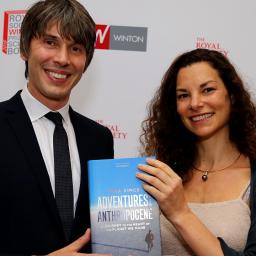
The new winner of the Winton prize for science books says humanity has become a geophysical force on a par with earth-shattering asteroids and planet-cloaking volcanoesWe live in epoch-making times. Literally. The changes humans have made in recent decades have been on such a scale that they have altered our world beyond anything it has experienced in its 4.5bn-year history. Our planet is crossing a geological boundary and we humans are the change-makers.Millions of years from now, a stripe in the accumulated layers of rock on Earth’s surface will reveal our human fingerprint, just as we can see evidence of dinosaurs in rocks of the Jurassic, or the explosion of life that marks the Cambrian or the glacial retreat scars of the Holocene. Our influence will show up as a mass of species going extinct, changes in the chemistry of the oceans, the loss of forests and the growth of deserts, the retreat of glaciers and the sinking of islands. Geologists of the far future will note in the fossil records the extinctions of wild animals and the abundance of domesticates, the chemical fingerprint of materials such as aluminium drinks cans and plastic carrier bags, and the footprint of projects such as the Syncrude mine in the Athabasca oil sands of north-west Canada, which moves 30bn tonnes of earth each year – twice the amount of sediment that flows down all the rivers in the world in that time. Continue reading...
|
 |
by Yuval Noah Harari on (#NGQQ)
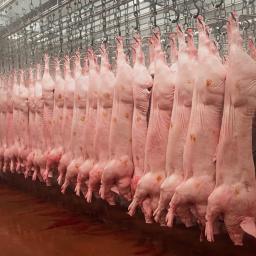
The fate of industrially farmed animals is one of the most pressing ethical questions of our time. Tens of billions of sentient beings, each with complex sensations and emotions, live and die on a production line
|