by Dominic Burgess, Elliot Smith and Amy Mathieson on (#GYPM)
Fictional scientist Jeremy Bumble gets to grips with the concepts of matter, mass and the mighty 'God particle', also known as the Higgs boson. Along the way he ropes in some partying friends and UCL physics professor Jonathan Butterworth to makes sense of it all
The area of south-west Queensland where the elusive nocturnal parrot, presumed extinct, was caught is now to be protectedThe elusive night parrot, a species thought to be extinct for about 100 years, has finally been captured and tagged by scientists as part of a pioneering project to safeguard the remaining ground-dwelling birds.
Data from Cancer Research UK suggests 80% of patients survive for at least 10 years after being diagnosed in early stages of eight of most common cancersThe survival rate for people with eight of the most common cancers is more than three times higher when the disease is diagnosed early, Cancer Research UK said on Monday.Data for thousands of patients between 1996 and 2000 suggests just over 80% of those with cancer survive for at least 10 years when their disease is diagnosed at stage one or two but only a quarter of those diagnosed at stage three or four live for at least a decade more. Continue reading...
by Affelia Wibinoso (Royal Observatory, Greenwich) on (#GXEP)
Get ready to watch nature’s very own fireworks display as the Perseids meteor shower rolls into town. The shower can be seen every year between 17 July and 24 August, with the peak falling this year on the morning of 13 August. Conditions for viewing the shower are favourable as the moon – a natural source of light pollution - diminishes into a new moon on 14 August. Continue reading...
The Rosetta mission makes the case for togethernessLook for the moment beyond the sordid argument about Greek debt, the mean-spirited management of the refugee confrontations in Calais, the murderous bitterness in the Ukraine. Forget the grotesque posturing of would-be Republican candidates in the US.Far away – more than 102m miles away but moving very fast – the European space probe Rosetta is escorting comet 67P/Churyumov-Gerasimenko on its journey to perihelion, its closest approach to the sun. This is the point at which the dust and gas blasted from the comet’s surface will be at its maximum, and, through Rosetta, humans will witness close at hand for the first time one of those mysterious celestial firework displays interpreted for 3,000 years as portents of wonderful or dreadful things to come. Meanwhile, even further away, a US space probe called New Horizons, travelling at 34,000mph, has already sped past what has traditionally been considered the ninth planet, Pluto, and its moon Charon. Continue reading...
The NOνA far detector, at Ash River Minnesota, measures neutrinos fired from Fermilab in Chicago - 800 km away. This week NOνA reported data showing that they change types during that journey; the begining of what promises to be an exciting programme of precision neutrino physics. And meanwhile, in Antarctica...
Ministers aim to use recent EU powers to opt out of a regime that is expected to see greater commercial use of GM crops around EuropeScottish ministers are planning to formally ban genetically modified crops from being grown in Scotland, widening a policy divide with the Conservative government in London.Ministers in Edinburgh are to apply to use recent EU powers that allow devolved administrations to opt out of a more relaxed regime, which is expected to increase commercial use of GM crops around the EU. Continue reading...
70 years on from the destruction of Nagasaki, much of the attention regarding radiation is still directed to the physical dangers, but the psychological consequences can also be damaging.Radiation protection research has been focused upon the bodily effects of exposure to ionising radiation, rather than upon the psychology of survivors. However, recent work, including my own, has shown that the most significant impacts of radiation emergencies are often in our minds.The physical consequences of radiation exposure are well documented, from radiation sickness to cancer. However, there is another insidious and debilitating impact upon the people in areas affected by nuclear accident, regardless of proximity to hazards and actual exposure; something that has a greater prevalence and a higher rate of morbidity and mortality than all physical health cases combined – mental health effects. Continue reading...
A simple experiment questioning people’s response to a picture reveals a common error that hampers our decision making. In an extract from his new book, psychologist Richard Nisbett reveals the ‘mindware’ to help us think smarterBill Gates is the richest person in the world. At the age of 19, he dropped out of Harvard to start Microsoft, and in a few short years he made it the most profitable corporation in the world. It’s tempting to think that he must be one of the smartest people who ever lived.Gates is undoubtedly extraordinarily bright. But his pre-college life was blessed, computationally speaking. He was bored at his Seattle school in eighth grade in 1968, so his parents switched him to a private school that happened to have a terminal linked to a mainframe computer. Gates became one of a small number of people anywhere who had substantial time to explore a high-powered computer. His luck continued for the next six years. He was allowed to have free programming time in exchange for testing the software of a local company; he regularly sneaked out of his house at three in the morning to go to the University of Washington computer centre to take advantage of machine time made available to the public at that hour. It is unlikely that there was another teenager in the world who had the kind of access to computers that Gates had. Continue reading...
By viewing scientists at work in the lab as artistic, creative figures, photographer Dan Stier has created a surreal series that shows researchers in a whole new lightA woman marches towards the camera on a sloping treadmill, fists clenched. Above her head is a muddle of electrical cabling; behind her are walls of tinny, zigzagged metal and surrounding her is a pervasive sense of the 70s B-movie. Her shimmering silver spacesuit and custard-yellow hood are garish and camp, reminiscent of Roger Moore’s costumes in Moonraker. She looks like she’s from the future, only it’s a future dreamed up by Hollywood 40 years ago.In fact, the year is 2009 and the woman is a scientist working at the Technical University in Dortmund, Germany. The room in which she is walking is a climatic chamber, designed to simulate precise environmental conditions and to gauge their effects on human subjects. Shot by Daniel Stier for his new book, Ways of Knowing, the photograph is one of 32 studies of laboratory interiors, all of which depict the cutting edge of modern science, only not as we are used to seeing it. Continue reading...
Animals at specialist charity will undergo evaluation at Milton Keynes hospital after proving 93% effective in detecting odour of prostate tumoursDogs capable of sniffing out cancer have been approved for use in a trial by the NHS.The charity Medical Detection Dogs has gained approval from Milton Keynes University Hospital for further trials, after an initial study showed specially trained dogs can detect prostate tumours in urine in 93% of cases. Continue reading...
by Brady Dennis for the Washington Post on (#GT9A)
Hong Kong chosen as focus of study because it is global crossroads for the diseaseThere’s no shortage of experts monitoring influenza outbreaks around the globe.The Centers for Disease Control and Prevention tracks flu activity in the United States year-round and produces weekly flu activity reports between the peak months of October to May. Likewise, the World Health Organisation constantly gathers epidemiological surveillance data, and releases updates on outbreaks taking place anywhere, anytime. Continue reading...
Robot probe Rosetta could provide dramatic images as 67P reaches perihelion, its orbital highpoint – and threatens to break upEuropean scientists are preparing to celebrate an unusual midsummer festival – on a comet that is currently 165 million kilometres from Earth. The comet, 67P/Churyumov–Gerasimenko, is set to reach the closest point to the Sun in its 6.5-year orbit on Thursday and Europe’s robot probe Rosetta is poised to provide scientists with a ringside view.The spaceship has already been in orbit around Comet 67P for a year and has studied dust and gas as they have started to erupt from its surface as it has approached the Sun. On Thursday, when the comet reaches perihelion, its closest point to the Sun, that activity will reach its peak. Continue reading...
A close look at the eyes of 214 types of animal has revealed a relationship between the shape of the pupil and the animal’s ecological nicheThe eyes say it all. They answer questions about a creature’s social scale, and its place in the pecking order. The geometry of the eye indicates whether an animal is the hunter, or the hunted – and how tall it walks.
by Presented by Richard Lea and published by Eva Krys on (#GR34)
Can humanity escape extinction by reaching for the stars? We confront final questions with the science fiction novelist Kim Stanley Robinson and the psychologist Sheldon Solomon
From background radiation to chemicals in the food chain, environmental changes are contributing to a rapid global rise in neurological diseaseMy interest in neurological disease was triggered by a second friend dying of motor neurone disease (MND), which in purely statistical terms was exceptional. It is suggested there is an incidence of about one in 50,000 who are affected by MND and most die. No one knows 50,000 people, so was it a statistical fluke?This raised the question of whether there were increases not only in MND, but in neurological disorders as a whole, including the dementias. Using World Health Organisation mortality data, which – while not perfect – is the best information available as it is collated in a standard and uniform way, myself and colleagues at the faculty of health and social sciences at Bournemouth University set out to investigate this. Continue reading...
Debates over Trident and energy policy are rarely joined up. But are there deeper links between Britain’s nuclear deterrent and its commitment to nuclear power?Two momentous issues facing David Cameron’s government concern nuclear infrastructure. The new secretary of state for energy, Amber Rudd, recently confirmed her enthusiasm for what is arguably the most expensive infrastructure project in British history: the Hinkley Point C power station. At the same time, a decision is pressing on a similarly eye-watering commitment to renew Britain’s nuclear deterrent.Ostensibly distinct, both of these issues are intensely controversial, extremely expensive, agonisingly protracted, and often accompanied by vicious political rhetoric. Yet commentators rarely ask how these decisions might be connected. Could such links help to explain the strength of the UK’s nuclear lobby? Britain remains one of only a handful of countries committed to a “nuclear renaissanceâ€, with senior government figures asserting the manifest falsehood that there is “no alternative†to nuclear power. Meanwhile, support for renewables and energy efficiency has been cut. Continue reading...
Largest-ever survey of youth mental health has found 10% of all teenagers have engaged in self-harm, and one in every 13 has contemplated suicideAlarming new figures show one in four Australian teenage girls have engaged in self-harm.The largest-ever survey of youth mental health found 10% of teenagers had engaged in self-harm, and one in 13 had contemplated suicide. One in 40 actually attempted it. Continue reading...
New analysis of interdisciplinary collaboration across the UK research landscape highlights important questions about how we organise, fund and assess research
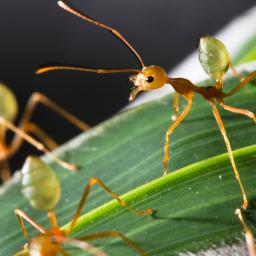
Four-year project maps location of species, with Australian state of Queensland found to host the greatest number of native speciesThe world’s first ever ant map showing the distribution of the tiny industrious creatures around the globe was launched on Thursday by the University of Hong Kong in a bid to shed more light on the insect world.
Three-year study involving 20,000 adults shows increased washing of hands leads to drop in acute respiratory, influenza-type and gastronintestinal illnessesThe trial of an online scheme that educates adults about proper hand-washing techniques has offered the first conclusive evidence that washing your hands makes a difference in reducing infection.You don’t only protect yourself, you also protect your family members, and presumably your colleagues as well Continue reading...
One of the joys of being old is that you can remember being younger. Those who are younger, like John Harris (Opinion, 5 August), can only imagine being older, and, like most imaginings, his is romantic. He imagines choosing to hobble down the road to drink his slow half. But as a fairly healthy 70-plus, I can tell him that you don’t choose to hobble. In my case it might so far be limited to taking the stairs one tread at a time instead of two, having to pre-plan crouching down, or failing with monotonous regularity to remember names. But it gives me enough of a peek into the future to know I might not like it at all. I might still be hale and hearty like Denis Healey at 90, or perhaps not. I have just witnessed the trauma of a friend losing both very elderly parents after caring for them through their increasingly serious illnesses. It’s not nice and it’s not fair. So, if I had a choice to be that sort of a burden or not to be, I hope I’d have the courage to consider the alternatives.
The headline “Rivalry is now part of higher education’s DNA†(5 August) is an oxymoron. DNA and the features encoded in it are inherited, not added during the lifetime of the organism. So a characteristic that is “now†part of higher education does not come from its DNA, but from the present circumstances. What does the Guardian’s style guide say on this topic?
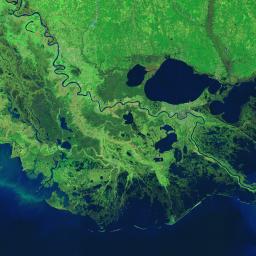
‘Eco-based’ engineering systems may be key to protecting cities that face up to eight times more risk from rising tides, storm surges and floods, says studyRich nations spend huge sums to keep the seas at bay but wealth may not save them indefinitely.New research suggests that the probability of flooding in cities and megacities built on river deltas is on the increase and over time, the Mississippi and the Rhine may become up to eight times more at hazard from rising tides, storm surges or catastrophic downstream floods.
Anthropologist who developed new insights into the origins of human societiesThe anthropologist Sir Jack Goody, who has died aged 95, combined thorough fieldwork with an original intellect that led him to establish links between very different civilisations, and gave him a deep understanding of the processes of change. One of his most remarkable pieces of work was a comparison between the societies of ancient Greece and modern Ghana.He was particularly interested in the transmission between the generations of both property and knowledge, in his work in northern Ghana. His comparisons of inheritance systems led him to the conclusion that, in medieval Europe, the Roman Catholic Church had resisted marriages between relatives for fear of losing bequests of property. Continue reading...
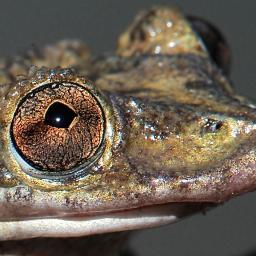
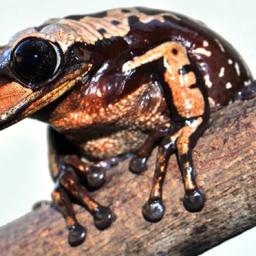
A team of scientists have identified two species of venomous frogs, a unexpected discovery. While a number of frogs have toxins in their skin and thus are considered poisonous, the term “venomous†is reserved for animals, such as pit vipers, that can inject their toxins into other animalsIt’s common knowledge that some frogs secrete toxins from special glands in their skin. But according to a paper published today in Current Biology, an international team of researchers report for the first time ever that two frog species are actually venomous. To be considered venomous, an animal must possess a toxin and must have some sort of mechanism, such as fangs, to deliver that toxin into another animal. And these frogs’ delivery mechanism of choice? Sharp spines on their faces.
The Labour Leadership contest furore continues unabated. With so much arguing and dispute between the available candidates and their supporters, is anyone really suitable for the role? A more rational, scientific approach is needed to determine who would be the best choice for leader of the oppositionWho should be the next leader of the Labour party? That’s a question a lot of people feel strongly about at present, resulting in a constant stream of analysis and opinion attempting to address the matter. What looked to be a by-the-numbers contest between familiar candidates has been turned upside down by the unexpected popularity of Jeremy Corbyn, resulting in a lot heightened passions about the “correct†way to proceed.However, are any of the available candidates “ideal†for the role of Labour leader? As the constant meticulous assessment of each has shown, all of them have their flaws. This is an inevitable consequence of being human. So are there better options out there? Is there a potential leader who could be universally popular, make the tough decisions and unify a fractured party? A scientific look at the current state of affairs and all the evidence suggests that yes, there might be. Continue reading...
Consultants think they can make publicly funded research more efficient. But they’re in danger of ignoring existing analyses – and real-life experienceAccording to Research Fortnight, Business Secretary Sajid Javid has hired business consultants from McKinsey and Company to say where cuts should be made to the research budget. They in turn have asked the seven UK research councils to justify why they should continue to exist as independent bodies.Why should this make you nervous? Continue reading...
by Ellen Dorothea Moss, University of Hull on (#GKBV)
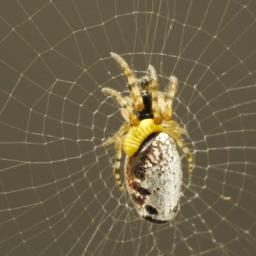
Parasitic wasp larvae drug their orb spider hosts into altering their normal webs to create a perfect nest for them to transform into adult waspsPeople associate wasps with memories of picnic invasions, BBQs under siege, and painful stings. There is a lot more to these much-maligned insects though, and with more than 100,000 different species, their life histories range from the quietly unobtrusive to the bizarre and gruesome. A new study in the Journal of Experimental Biology documents one such disturbing example of wasp larvae that takes control of their unfortunate spider hosts.The Japanese scientists behind the study thought the host-parasite relationship between the wasp Reclinervellus nielseni (most wasps have only a scientific name) and its orb-weaver spider host Cyclosa argenteoalba could help us understand how parasitic organisms alter their host’s behaviour. Continue reading...
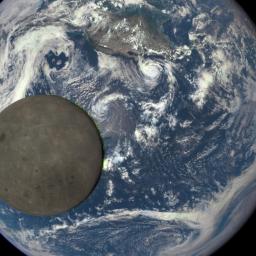
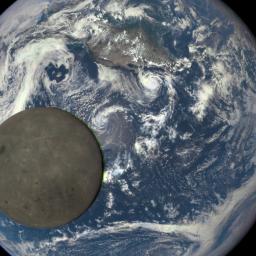
From a million miles away, a Nasa camera shows the moon crossing the Earth. The lesser-seen ‘dark side of the moon’ is dimly illuminated by the sun as it passes over the Pacific Ocean near North America. The north pole is in the upper left corner. The images were taken by the Dscovr spacecraft’s Earth polychromatic imaging camera (Epic) and telescope.Read more here Continue reading...
The US space agency has released a picture taken from its Deep Space Climate Observatory showing the moon as it moves in front of the sunlit side of EarthIn an unusual treat for astronomers, and perhaps Pink Floyd fans, what is often known as the dark side of the moon has been captured, fully illuminated, by a camera aboard a Nasa satellite.
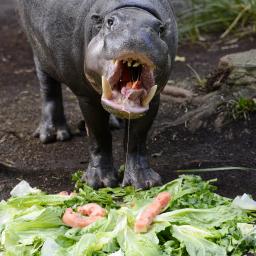
Wild Sea keeper Claire Anderson talks about how Melbourne zoo celebrates the birthdays of its animals. Petre the pygmy hippo, who turned 31 on Tuesday, may now be considered a senior pygmy hippo but she didn’t hold back in devouring a fruit and vegetable treat. Her calf, Obi, was the first of this endangered species born at the zoo since 1981 Continue reading...
Funding shortfall in programme to replace space shuttle means Soyuz remains the only way Americans can get to International Space Station, says Nasa chiefNasa has said it is being forced to extended its contract with Russia to fly astronauts to the International Space Station, at a cost of nearly half a billion dollars, because budget cuts have delayed commercial US alternatives.
by Ellen Brait and Mahita Gajanan in New York on (#GHS9)
Amid the grocery chain’s flavored water fiasco, the Guardian interviewed nutritionists for expert opinions on the trend that will never be worth $6 a bottleThe latest craze of flavored water reached a new level this week when a Whole Foods store placed three stalks of asparagus in water and threw a $6 price tag on the side. Shortly after, they admitted the product was a mistake.Related: 'Asparagus water' and $8 eggs: Whole Foods proves it knows its customers Continue reading...
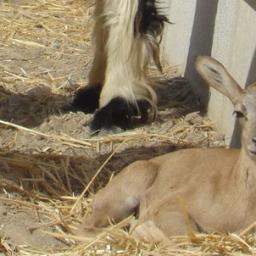
Poaching has driven the Isfahan mouflon close to extinction in Iran, where scientists are hailing the rare successful example of interspecies cloningA domestic sheep has given birth to a baby mouflon in a rare successful example of interspecies cloning, according to scientists in Iran.The wild Isfahan mouflon – or ovis orientalis isphahanica – was cloned by researchers at Iran’s Royan Institute, which is dedicated to reproductive biomedicine and stem cell research, using the domestic sheep as a surrogate mother. Continue reading...
I feel the need to express my opinion on the stories I so often read about Kids Company. I was eight when I first met Kids Company staff at my school in south London. I was then introduced to other staff and attended a centre in Camberwell every day after school.The support, warmth, care and love I received helped me escape my reality, which consisted of sexual, physical and emotional abuse from members of my own family. Continue reading...
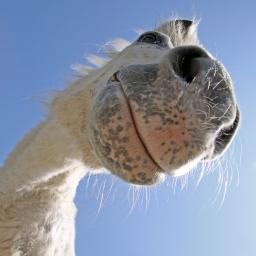
New study has identified 17 discrete expressions in horses (three more than chimpanzees) which may give researchers insight into their emotional statesA horse doesn’t have to pull a long face, it has one already. But it can and does look down its nose at you. It can be insistent, if not a nag. Horses are expressive, but those who want to decipher their expressions have a few hurdles yet to jump.But the chase is on. Scientists at the University of Sussex have compiled a directory of facial expression in one of humanity’s oldest four-legged friends. Their Equine Facial Action Coding System (EquiFACS for short) has identified 17 discrete facial movements in horses that may indicate mood or intention or just bafflement. Continue reading...
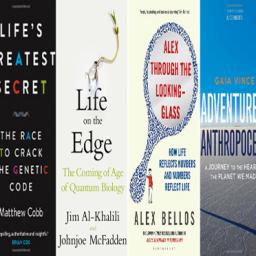
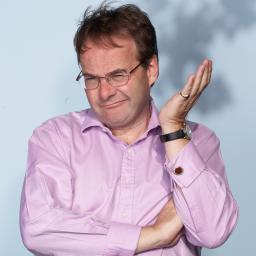
‘The best science writers can move and thrill us just as much as Austen or Dickens’, said judge Sarah Waters when announcing the shortlistWorried about your maths skills? Obsessed by the Higgs boson? Or the genetic code? Or anxious about your feeble grasp on the role of quantum physics in biology? Or what humans are doing to the planet? Or are you just worried to distraction full stop? Like science itself, all six shortlisted books in the Royal Society Winton Prize for Science Books are chronicles of the hunt for answers.Or are you worried about how many Guardian bloggers, contributors or former staff journalists you can identify in one single shortlist? Below are the candidates for the 2015 prize in alphabetical order, with links to reviews of their shortlisted work: Continue reading...
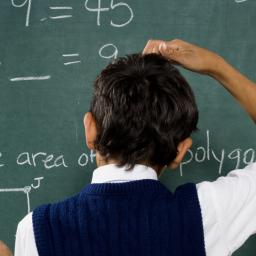
A report from the British Academy throws our lack of numeracy skills into sharp reliefIn June this year The British Academy (BA) published a report titled Count us in: Quantitative skills for a new generation. The report calls on the Government to face up to the problem of young people dropping maths too early. Currently, only about 20% of students stick with maths after the age of 16. This is one of the lowest rates in developed nations: in Japan, Korea, Finland, Germany and New Zealand for example, close to 100% of students take maths up to age 18.The report, described as “a vision of how the UK can rise to the potentially transformational challenge of becoming a data-literate nation†also pressed for improvements in the quality of quantitative skills teaching in schools and colleges. What surprises me is that the report wasn’t issued by any of the usual suspects – the Royal Society perhaps, or the Royal Academy of Engineering. No, the BA is the National Academy for the Arts and Social Sciences. Continue reading...
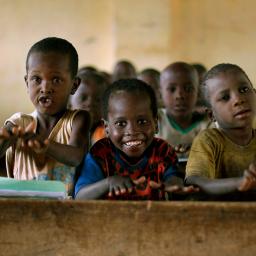
After doubt was cast on an influential scientific study two weeks ago, trenches were dug for the ‘worm wars’. Whose side are you on?It was supposed to be a magic bullet that would get under-privileged children in full health and into school. But in the last few weeks a row has broken out over just how useful mass ‘de-worming’ really is. Continue reading...
Fact checking? Based on sound evidence? The latest Radio 4 episode of What’s the point of ... the Met Office? not so much ignores the editorial guidelines as burns them to cindersQuentin Letts, the Daily Mail diarist, sporadically regales BBC Radio 4 listeners with programmes that ask ‘What’s the point ...’ of various national institutions. The Archbishop of Canterbury, the MCC and even the pub have come under his “witty but thought-provoking†gaze.This week’s offering purports to ask what is the point of the Met Office. But it actually poses a different question: What’s the point of the BBC editorial guidelines? Continue reading...
Seven-year study of adults in China matches regular consumption of spicy foods, such as chilli peppers, to 14% reduced risk of deathPeople who request an extra kick to their curry could also be adding years to their life, according to a large study which linked frequent consumption of spicy food to longevity.Researchers examining the diets of almost 500,000 people in China over seven years recorded that those who ate spicy foods one or two days a week had a 10% reduced risk of death compared with those who ate such meals less than once a week. The risk was 14% lower for those who ate spicy food between three and seven days a week. Continue reading...
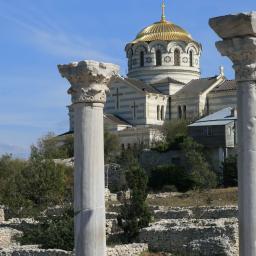
Tauric Chersonesos archaeological site in Sevastopol, Crimea, to come under Russian control after anger at decision to put Orthodox priest in chargeThe Russian president, Vladimir Putin, has moved to put a key archaeological site in Crimea under federal control amid academics’ outrage that an Orthodox priest was appointed to run it.The Interfax news agency said the Tauric Chersonesos national preserve in Sevastopol – the port city taken by Russia when it seized Crimea in 2014 –would be placed on a list of the cultural heritage of the Russian people and transferred to federal control from 1 September. Continue reading...
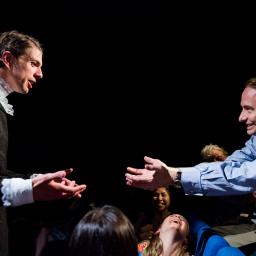
Acclaimed science-theatre writer-performer John Hinton talks about impersonating scientists as his award-winning ‘Scientrilogy’ comes to the Edinburgh FringeIf at first you don’t succeed, pretend.I adored science at school. But my coursework assignments bewildered my teachers. Details of experimentations were often accompanied by personal anecdotes and quotes from obscure song lyrics. Irrelevant clip-art was rife. So when I had to pick a path through the labyrinth of life, i.e. select my A-levels, science fell away in favour of subjects where personal anecdoture and obscure lyricalism are paramount.
Participants whose diet was rich in leafy greens, beans, berries and wholegrains were 7.5 years younger cognitively after five years than those who didn’t closely adhere to the dietA diet rich in green leafy vegetables, beans, berries, wholegrains and wine can help to slow normal brain ageing and cognitive decline, researchers said on Tuesday.Cognitive decline is a normal part of ageing but a study by scientists at Rush University Medical Center in Chicago showed that elderly adults who strictly followed the “Mind†diet were 7.5 years younger cognitively over a period of nearly five years than those who adhered the least. Continue reading...
Research found that protection can last for 30 years after use has stopped, with every five years of taking the pill reducing chance of womb cancer by a quarterThe pill not only prevents pregnancy but protects women from two forms of cancer for decades after they have stopped using it, say leading experts.Oxford University researchers say in the past 10 years, taking the pill has prevented 200,000 cases of womb cancer in high-income countries. In 2008, the Oxford epidemiologists, analysing the data from 45 studies involving 100,000 women, found that regular use for 15 years can halve the risk of ovarian cancer. Continue reading...
All plants contain toxins which continue to work after leaf fall, so how worms are able to stomach dead grass and leaf litter has long been a mysteryBritish scientists have cracked the global earthworm mystery: they have worked out how the planet’s great subterranean reprocessing system copes with the poisons that would choke most herbivores.Earthworms underwrite almost all life on earth: they drag fallen leaves below the soil and digest them, to excrete that rich mix of loam and living things called topsoil. Every year, 35 billion tons of dead grass and leaf litter get turned over by the worms and other soil fauna. But the catch is that some plants are really poisonous, and all plants contain some toxins designed by evolution to discourage demolition by herbivores, and these toxins carry on working even after leaf fall. Continue reading...