 |
by Kate Connolly in Berlin on (#GD44)
“Merkeln’, which means being indecisive or failing to have an opinion, is topping a poll to choose Germany’s favourite new ‘youth words’It is, perhaps, a measure of just how powerful she has become: Angela Merkel now appears to be influencing youth slang.The compilers of Germany’s most popular dictionary say that the verb “merkeln†is on track to become the most popular “youth word†of the year. Media strategists around the chancellor who may have fleetingly thought they could seize on the opportunity to encourage more young people to support the German chancellor will, however, have been quickly disappointed. Continue reading...
|
| Link | http://feeds.theguardian.com/ |
| Feed | http://feeds.theguardian.com/theguardian/science/rss |
| Updated | 2026-10-01 03:45 |
by Tim Radford on (#GCXN)
Researchers have recorded rapid rises in meltwater and alarming rates of glacial retreat, which are accelerating at a pace double that of a decade agoThe world’s glaciers are in retreat. The great tongues of ice high in the Himalayas, the Andes, the Alps and the Rockies are going back uphill at ever greater speeds, according to new research.And this loss of ice is both accelerating and “historically unprecedentedâ€, say scientists who report in the Journal of Glaciology. Continue reading...
 |
by John Crace on (#GCJQ)
‘If the first 10,000 pioneers to Mars can go without water for 10 years, everything should be hunky-dory’In the year 2027, two sleek spacecraft dubbed Raptor 1 and Raptor 2 will finally land on Mars after a gruelling 243-day journey. The following day a further 3,000 spacecraft – Raptors 3 to 3002 – will land next to them. This is a fact. The colonisation of Mars will have begun.Ever since Nasa stopped flying astronauts to the moon, many people have got a bit bored with space exploration. But manned space travel is now more than an ever a necessity as people are getting so fed up with the lack of Vodafone coverage. Earth is doomed to a slow death through climate change or a quick one through an invasion of Scientologists from Planet Theta, and the sooner we get the hell out of here the better. The good news is that Wernher von Braun has already designed the technology to get to Mars. Man got to the moon easily enough in 1969; all we need to do is build a rocket 1,000 times more powerful. Simples. Continue reading...
|
 |
by Tim Radford on (#GCH8)
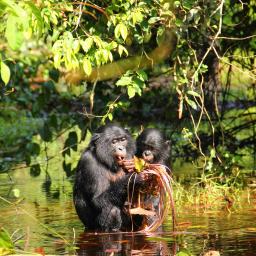
New observation of ‘peeping’ sounds made by humankind’s closest living relative suggest a possible evolutionary origin for human languageThe bonobo or pygmy chimpanzee – humankind’s closest living relative – has mastered the human art of babytalk. That is, it makes a range of sounds that must be interpreted in context. It may not be language, but it parallels those sounds that human infants make to communicate before they learn to use words, according to new research by Zanna Clay, a psychologist at the University of Birmingham. Continue reading...
|
by Jeremy Hance on (#GC51)
A new book, Brilliant Green, argues that not only are plants intelligent and sentient, but that we should consider their rights, especially in the midst of the Sixth Mass Extinction
 |
by Deepak Chopra and Rudolphe E Tanzi on (#GC44)
Some treatments hold much promise, but they pale in the face of the realization that everyday life choices are altering gene activity all the timeMuch of the current research on treating disease and staying healthy has focused on our genetic makeup – from the Human Genome project, completed in 2003, to the newer field of epigenetics, which puts our 23,000 genes into the context of the chemical reactions that influence their activities. Though these are crucial areas of study, scientists are continually forced to confront how much human health is not dependent on our genetics.The original optimism about the potential of genetics has been dampened by the immense challenges of translating gene findings into drug discovery as well as a gross underestimation of the role of lifestyle on disease risk. Geneticists did not –and many still do not – fully appreciate the dynamic manner in which our genes interact with each other and our lifestyles, down to the level of our cells, eavesdropping on activities everywhere in the body and responding, often instantaneously, to a person’s experiences. Continue reading...
|
 |
by David Urry on (#GC2Z)
The UK has over 20,000 species of insect, but their numbers are declining sharply. Here are some of the many reasons we should protect themIf you ask the average person what their favourite insect is, chances are you may not receive an enthusiastic response. Insects are not necessarily something we are expected to have an opinion on, let alone a favourite. They are often lumped together as one entity, “bugsâ€, and are regularly overlooked, or considered a pest (which of course they can be).In many ways, however, this is extremely surprising. We have over 20,000 species of insect in the UK. They come in all sorts of wonderful shapes and sizes, with distinct characters, traits and glorious life histories. Continue reading...
|
 |
by Peter Scott on (#GBV8)
Academics have learned to live with attempts to measure university research, but is this the best way to judge success or failure?Many academics now showcase their work on one or more “reputation†websites – Google Scholar, ResearchGate, Academia.edu … They are as familiar with their h-index – a number that measures the quality of a researcher’s output – as they are with their phone numbers, and they are not ashamed to quote them in job or research applications.They have learned to live with, if not love, these metrics, which rate the number of highly cited papers an academic has written. They seem solid compared with the old-fashioned peer review in which one lot of academics, anonymously of course, comments on the quality of the work of another lot. Continue reading...
|
 |
by Ian Sample on (#GBQ0)
A series of experiments has produced incredible results by giving young blood to old mice. Now the findings are being tested on humans. Ian Sample meets the scientists whose research could transform our livesOn an August morning in 2008, Tony Wyss-Coray sat in a conference room at the Veterans Affairs hospital in Palo Alto, California, waiting for his lab’s weekly meeting to begin. Wyss-Coray, a professor of neurology at Stanford University, was leading a young group of researchers who studied ageing and neurodegeneration. As a rule, the gatherings were forgettable affairs – the incremental nature of scientific progress does not lend itself to big surprises. But a lab member scheduled to speak that day had taken on a radical project, and he had new results to share.Saul Villeda, an ebullient PhD student with slick black hair and a goatee, had spent the past year engrossed in research that called to mind the speculative medical science of the middle ages. He was investigating whether the old and frail could be rejuvenated by infusions of blood from the young. The hypothesis was not as absurd as it might sound. Continue reading...
|
 |
by Melissa Davey on (#GAZJ)
Astrophysicist joins scientists and mathematicians to discuss climate change and extraterrestrial life – and the booing of Adam Goodes – without acrimonyPoliticians cherry-picking information to suit their own agenda is one of the great tragedies of modern civilisation, the astrophysicist Neil deGrasse Tyson said on Monday night’s Q&A.In a panel devoid of politicians, Tyson joined the oncologist and Guardian Australia columnist Ranjana Srivastava, the mathematician and CSIRO marine scientist Beth Fulton and the mathematics ambassador Adam Spencer to discuss climate change, extraterrestrial life and artificial intelligence. Continue reading...
|
 |
by Press Association on (#GAYG)
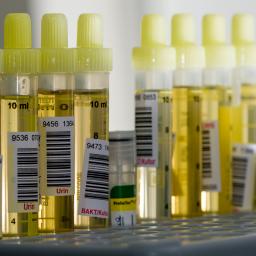
Scientists develop test for three proteins which could give early warning of disease and help doctors distinguish symptoms from chronic pancreatitis
|
 |
by Letters on (#GABF)
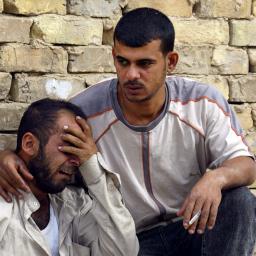
Michael Bywater (When a manly pat on the back won’t do, 1 August) correctly points to the salience of culture in shaping our responses to grief, but when he writes “We have grown to distrust rationality; feeling is the new thinkingâ€, whom is he referring to? For some, grief has to be stowed away because, in rational terms, they cannot allow it to dominate their lives when earning a living and supporting children have priority. They are not in a position to cogitate on “the rewriting of what it means to be humanâ€.Those who are at the forefront of this discourse, though, are not necessarily harbingers of change when it comes to responses to grief. Some years ago I was working in a Russell Group university and the response I received, on the death of my wife, from a female professor of sociology, was: “Oh, I wouldn’t like that.†Clearly indicating, as Bywater puts it, that the new message is “We’re all in it togetherâ€. Really?
|
 |
by Mahita Gajanan in New York on (#GABH)
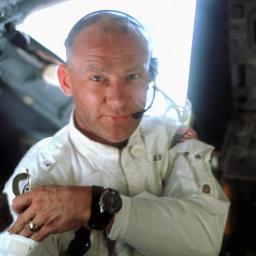
The Apollo 11 astronaut who made the first lunar landing in 1969 has tweeted his official travel voucher and customs forms for the moon rock he brought backBuzz Aldrin’s 1969 trip to the moon was just like any other business trip, expenses forms and all.Related: Camera and souvenirs from Apollo 11 moon landing go on display Continue reading...
|
 |
by Mary O'Hara on (#GA5Q)
The procedure is increasingly being sought out by professional women looking to postpone motherhood, but it could have unintended consequencesIsobel Taylor laughs as she recalls her decision to freeze her eggs. “I joke to my friends that it’s douchebag insurance,†the 34-year-old art director from Los Angeles says, explaining that since the right man is not yet on the horizon, putting her eggs in storage feels like a reasonable backup plan. “It takes away a bit of the stress.â€Taylor (not her real name) is far from alone in opting for egg freezing. There has been a surge in mainly professional women across the US going down the freezing route in an effort to preserve healthy eggs that can be thawed and fertilized later, if or when they decide to start a family. Continue reading...
|
by Alex Bellos on (#GA0F)
Here are the solutions to the Area Maze puzzles I set earlier todayEarlier today I set four Area Maze puzzles. Here’s how you solve them.Area Maze 1 Continue reading...
 |
by Gwendolyn Quinn and Matthew B Schabath on (#G9YB)
Members of those communities may be uncomfortable sharing their sexual orientation with doctors. And doctors lack comprehensive statistics on their riskGay, lesbian, bisexual, transgender or queer/questioning (LGBTQ) people may be at greater risk for seven different cancers than heterosexual and gender-aligned folks are, and a lot of the discrepancy is due to misinformation and lack of regular healthcare in those communities.These factors increase the likelihood that LGBTQ people, who make up some 12% of the population, will avoid important cancer screenings, or be unaware that they are necessary. The upshot is that anal, breast, cervical, colorectal, endometrial, lung and prostate cancers may disproportionately affect the LGBTQ community. For example, available data suggest the risk of dying from breast cancer is 3.2 times higher in lesbian women compared to heterosexual women. Continue reading...
|
by Tim Radford on (#G9WV)
Researchers have demonstrated that even if a geoengineering solution to CO2 emissions could be found, it wouldn’t be enough to save the oceansGerman researchers have demonstrated once again that the best way to limit climate change is to stop burning fossil fuels now.In a “thought experiment†they tried another option: the future dramatic removal of huge volumes of carbon dioxide from the atmosphere. This would, they concluded, return the atmosphere to the greenhouse gas concentrations that existed for most of human history – but it wouldn’t save the oceans. Continue reading...
 |
by Tim Radford on (#G9SX)
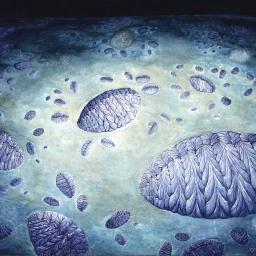
A combination of fossils and sophisticated statistical techniques has allowed scientists to reconstruct how Fractofusus reproduced 565 million years agoThey looked like plants but were almost certainly animals; they drifted back and forth in in the deep ocean currents 565 million years ago; and by 540 million years ago, they were gone.And yet, in one of palaeontology’s triumphs, researchers at Cambridge now know how these mysterious organisms spread themselves around the pre-Cambrian world. And the answer is one that every gardener would recognise: they sent out runners, and established new growths. Just like strawberries.
|
 |
by Alex Bellos, Ian Anderson, Paul Boyd, Tash Reith-B on (#G9YD)
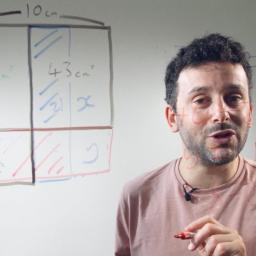
There were a whopping four puzzles to solve this week, each an area plan with a missing value. Did you manage it? Alex explains the solutions to two of them – click here to discover if you've cracked the other two. See you in two weeks for the next puzzle! Continue reading...
|
 |
by Jessica Glenza in New York on (#G944)
New study claims tendencies, which pediatricians have long advised children will ‘grow out of’, are associated with more serious conditionsFor many in the toddler-rearing parent population,dinner-time can be a battle: their children are picky eaters, and have divined what seems like a both arbitrary and immovable set of guidelines for their foods.The foods they can’t touch, the crusts that have to be cut off or the ketchup that has to be a certain brand. Continue reading...
|
 |
by Guardian music on (#G8MY)
Look out for alien skin, astronauts and UV-related anguish in the alt-pop band’s latest music video
|
by Alex Bellos on (#G8DY)
Area Maze is the a-mazing new game from prolific puzzle inventor Naoki InabaHello Guzzlers.It is with huge pleasure that I introduce today’s puzzle, which is already a big deal in Japan. It’s called Menseki Meiro, or Area Maze, and I hope you find it as brilliant as I do. Continue reading...
 |
by Alex Bellos, Tash Reith-Banks, Ian Anderson and Pa on (#G8DZ)
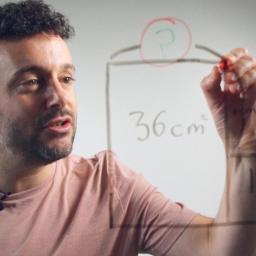
Alex Bellos sets a mind-bending puzzle – the area maze. Originally invented for schoolchildren, it's become a big hit with adults in Japan. Can you find the missing values in the four puzzles Alex has set? He goes through an example to help you along! For a written version, click here. Continue reading...
|
 |
by Jeremy Farrar on (#G8CV)
A success rate of 100% in trials is spectacular. There is no excuse for inertia on other diseases nowFor more than a year and a half, three of the world’s poorest countries have struggled against the most devastating Ebola epidemic in human history. Containing this unprecedented outbreak would have been a huge challenge for Guinea, Liberia and Sierra Leone under any conditions. But the scale of the task was far greater because of the absence of the most effective possible defence: a vaccine.Related: Ebola vaccine trial proves 100% successful in Guinea Continue reading...
|
by Melissa Davey on (#G80R)
On the eve of his Australian live shows, the renowned astrophysicist and Star Talk podcast host says he wants to empower audiences to think for themselvesDr Neil DeGrasse Tyson, an astrophysicist and director of New York’s Hayden planetarium, researches some of the most complex areas of the cosmos. Star formation, dwarf galaxies, and the structure of the Milky Way are just some of the areas of his work.That he can talk about these dense topics on stages in sold-out venues normally reserved for philharmonic orchestras or Broadway musicals is thanks to his ability to communicate science in a compelling and relatable way. Continue reading...
 |
by Kate Ravilious on (#G7F5)
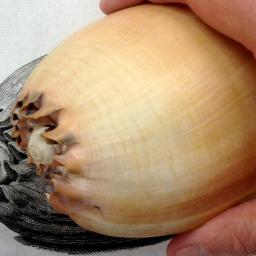
Today scientists use sophisticated technology to catalogue treasures such as fossils. Items can be laser scanned, enabling us to view the object from any angle, without even touching the specimen. But sometimes you can’t beat an old fashioned illustration. Continue reading...
|
 |
by Press Association on (#G761)
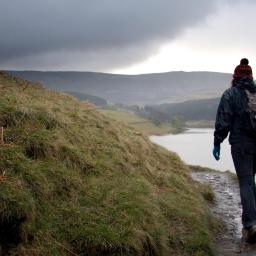
Intake should be boosted with supplements, say official health advisors in draft recommendations that could lead to new guidancePeople in Britain should boost their vitamin D intake with supplements because of a lack of bright sunshine to provide it naturally, government health advisers have suggested. The British weather prevents much of the population from receiving healthy amounts of the essential vitamin from sunlight, and natural food sources alone are not enough to boost levels, according to the scientific advisory committee on nutrition (SACN).The SACN, an independent advisory body to the government, made the recommendation after studying the links between vitamin D levels and a range of health problems, including musculoskeletal health, heart disease, type 1 diabetes, cancer and multiple sclerosis. Continue reading...
|
 |
by Dalya Alberge on (#G6WE)
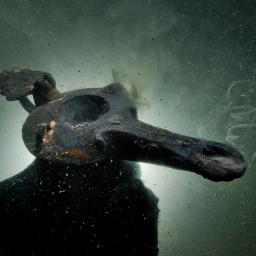
Artefacts discovered amid submerged ruins of cities of Thonis-Heracleion and Canopus to be unveiled in major Paris exhibitionSpectacular ancient Egyptian treasures are to be exhibited for the first time having been discovered underwater in the submerged ruins of the near-legendary cities of Thonis-Heracleion and Canopus.A finely sculpted statuette of a pharaoh and a golden-eyed depiction of god Osiris are among antiquities to be unveiled in a major exhibition in Paris from next month.
|
 |
by Jon Butterworth on (#G608)
Last week I was in a hotel in Edinburgh where the whole bedroom was vibrating for some unexplained reason, at an almost imperceptible level. The Bessel functions in my glass of water were a key part of the evidence that persuaded the manager to move us
|
 |
by Nic Fleming on (#G5WM)
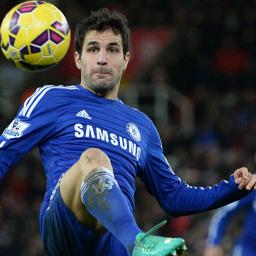
In February, football’s lawmakers approved the analysis of a player’s performance during live matches, via a tracking device in the shirt. So what impact will this have on a player’s health, game management – and the half-time team talk?The Fifa Women’s World Cup final this summer was remarkable, and not just because England came within one game of playing in it. One in 12 Americans watched at least part of the game live, making it the most watched football game in US history, while Team USA secured a record third title, thanks in no small part to their midfielder Carli Lloyd scoring a 13-minute hat-trick. The third of these saw her lob the Japanese goalkeeper from the halfway line.Less obvious, but possibly of more significance, were the small black gadgets about the size of an old Nokia mobile phone that the winning players were wearing between their shoulder blades. The final was the first major international match since the laws of the game were changed in February to allow players to wear performance-tracking devices during a match. Continue reading...
|
 |
by Jackson Landers for the Washington Post on (#G3R9)
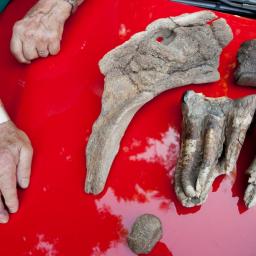
Analysis of the ancient mammal’s fossilised remains will help scientists study long-term climate trends and the ecosystems of the Holocene eraAt least 12,000 years ago, a mastodon with a toothache died on top of a pile of seashells beside a creek near what is now Yorktown, Virginia. The flesh decayed, leaving teeth and bones that were gradually covered by sediment from the creek. Over the years, the bones of other mastodons in Virginia dissolved. But this one was in just the right place to survive.In 1983, a brick mason named Lawnell Hart was out hunting when he spotted an enormous tooth in the creek. Hart showed the site to Gerald Johnson, a geologist at the College of William and Mary. Continue reading...
|
 |
by Richard Norton-Taylor on (#G39V)
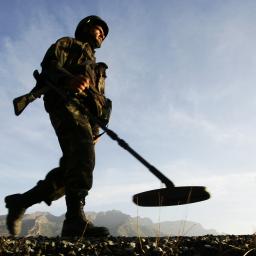
A ban on the use of landmines by British forces won’t cover troops working with NatoGeorge Robertson, the Defence Secretary, yesterday announced an immediate and total ban on the use of anti-personnel landmines by British forces as the Government ratified an international convention outlawing the indiscriminate weapon estimated to kill or maim 2,000 people a month.
|
 |
by Guardian Staff on (#G2QT)
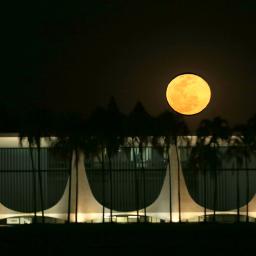
A blue moon rose in the skies for first time in three years on Friday. The event occurs when there are two full moons in one calendar month, roughly every two to three years. This summer it is especially interesting as it’s also a supermoon, when the moon is at its closest approach to Earth, making it appear very big and bright Continue reading...
|
 |
by Michael Bywater on (#G26E)
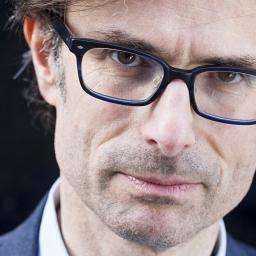
Robert Peston found his male friends insensitive after his wife’s death – but the problem is not menWe must all grieve, sooner or later. Even divinity doesn’t exempt you. “Jesus wept†is famously the shortest verse in the Bible, and he wept because his friend Lazarus was dead. Not just emotion, but a matter of doing the right thing. “Then said the Jews,†it goes on, “Behold how he loved him!â€What man, after all, would not weep if his friend died? Or the friend of a friend, or a friend’s wife? What man could remain stony-eyed or, worse, cheerily encouraging? Continue reading...
|
 |
by Hannah Ellis-Petersen on (#G21F)
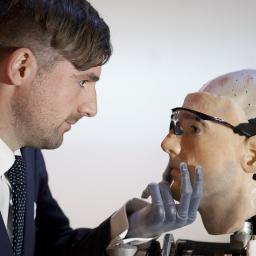
Sci-fi show is broadcaster’s most successful drama in 20 years, with audiences engrossed by its depiction of AI and how it could threaten mankindChannel 4 has announced there will be a second series of Humans, its most successful drama in 20 years, ahead of the show’s highly anticipated season finale on Sunday night.Set in a parallel present, Humans has prompted widespread debate about artificial intelligence. It imagines a world in which we increasingly rely on robots, marketed as high-tech luxury house appliances. As the eight-part drama has progressed, it has wrestled with questions around artificial intelligence and its possible threat to mankind, as well as exploring what it means to be human. Continue reading...
|
 |
by Sarah Boseley Health editor on (#G0X1)
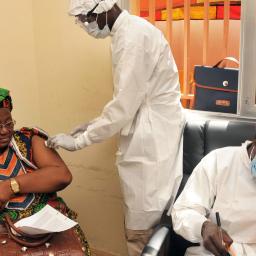
Rapid development and testing of drug may bring current epidemic in west Africa to an end and control future outbreaks, experts say
|
 |
by Ian Sample on (#G1KS)
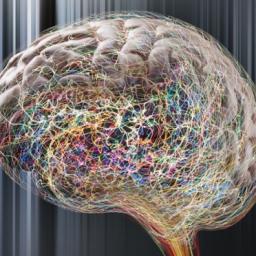
What does the creative brain look like, and can we boost our creative powers?It's a question that's fascinated us for centuries - what is the nature of creativity? Can we find its roots in the human brain? And if so, can we boost our creative powers?To discuss the notion of a link between creativity and madness Ian Sample is joined in the studio by Dr Caroline Di Bernardi Luft, from the Department of Psychology at Goldsmiths, University of London. Down the line is Dr Anna Abraham from the School of Social, Psychological and Communication Sciences at Leeds Beckett University, and from the University of New Mexico we have Professor Rex Jung. Continue reading...
|
 |
by Zoe Cormier on (#G1HY)
The proposed ban on nitrous oxide is irrational and unworkable, and requires serious challenge, not an inane demo in Parliament SquareOn Saturday at exactly 3pm, hundreds of people will converge on Parliament Square in London, inhale nitrous oxide, or “laughing gasâ€, collectively giggle for 30 seconds, and then disperse. The Psychedelic Society insists “this is not a party†but a serious act of political dissent. “We’ll all inhale together in a sea of coloured rubber to send the message: My mind, my choice.â€The “mass inhalation†is in protest against the proposed psychoactive substances bill, which would make possession or supply of any “psychoactive substance†(with the exceptions of nicotine, alcohol and caffeine) punishable by up to seven years in prison. The aim is to crack down on legal highs, which chemists constantly concoct when old favourites are banned. No more “meow meowâ€, “spiceâ€, “vanilla sky†or other new chemical substances. The catch-all legislation would also remove well-established legal highs such as nitrous oxide. Continue reading...
|
 |
by Stuart Clark on (#G0ZH)
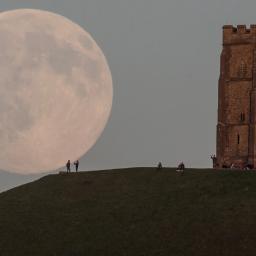
Tonight’s blue moon will be easy to see, but the name has nothing to do with its colour and ‘once in a blue moon’ is probably based on a misunderstandingIf it is clear tonight, step outside and marvel at the full moon. Its heavy, illuminated orb will trace a path right across the sky from horizon to horizon during the twilight and nighttime hours.It will be shining in the reflected light of the Sun, as normal, and will appear yellow/white, as normal, yet we call it a blue moon because, well … here’s where the story gets interesting. Continue reading...
|
by Jessica Bland and Jack Stilgoe on (#G0TY)
Stephen Hawking, Elon Musk, Steve Wozniak and artificial intelligence researchers published a letter calling for a ban on autonomous weapons. This is an easy first step. A ban that works in practice will be much harder.
 |
by Zehrah Hasan on (#G0PB)
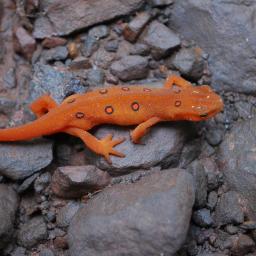
Move needed to prevent spread of deadly fungal disease via pet trade to the wild where it can wipe out salamander populationsThe import of hundreds of thousands of live salamanders to the US each year should be banned to save wild salamanders from a deadly disease, scientists say.They say the move is needed to stop the skin-eating fungal disease, Batrachochytrium salamandrivorans (Bsal), from spreading via the pet trade to wild populations, where there is currently no effective way to control it. Continue reading...
|
by Mo Costandi on (#G0JM)
New research shows that conscious and non-conscious thought processes can both alleviate and enhance the experience of painWhen we say that we are “in painâ€, we usually mean that an injured body part is hurting us. But the phenomenon we call pain consists of more than just physical sensations, and often has mental and emotional aspects, too. Pain signals entering the black box of the brain can be subjected further processing, and these hidden thought processes can alter the way we perceive them.We still know very little about these non-physical aspects of pain, or about the brain processes responsible for them. We do know, however, that learning and mental imagery can both diminish and enhance the experience of felt pain. Two new studies now extend these findings – one shows that subliminal learning can also alter pain responses, and the other explains how mental imagery can do so. Continue reading...
 |
by Suzi Gage on (#G0BF)
Pharmacology can get a bad rap in the press. Professors George Davey Smith and David Nutt fight the case for statins and SSRIs.In a public lecture hosted by the British Association for Psychopharmacology and Bristol’s MRC Integrative Epidemiology Unit (where I work), Professors George Davey Smith and David Nutt stripped away the sensationalisation and misinformation around statins and SSRIs. They come from very different fields, George is an epidemiologist and David a psychiatrist, but both fields can help us understand the efficacy and safety of drug treatments.George took on the topic of statins. George is a perfect example of a scientist being led by the evidence - he himself wrote an article 25 years ago calling for cholesterol lowering drugs to cease to be prescribed, but now believes the evidence is overwhelming in support of the use of statins for lowering cholesterol, which reduces the risk of cardiovascular disease. Not that you’d necessarily see that from the media, where their use has been linked to everything from baldness to memory loss, kidney damage to nosebleeds. Continue reading...
|
by Tim Lott on (#FZZN)
This readable study by Sheldon Solomon, Jeff Greenberg and Tom Pyszczynski attempts to measure the influence of mortal terror on human affairsErnest Becker’s The Denial of Death (1973) made the striking claim that human activity is driven largely by unconscious efforts to deny and transcend mortality. “We build character and culture in order to shield ourselves from the devastating awareness of underlying helplessness and terror of our inevitable death,†observed Becker. The authors of The Worm at the Core extended Becker’s work with a presentation in 1984 at a meeting of the Society of Experimental Social Psychology. They called it “Terror Management Theoryâ€. The reception was lukewarm. As the authors recount, “renowned psychologists were storming for the exitsâ€.Undeterred, they approached the journal of the American Psychological Association with a paper on the theory of terror management. The editor insisted their ideas wouldn’t be taken seriously unless some hard evidence could be provided (Becker’s work was built largely around psychoanalytic theory rather than empirical research). Continue reading...
 |
by Elizabeth Soumya on (#FZXQ)
Implausibly, this elusive nocturnal animal has somehow survived in Bangalore, a mushrooming megacity of 10 million people. But a catastrophic loss of trees in what was formerly known as India’s ‘garden city’ threatens their futureIt’s 7pm on a Saturday night and a park in the heart of the city is teeming with people. The pathways are crammed with jostling walkers, park benches are spilling over with couples and senior citizens. In all the bustle, a group of people carefully trail the walkway armed with torches that they shine across the park’s treetops. They’re looking for something. They find ant nests, a spotted owlet and bats hanging upside down – but they keep moving. They reach the end of the park’s walkway and a swathe of light from a torch hits a tall tree outside the park boundary. A pair of eyes glowing in the dark stare back and begin floating in the dark. They’ve found what they’re looking for – a small and extremely elusive furry creature – a slender loris. With wide, unblinking eyes and long, skinny limbs, these peculiar squirrel-sized primates live on trees in the forests of southern India and Sri Lanka.But the park where the group spots the loris is far from a pristine forest. The roundabout next to it is clogged with traffic, drowned in a cacophony of horns and city noises. Bangalore, known as India’s Silicon Valley, is one of the world’s fastest-growing cities with a population of 10 million.
|
 |
by Guardian Staff on (#FZKH)
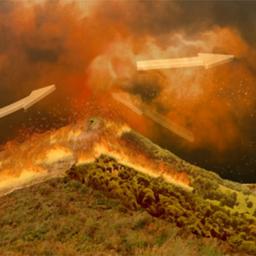
How scientists analyse the spread of extreme bushfires and the weather phenomena they create. In the latest Catastrophic Science episode, researchers at University of New South Wales analyse the deadly 2003 Canberra bushfires during which fire spread across the wind's direction as well as with it, and spawned supercell thunderstorms and tornadoes Continue reading...
|
 |
by Ian Sample, science editor on (#FYGQ)
From the “frozen primordial soup†of organics on the comet to new pictures, the discoveries made during the Philae lander’s first days have been published
|
 |
by Heathcote Williams on (#FYB1)
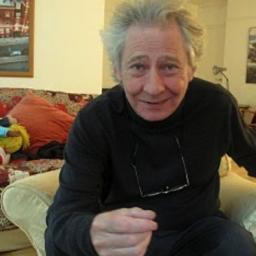
On 16 February 1963, my friend Mike Lesser, who has died aged 71, was one of the “Spies for Peace†who broke into the then secret regional seat of government (RSG-6) near Reading in Berkshire. The result, that Easter, was the publication of the pamphlet “Danger! Official Secret! RSG-6â€, which revealed – with phone numbers and names – the administrative network of underground bunkers prepared for a nuclear strike. RSG-6 was besieged by Campaign for Nuclear Disarmament Aldermaston marchers, Vanessa Redgrave declaimed from the pamphlet, and the activists were officially denounced as traitors.Mike, scientist and anarcho-communist, was then the youngest member of the Committee of 100 – non-violent campaigners against nuclear weapons – and had already served a jail term in Wormwood Scrubs prison following a Whitehall protest. After the RSG-6 break-in he spent six months hiding out on the German North Sea coast. None of the Spies for Peace was ever charged, but it would be 2010 before Mike spoke of his role. Continue reading...
|
 |
by GrrlScientist on (#FY3R)
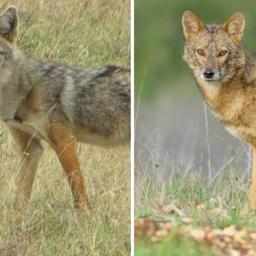
A new species of wolf has been discovered in Africa after exhaustive DNA and morphological analyses revealed it is evolutionarily distinct from the Eurasian golden jackal, which it strongly resemblesThe Canid family -- wolves, coyotes, jackals, foxes, domestic dogs and others -- are so familiar to us, and have been so intensively studied for so long that you might think that we know almost everything there is to know about them. But a paper published today in Current Biology belies that assumption. This paper describes the meticulous research conducted by an international team of experts who report a surprising discovery: a new species of wolf.
|
 |
by Helen Thomson on (#FY3P)
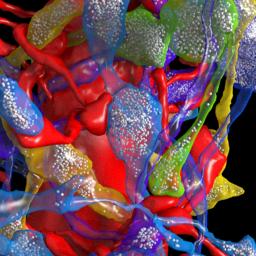
Researchers hope uprecedented images will allow study of abnormal connections in neurological disorders such as schizophrenia and depressionScientists have created an unprecedented high-resolution map of the brain that reveals structures as small as those found in individual nerve cells.
|