 |
by Tash Reith-Banks on (#FXG3)
The Shuffle festival in east London runs until this Saturday, and its science programming is genuinely exciting. And that’s before we get to eating worms ...It was about the time that the starter arrived that I began to fear for my four-month-old marriage.Let’s be clear: I hadn’t exactly lied to my husband. I had told him that I was taking him out to lunch and then to see a short film. Continue reading...
|
| Link | http://feeds.theguardian.com/ |
| Feed | http://feeds.theguardian.com/theguardian/science/rss |
| Updated | 2026-10-01 03:45 |
 |
by Alex Hern and Julia Powles on (#FXF2)
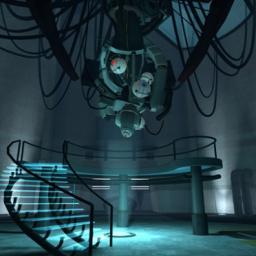
Artificial intelligence community comes together in unprecedented numbers to call for a ban on AI-controlled weaponryAn open letter from AI researchers urging a ban on offensive autonomous weapons has now reached 16,000 signatories, after being signed by more than 15,000 people in the three days since it was released.The letter says “AI technology has reached a point where the deployment of [autonomous weapons] is – practically if not legally – feasible within years†and was initially signed by Tesla’s Elon Musk, Apple co-founder Steve Wozniak, Google DeepMind chief executive Demis Hassabis and professor Stephen Hawking. It has now been signed by over 2,000 experts, as well as another 14,000 individuals from outside the AI community. Continue reading...
|
 |
by Jenny Rohn on (#FX0G)
Any change in a government brings uncertainty. For scientists in Britain, the waiting game ahead of the November spending review is turning into a nail-biterBack in 2010, UK science dodged a bullet – sort of.Following a global recession, the scientific community was warned to expect cuts of up to 40% to the core research budget. We rallied, presenting strong arguments for the role of science in fueling the economy. Afterwards, the £4.6b ring-fencing of these funds announced in the subsequent Autumn Spending Review came as a relief. Continue reading...
|
by Alex Bellos and Tash Reith-Banks on (#FWEX)
The Bridges Conference is an annual event that explores the connections between art and mathematics. Here is a selection of the work being exhibited this year, from a Pi pie which vibrates the number pi onto your hand to delicate paper structures demonstrating number sequences. This year’s conference runs until Sunday in Baltimore. Continue reading...
 |
by Haroon Siddique on (#FVTD)
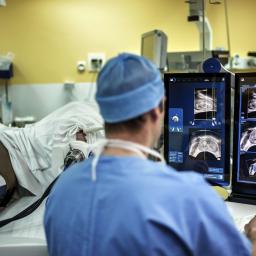
Researchers say study suggests need to target black men for screening of prostate cancer, which is projected to become the UK’s most common cancer by 2030
|
 |
by Jules Montague on (#FTQE)
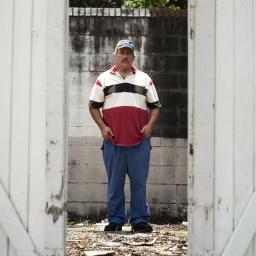
When amnesia strikes, people can forget everything about their life, including their name. But what causes memory loss? And what happens to people who lose themselves for an hour, a few months – or even for ever?She was missing but police knew where she was. She could not remember her name, her family or her childhood. She knew that she was dying, but only that. Interpol released a missing persons report: 1.7m, 91kg, brown eyes, chip on front tooth, right-handed, Caucasian, appears to be in her 50s, piercing on each ear, shoe size 39. Languages: English, French.She called herself “Sam†and spoke to the media this month, explaining that she had been found semi-conscious by police outside a church in Carlsbad, California, five months ago. She had stage three ovarian cancer, she said. A Facebook campaign earned 200,000 shares and ignited worldwide media interest. Then Sam’s scattered recollections started to emerge: “… swimming in a salt water pool in Perth, then icebergs in New South Wales and in Cairns in Queensland and Byron Bayâ€. Continue reading...
|
by Ian Sample Science editor on (#FTQG)
The most powerful aurora ever recorded has been spotted above a failed star 18 light years away, solving a longstanding astronomical mysteryThe sky above a failed star in a distant constellation shimmers with a beautiful green and yellow aurora one million times brighter than the northern lights. The spectacular light show is the first confirmed aurora on a body outside the solar system, and the most powerful ever recorded.
 |
by Neil Bartlett on (#FTM7)
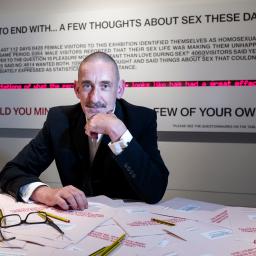
One man wants to service soldiers on leave, one woman was taught about multiple orgasms during an episode of The Antiques Roadshow . . . what happened when 10,000 people were asked to share their deepest desires?When it comes to sex, there’s no such thing as a simple question. Even the most basic inquiry soon turns out to be loaded. Most sex surveys start by asking the respondent whether they are male or female. Why not female or male? And what about all the other options – all the people who would describe themselves as neither or both? Why do surveys always ask people what they do with their bodies, instead of asking what they don’t – and why not? And how are we to deal with the peculiar fact that most sex exists only in memory; or, these days, on mobile phones.
|
 |
by Julia Kollewe on (#FTB3)
Pharmaceutical company reported better than expected second-quarter results of £5.9bn, although Chinese sales fell 14%The GlaxoSmithKline CEO, Sir Andrew Witty, said the Chinese drug market has slowed down dramatically over the past year but insisted that the drugmaker’s own business there is stabilising, as it unveiled second-quarter results that beat City expectations thanks to strong sales of new HIV drugs.Witty also flagged up 40 new drugs and vaccines that are in mid- to late-stage development, half of which are expected to be on the market or filed for regulatory approval by 2020. He highlighted a new shingles vaccine, as well as treatments for chronic lung disease, severe asthma, anaemia and heart disease. Continue reading...
|
 |
by Guardian Staff on (#FSZD)
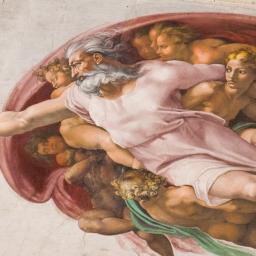
Readers answer other readers’ questions on subjects ranging from trivial flights of fancy to profound scientific conceptsIf there is intelligent life out there, what are the chances that it might believe in God (or the gods)?Tim Bowden, China Continue reading...
|
 |
by Guardian Staff on (#FSAE)
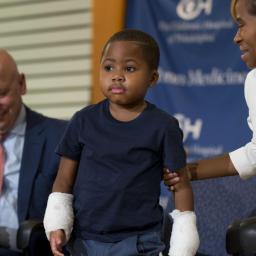
An eight-year-old boy from Baltimore who lost his hands and feet to a serious infection is the youngest patient to receive a double-hand transplant. A 40-person medical team used steel plates and screws to attach the old and new bones. Surgeons the Philadelphia children's hospital then painstakingly reconnected Zion Harvey's arteries, veins, muscles, tendons and nerves. Doctors say Harvey will spend several weeks in physical rehab at the hospital before returning home Continue reading...
|
 |
by Stephen Curry on (#FS0H)
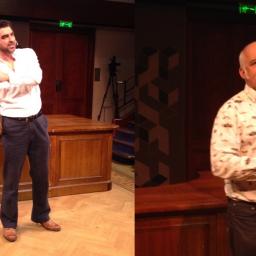
Nick Lane’s and Matthew Cobb’s talks on their engrossing books about cracking the secrets of life and the genetic code are now available on video and have brought to mind an intriguing question…At the weekend I reviewed two superlative volumes of popular science, The Vital Question by Nick Lane and Life’s Greatest Secret by Matthew Cobb. Lane dives to the ocean depths to pick apart the energetics of the chemistry that is likely to have given birth to life on Earth, while Cobb’s book is a masterful telling of the ideas, experiments and personalities that eventually cracked the genetic code.Those tantalised by the books may be pleased to learn that both authors spoke about their subjects at the Royal Institution back in June and the videos of these short talks (which I attended) are now available at the RI Channel. I can recommend both presentations for anyone doubtful about the excitement of ideas conveyed by these two books. Continue reading...
|
 |
by Agence France-Presse in Paris on (#FRHY)
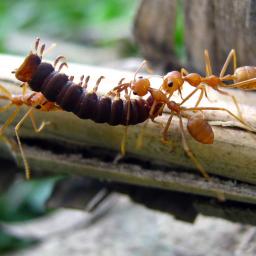
Groups of ants working together to carry objects change their tactics whenever a new individual joins in with a better idea, scientists findRelated: Ants on New York City's streets survive on junk food and meat, study findsRelated: Penguin robot helps researchers get close and personal Continue reading...
|
 |
by Associated Press in Washington on (#FREP)
Peter Siebold found himself plummeting through the frozen air after co-pilot pulled the wrong lever, destroying craftRelated: Virgin Galactic crash: co-pilot unlocked braking system too early, inquiry findsFree-falling miles above the desert, his test spaceship ripped to pieces and the frigid air hard to breathe, pilot Peter Siebold struggled through crippling injuries to turn on his oxygen and just to stay conscious. Continue reading...
|
by Nadia Khomami on (#FQC3)
UK Cabinet Office report sets out risks of coronal mass ejections from the sun causing power outages, and disruption of GPS and communicationsHumanity would only have a 12-hour warning about the arrival of a “coronal mass ejection†that could damage the National Grid, pipelines and railway signals, according to a newly released document from the UK Cabinet Office.
 |
by Mahita Gajanan in New York on (#FQ9H)
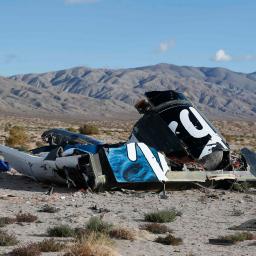
A nine-month investigation by the National Transportation Safety Board has found human error and inadequate safety procedures caused the violent crashThe violent crash of Virgin Galactic’s SpaceShipTwo was caused by a combination of human error and inadequate safety procedures, a nine-month investigation by the National Transportation Safety Board has found.SpaceShipTwo disintegrated within seconds during a test flight in the Mojave desert on 31 October, after a premature repositioning of the vehicle’s twin tail wings.
|
 |
by Associated Press inWashington on (#FQ5S)
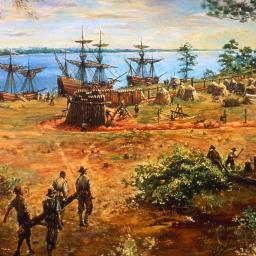
The graves of four leading colonists, buried more than 400 years ago in America’s first Protestant church where Pocahontas married, have been identifiedArchaeologists have uncovered human remains of four of the earliest leaders of the English colony that would become America, buried for more than 400 years near the altar of what was America’s first Protestant church in Jamestown, Virginia.The four burial sites were uncovered in the floor of what’s left of Jamestown’s historic Anglican church from 1608, a team of scientists and historians announced on Tuesday. The site is the same church where Pocahontas married Englishman John Rolfe, leading to peace between the Powhatan Indians and colonists at the first permanent English settlement in America. Continue reading...
|
 |
by John Soltes for Earth Island Journal, part of the on (#FQ1B)
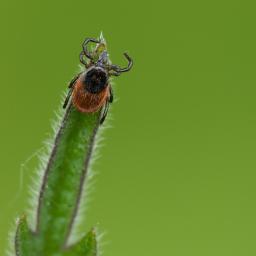
Ticks are spreading further north in the US and Canada with the potential to transmit diseases to dogs and humans, reports Earth Island JournalA few weeks ago, on a pleasantly cool day, this reporter and his dog, an Alaskan malamute named Bear, headed for a small set of trails in an area of woods not far from the New York-New Jersey border. With bicyclists plying their way on the shoulder of a nearby highway and the Hudson River rushing along beyond the wooded landscape, man and dog walked along the well-maintained trails, yielding to other visitors and trying to stay away from the tall grass.Memories of the day were somewhat dampened after returning home. Bear, whose deep malamute hair is a jungle of fluffiness, brought home an intrepid hitchhiker. Crawling in that furry maze, and thankfully not attached to his skin, was a tick, no doubt on the hunt for some dog blood — or human blood, for that matter. Another one was found crawling nearby. This episode plays out across the US and the rest of the world on a regular basis. Continue reading...
|
by Stuart Clark on (#FPGV)
With the immediate excitement of the Pluto flyby behind us, here are the ten most important things we now know about this fascinating worldStuart Clark is the author of The Unknown Universe (Head of Zeus). He is teaching the Guardian Masterclass, How the Universe Works in September. Continue reading...
by Pete Etchells on (#FP72)
We want to hear from you, our science readers, about how you want to see the blog network develop in the futureIn 2010, the Guardian launched an experiment: a small network of science blogs written by experts in their respective fields, with a remit to entertain, enrage, and inform. Nearly five years later, and the science blog network has expanded from its original five blogs to fifteen, covering a huge range of topics - from epidemiology, mathematics and physics, to the history of science, zoology, palaeontology, and more.Over those five years, the thirst for great science content on the web has grown tremendously and the popularity of the science blog network, and the insight that our expert writers offer, has never been higher. Science isn’t stagnant though; by its very nature, it is a continual process of reflection, revision and improvement. With that in mind, our upcoming fifth birthday seems like an excellent opportunity to take stock and start to think about the future of the network. Continue reading...
 |
by Angelique Chrisafis in Paris and Agence France-Pre on (#FP41)
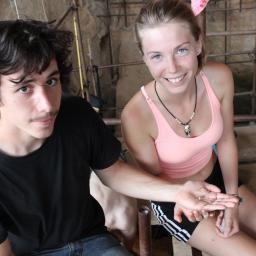
Tooth unearthed by 20-year-old volunteer hailed as major discovery by paleoanthropologist overseeing dig at Arago cave near TautavelA French student has found an adult tooth dating back around 560,000 years in south-western France, in what researchers are hailing as a major discovery.Valentin Loescher, 20, was volunteering alongside Camille Jacquey, 16, on his first summer archaeological dig at the Arago cave near Tautavel, when he discovered the tooth. Continue reading...
|
by Oliver Burkeman on (#FNJK)
Once a certain level of income or comfort becomes your default position, you can be sure it’ll stop delivering pleasure by contrast with earlier experiencesA couple of years ago, I got to fly in the ultra-luxurious business class of an especially high-end airline; and now all lesser air travel – which means all other air travel, basically – is ruined for me forever. I’m not expecting an outpouring of sympathy for my plight. But I did feel a flicker of vindication when I read, via Scientific American, about a new study on the psychology of restaurant diners: serve them a really delicious appetizer followed by a mediocre main course, it seems, and they’ll rate the main course much more negatively than if had been preceded by something equally mediocre.The researchers – whose results were published in the appropriately titled journal Food Quality and Preference – gave participants a boring pasta dish, preceded by an appetizer of bruschetta, made either with excellent fresh ingredients, or uninspiring dried ones. The resulting difference in their assessments of the pasta illustrates a phenomenon known as “hedonic contrastâ€, and it’s a familiar one to food psychologists and restaurateurs alike: what counts as tasty depends on what came before. If you’re planning to dine at Olive Garden, don’t pop into Nobu for a quick amuse-bouche first. Continue reading...
by Vanessa Heggie on (#FNDJ)
Immigration was a serious issue for the Victorians - like modern Britons they worried about migrants from eastern Europe, but unlike them the people they thought ‘didn’t identify with Britain’ were Jews, not Muslims. Vanessa Heggie looks at how these fears drove the founding, and location, of the first Jewish Hospital in Britain.Some Victorian anxieties about immigration would look very familiar to us today: politicians, newspapers and the (wo)man in the street were worried by both new immigrants and by second or third generation citizens who they feared were ‘unassimilated’ and perhaps – to use David Cameron’s phrase – ‘did not really identify with Britain’. These worries included the fear of violence and terrorism: not from Muslims, but from Jews, who came to Britain in increasing numbers after 1880 fleeing pogroms in the Russian empire. Although it was probably Irish Fenians that British people most associated with violent attacks, in the popular imagination Jews were linked to anarchists, who also appeared to pose a threat to social stability. On a smaller scale, popular belief linked Jews with anti-social petty crime, and with larger criminal gangs (Fagin is just one of many literary representations of this stereotype).Immigration, particularly from eastern Europe, was blamed for high unemployment rates and low wages, as British trade unions (and others) claimed Jews had lower standards of living and would therefore work for lower wages, and in worse conditions. At the same time, even with a very limited welfare system, there were fears that immigrants would also ‘swamp’ or ‘overwhelm’ workhouses, hospitals, soup kitchens, and other forms of state assistance or private charity. The result of these fears was the Aliens Act of 1905, the first piece of legislation controlling immigration to Britain, which basically banned the immigration of poor people, or those deemed ‘undesirable’ because of ill-health, criminal records, and so on. Continue reading...
 |
by Dean Burnett on (#FN8X)
Glamour magazine’s US edition recently published tips for women who wanted to make a man fall for them. These were roundly criticised for being ridiculous. Is this because they weren’t scientifically valid? Probably not, but here are some that are, just in caseAre you a woman? Do you have a male partner? Is this male partner not so much an individual human being, with all the nuances and complexity that would imply, but more of a self-propelled bag of crude stereotypes with a permanent erection? And do you, as a woman, want to forgo any hope of a career or life of your own in order to spend all your time wooing this creature, rather than doing the merciful thing and help end its undoubtedly horrific existence?If this all applies to you, then you may have read the recent article from US Glamour magazine, which gave many tips for how to make a man fall (even more) in love with you. Unfortunately, the tips provided have been widely condemned as sexist, old-fashioned, incredibly naïve and just plain ridiculous. But you know what’s not ridiculous? Science! Continue reading...
|
 |
by Oliver Milman on (#FN4Y)
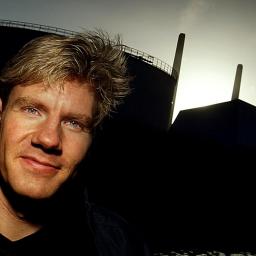
The government is attempting to find a university to run Lomborg’s centre, which would focus on international developmentAcademics at Flinders University have delivered a withering rejection of the university’s plan to host a Bjørn Lomborg-run research centre with $4m of federal government money, labelling the Dane “infamous†for his views on climate change.The government is trying to find a university to run Lomborg’s centre, which would focus on international development. The University of Western Australia was set to host the centre, only to return the $4m following a revolt by its academics, who claimed the process was politically motivated and attacked Lomborg’s lack of scholarly standing. Continue reading...
|
 |
by David Smith in Addis Ababa on (#FMCE)
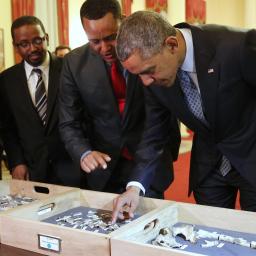
Lucy is a 3.2 million-year-old member of Australopithecus afarensis and the most complete skeleton of an early human ancestor ever discoveredShe had never heard of Barack Obama, or the United States for that matter, and did not say a word when she met the president before a state dinner in Ethiopia.Lucy, a 3.2 million-year-old member of Australopithecus afarensis, is the most complete skeleton of an early human ancestor ever discovered. The fossil, normally housed in Ethiopia’s national museum, was brought to the national palace on Monday for Obama’s visit and helped put the ephemera of politics in perspective. Continue reading...
|
 |
by Suzanne Goldenberg, US environment correspondent on (#FKJ0)
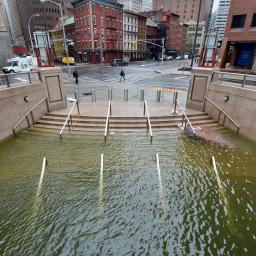
Trio of sea-level rise, storm surge and heavy rainfall exposes coastal cities such as New York, Los Angeles and Boston to potentially catastrophic flooding in futureAmerica’s biggest cities are at far greater risk of serious flooding in the coming decades than was previously thought, because of a “triple threat†produced under climate change, researchers said on Monday.
|
 |
by James Wilsdon on (#FK2X)
An as-yet-unannounced review of Business, Innovation and Skills-funded bodies raises a potential threat to the future of research funding. We need an intelligent, evidence-informed debate about the costs and benefits of assessmentIn academic circles, it’s become fashionable to denounce the Research Excellence Framework (REF) as the sector’s very own spawn of satan. The REF, a six-yearly assessment of the qualities and impacts of UK research, is used to allocate around £1.6 billion of public funding on an annual basis. In these austere times, you might think that would be enough to win it a few friends. Instead, the critics are lining up.The REF is “a bloated boondoggleâ€, a “Frankenstein monster†and “a Minotaur that must be appeased by bloody sacrificesâ€. It is responsible for a “blackmail cultureâ€, a “fever†and a “toxic miasma†which hangs over our campuses, choking the dying gasps of creativity from academic life. Entire books have been devoted to its insidious “hypocrisiesâ€. Sir Paul Nurse and Lord Stern, the presidents of our most eminent academies, query its “wasteful and distorting†influence. Even Jo Johnson, the science minister, is now trying to sell the virtues of teaching assessment on the basis that he has “no intention of replicating the individual and institutional burdens of the REFâ€. Continue reading...
|
 |
by Stephen Moss on (#FJSV)
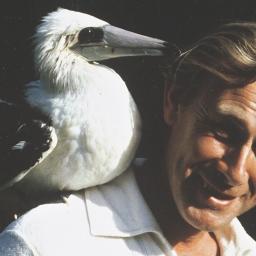
Ornithologist devoted to studying, filming and writing about seabirds, he became the ‘biographer’ of the gannetSeabirds are to many ornithologists the most fascinating of all bird groups. For Bryan Nelson, who has died aged 83, they became a benign obsession, to which he devoted most of his professional and personal life as an author, zoologist and academic.His passion for such birds found its outlet in several books, which ranged from a detailed and authoritative monograph on the gannet (The Gannet, 1978) to a concise introduction to the same species in the popular Shire Natural History series (1979). He once described himself as the “major biographer†of the gannet, but his masterwork, published in 2006, was a hefty volume entitled Pelicans, Cormorants, and their Relatives, produced by the Oxford University Press as part of its Bird Families of the World series. In addition to his books, Nelson also wrote numerous scientific papers and popular articles, appeared on radio and television, and made natural history films on seabirds. Continue reading...
|
 |
by Maev Kennedy on (#FJS5)
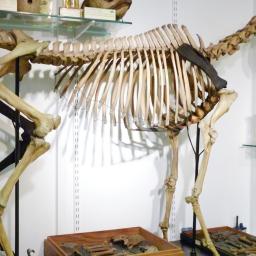
London’s Grant Museum of Zoology has completed work on its rare but neglected quagga skeleton – missing a leg and mistaken for a zebra for yearsThe tottering remains of one of the rarest zoological museum specimens in the world – a quagga whose ancestors were hunted to extinction in South Africa in the 19th century – is now standing firmly on four legs again through 3D printing, which recreated a flipped version of its right hind leg to replace the missing left leg.Related: The quagga now standing on three legs is next in line for Bone Idol restoration Continue reading...
|
 |
by Samuel Gibbs on (#FJAF)
More than 1,000 experts and leading robotics researchers sign open letter warning of military artificial intelligence arms race
|
 |
by Australian Associated Press on (#FHYZ)
A team of scientists, teachers and Indigenous rangers find new arachnids during survey of the Cape York peninsula in Queensland’s far northThirteen new species of spider have been discovered on Queensland’s Cape York peninsula – adding to the thousands of known species that give Australian wildlife its fearsome reputation.The new species were found by scientists, teachers and Indigenous rangers during a 10-day journey to the largely unsurveyed area. Continue reading...
|
 |
by Dominic Burgess, Elliot Smith and Amy Mathieson on (#FHRX)
Fictional scientist Jeremy Bumble always thought he was wise beyond his Earth years – that somehow his brain was older than the rest of his body. Here he explains, with the help of Einstein's thinking on space time, and UCL professor of astronomy Ofer Lahaw, that this is indeed the case. Go science!
|
 |
by Calla Wahlquist on (#FH9C)
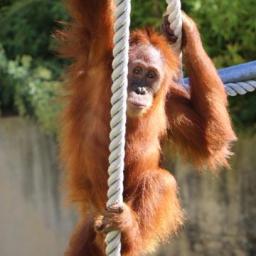
Zoo is conducting a review after Teliti, a five-year-old female, appears to have climbed a shade sail and jumped over enclosure outer wall onto boardwalkPerth zoo is conducting a security review of its award-winning orangutan enclosure after one curious inhabitant managed to escape and mingled with human visitors in the public viewing area on Sunday.Teliti, a five-year-old female orangutan who was born at the zoo, appears to have climbed up one of the exhibit’s shade sails about 11.30am before jumping to the outer wall of the enclosure and climbing onto the boardwalk. Continue reading...
|
 |
by Press Association on (#FH2H)
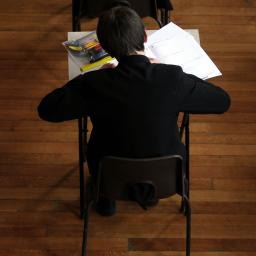
Sleep almost doubles chances of remembering previously forgotten information, according to new researchLast-minute “swotting†for an exam before going to bed might be a good tactic for students, according to research on the benefits of “sleeping on itâ€.Sleep almost doubles the chances of remembering previously forgotten information, scientists found. They believe it makes memories more accessible and sharpens our powers of recall. Continue reading...
|
 |
by Alan Pickup on (#FGT4)
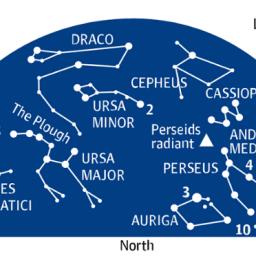
August brings Britain’s best views of the summer night sky. Our charts show the Summer Triangle looming in the S, its corners marked (in order of brightness) by Vega in Lyra, Altair in Aquila and Deneb in Cygnus. Capella in Auriga twinkles low in the NNE, below and left of Perseus and the radiant point for the Perseids meteor shower. Continue reading...
|
 |
by Press Association on (#FGJM)
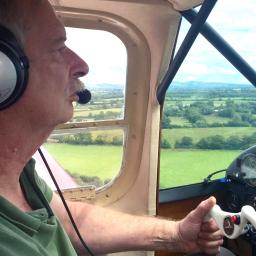
Howard Cox was on his way to Foynes Air Show at Shannon Estuary in single-seat BD5 aircraft, similar to plane from OctopussyA pilot killed in a plane crash in Ireland was flying a type of homebuilt mini-jet seen in the James Bond film Octopussy.Howard Cox, 67, from Devon, was on his way to an air show in his unique single seat BD5 aircraft, when it came down on Saturday evening in a field near Dungarvan, Co Waterford. Continue reading...
|
 |
by Jon Butterworth on (#FFR2)
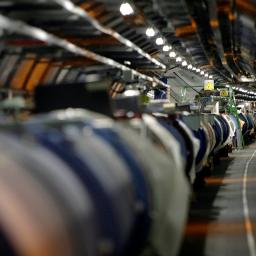
On 3 June this year, the Large Hadron Collider at CERN began delivering particle collisions at an energy 63% higher than previously achieved. This week in Vienna, first physics results were presented. Here are some highlights
|
 |
by Ann Druyan on (#FF6V)
The Breakthrough Message competition aims to build a digital portrait of life on Earth. Making it could increase respect for the preciousness of lifeRelated: Stephen Hawking launches $100m search for alien life beyond solar systemThe scientific search for extraterrestrial civilisations has languished for more than a decade, as the hunt for habitable planets and simpler forms of life has thrived. Nasa’s stunningly successful Kepler mission has discovered a thousand new worlds orbiting other stars. Astrobiology is a burgeoning field. But the search for intelligent life, begun in 1960 by astronomer Frank Drake, somehow fell off the funding radar. Continue reading...
|
by Peter Conrad on (#FF56)
Francis O’Gorman’s study of why we worry covers everything from medieval monastic life to modern cultural theory without really providing any answersBrooding in their cells, medieval monks identified a malaise they called accidie – not acid indigestion of the soul, but an apathetic and self-disgusted inertia. It overtook them in the static afternoons, so they called it “the noonday demonâ€. Francis O’Gorman has a bogey of his own, which attacks him in the middle of the night, and his book about anxiety begins at 4.06 am as he works through scenarios of imaginary disaster provoked by his uncertainty about whether he has locked the back door of his house. We have all been there; some of us spend a few hours there every night, watching a digital clock indifferently bat its eyelid as we wait for the bleary dawn to brighten the sky and wipe away our panic.A monastic worrier in the fourth century, Evagrius the Solitary, said that accidie’s symptoms included “a hatred of manual labourâ€. O’Gorman – who is a literature professor, and as such a remote descendant of socially marginal self-flagellators like Evagrius – here sets himself a brisk therapeutic task by writing a book that attempts to cure or at least comprehend his misery. He alleviates his problem by sharing it with the rest of us: we are all, he claims, the victims of a metaphysical calamity. We worry because we no longer believe in the gods who used to control our destinies; responsible for ourselves, we are obliged to make existential choices that ought to propel us ahead but more often leave us feeling dejected, disappointed, wondering what we did wrong. Continue reading...
 |
by Richard Luscombe Cape Canaveral on (#FEMR)
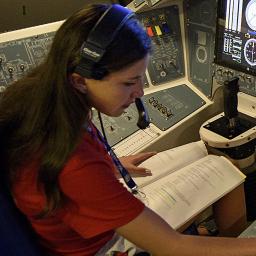
Young would-be astronauts are flocking to Cape Canaveral to learn what it takes to be picked for the next US missions into spaceOn recent evidence at least, Space Camp, an all-American rite of passage for generations of young maths wizards, science geeks and wannabe astronauts, ought to have disappeared into a black hole.Nasa no longer launches people into orbit, the US government’s investment in its space agency is as low as it has ever been, and the last rocket sent from Cape Canaveral with supplies for the International Space Station exploded last month seconds after lift-off. On the face of it, there doesn’t seem to be much for the next wave of explorers and adventurers to get excited about. Continue reading...
|
 |
by Catherine Bennett on (#FEND)
Twee road signs, folksy labelling. It’s the latest kind of manipulation – and it’s not only maddening, but uselessIn the 15 years since a new brand of smoothies introduced the style of packaging that addresses consumers as if they were the product’s ickle friends, the coming of the end of this cute, terminally patronising discourse, has continually been predicted. Even if Innocent can still get away with putting wee hand-knitted woolly hats on its refrigerated plastic bottles, for all the world as if it were run by dimwitted aunties as opposed to the Coca-Cola company, there are limits, learned advertisers have counselled, to the public’s tolerance for transparently manipulative baby talk. Especially now that so many consumers now know this tactic has a name – wackaging – and may even have begun to recoil from, rather than salivate over, formerly inoffensive words including – trigger alert – yummy, fun, respect, pure, good, planet, stuff, daddy, value and “usâ€.For example: an over-familiarity that might work for fellow perpetrator Johnnie Boden, the sender of fun notey-woteys to the effect that one hasn’t been in touch for simply ages – as well as flogger of one’s personal details to random tat-purveyors – might not work, say, in the grittier context of road safety. The use of rhyming, though not scanning, ditties, as deployed by Transport for London, in intended mitigation of behavioural guidance, would surely not appeal to any organisation that respected its clients or wished to minimise homicidal ideation on the planet. Continue reading...
|
 |
by Jamie Doward on (#FE91)
Sarah Long, oldest survivor of Morquio syndrome, pleads for NHS to provide expensive drug to treat conditionEvery day Sarah Long becomes weaker. She cannot sleep for more than an hour at a time, loses concentration and struggles to speak.“I don’t have much longer,†she says with a remarkable lack of self-pity. At 44, she is by far the oldest person to have Morquio syndrome, an extremely rare degenerative impairment, caused by missing enzymes, that has stopped her from growing since the age of six. Continue reading...
|
 |
by Robin McKie, science editor on (#FE8N)
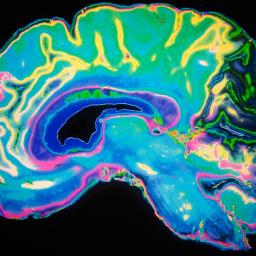
Announcement about success of solanezumab leads to calls for improved testing to identify those who would benefit from slowing of mental declineMajor improvements must be made in techniques for identifying future Alzheimer’s disease patients if medicine is to take advantage of drugs that could inhibit or halt their mental decline.This warning was made last week by several senior scientists after the announcement by the pharmaceutical giant Eli Lilly that its drug, solanezumab, had been shown to stave off memory loss in patients with mild Alzheimer’s. Continue reading...
|
 |
by Stephen Curry on (#FE4K)
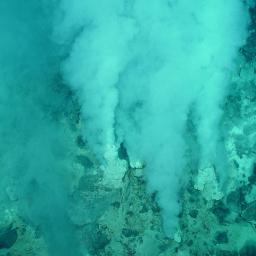
Two recent books dive into the mysteries surrounding the origins of life and the genetic code and come up with deeply satisfying tales filled with tenacious arguments and bold ideasSummer is here and brings for many a welcome opportunity to spend time on the beach immersed in the pages of a good thriller. Well, if you’re off to the coast let me recommend two crackers from the ‘underworld’ of science. Both spin yarns full of unlikely twists and turns about brilliant detective work that has uncovered the chemical and coding secrets of life on Earth.
|
 |
by Guardian Staff on (#FD97)
Nasa reveals the latest images of Pluto collected by its New Horizons mission. The images include what scientists described as the first image of the dwarf planet's atmosphere, believed to be composed of layers of haze. The image shows the atmosphere of Pluto backlit by the sun when the New Horizons spacecraft was about 1.25 million miles (2 million kilometres) away Continue reading...
|
 |
by Alan Yuhas in New York on (#FC0Q)
Nasa scientists discover ‘a pattern that indicates the flow of viscous ice’ similar to glaciers on Earth and say the atmosphere may be on the verge of collapseNew photos of Pluto released by Nasa reveal flows of nitrogen ice filling up craters, an atmosphere that could be on the verge of collapse, and a mysterious reddish haze extending 100 miles above the surface.
|
 |
by Guardian Staff on (#FBTN)
Beautiful simulated flyover of two regions on Pluto, north-western Sputnik Planum and Hillary Montes. Nasa's New Horizon team on Friday released new photographs and described new details sent back to Earth from the spacecraft
|
 |
by Guardian Staff on (#FBEY)
Nasa’s New Horizons team on Friday revealed new images and discussed the latest results from the spacecraft’s historic flight through the Pluto system. Earlier in the day they released a new image of the dwarf planet in full ‘false’ color Continue reading...
|
 |
by Guardian Staff on (#FAZT)
Images taken by the New Horizons spacecraft have been combined with color data to paint a new and surprising portrait of the dwarf planet, Nasa announced on Friday
|