 |
by Guardian Staff on (#EEC6)
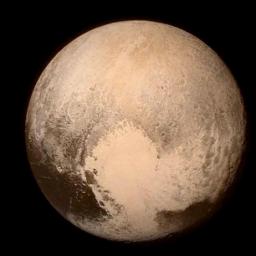
Nasa unveils new high-resolution photographs sent from New Horizons, the most detailed ever of Pluto and its moons
|
| Link | http://feeds.theguardian.com/ |
| Feed | http://feeds.theguardian.com/theguardian/science/rss |
| Updated | 2026-10-01 03:45 |
 |
by Luke Holland on (#EE75)
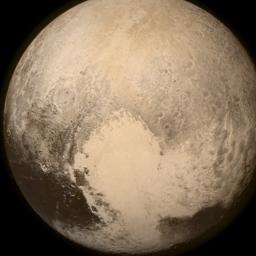
It just doesn’t feel like a complete solar system without the little planet for which we searched for so long, and let go far too soonRelated: Pluto photographs thrill Nasa scientists after nine-year missionDearest Pluto, Continue reading...
|
by Editorial on (#EE5Y)
Nasa’s New Horizons mission is a tribute to scientific methodology at a time when enlightenment values sometimes feel under siegeThe demotion of Pluto in 2006 to “dwarf planet†status posed a dilemma to lovers of astronomy. Generations have grown up thinking of Pluto as a first-team player in the solar system, made extra beguiling by its most remote status. But confidence in the scientific method demanded that such romantic notions be banished. If it is too small and its solar orbit too wonky, the decision of the International Astronomical Union must be respected. If Pluto remained a planet, scores of parvenu planetoids deeper in space might be eligible for upgrades. Rules are rules. Now Nasa’s New Horizons mission proves that Pluto has lost none of its allure. Images that take hours to reach Earth, travelling at the speed of light, enthral and inspire. No less impressive is the technical achievement of the mission: a probe despatched across 4.7bn km that arrives at its destination at the appointed hour, with a precision rate of 99.9%. It is a reminder of what humanity can achieve with sufficient patience, investment, collaborative effort and rational inquiry – a tribute to scientific methodology at a time when enlightenment values sometimes feel under siege. Better still, the data beamed back by New Horizons, revealing a level of climatic and geological sophistication previously unattributed to Pluto, raises hopes that it may yet achieve promotion back to the first tier of planets. We would heartily welcome that move. But only, of course, if the evidence supports it. Continue reading...
 |
by Tim Dowling on (#EE45)
We’ve seen the hair. We’ve heard the thing about Mexicans all being drug dealers and criminals. But, Donald – what’s your line on evolution?Does Donald Trump believe in evolution? I ask only because a USA Today poll puts him top of the Republican nominees among likely primary voters at 17%, just ahead of Jeb Bush on 14%. This news comes as the Trump campaign tweeted a photomontage featuring soldiers who, upon closer inspection, turned out to be Nazi soldiers. It’s been a big week for Trump.He has a stated view on most issues. He’s “very pro-life†(now) and also “very pro-choice†(a while back). He thinks global warming is a hoax, and that Mexican immigrants are mostly drug dealers and rapists. But no one seems to have ever asked him where he stands on evolution. I don’t imagine his answer would make a tremendous amount of sense, but he wouldn’t be alone there. Continue reading...
|
 |
by Spencer Ackerman in New York on (#EE10)
Pentagon says it has no plans to remove five psychologists, who are said to participate in forced tube feedings, even as APA signals desire to end relationshipThe Pentagon has said it has no plans to divest Guantánamo Bay of its psychologists even as the American Psychological Association signals a desire to end its decade-long association with US military and intelligence interrogations and detentions.
|
 |
by Alan Yuhas in New York on (#EE1Q)
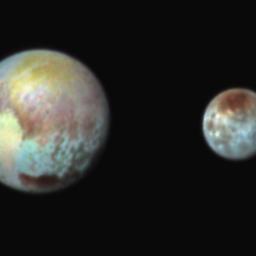
Passion still flare on both sides, with some saying it should never have been a planet to begin with while others call the dwarf planet designation ‘vindictive’Pluto lost its title as our ninth planet nearly a decade ago, not long after Nasa launched a 3bn-mile mission to the celestial body that reached its destination this week, and not nearly enough time for passions to cool over its demotion.
|
 |
by Ryan Kincaid on (#EDYM)
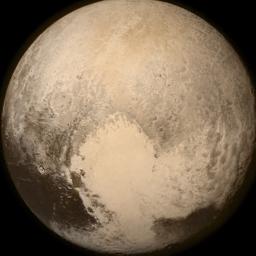
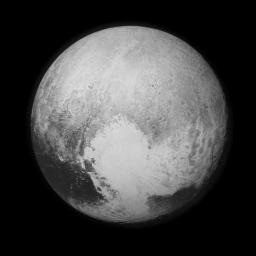
The internet’s dwarf planet-watchers gaze into Pluto’s newly revealed landscape and see everything from the Death Star to a Wrecking BallIt took Nasa’s New Horizons probe nine years to reach Pluto and complete its historic flyby, but it only took the internet about nine minutes to transform the incredible new image into a canvas for pop culture fun.With anticipation for the new Star Wars film reaching astronomical heights, it’s no surprise that George Lucas’s world was pulled into our own solar system. The threat from Death Star Pluto remains low for now, but let’s just hope it hasn’t received news of its planetary downgrade.
|
 |
by Guardian Staff on (#EDYP)
As Nasa releases New Horizons’ latest photographs of Pluto, we take a look at images of the planet over the years – from its discovery in 1930 to the present day Continue reading...
|
|
by Alison Flood on (#EDFF)
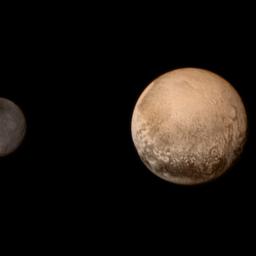
A public vote to find names for the dwarf planet’s mountains and craters is drawing inspiration from science fiction greats and fantasy charactersI have lately been glued to Stephen Baxter’s novels Proxima and Ultima, about a mission to colonise a planet of Proxima Centauri, but, already in a space exploration mindset, I’ve wrenched myself away to pore over the incredible Pluto image from the New Horizons spacecraft. And in the course of doing so, I’ve seen that the team behind the mission have a list of proposed names for the craters and mountains on the dwarf planet and its moons that is deeply satisfying.Related: Pluto: New Horizons probe makes contact with Earth Continue reading...
|
 |
by Hannah Devlin, science correspondent on (#ED70)
Nasa’s spacecraft made its historic flypast of Pluto yesterday, and scientists are standing by for data. Here’s a guide to the mission and what happens next.New Horizons blasted off in January 19 2006, and was the fastest launch recorded, reaching speeds of over 36,000 miles per hour. The spacecraft passed the Moon after just nine hours, around eight times quicker than the Apollo programme, and reached Jupiter the following year. Continue reading...
|
 |
by David Robert Grimes on (#ED2A)
A diagnosis of autism can make it tempting to turn to alternative treatments. But weighing up the scientific evidence is crucial - and potentially life-savingAs a rule of thumb, the more desperate and vulnerable you are the easier you are to exploit, with anything from financial advice to lifestyle tips. A diagnosis of an incurable disease; a child with a serious developmental disorder: these are circumstances that see many people seek unorthodox solutions, either as a way of coming to terms with what has happened, or in an attempt to find a treatment that perhaps the mainstream has not yet embraced, but which will give relief or cure.However, some alternative products and techniques are not merely controversial, they are potentially dangerous. Recently in mainland Ireland, a number of parents have been interviewed by police as part of an on-going investigation with the Health Products Regulatory Authority. These parents are thought to have administered a substance known as MMS to their autistic children. MMS has been known variously as Master Mineral Solution, Miracle Mineral Solution and Miracle Mineral Supplement. Continue reading...
|
 |
by Harry Leslie Smith on (#ED0K)
Whether it’s extreme abseiling, travelling around the world or becoming an anti-austerity activist, age can focus the mind on enjoying the time we have leftWhen I was a lad, a Traveller read my palm at a fairground near our doss in Bradford. From a mouth of broken teeth, she lisped my fate and said I would see the wonders of the world and be showered with good fortune, but that I had to be brave and always accept wherever the winds of fate blew me. Her pronouncement sent shivers of anticipation down my six-year-old spine.Yet it wasn’t until my retirement that I had the time or the resources to fulfil some of the dreams and ambitions that had fuelled my imagination and kept me sane during my working life. So I was thrilled to read about Doris Long – nicknamed Daring Doris – who at 101 broke her own record for being the world’s oldest abseiler. Her feat of extreme rappelling, descending 94m down the Spinnaker tower in Portsmouth on Sunday, reminded me that the spirit of adventure, of discovery and the need to defy death are innate in all of us regardless of our age. Continue reading...
|
 |
by Oliver Holmes in Chiang Mai on (#ECVQ)
British team ‘pleased as punch’ with four silver medals and 22nd place overall in annual contest, held this year in ThailandThis was the final question at the International Mathematical Olympiad (IMO), an annual “maths World Cup†for secondary school-age students, held this year in Thailand, which ended on Wednesday with the US as winners: Continue reading...
|
by GrrlScientist on (#ECPK)
Recent research suggests that the commonly prescribed psychiatric drug, Prozac, occurs at environmentally relevant concentrations that can significantly alter behaviour and physiology in wild birdsA study recently published in the peer-reviewed journal, Current Biology, revealed that some psychiatric pharmaceuticals commonly used to treat depression and Parkinson’s disease significantly alter human behaviour (doi:10.1016/j.cub.2015.05.021). In that report, the authors found that just one dose of a serotonin-enhancing drug increased the likelihood that healthy volunteers were more protective of themselves and others, whereas a dopamine-enhancing drug made healthy people more selfish. Continue reading...
 |
by Stuart Clark on (#ECEZ)
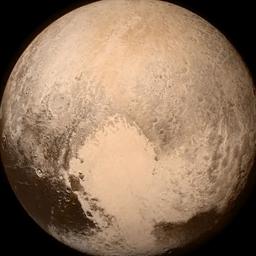
While the New Horizons flyby is cause for celebration, Pluto’s demotion to dwarf planet seems to have passed the mission by. We should reinstate its full planetary rightsHiding behind the cheers and the whoops that accompanied the triumph of Nasa’s New Horizons mission, there was an elephant in the room every bit as large as the world that the spacecraft had been sent to study. Embarrassingly, Pluto is no longer a planet according to the International Astronomical Union, the astronomers’ regulating body.That didn’t stop the mission’s principal investigator, Alan Stern, referring to it in passing as a planet during the press conference at closest approach. Nor did it stop Nasa’s chief administrator, Charles Bolden, using the P-word in the days leading up to the flyby. But the reality is that the argument over Pluto’s status has been rancorous, and highlights both the lofty ambition of science and the pettiness of its practice. Continue reading...
|
 |
by Claire Phipps on (#EBE8)
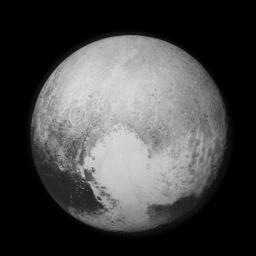
Drama as first contact with probe after its Pluto flyby is made, meaning vast amounts of data from mission can be transmittedNasa’s New Horizons spacecraft has made contact with Earth, confirming its successful flypast of Pluto, after a journey to the far reaches of the solar system that has taken nine-and-a-half years and 3 billion miles (4.88bn km).At precisely 8.52.37pm Eastern US time, the probe “phoned home†to mission control in Maryland, 13 hours after it flew within 7,750 miles (12,472km) of Pluto. Continue reading...
|
 |
by Claire Phipps on (#EB9J)
Live coverage as spacecraft successfully re-establishes contact with Nasa, bringing proof of its mission to reach the distant dwarf planet
|
 |
by David Shariatmadari on (#EC14)
Every day, millions of internet users ask Google life’s most difficult questions, big and small. Our writers answer some of the commonest queriesTo illustrate how horrible it was, being in jail in a wheelchair with four broken limbs after the car accident that prompted me to get sober ... was much, much easier and less painful.Comedian Rob Delaney’s description of severe depression is enough to stop you in your tracks. How can a mental illness, a disorder of thought and emotion, feel so much worse than the most intense physical discomfort? And yet it’s not unusual to read about metaphorical bouts between illnesses in which the black dog always wins. “It’s a piece of cake in comparison with depression,†said Majella O’Donnell, of breast cancer. Even in the realm of mental anguish, it pummels all competitors into submission. Lewis Wolpert found it “more terrible even than watching my wife dieâ€. A pain worse than fractured bones, cancer and grief. What is this state, which around 10% of us can expect to experience at least once in our lives? Where does it come from, and what can be done about it? Continue reading...
|
 |
by Guardian Staff on (#EBV9)
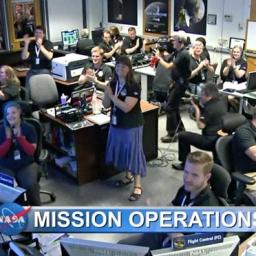
About 13 hours after its closest approach to Pluto, New Horizons phones home, signalling that it has survived its 49,000km/h (31,000mph) blitz through the planet's system. The signal took four and a half hours to travel the 4.88bn km (3bn miles) back to Earth at light speed. With 99% of the data gathered during the encounter still on the spaceship, New Horizons' survival was critical to the mission Continue reading...
|
by Virginia Spiers on (#EBQX)
St Breward, Bodmin Moor: Skylarks sing above this expanse where drifts of flowering grasses mix with stony outcrops and turf sprinkled with tormentilCloud shadows sweep across the green of Treswallock Downs, in Cornwall, and the adjoining moorland. Skylarks sing above this expanse of open grazing where drifts of flowering grasses, sedges and rushes mix with granite outcrops, remains of ancient settlements, and turf sprinkled with tormentil.From the top of Alex Tor the vista extends as far as Pentire Head on the north coast, west to the Cornish alps of St Austell and towards old china clay tips at nearby Stannon, now grassed over. Continue reading...
 |
by Guardian Staff on (#EBQY)
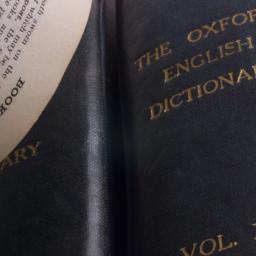
Is it desirable for everybody to speak English in the same accent?That admirable watchdog of the English language, Professor Brander Matthews, of Columbia University, discusses once again, in the “North American Review,†the possibility of attaining a universal standard of pronunciation for our mother tongue. France has done it for hers; Italy and Spain have done it, and Germany, very late in the day, made an attempt to submerge her dialects in a common speech for the educated Teuton. What can we do? It is conceivable that we could establish a standard, and, having done it, make a person brought up in Glasgow or Lancashire talk like a Londoner, and all of them speak so that no one could tell that they had not come from either New York or New South Wales? The answer is, it is not possible; and even if it were the English-speaking peoples would not want to do it. Most of them delight in the endless variations of spoken English, and if they think about the matter at all they recognise that pronunciation is only one element of an exceedingly complex process in which pace and pitch and cadence all play their part. Professor Matthews, like the rest of us, has in his mind an ideal of perfect English. He would say that it cannot be described, but you know it when you hear it; and he has heard fine speakers from both sides of the Atlantic whose speech “was English pure and simple, not betraying itself as either British or American.†They must be excessively rare; indeed, so decisive are the geographical influences that even when no differences of pronunciation are discernible the subtle distinction created by distance almost invariably remains. It is certain, however, that most of the great speakers of the past would have scorned the idea of an academic standard. Gladstone and Bright kept to the last the marks of their northern origin, and we may hazard the guess that they would have been horrified at hearing a speech from Lincoln or Daniel Webster in the accent of Oxford. Regional variations, we may be sure, will not disappear; but it is plain that the schools and other modern influences tend to wear down the greater dialectical differences. The special danger of this country is, however, not the single standard, but something altogether different: a uniform speech for the specially educated, and one of infinite variation for the majority of the nation. And that means a serious obstacle to the establishment of genuine democracy. Continue reading...
|
 |
by Melissa Davey on (#EBM0)
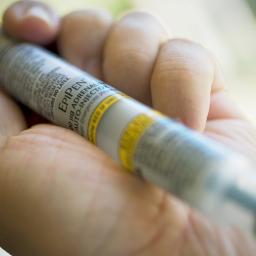
Rise in anaphylaxis admission rates over 14-year period reveals urgent need to prevent food allergies from developing, say researchersAustralians are increasingly being hospitalised for severe and life-threatening allergic reactions, known as anaphylaxis, researchers from the Murdoch Childrens Research Institute in Melbourne have found.Researchers analysed 14 years of hospital data to 2012, extracting admissions for anaphylaxis. Anaphylaxis admission rates increased by 50% over this period, they found. Rates increased rapidly in the final half of the period, with 5.6 people per 100,000 hospitalised with food anaphylaxis in 2005, compared with 8.2 by 2012. Continue reading...
|
by Oliver Milman and Nick Evershed on (#EBKB)
State of Australia’s Birds report finds common birds as well as lesser-known species have suffered surprising drops in numbersSome of Australia’s best-known birds, including the magpie, the kookaburra and the willie wagtail, are in decline in parts of the country, a major government-funded survey has found.
 |
by Guardian Staff on (#EB43)
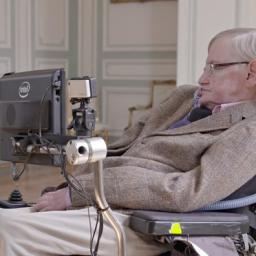
British physicist Stephen Hawking praises Nasa's 'pioneering, decade-long mission' after the New Horizons spacecraft completed a dramatic flyby of Pluto, considered the last unexplored world in our solar system. The probe's journey to reach the dwarf planet spanned nine years and a distance of three billion miles (4.8bn km)
|
 |
by Philip Oldfield on (#EB45)
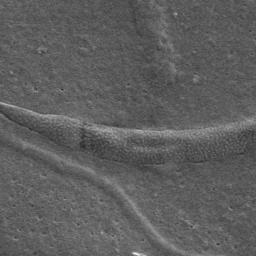
50m-year-old worm sex cells are the oldest found by 10m years, but although incredibly well-preserved contain no organic material
|
 |
by Ian Sample Science correspondent on (#E949)
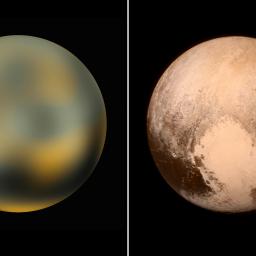
Nasa spacecraft makes history as the first spacecraft to reach distant dwarf planet, the last unexplored world in solar system
|
 |
by AFP in Antananarivo on (#EA6M)
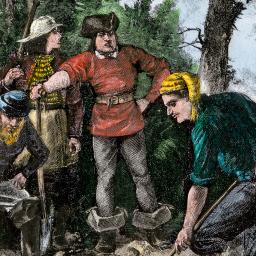
United Nations’ cultural body dismisses Maine archaeologist’s claim that he found the legendary pirate’s ship and a silver ingot near MadagascarUnesco has thrown cold water over an American explorer’s claims that he had discovered the sunken treasure of infamous 17th-century pirate William Kidd off the coast of Madagascar.Related: 'Captain Kidd's treasure' found off Madagascar Continue reading...
|
by Ian Sample Science editor on (#E6PZ)
New Horizon measurements reveal Pluto is roughly two-thirds the size of the moon, and probably holds more ice beneath its surface than previously thought
 |
by Josh Cohen on (#EA54)
People in their 40s and 50s report feeling increasingly isolated. Social media can seem like a magic potion, but can end up making us feel worseIn all the recent statistical analysis and commentary on the epidemic of loneliness, perhaps the most striking is that, more than any other age group, it’s middle-aged people who are now reporting feelings of isolation. According to the Office for National Statistics, loneliness afflicts around one in seven of those between 45 and 54.Middle age is that phase of life in which our possibilities and freedoms seem to contract most dramatically, where our sense of who we are and will be is liable to feel most constrained by pressures from all sides. The disappointments and anxieties of unfulfilling work, unhappy family life, and our own or others’ poor health are intensified by the conviction that there is no escape: this is simply the hand fate has dealt us. It’s not hard to imagine what a lonely feeling that can be. Continue reading...
|
 |
by Ascanio Branza on (#EA56)
Margot Lee Shetterly’s forthcoming book Hidden Figures, about unsung black women recruited as mathematicians during the space race, to receive major film adaptationKatherine Johnson, Mary Jackson, Dorothy Vaughan, Kathryn Peddrew, Sue Wilder, Eunice Smith and Barbara Holley – all names that have been largely forgotten by the American public. And yet these black, female mathematicians were crucial in the success of the Nasa space missions during the 1950s and 60s. Now their story is being placed back into the public eye in a new film.Shakespeare in Love producer Donna Gigliotti, screenwriter Allison Schroeder and St Vincent director Ted Melfi are adapting Margot Lee Shetterly’s forthcoming book Hidden Figures for the big screen, according to Deadline. Actors rumoured for the lead roles include Oprah Winfrey, Taraji P Henson, Viola Davis and Octavia Spencer. Continue reading...
|
 |
by Rebekah Higgitt on (#E9J7)
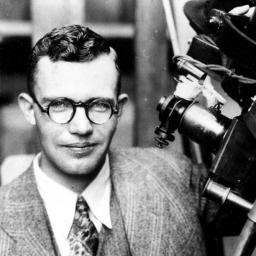
As we enjoy spectacular images of Pluto today, spare a thought for the person who first saw it 75 years agoToday Pluto, looking magnificent, is all over our newspapers and social media. But the person who first saw Pluto only did so as a result of much tedious effort. I write “sawâ€, as it would be misleading to say that Clyde Tombaugh “discovered†Pluto in February 1930. Certainly, he cannot be credited as the sole discoverer, given the mathematical, organisational, technical and scientific work, not to mention money, of several others that should also be recognised. He was just one part of a programme set up by Percival Lowell in 1909 to search for Planet X, the existence of which was (wrongly) predicted by apparent eccentricities in the orbits of Neptune and Uranus.It is also not true to say that Tombaugh was the first to look directly at Pluto. Rather, he saw the chemical trace of its light on photographic plates taken several days before. Indeed, he may not even have been the first person whose eye cast over Pluto’s photograph, as Corey S. Powell’s article on the Lowell Observatory director, Vesto Slipher, suggests. However, he was the first to spot that something had moved across the small field of stars captured through the observatory’s 13-inch wide-field telescope between 23 and 29 January 1930. That something turned out to be Pluto. Continue reading...
|
 |
by Guardian Staff on (#E9AV)
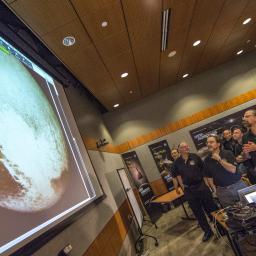
Scientists at Nasa's New Horizons mission control centre celebrate the spacecraft's flyby of Pluto. The US probe shot past Pluto at more than 45,000 km/h (28,00mph) at 12.49pm UK time on a trajectory that brought the spacecraft within 12,500km of the body's surface. John Grunsfeld, Nasa's associate administrator for science, says studies of Pluto will help explain more about Earth's own origins and how our solar system was formed Continue reading...
|
 |
by Peter Walker on (#E99M)
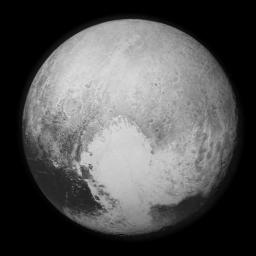
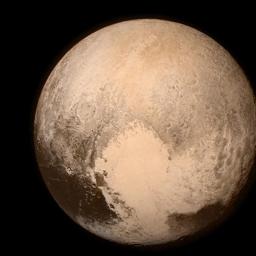
New Horizons spacecraft captures sharp, close-up image as it approaches the dwarf planet on its flybyBy the standards of modern astronomical photography it might seem initially underwhelming – a grey-and-white sphere sitting amid the blackness – but make no mistake, this is a big moment for human scrutiny of the outer solar system.To mark the moment when America’s New Horizons probe made its closest approach to Pluto, passing within 7,700 miles (12,500km) of the last unexplored world in the solar system, Nasa released a picture of the dwarf planet from slightly further away. Continue reading...
|
 |
by Marc Abrahams on (#E966)
Shoes, catheters, even pacemakers and dacryphilia: academics have made it their duty to study the ever-expanding catalogue of things that turn people onOn 28 October 2004 we humans took a giant step towards cataloguing all of our sexual fetishes. An Italian/Swedish research team, led by Claudia Scorolli at the University of Bologna, downloaded data from hundreds of online fetish discussion groups and spent the next three years analysing their haul. Then they published a study in the International Journal of Impotence Research: Relative Prevalence of Different Fetishes.Many fetishes concern body parts, the catalogue reveals. Feet and toes lead the list, followed in order of frequency by body fluids (blood, urine, etc), then body size (slim, stout, short, tall, whatever) and head hair. The least coveted bits by fetishists are nails, nose, ears, neck and, in last place, body odour. Continue reading...
|
 |
by Oliver Burkeman on (#E91J)
If you can stand to have a little empathy for someone who seems unsympathetic, maybe his whole life is dedicated to feeling less empty insideLately, as I follow American politics, a question keeps nagging at me, resurfacing unbidden in idle moments over coffee, or while waiting on station platforms: what is Donald Trump thinking?To be clear, I don’t mean “what makes Trump think he can be president?â€, since for all I know, he doesn’t really think this. And I don’t mean “what makes Trump think the right way to campaign for the presidency is to travel the country by private jet spewing racist bile about Mexicans every time he opens his mouth?†Clearly, Trump either believes that stuff or is cynical enough to pretend that he does. Continue reading...
|
 |
by Ian Sample, science editor on (#E8ZS)
Although long believed to be theoretically possible, new data from Cern has provided conclusive evidence for a new state of matterScientists at the Large Hadron Collider near Geneva have discovered a previously unseen class of particles that demonstrate there is a new state of matter.Researchers working on the collider’s LHCb detector spotted signals that are produced when five subatomic particles called quarks combine together to form pentaquarks.
|
 |
by Tom Stevens and Guardian readers on (#E8TK)
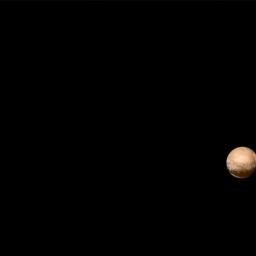
With Nasa’s New Horizons spacecraft encountering Pluto on Tuesday, we’d like to see your photographs and artwork of the planets in our solar systemNasa’s Pluto probe is entering a crucial stage in its flyby phase, with its New Horizons spacecraft expecting to gather pictures and scientific data of the dwarf planet, 5 billion kilometres away, on Tuesday.Related: Pluto: Nasa's New Horizons probe shows dwarf planet bigger than expected Continue reading...
|
 |
by Cameron Neylon on (#E8JQ)
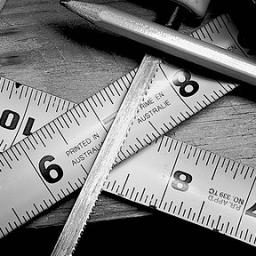
Metrics play a growing role in managing research. But to understand their limitations, we need to draw on the humanities.
|
 |
by James Whiting on (#E8G7)
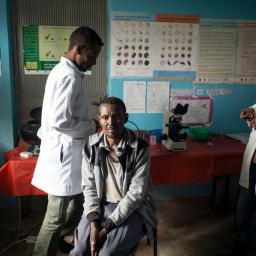
A huge global commitment to reducing malaria has paid off and the goal of near zero deaths from the disease is realistic and affordable. What are we waiting for?A goal properly set is halfway reached. So said the late Zig Ziglar, who knew a thing or two about lessons for success. Yesterday, not only was a goal set – to bring malaria deaths to near zero in the next 15 years – but we have a definitive plan that maps out what it will take to get us there.Amid the negotiations taking place at the third international financing for development conference in Addis Ababa, an event – Malaria Financing for a New Era: an Exceptional Case for Investment – saw the presentation of two complementary and compelling plans, laying out technical guidance and charting the investment and collective actions needed to reach the 2030 malaria goals.
|
 |
by Linda Geddes on (#E8F9)
We all face so many big decisions in life, but maybe recent scientific research can help us make better choicesShould you get a cat, shun meat, live child-free and cancel your Facebook account; or get a dog, gorge yourself on steak, have a huge family – and post about it every day? We look at what new research tells us about the big choices in life Continue reading...
|
 |
by Oliver Milman on (#E7Y4)
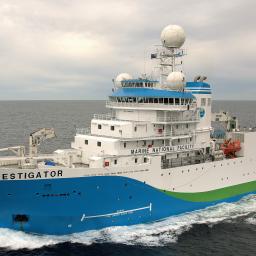
The 94-metre vessel, Investigator, is capable of spending 300 days a year at sea but will remain docked in Hobart for much of that time unless private funding sources can be foundAustralia’s new state-of-the-art marine research vessel is being wasted because it is only funded for half of the year, scientists claim, as the government looks to private sources of finance to get the ship to sea.The $120m vessel, Investigator, is a 94-metre research facility capable of carrying 40 scientists and support staff and spending 300 days a year at sea undertaking atmospheric, oceanographic, biological and geoscience work. Continue reading...
|
 |
by Monica Tan on (#E7WH)
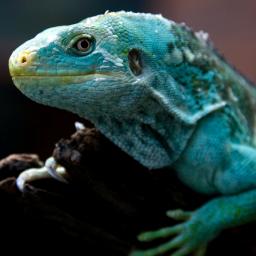
A group of endangered iguanas introduced to the Fijian island of Monuriki two months ago have been tracked down and appear to be healthyScientists have welcomed the first results of a captive breeding program aimed at saving a group of critically endangered Fijian crested iguanas, the first such attempt to reintroduce a species in that country.Some of the iguanas that were introduced to the Fijian island of Monuriki two months ago have been tracked down by scientists and appear to be healthy.
|
 |
by Australian Associated Press on (#E7NV)
Finding by Queensland researchers is significant for humans, given about a quarter of food production depends on honey bee pollinationBees infected with a common gut parasite work less, die younger and carry much less pollen than healthy bees, Queensland researchers have found.The finding is significant for humans, given about a quarter of food production depends on honey bee pollination. Continue reading...
|
 |
by Spencer Ackerman in New York on (#E72D)
Jean Maria Arrigo was largely ignored and the subject of a smear campaign for sounding alarms about psychologists’ post-9/11 torture complicity but has emerged from the damning report as the story’s hero – and martyrJean Maria Arrigo’s inbox is filling up with apologies.For a decade, colleagues of the 71-year-old psychologist ignored, derided and in some cases attacked Arrigo for sounding alarms that the American Psychological Association was implicated in US torture. But now that a devastating report has exposed deep APA complicity with brutal CIA and US military interrogations – and a smear campaign against Arrigo herself – her colleagues are expressing contrition. Continue reading...
|
 |
by Garrett Koren on (#E6JY)
It would have been out of the question for a physician to participate in torture. For psychologists, this was a subject for debateIt should come as no surprise that the architects of the CIA’s enhanced torture program were psychologists and not psychiatrists. During my psychiatry residency in the federal prison system, there was one divide between doctors and prison guards that could not be crossed: I was exempt from firearms training. The psychologists in my cohort, however, were required to achieve proficiency on the shooting range like any other correctional officer.Prison psychologists do not walk around with guns during their normal routines. However, in a crisis situation such as a riot or an escape, they would be obligated to obtain a gun from storage and be prepared to use it. It’s entirely possible that a psychologist who had been listening to an inmate pouring out their heart out one day, could be in the position of having to open fire on that very same person the next. Continue reading...
|
 |
by Hannah Devlin science correspondent on (#E63T)
Family of 23-year-old Katie Clack, who took her own life after struggling with the terrible effects of her incurable sleep disorder, vows to fight for justiceA 23-year-old nursery assistant who developed narcolepsy after receiving a swine flu vaccine took her own life last year, telling her family that living with the incurable sleep disorder had become unbearable.Katie Clack’s death raises fresh questions about the government’s long refusal to compensate about 80 people who developed narcolepsy as a rare side-effect of the vaccine, on the basis that the condition is not serious enough to merit payouts. Continue reading...
|
 |
by Jessica Elgot on (#E61T)
What would we do without Gwynnie? Not only has she taught the world to cook an egg but she has now explained how to yawn properlyFrom suncream to bed-making, the internet is full of advice on mundane endeavours which you have apparently been “doing wrong†your whole life.And you’ve been doing yawning wrong too, according to Gwyneth Paltrow. Continue reading...
|
 |
by Monica Tan on (#E5ZX)
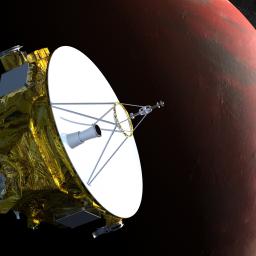
The CSIRO’s deep space communication complex will be the first place on Earth to receive images as the New Horizons probe makes its closest encounter with the dwarf planetAustralian scientists are gearing up for a historic moment in space exploration as a tracking station in Canberra becomes responsible for receiving the world’s first close-up images of Pluto on Tuesday evening.Nine and a half years after it left Earth and having clocked up 5bn kilometres of space travel, Nasa’s New Horizons spacecraft will make its closest encounter with Pluto at exactly 9:49.57pm AEST (12.49.57pm BST or 7:49.57am EST) on Tuesday. Continue reading...
|
by Steve Caplan on (#E4XH)
The National Institute of General Medical Sciences at the US National Institutes of Health has come up with a new system for funding researchers. Will the new Maximizing Investigators’ Research Award (MIRA) prove beneficial?There is no question that the proportionally decreasing National Institutes of Health (NIH) funding in the USA for biomedical research is having short-, mid- and long-range negative effects on science.Fewer positions are opening for new investigators, and in many cases universities are hesitant to hire young postdocs who are not yet funded, often preferring ‘lateral recruitments’ of established researchers from other institutes. Continue reading...
 |
by Dominic Burgess, Elliot Smith and Amy Mathieson on (#E4VZ)
Fictional scientist Jeremy Bumble dreams of the day when mankind can break the shackles of the ageing process so that he can once againe feel the silky-smooth skin of his younger self. But could it ever happen? He explains why a special jellyfish called 'turritopsis dohrnii', coupled with process called 'transdifferentiation', shows that immortality is possible - sort of. Go science!
|