 |
by Julia Kollewe on (#F9V4)
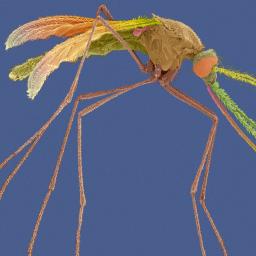
European Medicines Agency recommends RTS,S, or Mosquirix, developed by GSK and backed by Gates Foundation, for use in young children in Africa
|
| Link | http://feeds.theguardian.com/ |
| Feed | http://feeds.theguardian.com/theguardian/science/rss |
| Updated | 2026-10-01 03:45 |
by Qazi Rahman on (#FA5C)
A recent article argued that sexuality is down to choice, not genetics. But the scientific evidence says otherwise, and points to a strong biological originIn a recent Guardian article , Simon Copland argued that it is very unlikely people are born gay (or presumably any other sexual orientation). Scientific evidence says otherwise. It points strongly to a biological origin for our sexualities. Finding evidence for a biological basis should not scare us or undermine gay, lesbian and bisexual (LGB) rights (the studies I refer to do not include transgendered individuals, so I’ll confine my comments to lesbian, gay and bisexual people). I would argue that understanding our fundamental biological nature should make us more vigorous in promoting LGB rights.Let’s get some facts and perspective on the issue. Evidence from independent research groups who studied twins shows that genetic factors explain about 25-30% of the differences between people in sexual orientation (heterosexual, gay, lesbian, and bisexual). Twin studies are a first look into the genetics of a trait and tell us that there are such things as “genes for sexual orientation†(I hate the phrase “gay geneâ€). Three gene finding studies showed that gay brothers share genetic markers on the X chromosome; the most recent study also found shared markers on chromosome 8. This latest research overcomes the problems of three prior studies which did not find the same results. Continue reading...
 |
by Peter Beaumont in Jerusalem on (#F9VM)
Study of plant remains on shores of Sea of Galilee show crop cultivation may have developed 23,000 years ago
|
 |
by Guardian music on (#F9SW)
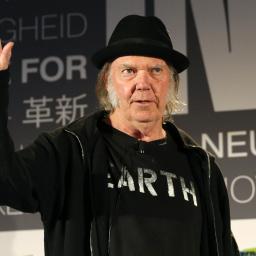
Singer puts out Seeding Fear on the same day as the House of Representatives passes bill to block compulsory labelling of GM foodsNeil Young has released a short film that continues his campaign to draw attention to the alleged misdemeanours of the agrochemical corporation Monsanto. Seeding Fear is a 10-minute documentary telling the story of a farmer who defied Monsanto in court – and lost – after having been accused of using the company’s copyrighted GM soya beans. He was one of a number of farmers sued by the huge corporation for copyright infringement.Related: Neil Young + Promise of the Real: The Monsanto Years review – on angry, brilliant form Continue reading...
|
 |
by Amy Coats on (#F9NC)
After a leading botanist was killed by the Philippine Army, his work lives on in the science of citizensOn 15 November 2010, botanist Leonardo L Co was shot and killed by the Philippine army while doing fieldwork on the island of Leyte. Continue reading...
|
 |
by Amy C. Chambers on (#F9KJ)
Sarah Frankcom and Maxine Peake’s interpretation of Caryl Churchill’s The Skriker retains its environmental relevance, but can it inspire audiences into political action?Caryl Churchill’s postmodern play The Skriker is just about to begin its final week of a sold-out run at Manchester’s Royal Exchange Theatre and its environmentalist message is as worryingly relevant today as when it premièred at the National Theatre twenty-one years ago. This has been a summer of headlines about record-breaking temperatures; according to scientists the Earth as a whole has experienced its hottest June and the hottest first half of the year since records began. The current climate crisis is entwined with a lengthy history of industrialisation, reckless ecological practices, and the environmental movement has been blighted by financial crisis, austerity, and a political and corporate denial of this global catastrophe. Global warming and climate change are unavoidable issues that permeate news media and increasingly fictional media.‘It’s a clarion call …Maybe it will make people look at what we’re doing on a global scale and how wrong it is.’ – Maxine Peake Continue reading...
|
 |
by Andrew Simms on (#F9JP)
From superfoods to GM crops – every week presents a new technological solution to save the world, distracting us from the simpler, sustainable optionsEvery week brings news of the latest world-saving technological breakthrough, from electric cars to superfoods and energy miracles. Global agrochemical firm Monsanto just announced a $1bn investment in its new herbicide, dicamba, part of Roundup Ready Xtend, its system for genetically engineered crops such as soya beans and cotton.But, as we consider which paths to go down to solve the world’s food, energy, climate and health problems, are we spellbound by hi-tech answers over less glamorous, but potentially better, low-tech approaches? Continue reading...
|
 |
by Alan Yuhas in New York on (#F7S8)
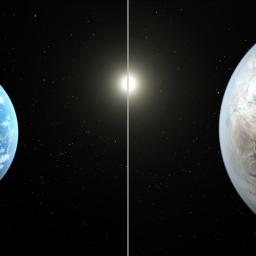
Using four years’ worth of data from the Kepler space telescope, researchers announce the new exoplanet along with 12 possible ‘habitable’ othersScientists on the hunt for extraterrestrial life have discovered “the closest twin to Earth†outside the solar system, Nasa announced on Thursday.Working off four years’ worth of data from the Kepler space telescope, researchers from Nasa, the Seti Institute and several universities announced the new exoplanet along with 12 possible “habitable†other exoplanets and 500 new candidates in total. Continue reading...
|
 |
by Hannah Devlin on (#F9GG)
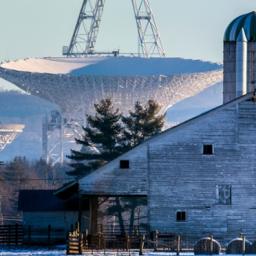
The most intensive ever search for alien lifeThis week it was revealed that astronomers are about to start the most intensive ever search for alien life. The Breakthrough Listen project will scan stars in 100 galaxies for radio and optical signatures that indicate someone, or something, is out there.Until now, the search for extraterrestrial intelligence - or SETI - has been met with an eerie silence. What makes scientists so convinced it's worthwhile looking for alien life? Continue reading...
|
 |
on (#F9A8)
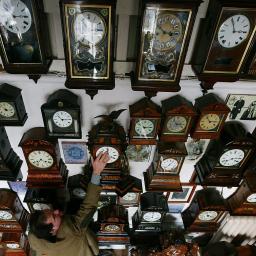
Pair of physicists bust a 350-year-old conundrum in a report that proposes a transfer of energy through a sound pulse causes clocks to synchroniseAlmost 350 years ago, Dutch inventor and scientist Christiaan Huygens observed that two pendulum clocks hanging from a wall would synchronise their swing over time.
|
 |
by Staff and agencies on (#F8V2)
Scientists say they have isolated the ability of the human palate to detect fat as a distinct taste from sweet, salty, bitter, sour and umamiRelated: Congealed Tipex to odour of gym – Russia cheese fakers fail taste testThe taste of fat might be joining sweet, salty, bitter, sour and umami as an official sense of the human palate after scientists said they found people have a distinct and basic ability to detect it. Continue reading...
|
 |
by Ellen Brait in New York on (#F8MQ)
Nasa and other scientists have discovered the ‘closest twin to Earth’ that’s ever been found, bringing humans one step closer to finding where life is possibleA new planet has been discovered that has more in common with Earth than any exoplanet yet. And with the discovery by Nasa and other scientists of Kepler 452b plus 12 other possible “habitable†exoplanets, it may have become just a little more likely that humans will find extraterrestrial life on another planet.Seth Shostak, senior astronomer and director of the Center for Seti Research at the Seti Institute, which was also involved in the discovery, said the revelations about the new planet have brought us one step closer to figuring out “what fraction of stars have a world that could support lifeâ€. Continue reading...
|
 |
by Stuart Clark on (#F89K)
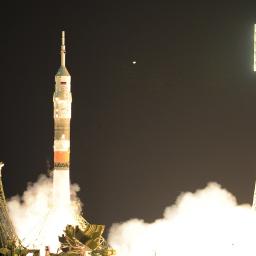
Three more astronauts have arrived at the International Space Station to begin a five-month mission. Flight TMA-17M took off from the Baikonur cosmodrome in Kazakhstan at 21.02 GMT on Wednesday and docked less than six hours later.This is the 126th flight of the Soyuz launcher since its maiden voyage in 1967. Its crew consists of the Russian Oleg Kononenko, Japan’s Kimiya Yui and the Nasa astronaut Kjell Lindgren. Continue reading...
|
by Hannah Devlin, science correspondent on (#F82F)
Around 60% of differences in GCSE results can be explained by genetic factors, with the same genes responsible for maths, science and the humanitiesYou may feel you are just not a maths person, or that you have a special gift for languages, but scientists have shown that the genes influencing numerical skills are the same ones that determine abilities in reading, arts and humanities.The study suggests that if you have an academic Achilles heel, environmental factors such as a teaching are more likely to be to blame. Continue reading...
 |
by Guardian Staff on (#F80G)
On Thursday Nasa announced that their powerful Kepler telescope has discovered a planet beyond the solar system that is a close match to Earth. Continue reading...
|
 |
by Seth Baum and Trevor White on (#F7PM)
A recent robot-related death in Germany highlights broader dilemmas in the design of safe autonomous systems.
|
by Tom Solomon, professor of neurology at the Walton on (#F6Q0)
There’s no treatment that actually tackles the underlying causes of this terrible disease. Solanezumab, a genetically engineered antibody, may be the firstEvery week in my neurology clinic at the Walton Neuro-Centre in Liverpool, I see people who are worried that they may have Alzheimer’s disease. Perhaps this is not surprising, given there is a news story about the disease almost daily, an estimated 850,000 people in the UK have dementia, and the government has described it as “one of the greatest challenges of our lifetimeâ€. This is why news of solanezumab, a drug that appears to slow decline in Alzheimer’s patients, has provoked such interest.Currently, the treatments we can offer patients with Alzheimer’s disease are very limited Continue reading...
by Roger Pielke Jr on (#F6ES)
The search for extraterrestrial life is seen as one of pure curiosity. But, as in other areas of science, we should worry about the consequences of success.
 |
by Guardian Staff on (#F62P)
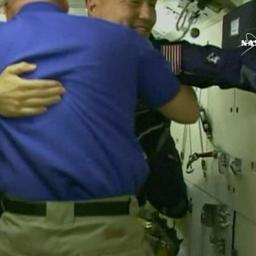
The Russian Soyuz rocket TMA-17M, carrying an American Nasa astronaut, Kjell Lindgren, and fellow astronauts Kimiya Yui, of Japan, and the Russian crew commander, Oleg Kononenko, docks and opens hatch at the International Space Station for a five-month mission after launching from the Baikonur cosmodrome in Kazakhstan Continue reading...
|
 |
by Reuters on (#F4XE)
Craft docks smoothly, bringing Russian, Japanese and American trio to ISS after two-month delay caused by previous botched launch of uncrewed shipA Soyuz space capsule carrying a Russian, an American and a Japanese docked smoothly on Thursday with the International Space Station.The capsule connected to the orbiting laboratory about 250 miles (400km) above Earth at 0245 GMT. Continue reading...
|
 |
by Dean Burnett on (#F5TC)
A recent Observer article looked at what it’s like for children whose parents come out as gay. Having your parents come out is one thing, but what if your ex-partner comes out? What, if anything, is the appropriate response to this?If you’ve been in a relationship that has ended, you’re almost certain to have an “exâ€: someone you were romantically involved with but aren’t any longer. Relationships with an ex-partner are among of the most complicated and delicate it’s possible for your average human to maintain, and there are countless sitcom plots exploring this.There are good reasons for this. An ex-partner often represents a significant part of someone’s life being intimately linked with numerous experiences and important milestones (interpret that how you will). But they’re also often a source of serious emotional upset and unpleasantness, depending on why they’re an “exâ€. Some break ups are amicable, but many aren’t at all. Hence, a lot of people dwell on an ex-partner, a process made considerably easier (and more worrying) with the advent of social media. Continue reading...
|
 |
by Siobhan Roberts on (#F5P7)
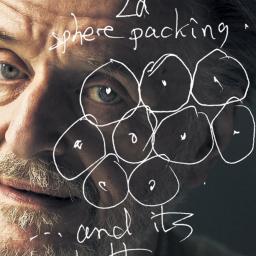
John Horton Conway is a cross between Archimedes, Mick Jagger and Salvador DalÃ. For many years, he worried that his obsession with playing silly games was ruining his career – until he realised that it could lead to extraordinary discoveriesOn a late September day in 1956, John Horton Conway left home with a trunk on his back. He was a skinny 18-year-old, with long, unkempt hair – a sort of proto-hippie – and although he generally preferred to go barefoot, on this occasion he wore strappy Jesus sandals. He travelled by steam train from Liverpool to Cambridge, where he was to start life as an undergraduate. During the five-hour journey, via Crewe with a connection in Bletchley, something dawned on him: this was a chance to reinvent himself.In junior school, one of Conway’s teachers had nicknamed him “Maryâ€. He was a delicate, effeminate creature. Being Mary made his life absolute hell until he moved on to secondary school, at Liverpool’s Holt High School for Boys. Soon after term began, the headmaster called each boy into his office and asked what he planned to do with his life. John said he wanted to read mathematics at Cambridge. Instead of “Mary†he became known as “The Profâ€. These nicknames confirmed Conway as a terribly introverted adolescent, painfully aware of his own suffering. Continue reading...
|
by Guardian Staff on (#F544)
Australian scientists have used the example of the Cook Islands to look at how communities can prepare for violent storm surges. Across the South Pacific, tropical storms bring tidal surges that can devastate low-lying coastal communities. But complex modelling by researchers at the University of New South Wales is helping shed light on just how these wave systems work
 |
by Sarah Boseley Health editor on (#F52S)
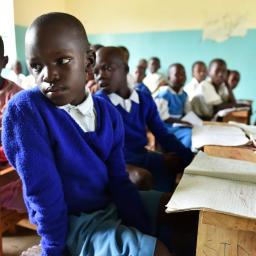
Re-analysis of existing studies finds that deworming schemes may not improve educational attainment as previously claimed
|
 |
by Guardian Staff on (#F51W)
American NASA astronaut Kjell Lindgren, along with fellow astronauts Kimiya Yui of Japan and Russian crew commander Oleg Kononenko, launched on their Soyuz TMA-17M spacecraft from the Baikonur Cosmodrome in Kazakhstan for a five-month mission on the International Space Station. Continue reading...
|
 |
by Paul Simons on (#F4PT)
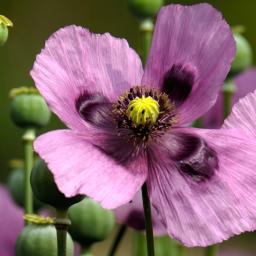
Plants famous for their drugs are out in flower. Perhaps most spectacular is the brilliant red field poppy, making a stunning splash of colour this summer. This common poppy has a type of opiate that was long used for mild pain relief for toothache, earache and sore throats, as well as a mild sedative. But far better known for opiates is the opium poppy, Papaver somniferum, its lilac-coloured flowers infamous from the illegal drugs trade in Afghanistan. But the opium poppy is also grown for pharmaceutical morphine in parts of southern and eastern England, where the soil and climate are just right. Last summer saw a record harvest and the quality of morphine produced now provides some 50% of all the morphine used in the UK. Although the poppies are grown under a Home Office licence, they are no good for making illicit drugs because the variety grown in England needs a good deal of sophisticated refining to make into morphine.Meadowsweet was the source of another important drug. This plant grows in damp places and is now in bloom with frothy white flower heads with a heady sweet fragrance. Meadowsweet has an especially proud history because it was used for relieving headaches thanks to a substance called salicylic acid. In 1897 these painkiller properties inspired the chemical synthesis of aspirin – named after the plant’s old scientific name, Spiraea. Continue reading...
|
 |
by Tash Reith-Banks and Josh Harbord on (#F3SY)
Over the next few months we’ll be breaking down scientific concepts into six-second vines at #guardianscienceinsix. This week we look at how the Large Hadron Collider worksWith the exciting news that the Large Hadron Collider has discovered firm evidence for pentaquarks (a previously unseen class of particles that demonstrate there is a new state of matter) it seems a good time for a quick reminder of how the LHC actually works.Related: What does a pentaquark mean for you? Continue reading...
|
 |
by Guardian Staff on (#F3T0)
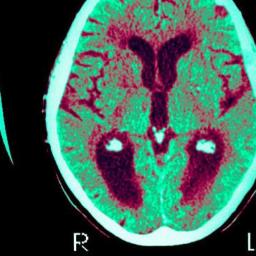
Dr Matthew Norton, head of policy at Alzheimer's Research UK, welcomes a new drug that slows the pace of mental decline. The drug, called solanezumab, is shown to stave off memory loss in patients with mild Alzheimer's over the course of several years. It is the first time any medicine has slowed the rate at which the disease damages the brain Continue reading...
|
 |
by Rebecca Oppenheimer on (#F3R5)
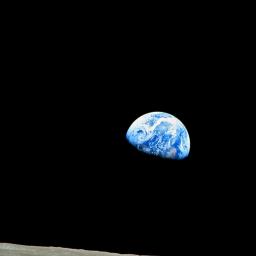
Yuri Milner’s massive investment is minuscule for a priceless addition to human knowledge, not to mention the strides in science and technology
|
by Oliver Wainwright on (#F34A)
Carlos Arturo Torres has designed a modular system that lets kids programme their own prosthetics – and this is only the start of toy-based body partsChildren could soon see their favourite toy grafted on to the end of their arm, thanks to designs for Lego prosthetics that allow everything from mechanical diggers to laser-firing spaceships to be screwed on to the end of a child’s limb.Iko is the work of the Chicago-based Colombian designer, Carlos Arturo Torres, and is a modular system that allows children to customise their own prosthetics with the ease of clicking together plastic bricks. The only limit is their imagination – and what they can find at the bottom of the Lego box. Continue reading...
 |
by Hannah Devlin Science correspondent on (#F314)
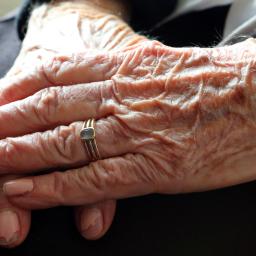
Solanezumab blocks memory loss in patients with mild version of the disease, making it the first medicine ever to slow pace of damage to patients’ brainsScientists appear to have broken a decades-long deadlock in the battle against Alzheimer’s disease after announcing trial results for the first drug that appears to slow the pace of mental decline.The drug, called solanezumab, was shown to stave off memory loss in patients with mild Alzheimer’s over the course of several years. The effects would have been barely discernible to patients or their families, scientists said, and it is no cure. But the wider implications of the results have been hailed as “hugely significant†because it is the first time any medicine has slowed the rate at which the disease damages the brain. Continue reading...
|
 |
by Press Association on (#F2PZ)
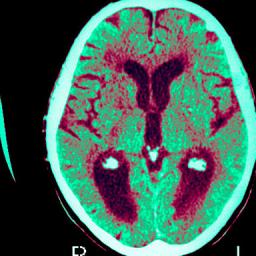
Promising results of studies into use of solanezumab expected to be announced at Alzheimer’s conference in Washington
|
 |
by Guardian Staff on (#F2P3)
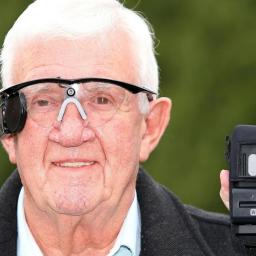
Ray Flynn, a partially sighted pensioner, has his central vision restored after receiving a bionic eye. The 80-year-old, from Audenshaw, Manchester, is the world's first patient with advanced dry age-related macular degeneration (AMD) to undergo the procedure. Flynn hopes the retinal implant will restore his quality of life Continue reading...
|
 |
by Suzi Gage on (#F26W)
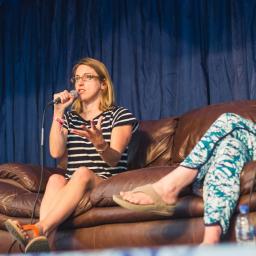
A music festival might not seem an obvious place to see and hear science, but Latitude was full of it.Why do people go to music festivals? When I was 18 years old and heading to Reading festival the answer was very much ‘to listen to Pulp and Beck in a field while drinking overpriced beer and definitely not trying to sneak a hip flask on to the site’. But I’ve grown up since then, and so, it seems, have festivals.At Latitude this weekend, I probably only watched a handful of bands. Not to say that the musical lineup wasn’t great, but there was so much more on offer that caught my attention. The Wellcome Trust funded a large number of talks, interactive sessions and demos that appeared both in their ‘hub’, a tiny tent on the outskirts of the festival, but also in the Literary Tent at the heart of the festival and at other locations across the site. Continue reading...
|
 |
by Agence France-Presse on (#F1VE)
Study also reveals some groups in South America have closer genetic ties to indigenous peoples of Australia, New Guinea and the Andaman Islands than to present-day Native AmericansNative American ancestors reached the new world in a single, initial migration from Siberia at most 23,000 years ago, only later differentiating into today’s distinct groups, DNA research revealed Tuesday.
|
 |
by Letters on (#F0SS)
The vanity bus commissioned by London mayor Boris Johnson has more than electrical problems (Boris buses ‘running on diesel’ due to battery fault, 20 July). This new bus was designed with no windows that open and no air conditioning. This means that on warm days they become ovens, especially on sunny days. One of these days someone will pass out from the heat on the bus and someone might even die. I had to get off one the other day to avoid collapsing from the intense heat.
|
 |
by Press Association on (#F0HN)
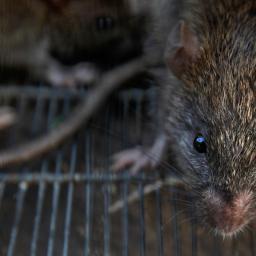
Study finds that form of therapy which uses electric current blunted activity in rats’ hormonal pathway linked to stress, chronic pain and moodA biological mechanism explaining part of the mystery of acupuncture has been pinpointed by scientists studying rats.Stimulation with electroacupuncture – a form of the therapy in which a small electric current is passed between a pair of needles – blunted activity in a key hormonal pathway linked to stress, chronic pain and mood, the researchers found. Continue reading...
|
by Amy Mount on (#F0F0)
A visit to the Googleplex offers a reminder of the need for public debate about the ethical, social and environmental implications of new technologies.At the headquarters of Google in Mountain View, California, multi-coloured bikes are scattered around the campus; there’s a Holodeck (a dizzying immersive version of Google Earth); and two of the meeting rooms are called Flux and Capacitor. So far, so Google.Yet the company, which earns most of its revenues through advertising, has a strange urge to communicate its materiality. The campus features a visitor centre, still ‘in beta’, which has the difficult task of assembling objects to depict the history of a corporation that deals in bits rather than atoms. These include a graph tracking Google searches over time, a nap pod and a reconstruction of a Google office, which looks like… an office. Weirder still is the sculpture garden, a patch of grass occupied by several large Android statues, one for each version of the operating system. Continue reading...
by Amy Westervelt on (#F074)
Manufacturing and wastewater treatment sites are releasing bisphenol A into the air, exposing people to high levels of the chemical, according to a studyResearchers have long known people can be exposed to bisphenol A (BPA), a chemical commonly found in plastic packaging from receipts to the lining of food cans and believed to disrupt human hormones. But a new study has found people also can be exposed to the chemical just by breathing.Published in May 2015 by researchers at the University of Missouri, the study found high concentrations of BPA in both air and water near industrial sites, indicating that people may be exposed to much larger quantities of the chemical than previously thought. Continue reading...
 |
by Samuel Gibbs on (#EZVR)
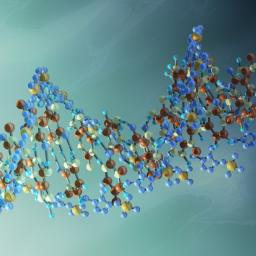
Researchers find transistors can be produced consisting of atoms 600,000 times thinner than a human hair – paving way for atom-scale chipsScientists have created a transistor made up of a single molecule. Surrounded by just 12 atoms, it is likely to be the smallest possible size for a transistor – and the hard limit for Moore’s law.
|
 |
by GrrlScientist on (#EZMF)
Scientists at London’s Natural History Museum recently launched a citizen science project that will document how wild British orchids are responding to climate changeA few years ago, a paper published in the Journal of Ecology reported that an orchid that grows wild in the UK and parts of Europe was blooming earlier than it was 150 years prior. In that paper, the authors examined field records of flowering times for the early spider-orchid, Ophrys sphegodes, for two time periods and compared the shift in peak flowering times to historical springtime temperature variations (doi:10.1111/j.1365-2745.2010.01727.x). The first time period extracted relevant data from herbarium specimens collected between 1848 and 1958; and the second time period recorded observed peak flowering times for this orchid species in the field between 1975 and 2006. Continue reading...
|
 |
by Maev Kennedy on (#EYWA)
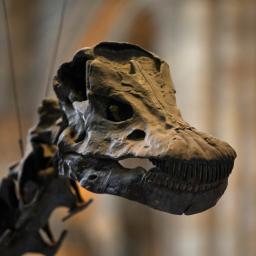
One of London museum’s best-loved exhibits – a giant Victorian cast of a diplodocus – to be loaned to any museum in UK big enough to host itAnyone with a very large spare room is invited to apply for a very large house guest: Dippy the dinosaur, one of the best-loved museum specimens in Britain, is going sofa surfing.The Natural History Museum is inviting any indoor museum in the UK with enough space to accommodate the giant Victorian cast of a diplodocus to apply to host Dippy for at least a four-month visit after it is dismantled and removed from the South Kensington institution’s magnificent central hall, where it has been the star attraction for the past 35 years. Continue reading...
|
 |
by Ben Still on (#EYQJ)
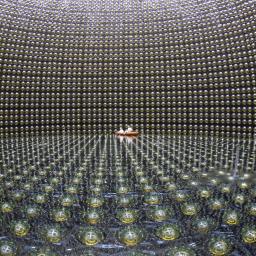
Ben Still describes new plans to upgrade a huge tank of water surrounded by light detectors, so that it can detect antineutrinos
|
 |
by Staff and agencies on (#EYGP)
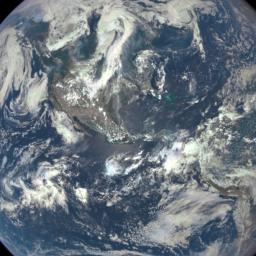
Nasa’s new Deep Space Climate Observatory, hanging in gravitational balance between Earth and sun, sends high-quality snapshot that is first of its kind
|
 |
by Ian Sample Science editor on (#EVTZ)
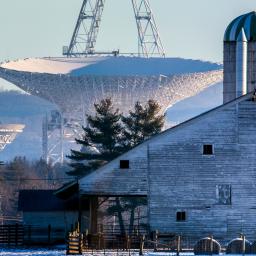
Breakthrough Listen, funded by Yuri Milner, will allow telescopes to eavesdrop on planets that orbit the million stars closest to Earth and 100 nearest galaxies
|
 |
by Sam Thielman in New York on (#EXTG)
|
 |
by Sarah Boseley Health editor on (#EXAY)
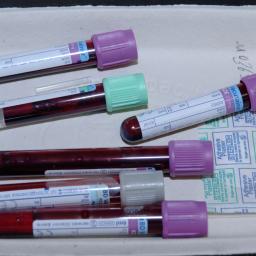
First case of long-term remission gives scientists new insights into the potential effectiveness of early HIV detection and treatmentA French teenager who was infected with HIV as a baby and given intensive drug therapy in early childhood has lived for more than 12 years without any treatment, raising hopes among scientists searching for a cure for Aids.The case of the 18-year-old was presented at an Aids conference in Vancouver, Canada, by doctors at the Institut Pasteur who treated her. Like the so-called Mississippi baby, she became infected before birth and received drug treatment in the first weeks of her life. Continue reading...
|
 |
by Ellen Brait in New York on (#EWS9)
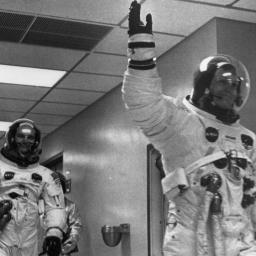
National Air and Space Museum’s first crowdfunding campaign launched Monday to conserve Armstrong’s deteriorating suit so it can go on displayThe US National Air and Space Museum has launched its first crowdfunding campaign to raise money to conserve the spacesuit Neil Armstrong wore on the moon.
|
 |
by Jeff VanderMeer on (#EWP9)
Any truth humans can find ‘out there’ remains speculative, and science and fiction are both still telling storiesAre we alone? There are so many possible ways to begin to answer this question. The backstory on the Fermi Paradox – why we haven’t encountered aliens yet – reads like science fiction. Certainly, the scenarios it sets out are all consigned to the realm of storytelling for now, and even the most logical theories may turn out to be wildly inaccurate. For this reason, the science and fiction of alien contact have much in common, with speculation on the subject sometimes more useful than empirical approaches.The idea of an intertwining between science and fiction on this subject has historical underpinnings. Early scientific papers in the west by the likes of Francis Bacon and Johannes Kepler took the form of “contes philosophiques†or “philosophical talesâ€, in which the fictional framework of an imaginary or dream journey surrounded some sort of scientific speculation. In the late 1800s, some scientists even presented their findings in the form of poetry. Continue reading...
|
 |
by Damian Carrington on (#EWJQ)
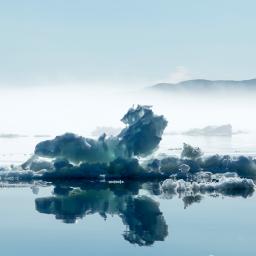
Cooler temperatures revived sea ice levels suggesting a rapid recovery was possible if global warming was curbed, scientists say
|