 |
by Molly Crockett on (#E4QR)
A recent study shows that medications used to treat depression and Parkinson’s disease can alter moral decision-making in healthy people. Lead author Molly Crockett discusses what we can and cannot conclude from these findings.Can drugs change our morals? My colleagues and I recently addressed this question in a study carried out at University College London. We gave healthy people the opportunity to earn money by delivering painful electric shocks to either themselves or others, and investigated how common medications influence these moral decisions.One group of volunteers received either the serotonin-enhancing antidepressant drug citalopram or placebo. Enhancing serotonin made participants more reluctant to harm, regardless of whether this benefited themselves or another person. The volunteers who received citalopram were willing to pay nearly twice as much money as those who received placebo to prevent both themselves and other people from receiving pain. Continue reading...
|
| Link | http://feeds.theguardian.com/ |
| Feed | http://feeds.theguardian.com/theguardian/science/rss |
| Updated | 2026-10-01 03:45 |
 |
by Oliver Milman on (#E4DG)
Scientists searching for lobster larvae on Investigator research vessel instead find cluster of four volcanoes thought to be about 50m years oldFour enormous underwater volcanoes, thought to be about 50m years old, have been discovered off the coast of Sydney by a team of scientists who were looking for lobster larvae.
|
 |
by Tom Kerss, Royal Observatory, Greenwich on (#E3RQ)
Astronomers of all stripes are poised for a face-to-face meeting with Pluto – a mere point of light in a large telescope, but a familiar mark on our star charts for 85 years. It’s like meeting a lifelong pen-pal for the first time. A concoction of nerves, expectations and raw excitement has swept the community, unable to resist the allure of the unknown. Yet Pluto is only the first step into a new frontier of exploration beyond Neptune. Continue reading...
|
 |
by Spencer Ackerman in New York on (#E39H)
Louis Freeh calls report that preceded Stephen Behnke’s ousting from the American Psychological Association leadership a ‘gross mischaracterization’A prominent psychologist ousted from the leadership of the the US’s largest professional psychological association for his alleged role in enabling and covering up torture has enlisted a former FBI director to fight back.Related: US torture doctors could face charges after report alleges post-9/11 'collusion' Continue reading...
|
by Maev Kennedy on (#E39P)
Neolithic building on vast site at Marden Henge is welcoming public visitors again after thousands of years buried beneath farmlandPieces of flint tools dropped more than 4,300 years ago on the floor of a house as old as Stonehenge have been laid bare on the edge of Marden Henge, a giant ditch and bank enclosure so buried in rich Wiltshire farmland that it has almost vanished from view.“We’ve over-fetishised Stonehenge for far too long, because those giant trilithons are just so damn impressive,†said Dr Jim Leary, director of this summer’s excavation with the Reading University archaeology summer school, in the lush Vale of Pewsey. “It could well be that this was really where it was at in the Neolithic.†Continue reading...
 |
by Guardian Staff on (#E38M)
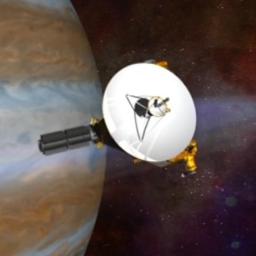
Nasa's New Horizons spacecraft has begun beaming back photographs of the surface of Pluto as it approaches. The probe was less than 2.5m km from the 2,300km-wide dwarf planet on Saturday and by Tuesday, it will be taking pictures from an altitude of just 12,500km. The newly published image shows the planet's hemisphere that will soon rotate out of view Continue reading...
|
 |
by Mitchell Moffitt and Greg Brown on (#E2DK)
From are silent farts more deadly to could a zombie apocalypse actually happen? The creators of the AsapSCIENCE YouTube channel share their favourite science questions (and answer them!)As the creators of AsapSCIENCE, a YouTube channel where we answer some of the world’s weirdest questions using science, we get asked lots of fun, fascinating, and sometimes bizzare questions. We’ve investigated whether video games can make you smarter (good news for XBox fans), how much sleep you actually need, and whether social media is changing your brain. We even solved #TheDress.
|
 |
by Ben Martynoga on (#E2AE)
Educational neuroscience burst onto the scene with the hope of explaining how we learn. But the jury is still out on whether it’s useful for classroom practiceNo one knows how much knowledge students take home with them after a day at school. Tests, homework and inspections give a snapshot of learning but ultimately it’s something that you cannot see; it’s invisible and personal.The educational researcher Graham Nuthall spent 40 years trying to understand how we learn. He wired classrooms in New Zealand for sound, installed video cameras, sat in on lessons and interviewed hundreds of students. But despite crunching mountains of data, he was not able to draw any conclusions. Continue reading...
|
by Jon Butterworth on (#E28G)
Cosmic rays provide a free source of high-energy collisions, which have been used in the past to discover new particles. A recent study calculates how often they produce Higgs bosons
 |
by Guardian Staff on (#E0WF)
Independent review examines American Psychological Association guidelines and doctors’ involvement in national security
|
 |
by Rosie Ifould on (#E0H7)
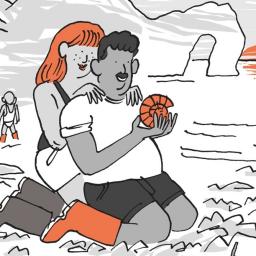
Jurassic World has rekindled our passion for the prehistoric, so this summer head to the beach in search of ammonites, belemnites – and maybe a sauropod or twoWhat is it about dinosaurs? They never really go out of fashion, but with Jurassic World stomping across multiplex screens for the past few weeks and scientists at National Geographic staging a televised “T rex autopsy†(fake, obviously), there’s no escaping them this summer. Maybe now’s the time to discover your inner palaeontologist and try fossil hunting. There are plenty of sites across the UK from beaches to quarry beds where you can give it a go, but some more popular spots are prone to falling rocks and are dangerous at high tide, so a little bit of research is a good idea. Go to ukfossils.co.uk for advice on the safest sites to visit.Charmouth on Dorset’s Jurassic Coast is ideal for first-timers, says palaeontologist Simon Penn, as it’s quite safe and set up for holidaymakers who want to amble along and do the odd bit of fossil spotting. “At that end of the coast, you’re likely to find ammonites and belemnites that are around 190 million years old,†he says. (If you’re heading to Camp Bestival at end of July, keep an eye out for Jurassic CSI, which Penn helped to set up – mocked-up crime scenes where the culprit is one of six possible dino-villains.) Continue reading...
|
 |
by Dr Steven Miles on (#E0FX)
The American Psychological Association report highlights how it allowed torture clinicians to operate in our ranks. But the impact goes far beyond the groupRelated: US torture doctors could face charges after report alleges post-9/11 'collusion'The report documenting the role of the American Psychological Association (APA) as an embedded accomplice to torture during the War on Terror is important for its detail, but not for its novelty. The essence of this story has been known for eight years despite APA denials, euphemisms, double-talk and whitewashing; the report simply underscores the truth of what many of us have been saying all along. Continue reading...
|
 |
by Spencer Ackerman on (#DYP5)
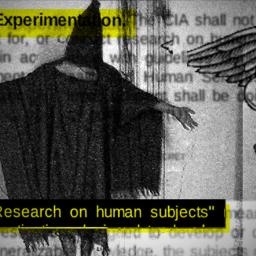
Leading group of psychologists faces a reckoning following repeated denials that its members were complicit in Bush administration-era tortureThe largest association of psychologists in the United States is on the brink of a crisis, the Guardian has learned, after an independent review revealed that medical professionals lied and covered up their extensive involvement in post-9/11 torture. The revelation, puncturing years of denials, has already led to at least one leadership firing and creates the potential for loss of licenses and even prosecutions.For more than a decade, the American Psychological Association (APA) has maintained that a strict code of ethics prohibits its more than 130,000 members to aid in the torture of detainees while simultaneously permitting involvement in military and intelligence interrogations. The group has rejected media reporting on psychologists’ complicity in torture; suppressed internal dissent from anti-torture doctors; cleared members of wrongdoing; and portrayed itself as a consistent ally against abuse.
|
|
by Pete Guest on (#E077)
This month’s data set graphic by Pete Guest looks at the sun, how strong it is, and the effect it can have on your skin Continue reading...
|
 |
by Simon Copland on (#DXXK)
Are our sexual desires derived from our genes? Or can we make active choices about who we are sexually attracted to?Over the past decade the idea that we are “born this way†— or that our sexuality is genetic — has become increasingly important. The mantra has become a political strategy, in particular for gay and lesbian communities, who see it as a way to protect themselves from discrimination. The movement has spawned blogs where people show pictures of their childhood to highlight the innate nature of their sexuality, and attacks on those who have questioned the theory.But do the politics match the science? Continue reading...
|
 |
by Celeste Orr on (#DXXN)
It is done to reinforce the inadequate sex binary and even to police non-heterosexual, queer attractions or acts“Designer babies†seems like a concept from a dystopian future, but they’re here now: would-be parents who utilize in-vitro fertilization to conceive often also have the option of genetically testing embryos and then picking which one to implant.Scientists can test for hundreds of things, from fatal genetic traits like Tay-Sachs and Huntington disease to non-fatal but culturally devalued embodiments like Down syndrome, deafness, blindness and intersex conditions. Continue reading...
|
 |
by Bruce McCandless on (#DXW5)
‘I wanted to say something similar to Neil [Armstrong] when he landed on the moon, so I said, “It may have been a small step for Neil, but it’s a heck of a big leap for me.†That loosened the tension a bit’The main aim of our nine-day mission on Challenger was the release and deployment of two communications satellites; the walk would follow that. It was a long time in the making: decades earlier, I helped develop the jet-propelled backpack I’m wearing, an MMU, or Manned Manoeuvring Unit. We were still testing and tweaking it six weeks before we went up. I was delighted to have been picked for the mission: it was a murky selection process, lots of back and forth between mission command and management.The day before my walk, we reduced the pressure and increased the oxygen in the shuttle to get the nitrogen out of my bloodstream, otherwise I’d get the bends. Where I live now, outside Denver at an altitude of 8,300ft, has lower oxygen levels than the cabin did that day. Continue reading...
|
 |
by Ian Sample, science editor on (#DXT4)
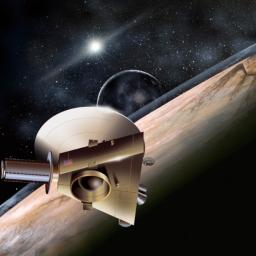
Next Tuesday, more than nine years after leaving Earth, Nasa’s probe will make history as the first spacecraft ever to reach the distant dwarf planetNine years after it left Earth, Nasa’s New Horizons spacecraft will on Tuesday become the first probe to reach Pluto, the mysterious icy world at the edge of the solar system, snapping photographs as it hurtles by at 30,000 miles an hour.The journey has taken sufficiently long that in the intervening years the status of the celestial body has been downgraded by astronomers from planet to the less impressive-sounding dwarf planet. Continue reading...
|
 |
by Press Association on (#DXMR)
Rare example of an Enigma machine, used by Nazi Germany to send coded messages during second world war, expected to fetch £70,000A rare surviving example of an Enigma machine, used by the German military to send coded messages during the second world war, is expected to fetch £70,000 at auction next week.Related: Why didn’t we build our own Enigma machine? Continue reading...
|
by Guardian Staff on (#DXAW)
French pilot Didier Esteyne flies a battery-powered two-seat Airbus E-Fan from Lydd, Kent, across the Channel to Calais in France on Friday. The flight took around 40 minutes. Airbus said it was the first flight in an electric plane across the Channel, a milestone in the attempt to make electric flights a viable form of travel. It said an earlier Channel crossing by Hugues Duval was invalid as his plane was launched from another aircraft Continue reading...
 |
by Nicola Davis on (#DWJD)
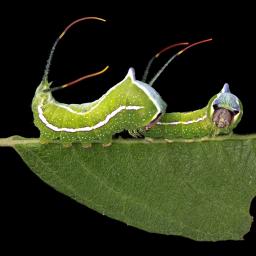
Samuel Jaffe and his digital camera have entered an insect world where things are not what they first appear
|
 |
by Angel Hsu and Amy Weinfurter on (#DWCQ)
We should welcome recent commitments by the business sector, but they now need to be converted into tangible progressThe success of the Paris climate talks, COP 21, this December will not be measured by whether or not countries can all agree on a new global deal. It will rest on deals made outside the negotiation halls and beyond the traditional scope of international climate talks.The New York climate change summit last September offers one bellwether for tracking this change, where 481 private companies and investors joined national, city and regional governments, and nearly 400 civil society groups to craft and sign 29 different pledges for climate action. These commitments take on targets that range from reducing deforestation to mitigating aviation sector emissions.
|
by Monica Tan on (#DWA9)
A 12-year-long animal study finds a link between obesity, type 2 diabetes and cardiovascular disease and whether their ancestors were undernourishedPeople from developing nations who adopt western lifestyles with sufficient or excessive calorie intake could be more susceptible to obesity, type 2 diabetes and cardiovascular disease than their Caucasian counterparts, new research has inferred.The laboratory-based animal study found a link between greater susceptibility to obesity and diabetes, and whether one’s ancestors have been undernourished for several generations, and was published on Friday in the journal Cell Metabolism. Continue reading...
 |
by Bill Code on (#DW17)
The most detailed pictures captured of the satellite have been beamed back to earth by the New Horizon spacecraftNasa has released the most detailed picture yet taken of dwarf planet Pluto, captured by the New Horizons spacecraft.Taken from a distance of 8m kilometres, the relative close-up of the icy world on the fringes of the solar system was sent back to earth on 8 July. Continue reading...
|
 |
by Guardian Staff on (#DVZH)
Nasa's New Horizons spacecraft has sent back detailed images of Pluto and its moon Charon, leaving scientists 'drooling'. The pictures have been captured from a mere 8m kilometres, giving the closest-ever pictures of the dwarf planet. New Horizons is due to fly past Pluto on 14 July after taking nine years to reach it Continue reading...
|
by Sarah Boseley Health editor on (#DVN3)
Analysis of studies on smoking tobacco and psychosis, of which schizophrenia is most common type, suggests smoking may be causal factor in itselfSmoking cigarettes might increase people’s risk of psychosis, say researchers who believe tobacco as well as cannabis could play a part in causing schizophrenia.It has long been recognised that people suffering from psychosis tend to smoke more than most of the population, but it has generally been assumed they are self-medicating. “Having psychosis is a very distressing thing – hearing voices, having delusions,†said Dr James MacCabe from King’s Institute of Psychiatry, Psychology and Neuroscience, one of the authors of a new study. Continue reading...
 |
by Richard Adams Education editor on (#DVN1)
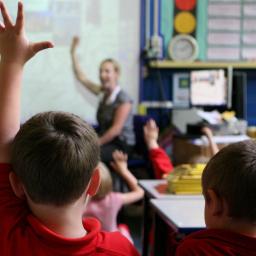
Primary school pupils across England take part in trial as part of ‘philosophy for children’ study, with pupil-led discussions on topics such as fairness and bullyingPhilosophical discussions about truth, fairness or kindness appear to give a small but significant boost to the maths and literacy progress of primary school pupils, although experts remain puzzled as to why.More than 3,000 pupils in 48 state primary schools across England took part in a year-long trial as part of a study named “philosophy for childrenâ€, and found that their maths and reading levels benefited by the equivalent of two months’ worth of teaching. Continue reading...
|
|
by Stuart Clark on (#DV9B)
Scientists have regained contact with the probe before its encounter with the dwarf planet, after a nine-year journey from EarthNasa is all set for next week’s historic Pluto fly-by having reactivated the New Horizons spacecraft following a malfunction last weekend.The 14 July fly-by will take place on the 50th anniversary of Mariner 4’s visit to Mars, which was America’s first successful planetary fly-by. Continue reading...
|
 |
by Hannah Devlin, science correspondent on (#DTF7)
In two separate experiments, scientists have formed a network from the brains of monkeys and rats, allowing them to co-operate and learn as a “superbrainâ€Scientists have linked together the brains of three monkeys, allowing the animals to join forces and control an avatar arm, in research that raises the prospect of direct brain-to-brain interfaces in humans.In a second experiment, the brains of four rats were wired together in a “brain netâ€, enabling the rodents to synchronise their neuronal activity and collaboratively solve a simple weather forecasting problem that individual rats struggled to complete. Continue reading...
|
 |
by Samuel Gibbs on (#DST0)
IBM processors built at 7nm will be four times more powerful with up to 20bn transistors squeezed onto a single chipFears that Moore’s law – which dictates the exponential growth of processing power – would falter this year have been allayed after IBM revealed processors with circuits just 7nm wide.Moore’s law states that every 18 to 24 months processing power will double and it has been steadily observed to be true since 1965, enabling the rapid technological progress over the last four decades. Continue reading...
|
 |
by Hannah Devlin Science correspondent on (#DSKW)
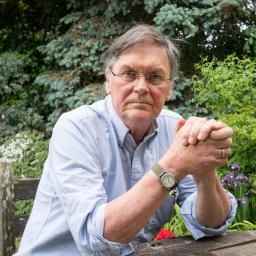
Scientist who resigned after being lambasted for his comments about his ‘trouble with girls’ will not be reinstated at University College London
|
 |
by Philip Oldfield on (#DSEG)
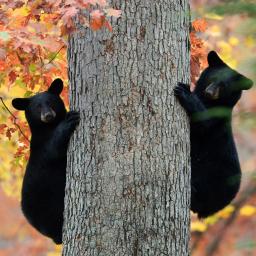
Bone weakness is a significant problem for astronauts, but a unique biological process that occurs in hibernating bears could be the basis for a new therapyAstronauts could protect themselves against bone wastage by harnessing a unique biological process that allows black bears to maintain their skeletons during hibernation.A study has revealed that bears protect their bones from degrading, despite hardly moving for up to six months, by suppressing the usual constant release of calcium from the bones into the blood. Such a lengthy period of inactivity in humans would lead to a severely weakened bone structure. Continue reading...
|
|
by Ian Sample on (#DS8M)
Plus, how technology is changing what we know about StonehengeThe annual Royal Society Summer Science Exhibition wrapped up last week. On last week's podcast we looked at one of its featured topics – quantum computing. This week we're picking up three other themes from the exhibition.Can science help us produce meat in a sustainable way? Ian Sample is joined in the studio by Professor Michael Lee, head of Rothamsted Research's North Wyke Site, and by the Guardian's science correspondent Hannah Devlin, to find out. Continue reading...
|
 |
by Roger Harrabin on (#DS5D)
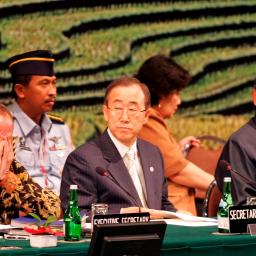
The devastating impact CO2 emissions are having on oceans recently brought one professor to tears during a radio interview. But does such passion validate or weaken science in the audience’s eyes?Should scientists show emotion while discussing their science? I ask because a professor of ocean geology wept as she discussed with me the impact carbon dioxide (CO2) emissions are having on the sea.She fears we are acidifying and heating the ocean so fast that her young daughters may no longer enjoy coral reefs and shellfish by the end of the century. Continue reading...
|
 |
by Stephen Curry on (#DS31)
Today sees the publication of the report of an independent review of the contentious use of metrics — numerical indicators of performance — in the assessment of UK research and researchers. Can it plot a sensible course in a world increasingly obsessed with numbers?The 2009 movie Knowing starred Nicolas Cage as a professor of mathematics and was advertised with the strap-line: what happens when the numbers run out? Without giving away too much of the plot of this ludicrous piece of sci-fi shlock, the answer turns out to be A Very Bad Thing. But in the real world of research, where often we want to know who are the top performers – usually in deciding who gets funded, appointed or promoted – we have the opposite problem. There is no shortage of numbers. The question is rather: what happens when the numbers take over?That question is much discussed in The Metric Tide, the report published today by the UK Independent review of the role of metrics in research assessment. The steering group, of which I was a member, was convened in Spring 2014 by then Minister for Universities and Science, David Willetts. The primary task was to examine the potential of metrics – numerical indicators of performance such as the number of times a research paper is cited by other researchers, or the average citation score embodied in journal ‘impact factors’ – to inform the Research Excellence Framework (REF). This is a complex and intensive exercise that, every six years or so, evaluates the scholarly prowess of university departments across the UK. Continue reading...
|
by Iain MacDougall on (#DRPV)
The competition, which is run by the Royal Observatory Greenwich in association with Insight Investment and BBC Sky at Night Magazine, is now in its seventh year and continues to go from strength to strength, receiving a record number of over 2700 spectacular entries from enthusiastic amateurs and professional photographers from over 60 countries spanning the globe Continue reading...
 |
by James Wilsdon on (#DREK)
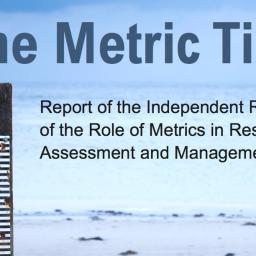
Across research, the metric tide is rising. An independent report published today argues that we have the opportunity to influence how it washes through higher education and research.Yesterday’s Budget brought good news for those vice-chancellors who have been lobbying to raise student tuition fees above the current £9,000 annual cap. But it came with a sting in the tail: George Osborne said that fees could rise in line with inflation only for those universities “that demonstrate excellence in teachingâ€. This will be assessed through a new Teaching Excellence Framework, or TEF, to be introduced alongside the Research Excellence Framework (REF), which is used to allocate around £1.6 billion each year on the research side of the system.Chris Cook, policy editor of Newsnight, suggested yesterday that linking fee rises to “excellent†tuition in this way “will mess with the Russell Group’s head.†And it’s true that the prospect of yet another layer of audit and assessment in universities is enough to make many academics weep. A letter to the Guardian this week from 121 professors reflects the concern of many in the sector about “continuous pressures to standardise, conform, obey and duplicate in order to be “transparent†to measurementâ€. A related call for “slow scholarship†and active resistance to the acceleration of academic life has been doing the rounds on blogs and social media over recent weeks. Continue reading...
|
 |
by Guardian Staff on (#DR63)
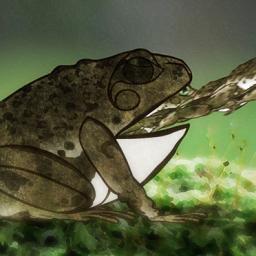
Australia's gastric-brooding frog was discovered in the 1970s but by the early 1980s was classed as extinct. However, this remarkable frog, which projectile-vomits its young after gestating them in its stomach, is the subject of ground-breaking research at the University of New South Wales to recreate an extinct species.
|
 |
by Guardian Staff on (#DR1Q)
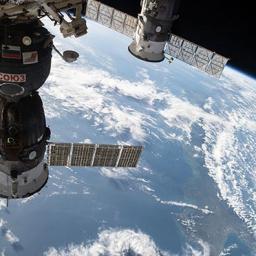
Video shows a clearly visible International Space Station passing between Jupiter and Venus above Sydney. The two planets have been closely aligned for some time but it is the first time the ISS is believed to have passed so close to them since it was launched in 1998. The spectacle occurred at around 5:30pm local time on Wednesday and was visible from most parts of eastern Australia Continue reading...
|
by Ian Sample Science editor on (#DPW7)
If effective in humans, adding the hormone progesterone to standard drug treatment could potentially benefit 25,000 women a year in the UK aloneHundreds of thousands of women with breast cancer could potentially benefit from having a low-cost female hormone added to their therapy, scientists say.The fresh hope emerged from research in animals which found that the hormone, progesterone, slowed the growth of breast cancers when it was combined with tamoxifen, the standard drug treament.
 |
by Anthony Toft on (#DPW8)
One of the most eminent cardiovascular researchers of his generation, he demonstrated the relationship between cholesterol and coronary artery diseaseShortly after the National Health Service was established in 1948, a new breed of doctor emerged who was clinically competent but sought to go further by undertaking research into the cause of disease, usually in collaboration with scientists. Michael Oliver, who has died aged 89, was in the vanguard of this movement, and with his biochemist colleague in Edinburgh, George Boyd, he demonstrated the relationship between cholesterol and coronary artery disease.A tall, elegant figure, immaculate in his white coat, MFO, as he was known, would occasionally visit his wards and then rush, with arms and legs flailing, down the long medical corridor to the department of cardiology in the Royal Infirmary of Edinburgh, followed by his breathless entourage. He was envied, as were his few like-minded colleagues, by the more prosaic clinicians on the staff who felt that academic colleagues like him did not contribute sufficiently at the coalface. But the international standing of that hospital unquestionably depended upon these clinical scientists. Continue reading...
|
by Kieron Flanagan on (#DPTA)
We learned little about future science spending in the Summer Budget, says Kieron Flanagan, but there were some hints at the likely direction of future UK science and technology policy.
 |
by Luke Harding and agencies in Moscow on (#DPCY)
Dynasty Foundation, which gave grants to young scientists, announces it is liquidating all activities after it was sanctioned under controversial Kremlin lawA Russian foundation that gave grants to young scientists and mathematicians has been forced to close down after it was branded a “foreign agentâ€, under a controversial Kremlin law.In a one-line statement on its website the Dynasty Foundation in Moscow announced on Monday that it was “liquidating†all of its activities. The foundation had been operating since 2002 and had sponsored numerous scientific grants and prizes. Continue reading...
|
by Dana Nuccitelli on (#DP5B)
Recurrent Fury uncovers the difference between skepticism and conspiratorial denial
 |
by Tim Radford for Climate News Network, part of the on (#DNXM)
Technique to unravel how each molecule of CO2 absorbs light allows more accurate predictions about how much the Earth is likely to warm, reports Climate News Network
|
 |
by Nathalia Gjersoe on (#DNWR)
Racial prejudice has its roots in children’s natural drive to carve the world up into categories. Can research do anything to fix this?Racist stereotypes, at their root, come from quite a fundamental learning mechanism. Humans are able to learn and adapt so quickly because they are excellent at making generalisations about the world based on very limited experience. Take dogs, for example - a toddler might reasonably conclude after meeting just two or three that all dogs are furry, bark and have tails that should be treated with some caution.
|
 |
by Press Association on (#DNPX)
British scientists develop GM oilseed crop containing omega-3 fatty acids that could provide sustainable alternative to farmed fish, such as salmonFish oil grown on the farm has come a step closer following promising results from a genetically modified crop trial.
|
|
by Mark Miodownik on (#DNEK)
With people living longer than ever, being able to replace bits of the human body as they wear out has become a new frontier in medicineMost babies born in 1900 died before the age of 50; 100 years later life expectancy in the UK now exceeds 80 years, with the number of over-65s expected to double by 2030. This trend is radically changing the age demographics of the population and creating a new set of challenges for engineers. One of the most significant of these is to give people a higher quality of life in their old age.Significant progress has been made; 300,000 hip replacements are now performed annually worldwide, releasing people from pain, and extending the active period of their lives by 20 years or more. The success of these implants has led scientists to develop a new type of biomaterial that is promising to do for medicine what silicon did for computing. Continue reading...
|
 |
by Michele Hanson, June Eric-Udorie, Bidisha and Simo on (#DN9V)
A survey has shown some of us are much younger or older than our biological age. Our writers discuss whether their minds and bodies are out of syncIt was reported this week that people age at vastly different rates. A study of nearly 1,000 38-year-olds, which considered 18 physiological markers, found that some were much older or younger than their biological age. But what about our psychological experience of age? Do you feel the age you are? Or will you always be a teenager at heart? Continue reading...
|
 |
by Monica Tan on (#DN7G)
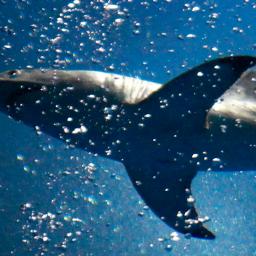
Global FinPrint survey will use new technology to monitor underwater life and shark habitats, which have been ‘notoriously difficult’ to studyThe first ever global survey of sharks, rays and skates in coral reef environments using underwater cameras will begin in August.The Global FinPrint survey uses technology called baited remote underwater video (Bruv) to take one hour of underwater footage, capturing marine life. Continue reading...
|