Scientists dismiss calls by some Liberal Party members to review basic climate science – within days of Australia announcing a key emissions target – as ‘worrying and ignorant’Now is probably not the best time – if there ever was one – for a minority within Australia’s Liberal party to be excreting climate science denialist brain farts.The government is expected to announce within a week or two its proposed target to cut greenhouse gas emissions beyond the year 2020. Continue reading...
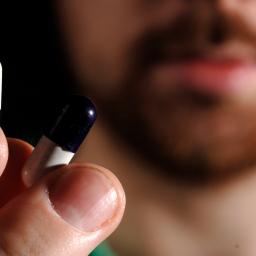
Prescriptions of sildenafil are at 1.7m, compared with 1.4m in 2013, and antidepressants saw an increase of more than 97% since 2004The number of prescriptions for Viagra and other erectile dysfunction drugs has gone up by more than a quarter in a year, official figures show.Statistics released by the Health and Social Care Information Centre (HSCIC) show that last year there were 1.7m prescriptions for sildenafil – commonly sold as Viagra, but also available under other trade names – compared with 1.4m in 2013 and 1m in 2004. Continue reading...
Researchers study original Swedish trial data, which provided evidence for UK’s and other screening programmes, and claim benefits were vastly overestimatedInternationally renowned cancer experts have cast fresh doubt on the benefits of breast cancer screening programmes, warning that they save fewer lives than previously thought.
From what I can make out, if one wants to live forever – or at least until 110 – you must head straight to your local hipster restaurantThere’s a sign on Susannah Mushatt Jones’s kitchen wall. It reads: “Bacon makes everything better.†You could legitimately quibble with this. Not better for the pig, of course. Plus, what about concerns around the cholesterol and sodium content, as well as links between bacon and chronic pulmonary disease and diminished sperm morphology? But it’d be hard to argue to her face: Jones is the world’s oldest living person. On Monday, when she turned 116, she credited her longevity to a regular breakfast of bacon and eggs. Regular as in she’s eaten it every day for 100 years.The fry-up turns out to be something of a staple for the supercentenarian. Charlotte Hughes (1877–1993) said her advanced age was down to a “stiff brandy and bacon and eggsâ€. Ditto Edna Parker (1893–2008), who topped up with sausage. The spanner in the works is Emma Morano, who, alongside Jones, is the only person still alive who was born in the 1800s. Eggs? Yes, she says: ever since she was a teenager, she’s had three raw ones every day. Bacon? Not so much. Continue reading...
Scientists look at 135,000 deaths and find combination of the two conditions leads to a substantially lower life expectancyA combination of heart disease and diabetes can shorten your life by more than a decade, research has shown.
On the eve of the summer budget, a new campaign seeks to remind the government that science has a huge role to play in boosting the UK economy“I believe that science is the engine of prosperity,†renowned physicist and author Dr Michio Kaku once remarked .
WA backbenchers Dennis Jensen and Chris Back, who want an inquiry before emission reductions are decided, agree to briefing but say they will not be lectured toTwo climate sceptic MPs have accepted an offer from a group of scientists for a briefing ahead of the release of Australia’s post-2020 emissions targets.But the West Australian backbenchers Dennis Jensen and Chris Back insist they want a parliamentary inquiry before emission reductions are decided. Continue reading...
Tests on physiological markers in nearly 1,000 38-year-olds found that some had biological ages many years older than their birthdates would suggestIf the school reunion was not proof enough, scientists have confirmed that people grow old at radically different rates, with some ageing much faster than their fresh-faced former classmates.
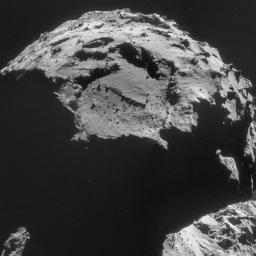
There could be life beneath the surface of the comet 67P/Churyumov-Gerasimenko according to two UK astronomers. Apparently the comet displays characteristics typical of an environment that could support alien life, including a black crust and icy lakes. Rosetta, the European Space Agency [ESA], spacecraft is also said to have picked up clusters of organic material that resemble viral particles Continue reading...
A sensational claim that ESA’s Philae spacecraft has landed on a comet teeming with life doesn’t hold waterThe Guardian’s story “Philae comet could be home to alien life, say scientists†has been met with scepticism and outright dismissal by leading comet experts.The people behind the headline are Chandra Wickramasinghe, University of Buckingham, and Max Wallis, University of Cardiff. Today, the Daily Mirror reported Wickramasinghe as saying, “Data from the comet seems to unequivocally point to micro-organisms being involved.â€
Laughter overrides our usual vocal and physical control to make sounds we never normally hear in any other contextThe human voice is the most complex instrument in nature. When we talk, we shape sounds in the way no other animal can. This reflects the very precise evolutionary adaptation that means, for example, our tongues are short and fat and nimble, rather than long and hard to maneuver. It also reflects the very fine voluntary motor control that we have over our mouth and our rib cage, which enables us to control the act of talking, and also the fact that unlike many other animals, we learn new patterns of vocal behaviour. And of course, this is only the start of our abilities – we can do vocal impressions, sing, beatbox – when it comes to the human voice, the sheer range of abilities is extraordinary. However, these voluntary motor acts can be derailed quite efficiently by a different vocal behaviour – laughter. Continue reading...
Breakthrough linking protein in blood to memory loss raises hopes for dementia treatment, and could be key to keeping people healthy for longer in old ageResearchers may have found a way to slow down or prevent memory problems that arise in old age and which can become devastating in patients with dementia.The fresh hope comes from a series of studies in humans and mice that identified a protein which causes memory impairment when it builds up in the blood and brain with age.
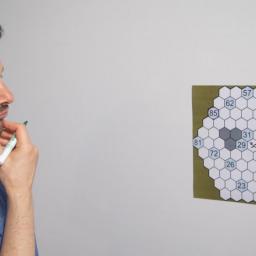
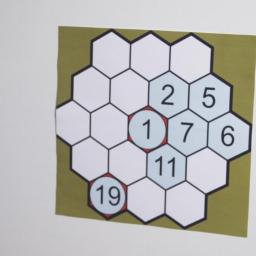
Here’s how to solve the hexagon puzzle.Can you solve it? Four beehive Hidato puzzles, the new Sudoku?I hope you enjoyed this week’s Hidato puzzles. I’m going to explain how to solve the hardest one, since the strategies used will also help you solve the simpler ones.The aim is to find the path from 1 to the largest number, in this case 85, such that consecutive numbers touch each other. Continue reading...
by Alex Bellos, Tash Reith-Banks, Ian Anderson and Pa on (#DFK3)
Today's problem is an Israeli version of sudoku, a hexagonal number puzzle invented by computer scientist Gyora Benedek. Were you able to solve it? Never fear, Alex will show you how. Alternatively, click here to see a written solution. Continue reading...
Alex Bellos and Edmund Harriss’s Snowflake, Seashell, Star promises to be ‘both a field guide and a therapeutic exercise book’Adults who are running out of cats and gardens to colour in as part of the new craze for “mindful†colouring books will soon have a more educational option for their eager felt-tips, thanks to the forthcoming release of a mathematical colouring book.Alex Bellos, the author of bestselling popular maths books including Alex’s Adventures in Numberland, has teamed up with British mathematical artist Edmund Harriss to create Snowflake, Seashell, Star, a series of mathematical patterns first to colour, and then to create, using simple rules. Out from Canongate in September, it will be, said the publisher, “both a field guide and a therapeutic exercise bookâ€: it requires no mathematical knowledge, but is “a stunning celebration of how mathematics is the search to understand the patterns of the universe in their purest formâ€. Continue reading...
To do justice to the ongoing Greek crisis, journalists should ditch the achilles heels and pyrrhic victories and explore the underused wonders of Greek myth and language. Lalochezia, anyone?An air of inevitability has hung over journalists’ notebooks this past week. Not the certainty of economic chaos in the Aegean. No, I’m talking about the near 100% chance of finding a classical allusion in their copy. Multiple Greek tragedies, achilles heels and mentions of Icarus flying too close to the sun have now given way to a slew of pyrrhic victories as prime minister Alexis Tsipras emerges triumphant from his referendum gamble.Greek myth has been plundered for its riches, just as the real treasuries of Athens are running dry. Nothing wrong with that: but hacks are going to have to dig a little deeper if they want to avoid repeating themselves. How about Horkos, the god who punishes those who break oaths? Or Moros, the spirit of impending doom? Continue reading...
Instead of believing they have all the answers, leaders need to be comfortable with uncertainty and making mistakes to unleash creativityToo many senior leaders want to be the hero, believing they are responsible for all creative output. This is unfair and exhausting. By trying to control it, they kill it. The only way to guarantee great output is to create the conditions for those around you to bring their genius to the fore; whether that’s your people, customers, agencies or suppliers. When we create the conditions and step back unattached from the output, brilliance inevitably comes knocking. To avoid suffocating creativity, here’s what we need to be wary of: Continue reading...
by Alex Bellos, Tash Reith-Banks, Ian Anderson and Pa on (#DE1X)
Hidato is a big hit in Israel – a sudoku-like puzzle invented by computer scientist Gyora Benedek. It's usually laid out on a grid, like sudoku, but for the first time we give you ... beehive Hidato! Click here for a written version of the puzzle Continue reading...
Screening for disease has the potential to save lives, but only in very specific circumstancesWhy isn’t prostate screening offered in the UK? Why do we only start screening for cervical cancer after age 25? These questions are often leveled at the government or the NHS, who are accused of withholding them due to cost. But although financial reasons play a factor, the screening programme in the UK is most definitely evidence driven.
Astronomers say features of comet landed on by spacecraft in November, such as black crust and icy lakes, suggest living micro-organisms beneath surface
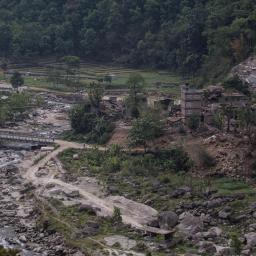
It has been just over two months since the devastating earthquake in Nepal and, for much of the world, the event has faded from memory. But for Nepalese people the nightmare continues and now that the monsoon rains have arrived a new threat looms.Every year landslides are common in Nepal during the monsoon, which usually runs from June to September, but this year is likely to be particuarly bad. Steep hillsides have been seriously destabilised by the magnitude 7.8 earthquake in April and its subsequent aftershocks, and it is feared that the heavy rains will trigger multiple landslides from these precarious slopes. Continue reading...
Mistakes are embarrassing, and getting over-excited about a statisitical anomaly is silly. But these things happen, and the answer to building public confidence in science is not to pretend that they don’t
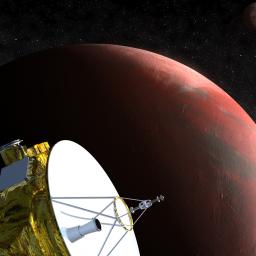
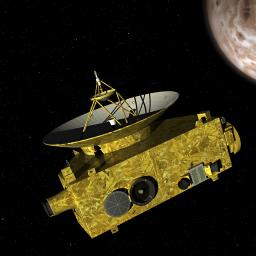
New Horizons craft suffered malfunction – which triggered an 81-minute break in radio communications – just nine days before it was due to fly past PlutoNasa scientists were working on Sunday to revive the New Horizons spacecraft, after it suffered a computer malfunction just nine days before it was due to fly past Pluto.The probe has been barreling toward the dwarf planet and its primary moon, Charon, since January 2006. Continue reading...
Given that we’re living in a golden age for space photography, it’s surprising how antiquated the hardware responsible is…For those who keep up with the latest developments in space exploration, the last couple of years have offered a rich feast of images: from close-up pictures of water-worn pebbles on the surface of Mars to the views of galaxies at the edge of the visible universe, by way of the cratered surface of comet 67P/Churyumov-Gerasimenko. We are becoming almost blase with the seemingly daily occurrence of a fresh view of a star or planet.Back on Earth, we are also no longer amazed by the instant communication of social media or the ability to watch films in high definition on our smartphones. Rather, we tend to complain if our mobile signal drops out when going through a tunnel on a train journey or the internet speed slows because it can’t cope with the 10GB film you are streaming at the same time your kids are playing an online fantasy game ported through a server some thousand miles away. The latest developments in hi-tech communications incorporate 64bit architecture, 1GB RAM, 1.4 GHz speed, 20 megapixel cameras and so on. How does all this relate to the wonderful images produced by space instruments? Continue reading...
The Migratory Connectivity Project seeks to connect people and cultures throughout the Americas by fostering the public’s love of and appreciation for migratory birdsDid you know the coast of Texas is a critically important place for migratory birds in the U.S. and Canada? This is where most migratory birds that breed in the eastern United States and throughout Canada first make landfall after a long migration across the Gulf of Mexico. This is where they seek food, water and rest before continuing northward on their migratory journeys.But unfortunately, populations of North American migratory birds are declining, and in many cases, scientists aren’t exactly sure why. The Migratory Connectivity Project, a collaboration between the US Geological Survey bird banding lab and Smithsonian Migratory Bird Center, is devoted to better understanding the migratory patterns of North American birds so they can learn how to protect them. They do this by analysing USGS bird band recovery data and using this data to construct migratory connectivity maps for all birds breeding in North America. Here’s a preliminary map for the tree swallow, Tachycineta bicolor: Continue reading...
by Joel Achenbach for the Washington Post on (#D9AX)
With much skill – and some luck – the New Horizons spacecraft is about to provide our closest glimpse yet of the frozen and little-understood world of PlutoPluto is so far away (4.8bn km) and so small (about two-thirds the size of the Earth’s moon) that we’ve never had a good look at it, not even with the Hubble space telescope. In Hubble images, Pluto has always been a tiny, pixelated blob. Until now.Related: Target Pluto: fastest spaceship set for epic encounter with our remotest planet Continue reading...
A gripping, novelistic intellectual history from the man behind ‘nudge’ economicsProfessor Richard Thaler is a bit lazy, prone to procrastination and likes his booze: his observations, not mine. He is also the president of the American Economic Association, a role held in the past by such luminaries as Milton Friedman, JK Galbraith, Gary Becker and Amartya Sen.That a person with such everyday flaws has scaled the unforgiving heights of the economics establishment is striking in itself. Even more so is the fact that he has done so by turning those weaknesses into the very subject of a new branch of economic science. Thaler has spent a career seeking to understand individuals as they really are – chock-full of weaknesses, irrationalities and idiosyncrasies. He labels these creatures “humansâ€, rather than as “econsâ€, walking calculators rationally optimising their utility. Continue reading...
Recognise his name? Few do. But Wieland wasn’t just the father of biochemistry and a Nobel prize winner. He was a scientist with the courage of his convictionsDespite finding international fame as one of Germany’s most renowned scientists in the first half of the 20th century, Heinrich Otto Wieland always shied away from the limelight, so the man now regarded as the father of modern biochemistry would probably have approved of the low key manner in which his 1927 Nobel prize was sold in April.Auctioned off by a small memorabilia company in Los Angeles amongst a random collection of showbiz items such as curtain costumes from the Sound of Music, Wieland’s medal received just a single bid, raising a princely $395,000. Continue reading...
16-year-old mathlete Joe Benton travels with UK team to Thailand next week to battle, against the odds, the powerhouses of China, USA and Taiwan“I’ve always been interested in maths, since I can remember,†says 16-year-old Joe Benton. “I find it elegant. I really enjoy the kick you get when you solve a problem, when it’s something you’ve been thinking of as impossible for a long time, and it suddenly becomes obvious. That ‘a-ha’ moment – it’s fun.â€Joe is one of six gifted young mathematicians chosen for the British team who will compete next week in the 56th International Mathematical Olympiad (IMO) in Chiang Mai, Thailand. The IMO is the world cup of mathematics competitions for secondary school-age students. It began in 1959 with seven countries competing in Bucharest, Romania. Now, it’s a global event with more than 500 teenagers from over 100 countries. Continue reading...
As Greece’s spending on weapons shows, it’s not pensions or benefits that cripple economies, it’s the military-industrial complexSomewhere in a Greek jail, the former defence minister, Akis Tsochatzopoulos, watches the financial crisis unfold. I wonder how partly responsible he feels? In 2013, Akis (as he is popularly known) went down for 20 years, finally succumbing to the waves of financial scandal to which his name had long been associated. For alongside the lavish spending, the houses and the dodgy tax returns, there was bribery, and it was the €8m appreciation he received from the German arms dealer, Ferrostaal, for the Greek government’s purchase of Type 214 submarines, that sent him to prison.There is this idea that the Greeks got themselves into this current mess because they paid themselves too much for doing too little. Well, maybe. But it’s not the complete picture. For the Greeks also got themselves into debt for the oldest reason in the book – one might even argue, for the very reason that public debt itself was first invented – to raise and support an army. The state’s need for quick money to raise an army is how industrial-scale money lending comes into business (in the face of the church’s historic opposition to usury). Indeed, in the west, one might even stretch to say that large-scale public debt began as a way to finance military intervention in the Middle East – ie the crusades. And just as rescuing Jerusalem from the Turks was the justification for massive military spending in the middle ages, so the fear of Turkey has been the reason given for recent Greek spending. Along with German subs, the Greeks have bought French frigates, US F16s and German Leopard 2 tanks. In the 1980s, for example, the Greeks spent an average of 6.2% of their GDP on defence compared with a European average of 2.9%. In the years following their EU entry, the Greeks were the world’s fourth-highest spenders on conventional weaponry. Continue reading...
Paul Whyley is receiving treatment for motor neurone disease after experiencing an epiphany during screening of Oscar-winning film The Theory of EverythingA moviegoer has told how he correctly diagnosed himself with motor neurone disease after watching the Oscar-winning Stephen Hawking biopic The Theory of Everything.Paul Whyley, 62, a grandfather and former newspaper circulation rep from Hagley in the west midlands, is now being looked after full time by his wife Jayne after doctors agreed his symptoms were unmistakable. Continue reading...
‘Researchers have found that CBT is roughly half as effective in treating depression as it used to be’Everybody loves cognitive behavioural therapy. It’s the no-nonsense, quick and relatively cheap approach to mental suffering – with none of that Freudian bollocks, and plenty of scientific backing. So it was unsettling to learn, from a paper in the journal Psychological Bulletin, that it seems to be getting less effective over time. After analysing 70 studies conducted between 1977 and 2014, researchers Tom Johnsen and Oddgeir Friborg concluded that CBT is roughly half as effective in treating depression as it used to be.What’s going on? One theory is that, as any therapy grows more popular, the proportion of inexperienced or incompetent therapists grows bigger. But the paper raises a more intriguing idea: the placebo effect. The early publicity around CBT made it seem a miracle cure, so maybe it functioned like one for a while. These days, by contrast, the chances are you know someone who’s tried CBT and didn’t miraculously become perfectly happy for ever. Our expectations have become more realistic, so effectiveness has fallen, too. Johnsen and Friborg worry that their own paper will make matters worse by further lowering people’s expectations. Continue reading...
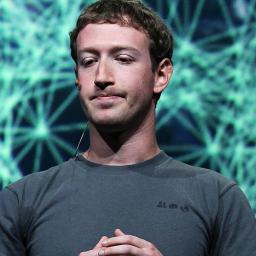
Don’t panic! Facebook may be working on thought transmission, but I for one don’t think a dystopian future is around the cornerAdvances in the field of artificial intelligence are invariably greeted with concern about an imminent robot uprising. Similarly, when we hear about developments in the field of brain-to-brain communication, we imagine any number of outlandish scenarios: perhaps a government marching us unquestioningly into battle via a process of insidious mind control, or an erotic thought we had about a work colleague being unwittingly transmitted to our partner.When Facebook’s CEO, Mark Zuckerberg, announced this week during one of his regular Q&A sessions that Facebook is working in the field of thought transmission, we found ourselves momentarily transported to a horrific telepathic future. “You’ll just be able to think of something and your friends will immediately be able to experience it too,†he said, as people thought to themselves “under no circumstances do I want anyone to know the dark, unsettling images that flash through my mind on an hourly basisâ€. We are troubled by that vision. But it’s only a vision. Continue reading...
Although results of first trial were ‘modest and variable’, second bigger trial aims to combine gene therapy with other treatments for longer term benefitsA treatment to help those with cystic fibrosis may be available within five years, say scientists who who have been working for decades to develop a gene therapy for the disease.The results of a year-long trial showed only a small and variable improvement in the lung capacity of those children and adults who took part, but scientists now believe they have proved gene therapy is possible in treating cystic fibrosis. With more work, they say that by the end of the decade it will at least be possible to help stabilise patients. Continue reading...
by Hannah Devlin, science correspondent on (#D46R)
New model suggests that as the universe expands everything from galaxies to space-time itself will be torn apart - but not for about 22 billion yearsEverything we know, and everything else besides, burst into existence at the Big Bang. Now scientists have concluded that we could be heading for an equally dramatic cosmic finale: the Big Rip.A new theoretical model suggests that as the universe expands, everything, from galaxies, planets and atomic particles to space-time itself, will eventually be torn apart before vanishing from view. Continue reading...
The UK is currently experiencing something of a heatwave. However, as much as people claim to look forward to and enjoy hot weather, the evidence suggests that people are actually far more aggressive and violent when the temperature rises. What is it about the heat that makes people so angry?Wednesday 1 July saw the hottest July day in the UK on record, and of course the population and the media responded with the typical calm and level-headedness you’d expect.I myself missed most of it as, by astonishing coincidence and following a celebratory pub visit with some friends, I was enduring the worst hangover on record. The sort of hangover where every internal organ is competing for the title of “biggest source of wretchednessâ€. The sort of hangover where your own skull seems to be angry at you. The sort of hangover where even attempting a sip of water feels like trying to down a cocktail of rancid milk and toilet cleaner. Continue reading...
Ian Sample explores the journey from logic to modern computersThe annual Royal Society Summer Science Exhibition shows off the best of British science, highlighting the place of scientific innovation at the heart of our culture, and of our economic wellbeing.The exhibition dates back to the early 19th century, when the Royal Society's president invited guests to his home to inspect collections of scientific instruments and other objects illustrating the newest scientific research. Continue reading...
Researchers from the University of New South Wales (UNSW) explain how a recent discovery could help tsunami-prone areas reduce the impact of future disasters. Before the Japanese tsunami of 2011, the inland reach of such an event had been drastically underestimated. Soil samples from affected areas have proved to be the key to designing measures that can mitigate future disasters
Trial showed healthy people given a Parkinson’s drug became more selfish, while people given a serotonin-boosting drug were more protective of othersCommon drugs for depression and Parkinson’s can sway people’s moral judgments about harming others, according to research that raises ethical questions about the use of the drugs.The study found that when healthy people were given a one-off dose of a serotonin-boosting drug widely used to treat depression they became more protective of others, paying almost twice as much to prevent them receiving an electric shock in a laboratory experiment. They also became more reluctant to expose themselves to pain. Continue reading...
Syrian antiquities director says destruction of Lion of al-Lat statue dating from 1st century BC at Palmyra museum is serious crime against world heritage siteIslamic State (Isis) jihadis have destroyed a 2,000-year-old statue of a lion outside the museum in the Syrian city of Palmyra, the country’s antiquities director has said. Continue reading...
Kamila Shamsie always revises her work by reading aloud, but AS Byatt looks for the rhythms of the page. Richard Lea goes in search of what happens in the brain when we write and read fictionThe novelist Kamila Shamsie measures out her life as an author in chapters, punctuated by a familiar ritual.“Usually at the end of writing every chapter I’ll print out and read aloud,†she says. It’s something she’s been doing since university, she continues, citing the Kashmiri poet Agha Shahid Ali, who told her “there are things the ears pick up which the eyes don’tâ€. As she sits on the lookout for repeated words, unexpected clunks or unwanted dissonances, it “feels like listeningâ€. Continue reading...
We have been driving many species to extinction, seemingly without a care about who and what we push over the edge, including ourselves. But our ability to empathise may be key to our survivalIf you wandered around planet Earth 100,000 years ago you would have come across at least half a dozen distinct species, or sub-species, of human. At least one, Homo erectus, centred around East Asia, lasted for nearly two million years. That makes the duration of us, recognisably modern Homo sapiens, at around 200,000 years, seem modest.It will remain so if Yuval Noah Harari, author of Sapiens: A Brief History of Humankind is correct. He suggests on current trends we’ll be lucky to see out the millennium. Continue reading...
The founder of Africa’s first drug discovery and development centre explains why scientific research is key to unlocking the continent’s potentialThe continent of Africa suffers a crippling disease burden, which continues to choke economic growth in addition to causing high morbidity and mortality. It is therefore vital for Africans to contribute to finding solutions to their health problems. The discovery and development of new medicines in Africa led by Africans is essential to that.
The survey of 350,000 people across four continents did not, however, confirm a belief of a link between genetic variety and high cholesterol or blood pressureThe children of parents who are more distantly related tend to be taller and smarter than their peers, according to one of the largest studies to date into genetic diversity.The study suggests that height and intelligence may be increasing as a growing number of people are marrying people from more distant parts of the world. Continue reading...
by Associated Press in Des Moines, Iowa on (#D1MB)
Dong-Pyou Han, who spiked rabbit blood with human antibodies to suggest major progress toward a vaccine, must pay $7.2m to US governmentA former Iowa State University scientist who altered blood samples to make it appear he had achieved a breakthrough toward a potential vaccine against HIV was sentenced on Wednesday to more than four and a half years in prison for making false statements in research reports.Dong-Pyou Han, 58, also must pay $7.2m to a federal government agency that funded the research. He entered a plea agreement in February admitting guilt to two counts of making false statements. Continue reading...
Discovery rules out many theories of comet formation by demonstrating that comets have substantial variations in their internal structuresCameras on the Rosetta spacecraft have spotted a series of enormous pits on comet 67P/Churyumov-Gerasimenko that plunge hundreds of metres down into the body’s cold interior.Scientists on the mission believe the pits formed in the same way as sinkholes on Earth, which appear out of the blue when the natural ceilings above underground caverns suddenly collapse under their own weight. Continue reading...
by Hannah Devlin, science correspondent on (#D138)
Vaccine may have caused narcolepsy by triggering the production of antibodies which destroy a sleep-regulating part of the brain, a new study suggestsScientists appear close to pinpointing why a swine flu vaccine given to six million people in Britain triggered the devastating sleep disorder, narcolepsy, in rare cases.The Pandemrix vaccine, made by GlaxoSmithKline (GSK), and which was recommended by the UK government to high-risk groups during the 2009-10 swine flu pandemic, was withdrawn after medical records showed a spike in the number of cases of narcolepsy presenting in doctors’ surgeries. Continue reading...