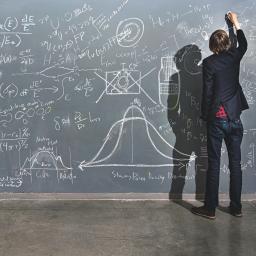
The first of two Perimeter Institute public lectures this week. Emmy Noether was a giant of mathematics, whose work tied together two fundamental concepts: conservation laws and symmetries in nature. But who was she, and why does her work still have such impact?
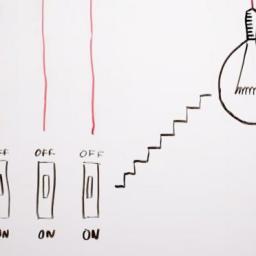
The Three Switches puzzle is a classic, but most of you will not have heard of it.Strangers often ask me to challenge them with mathematical brainteasers. It comes with the territory, I suppose.
The federal government’s failure to implement a competitive regime means potential savings are wasted, thinktank the Grattan Institute saysThe federal government is wasting $320m every year through its failure to implement properly a drug-pricing policy for subsidised medicines, a new report from the thinktank the Grattan Institute shows.The report analyses a policy known as the therapeutic group premium, whereby different drugs used to treat the same condition, and which do exactly the same thing, are clustered into a group. The government then subsidises the cheapest drug within that therapeutic group. Continue reading...
While I agree with Maulfry Worthington (Letters, 19 June) that our schools should encourage more curiosity, it is unfortunate that she repeats the near-calumny that Einstein was a “patent clerk†who would “become†a great physicist. In fact Einstein worked as a technical examiner at the Eidgenössisches Institut für Geistiges Eigentum (the Swiss Federal Intellectual Property Office) in 1902-09 to support himself while he completed his PhD thesis in physics and did his early work on quantum mechanics and special relativity. He was already published in Annalen der Physik before joining the patent office. Einstein did not have good academic connections, which made it hard to secure a teaching post, but was recognised as a physicist of the first rank very early in his career.While curiosity is absolutely a necessary trait for success in science, the hard work has also to be done, and the exams passed, even by Einstein.
Nine-month trial led by King’s College London shows that speeding up treatment for eating disorders has a wide range of benefits“If you have a child with cancer, you wouldn’t wait until they had reached stage four cancer before starting treatment. It’s no different with an eating disorder, because if you delay treatment, then the illness becomes more ingrained and more difficult to treat.â€Ulrike Schmidt, professor of eating disorders at King’s College London (KCL), is explaining why she and a team of medical personnel have begun helping young adults suffering from anorexia and bulimia to start specialist treatment within weeks rather than the months of delay that are so common across the NHS. The first episode and rapid early intervention for eating disorders (Freed) trial has only been going for nine months but has so far given patients – mainly young women – access to vital treatment in an average of 33 days rather than the usual time of between four and eight months. Continue reading...
The rate at which vertebrate species are dying far exceeds the normLife on Earth is in trouble. That much we know. But how bad have things become – and how fast are events moving? How soon, indeed, before the Earth’s biological treasures are trashed, in what will be the sixth great mass extinction event? This is what Gerardo Caballos of the National Autonomous University of Mexico and his colleagues have assessed, in a paper that came out on Friday.These are extraordinarily difficult questions. There are many millions of species, many elusive and rare, and inhabiting remote and dangerous places. There are too few skilled biologists in the field to keep track of them all. Demonstrating beyond reasonable doubt that any single species is extinct is arduous and painstaking (think how long it took to show – to most people, at least – that Loch Ness probably does not harbour a large monster). Continue reading...
Joel Gibbard has developed a method of producing bespoke bionic prostheses for a fraction of the price of similar devices on the market by using a 3D printerAs a teenage hobbyist building robots at home in Bristol, Joel Gibbard had a leftfield thought when pondering his next project. How would he continue to make models if he lost a hand?“The critical thing to me in continuing to play with robotics and tinker with making things was to use my hands. So I thought it would make sense to make a robotic hand so that in the event I ever lost one, I would continue to use that,†he said. Continue reading...
Alok Jha’s study of water is awash with astonishing data about an extraordinary substanceWater is everywhere. And almost everywhere is water. Nasa scientists have discovered a black hole 12 billion light years from Earth around which sits a water reservoir that itself spans hundreds of light years and has 140 trillion times the water in the world’s oceans. Scientists have also found evidence of a wet zone within the Earth’s crust that contains as much water as in all the oceans. A foetus is around 95% water, while adults are almost 70% water. Even our bones are 22% water.Water is everywhere and yet, according to Alok Jha, infinitely mysterious. Scientists know more about outer space than they do about the depths of the ocean. Water is made from such light atoms that at room temperature it should be a gas rather than a liquid. “By the usual rules of chemistry, our Earth should have no oceans at all – all of the water on our planet should exist as vapour, producing a thick, muggy atmosphere that sits above a bone-dry surface.†Even ice cubes in drinks are anomalous: they are solids that float on a liquid version of themselves. Continue reading...
It’s not just the booze giving you a hangover – it’s the microbes in your stomachEver woken up on a Sunday morning with the worst hangover ever? The headache was bad enough, but the nausea and lethargy made you feel as if you had been poisoned. Yet, when you had done the same thing two months before, it hadn’t felt this bad, even though you had drunk the same amount of wine and avoided the usual culprits (the spirits, such as brandy and whisky, with their particularly toxic chemicals). What was worse, your friend, who drank even more than you, felt fine. The usual excuse is to blame the after-effects on bad luck, or your genes, but could there be other culprits?Hangovers occur due to the side-effects of the chemical produced when alcohol is broken down. Alcohol itself is fairly harmless – but enzymes convert it to acetaldehyde, which does the damage. The longer the acetaldehyde hangs around, the worse you and your liver feel. Other enzymes help to clear the acetaldehyde away, but the rates at which both happen are extremely variable in different people. Continue reading...
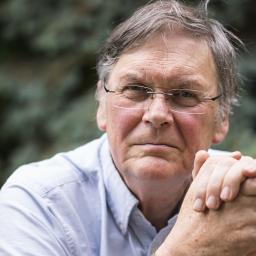
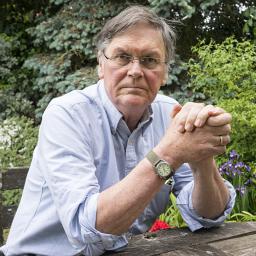
Much has been said about Tim Hunt’s dismissal. Now we must all take concrete actions to eradicate sexism, whether blatant or subtle, from labs and classroomsIf nothing else, the furore over Sir Tim Hunt’s remarks in Seoul to a lunch of women journalists has shone a laser beam on the lot of women in science. I hope this illumination can stimulate widespread action in institutions across the world, eradicating some of the many manifest inequities women all too often face.Opinions have varied on just how unacceptable Hunt’s remarks were or how much latitude should be allowed because they were a failed attempt at humour in an off-the-cuff, brief speech of welcome. (On Saturday, eight Nobel-winning scientists criticised the summary dismissal of Hunt by University College London.) Nevertheless, for many – though not for me – he is likely to remain the exemplar for all that is bad about the sexist culture that is still endemic in science, as across the whole of our society. Continue reading...
Doctors treating boy victim of PAH raise hopes for a drug to beat a condition that leaves patients breathless, exhausted and prone to heart attacksArchie Strachan was two when he displayed symptoms of the disease that has since blighted his life. “One night he started screaming in pain,†said his mother, Julia. “Doctors flew Archie to hospital, where we eventually found he was suffering from a condition called pulmonary arterial hypertension.â€The disease, known as PAH, leaves the sufferer breathless, exhausted and prone to heart failure. Twenty years ago it was considered a death sentence; even today the condition – which affects around 6,500 people in the UK – is considered debilitating and life-limiting. Continue reading...
Ousted professor receives emails of backing from academics and urges scientific community to use incident to remove remaining barriers for women in scienceThe beleaguered UK scientist Sir Tim Hunt on Saturday thanked the hundreds of female scientists who have written to support him in the wake of the furore triggered by his controversial remarks about women in science.Hunt, who won the Nobel prize in 2001 for his work on cell biology, became the focus of furious online attacks earlier this month over comments about women in science being disruptive. He had to resign from several academic posts, including an honorary position at University College London (UCL). Continue reading...
This charming video features a pet cockatiel who whistles a lovely song whilst being accompanied on piano by his humanToday is “Caturday†-- that wonderful day of the week when we stop thinking only about ourselves and take a few minutes to celebrate animals. Today, I had to share this wonderful video of a pet cockatiel who whistles a song whilst his human accompanies him on piano: Continue reading...
He fused the atom at 14, has advised the US government on counter-terrorism and plans to beat cancer – and he’s still only 21. What scares Taylor Wilson? Asking a girl for her number ...
by Guy Gugliotta for the Washington Post on (#BWS0)
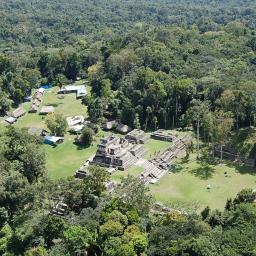
A technology using rapid pulses of light is helping archaeologists to chart ancient settlements hidden beneath dense forest canopiesColorado State University archaeologist Chris Fisher found out about lidar in 2009. He was surveying the ruins of Angamuco in west-central Mexico the traditional way, with a line of grad students and assistants walking carefully while looking at the ground for bits of ceramics, the remains of an old foundation or even a tomb.He had expected to find a settlement, but instead he happened upon a major city of the Purepecha empire, rivals of the Aztecs in the centuries immediately preceding the Spanish conquest of Mexico in 1519. Continue reading...
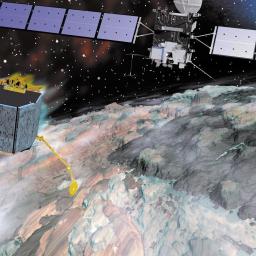
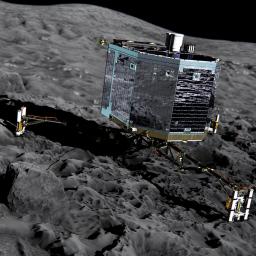
Solar-powered lander now getting enough sunlight to send periodic transmissions and charge batteries so it can continue to work through the nightEurope’s robot lab Philae phoned home on Friday after several days’ silence in its journey towards the sun on the back of a comet and is “doing very wellâ€, the German Aerospace Centre (DLR) said.The latest contact lasted 19 minutes and is the third time Philae has touched base with Earth since it landed on Comet 67P/Churyumov-Gerasimenko on 12 November after piggybacking on its mothership Rosetta. Continue reading...
Buenos Aires alone has more bookstores per person than any other city in the world – just enough for inquisitive Argentinians to indulge their literary cravings
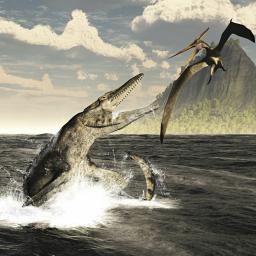
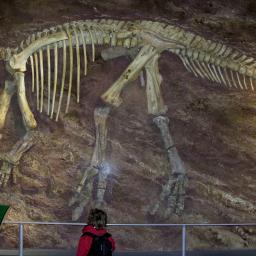
Paleontologist Dr Dave Hone answered questions ranging from the best way to ride a T rex to whether or not crocodiles are really dinosaurs3.08pm BSTThanks for all of the questions and apologies for some brief answers and not being able to hit quite everything. More questions can be directed to my Ask A Biologist site where I and some friends and colleagues can try to help, and of course there the Lost Worlds here on the Guardian.
In the wake of #Huntgate, here is a handy list of actions that individuals could commit to if they really want to see a change in the working environment coupled with a genuine move towards equalityWomen in science have been much in the news over the past week. Do they cry too much? Are they #distractingly sexy?Whatever your take on the recent furore, I would like to propose we use the focus on the challenges facing women in science to drive forward real change. I challenge individuals to commit to ‘just one action for women in science’ (#just1action4WIS). Continue reading...
Why is it important to view scientific advances within the cultural and historical contexts from which they emerged?Dr Leonard Mlodinow is a theoretical physicist. He's the author of a number of books, including The Grand Design - written with Stephen Hawking - and he's been a screenwriter for TV series including Star Trek, The Next Generation.His new book is called "The Upright Thinkers - The human journey from living in trees to understanding the Cosmos". Continue reading...
Finding challenges prior assumption that consistent favouring of one hand over the other is a characteristic unique to humans and certain primatesKangaroos are left-handed, according to a new study.The finding challenges a prior assumption that the consistent favouring of one hand over the other is a characteristic unique to humans and certain primates. Continue reading...
Climb those library ladders and dust off the shelves to find music influenced by or making reference to authors, characters, quotes or plots in novels or any other form of the printed volume
In the article on the discovery of dinosaurs (They’re back, Review, 6 June) you state: “In Sussex, a local doctor uncovered fragmentary remains of what appeared to be two more species of colossal extinct land reptiles.†You grossly underplay the contribution of Lewes-born Gideon Mantell, geologist and palaeontologist, author and diarist, friend to princes and international scholars as well as local doctor. Mantell not only discovered (aided by his wife) the first remains of the iguanodon in 1824 but named it – as it resembled the tooth of an iguana. This was the first known land dinosaur, Mary Anning having identified the first sea-living dinosaur.Mantell went on to put together more pieces of the jigsaw with extra fossil discoveries. In contrast to Richard Owen, whose models form the basis for the Crystal Palace dinosaurs, Mantell stated correctly that iguanodon would have walked on their back legs, using their forearms to fight or gather food. He did, however, attribute the thumb spike to a nose horn though later corrected this assumption. The Natural History Museum has a display on Gideon and his wife Mary’s contribution as well as the large “Mantell-piece†of Iguanodon fossils that he had on show in his museum in Brighton. He sold it, along with many more priceless items, to the British Museum in 1838. Gideon Mantell’s reputation deserves better than your throwaway remark.
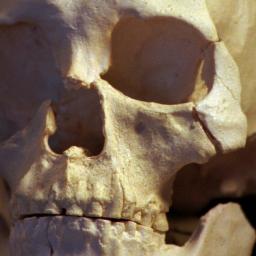
Genome sequencing indicates Kennewick Man is Native American, reopening the bitter battle over whether he should be reburied or studiedGenetic tests on one of the most important human skeletons ever found in North America have re-ignited a fierce debate over the rightful fate of the remains.The ancient skeleton of Kennewick Man became the focus of a bitter $5m court battle between the US government, which planned to return the bones to Native Americans for reburial, and scientists, who wanted to study the remains.
A gaming novice, I approached Brendan Walker’s Oscillate ‘ride’ and Karen Palmer’s Syncself 2 neurogame with trepidation, but came away a convertI’ll put my hands up: I’m not a gamer, and I have never used a virtual reality headset before. It was therefore with some apprehension as well as genuine excitement that I approached playing in the Virtual Reality Arcade and Interactive Exhibition at Sheffield Doc/Fest.Oscillate is the brainchild of Brendan Walker. A former military aeronautical engineer turned interactive designer and visual artist, he is well-placed to bridge the gap between science and art. He recalls that his first time using virtual reality was the Trocadero in Manchester in the early 90s; I now feel like even more of a luddite and park my penny-farthing outside in order to give this new-fangled technology a go. Continue reading...
Early developers at greater risk of diabetes and heart disease while late developers more prone to asthma, according to Cambridge University studyThe age that children hit puberty has been found to be a significant predictor of their health in later life, researchers say.The University of Cambridge study confirms previous findings of a link between early puberty in women and heart disease and type 2 diabetes, and has shown for the first time that early puberty in men is also associated with these conditions. Continue reading...
Broadcaster’s latest prototype taps viewers’ brainwaves to choose what to choose next on its iPlayer catch-up servicePaging the Daily Mail: BBC in mind-control shock! Except this story is unlikely to become a front-page scandal, since it involves viewers’ brainwaves controlling their TVs, rather than the other way around.The broadcaster has revealed details of its latest tech experiment, which involved working with digital agency This Place to create a “Mind Control TV†prototype for use with its iPlayer catch-up service. Continue reading...
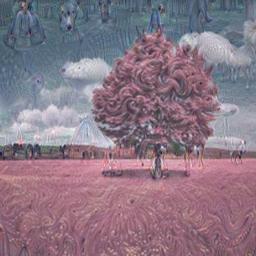
Google sets up feedback loop in its image recognition neural network - which looks for patterns in pictures - creating hallucinatory images of animals, buildings and landscapes which veer from beautiful to terrifyingWhat do machines dream of? New images released by Google give us one potential answer: hypnotic landscapes of buildings, fountains and bridges merging into one.The pictures, which veer from beautiful to terrifying, were created by the company’s image recognition neural network, which has been “taught†to identify features such as buildings, animals and objects in photographs. Continue reading...
Today I was thrilled to be announced as the recipient of this year’s Royal Academy of Engineering Rooke Award, but I’m concerned that engineering in general is hiding in plain sightPicture the scene. We’re filming a TV documentary called Dambusters: Building the Bouncing Bomb, doing the first test drop of our “bombâ€. But when the drop cable gets badly tangled, filming grinds to a halt and it looks like the show may be cancelled. Ian, the director, is pacing around with his phone in hand, all very glum. Meanwhile, I’m sitting down poring over all the camera angles of the failed drop. It doesn’t take me long to figure out what went wrong, and I suggested a solution that, thankfully, worked. Later Ian asked, “How were you so relaxed when we were all convinced it was a disaster?â€I am an engineer, and problem-solving is in my DNA. Engineers simply relish a challenge, and the harder it is to solve, the better! Despite the fact that engineering has shaped our world, many people are unaware of its impact. I might ask you about the room that you’re sitting in – do you see any engineering around you? Is there a pen on the table, a kettle boiling or lights switched on? You’re almost certainly carrying a smartphone, and you may be wearing clothes made with synthetic fibres, or have taken transport today. If so, then you are surrounded by engineering! Continue reading...
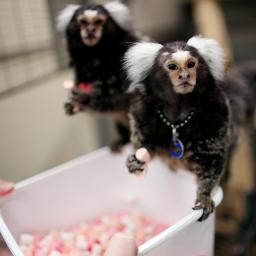
New US laws require that researchers treat chimpanzees in an ethologically appropriate manner, and several organizations say monkeys need the same rulesAfter succeeding in their quest to overhaul the treatment of chimpanzees used in research, animal rights advocates are turning their attention to other primates: the tens of thousands of monkeys now used in medical research in the United States.The rules governing these animals’ welfare are minimal and outdated, says the Animal Legal Defense Fund, and are no longer consistent with what scientists now know about their needs and feelings. Continue reading...
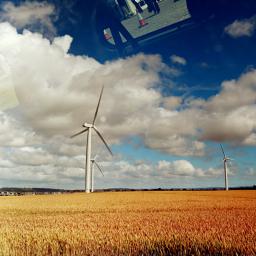
The planet is warming at record rates, yet the Tories’ reckless loyalty to its shire heartlands takes precedence over policy, science and economicsToday, the government fulfils one of its most perverse manifesto pledges – to end the subsidy for onshore wind turbines a year early, in April 2016. This is cavalier and contrary policy-making, designed to please the nimbys in its shire heartlands, regardless of wider energy policy, regardless of climate change.As the Tories plunge ahead with far more expensive, disruptive and unpopular fracking, onshore wind energy is the cheapest of all renewables, and Britain one of the most wind-rich spots on earth. What a long journey Cameron has travelled since the days when he fixed a symbolic turbine on his own roof. Continue reading...
While the web has facilitated a glut of unoriginal and trivial content, technology deserves some credit for lifting the barriers that inhibit creativityCreativity is the ability to generate novel, useful ideas and innovation is the successful implementation of those ideas. With this in mind, it is tempting to suggest that technology has made us more creative: the digital revolution has clearly produced a large number of innovative products and services. Some of them have become multibillion pound companies and transformed a significant part of our lives. What these innovations have in common is that they level the gap between supply (of services or products) and consumer demand, much like with any effective entrepreneurial activity.Aside from the obvious examples – Google, Airbnb, Uber, LinkedIn, Tripadvisor, Spotify and Whatsapp – there has been an explosion of creative activity in the technology space: there are over 3m apps, and 300 hours of YouTube video are uploaded every minute. According to some estimates, every two minutes we snap as many pictures as the entire population of the world did in the 1800s. Continue reading...
Thorsgill Beck, Teesdale To 16th century travellers meadow saxifrage would have been unremarkable, today it is a window into a lost landscapeFive centuries ago the White Canons, who worshipped in the Premonstratensian abbey, whose ruins sit high above the bend in the Tees at Egglestone, would have been familiar with the view that appeared as we crossed the pack-horse bridge.The pasture had buttercups and another flower that I couldn’t immediately identify. It was only when we stood among the densely packed drifts of its white blooms that it dawned on me that this was meadow saxifrage, in greater profusion than I had ever seen. Continue reading...
Everyone remembers hearing their first nightingale. How was it for you?I was 23-years old and in Hungary. I had ventured to a sand quarry on the outskirts of a small rural village in the dead of night with the aim of catching, ringing and releasing sand martins. I can’t remember if I was successful in this endeavour that morning. But I can recall standing still in the pre-dawn pitch and listening, mesmerized by the plaintive anthem, the fast thick warble of a nightingale. It seemed as though he sang for me. Continue reading...
Following on from the Care Quality Commission report on crisis care for people with mental health problems, it is clear that children and young people are not receiving the care and support they need (A&E staff attitudes to patients in mental health crisis ‘often shocking’, 12 June). We know that if they receive effective help at an early stage they probably won’t reach a mental health crisis in the first place.Ten per cent of children and young people have a mental disorder, and many more are unhappy or dissatisfied with their lives. We know that a large proportion of these young people will not be accessing appropriate support when they first need it. This is likely to result in them only coming to the attention of services once they reach a crisis. Continue reading...
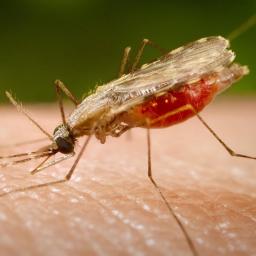
Trials show new drug could kill parasite and prevent the spread of malaria, which kills over half a million a year, and would cost around $1 per treatmentA new malaria treatment has been developed by scientists, and could help turn the tide against rapidly emerging drug-resistant strains of a disease which kills over half a million people a year.The new compound rapidly kills the parasite in mice, and also appears capable of stopping the transmission of malaria - a crucial step in the bigger battle to eradicate the disease entirely.
Genome sequencing indicates Kennewick Man is Native American, reopening the bitter battle over whether he should be reburied or studiedGenetic tests on one of the most important human skeletons ever found in North America have re-ignited a fierce debate over the rightful fate of the remains.The ancient skeleton of Kennewick Man became the focus of a bitter $5m court battle between the US government, which planned to return the bones to Native Americans for reburial, and scientists who wanted to study the remains.
Reconstruction of outbreak, which has killed more that 11,000 people, found virus might have been contained had Ebola been diagnosed one month earlierScientists have analysed the genetic code of Ebola viruses from patients across west Africa and pieced together the evolution of the worst ever outbreak of the killer disease.Experts from Public Health England at Porton Down in Britain, the World Health Organisation (WHO), and other leading labs, used DNA from 179 Ebola samples to reconstruct the spread of the virus from Guinea into surrounding countries last year.
Until women are given more of a voice and power in traditional organisations, calling out sexism on social media often remains our only recourseLast week I started the hashtag #distractinglysexy, in response to Nobel prizewinning scientist Tim Hunt’s ill-advised comments about men falling in love with over-emotional women in laboratories. Despite claims that the response to Hunt’s comments constituted an online “march of the feminist bulliesâ€, no one who was part of this humorous attempt to highlight the varied and complex work of female scientists called for Hunt’s resignation or hounded him online, but that was the way it was framed.Related: Tim Hunt shouldn't resign. He should lead the way against sexism in science | Van Badham Continue reading...
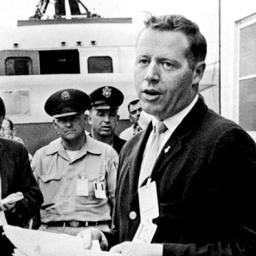
Nasa PR chief recognisable to millions as the voice of America’s space programmeJust before 9.30am Florida time, on 16 July 1969, Jack King confirmed his place in media history by describing technology in action, and transfixing audiences around the planet. “Two minutes and 10 seconds and counting,†he said, in his flat, laconic, Bostonian tones. “The target for the Apollo 11 astronauts, the Moon … Third stage completely pressurised,†he went on. “Second stage tanks are now pressurised … all engines running.â€â€œWe have a liftoff, 32 minutes past the hour. Liftoff on Apollo 11. Tower cleared.†Thus did a calm King, at the centre of a global media clamour, count down as the Saturn V rocket blasted Neil Armstrong, Buzz Aldrin and Michael Collins off into their lunar epic. Continue reading...
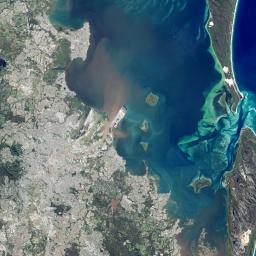
Storms in Australia, wildfires in North Korea and the effects of record high temperatures in Alaska are among the images captured by European Space Agency and Nasa satellites last monthThe east coast of Australia was hit by a severe storm and flooding on 1 May reports. South-east Queensland had14 inches of rain in three hours, causing flash floods that formed distinct river plumes along the coastline. Seen in the image above is a plume from the Brisbane river entering Moreton Bay. Continue reading...
Over the next few months we’ll be breaking down scientific concepts into six-second vines at #guardianscienceinsix. This week we look at photovoltaic cells. But can you do better?Solar panels have long been a feature of the quest for renewable energy, and as such feel like a very modern technology indeed. However, their origins go back to 1839, when French physicist Edmund Bequerel first discovered that certain materials would produce small amounts of electric current when exposed to light - the photoelectric effect.Albert Einstein provided the real breakthrough for modern photovoltaic technology in 1905, when he described the nature of light and used this to explain the nature of the photoelectric effect, for which he later won a Nobel prize. It took some time from that discovery to the production of the first photovoltaic module in 1954, but by the 60s engineers started to make use of the technology to provide power for spacecraft, and through use in space programmes around the world the technology progressed to being a potential source for domestic energy. Continue reading...
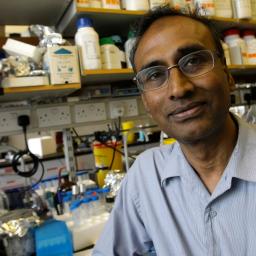
Sir Venkatraman Ramakrishnan warns Brexit would lead to cut in research funding and fall in collaborationsLeaving the European Union would be detrimental to British science, hitting research funding and cutting the UK off from a pool of talented scientists and world-class facilities, the incoming president of the Royal Society has told the Guardian.In his first interview since his election was confirmed in March, Sir Venkatraman Ramakrishnan weighed into the increasingly heated debate over EU membership, warning withdrawal would “really narrow down our scienceâ€. Continue reading...
Mission will improve contact between orbiter and Philae lander after agency says data already received is ‘amazingly exciting’The Rosetta space orbiter is to be moved closer to the comet hosting the pioneering Philae lander to establish a better with link the probe after it sent back signals last weekend, the European Space Agency has announced.
European Space Agency scientists say no further contact has been made with the Philae probe since it ‘woke up’ to send messages from a comet10.00am BSTThe briefing is wound up by a spokesman for the agency, who says: “Expect the unexpected.â€That’s it for now. There’ll be a story soon.9.58am BSTBibring says the agency may decide to rotate the lander by a few degrees. But a decision will come later as the operation is so risky. First the scientists will try to analyse the data they have obtained already.Gaudon points out that the lander was rotated by around 20 degrees in November. Continue reading...
Scientist and broadcaster Brian Cox discusses Nobel prize-winning scientist Tim Hunt on BBC Radio 4's World at One programme on Tuesday. Cox says Hunt's comments about women working in laboratories were ill-advised, but questioned the decision by University College London to force Hunt to resign. Cox also points to a 'wider problem of trial by social media'
Guest post: Why walking away from the EU will leave UK science in difficult negotiation territoryIn late January 2014, the contract between Switzerland and the EU sat on desks, ready to sign. Switzerland was due to become an associated country on the EU’s new seven-year, €80 billion science programme, called “Horizon 2020â€. Although not an EU country, Switzerland would contribute appropriate levels of money, thereby allowing its university scientists and small innovative businesses to compete for the pooled research and innovation funds in exactly the same way scientists in EU member states do.The science programme had already launched, but the Commission would not sign just yet. They were waiting. There was a referendum coming up in Switzerland that was a direct challenge to the standing bilateral agreements with the EU. The proposal, named “against mass immigration†and championed by the Swiss People’s Party, aimed to limit immigration through quotas and permit allocation of jobs preferentially to Swiss over foreigners, effectively returning Switzerland to the days before its freedom-of-movement agreements with the EU. Continue reading...
by Alex Spelling, Brian Balmer and Caitriona McLeish on (#BHP2)
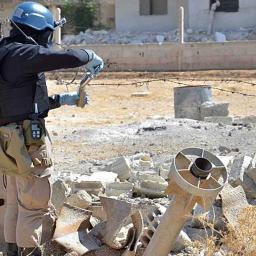
On the 90th birthday of the Geneva Protocol, Alex Spelling, Brian Balmer and Caitriona McLeish reflect on a crucial chapter in the prohibition of chemical and biological weaponsThis year marks the 100th anniversary of the use of lethal chemical weapons (CW) in World War One. Perhaps less well known is that June 17 2015 is the 90th anniversary of the piece of legislation which sought to prohibit such an occurrence ever happening again: the 1925 Geneva Protocol. This treaty is now firmly established in international law, governing both signatories and non-signatories. It is not a perfect instrument. Lacking enforcement machinery, the value of the Protocol lies in its moral and practical commitments towards regulating norms of behaviour and rules of engagement. And it has evolved throughout its history. The outcry over the alleged use of CW in Syria in recent years demonstrates the continued revulsion against these weapons and relevance of prohibiting them.The ninety year old Protocol is also a crucial anchor for much of the subsequent effort to enact this prohibition. The treaty marked an important milestone in establishing a multilateral consensus on the conduct of warfare and the promotion of greater morality and stability in international affairs. Today 137 nations have ratified the agreement. During the 1980s allegations of CW use in conflicts and concern at the lack of investigative machinery in the Protocol led to the United Nations (UN) Secretary General’s Mechanism being developed. Authority was granted to carry out investigations into allegations of chemical and biological warfare, as prohibited by the Protocol, which could be triggered by a request from any Member State. One such recent investigation was made into the alleged use of CW in the Ghouta area of Damascus on 21 August 2013. Continue reading...