 |
by Guardian Staff on (#ATSB)
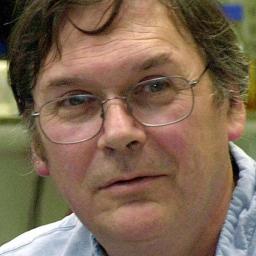
Nobel laureate Tim Hunt apologises for recent comments suggesting female scientists were a distraction in the lab and easily offended. Speaking on BBC Radio 4's Today programme on Wednesday, Hunt says he didn't mean to cause offence but added he 'did mean the part about having trouble with girls', saying 'emotional entanglements' in the past between male and female scientists had made work very difficult Continue reading...
|
| Link | http://feeds.theguardian.com/ |
| Feed | http://feeds.theguardian.com/theguardian/science/rss |
| Updated | 2026-10-01 03:45 |
 |
by Jamie Grierson on (#ATN0)
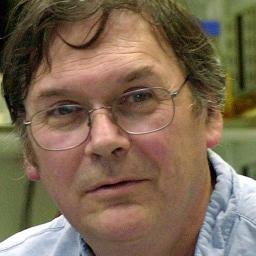
Nobel laureate caused outrage after telling conference he had reputation as a chauvinist and said of women in labs, ‘when you criticise them, they cry’The Nobel laureate Tim Hunt has apologised for comments he made about female scientists.
|
 |
by Molly Crockett and Essi Viding on (#ATGN)
Online quizzes claim to unmask the psychopaths among us. But just how accurate are these tests?
|
by Staff and agencies on (#ATE1)
English biochemist tells conference women in laboratories ‘fall in love with you and when you criticise them, they cry’Tim Hunt, where’s the science in your prejudice against women?Scientists should work in gender-segregated labs, according to a Nobel laureate, who said the trouble with “girls†is that they cause men to fall in love with them and cry when criticised.
 |
by Paul Evans on (#ATAR)
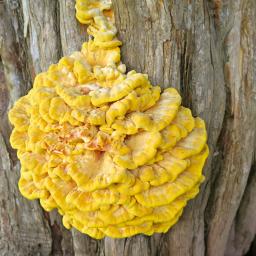
Wenlock Edge, Shropshire: The fungi create a bright yellow expanding universe, continuing the pact with immortality inside the yewAn old yew tree above the holloway has a bright yellow growth emerging from its trunk. This brilliant, sulphur-yellow, stuff seems weirdly at odds with the shadowy woods of early summer. The vividness is caused by the fungus Laetiporus sulphureus, aka “chicken of the woodsâ€. The name is derived from its flavour, apparently.We had gone to the gardens at Morville Hall, near Bridgnorth, a few miles away. It’s a country house owned by the National Trust but with gardens that are managed by individual tenants. One of the plots is the Dower House garden, which was created by Katherine Swift. It’s a real joy, particularly when the old roses and wild flowers are out. Continue reading...
|
by Associated Press on (#AT57)
Station’s position in orbit has changed but no one is injured and scheduled crew return will go ahead, space agency saysA glitch at the International Space Station on Tuesday caused its position in orbit to change, but the crew was not in danger, the Russian space agency said.Roscosmos said the engines of a Soyuz spacecraft docked at the station unexpectedly started during testing of the radio system that controls the docking procedure. Continue reading...
 |
by Ian Sample Science editor on (#ASY1)
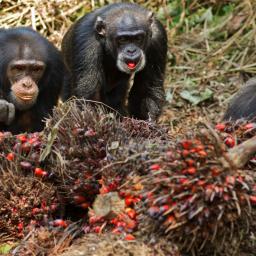
Inhabitants of forests in Bossou, south-eastern Guinea, enjoy rich, alcoholic brew fermented from sugary sapThe boozing starts from 7am. Though large amounts are often drunk, the sessions are orderly, even sociable. A skinful later, and always before nightfall, enough is enough and they rest.They are the chimpanzees of Bossou, south-eastern Guinea, and their secret is finally out. With 17 years of evidence in hand, scientists have declared the troop the first wild chimpanzees to indulge in regular, habitual drinking.
|
 |
by Hannah Devlin Science correspondent on (#ASYD)
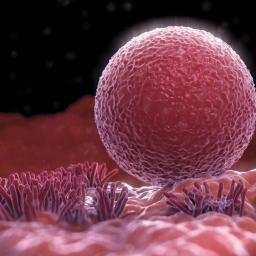
Ovarian tissue frozen when patient underwent chemotherapy as a teenager successfully grafted onto remaining ovary, allowing natural conceptionA young woman in Belgium has become the first to give birth to a healthy baby after having her fertility restored by a transplant of ovarian tissue that was removed and frozen when she was a child.The pioneering treatment could lift the spectre of infertility for girls who undergo harsh chemotherapy or radiotherapy treatments at a young age when they do not yet have mature eggs that can be stored for use in the future. Continue reading...
|
by Sarah Boseley on (#ASYF)
Health organisations say tobacco industry should pay levy to help smokers quit and prevent young people picking up a habit that costs UK at least £12bn a yearThe government should impose a new levy on tobacco companies to help pay for the harm they cause, according to 120 public health organisations launching a proposed new strategy against smoking.By 2035, the proportion of the population who smoke should be brought down from 18.5% to just 5%, says the group, which is led by Action on Smoking and Health (Ash), Cancer Research UK and the British Heart Foundation. Continue reading...
 |
by Henry Nicholls on (#ASY4)
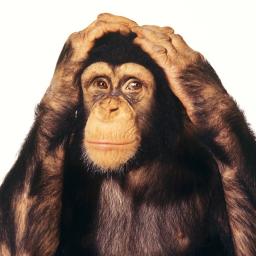
A community of chimps in West Africa is partial to the occasional alcoholic beverage. There are “behavioural signs of inebriation,†note researchersLast week, we learned that chimps like to “cookâ€. This week, we discover that a community of wild chimpanzees in West Africa is partial to the occasional alcoholic beverage.
|
 |
by David Smith in Johannesburg on (#ASBP)
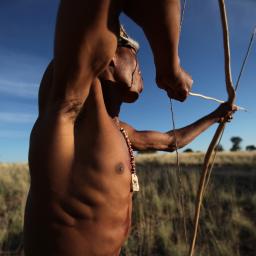
Hanna Koper, 95, and her two siblings thought to be last remaining speakers of N|uu and are working with linguists to preserve oldest surviving San languageA 95-year-old woman is helping a last ditch effort to preserve an ancient African language before it goes extinct.Hanna Koper and her two sisters are thought to be the last remaining speakers of the San language N|uu, rated as critically endangered by Unesco. The San, also known as “bushmenâ€, were the first hunter-gatherers in southern Africa. Continue reading...
|
 |
by Hannah Devlin Science correspondent on (#ASA2)
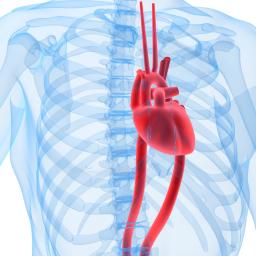
Proton pump inhibitors are one of the most commonly prescribed drugs, but patients are 16%-21% more likely to suffer a heart attack, study suggestsCommon heartburn drugs could increase the risk of heart attacks, scientists have warned. A major US study drawing on the health records of nearly three million patients showed that people taking indigestion drugs called proton pump inhibitors were 16 to 21% more likely to suffer a heart attack.Nick Leeper, a cardiologist at Stanford University in California, who led the investigation, said: “At first glance you may think a 16% increase in risk is modest and say what’s the big deal? But heart disease is by far the leading cause of death in the western world and PPIs are so commonly prescribed. This is potentially a big deal from a public health perspective.â€
|
 |
by Amy Tran on (#ARXR)
One in 25 teens attempt suicide and one in eight think about doing so. Yet teens are especially ill-served by mental health services
|
by Ian Sample Science editor on (#ARXT)
Scientists accidentally discover what appear to be red blood cells and collagen fibres during analysis of ‘crap’ fossils dug up in Canada 100 years agoScientists have discovered what appear to be red blood cells and collagen fibres in the fossilised remains of dinosaurs that lived 75 million years ago.Traces of the soft tissues were found by accident when researchers at Imperial College in London analysed eight rather shabby fossils that had been dug up in Canada a century ago before finding their way to the Natural History Museum in London.
by Henry Barnes on (#ARN7)
Frankl counselled fellow prisoners in Auschwitz, later writing Man’s Search for Meaning, outlining the concept of survival through finding meaning in the world
 |
by Jon Butterworth on (#ARB6)
A podcast from Laura Jeanty and Tova Holmes gives a very good flavour of a thousand coffee, pub or conference discussions in particle physics right now
|
 |
by Charles Arthur on (#ARA7)
Co-founder of technology company insists AI is not a danger to humanity, but will help tackle lack of clean water, financial inequality and stock market risks
|
 |
by Guardian Staff on (#AQZK)
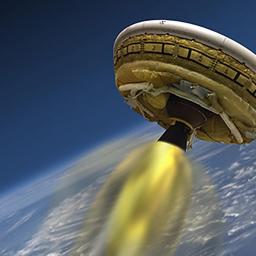
Nasa's test flight to land vehicles on Mars comes to an end on Monday when the saucer-shaped vehicle's parachute failed to inflate and tore away high over the Pacific. The initial launch from the US navy's launch site on the island of Kauai, Hawaii, using a giant helium balloon was successful. But several hours later, the 100ft supersonic parachute, designed to slow down the descend onto Mars, failed to inflate Continue reading...
|
 |
by Agence France-Presse on (#AQXT)
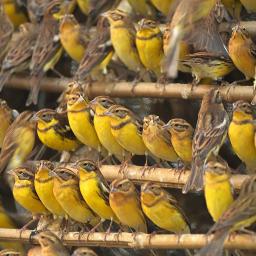
Birds once abundant in Europe and Asia could share the same fate as passenger pigeon as they are killed in millions for foodA bird that was once one of the most abundant in Europe and Asia is being hunted to near extinction because of Chinese eating habits, according to a study published on Tuesday.
|
 |
by Stephen Curry Drew Berry on (#AQQ9)
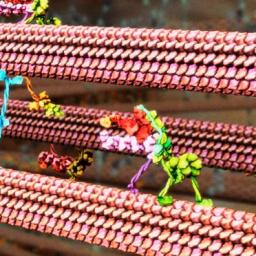
Animator Drew Berry explains how he brings the molecules of life to lifeYesterday I was trying to figure out why it seems to be so difficult to connect to the biological molecules that we are made of – proteins, DNA and such like. My piece might have ended on a frustrated note but I have no wish to be negative, especially since the problem has only arisen because animators like Drew Berry are now able to use the results of structural biology to make quite exquisite movies of the molecules of life at work inside the cells of our bodies. As I was working though my difficulties, I wrote to ask Berry how he approached the task of representing molecular complexity in ways that would make sense to people. This is his considered and insightful reply:“The goal of my work is to show non-experts – the general public aged 4 to 99, students of biology, journalists and politicians, and so on – what is being discovered in biology, in a format that is accessible, meaningful, and engaging. I hope that my work provides some sense of what biologists and medical researchers are discovering and thinking about, to provide the public with a framework of understanding to discuss these important new discoveries and the impact it will have on us as a society as we head into the future. Continue reading...
|
 |
by Sophie Elmhirst on (#AQK1)
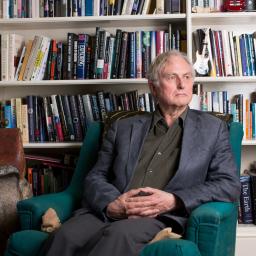
The scientist and bestselling writer has become the face of a new crusading atheism. But even his closest allies worry that his online provocations do more harm than goodIn Dublin, not long ago, Richard Dawkins visited a steakhouse called Darwin’s. He was in town to give a talk on the origins of life at Trinity College with the American physicist Lawrence Krauss. In the restaurant, a large model gorilla squatted in a corner and a series of sepia paintings of early man hung in the dining room – though, Dawkins pointed out, not quite in the right chronological order. A space by the bar had been refitted to resemble the interior of the Beagle, the vessel on which Charles Darwin sailed to South America in 1831 and conceived his theory of natural selection. “Oh look at this!†Dawkins said, examining the decor. “It’s terrific! Oh, wonderful.â€Over the years, Dawkins, a zoologist by training, has expressed admiration for Darwin in the way a schoolboy might worship a sporting giant. In his first memoir, Dawkins noted the “serendipitous realisation†that his full name – Clinton Richard Dawkins – shared the same initials as Charles Robert Darwin. He owns a prized first edition of On The Origin of Species, which he can quote from memory. For Dawkins, the book is totemic, the founding text of his career. “It’s such a thorough, unanswerable case,†he said one afternoon. “[Darwin] called it one long argument.†As a description of Dawkins’s own life, particularly its late phase, “one long argument†serves fairly well. As the global face of atheism over the last decade, Dawkins has ratcheted up the rhetoric in his self-declared war against religion. He is the general who chooses to fight on the front line – whose scorched-earth tactics have won him fervent admirers, and ferocious enemies. What is less clear, however, is whether he is winning. Continue reading...
|
by Joshua Robertson on (#AQHG)
Crystal Caves museum owner believes the theft of 12kg Wolf Creek specimen was more about pursuing an object of desire than its monetary valueA rare meteorite the size of a soccer ball has been stolen from a Queensland museum whose owner suspects the work of an unscrupulous collector.The 11.25kg space rock, worth more than $16,000, was stolen from the Crystal Caves museum in Atherton, north Queensland, early on Monday. Continue reading...
by Alan Yuhas in New York on (#AQ69)
The space agency’s trials over Hawaii are meant to experiment with ways to send more sophisticated robots and eventually humans to red planetNasa let loose a flying saucer into the sky over Hawaii on Monday in order to test a donut-like airbag and its largest parachute ever, but the device did not inflate.After several days of delays, the space agency launched its Low-Density Supersonic Decelerator mission, which may help land vehicles on to Mars, from the island of Kauai. But while the chute deployed, Nasa said the balloon above the saucer-shaped test vehicle did not inflate.
by Nicola Slawson on (#APZ7)
Increase in both number and proportion of rare and less common cancer deaths may be partly because of poorer treatment than for ‘big four’ cancersDeaths from rare and less common cancers are continuing to rise in England, a new report has found.
by Stuart Heritage on (#APWF)
According to a professor of evolutionary psychology, gossip has a bigger effect on your life expectancy than anything except giving up smoking. Should you start dishing the dirt, or is it better to resign yourself to an early grave?There are upsides and downsides to working from home. Upside: I now live a life almost entirely unencumbered by trousers. Downside: the postman has figured out that I’ll always take my neighbours’ parcels for them. Upside: I get to spend more time with my family. Downside: most of that time is spent yelling: “Shut up I’m on a deadline I’m sorry I love you!†at them. Simultaneous upside and downside: I don’t have anyone to gossip with.That last one is an upside because gossip is a base activity reserved almost exclusively for people who revel in pettiness and jealousy. But it is also a downside, because gossip is flat-out brilliant and I really enjoy knowing what’s wrong with people. Continue reading...
 |
by Guardian Staff on (#APT6)
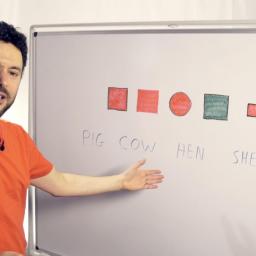
Alex set two puzzles this week. Some of you couldn't stand the suspense, so here's how to solve them, or head on over to the blog if you prefer to see a written solution. Continue reading...
|
 |
by Alex Bellos on (#APQN)
How did you get on with this week’s puzzle post? Here are the answers ... and another puzzle, just in case two weeks seems like too long a wait between puzzles!I hope you enjoyed solving today’s odd-one-out problem, because it was meant to be funny, as well as fun.Puzzle maven Tanya Khovanova, who devised it, intended it to be taken that way. Tanya - like many of you who posted comments - does not like odd-one-out puzzles. Continue reading...
|
by Ian Sample, science editor on (#AP9C)
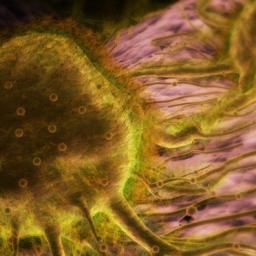
Results imply creative people are 25% more likely to carry genes that raise risk of bipolar disorder and schizophrenia. But others argue the evidence is flimsyThe ancient Greeks were first to make the point. Shakespeare raised the prospect too. But Lord Byron was, perhaps, the most direct of them all: “We of the craft are all crazy,†he told the Countess of Blessington, casting a wary eye over his fellow poets.
 |
by Press Association on (#AP1V)
Edinburgh University researchers hope findings may lead to new treatments to stop progression of breast cancer in its tracksNew therapies to stop the progression of breast cancer could emerge from a fresh study into the disease, researchers believe.Scientists at the University of Edinburgh said they have discovered a “trigger†that allows breast cancer cells to spread to the lungs. Continue reading...
|
 |
by David Shariatmadari on (#AP1X)
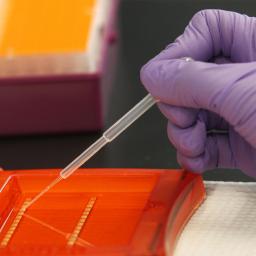
When a legal gadget can induce calm, energy or euphoria, what chance have MPs trying to police altered states?Mind control may not have been one of the stated aims of the Conservative manifesto, but the psychoactive substances bill does read like an attempt to wedge shut the doors of perception. Its scope is any material that “affects the person’s mental functioning or emotional stateâ€. The list of exemptions shows that practically anything we put in our bodies can do that; “foodâ€, for instance. Even so, such is the pace of innovation that the law might already be unable to stop people getting high. Thync, a US company, allows its customers to choose from a menu of “mental alertnessâ€, “bursts of physical energyâ€, “detachment from stressful thoughtsâ€, even “mild euphoriaâ€.Related: Queen's speech: the day ‘psychoactive drugs’ tripped off the royal tongue Continue reading...
|
 |
by Guardian Staff on (#ANH7)
Workplace privacy is more than if your boss digs into your genetic markersIf someone poops on the floor at work, can your boss test your DNA to see if you’re the culprit? That is what Federal District Judge Amy Totenberg was asked to decide in the case of the “devious defecator.â€In 2012, the longhaul transportation and storage company Atlas Logistics discovered that someone had been defecating in its warehouse and suspected it was a disgruntled employee. The company wanted to analyze the “offending fecal matter†– and their employees’ DNA via cheek swabs – to identify the culprit. Two employees, Jack Lowe and Dennis Reynolds, sued. They claimed that Atlas violated the little-known Genetic Information Nondiscrimination Act (Gina) by taking their genetic information. (Neither Lowe nor Reynolds was a match. The true devious defecator remains at large.) Continue reading...
|
 |
by Alex Bellos on (#AN2A)
Welcome to Alex's second Monday puzzle. If you'd prefer to read the question, you can find it here. This week we're leaving Cheryl and Denise behind with two new types of brainteaser. To start with, can you spot the odd one out? Then see if you can answer a question set for Hong Kong six-year-olds. Can you solve it? Continue reading...
|
 |
by Stephen Curry on (#AN0W)
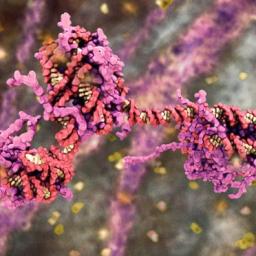
Structural biologists are revealing the astounding complexity of the molecular machinery of life. But why is it so hard to get any real sense of our molecular nature?I’d like to show you your inner molecule but, to be perfectly honest, I don’t think you’re interested. Which is rather frustrating for scientists like myself who have spent a career in structural biology working out what the molecules of human life look like. You know – proteins, nucleic acids, carbohydrates, lipids. The stuff we’re all made of.
|
by Alex Bellos on (#AN0B)
Two puzzles today - one asks you just to identify the odd one out, and the other needs to be done in 20 secondsHello guzzlers.Welcome to the second instalment of my new puzzle series. Continue reading...
by Nick Davis on (#AN0C)
A bill before the House of Lords proposes new powers for the police to prosecute people involved in trade in legal highs. But can these drugs ever be beneficial? A research exemption would allow researchers to find outOn 9 June the United Kingdom’s House of Lords will have its first opportunity to debate a new set of drugs laws. The Psychoactive Substances Bill, proposed by Conservative peer Lord Bates, reflects the new government’s manifesto commitment to deal with legal highs. At present, legal highs (or “novel psychoactive substancesâ€) are identified and banned on a case-by-case basis, which means that the police and the courts must constantly react to new drugs, and a delay is added to the control of these substances.
 |
by Alex Renton on (#AMYS)
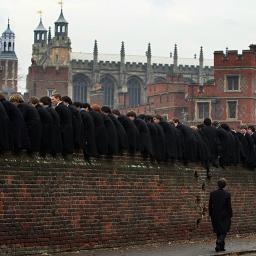
A gripping study of the mental wounds inflicted by classic British institutionsI once knew an American psychoanalyst who worked in a Bangkok practice, specialising in expats. He’d first come to east Asia on contract for an international church whose missionaries kept getting into trouble. He never went home: there was more than enough work. “Specifically,†he said, “with people like you. Middle-aged, middle-class Brits who went to your crazy private schools may just about be the most damaged social sub-group I’ve ever come across.â€It’s long been known that the practice of sending young children off into the care of strangers is not wholly safe. The ancient “public†schools worried the Victorians as much or more than did the workhouses: three parliamentary commissions sat in the 19th century to look at the financial frauds, riots and the astonishing numbers of deaths – from suicides, assaults by teachers and pupils, starvation, epidemics – in the schools of the rich. Tom Brown’s Schooldays only scraped the surface. Continue reading...
|
 |
by Anne Manne on (#AMXJ)
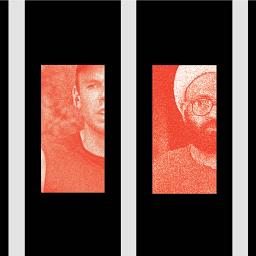
What do Sydney siege gunman Man Haron Monis, Germanwings pilot Andreas Lubitz, Norwegian mass murderer Anders Breivik, and Isis killers Jihadi John and Jihadi Jake have in common? Delusions of grandeur, a fear of failure and a need for admirationWhen Man Haron Monis, self-styled Islamic cleric, took 18 hostages in the Lindt cafe in Sydney, he declared himself to be a jihadist on behalf of Islamic State. Reports of the siege immediately went global. But, in fact, Monis had no connection to the group; he had brought the wrong flag to his own siege, and demanded that police bring him the right one in exchange for releasing hostages.In the inquest into the siege, which concluded last week, Monis was described as a “man spiralling downwardsâ€. He had no job but many debts, had lost custody of his children and faced a lengthy jail term. Seeking “power and influenceâ€, he had even briefly joined a biker gang, but was rejected as too “weirdâ€. “His constant goal in life,†junior assisting counsel Sophie Callan summed up, “appears to have been achieving significance.†Continue reading...
|
 |
by Robert Booth on (#AMJ3)
Recovering patients continue to experience symptoms and side-effects, with Macmillan calling on government to fund long-term recovery packagesBritain’s health service is not prepared for the issues faced by the growing number of cancer survivors who live on after being diagnosed at a young age, a study published on Monday warns.Almost 80,000 people currently alive in the UK were diagnosed before the age of 45 with cancers traditionally associated with older age: breast, prostate, colorectal and lung cancers, new figures released by Macmillan Cancer Support and Public Health England reveal. Continue reading...
|
 |
by Associated Press in Sioux Falls, South Dakota on (#AKXD)
Scientist calls Persistence Cave ‘a warehouse of information’ and says he expects to find 100,000 animal bones over the summer as team excavates entranceThe National Park Service is beginning to excavate the mouth of an unexplored cave in the Black Hills of South Dakota, and researchers believe it could help broaden our understanding of how the region’s climate has changed over thousands of years.A park service worker found Persistence Cave in 2004 on the grounds of Wind Cave national park, in western South Dakota, but the agency kept it quiet, partly to prevent amateur spelunkers from trying to explore the well-preserved site. Continue reading...
|
 |
by Tim Adams on (#AK6A)
Neurologist Suzanne O’Sullivan’s excellent book reveals that medicine remains as much an art as a scienceSuzanne O’Sullivan qualified as a doctor in 1991. She is now a consultant at the National Hospital of Neurology and Neurosurgery in London. This, her first book, is an account of her experience over 20 years of the many conditions that exist in that much disputed no man’s land between psychological and physical illness. The patients she examines in these pages often have dramatic symptoms – blindness, paralysis, seizures, intense pain and chronic fatigue – but they are symptoms related to no identified disease or physical cause. By the time these patients come to O’Sullivan they have generally exhausted every scan and endoscopy the NHS can provide, as well as the patience of doctors and specialists in different fields. She is often there to tell them the last words that they generally want to hear: that the very real agony that they may feel in head or gut or back or limb is all in their mind.To O’Sullivan that is never a trivial diagnosis, no matter how it sounds. Psychosomatic illness, the experience of physical symptoms brought about by emotional states, is not a new phenomenon, though arguably it has reached pandemic proportions with the self-diagnostic possibilities offered by the internet. O’Sullivan traces it at least as far back as Hippocrates in 400BC, who noted, for example, that emotion alone could trigger sweating and cause the heart to beat double time. As a result of such observations Hippocrates believed that a physician must treat disturbances in the mind as well as the body. Two millennia before Freud he was analysing the dreams of his patients for signs of mental distress that might be causing physical illness. Continue reading...
|
 |
by Vaughan Bell on (#AK68)
Many children hear voices or have visions. Usually there is no cause for concern...Childhood has long been championed as a time for make-believe, but recent research has found that another form of unreality – hallucinations – is more common in children than we previously imagined. For years, kids’ accounts of seeing, hearing and experiencing things that weren’t really there were considered to be part of the same invented world – an “overactive imaginationâ€; a “fantasy worldâ€. The Alice in Wonderland approach, perhaps. But as it was recognised that hallucinations can be reliably identified in children, science has begun to look at why these illusory experiences are many times more common during our early years.Hallucinations often reflect a bizarre, blurry version of our realities and because play is an everyday reality for children, the content can seem similar. Both can contain quirky characters, strange scenarios and inspire curious behaviour. One child described how he saw a wolf in the house, another that he had “Yahoos†living inside him that ate all his medicine. On the surface, these could just as easily be a child’s whimsy, but genuine hallucinations have a very different flavour. “In play and make-believe, children are imagining,†says Elena Garralda, a professor of child and adolescent psychiatry at Imperial College London. “They do not have the actual perceptual experience of seeing and hearing.†Another key difference, notes Garralda, is that “hallucinations feel imposed and children cannot exercise a direct control over themâ€. Continue reading...
|
 |
by Robin McKie on (#AJW3)
Cancer, dementia, heart disease and new – or new strains of – infectious diseases are what modern westerners are dying of nowWhere are we
|
 |
by Dalya Alberge on (#AJVT)
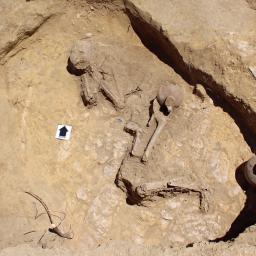
British archaeology team uncovers stunning Aksumite and Roman artefactsSpectacular 2,000-year-old treasures from the Roman empire and the Aksumite kingdom, which ruled parts of north-east Africa for several centuries before 940AD, have been discovered by British archaeologists in northern Ethiopia.Louise Schofield, a former British Museum curator, headed a major six-week excavation of the ancient city of Aksum where her team of 11 uncovered graves with “extraordinary†artefacts dating from the first and second centuries. They offer evidence that the Romans were trading there hundreds of years earlier than previously thought. Continue reading...
|
by Edward Helmore in New York on (#AJ1M)
To truly understand America’s super-rich, observe them as an anthropologist would … that’s what Wednesday Martin has done, and her memoir Primates of Park Avenue is provoking whoops of rage from wealthy wivesFrom Tom Wolfe’s Bonfire of the Vanities to Candace Bushnell’s Sex and the City, New York’s Upper East Side has long offered novelists and satirists a rich seam to mine. But until Wednesday Martin came along, no one had thought to use primatology in a portrait of one of America’s wealthiest – and most competitive – urban enclaves.Martin, mother-of-two and wife of a banker, is the author of Primates of Park Avenue, part-memoir, part-study of young East Side mothers and their social customs. The book, published last week, has been variously described as sexist, harsh and inaccurate. Continue reading...
 |
by John Vidal on (#AJK0)
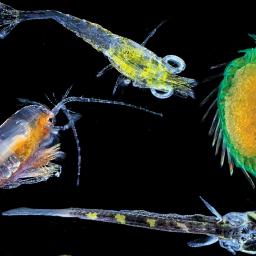
Plankton are the tiny enablers of life on Earth, but their fragile ecosystems are under attack from climate change. A three-year study is helping marine experts understand them for the first time
|
by Guardian Staff on (#AJ0Y)
European Space Agency (ESA) astronaut Samantha Cristoforetti demonstrates how she prepares a meal on the International Space Station (ISS). Food is an important in space, not just for nutrition but also for boosting morale. Astronauts are provided with a certain quantity of so-called 'bonus food' that they are entitled to choose. Cristoforetti prepares chicken turmeric with champignon mushrooms, brown rice and peas, all in zero-gravity Continue reading...
 |
by Michael Krämer on (#AHPD)
There have been many tedious discussions about the value of philosophy for modern science. I find it much more interesting to ask if and in what way modern science can advance philosophyThe Large Hadron Collider (LHC) at the European Organization for Nuclear Research CERN in Geneva is the world’s largest and most powerful particle accelerator and possibly the most complex scientific instrument ever built. The LHC has just begun its second three-year run, at the record-breaking collision energy of 13 TeV. About 10,000 scientists from 60 countries will search for new phenomena beyond the Standard Model of particle physics, in pursuit of a simple, beautiful and all-encompassing theory of nature.Related: Live webcast of the 13 TeV restart of the CERN Large Hadron Collider Continue reading...
|
 |
by Joanna Blythman on (#AGK3)
Sense About Science talks about ‘perceived food allergies’. But I’m not just another muesli-belt middle-class neurotic who doesn’t understand scienceOn the bus the other day I watched a mother hand her toddler a packet of salt and vinegar crisps. The little girl obviously liked them, doubtless relishing their salty-sweet crunch, but suddenly her face reddened, her eyes watered and she began coughing and spluttering, an episode that must have lasted a good two minutes. The volatile pungency of the crisps was getting up my nose a couple of seats away, so was it any wonder that a child’s immature lungs reacted like that?Related: Why does the media have a blindspot on food science? | Robin Bisson Continue reading...
|
 |
by Ian Sample, science editor on (#AGGC)
Scientists from Kew and Western Australia stumbled upon the as yet unnamed flower during a three week expedition to collect waterlily specimensA perilous expedition in northwestern Australia that had researchers wading through lakes, ponds and creeks stalked by meat-eating crocodiles has ended with the discovery of a stunning new species of waterlily.
|
by Hannah Devlin, science correspondent on (#AG3J)
Decades of textbook teaching could be overturned by discovery, which might also explain links between poor health and brain disorders such as Alzheimer’sScientists have discovered a previously unknown link between the brain and the immune system that could help explain links between poor physical health and brain disorders including Alzheimer’s and depression.The discovery of vessels, nestled just beneath the skull, overturns decades of textbook teaching and could pave the way for new approaches to treating brain diseases. The scientists behind the discovery described their surprise at having uncovered a major anatomical structure that until now had been entirely overlooked. Continue reading...