|
by Hannah Devlin, science correspondent on (#AA1T)
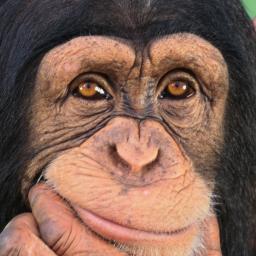
Findings suggest chimpanzees have the intellectual abilities required for cooking, which could have an impact on our view of human evolutionThey may lack the secret of man’s red fire, but chimpanzees possess most of the intellectual abilities required for cooking, according to scientists.A study found that chimpanzees prefer the taste of cooked food, can defer gratification while waiting for it and even choose to hoard raw vegetables if they know they will have the chance to cook them later on. The findings suggest that our earliest ancestors may have developed a taste for roast vegetables and grilled meat earlier than previously thought, potentially shifting the timeline for one of the critical transitions in human history. Continue reading...
|
| Link | http://feeds.theguardian.com/ |
| Feed | http://feeds.theguardian.com/theguardian/science/rss |
| Updated | 2026-03-24 23:00 |
|
by Maev Kennedy on (#A9GR)
Mythical creatures will return when west London folly inspired by China’s Porcelain Tower undergoes biggest restoration in its 257-year history Continue reading...
|
|
by Roger Pielke Jr on (#A9FZ)
Recent controversies surrounding the public portrayal of science suggest that we are too reliant on its fragile findings
|
|
by Mo Costandi on (#A8E1)
A series of recent studies suggest that eye movements may both reflect and influence the workings of the brain Continue reading...
|
|
by GrrlScientist on (#A88W)
A large group of tiny birds huddle together for warmth in a garage near Dunedin New Zealand, as a big snowstorm approaches Continue reading...
|
|
by Ranjana Srivastava on (#A9A3)
News of the latest drug breakthrough is welcome – but let’s not delude ourselves about the costs and modest benefits of treatment Continue reading...
|
|
by Dean Burnett on (#A858)
Science Magazine caused outrage with an advice column where a female researcher was told to put up with being ogled by her boss. This may be the worst advice it’s possible to give a woman in science. But in case it isn’t, here’s some more Continue reading...
|
by Monica Tan on (#A818)
The aggressive climbing perch, which can crawl on land, live for six days out of water and suffocate its predators, heads south from Papua New Guinea Continue reading...
|
by Damian Carrington on (#A80G)
Sir David King calls for £15bn a year R&D spending on clean energy to make it cheaper than coal power globally, in emulation of space race research efforts Continue reading...
|
|
by Joanna Moorhead on (#A7AA)
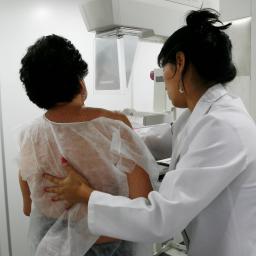
Europe-wide trial launched in attempt to develop test similar to cervical smear, but also checking for ovarian, womb and some forms of breast cancerDoctors have raised the possibility of a single screening test which could detect the risk of four different cancers in women, raising hopes of catching them early and saving lives.A four-year Europe-wide trial was announced on Monday with the aim of developing a test similar to the current simple cervical smear, which will identify a woman’s risk of developing cervical, ovarian, womb or certain sorts of aggressive breast cancer. Continue reading...
|
|
by Press Association on (#A6YY)
Experts say they have identified 176m-year-old sauropod from fossil backbone discovered on a beach at WhitbyExperts say they have identified Britain’s oldest sauropod dinosaur from a fossil bone discovered on the North Yorkshire coast.The dinosaur backbone – which dates back about 176m years to the Middle Jurassic period – was found on a beach at Whitby after it fell out of a cliff face.Related: British dinosaurs should be everyone’s cup of tea Continue reading...
|
|
by Hannah Devlin, science correspondent on (#A6VN)
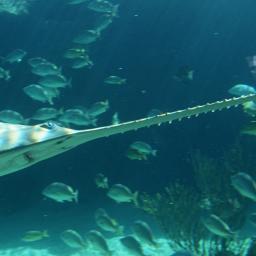
A routine DNA study has revealed surprising results which suggest that female sawfish in Florida are reproducing without mating with malesA virgin birth is normally taken as a sign of divine intervention, but the phenomenon may be more common than we thought - at least in certain fish species.Scientists have discovered that female sawfish appear to be routinely reproducing without any male input through an alternative form of reproduction known as parthenogenesis. Continue reading...

|
|
by David Smith Africa correspondent on (#A6R4)
Ceremony to be held on Clifton beach, Cape Town, near recently discovered wreck site of Portuguese ship that sank, leading to the loss of 212 slaves’ lives Continue reading...
|
|
by Tash Reith-Banks and Joshua Harbord on (#A67P)
Over the next few months we’ll be breaking down scientific concepts into six-second vines at #guardianscienceinsix. But can you do better?Science is full of big, complex ideas, and one of the most important skills a scientist can develop is a knack for communicating those ideas to others. It’s a difficult job, and one which is even harder if you want to condense a lot of information into a tight word count or timeframe.However, that’s exactly what we’re going to try to do over the next couple of months. Every two weeks we’ll be trying to break down a range of scientific concepts into six-second vines, which we’ll launch on the Guardian Vine account and here in the Notes & Theories blog. Continue reading...
|
|
by Sarah Boseley Health editor on (#A6NA)
Analysis: A combination therapy – helping the body’s own defences fight cancer cells – has shown impressive results for terminally ill melanoma patients Continue reading...
|
|
by Guardian readers on (#A5PT)
Whether you have stopped consuming alcohol or using illegal substances we’d like to know why you made that life changing decision Continue reading...
|
|
by Josh Halliday and agencies on (#A51T)
International trial using ipilimumab and nivolumab to treat patients with advanced melanoma stopped cancer advancing in 58% of casesTerminally ill cancer patients could be “effectively cured†of the disease using a powerful new combination of drugs described by scientists as heralding a once-in-a-generation advance in treatment.A British-led trial brought “spectacular†results with more than half of patients with advanced melanoma seeing tumours shrink or brought under control using the drugs.Related: Immunotherapy: the big new hope for cancer treatment Continue reading...
|
|
by Nadia Khomami and agencies on (#A5KQ)
Poor weather conditions force solar-powered plane to make detour to Nagoya during attempted flight from China to HawaiiA solar-powered plane attempting to make an unprecedented flight across the Pacific has been forced to make an unscheduled stop in Japan due to poor weather conditions.Solar Impulse 2 en route from China to Hawaii has made a detour to Nagoya. It took off early on Sunday for a six-day, six-night, flight over the Pacific Ocean. Continue reading...
|
|
by Associated Press in Chicago on (#A4KD)
Treating whole brain with radiation found to harm cognitive skills without improving survival, study finds – meaning many could be spared such care Continue reading...

|
|
by Amanda Holpuch in New York on (#A4FB)
Alberta man who discovered a rare fish fossil is happy to display it in a museum, even if he takes issue with scientists’ stance: ‘We agree to disagree’If a Canadian museum decides to exhibit a recent fossil discovery, the man who found it, Edgar Nernberg, hopes it will be displayed with two plaques. One would contain local paleontologists’ explanation, that the fossil is around 60 million years old. The other would explain Nernberg’s view that his find is from the past 6,000 years, after the world began.Nernberg is a long-time excavator, fossil collector and creationist. He believes in the biblical history of the creation of the world, not the scientifically accepted one. The Calgary Sun newspaper, to which he has sent between 30 and 40 letters on the subject, has said he is the “greatest promoter of creationism in Albertaâ€. Continue reading...

|
by Shane Hickey on (#A4PC)
Fear of skin cancer is stopping people getting much-needed vitamin D, Dr David Hazafy says Continue reading...

by Jon Butterworth on (#A43E)
There is an urgent need to reverse the decline in research funding, and a lot to discuss about how decisions are made. But setting up a death match between Big Science and the rest is not the way to go
|
by Alice Roberts on (#A416)
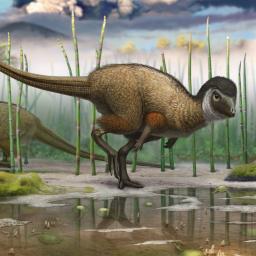
Evolution has made us survivors, but that’s not the end of the story – as anyone with a bad back will tell youYour body is far from perfect. You’re the product of millions of years of evolution, but this process doesn’t strive towards “perfectionâ€. In fact, it doesn’t strive towards anything. It just happens: because there are differences between individuals in a species, and some have better chances of surviving and reproducing than others. There’s never a goal in mind. All that matters is those chances of survival and reproduction: a game played out in the moment, between organisms and their environment. Continue reading...
|
|
by Maggie Brown on (#A39S)
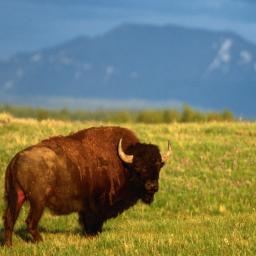
Channel 4’s anthropology show will star a cantankerous granddad, a long-suffering wife and a cattle-leaping son Continue reading...
|
|
by Press Association on (#A39V)
Scientist praises college for supporting him but fears young ambitious academics of today in similar position would not get same backing
|
by Catherine de Lange on (#A39M)
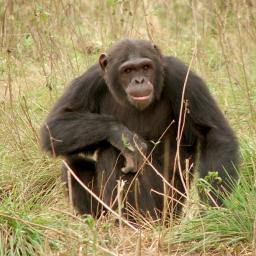
Global warming could also have a shattering impact on our ability to feed ourselves Continue reading...
|
by Andrew Smith on (#A417)
Alexandra Doyle has signed up for a one-way trip to Mars. What makes her, and 99 others, so ready to leave Earth behind? Meet the red planet’s would-be pioneers – and the man who promises he can get them thereWhen Nasa’s first rover set down on the surface of Mars in 1997, its streamed colour images caused an early internet sensation. After centuries of dreaming, here we were, at eye level to our closest potentially habitable neighbour, and the sight was as bleakly majestic as we could have imagined: a rocky, red desertscape on a scale entirely alien to Earth. One mountain, Olympus Mons, was the largest in our solar system (three times the height of Everest, with a footprint the size of Sweden); dune-seas swept its northern hemisphere while 7km-deep canyons veined the south.Watching on a clunky desktop computer in the Dutch university town of Twente, 20-year-old Bas Lansdorp’s first thought was one of wonder; his second of longing (“I want to go there!â€), then the melancholy realisation that, being Dutch, he could never fly with Nasa. So he’d have to do it himself.It's become an issue for my parents. I mean, it was a big step for me to move from Blackpool to LondonWhat makes a good reality TV show? Tension, conflict. But you don't send four kooky divas to Mars!Why send people for a holiday – when there are 200,000 applicants who don't need to come back? Continue reading...

|
|
by Jessica Elgot on (#A0AG)
The sale of laughing gas is to be outlawed in the latest government crackdown on legal highs. Which other drugs will be affected by the ban?Whether it’s a high that’s been around since the 17th century, or a chemical cocktail created last weekend, successive governments have found it difficult to get a grip on legal highs.Ban one thing then tweak the compound slightly and the revamped drug becomes legal again. This is because the Misuse of Drugs Act 1971 classifies drugs as illegal by their chemical compounds.Related: Laughing gas sales to be outlawed in government's legal highs clampdown Continue reading...

|
|
by Dean Burnett on (#A08F)
There has been considerable confusion and concern around new government plans to ban legal highs. Scientifically, the only solution is to ban the human brain Continue reading...
|
|
by Julie McDougall-Waters on (#9ZWF)
A recent Royal Society oral history event provided an opportunity to learn from four senior scientists who lived through the changes Continue reading...
|
by Alison Crutchley on (#9ZVW)
A brilliant word like omnishambles makes blending look easy, but there’s more to it than just jamming words together and cutting off the bits that stick out Continue reading...
|
by Hannah Devlin on (#9ZSP)
We take a closer look at some of Lomborg's arguments on fracking, emissions and green energy Continue reading...
|
|
by Damien Gayle on (#9ZP1)
David Nutt, former government chief drugs adviser, says banning of legal highs has already been destructive to Parkinson’s and anti-smoking research Continue reading...
|
|
by Agence France-Presse on (#A0HT)
Study challenges understanding of how memory functions, with researchers finding past memories could simply be ‘lost’ rather than ‘erased’ Continue reading...
|
by Oliver Milman on (#9ZKD)
Fossilised skeleton found in Kimberley shows sharks once had bone cells within cartilage, suggesting a sophisticated evolutionary pathA 380m-year-old fossil found in Western Australia has been hailed as the “missing link†in shark evolution, revealing the marine predator has a far more sophisticated lineage than previously thought.The fossilised skeleton, jaws and teeth, found at the Gogo formation in the Kimberley region of WA, shows the ancient shark had a small amount of bone as well as cartilage. Continue reading...
by Graham Readfearn on (#9ZHQ)
Climate science denialists love to claim action on climate change will restrict people’s freedoms, when the opposite could be true Continue reading...
|
by Rory Carroll in Los Angeles on (#9ZH7)
Severely disfigured in a shooting accident, Richard Norris, 39, given the face of Joshua Aversano, who died aged 21 after being run over Continue reading...
|
|
by Sarah Boseley Health editor on (#9Z6N)
GPs give patients ciprofloxacin, which has not been recommended since 2005, raising fears that drug-resistant forms of sexually transmitted disease will spread Continue reading...
|
|
by Associated Press in New York on (#9Z2T)
Co-author Michael LaCour did not support publication’s decision after its investigation discovered monetary discrepancies and lack of raw survey data Continue reading...
|
by Hannah Devlin, science correspondent on (#9YRN)
Playing auditory cues during sleep partially undid biases, raising possibility of using the technique to make permanent behavioural changesIn Aldous Huxley’s Brave New World, the overlords use “sleep teaching†to condition children to submit to their sinister moral values. Now scientists have found a more noble purpose for the technique in a study that suggests deep-rooted biases about race and gender could be “unlearnt†during a short nap.The findings appear to confirm the idea that sleeping provides a unique window for accessing and altering fundamental beliefs – even prejudices that we don’t know we have. Continue reading...
|
by Agence France-Presse in Geneva on (#9YAM)
Holes that form in cheeses such as emmental caused by hay particles in milk and not CO2 released by bacteria, say experts Continue reading...
|
|
by Zach Stafford on (#9Y5S)
LGBT people often hate themselves after the torture of conversion therapy. That hate doesn’t just hurt them, it affects all of us
|
by Rich McEachran on (#9Y5V)
Evolva say its synbio vanillin is a sustainable alternative to the synthetic variety, but critics say the technology isn’t palatable for the environment
|
by Tomas Chamorro-Premuzic on (#9Y01)
Business psychologist Tomas Chamorro-Premuzic looks at how brands can turn their internal identity into public reputation Continue reading...
|
|
by Alok Jha, Ian Anderson, Matt Hill, Pascal Wyse and on (#9XP9)
You think you know water, but you don't. And if it wasn't so odd, you wouldn't be here. So how does this seemingly everyday substance turn out to be a an epic scientific story of a strange molecule that connects you to everyone and everything else and the rest of the universe? Science broadcaster Alok Jha explains
|
|
by Press Association on (#9WY8)
Discovery of method for blocking enzyme that spreads cancer cells to bones is described as ‘important progress’ in prevention of secondary stage of disease
|
|
by Sarah Boseley on (#9WW8)
Researchers say GPs in England, Wales and Northern Ireland less likely than other countries to refer possible cancer patients immediately Continue reading...
|