Today we launch a new initiative to promote “open science†or as we hope to one day call it, “scienceâ€In today’s issue of Science Magazine we unveil a series of guidelines to promote transparency and reproducibility in research practices - critical aspects of science that are frequently overlooked in the pursuit of novelty and impact.
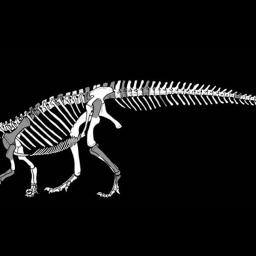
The remains of herbivorous Sefapanosaurus were unearthed in the 1930s but languished in a storeroom at Wits University until they were recently reassessedPalaeontologists in South Africa have discovered the fossil of a previously unknown dinosaur dating back 200m years. It was found not on a remote desert plain but in a university storeroom.The specimen had been collected in the late 1930s and for decades it remained hidden among the biggest fossil collection in the country at Wits University in Johannesburg. Continue reading...
GM wheat designed to repel aphids is no more effective at repelling the bugs than standard varieties a major field trial has revealedA major field trial of GM wheat that is designed to repel aphids has found the crop is no better protected against the pests than conventional wheat.The results come from two years of trials that compared aphid attacks on standard wheat plants with those suffered by a GM version modified to release a natural aphid repellant. Continue reading...
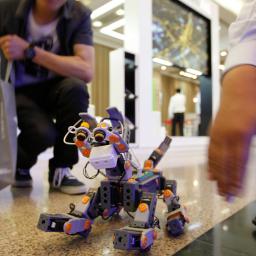
Humans will be taken care of like pets should robots take over because AI will want to preserve us as part of natureApple’s early-adopting, outspoken co-founder Steve Wozniak thinks humans will be fine if robots take over the world because we’ll just become their pets.
Pharmaceutical companies are creating new business models to meet the needs of the global poor. Is it enlightened self-interest or calculated profiteering?Big pharma isn’t known for its fair dealing in the global South. Infamously, the high cost of patented HIV antiretroviral drugs (ARVs) in the early 2000s priced out developing countries and millions died. Patent wars still rage, notably in India and South Africa, as the industry attempts to maintain monopolies on life-saving drugs.
The future of astronomy is not in acquiring new data, but in mining the oldAstronomical data is and has always been “big dataâ€. Once that was only true metaphorically, now it is true in all senses. We acquire it far more rapidly than the rate at which we can process, analyse and exploit it. This means we are creating a vast global repository that may already hold answers to some of the fundamental questions of the Universe we are seeking.Does this mean we should cancel our up-coming missions and telescopes – after all why continue to order food when the table is replete? Of course not. What it means is that, while we continue our inevitable yet budget limited advancement into the future, so we must also simultaneously do justice to the data we have already acquired. Continue reading...
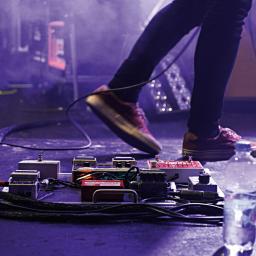
Long hours in vans and solitary hotel rooms. Screaming fans when you’re on stage, then back home to feed the cat. Musicians talk about the psychological dangers of life on tourWhile many may envisage the life of a touring musician to be that of a glorified jetsetter, the reality is far from idyllic. A recent study by charity Help Musicians UK found that over 60% of musicians have suffered from depression or other psychological issues, with touring an issue for 71% of respondents.Singer Alanna McArdle recently announced her departure from Cardiff punk band Joanna Gruesome for mental health reasons, her statement hinting that the strain of touring may have been a factor in her decision to quit.And when Zayn Malik broke the hearts of millions by pulling out of One Direction’s tour of Asia – leaving the boy band shortly after – a source close to the band told the tabloid press: “Zayn went because he’d had enough. Have you ever been on the road for four years? â€
Bioethicist says older men’s seminal fluid contains greater number of mutations that could pose a risk to future offspringYounger men should consider freezing their sperm to avoid their children having genetic disorders if they choose to have them later in life, according to a bioethics expert.Freezing eggs from women planning families when they are older is not unusual, but bioethicist Kevin Smith, of the School of Science, Engineering and Technology at Abertay University in Dundee, believes freezing should also be considered for sperm to avoid the risk of “gradually reducing human fitness in the long termâ€. Continue reading...
How do you estimate the size of hidden populations? Dr Ruth King explains here, an excerpt from her talk tonight in the London Mathematical Society’s prestigious Popular Lecture series.In theory the question “How many…?†is a very simple one. After all, we just need to be able to count.In fact, this question is often extremely difficult to answer: Continue reading...
The five-second rule won’t save you from germs and the blue whale isn’t actually the earth’s largest living organismFrom star signs to homeopathy, humans believe in strange things. Venkatraman Ramakrishnan, the incoming president of the Royal Society, recently described us as being “intrinsically prone to being irrationalâ€. He pointed out that science has a role in countering this, which got me thinking about the common myths that persist, in spite of scientific evidence telling us otherwise. While not quite in the same league as astrology and homeopathy – two bugbears of Venki and scientists the world over – I hope this odd collection of not-so-conventional wisdom will at least right some small wrongs. Continue reading...
Roadside verges are one of our great wild plant refuges. They are only narrow strips of land, but verges along our major roads total an area the size of the Isle of Wight. And they provide a home to more than 700 species of plants, almost half the native flora of Britain, with some of the last habitats left for many wild flowers, especially meadow plants – which is why the charity Plantlife is campaigning to get verges looked after better to encourage these wild plants.Many of the roadside plants are flowering now, such as the familiar red clover, common buttercup, brilliant white oxeye daisy and the tall rosebay willowherb with its distinctive clusters of purply-red flowers. There are even rare flowers, such as the green-winged orchids on the M40 in Buckinghamshire, the Deptford pink in Devon and Worcestershire and wood bitter-vetch in Powys. Continue reading...
Thank you for the article by Luisa Dillner (How do you mend a broken heart?, 8 June). I am grateful that some solutions of how to deal with heartache are shown. The one I like best is the suggestion of doing sports to get over your ex: “The endorphins released during exercise are nature’s own brand of pain relief.†I always feel better after a challenging workout, even without heartache. Most people experiencing serious heartache feel like never leaving their beds again. Instead, more of them should be made aware of the fact that sport can help them recover. Your mental health will benefit from the endorphin rush as well as your physical health.Later in the article, Dillner presents the advice that “rapidly beginning a new relationship is actually good for your self-esteem and also weans you off your exâ€. I find this outcome of the empirical study – which is done on students – interesting, but it has to be differentiated between starting a new relationship and dating someone for fun. Personally, although the attention of men might be charming, I do not agree with the suggestion that starting a new relationship could help to get over the last. My experience is that it takes half of the amount of time of your broken relationship to recover sufficiently.
Hallucigenia sparsa, one of most common creatures 500m years ago, had previously baffled scientists as an anatomical misfit without distinguishable head or rear
It’s pachycephalosaurus, not ‘pakisaurus’, but that hasn’t stopped some people taking offence at the tiny-brained lizard with the thick, scaly head
by Dominic Burgess, Elliot Smith, Amy Mathieson on (#CA2S)
This week, the irrepressible Jeremy Bumble looks at how the moon was formed. With help from space scientist and Sky at Night presenter Maggie Aderin-Pocock, Jeremy discovers how our largest natural satellite got its appearance and why it is the Earth's best friend. Go Science! Special thanks to Richard Hunter, Jamie Maule-ffinch, Luke Roulstone, Phillippa Burgess, Stuart Mckechnie, Laura Mckechnie, UCL, Imperial College, Fabrics Galore, Vega Electronics Continue reading...
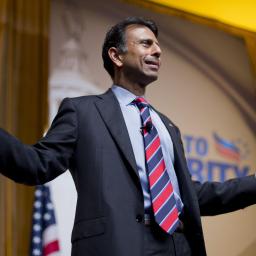
Louisiana governor can point to a singular achievement as he announces run for president: allowing theories like ‘intelligent design’ to be taught in public schoolsHis refusal to endorse evolution hardly distinguishes him from the other Republican presidential hopefuls, but Louisiana governor Bobby Jindal can point to an unmatched achievement as he formally kicks off his campaign: signing a law that paved the way for creationism to be taught in schools.Jindal, who will announce his White House bid at a rally near New Orleans on Wednesday, signed the Louisiana Science Education Act into law in 2008. It was his first year as governor. Continue reading...
Ageing doesn’t mean a steady descent into misery – evidence suggests that happiness is likely to increase as we head towards old age, but is it that simple?
Skinny jeans have been implicated in a woman losing feeling in her legs. But does this show that they’re harmful?You’ve probably seen recent headlines decrying that staple of teens and hipsters everywhere (regardless of gender), the skinny jeans, as being bad for your health, after an article in the Journal of Neurology, Neurosurgery and Psychiatry.The article was a case study of a woman who, after helping a relative move house, found that her legs and ankles were weak, to the point where she fell and couldn’t get up again. She had spent the day squatting for prolonged periods of time, whilst wearing skinny jeans. The doctors concluded she had compartment syndrome, where compressed muscles and nerves can cease to function properly. She was cut out of the offending trousers and had to spend four days in hospital recovering. Continue reading...
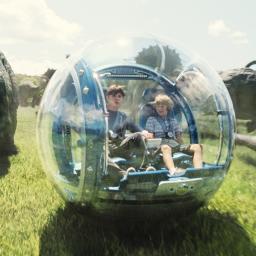
Jack Stilgoe: I was speaking yesterday at the Circling the Square conference in Nottingham and asked to say something about responsible innovation. Here’s the gist of what I said. I’ve been told to issue a SPOILER ALERT!, although I don’t think I’m giving away much of Jurassic World in harvesting its narrative.Frankenstein is almost 200 years old. It remains the default parable of irresponsible innovation even though it was written in the 1810s, when experiments with electricity and surgery were capturing the imaginations of Mary Shelley, Lord Byron and co. In the early 21 century, hopes and fears swirl around synthetic biology, geoengineering and de-extinction. While scientists stake their claims on various imagined futures, we watch Jurassic World.In 2012, the philosopher and sociologist Bruno Latour, writing for the Breakthrough Institute, explored the Frankenstein story. Why, he wondered, do we persist in confusing the monster with its creator? Langdon Winner had argued in 1978 that the problem was Hollywood. The many films of Frankenstein switched the villain from the scientist to the monster, stripping the human protagonists of their agency and reinforcing the message that monsters are bad and red lines must not be crossed. Latour argues that monsters are normal (in any case, as the scientist Henry Wu says in Jurassic World, ‘monster is a relative term’). The challenge is to find ways to love our monsters. Responsible innovation is about taking care of science and technology, not cordoning it off from society. Continue reading...
The ‘Claim the Sky’ campaign aims to save lives by protecting the atmosphere as a global asset, with governments taking legal action against those who pollute it
Mouse House to make naturalist biopic, six years after box-office failure of Creation, starring Paul BettanyIn 2009, Paul Bettany starred as revolutionary naturalist Charles Darwin in Creation, which told of his struggles writing On the Origin of Species, and his grief following the death of his 10-year-old daughter, Annie. The film, based on a biography by Darwin’s great-great grandson, made just over half a million pounds worldwide.Now, Walt Disney Studios is to attempt to reanimate the scientist in a new movie. Stephen Gaghan – whose previous script credits include Traffic and Syriana – is on board to direct from his own screenplay. He is currently about to direct Matthew McConaughey in a mining drama, Gold. Continue reading...
Every day, millions of internet users ask Google some of life’s most difficult questions, big and small. Our writers answer some of the most common queriesAnimals, including human animals, often find themselves in a state of desire. Desire, the felt motivation to pursue a goal, is how nature gets us to go after the things we need: food, sex, shelter, social status, cigarettes. Wait a minute … cigarettes?Like many other chemical candidates for the wayward human appetite, tobacco attracts. We desire it, despite its bad press. And as a result, it is one of the worst public health disasters the world has ever encountered. Continue reading...
Study finds elevated hospital admission rate among patients who live where traffic noise exceeds world health standards by five decibels or moreLiving in a neighbourhood with noisy road traffic may reduce life expectancy and increase the risk of stroke, doctors have reported in a study.
by Joshua Thaisen in San Juan Capistrano on (#C7DG)
Horses make great companions for psychotherapy because they can mirror and respond to human behavior. And crucially, ‘there’s no judgment with a horse’It’s Saturday night in downtown Long Beach, California, and laughter can be heard from the streets below. Sarah Smith is sprawled on her bed, diligently peeling through sociology notes, preparing for her impending exams. An acoustic guitar rests against her bed, and a colorful gay-pride flag is pinned next to her bookshelf.
The race to uncover the structure of DNA reveals fascinating insights into how Franklin’s data was key to the double helix model, but the ‘stealing’ myth stems from Watson’s memoir and attitude rather than facts
Pigs ‘edited’ with a warthog gene to resist African swine fever could help spawn GM animal farms in the UKOn an isolated farm outside Edinburgh, pigs grunt eagerly as their food arrives. The barn has a typical farmyard whiff, and a litter of tiny piglets, born just hours earlier, lie with trotters outstretched and eyes sealed, as helpless as any newborns. Only the occasional fluorescent snout or trotter reveals that the building is home to one of the world’s most advanced genetic modification projects.“These are happy animals. They have a lovely sheen on them, their tails are wagging away,†said Prof Bruce Whitelaw, head of developmental biology at the University of Edinburgh’s Roslin Institute, which is responsible for the pigs. Continue reading...
The likes of Richard Dawkins and Brian Cox should focus on taking up the real issue of sexism in science. It is absurd to say that scientists can do and say what they like in the name of academic freedom
Lamb genetically modified with jellyfish protein may have been sent from Paris lab to abattoir after dispute between researchers – and ended up on someone’s plateA lamb born with a jellyfish gene was mistakenly sold for human consumption and probably ended up on someone’s plate, French authorities have said. A dispute between researchers at a highly respected national institute may have been the cause of the animal being deliberately sent to the abattoir last year. Police have now been called in and an inquiry launched into how the lamb could have been passed as fit for human consumption.
With his latest statement on science, technology and the environment, Pope Francis has sought to change the debate on climate change. But his statement has broader significance for the way we think about the futureThe Encyclical Letter Laudato Si’ released by Pope Francis last week has generated a wide range of reactions ranging from enthusiastic praise to uneasy criticism. For some, the Pope’s key message was about climate change, for others about the downsides of economic growth, and some saw in it a reconciliation of science and religion. But the Encyclical also lays bare a debate much larger than each of these perspectives, one that is fundamentally about what kind of world we want to inhabit. The Pope’s message is just the latest intervention in a debate over technologies that has been going on for centuries.Pope Francis writes of the “human roots of the ecological crisis†defined in terms of deference to a “technocratic paradigm†which contains “the deepest roots of our present failures, which have to do with the direction, goals, meaning and social implications of technological and economic growth.†Continue reading...
Watch a collection of stunning timelapses from the International Space Station, as made by film-maker Dmitry Pisank, using images and video courtesy of the Earth Science and Remote Sensing Unit, Nasa Johnson Space Centre. Visit The Gateway to Astronaut Photography of Earth for more images and video from the International Space Station Continue reading...
The 3,500kg, 6.5-metre ‘gentle giant’ accidentally netted by trawler in Bass Strait and donated to Museum VictoriaA basking shark, rarely seen in Australian waters, will be donated to scientists after it was caught by the Castella Rosa fishing trawler off Victoria’s south-west coast.The 3,500kg, 6.5-metre shark was being dissected by staff from Museum Victoria on Tuesday after being pulled in by the trawler on Sunday afternoon at Portland. Continue reading...
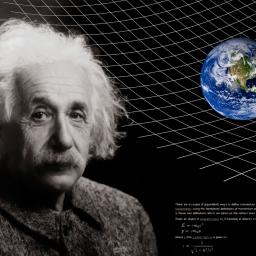
Another Perimeter Institute lecture, by Jürgen Renn, on the theory by which as John Wheeler put it - ‘Matter tells space how to curve. Space tells matter how to move’As described in Pedro Ferreira’s book “The Perfect Theoryâ€, after its development by Albert Einstein about a 100 years ago, and the subsequent big splash of its vindication by Eddington’s observations of stars near to the Sun during an eclipse, the general theory of relativity went into a bit of a lull, becoming something of a backwater. It answered the fundamental questions in physics that it was intended for, and the equations supported some interesting solutions, but the theory did not develop. Unusually for a great breakthrough in science, it did not seem to lead on to further exciting questions and phenomena, especially when contrasted with quantum theory, which was bursting out all over.
Shutting other people up when you’re powerful but frightened isn’t defending academic freedom. It’s repressing itTwo weeks ago, a Nobel Laureate made some ill-advised remarks in front of the World Conference of Science Journalism.
By tracking how people live their values, businesses can and must instil ethical frameworks into the technologies of the futureAt a time when most media surrounding artificial intelligence are focused on wondering when machines will become self-aware, a larger question is which ethical frameworks should guide this autonomous evolution.Personalisation algorithms scrutinise human behaviour to a molecular level and define, by our actions, what values we’re living on a daily and even momentary basis. But when it comes to questions of consciousness, spirituality and wellbeing, it’s only by becoming self-aware that we will be able to define humanity within the environment of mechanised sentience. Continue reading...
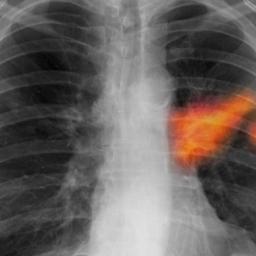
One in five cancers may be caused when common chemicals – deemed safe on their own – blend lethally inside the human body, study revealsChemicals deemed safe to humans may blend lethally together inside the human body to cause cancer, a report says.Researchers, including New Zealand scientist Dr Linda Gulliver, have released findings into possible links between common chemicals and the development of cancer. Continue reading...
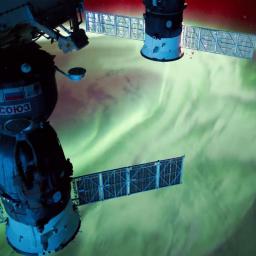
American astronaut Scott Kelly posted this image on Twitter on Tuesday with the words: “I’ve never seen this before- red #aurora. Spectacular! #YearInSpaceâ€. His post garnered more than 5,000 favourites in a matter of hours and the first comment, by @Jordan_D, summed up public reaction: “wowowowowow.†Another photo posted by Kelly captured the “curtain of [the] aurora closingâ€. Continue reading...
Guidance on symptoms and tests drawn up by the National Institute for Health and Care Excellence for doctors and patients could transform cancer care in UKDoctors are being advised to extend cancer tests to half a million more people a year under new guidelines which could eventually prevent 5,000 deaths a year.Thousand of lives will be saved every year if GPs and patients act on new NHS guidance, which details for the first time the symptoms that could indicate cancer. Continue reading...
But slashing fossil fuel use also presents greatest global opportunity to improve people’s health in 21st century, says Lancet and UCL commissionClimate change threatens to undermine half a century of progress in global health, according to a major new report.But the analysis also concludes that the benefits to health resulting from slashing fossil fuel use are so large that tackling global warming also presents the greatest global opportunity to improve people’s health in the 21st century.
An Australian woman spent four days in hospital due to damaged nerve and muscle fibres in her legs. The reason? Her choice of tight trousers, say scientistsThey have been the uniform of choice for more than a decade of indie pop stars, off-duty supermodels and Russell Brand, but if that wasn’t enough of a warning sign, scientists now have the evidence: skinny jeans can be bad for your health.That, at least, was the case for one woman in Australia who collapsed and was hospitalised for four days after damaging her nerves and muscles by squatting while wearing tight jeans. Continue reading...
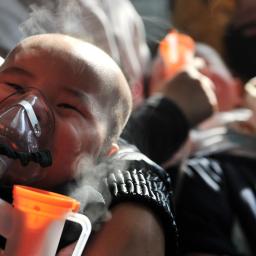
International team spends 10 years making inroads into treatment of bacterium which kills up to half of those it infectsAustralians have led an international team of researchers to decode the genes of a deadly superbug which kills up to half of those it infects, and which has wreaked havoc in Victorian hospitals.The bacterium, Klebsiella pneumoniae (KP), is not easily treated with antibiotics. Last week, Victoria’s health department issued a health alert after a particularly drug-resistant strain, known as KPC, was found in two hospital patients who had died. Continue reading...
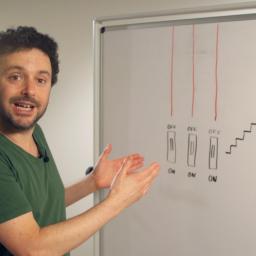
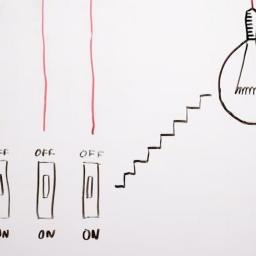
Here’s the answer to the three switches puzzle Earlier today I set this puzzle:The Three SwitchesDownstairs in a house are three identical on-off switches. One of them controls the lamp in the attic. The puzzle is to work out which switch controls the lamp. Continue reading...
Are you as smart as a Norwegian crime writer? Have you had a lightbulb moment and solved Alex's classic Three Switches puzzle? Here's the solution Continue reading...
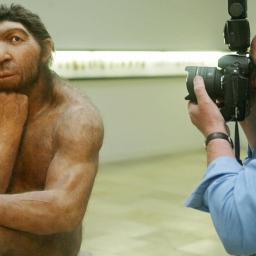
Genetic tests on one of earliest Europeans living 40,000 years ago finds unusually high DNA levels to reveal sex with Neanderthal only four generations earlier
Recent revelations about post-9/11 practice remind us that doctors’ ethical guidelines are only as good the society that has allowed a variety of shocking human experimentation
Civilians bear brunt of rise in number of deaths and injuries from explosive devices in conflict zones including Syria, Gaza, Nigeria and IraqThe global civilian death toll from explosive weapons has increased dramatically in recent years, driven in part by the greater use of aerial bombs on populated areas, often by governments including Syria and Israel, according to a report.Although the international community has taken concerted action to curb the use of chemical weapons, the report by advocacy group Action on Armed Violence (AOAV) confirms that conventional explosives, can be just as devastating and indiscriminate when used against towns and cities. Continue reading...
Alex is back with another puzzle. This time you don't need to be smarter than a six-year old, or be mates with Cheryl or Denise: you just need to be able to figure out which switch controls a lamp. Simple, right?