 |
by John Naughton on (#B6BY)
Britons are remarkably unconcerned about phone hacking and GCHQ snooping. Could a new report on our intelligence agencies result in greater accountability?The political theorist David Runciman has a nice way of analysing the controversies that regularly blow up in liberal democracies. He divides them into two categories: scandals and crises. Scandals arise all the time in democracies. They generate much heat but little light. And in the end they pass, like ripples of breeze through a ripe cornfield, having made relatively little impact on the body politic. Crises, in contrast, are rarer, and much more important; not only do they generate much heat, but in the end they lead to serious political change.When the phone-hacking story broke in 2011 many observers thought it was a crisis: all that fuss; closure of the News of the World; journalists in the dock; massive legal cases; Murdoch not only denying control of Sky but apparently on the ropes; David Cameron’s toxic mateyness with Rebekah Brooks, not to mention his employment of Andy Coulson; and then the full panoply of the Leveson inquiry with its associated QCs, all with meters running at public expense. Continue reading...
|
| Link | http://feeds.theguardian.com/ |
| Feed | http://feeds.theguardian.com/theguardian/science/rss |
| Updated | 2026-10-01 03:45 |
 |
by Guardian Staff on (#B62J)
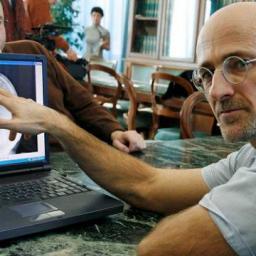
A Russian man who suffers from spinal muscular atrophy is hoping to have the world's first head transplant. Valery Spiridonov, 30, says the operation would rid him of his debilitating illness and greatly improve his life. Dr Sergio Canavero, who is looking to perform the operation, made a bid this week to recruit other surgeons to assist him during the annual meeting of the American Academy of Neurological and Orthopaedic Surgeons Continue reading...
|
 |
by Sam Thielman in Annapolis on (#B5PK)
At annual meeting Dr Sergio Canavero looks to recruit surgeons to help him perform the procedure. ‘Today I’m here to give us all a vision’On Friday afternoon at the Westin Hotel in Annapolis, Maryland, with the volunteer for the first human head transplant by his side, Dr Sergio Canavero made a bid to recruit surgeons willing to help him perform the procedure from an audience of fellow doctors at the annual meeting of the American Academy of Neurological and Orthopaedic Surgeons.About a quarter of the seating was given over to video cameras, tripods and lights stands. In order to get the press-friendly doctor to the front of the room, one of the attendees had to take the podium microphone and bellow into the scrum surrounding Canavero: “‘Scuse me, press, I would like for you to back off, please. Enough is enough.†Continue reading...
|
 |
by Suzanne Goldenberg US environment correspondent on (#B5KG)
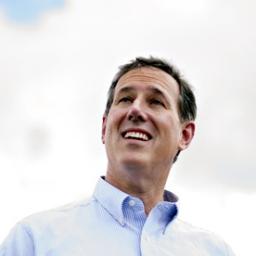
The US right will launch pre-emptive attacks on the pope’s stance on climate changeLeading figures on the American right are launching a series of pre-emptive attacks on the pope before this week’s encyclical, hoping to prevent a mass conversion of the climate change deniers who have powered the corps of the conservative movement for more than a decade.The prospect that the pope, from his perch at the pinnacle of the Catholic church, will exhort humanity to act on climate change as a moral imperative is a direct threat to a core belief of US conservatives. And conservatives – anxious to hang on to their flock – are lashing out. Continue reading...
|
 |
by Anthony J Martin on (#B55X)
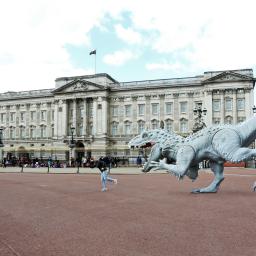
Pleistocene Parks may be a realistic possibility, but whatever you do, don’t forget the dung beetlesThis piece was originally published on The Conversation.Like many moviegoers this summer, I plan to watch Jurassic World. And because I’m a paleontologist, I’ll cheer for the movie’s protagonists (the dinosaurs) and jeer at the villains (the humans). Continue reading...
|
 |
by Ian Sample, Rebecca Ratcliffe and Claire Shaw on (#B3SN)
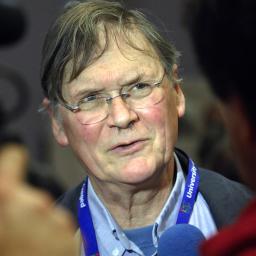
That sexism is alive and well in science is known. The problem is the Nobel laureate’s remark could compound the striking lack of women in top positions
|
 |
by Alan Yuhas in New York on (#B3NB)
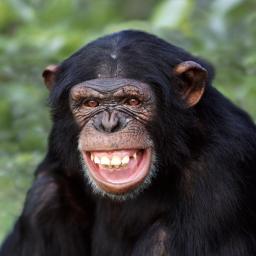
The primates had previously had a ‘split status’ with those in US classified as ‘threatened’ but new rules will restrict scientific research on captive animalsThe US has named chimpanzees a fully endangered species, extending greater protections to the apes in a decision that primate researcher Jane Goodall has hailed as a sign of “an awakeningâ€.
|
by Philip Oltermann on (#B3J2)
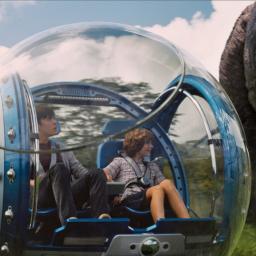
Don’t be fooled by the dinosaurs: the Jurassic films are really about chaos theory and the unpredictability of existenceThe German novelist Thomas Mann once dismissed those befuddled by his cryptic magnum opus, The Magic Mountain, by saying that all they needed to do was read the bloody book twice. I feel similarly about the Jurassic Park franchise, whose third sequel opened this week. Only I needed to watch the original about seven times to realise that this wasn’t just a guilty pleasure – a big blockbuster action film I loved watching again and again – but in fact an intricately constructed masterpiece with a serious message.There’s a scene, fairly early on in the movie, I had missed until I watched it again on Boxing Day last year. Our human heroes land for the first time on Isla Nublar, home to the eponymous planned amusement park. The helicopter hits turbulence and the passengers are told to fasten their seatbelts, but Dr Grant, a slightly grumpy palaeontologist played by Sam Neill, realises that he is stuck with two buckle ends – the female parts of the mechanism – and no tongue. He improvises and ties them into a knot. Continue reading...
 |
by Elizabeth Jones on (#B36F)
To some extent, 1993’s Jurassic Park did actually drive and develop the science and technology of ancient DNA researchThis article was first published on The Conversation.The park is open. Two decades on and Jurassic Park has morphed into Jurassic World, the one and only dinosaur theme park. Science has apparently evolved too: the genetically-engineered dinosaurs are to take a secondary role to a new star of the show, a genetically-engineered hybrid, worryingly named Indominus Rex. Undoubtedly, chaos will ensue.
|
 |
by Robert Stevens, Nicola Davis, Pete Guest on (#B2N3)
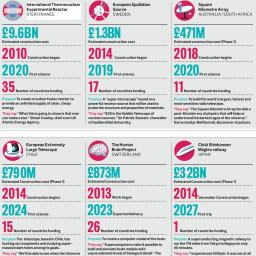
As the Large Hadron Collider is booted up again, we look at some of the other huge, multi-million-pound projects taking place worldwide, including an alient-hunting telescope in South Africa, and Japan’s remarkable magnetic railway.
|
 |
by David Smith in Johannesburg on (#B2F6)
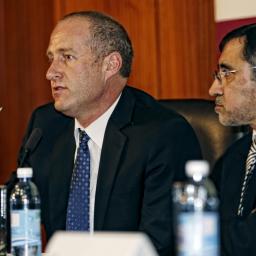
Doctor behind world’s first successful operation of its kind announces man’s partner is pregnant less than a year after surgeryA South African man who had the world’s first successful penis transplant is to become a father less than a year after the breakthrough surgery.
|
 |
by Helen Cahill on (#B28G)
With the announcement of Tim Hunt’s resignation from UCL comes an opportunity to reflect on the women in science who were part of his successThis week, Professor Tim Hunt shocked the scientific community, and pretty much everyone else, with his outrageous comments about his “trouble with girls†and his backwards endorsement of gender-segregated laboratories, which are apparently needed because women are impossibly attracted to him. Understandably, commenters have slammed both his sexist comments and his apology. But the most important people in the story have been drowned out: the women scientists who are living proof of just how wrong Hunt is.The field Hunt partly created, as well as his own scientific career, have both flourished due to his intellectual collaborations with women, as well as countless other academic partnerships between men and women, notably in the lab of Sir Paul Nurse. Tracing Hunt’s own history, his outburst seems even more astounding. Continue reading...
|
 |
by Steven Gimbel on (#B28J)
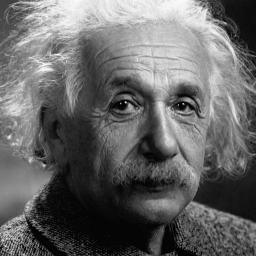
From his radical thinking to his radical politics, his disavowal of celebrity to his wild hairstyle, the great physicist’s significance endures, argues his biographer
|
 |
by Jessica Glenza on (#B27H)
An appeals court made the ruling on Wednesday, prompted by the case of a Staten Island forensic pathologist who kept the brain of a 17-year-old car crash victimNew York medical examiners can keep organs without notifying family members when bodies are released, a New York appeals court ruled on Wednesday.The decision divided the seven-member court 5-2, after a Staten Island forensic pathologist kept the brain of a 17-year-old car crash victim, only for it to be discovered by a classmate on a field trip. The appeals court justices all wanted the state legislature to decide the matter. Continue reading...
|
 |
by Keith Stuart on (#B23K)
As part of our Keep it in the Ground campaign, the Guardian has commissioned a Minecraft map exhibiting a city filled with real-world climate initiativesOn the rooftops, there are endless luscious gardens, so that the skyline of the city looks almost like the tree tops of a vast rain forest. Beneath them, lining the roads, are multi-storey farms, producing fruit and vegetables for the local populace. There are strange sail-shaped constructions that suck CO2 out of the air, and along the canals, hydrogen powered boats glide silently through crystal clear waters. This is Climate Hope City – and for now, it exists only in Minecraft.When the Guardian launched its Keep it in the Ground campaign in March, editor-in-chief Alan Rusbridger, and other senior staff, spoke about the challenge of finding new ways to discuss and report on climate change – to break out of traditional journalism and explore fresh ideas. Continue reading...
|
by Henry Nicholls on (#B1ZY)
In May, 134,000 saiga died in the space of just two weeks. I spoke to E.J. Milner-Gulland, a conservation biologist at Imperial College about the probable causeLast month I wrote a short piece for Nature on the alarming and as-yet unexplained mass mortality of saiga antelope in Kazakhstan in May. I spoke at length to E.J. Milner-Gulland, a conservation biologist at Imperial College London and chair of Saiga Conservation Alliance. Last week, the charity launched an appeal to raise urgent funds in support of their efforts. Here is an edited transcript of the interview.Henry Nicholls: What is the latest news from Kazakhstan?
 |
by Terry Virts/Nasa on (#B1VP)
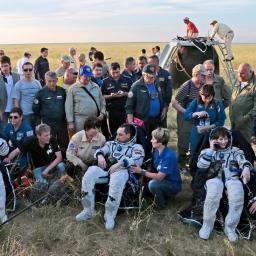
Three astronauts from the International Space Station have returned to Earth safely after a 200-day mission that included hundreds of scientific experiments. One of the trio, the Expedition 43 commander Terry Virts, beamed back a series of incredible photographs charting the six-month expedition, including the pyramids of Giza and the coastal dunes of Namibia. According to Nasa, the team travelled more than 84m miles since their launch into space on 24 November Continue reading...
|
 |
by Peter Forbes on (#B1SP)
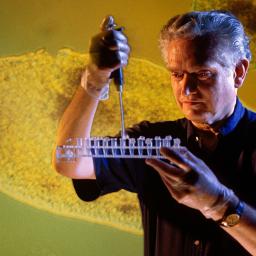
We know about Crick, Watson and the double helix. But how did scientists solve the other great mystery of our existence?It is a surprise that the story of “life’s greatest secret†is only now being fully told nearly 50 years after the genetic code was cracked. While DNA’s double helix and the names James Watson, Francis Crick and Rosalind Franklin are legendary, how many people have heard of Marshall Nirenberg, Severo Ochoa and Har Gobind Khorana? These were the men who, following the discovery of the double helix in 1953, were largely responsible for working out the code – the set of rules by which the information within DNA controls the assembly and regulation of all the proteins in living cells.Crick himself was the first to recognise that the bases along the double helix act to select from the 20 natural amino acids and to marshal them into a chain. The enigma came down to this: how could a mere four bases in DNA order the 20 amino acids that make up all proteins? It seemed that in this instance, as in many others, nature was a mathematician. Cicadas breed every 17 years, apart from one species that breeds every 13. Why 13 and 17? Because they are prime numbers. If it were 16 years, predators with two-, four- and eight-year life-cycles would coincide with the arrival of the cicadas: it has to be 17 or bust. Similarly, the spirals in sunflower heads and pine cones follow the mathematical Fibonacci series. Continue reading...
|
by Katy Vans on (#B1NX)
Watching Solveig Melkeraaen’s film with a psychiatrist gave me answers the audience are denied in this underexplored self-portrait of depression and ECTGiven that in the UK alone around a quarter of the population will experience some sort of mental health problem each year, any documentary exploring the issues is a welcome addition to the debate. Watching Good Girl alongside Dr Peter MacRae, consultant psychiatrist at East London NHS Foundation Trust, offered some interesting insights into both the reality of living with mental health issues and the pros and cons of documenting the experiences of an individual.Good Girl is a self-portrait of Norwegian filmmaker Solveig Melkeraaen as she undergoes treatment for depression. A successful director at an early age, Melkeraaen found that she was feeling empty and unhappy despite her career and relationship. She decided to film her journey through her illness and recovery, sharing with us a very personal view of the process. Continue reading...
 |
by Daniel Kruithoff on (#B1MN)
The managing editor of Monsanto Australia & New Zealand accuses the Undercurrent of inaccurate and damaging statements in its film about Monsanto and Roundup, which was first published on the GuardianLast week the Guardian published a video called “Why are we being fed by a poison expert: Monsanto and Roundup†on its news website, under the science and agriculture banner. While the video was at times humorous, the content contained errors regarding Monsanto, the ethics of our people and the safety of our products.Some of the statements made in this video are incorrect and damaging not just to Monsanto, but to farmers and the important role they play in feeding and clothing the world’s rapidly growing population. Continue reading...
|
 |
by Hannah Devlin on (#B1JM)
Do big research step-downs reflect a general problem with science and scientific publishing?In December, a study published in Science magazine caused waves after appearing to show that speaking to a gay canvasser for just 20 minutes could radically shift people's views in favour of same-sex marriage. Last month, the journal retracted the study after the first author, Michael LaCour, was unable to provide the raw data for the study and admitted to lying about financial incentives provided to participants.It's by no means the first example of a big step-down, from apparently innocent mistakes to outright fabrication and fraud. We look at how and why scientific research goes wrong, and whether these big retractions are linked by common themes that could help both scientists and publishers prevent them from being repeated. Continue reading...
|
 |
by Agence-France Presse on (#B1GC)
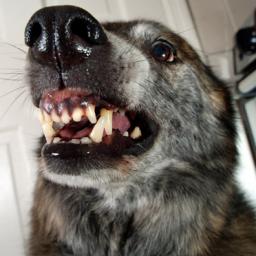
Research appears to show dogs will snub people who are mean to their ownersDogs do not like people who are mean to their owners and will refuse food offered by people who have snubbed their master, Japanese researchers have said.The findings reveal that canines have the capacity to cooperate socially – a characteristic found in a relatively small number of species, including humans and some other primates. Continue reading...
|
 |
by Melissa Davey on (#B1CY)
Donation from Barry and Joy Lambert made ‘not only for benefit of those with childhood epilepsy, like our Katelyn, but for wide range of other conditions’The grandparents of three-year-old girl with a rare form of epilepsy have made a $33.7m donation to the University of Sydney to fund medicinal cannabis research.Announcing their donation at the university on Friday, Barry and Joy Lambert said international research suggested their granddaughter Katelyn, who suffers hundreds of seizures each day, may benefit from medicinal cannabis treatment. Continue reading...
|
by Michael Safi on (#B1C6)
Hundreds of scientists from government agencies to begin walking off the job after months of stalled negotiations over a new industrial agreementHundreds of scientists from CSIRO and other government agencies will begin walking off the job next Thursday as part of public sector-wide industrial action.Work bans at the national research agency started in April after months of stalled negotiations over a new industrial agreement. Continue reading...
 |
by Stuart Clark on (#B0DQ)
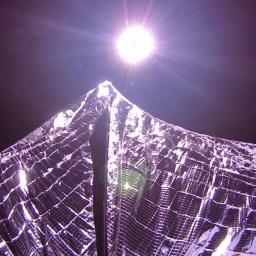
A privately funded space advocacy group has deployed a “solar sail†in orbit. Such spacecraft could open up cheap space travel and provide ways to drag space debris out of orbit.LightSail uses no fuel. Instead it relies on a large reflective sail to capture the momentum inherent in sunlight. Continue reading...
|
 |
by Gaby Hinsliff on (#B027)
Tim Hunt isn’t too old to learn that his views of women are out of step with the modern world“You’re a sexist!†“No, you’re a sexist!†The argument was loud enough to carry up a flight of stairs, and reluctantly I went to see what was going on. Emotions were running too high to ascertain exactly what had started it – something to do with football, possibly – but one thing was clear: playground insults have changed since my day. The gaggle of eight-year-old boys in our kitchen had absolutely no idea what a sexist actually is, but they’d certainly grasped that nobody wants to be called one.Related: Nobel laureate Tim Hunt resigns after 'trouble with girls' comments Continue reading...
|
by Guardian Staff on (#B00C)
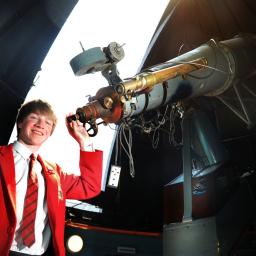
A Newcastle-under-Lyme school pupil has discovered a new planet while on a work placement. Tom Wagg, 17, was doing work experience with an astrophysics professor at Keele University when he spotted a minuscule dip in the light from a faraway star that he knew could be caused by a planet passing in front of it. Two years later the large gas form in the southern constellation of Hydra was confirmed as a planet Continue reading...
 |
by Guardian Staff on (#AZYE)
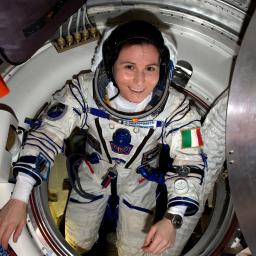
Astronauts from the International Space Station returned to Earth after a record-breaking mission of 200 days, during which Samantha Cristoforetti became the longest-serving female astronaut in space. Here are some of the stunning images posted during that time Continue reading...
|
 |
by Sarah Boseley Health editor on (#AZYG)
Scientists urge obesity prevention after study finds there is no change in breast cancer risk for overweight women who lose weightScientists are calling for greater action to prevent obesity after a major study established that overweight and obese women run an increased risk of breast cancer that is not diminished by weight loss.The study of more than 67,000 women in the United States, who were followed for a median of 13 years, confirms that excess weight is a real risk for breast cancer after the menopause. The paper, published in JAMA (Journal of the American Medical Association), highlights that two-thirds of women in the US, as in the UK, are either overweight or obese and therefore running a raised risk of breast cancer. Continue reading...
|
 |
by Jessica Elgot on (#AZMR)
Newcastle-under-Lyme pupil Tom Wagg spotted dip in light which revealed existence of a planet while on placement at Keele University two years agoA schoolboy doing work experience with an astrophysics professor has discovered a new planet 1,000 light years from Earth.Newcastle-under-Lyme school pupil Tom Wagg was 15 when he went for his work placement at Keele University, where he spotted a minuscule dip in the light from a faraway star that he knew could be caused by a planet passing in front of it. Continue reading...
|
 |
by Agencies in Moscow on (#AZEY)
Trio landed safely in Kazakhstan on Thursday after return from ISS was delayed by Russian rocket failureTwo Western astronauts and a Russian cosmonaut have landed in Kazakhstan, safely returning to Earth after their flight back home was delayed for a month by a Russian rocket failure.Both Russian mission control and Nasa showed a capsule carrying Russian Anton Shkaplerov, Italian astronaut Samantha Cristoforetti and Terry Virts of the United States landing on schedule in the steppes of Kazakhstan after 199 days in space. Continue reading...
|
 |
by Naomi Larsson on (#AZC5)
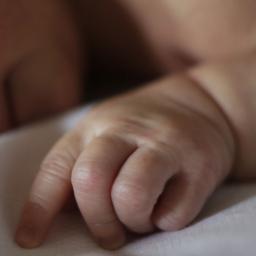
Your fate is sealed before you are even born: new study shows nutrition advice to adolescent girls before pregnancy could avert preterm births and brain defectsRelated: Gender equality: empowered women raise healthier childrenA mother’s diet before conception can affect her unborn child’s genetic make-up and immune system, according to new findings with profound implications for policy and development work. Continue reading...
|
 |
by Guardian Staff on (#AZ2P)
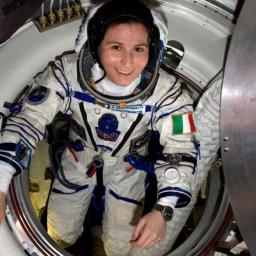
Italian astronaut Samantha Cristoforetti returns to Earth on Thursday after a record 200 days in space. Cristoforetti became something of an online celebrity during her time in orbit, thanks to regular videos posted online about life on board the International Space Station. We look back at highlights from her weird and wonderful time in space Continue reading...
|
by Claire Shaw on (#AYVZ)
Female scientsts take to Twitter to respond to the Nobel laureate’s comments about women crying in labs
 |
by Henry Nicholls on (#AYGA)
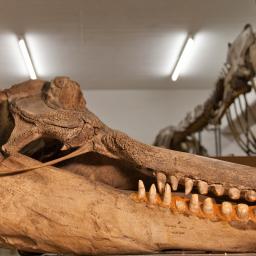
In 1861, a dissection of a dead killer whale revealed the presence of 27 large mammals in its stomach. It was so surprising that Jules Verne wrote the beast into Twenty Thousand Leagues Under the Sea.Name: The greedy orca
|
by Alex Bellos on (#AXN9)
Male supermodel Pietro Boselli talks openly about his true passions: maths, turbines and the number eightNever has the phrase “mathematical model†had such a delicious double meaning than in the case of Pietro Boselli, the Italian model and engineering lecturer whose academic specialism is mathematical modelling.Boselli, aged 27, was branded the “world’s sexiest maths teacher†earlier this year by newspapers and magazines around the world after one of his students at University College London posted on social media that he was also a successful model, and the post went viral.
 |
by Dr Dave Hone on (#AXM4)
T. rex Autopsy hit screens last Sunday, so I can finally lift the lid on the special effects behind the dinosaur dissection
|
 |
by From our Zoological Correspondent on (#AXH3)
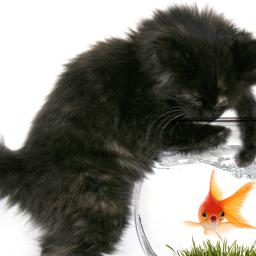
Oxford scientist finds evidence that left-handers are born, not madeCats, unlike men, are inclined to be left-handed. This is the conclusion of Mr J. Cole of the Oxford University Laboratory of Physiology, after an experiment with 60 cats “selected at random.†Parrots, it seems, show a similar left-handed tendency and, in fact, a large proportion of all the animals tested by various workers have shown a preference for using one or other forelimb.
|
by Reuters in Cape Canaveral on (#AWHJ)
Tiny privately funded vehicle will re-enter atmosphere after testing thin sails that could be used to gain propulsion from sun’s raysA privately funded space project to demonstrate an innovative solar sail passed with flying colours despite a series of near-fatal technical issues, program managers have said.The five-kilogram LightSail spacecraft hitched a ride into orbit aboard an Atlas 5 rocket carrying the US Air Force’s X-37B robot space plane on 20 May. Continue reading...
by Hannah Devlin Science correspondent on (#AW53)
Ruling comes after government claimed illness was not serious enough to merit payment, and opens door for up to 100 families to seek compensationA 12-year-old boy has been awarded £120,000 by a court that agreed he had been left severely disabled by narcolepsy triggered by the swine flu vaccine, following a three-year battle in which the government had claimed that his illness was not serious enough to merit payment.The ruling is expected to lead to as many as 100 other families of people affected by the sleeping disorder after receiving the vaccine bringing fresh compensation claims, in a dispute where the government’s initial hostility was described by the family’s legal team as offensive. Continue reading...
 |
by Reuters on (#AVZ1)
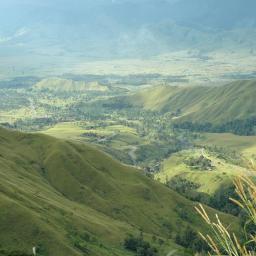
The cannibalistic practice helped the Fore tribe develop genetic resistance to a mad cow-like disease. This is useful for scientists studying diseases like dementiaResearch involving a former brain-eating tribe from Papua New Guinea is helping scientists better understand mad cow disease and other so-called prion conditions and may also offer insights into Parkinson’s and dementia.People of the Fore tribe, studied by scientists from Britain and Papua New Guinea, have developed genetic resistance to a mad cow-like disease called kuru, which was spread mostly by the now abandoned ritual of eating relatives’ brains at funerals. Continue reading...
|
 |
by Hannah Devlin Science correspondent on (#AVXF)
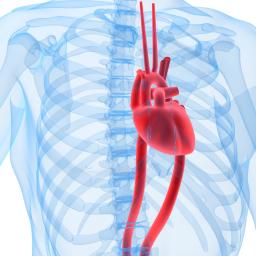
Proton pump inhibitors are one of the most commonly prescribed drugs, but patients are 16%-21% more likely to suffer a heart attack, study suggestsCommon heartburn drugs could increase the risk of heart attacks, scientists have warned. A major US study drawing on the health records of nearly three million patients showed that people taking indigestion drugs called proton pump inhibitors were 16 to 21% more likely to suffer a heart attack.Nick Leeper, a cardiologist at Stanford University in California, who led the investigation, said: “At first glance you may think a 16% increase in risk is modest and say what’s the big deal? But heart disease is by far the leading cause of death in the western world and PPIs are so commonly prescribed. This is potentially a big deal from a public health perspective.â€
|
 |
by Ian Sample, science editor on (#AVW4)
Early trial showed use of computer algorithm to produce diet tailored to a person’s unique biological make-up had benefits for pre-diabetic subjectsScientists have created bespoke diets using a computer algorithm that learns how individual bodies respond to different foods.
|
 |
by Associated Press in Whitehorse, Yukon on (#AVJS)
New results of fossil analysis will help scientists to understand why the camels went extinct 13,000 years ago and to re-examine other speciesMiners in north-western Canada have discovered ice age camel bones whose DNA is forcing scientists to redraw the family tree of the now-extinct species.Grant Zazula, a paleontologist with the Yukon’s department of tourism and culture, said three fossils recovered from a gold mine in the Klondike in 2008 are the first western camel bones found in the territory or Alaska in decades. Continue reading...
|
by Katy Vans on (#AVD9)
This study of a young stroke patient’s struggle to regain language and memory manages to be at once visually arresting, deeply moving and upliftingMy Beautiful Broken Brain is the story of stroke patient Lotje Sodderland. Sodderland suffered a catastrophic brain haemorrhage in 2011 at the age of 34; eight days later she contacted filmmaker Sophie Robinson to ask her to help document the aftermath. The pair initially filmed 150 hours of footage, most of it self-shot by Sodderland on her iPhone, which was edited to create this documentary piecing together Sodderland’s recovery.Related: 'I felt as if I had become fear itself': life after a stroke at 34 Continue reading...
 |
by Sophie Scott on (#AVB1)
The Nobel prizewinner’s ‘trouble with girls’ comments are toxic as well as nonsense – discrimination in science is endemicWomen, eh? Can’t work with ‘em, can’t complain about them without all bloody hell breaking loose on Twitter. What’s a scientist to do?I’m a great fan of the different varieties of outrageous sexism that we get exposed to on a fairly regular basis – I particularly like the “no woman is my equal†kind – and this week we’re seeing another variety being taken for a gentle canter around the ring, with Nobel prize-winning scientist Tim Hunt’s comments about the problems of having women in the lab. Continue reading...
|
 |
by Agence-France Presse on (#AV0D)
Hospital in Khartoum that has become a world leader in complex heart operations agreed to perform critical procedure for free
|
 |
by Sylvia McLain on (#ATZR)
Professor Tim Hunt’s comments on women are not just ridiculous: they endanger the future of equality in scienceSo this happened - at The World Conference of Science Journalism, at a lunch sponsored by Korean female scientists and engineers - just yesterday. Continue reading...
|
 |
by Dean Burnett on (#ATZT)
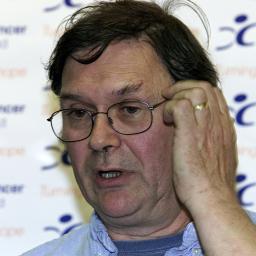
72-year-old Nobel prize winner Tim Hunt has caused controversy by saying laboratories should be segregated along gender lines. However, there is evidence to suggest that science should be more exclusive. It should exclude old menTim Hunt, 72-year-old Nobel laureate, is currently at the centre of a big controversy for his remarks about women in science. He argued that gender-segregated labs were the answer, because “they cause men to fall in love with them and cry when criticisedâ€. In his defence, Tim Hunt is the product of gender-segregated education himself, and it clearly hasn’t left him with a warped perspective on the opposite sex.Related: Cry, cry, cry (for backwards Nobel laureates) Continue reading...
|
 |
by Anne Perkins on (#ATZ0)
The Nobel prizewinning scientist accuses women of being over-emotional in the male world of rationalist truth-seeking. Perhaps it’s not his female colleagues who are the problemThe mask has not so much slipped as crashed to the floor. Stand up and be thanked, Sir Tim Hunt, fellow of the Royal Society (at the time of writing, at least) and the winner of the 2001 Nobel prize for physiology for his work on regulators of the cell cycle. Here at last is someone who has come out with it. Women at work are a nuisance.Hunt chose his moment of public revelation at, of all places, a women’s convention on science and journalism in South Korea. Perhaps he thought they’d be flattered when he told them that the trouble with women in labs was that they fall in love and cry when they’re criticised. Continue reading...
|