 |
by Philip Hoggart on (#9ERN)
When it comes to psychiatric treatments, it’s not just mood-altering drugs that can have side-effects Continue reading...
|
| Link | http://feeds.theguardian.com/ |
| Feed | http://feeds.theguardian.com/theguardian/science/rss |
| Updated | 2026-10-01 05:30 |
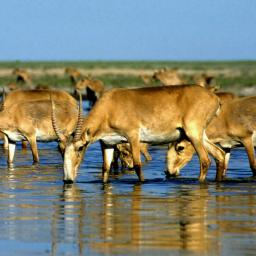 |
by Mark Baker and Merhat Sharipzhan for RFE/RL, part on (#9ER6)
With over 19,000 carcasses buried and more deaths expected officials are no closer to determining the cause of the catastrophe. RFE/RL report
|
 |
by Hannah Devlin Science correspondent on (#9EB3)
Craft financed by crowd-funding piggy-backs on the launch of an Atlas 5 rocketA tiny spacecraft designed to sail on sunbeams has been launched in a test flight that could transform long-distance space exploration.The probe, called LightSail, is equipped with a huge silver sail that will unfurl in the coming weeks and use the momentum of sunlight to propel it smoothly through space. Continue reading...
|
 |
by Lauren Gambino in New York and Hannah Devlin in Lo on (#9F77)
Prof Donald Green ‘embarrassed’ over claims of errors by his co-author in study that found a conversation with a gay canvasser could soften attitudesThe senior author of a study claiming to find that a brief, face-to-face conversation with a gay political canvasser had the ability to soften the opinions of those opposed to same-sex marriage has retracted its findings, claiming there were errors in his co-author’s work.The study, which was published in Science in December and was widely covered in the media, found support for same-sex marriage climbed among voters who had a single conversation with a gay or lesbian canvasser. In addition, the authors found that the changed views not only lasted for at least a year, but also positively influenced the opinions of other members of the household.(1/2) I read "Irregularities in LaCour (2014)," posted at http://t.co/SJ3jE89XeD on May 19, 2015 by Broockman et al. I’m gathering evidence(2/2) and relevant information so I can provide a single comprehensive response. I will do so at my earliest opportunity. Continue reading...
|
 |
by Sarah Boseley Health editor on (#9DSX)
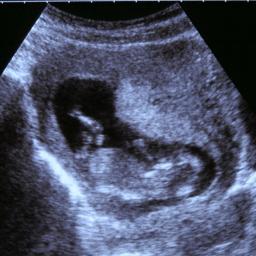
Researchers investigating reproductive defects in baby boys identify possible link between low levels of testosterone and paracetamol intake Continue reading...
|
by Hannah Devlin, science correspondent on (#9DNE)
Finding overturns idea that tool-making ability was unique to our own ancestors and is hailed as a “new beginning to the known archaeological recordâ€The oldest known stone tools, dating to long before the emergence of modern humans, have been discovered in Africa.The roughly-hewn stones, which are around 3.3 million years old, have been hailed by scientists as a “new beginning to the known archaeological record†and push back the dawn of culture by 700,000 years.Related: Skull of Homo erectus throws story of human evolution into disarray Continue reading...
 |
by Alan Yuhas in New York on (#9DDW)
X-37B craft launched from Cape Canaveral on Wednesday, its fourth long orbital flight in five years – but many details of the trip are being kept secretA mysterious robotic space plane launched its secretive mission for the US air force on Wednesday, its fourth long orbital flight in five years.
|
 |
by Nicholas Stern on (#9CYC)
IMF evidence about hidden costs such as pollution, traffic accidents and climate change makes it apparent just how heavily subsidised the coal, oil and gas industries are Continue reading...
|
 |
by Lewis Smith on (#9CXV)
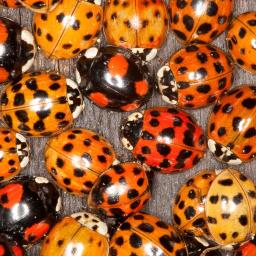
World’s most invasive ladybird is consolidating its presence in the country and is responsible for the decline of seven native species, scientists say Continue reading...
|
 |
by Gracie Lofthouse on (#9CWV)
You can extend your lifespan without living longer by changing the way you sleep, argues science writer Jessa Gamble
|
 |
by Denis Campbell Health correspondent on (#9CTB)
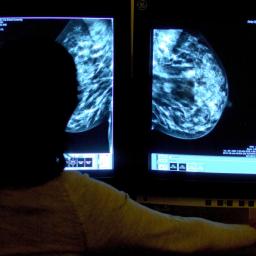
Up to a quarter of patients with three common types of cancer did not receive first treatment within required 62 days, official figures show Continue reading...
|
by Alex Bellos on (#9CJV)
All you need to do is place the digits from 1 to 9 in the the grid. Easy, right?Forget Singapore.The latest brain-mangling maths puzzle to hit the news is from Vietnam. Continue reading...
 |
by Guardian Staff on (#9CJ2)
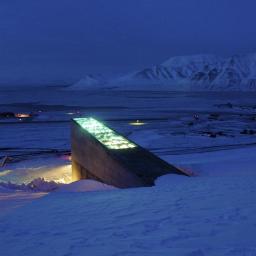
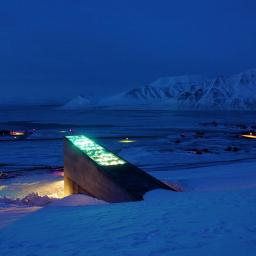
The Svalbard seed vault, which opened in 2008, has been entrusted by the world's governments with the safekeeping of the most prized varieties of crops on which human civilisation was raised. It contains the seeds of around 4,000 plant species – more than 720,000 individual samples. The site was built to be disaster-proof – it lies 130 metres up a mountain in Norway in case of sea-level rise and is earthquake-resistant Continue reading...
|
by Chris Chambers and Pete Etchells on (#9CJ8)
Another day, another ridiculous headline about the apparently disastrous consequences of playing video games on the brain Continue reading...
 |
by Koen Frenken, Toon Meelen, Martijn Arets and Piete on (#9C8M)
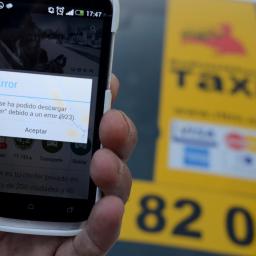
Technology-based sharing platforms are touching more and more people’s lives, but policy and regulation can struggle to cope with new technologies. We need to rethink our notion of the sharing economy in order to make better regulation
|
 |
by Suzanne Goldenberg on (#9C4J)
Set in an Arctic mountainside, the Svalbard seed bank contains the world’s most prized crops. But a row has erupted over whether this is the best hope of feeding the world after a catastrophe or just an overpriced deep freeze Continue reading...
|
 |
by Caroline Davies on (#9C8G)
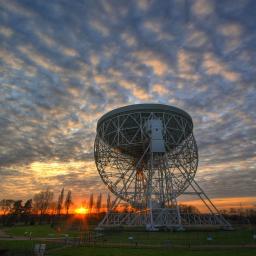
Lovell telescope and Lincoln Cathedral among recipients of bumper handout to preserve Britain’s scientific and technological history Continue reading...
|
 |
by Associated Press in Cape Canaveral, Florida on (#9C8P)
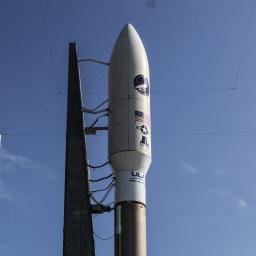
Unmanned X-37B flight, to depart from Cape Canaveral, is the fourth in a secretive programme and will carry Nasa and military experiments Continue reading...
|
by Hannah Devlin, science correspondent on (#9BEW)
Adding to their extinction woes, study finds pandas have a carnivorous digestive system and lack the gut flora for extracting maximum energy from plantsThe panda’s woes are well-documented. Their habitat is shrinking, they are incredibly fussy eaters and they have an unusually lacklustre approach to sex.Now scientists have discovered that the bears are also poorly adapted for digesting bamboo, despite the plant being almost the only thing they eat. The research shows that two million years after shifting to a herbivore lifestyle, the giant panda still has carnivore-like gut bacteria, which is better at breaking down protein. Continue reading...
by Kirsten Shepherd-Barr on (#9B30)
Critics of science plays cannot accept that playwrights are free to depict real historical events and people as they likeTheatre and science have had a long history together, but in recent decades there has been a sharp surge of interest in putting scientific ideas on the stage. Just this year two new “science plays†have premiered: Tom Stoppard’s The Hard Problem opened at the National Theatre in January, set in the high-pressured world of a cutting-edge brain research institute, and a few months later Tom Morton-Smith’s play Oppenheimer opened at the Royal Shakespeare Company and then transferred to the West End. It has been praised for merging “real†science, biography and history while not skimping on, or dumbing down, the scientific ideas it depicts.In contrast, several films that have had meaty scientific subjects like The Imitation Game, depicting Turing’s code-breaking efforts at Bletchley, or the Stephen Hawking biopic The Theory of Everything, have actually contained very little science and focused instead on biography.
 |
by Monica Tan on (#9AJV)
Twin studies collated over the past 50 years reveal human traits and disease are almost equally determined by genetic and environmental factorsThe age-old question of whether human traits are determined by nature or nurture has been answered, a team of researchers say. Their conclusion? It’s a draw.By collating almost every twin study across the world from the past 50 years, researchers determined that the average variation for human traits and disease is 49% due to genetic factors and 51% due to environmental factors. Continue reading...
|
 |
by Ariana Eunjung Cha for the Washington Post on (#9AJX)
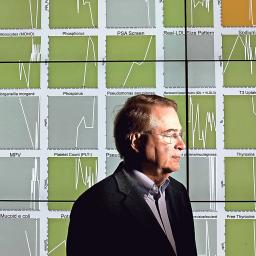
From granular microchips to voice analysis, health-tracking technology offers medical benefits but doubt persist about the quality and security of data gatheredFrom the instant he wakes up each morning, through his workday and into the night, the essence of Larry Smarr is captured by a series of numbers: a resting heart rate of 40 beats per minute, a blood pressure of 130/70, a stress level of 2%, weight of 87kg, 8,000 steps taken, 15 floors climbed, eight hours of sleep.Smarr, an astrophysicist and computer scientist, could be the world’s most self-measured man. For nearly 15 years, the professor at the University of California at San Diego has been obsessed with what he describes as the most complicated subject he has ever experimented on: his own body. Continue reading...
|
 |
by Simon Copland on (#9AF3)
A study released last week presented evidence that prehistoric men and women lived in relative equality. But is the truth even further from the nuclear narrative?Last week, scientists from University College London released a paper presenting evidence that men and women in early society lived in relative equality. The paper challenges much of our understanding of human history, a fact not lost on the scientists. Mark Dyble, the study’s lead author, stated “sexual equality is one of the important changes that distinguishes humans. It hasn’t really been highlighted before.â€Despite Dyble’s comments, however, this paper isn’t the first foray into the issue. In fact, it represents another shot fired in a debate between scientific and anthropological communities that has been raging for centuries. It’s a debate that asks some fundamental questions: who are we, and how did we become the society we are today?Related: Early men and women were equal, say scientistsRelated: Being polyamorous shows there's no 'traditional' way to live | Laurie Penny Continue reading...
|
by Jo Røislien on (#9AEM)
Today King Harald of Norway will present John Nash and Louis Nirenberg with the £500,000 Abel Prize, one of the top honours in mathematics. Here Norwegian mathematician and TV presenter Jo Røislien explains their groundbreaking work Continue reading...
by Associated Press in Washington on (#9A5W)
Houston-Dallas-San Antonio and Atlanta-Charlotte-Raleigh areas most affected by ‘double whammy’ of population shift and temperature rises, scientists argue Continue reading...
by Monica Tan on (#99ZB)
An experiment to work out why magma travels along vertical and horizontal fractures reveals a previously unrecognised potential trigger for eruptionsScientists have discovered a previously unrecognised potential trigger for volcanic eruptions during an experiment involving jelly, lasers and coloured water.
 |
by Tim Lott on (#9AJZ)
Shopping around is the mantra of the modern era. But who really benefits from our befuddlement? Continue reading...
|
 |
by Hannah Devlin, science correspondent on (#998A)
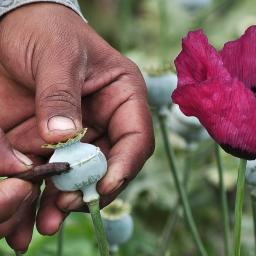
Researchers have managed to reproduce the way poppies create morphine in the wild, but warn that the technology needs urgent regulationHome-brewed heroin could become a reality, scientists have warned, following the creation of yeast strains designed to convert sugar into opiates.The advance marks the first time that scientists have artificially reproduced the entire chemical pathway that takes place in poppy plants to produce morphine in the wild. Continue reading...
|
by Sarah Boseley Health editor on (#98T1)
A judicial review will examine Health Research Authority plans for firms to publish all results, even when a drug is shown not to be beneficialThe long-fought battle for greater transparency in human drug trials is facing a major setback after a legal challenge against full disclosure from within the pharmaceutical industry.The Health Research Authority, which authorises trials and works to ensure the safety of patients taking part, has proposed that all drug trials must in future be registered. A judicial review has now been brought by a leading clinical trials company, challenging the plans for reform.Related: Drug companies accused of holding back complete information on clinical trials Continue reading...
 |
by Laya Maheshwari on (#99B8)
Perfectionism’s bad reputation is unfair. We’re not procrastinators or obsessives, we just want to do the best that’s possible in the real world Continue reading...
|
 |
by Stephen Curry on (#98KY)
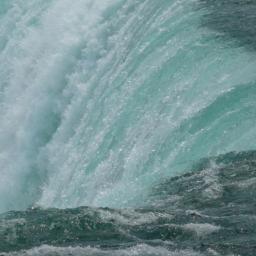
Alok Jha’s The Water Book tells the fascinating and unexpected story of the ubiquitous liquid of life Continue reading...
|
 |
by Sean Farrell on (#98HE)
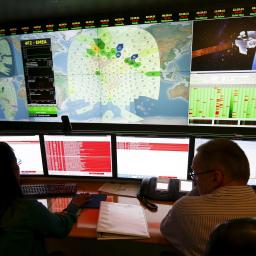
Global broadband satellite service for companies suffers further holdup after latest malfunction at cosmodrome Continue reading...
|
 |
by John McConnell on (#98F8)
We have taken these drugs for granted. But as their efficacy wanes, a global response involving governments, pharmaceutical companies and serious investment is vital Continue reading...
|
 |
by Annalisa Barbieri on (#9877)
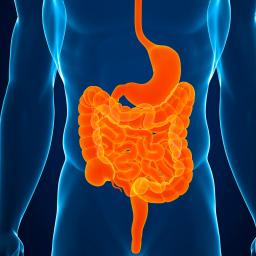
Who knew sitting on the toilet was bad for you? In her best-selling book Charming Bowels, microbiologist Giulia Enders explains how to go to the looIn my large Italian family, I grew up with the subject of poo, bottoms and constipation readily – and far too frequently – discussed at the dinner table. I’d be about to raise a raviolo to my mouth, only to hear how someone’s piles had popped, just that morning.This doesn’t mean I’m anal (sorry) about the subject. It’s fascinating away from the lunch table. Late last year, I read that we are pooing all wrong: we should be squatting, not sitting, on a toilet bowl. Then a book called Charming Bowels by Giulia Enders caused something of a storm in its native Germany and I got fully immersed in the subject. Continue reading...
|
 |
by Dean Burnett on (#986H)
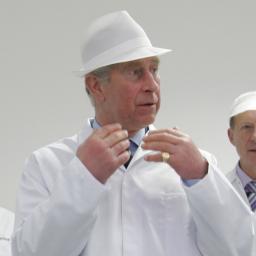
Prince Charles’s letters to government figures were recently published following a prolonged legal battle. But who’s to say the Prince’s letter writing was restricted to politicians? What if he wrote to high-profile scientists too? And given his poor grasp of science, this probably wouldn’t have ended well. Continue reading...
|
 |
by Nick Davis on (#985V)
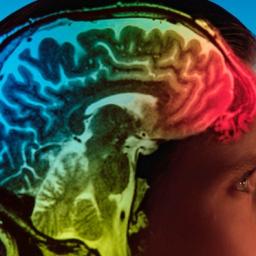
Last week’s announcement that a UK company won US approval for device-based treatment of depression is excellent news for taking academic findings into a clinical setting Continue reading...
|
by Agence France-Presse on (#98HG)
Correction of orbit of the International Space Station comes after failures which prompted Moscow to launch an inquiry into the space industry Continue reading...
 |
by Sarah Boseley Health editor on (#97BF)
Combination of lumacaftor and ivacaftor modifies genetic defect that causes half of cases of disease that affects 10,000 UK children Continue reading...
|
 |
by Jimmy Whitworth on (#976P)
Scientist whose studies in the Amazon region of Brazil led to significant discoveries about leishmaniasis and other parasitic diseases Continue reading...
|
 |
by Quentin Wheeler on (#96GS)
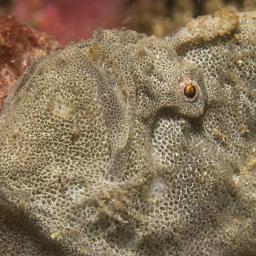
This newly classified frogfish, which inhabits the subtidal waters of New South Wales, has two quite distinct colour phases and an atypical defence strategy Continue reading...
|
 |
by Reuters on (#96DW)
All launches of Proton-M carrier rockets of this type will be suspended, according to media reports Continue reading...
|
 |
by Guardian Staff on (#95HZ)
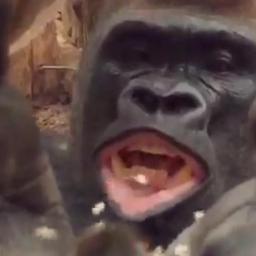
Video from ZSL London Zoo shows Kumbuka, one of the zoo's western lowland gorillas, holding out his hand for his favourite snack, brown rice. London zoo's gorilla troop are very partial to the highly nutritious rice that keepers scatter over the enclosure to encourage the apes to forage Continue reading...
|
 |
by Suzanne O'Sullivan on (#95BY)
Yvonne went blind overnight, Matthew couldn’t walk, Shahina lost the use of her hand – but doctors found nothing wrong. Were they faking it, or was the mind playing tricks? A neurologist on her most intriguing casesI was a junior doctor when I encountered Yvonne. She was 40 and worked in a supermarket. One Tuesday she was reorganising produce in a refrigerated unit while a colleague cleaned the glass. Yvonne turned to talk to her just as she released a small spray of window cleaner. Yvonne felt the liquid splatter on her face and a burning in both eyes. Another colleague led her to the bathroom and washed her eyes with water. Yvonne was taken by ambulance to hospital, where she was examined and had her eyes bathed. Her husband was called, and by the time he arrived she was feeling better. Her eyes were red and full of tears, but she could see normally and the pain had lessened. Her husband took her home.He told her not to go in to work the next day, and during the morning Yvonne noticed her vision blurring. By lunchtime, she was struggling to read the digital clock. Her husband and children came home that evening and encouraged her to have an early night. When Yvonne woke up and opened her eyes, everything was black. She cried out for help and heard the noise of people entering the room, but could not see them. She was completely blind.I noticed increasingly that when she spoke, she looked me in the eye. It was more than a glance; I felt our eyes connectDo you really think my daughter could hold her hand like this for weeks? She's in pain. I know my own childI can't believe it! I came to this hospital with muscle spasm and now I'm being told I'm doing it on purposeFantastic news: none of his tests had shown evidence of MS. I could see his face darken and his wife's eyes roll Continue reading...
|
by Joanna Moorhead on (#95AA)
Motor neurone disease and physics both played a part in her split from her husband Stephen Hawking, she says. She talks about the challenges they faced in their 30-year marriage and about how close The Theory of Everything was to realityHere is Stephen Hawking’s verdict on the movie about his marriage: it needed more science. And here is Jane Hawking’s verdict: it needed more emotion. Those opposing views on The Theory of Everything, which brought Eddie Redmayne an Oscar and a Bafta for his portrayal of Stephen and Felicity Jones Oscar and Bafta nominations for her portrayal of Jane, reveal a great deal about not only the personalities of the world’s most famous scientist and his former wife, but also one of the major strands of difference in their relationship.But the truth is that science is probably more absent from the film than emotion, because what the film represents is a triumph of Jane’s experience and persona after decades in which the family was viewed solely through the prism of Stephen’s genius, who as well as being the world’s best-known scientist is also the world’s best-known sufferer of motor neurone disease (MND).Related: Dear Katie Hopkins. Stop making life harder for disabled people | Lucy Hawking Continue reading...
 |
by Hannah Ellis-Petersen on (#94DA)
Public invited to experience museums and galleries across UK late at night as festival aims to celebrate diverse and quirky cultural landscape Continue reading...
|
 |
by Stefano Vanin on (#947N)
Criminals beware: a new study has shown that germs on phones, shoes and other personal belongings can help trace a person’s whereaboutsThis piece was first published on The ConversationProspective criminals should take note: bacteria are everywhere. A small pilot study has shown that the germs on personal belongings such as shoes and mobile phones are actually a useful way of tracing a person’s whereabouts – something that may prove useful in forensic investigations. Continue reading...
|
by Guardian higher education network on (#946K)
As the London Mathematical Society celebrates its 150th anniversary, we look back at some of the key moments and players that helped shape and influence mathematics, including Mary Cartwright, the first female mathematician who founded the chaos theory, and twice president GH Hardy who aptly named his cricket team ‘Hardy’s Mathematicals’ Continue reading...
 |
by Hannah Devlin on (#93X9)
How the filter bubble is shaping our lives Continue reading...
|
 |
by Sally Weale education correspondent on (#93W2)
Reproduction specialist Dr Geeta Nargund wants secondary school pupils to be taught about conception, not just contraception Continue reading...
|
by Rebekah Higgitt on (#93V7)
Historians for Britain hope to shape the debate over Europe. We should question their narrative and our own assumptions about Britain’s place in history and the history of scienceReaders of the Guardian Science pages may not have noticed the group called Historians for Britain, or a recent piece in History Today by David Abulafia asserting their belief “that Britain’s unique history sets it apart from the rest of Europeâ€. Since it is a pressure group, connected to Business for Britain, that aims to use history to steer the debate over the EU referendum, it will probably become increasingly vocal. It requires critical scrutiny from everyone with an interest in Britain’s relationship with the rest of the world, and in evidence-based political discussion.Abilafia’s article is a classic example of an old-fashioned “Whiggish†narrative. It claims a uniquely moderate and progressive advance toward the development of British institutions, traced continuously from Magna Carta and isolated from the rages and radicalism of the Continent. There has been a strongly negative response from historians on Twitter, sometimes suggesting their opposition as #HistoriansforEurope or, given the scathing reception of Abulafia’s ‘island nation’ narrative, simply #HistoriansforHistory. A reply is being drafted for the pages of History Today and a piece by Neil Gregor has already appeared in The Huffington Post. Continue reading...