 |
by Elsa Panciroli on (#1CQZ4)
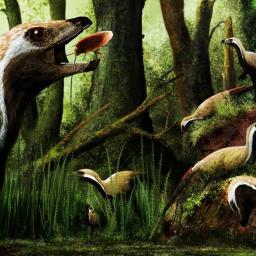
The invertebrate fossil record from amber provides insights into evolutionary history, and the climate of Earth’s past ecosystems“It’s all about the genitals. It’s often the only way to tell the difference between them.â€I tried not to choke on my coffee as palaeoentomologist Richard Kelly explained the intricacies of his field of research – the study of fossil insects - during a refreshment break. “Genitalia are usually internal when they’re not being used, or when the animal is dead. There was this one guy who invented a special device for extracting fly genitals. I can’t remember his name though…†Continue reading...
|
| Link | http://feeds.theguardian.com/ |
| Feed | http://feeds.theguardian.com/theguardian/science/rss |
| Updated | 2026-10-01 00:15 |
 |
by Alan Yuhas on (#1CQNX)
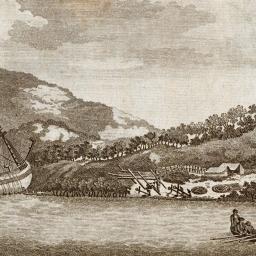
The ship in which the explorer charted New Zealand, Australia and the Pacific ended its life sold, renamed and scuttled in the war to keep America BritishCaptain James Cook observed the transit of Venus from the shores of Tahiti, ran aground on the Great Barrier Reef and claimed Australia for the British crown. He fought the French in the Americas, circumnavigated the world and died trying to kidnap a king of Hawaii.Related: Wreckage of Captain James Cook's ship Endeavour found, researchers say Continue reading...
|
 |
by Press Association on (#1CQQ8)
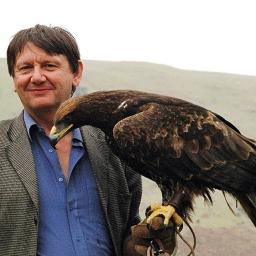
Biologist who saved nine species from extinction has been given the Indianapolis Prize for conservationA biologist from Wales who saved nine species from extinction has been given a prestigious environmental award.Prof Carl Jones has been awarded the 2016 Indianapolis Prize, often dubbed the “Nobel prize†of conservationism. Continue reading...
|
 |
by Will Self on (#1CQQ6)
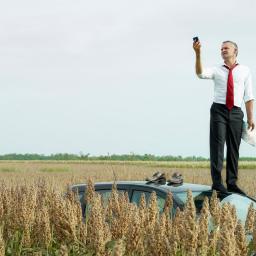
Anyone with a smartphone anywhere on Earth knows exactly where they are. But does that leave us lost?In early 2008, for quixotic reasons that needn’t detain us here, I decided to walk from Dubai airport across the city and into the Empty Quarter of Arabia. Prior to departure, at home in London, I tried to figure out a way of reaching, on foot, the desert resort of Bab al Shams, which lay about 15 miles beyond the city’s ragged fringe of buy-to-let building sites. There were some tourist maps that showed the downtown area and a few primary arterial routes, but there was nothing available that had both the necessary scale for a walker – 1:25,000 or better – and sufficiently accurate orientation to enable compass bearings. While the local Bedouin may to this day retain a mental map of the area, collating a myriad of little positional markers – environmental, solar and sidereal – in order to determine location and direction, everyone else presumably relied on the GPS navigation systems in their air-conditioned cars.In the end I hit on the simple if deranging idea of laying a 12in ruler against a Google Earth satellite photograph of the desert on my computer screen. This did indeed give me a means of dead-reckoning, but I had no way of determining distance accurately, and when I left the last pile of dusty breezeblocks behind and headed into the dunes, following the flickering needle of my compass, it was with the understanding I might well be spending the night beneath the stars. In fact, the bearing proved sound enough, and I arrived at the resort hotel well after dark to be informed by the receptionist (who was from Selly Oak) that there’d be no alcohol served that night because it was the Prophet’s birthday. Continue reading...
|
 |
by Amanda Holpuch in New York on (#1CPMT)
|
 |
by Jessica Glenza in New York on (#1CPAA)
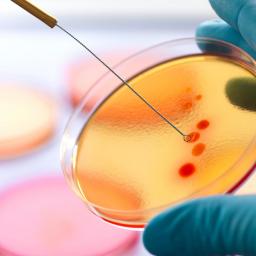
Study finds more than half of US population receives prescription annually and estimates ‘inappropriate’ prescriptions in doctor’s office setting at up to 30%Nearly one-third of Americans prescribed antibiotics during doctor’s office visits probably should not have received the drugs, were not given a long enough course or did not get the right dose, according to new research.The new study into how doctors prescribe antibiotics to Americans in outpatient settings comes as rates of antibiotic resistant bacterial infections are on the rise. Up to 23,000 Americans die and 2 million more become sick due to antibiotic resistant bacteria each year, according to the Centers for Disease Control and Prevention (CDC), and scientists have found rates of such infections on the rise. Continue reading...
|
 |
by Mary Dejevsky on (#1CP4G)
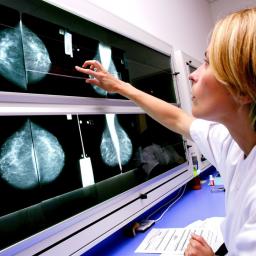
I hope the latest breast cancer breakthrough is genuine. But I also wish we paid as much attention to other severe conditionsI prefer to give a wide berth to boasts about dragon-slaying medical breakthroughs. Perhaps it’s the awareness that the hopes raised tend to be fleeting, or that the actual arrival of a new treatment, even a cure, lies many years away.Yet a new study, published this week in Nature, seemed to warrant a closer look. It appears that researchers at the Sanger Institute at Cambridge now have what was described as “a near-perfect picture of the genetic events that cause breast cancerâ€. They have identified most of the genetic mutations that cause healthy breast tissue to misbehave. The prospect of individually tailored, effective, treatment would thus seem to have come a whole lot closer. Continue reading...
|
 |
by Nicola Davis on (#1CNXT)
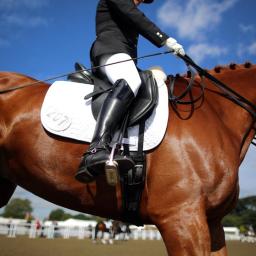
Study found horses’ heart rates increased and they struggled to chew when nosebands were over-tightened, leading to calls for stricter regulations on useResearchers studying the physiological impact of nosebands on horses competing in international equestrian competitions including the Olympics are calling for new regulations to reduce potential pain and distress from the equipment.The scientists found that horses’ heart rates were raised and they struggled to chew when nosebands were fitted too tightly around the animals’ heads. Continue reading...
|
 |
by Frank Knowles on (#1CNSB)
My sister, Barbara Knowles, who has died aged 55, was an enthusiastic biologist, a scientific adviser to the Royal Society of Biology (RSB) and a champion of meadow ecology and sustainable development projects, especially in Transylvania.She worked in the Pogány-havas region of the eastern Carpathians with local volunteers and experts to record and protect valuable flora and fauna. She established the Barbara Knowles Fund and supported activities working with schoolchildren, academics and policymakers. Continue reading...
|
 |
by Nicola Davis on (#1CNFM)
A study of labrador DNA revealed more than a fifth of the dogs carry a genetic variation which could predispose them to food-seeking and weight gainLabrador dogs are well known for being fond of their food, but new research suggests their greedy nature could be down to genetic mutation.Labrador retrievers are top dog in the UK, with 32,507 animals newly registered with the Kennel Club in 2015 alone. But the breed is well known for its tendency to develop a portly form, a concern given the variety of health problems - from diabetes to heart disease - linked to obesity. Continue reading...
|
 |
by Alison Flood on (#1CNBY)
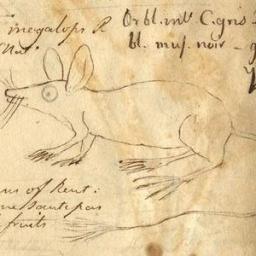
Brilliant work in the archives has unearthed evidence that the great ornithological artist also enjoyed some rather more fanciful workArtist and naturalist John James Audubon was a master of ornithological illustration, and also, it turns out, master of the prank.A new paper in the journal Archives of Natural History, Pranked By Audubon, sees the Smithsonian Museum of Natural History curator Neal Woodman lay out how the author of The Birds of America took time out from his superb illustrations to invent a series of “wild rats of the western states†and other creations with which to fool the naturalist Constantine Rafinesque. Continue reading...
|
 |
by Ian Sample Science editor on (#1CMW2)
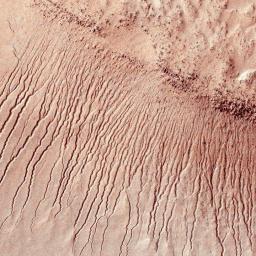
Water seeping to the surface during the Martian summer might boil so violently it blasts dust off the ground, helping to explain the size of the streaksMysterious streaks that appear on the steep slopes of Mars may form when seeping water boils with such violence that it blasts dust off the ground.The seasonal tracks come into being in the summer months on Mars and grow for hundreds of metres down cliffs, gullies and crater walls, before they vanish again in the winter.
|
 |
by Ian Sample Science editor on (#1CMA2)
Following their February breakthrough, Kip Thorne, Rainer Weiss, Ronald Drever and nearly 1,000 LIGO scientists will share the Silicon Valley-backed prizeMere months after they declared the discovery of gravitational waves, more than 1,000 physicists have been handed good reason to put their party hats back on and return to the champagne.The February observation of ripples in the fabric of spacetime, first postulated by Albert Einstein a century ago, has landed the researchers $3m (£2.04m) in the shape of a prize backed by Silicon Valley entrepreneurs. Continue reading...
|
 |
by Benjamin Lee on (#1CM8X)
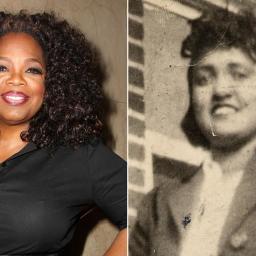
Media mogul takes role as the daughter of Baltimore woman who unwittingly contributed to vital medical researchOprah Winfrey is to take on a rare acting role in a new film about Henrietta Lacks, a woman whose cells became instrumental in the field of medical research.According to Deadline, the media mogul will headline The Immortal Life of Henrietta Lacks, a film for HBO that she will also executive produce. Winfrey has teamed up with Six Feet Under creator Alan Ball, and George C Wolfe, best known for his stage work, who will write and direct. Continue reading...
|
 |
by Michael Slezak on (#1CM21)
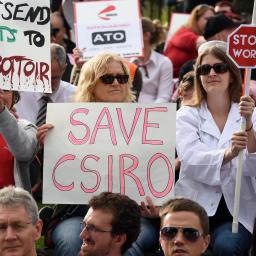
One Senate committee member has also called on the government to consider replacing CSIRO chief executive Larry Marshall over the planned cutsThe government must act to halt the CSIRO’s plans to cut its climate science program, a Senate committee has recommended, with one committee member calling on the government to consider replacing the chief executive over the debacle.In February, the CSIRO announced it would be sacking about 100 of its 140 climate scientists, chief executive Larry Marshall saying the science was settled on climate change and it was time to move on to questions of adaptation and mitigation. Continue reading...
|
 |
by AFP in New York on (#1CJMC)
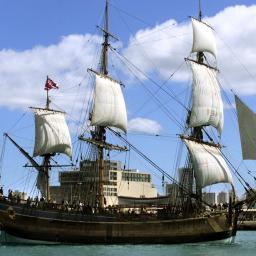
The Rhode Island Marine Archaeology Project appears to have located the British explorer’s vessel off US coast where it was sunk during the revolutionary warResearchers said they believe they have located the wreckage of the Endeavour, a ship sailed by the famous British explorer James Cook, which was sunk off the US during the revolutionary war.The ship was scuttled in 1778 leading up to the Battle of Rhode Island between American colonists and the British, and was as part of a blockade during the revolutionary war. Continue reading...
|
 |
by Nicola Davis on (#1CJAK)
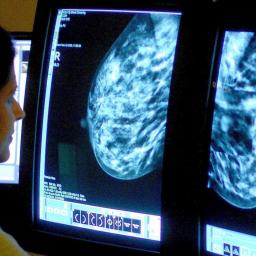
Research indicates that cancers are highly individual and would therefore respond best to individualised treatmentsPersonalised treatment for breast cancer patients could become commonplace, as scientists reveal that they have compiled the most detailed picture yet of which genetic mutations are involved in the disease.
|
 |
by Nicola Davis on (#1CHZ0)
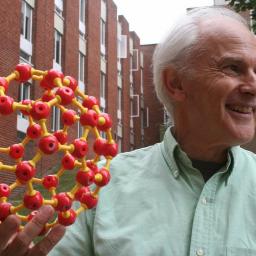
Lord Rees and Richard Dawkins lead tributes to British scientist best known for creating carbon-based molecule buckminsterfullereneSir Harry Kroto, the British Nobel prize-winning chemist who co-discovered a new form of carbon, has died aged 76.Kroto is best known for his role in revealing that carbon can exist in the form of a hollow football-like structure. Named “buckminsterfullerene†after the similarly shaped domed buildings produced by the American architect Buckminster Fuller, these structures soon became known as “buckyballsâ€. Continue reading...
|
 |
by Ian Sample Science editor on (#1CH7A)
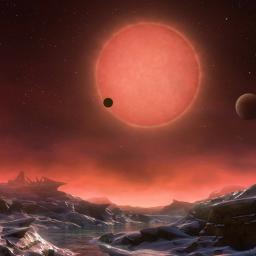
Three Earth-sized planets are thought to have surface temperatures which would allow liquid water, making them potentially hospitable to lifeThree distant worlds that orbit a feeble star in the constellation of Aquarius are the most likely places discovered so far to find life beyond the solar system, astronomers say.Related: Kepler 438b: Most Earth-like planet ever discovered could be home for alien life Continue reading...
|
 |
by Alfred Hickling on (#1CGC0)
Northern Stage, Newcastle
|
 |
by Goedele Liekens on (#1CG33)
Much of the response to the TV show is connected to the shame and guilt surrounding lovemaking. As a sexologist, I want to break down those taboosLooking at the Twitter explosion after the first episode of Sex Box aired on Channel 4 it seemed that many Brits were shocked to learn that some people wanted to come on television to have sex in a box and talk about their sex lives. I will admit that it’s not for everyone, but for some of them, going into the box added a sort of frisson to the entire experience. Which isn’t surprising – it’s not unusual for us to find arousal in unlikely places.For others, the box was a reason for them to have a conversation about trying something different or new together for the first time. And though that may sound scary, it wasn’t really. I was always there to talk each couple through their experience, offering any tips and advice as and when they needed it. Continue reading...
|
 |
by Carey Davies on (#1CFP2)
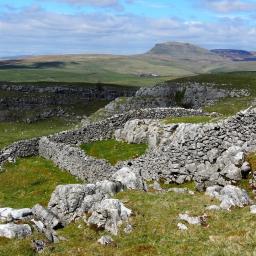
Ribblesdale, Yorkshire Dales Sheep graze around giant boulders dropped by glaciers, picking the land as clean as the ice once did
|
 |
by Rajeev Syal on (#1CF41)
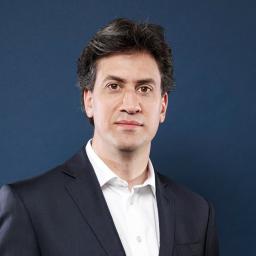
Former Labour leader joins environment secretary Liz Truss and Green MP Caroline Lucas in supporting remain campaignEd Miliband has joined a cross-party attempt to persuade voters that leaving the EU would damage the environment.The former Labour leader has signed a joint declaration with environment secretary Liz Truss, former energy secretary Ed Davey and Green Party MP Caroline Lucas in what pro-EU campaigners called an unprecedented partnership.
|
 |
by Associated Press in Cincinnati on (#1CEFR)
|
 |
by Kate Ravilious on (#1CET2)
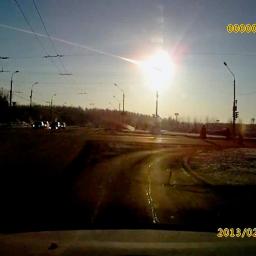
Roughly every other week a one-metre-wide asteroid impacts on Earth’s atmosphere and creates a spectacular fireball. Meanwhile, every few decades a lump of rock the size of a double-decker bus comes our way, creating a small crater on the ground like the Russian Chelyabinsk event on 15 February 2013.Asteroids that cause significant damage (football-field-sized rocks) slam into us every 5,000 years or so, and the real biggies – capable of causing global disaster – arrive every few million years. Continue reading...
|
 |
by Letters on (#1CEMR)
Contrasting Greens | Doctors’ strike | Pointless prefixes | A rare actress | Politician-kissing babyCongratulations on your editorial finesse. Page 4 of last Friday’s Guardian had photos of two Greens. One was a knighted establishment figure who sold a high street chain store after taking out millions of pounds in dividends, leaving a massive pensions hole in a firm that has now collapsed, putting 11,000 jobs at risk. The other is an elected member of parliament. Only one of these Greens has been spied on by the police. Is this what is meant by a democratic deficit?
|
 |
by Paul Manning on (#1CE42)
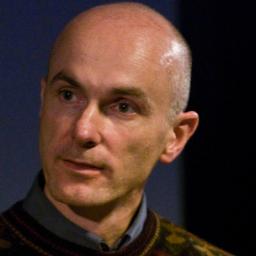
In the late 1980s I was a scientist at the Royal Signals and Radar Establishment in Malvern. David MacKay was placed with our team as our summer student for two months’ work experience. It rapidly became clear that not only did he fit well into our small thermal imaging research team, but he was able to complete the tasks we allocated to him in about half the time we would normally expect for a student.In his final week we ran out of jobs, so we suggested he could do his own little project. He presented us with an astrolabe made from cardboard and odds and ends found round the lab, with the appropriate azimuth and altitude circles for Malvern plotted on plastic transparencies using our lab plotter. When he left to go back to his second undergraduate year, we were sure he was heading for great things. Continue reading...
|
 |
by Guardian Staff on (#1CE2N)
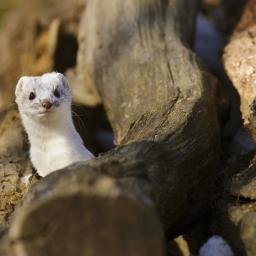
Test your pawprint identification skills and your knowledge of native species with our nature quizWhich of the following animal paw prints belong to a fox?abcdWhich of these edible plants isn't associated with the seashore?SamphireSea PeaThree-cornered leekSea BeetWhich is the odd one out and why?Agaricus xanthodermus, yellow stainerBoletus edulis, the penny bunAgaricus arvensis, the horse mushroomCalvatia gigantea, the giant puffballWhat animal's scientific name is Cupido minimus?Red foxEuropean otterSmall blue butterflyWrenWhich of the following bird names do you complete with tern?The roseate …The marsh …The long-tailed …The Coal...Which bird is the odd one out and why?CuckooTurtle doveSwiftWrenWhich of these creatives is a non-native arrival in this country?Harlequin ladybirdSeven-spotRoe deerWhat has been successfully brought back from extinction in Britain just next to the nuclear power stations at Dungeness in Kent?The great bustardThe craneThe short-haired bumblebeeThe large blue butterflyWhat species is most commonly found on Isle of Mull, Scotland?The red-barbed antThe white-tailed eagleThe red squirrelThe lundy cabbageNature reserves. Identify which of these lovely wild places is The North York Moors, Yorkshireabcd Continue reading...
|
 |
by Jon Butterworth on (#1CDG9)
Scientists deployed a new political technology twice this week, to spectacular effectOn Thursday I was on BBC Radio 4’s Inside Science, discussing with Adam Rutherford some excitement around the new data from CERN’s Large Hadron Collider. Under his newly-invented ‘Cloak of Speculation’, we mused as to whether the currently statistically-marginal blip might develop into the first evidence for a new particle, perhaps some kinds of heavier version of the Higgs boson, or maybe even some kind of graviton looped over higher dimensions of spacetime. You can listen to us here.Eventually, someone is going to ask ‘Who threw the dead cat?’ Continue reading...
|
 |
by Andrew Anthony on (#1CD8R)
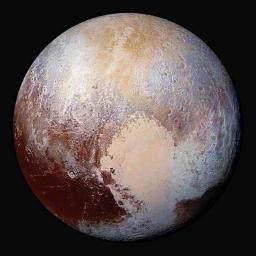
Long known as the ninth planet, Pluto was downgraded in 2006, sparking a scientific spat that raises basic questions about how we understand the universeImagine that you have nurtured an ambition for 25 years to head up an expedition to the last unexplored planet in the solar system. You’ve worked your way up and through countless other suborbital, orbital and planetary missions. You’ve written scores of scientific papers. Finally, you are the principal investigator on Nasa’s New Horizons mission to Pluto – that mysterious little entity, a third of the size of our moon, that is located, depending on orbital position, between 2.6bn and 4.7bn miles from Earth.In January 2006, your probe leaves Earth on its nine-year journey to its historic destination. It is the crowning moment of your career, a landmark project; you’ve reached the peak of your profession. Then, seven months later, with your spacecraft still in the early stages of its odyssey, it is announced, following a vote at a meeting of the International Astronomy Union (IAU) in Prague, that Pluto is no longer a planet. Continue reading...
|
 |
by Steve Connor on (#1CD1P)
Disruption of your natural circadian rhythms can cause health problems, so here are some tips for staying on scheduleBreakfast in the morning, work during the day, relaxation in the evening followed by bedtime. The waking hours have a certain rhythm, and the 24-hour cycle of the Earth’s rotation has resulted in a human sleeping pattern that largely takes place at night for about seven or eight hours of continuous shut-eye.Several studies have found that disturbing this ancient sleep-wake cycle can make people more prone to illnesses such as diabetes, obesity, gastrointestinal disorders and heart disease. Now, a study on nearly 300 pensioners at 24 GP practices in England has found that the best time to have a flu jab is probably in the morning, as this is the time when the immune systems of older people are better able to produce virus-fighting antibodies. Continue reading...
|
 |
by Ben Ambridge on (#1CCYF)
Do you struggle to remember details? And what does this mean for your psychological wellbeing?To find out, first read these descriptions: Dave earns £73,412 and is described by his colleagues as a nice guy who works hard and is a pleasure to be around. He often has lunch at the local café, where the staff say he is polite and pleasant. He always gives a generous tip.Frank earns £78,305 and is described as grumpy and rude. He skives as much as possible and is a pain to be around. He often has lunch at the local café, where the staff describe him as bad-mannered and unpleasant. He never gives a tip. Continue reading...
|
 |
by Carole Cadwalladr on (#1CCCT)
Women are being exploited by the idea that a cure for everything is on the horizonRecently, I had the opportunity to investigate the domestic habits and behaviours of a little understood human genus: Homo plutocratus. The super-rich, if you will. I spent time with them in their natural environment, observed them at close quarters and even managed to communicate with them in a form you might characterise as “light, social chit-chatâ€.And, as a result of these in-depth investigations, I am now able to reveal the results of my research: they are better looking than us. Continue reading...
|
 |
by Alok Jha on (#1CAFM)
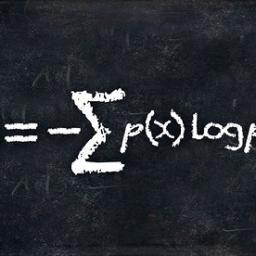
It showed how to make communications faster and take up less space on a hard disk, making the internet possibleThis equation was published in the 1949 book The Mathematical Theory of Communication, co-written by Claude Shannon and Warren Weaver. An elegant way to work out how efficient a code could be, it turned "information" from a vague word related to how much someone knew about something into a precise mathematical unit that could be measured, manipulated and transmitted. It was the start of the science of "information theory", a set of ideas that has allowed us to build the internet, digital computers and telecommunications systems. When anyone talks about the information revolution of the last few decades, it is Shannon's idea of information that they are talking about.Claude Shannon was a mathematician and electronic engineer working at Bell Labs in the US in the middle of the 20th century. His workplace was the celebrated research and development arm of the Bell Telephone Company, the US's main provider of telephone services until the 1980s when it was broken up because of its monopolistic position. During the second world war, Shannon worked on codes and methods of sending messages efficiently and securely over long distances, ideas that became the seeds for his information theory. Continue reading...
|
 |
by Charlotte Beale on (#1CAC9)
Thirty years on from one of the worst radiation leaks in history, several countries have moved to phase out nuclear energy production altogether, and experts say another accident would kill the industryRelated: Chernobyl nuclear disaster 30th anniversary – in picturesThis week marks 30 years since an accident at the Chernobyl nuclear power plant in Ukraine led to a huge leak of radiation across eastern Europe. Continue reading...
|
 |
by Matthew Youlden on (#1CADM)
Learning is all about motivation. When we really want to learn something, we generally succeed, even when the going gets toughImagine I gave you a book full of words, numbers and strange symbols – 150-odd pages of the stuff. Some of the things relate to each other in obvious ways, others not so much. Now suppose I’m going to test you: 50 questions about the contents of that book, how do you think you’d do?Well, if you can drive a car, chances are you’ve already done very well: those of you who passed the theory test recently will have got at least 43 out of 50 questions correct. That’s just one everyday example of the average person’s capacity to learn something that appears complex at first. Despite recently making the questions tougher, the DVLA still reports that the test has a pass rate above 50%. Continue reading...
|
 |
by Ian Sample Science editor on (#1C8NZ)
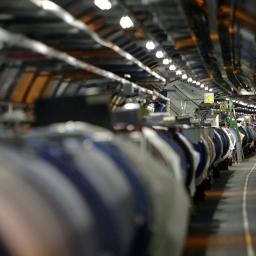
LHC to be out of action for a week while connections to transformer are replaced following visit from hungry fouineThe world’s largest and most powerful particle accelerator has been brought to its knees by a beech marten, a member of the weasel family, that chewed through wiring connected to a 66,000-volt transformer.The Large Hadron Collider on the outskirts of Geneva was designed to recreate in miniature fireballs similar to the conditions that prevailed at the birth of the universe, but operations of the machine, which occupies a 17-mile tunnel beneath Switzerland, have been placed on hold pending repairs to the unit. Continue reading...
|
 |
by Stuart Clark on (#1C8E7)
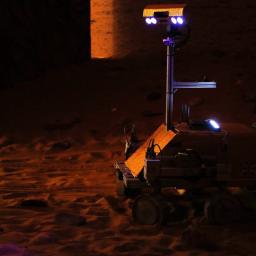
Having run a marathon in space, what’s next for Tim Peake? A test drive on Mars (well, a Stevenage aircraft hangar decked out to resemble the red planet)The Airbus Stevenage Mars Yard is an impressive place, complete with sand, rocks, uneven surfaces and a mural representing the Martian horizon. The lights are low in the aircraft hanger, as if it is dusk on the Red Planet.Two robotic rovers sit silently in the artificial twilight. One of them, known as Bridget, is waiting for the test to begin. Continue reading...
|
 |
by Guardian Staff on (#1C7KC)
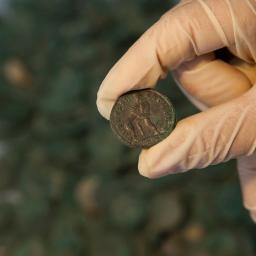
A 600kg haul of ancient Roman coins were unearthed in the town of Tomares near Seville on Wednesday. Construction workers found the treasure while carrying out routine work on water pipes. Ana Navarro Ortega, head of the Andalucian Archeological Museum, says a discovery of this magnitude is incredible Continue reading...
|
 |
by Stephen Curry on (#1C73X)
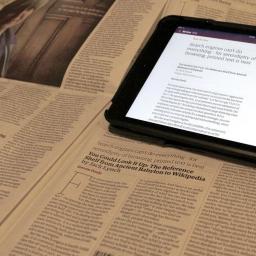
After five years as a digital subscriber to the Guardian, the lure of the printed page is just too strongThe bad news is that newspapers are in decline. You only have to look around any commuter train carriage to clock the year on year drop in circulation. Practically the only papers you see now are the freebies – the Metro in the morning and, on the way home, the Evening Standard. Everyone else has their eyes fixed on a phone, tablet or laptop screen. A few are reading, but most are playing games or watching films or television programmes.Don’t get me wrong: I’m not here to rail against the new-fangled pursuits of a younger generation. The wealth of information, entertainment and connection that the digital world has brought to us, in its myriad colours and capabilities, is truly amazing. But I am troubled by the cost to news and newsprint. Even in digital forms that ought to be their salvation the papers struggle to compete for attention, displaced by more vibrant media. Continue reading...
|
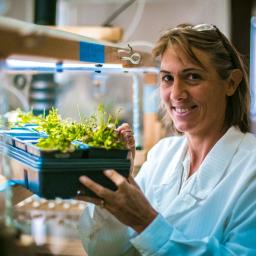 |
by Helen Pearson on (#1C6BZ)
Jahren, a geobiologist, lives on reheated fast food, encounters sexism and worries so much about funding it makes her ill. This is an inspiring behind-the-scenes look at scientific researchScience is about a passion for ideas and the people who pursue those passions. Hope Jahren captures both in her book, the engrossing story of her love of science and of the adventures she has while pursuing her hunches and hypotheses. In Jahren’s case, the passion is plants – and Lab Girl instils the reader with an appreciation for botany as well as for scientific discovery.Jahren is a geobiologist at the University of Hawaii, MÄnoa, but she grew up in rural Minnesota, where the frigid temperatures outside were, she writes, mirrored by an emotional coldness inside: her family’s Scandinavian origins meant that discussions of feelings were out of bounds. But Jahren was busy playing under the lab bench belonging to her father, who taught physics and earth science at the local community college, and she fell in love with his profession. “The only thing I ever knew for certain was that someday I would have my own laboratory, because my father had one,†she writes. Continue reading...
|
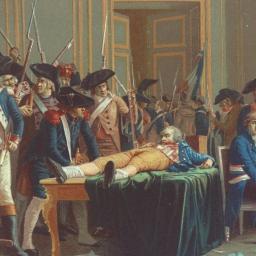 |
by Nicola Davis, Steve Jones and Iain Chambers on (#1C6AQ)
Steve Jones on science at the time of the French revolution - and why scientists were among the first to be sent to the guillotineParis circa. 1789 saw the first lightning conductor, the first flight, the first estimate of the speed of light, and the invention of the tin can and the stethoscope. The metre replaced the yard and the theory of evolution came into being.
|
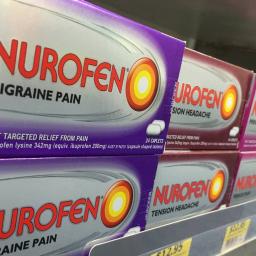 |
by Calla Wahlquist on (#1C5MJ)
Reckitt Benckiser says it did not intentionally mislead about tablets targeting different types of pain
|
|
by Agence France-Presse on (#1C5KB)
Construction workers working on water pipes in Seville stumble upon ‘unique’ collection of bronze coins said to be worth millions of eurosConstruction workers have found 600kg (1,300lb) of ancient Roman coins while carrying out routine work on water pipes in southern Spain, local officials have said“It is a unique collection and there are very few similar cases,†Ana Navarro, head of Seville’s archeology museum, which is looking after the find, told a news conference. Continue reading...
|
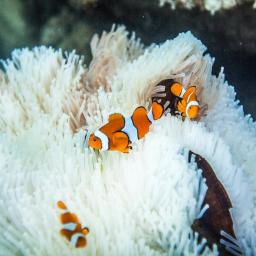 |
by Michael Slezak on (#1C566)
Such coral bleaching could be normal in 18 years, according to preliminary findings by leading climate and coral reef scientistsThe hot water temperature that drove the devastating bleaching on the Great Barrier Reef this year was made 175 times more likely by human-caused climate change, and could be normal in just 18 years, according to preliminary findings by leading climate and coral reef scientists.Related: Great Barrier Reef tourism operators refuse media and politicians access to bleached reefs Continue reading...
|
 |
by David Hambling on (#1C4YV)
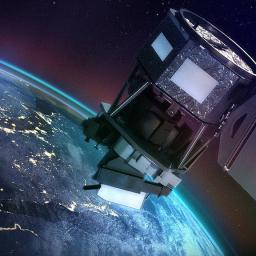
A new satellite will explore how the weather “down here†in the troposphere affects the weather “up there†in the ionosphere, from 30 miles above ground to 600 miles. Everything above 100 miles is classed as space, so this includes most of the ionosphere.The Ionospheric Connection Explorer or Icon is being built by UC Berkeley for Nasa to investigate the upward coupling effect, the mysterious way that storm systems affect conditions at much higher altitudes. Continue reading...
|
 |
by Michael Slezak on (#1C4VZ)
El Niño driving current spike in warm weather and May almost certain to be warmer than average from 1961 to 1990Unseasonably warm weather across Australia, which is set to continue through the coming month, might be putting a spring in people’s step but is a clear sign of dangerous climate change, according climate scientists and meteorologists.Australia and the rest of the world have been reeling from a string of temperature records being smashed. February caused alarm when it was the most unusually warm month on record by a huge margin. But that record was broken immediately by March.
|
 |
by Press Association on (#1C4J7)
Oxford University researchers hope study will pave way for single-treatment cure for many types of inherited blindnessGroundbreaking gene therapy has restored some vision to patients who were going blind.University of Oxford researchers hope the findings of the small study will lead to potential cures for common causes of vision loss, including genetic-related macular degeneration, which affects thousands of people in the UK. Continue reading...
|
 |
by Ian Sample Science editor on (#1C46S)
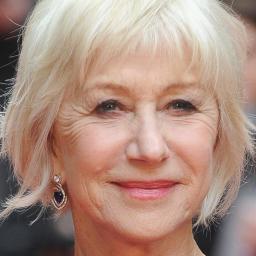
If verified, finding could help understand how people’s faces change with time, and may ultimately lead to ways of slowing the most visible effects of ageingThose in search of the fountain of youth should not hang up their boots, but in a laboratory in the Netherlands lies what may be the answer to a more realistic mystery: why some people look younger than others of the same age.
|
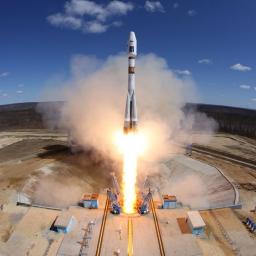 |
by Agence France-Presse in Vostochny on (#1C3RS)
Launch of Soyuz 2.1a marks milestone for Russia’s beleaguered space industry after series of embarrassmentsRussia has launched the first rocket from its new Vostochny cosmodrome, with President Vladimir Putin praising the event after dressing down officials over a delay caused by a technical glitch.The launch marks a milestone for Russia’s beleaguered space sector, with the new spaceport in the far east of the country touted to signal a rebirth of an industry plagued by a string of embarrassments in recent years. Continue reading...
|