 |
by Helen Bould on (#1C3SZ)
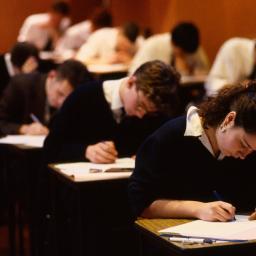
New research has found that young women with eating disorders are more likely to go to schools with more girls, and with more highly educated parents. Research author Helen Bould explores why this might beDiagnosed eating disorders are more common in some schools than others: schools with greater proportions of female students, and schools with higher numbers of children with university-educated parents. These were the headline results of our study, published last week in the International Journal of Epidemiology (open access).Eating disorders are serious illnesses (someone with bulimia nervosa is around twice as likely to die young as someone without it; someone with anorexia nervosa about six times more likely), so this might make us worry about the effect of all-girls private or selective state schools on the mental health of young women – but should it? Continue reading...
|
| Link | http://feeds.theguardian.com/ |
| Feed | http://feeds.theguardian.com/theguardian/science/rss |
| Updated | 2026-10-01 00:15 |
 |
by Guardian Staff on (#1C346)
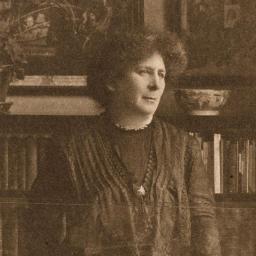
28 August 1923: Ayrton, celebrated in a Google doodle, was the first woman to receive the Hughes Medal from the Royal Society and an active suffragetteWe regret to announce that Mrs. Hertha Ayrton, widow of Professor W. E. Ayrton, and herself a scientist of great distinction, died at North Lancing, Sussex, on Sunday last.Mrs. Ayrton’s name is bound up in the public mind chiefly with her researches in connection with the electric arc. Her great powers of observation and remarkable inventive faculty were turned in this direction in 1893. Her husband, Professor Ayrton, had been approached by the Board of Trade on behalf of the Admiralty with a request that he should investigate the question of “roaring†searchlights, which was being examined concurrently by the Admiralty’s own experts. Continue reading...
|
 |
by Guardian Staff on (#1C2K4)
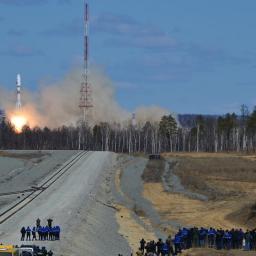
Russian president Vladimir Putin watches the first rocket launch from the new Vostochny cosmodrome in the country’s far east on Thursday. The unmanned Soyuz spacecraft was launched a day after a technical glitch thwarted a much-publicised event in a sign of continued crisis in the nation’s space industry Continue reading...
|
 |
by Paul Simons on (#1C2DH)
Some of the most common exotic plants in Britain have evolved rapidly to better suit the environment – whether that means becoming larger or smaller
|
 |
by Press Association on (#1C1AF)
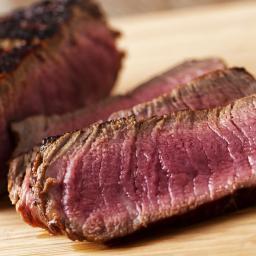
Scientists an increase in levels of serum phosphate in the body caused by red meat consumption increases your ‘miles on the clock’, or biological ageEating too much red meat and not enough fruit and vegetables could increase the body’s “biological age†and contribute to health problems, according to researchers.Scientists found that a moderate increase in levels of serum phosphate in the body caused by red meat consumption, combined with a poor overall diet, increases your biological age – your “miles on the clock†– in contrast to your chronological or actual age. Continue reading...
|
 |
by Jeremy Hance on (#1C305)
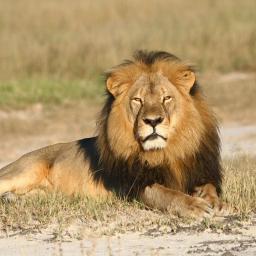
Inspired by Cecil the lion, activists have begun an uphill struggle to convince Unesco to do for wildlife what it already does for places – and create World Heritage Species
|
 |
by Danny Yadron in San Francisco on (#1C0JT)
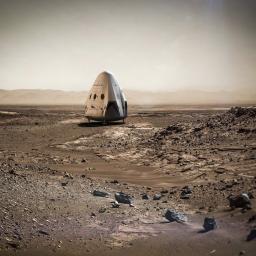
Tesla boss’s SpaceX plans to send an unmanned spaceship, the boldest goal yet in a private space travel industry that counts Jeff Bezos and Richard BransonThere are moonshots, and then there are moonshots.Elon Musk’s rocket company, SpaceX, announced Wednesday morning it planned to send one of its spaceships to Mars by 2018, the most ambitious goal set to date by the burgeoning private space travel industry funded by billionaires instead of governments. Continue reading...
|
 |
by Ian Sample Science editor on (#1C05V)
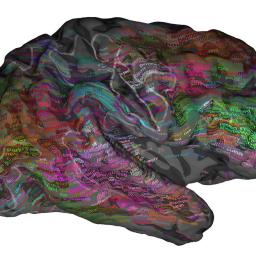
Using brain imaging, scientists have built a map displaying how words and their meanings are represented across different regions of the brainScientists have created an “atlas of the brain†that reveals how the meanings of words are arranged across different regions of the organ.Like a colourful quilt laid over the cortex, the atlas displays in rainbow hues how individual words and the concepts they convey can be grouped together in clumps of white matter. Continue reading...
|
 |
by Stephen Burgen in Barcelona on (#1BZ1F)
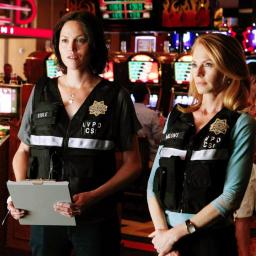
Carmen Moreno collected vital evidence left behind by officers after woman was found dead in Spanish parkA park keeper and big fan of the CSI series of forensic criminal investigation TV dramas helped solve a murder in southern Spain when she bagged up vital evidence overlooked by police.Carmen Moreno, who has been sweeping leaves and collecting rubbish in the MarÃa Luisa park in Seville for 28 years, went to clean up the mess the police left behind after a woman’s body was found in the park. Continue reading...
|
 |
by Dr Dave Hone on (#1BYPZ)
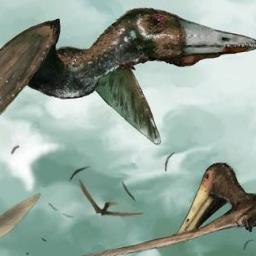
Creationists fail to appreciate the history of science as well as science itself
|
 |
by Jessica Aldred on (#1BYJ9)
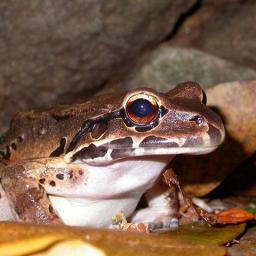
Conservationists pin hopes of the species’ survival on breeding the Caribbean island’s last known male and female in the wildIn what could be a fairytale ending, conservationists are hoping to reunite the last two remaining wild mountain chicken frogs living on Montserrat and help their species breed on the Caribbean island for the first time since 2009.A project led by the Durrell Wildlife Conservation Trust will next month take the last remaining female and “translocate†her into the territory of the last remaining male as part of a 20-year recovery plan for the species, one of the world’s largest and rarest frogs that exists on just two Caribbean islands, Montserrat and Dominica. Continue reading...
|
 |
by Nicola Slawson on (#1BY14)
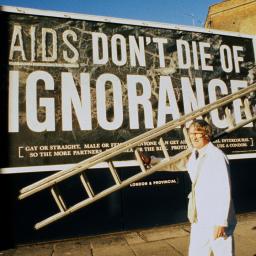
The best charity adverts use words that stick in the mind. How can charities harness the psychology of words to improve their fundraising ads?Contrary to what you may feel about everyday communication, there is science and psychology behind every word we use: our speech is not random at all.Elizabeth Stokoe, a British scientist and professor of Social Interaction at Loughborough University where she studies conversation analysis, explains: “Talk falls into systematic patterns in ways that are surprising and not intuitive, for example, people on a first date ask questions about each other’s relationship histories in almost identical waysâ€. Continue reading...
|
 |
by Michael Slezak on (#1BXZW)
The chief of Australia’s peak science organisation confirms about 75 oceans and atmosphere researchers will lose their jobs in a smaller restructureThe CSIRO chief executive has admitted recent cuts to the organisation’s climate research have been handled badly, conceding he wasn’t very good at communications or politics.In another gruelling Senate committee hearing on Wednesday, Dr Larry Marshall confirmed about 75 researchers in the oceans and atmosphere business unit would lose their jobs in a revamped, smaller restructure – down from about 110 announced to widespread derision in February.
|
 |
by Paul Cairney and Kathryn Oliver on (#1BXWW)
Turning scientific evidence into policy exposes a gulf between how scientists think and how policymakers work. Here’s what scientists need to knowLast week, a major new report on The Science of Using Science: Researching the Use of Research Evidence in Decision-Making suggested that there is very limited evidence of “what works†to turn scientific evidence into policy. There are many publications out there on how to influence policy, but few are proven to work.This is because scientists think about how to produce the best possible evidence rather than how policymakers use evidence in complex policymaking systems. (The report describes how policymakers’ “capability, motivation, and opportunity†to use evidence varies). Scientists identify a cultural gap between them and policymakers, suggesting that we need to overcome differences in the languages used to communicate findings, the timescales to produce recommendations, and the incentives to engage. Continue reading...
|
 |
by Reuters on (#1BXAD)
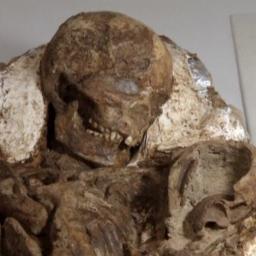
Archaeologists uncover extraordinary remains of mother looking down at infant in her armsArchaeologists in Taiwan have found a 4,800-year-old human fossil of a mother holding an infant child in her arms.The 48 sets of remains unearthed in graves in the Taichung area are the earliest trace of human activity found in central Taiwan. Continue reading...
|
 |
by Nicola Davis on (#1BX6F)
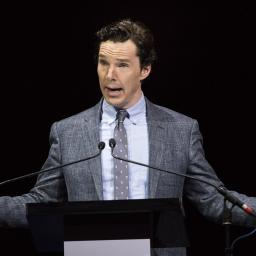
Study suggests that men’s voices evolved through male competition not female mating choices, and might show our ancestors were not made for monogamyBenedict Cumberbatch’s deep and booming voice might have made him a hit among women, but a low pitch is more likely to have evolved to intimidate other men, new research suggests.When both heterosexual men and women were played recordings of male voices, the deeper tones were hailed by men as sounding more dominant. While the deeper voices were judged to be more attractive by female listeners, the effect was weaker, the researchers report. Continue reading...
|
 |
by Letters on (#1BW7X)
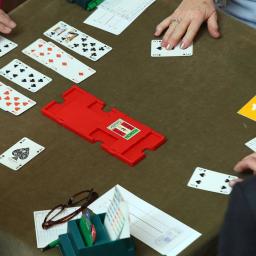
TTIP democracy | Nicky Morgan ‘finishing this job’ | Theresa May and the ECHR | Bridge ignored | Falcon 9 rocket name | Keith Flett’s productivityRobin Gill (Letters, 25 April) queries my comments about EU decision-making in relation to TTIP – the trade negotiations between the EU and the US. However, the European commission can only negotiate on the basis of the public mandate it has received from EU governments. TTIP can only enter into force if EU governments and the European parliament agree. Furthermore, the commission has given much evidence on its negotiations, including to the House of Lords – evidence that is publicly available. It cannot impose an agreement or bypass elected governments.
|
 |
by Jamieson Webster on (#1BVQ1)
A clinical psychologist reflects on the combination of cultural factors at play in this disturbing trend
|
 |
by Adam Vaughan on (#1BVBN)
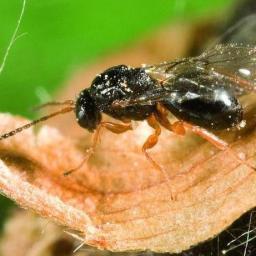
Forestry commission elevates oriental chestnut gall wasp to high-priority tree pest after 2015 outbreaksAn Asian wasp that threatens the UK’s sweet chestnuts has been designated a high-priority tree pest for the first time.The oriental chestnut gall wasp (Dryocosmus kuriphilus) was first found in the UK last year, in Farningham woods near Sevenoaks in Kent, and a street in St Albans in Hertfordshire.
|
 |
by TIm Kruger, Oliver Geden and Steve Rayner on (#1BT9D)
The economic models that are used to inform climate policy currently contain an unhealthy dose of wishful thinking. Technologies that remove carbon dioxide from the air are assumed in the models that avoid dangerous climate change – but such technologies do not yet exist and it is unclear whether they could be deployed at a meaningful scale.The scenarios modelled for the IPCC’s Fifth Assessment Report assume the large-scale deployment of technologies that achieve negative emissions that draw down carbon dioxide from the atmosphere and permanently store it. But whether such proposed methods could be deployed at a material scale is unproven. It would be more prudent to exclude these techniques from mitigation scenarios used by the IPCC, unless and until we have sufficient evidence of their availability and viability to support their inclusion.Most of the modelled emissions pathways limiting warming to 2 °C (and all the ones that restrict the rise to 1.5 °C) require massive deployment of Biomass Energy with Carbon Capture and Storage (BECCS). This involves growing biomass which is used to generate power and geologically sequestering the carbon dioxide produced. While the constituent steps of this process have been demonstrated, there are but a few, small, examples of the combined process. To rely on this technique to deliver us from climate change is to demonstrate a degree of faith that is out of keeping with scientific rigour. Continue reading...
|
 |
by Geoffrey Belknap on (#1BSY4)
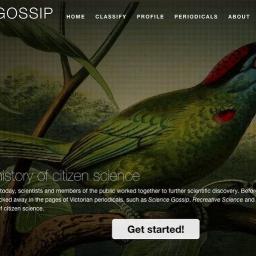
Crowdsourcing research by ‘non-specialists’ could help historians investigate big-data archives, and in the process make everyone an expertCitizen science is a digital method, which has been applied to a range of big-data scientific problems. The Zooniverse is a key player in this; having first sought the help of the crowd in classifying galaxies almost a decade ago, it now boasts 47 different projects with well over a million users. The projects hosted on their site have been bringing to the forefront concerns over who exactly is allowed to participate in science.Even though the hierarchical structure of professional science still remains within most citizen science platforms (with the exception of the extreme citizen science movement), they have had the result of giving everyone access to the raw data of research, and an opportunity to demonstrate and develop expertise. Continue reading...
|
 |
by Nicola Davis on (#1BSPH)
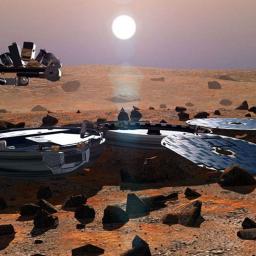
New pictures are most detailed images of Mars ever achieved from an orbiting spacecraft and seem to add weight to theory on Beagle 2’s final resting placeAstronomers have revealed the most detailed images yet of what is thought to be the landing site of the ill-fated Mars lander, Beagle 2, offering further evidence that the British spacecraft failed to phone-home because of problems following touchdown.Showing a bright blip in dusty terrain, the new picture is four times the resolution of previous images. The image adds weight to the theory that the diminutive spacecraft - just under a metre in diameter - landed as planned on Mars in 2003, but failed to fully unfurl its solar panels. “Given the size of Beagle 2, even with super-resolution images you are not likely to see more than a series of blobs because it is so small,†said Mark Sims, of the University of Leicester and former mission manager for Beagle 2. “What it does show is that it is on the surface and it is at least partially deployed.â€
|
 |
by Michael Slezak on (#1BS8E)
Thirty-five jobs saved and half of remaining 75 to 80 climate scientists to go to new centre in HobartAbout 35 climate science jobs at the CSIRO have been saved from initial cuts of 110, as part of a restructure that includes the establishment of a new climate science centre in Hobart.Of the organisation’s remaining 75 to 80 climate scientists, half will go to the Tasmanian centre. Continue reading...
|
 |
by Ian Sample Science editor on (#1BRZK)
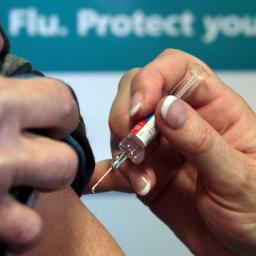
Older patients given flu vaccinations in the morning rather than the afternoon produced more antibodies to fight seasonal virus strains, say researchersGPs could save the lives of thousands of people and prevent many more from being hospitalised by administering flu jabs in the morning rather than the afternoon, research suggests.A trial of nearly 300 pensioners seen at 24 GP practices in the West Midlands found that flu vaccinations were more effective when given at morning surgeries, with people producing higher levels of antibodies to fight off seasonal strains of the virus.
|
 |
by Ian Sample Science editor on (#1BRAV)
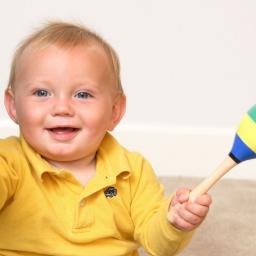
Study of nine-month-old children showed regular musically-based play sessions improved their ability to process speech sounds and rhythmsTaking babies along to musical play sessions may boost their cognitive skills and have a long-lasting impact on their learning, researchers say.A study of nine-month-old infants found that regular play sessions arranged around musical activities improved the children’s ability to process speech sounds as well as musical rhythms. Continue reading...
|
 |
by Letters on (#1BR5Z)
Disappearing pitmatic | Appearing in the Guardian | King Canute v tide | Horse/car priority on roads | Wakes weeks and potato pies | Spelling test cancellationI only speak to animals while out walking (Notebook, 19 April) if there are no people within earshot. However, I have found that the salutations between people in County Durham have changed over the past 30 years. No more pitmatic “What fettle?†or “What cheer?†and an increase in the prosaic “Alreet?â€, which is used as both greeting and response. With the pits long gone and pitmen as rare as nightingales, so their language disappears too.
|
 |
by Alex Bellos on (#1BQN8)
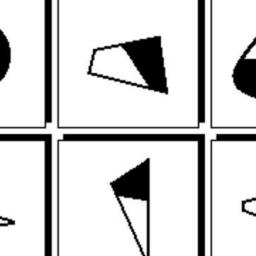
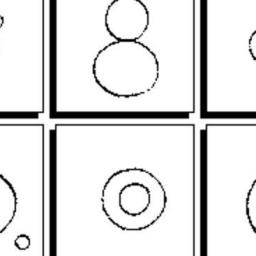
Answers to today’s spot the difference puzzlesI’ve been posting fortnightly puzzles in the Guardian for almost a year now, and one of the trickiest things to judge is level of difficulty.I try only to set puzzles that are understandable to everyone, and that at least a significant minority will be able to solve. Continue reading...
|
 |
by Clár Nà Chonghaile on (#1BPQV)
Malaria death rates have fallen 60% since 2000, but with some mosquitoes developing resistance to treated bednets, is it time to change strategy?The underlying fact seems incontrovertible: mosquito resistance to the insecticides used to treat bednets is growing. The question is what can be done to combat this resistance and ringfence the dramatic drop in global malaria deaths over the past 15 years?Since 2000, the numbers of people dying of malaria have dropped by 60% and cases of the disease have fallen by 37%, according to the World Health Organisation (WHO). Continue reading...
|
 |
by Guardian Staff on (#1BPJ9)
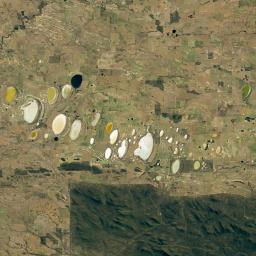
Salt lakes, dust rivers and ice shelves were among the images captured by European Space Agency and Nasa satellites last monthThousands of saline lakes span the south-western part of Western Australia, at the headwaters of the Frankland river, north of Stirling Range national park.Millions of years ago, declines in rainfall caused river flows to ebb and river valleys to fill in with sediment. Wind then sculpted the loose sediment to form the lake basins that remain today. Some of the lakes now fill with runoff directly from the Stirling Range; others are controlled primarily by groundwater. Continue reading...
|
 |
by Anonymous on (#1BP21)
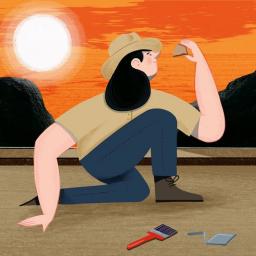
Archaeology is hard work. You need patience to cope with red tape, dedication to painstakingly record finds at digs – and a touch of eccentricity always helpsI ended up in archaeology as a result of a long-held romantic notion of making great discoveries and solving mysteries. As a kid I always had my head buried in books, lost in the realms of the great ancient civilisations of the world. I never had fantastical expectations of archaeology, though. I didn’t think that I would travel the world and be a globe-trotting treasure hunter. And you certainly don’t get to travel in archaeology unless you are somehow affluent, have magical powers to secure funding, or know the right people in all the right places.None of the above apply to me, so I have been confined to archaeology in England and Northern Ireland. Don’t get me wrong, archaeology here is infinitely fascinating but let’s be honest, it’s not as grand and visually awe-inspiring as, say, the pyramids or Pompeii. Over here, at its most stellar, it can be just two different coloured soils side by side, but to the trained eye that tells us a great deal about what was going on thousands of years ago. Continue reading...
|
 |
by Alex Bellos on (#1BNZ6)
Spot the difference problems - with a difference!
|
 |
by Alan Pickup on (#1BMXD)
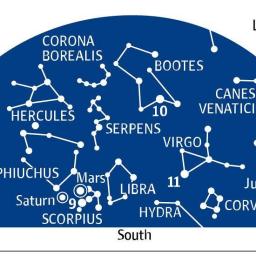
Mars stands at its brightest and closest at opposition in May but sadly hovers low down in the S sky as Britain’s nights dwindle in length and become dogged by twilight. The astronomical highlight of the month, though, can only be observed in bright sunlight. When the innermost planet Mercury slides around the near side of its orbit on 9 May, its silhouette appears as a miniature inky dot against the dazzling face of the Sun. Continue reading...
|
 |
by Ian Sample Science editor in Cologne on (#1BMC3)
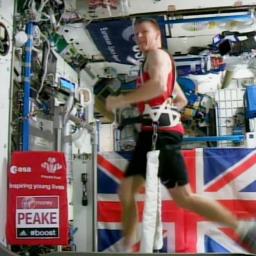
British astronaut becomes first man to complete a marathon in space, finishing in three hours, 35 minutes and 21 secondsThe treadmill turned and the timer began. It was 10am on Sunday morning in London and as tens of thousands of runners set out on the marathon below, the British astronaut Tim Peake broke into his stride on board the International Space Station. He was somewhere over the Pacific Ocean.Dressed in a red vest and black shorts, with the union flag hoisted behind him, Peake’s run took him into the world record books as the first man to complete a marathon in space. He finished in three hours, 35 minutes and 21 seconds. In the time he had taken to pound out 26.2 miles, he had travelled more than twice around the planet. Continue reading...
|
 |
by Catherine Shoard, Philippa Perry, Steven Pinker, D on (#1BM9E)
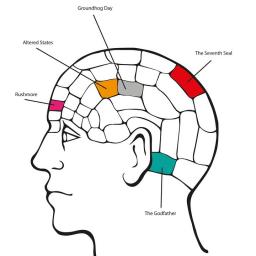
Power, violence, death and reality … the movies can teach us plenty about life’s big issues. From the Godfather to Groundhog Day, five psychologists pick the films that tell us what makes humans tickTen days ago in London, the Hungarian director László Nemes hosted a preview screening of his film, Son of Saul. He explained that if people didn’t want to stay for the Q&A afterwards, that was fine; he wouldn’t take personal offence. The audience giggled politely. “That’s the last laugh you’ll have for a while,†he told them. Continue reading...
|
 |
by Guardian Staff on (#1BM9G)
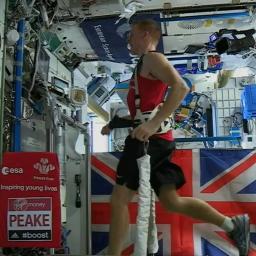
European Space Agency video captures the moment British astronaut Tim Peake completed the London Marathon on a treadmill at the International Space Station on Sunday. He is the second person to finish a full 26.2 mile course in space. In 2007, Nasa’s Sunita Williams ran along with the Boston marathon on the space treadmill
|
 |
by Salley Vickers on (#1BKH0)
Hearing voices can be as much a sign of creativity as madness, according to an intriguing new psychological study“What shall I say about this book? Why do I like it?†This, were I to put into words what passed through my mind, was roughly what I said to myself before beginning to write this review. Hovering somewhere in the space between these thoughts, another voice, inaudible to anyone but myself, asked: “How about coffee? Or maybe wine? Yes? No, better stick to coffee.†These words, however, do not quite convey the actual experience, which was altogether a mistier and less definitive one. This kind of inner conversation, though common enough, is not well documented or understood. The psychologist Charles Fernyhough, who became interested in the manifold ways in which we commune with ourselves, decided to investigate the phenomenon and his book, The Voices Within, is the intriguing result of his research.The book explores a wide range of types of voice, from the everyday, such as my own rather banal example, to the creative and the bizarre. Voices are associated in the popular mind with schizophrenia, but they are also frequent attenders on other psychiatric disorders. During the years I spent working as a psychoanalyst, I became acquainted with many kinds of inner voice: nags, down-putters, savage persecutors, prophets of doom, the siren calls of idleness, the seductive beckonings of recklessness – these and many other soundtracks afflict people who are by no means mad but nonetheless are victims of vocal inner correspondents prejudicial to their health and balance. Continue reading...
|
 |
by Nick East on (#1BKAA)
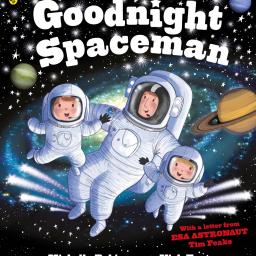
Nick East has a step-by-step guide inspired by the ultimate spaceman: Tim Peake! Continue reading...
|
 |
by Stuart Clark on (#1BK3V)
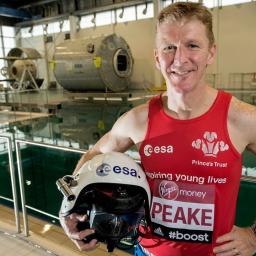
The astronaut faces a number of challenges when he competes in Sunday’s big race… in spaceToday, around 36,000 people will be running the London Marathon but only one will be doing it in space. British astronaut Tim Peake will be in orbit aboard the International Space Station (ISS), strapped by bungee cords to a treadmill. He will be watching the RunSocial app on his iPad, which will digitally recreate the route for him.Weightlessness is not kind to astronauts. The perceived lack of gravity deconditions the body in a number of ways. Muscle loss occurs because the body is not having to work to stand up right but more obscure changes to the nervous system are being recognised too. Continue reading...
|
 |
by Lucie Green on (#1BK25)
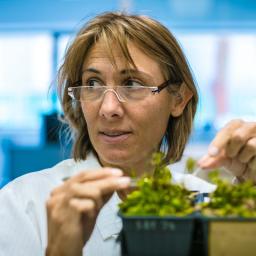
Hope Jahren’s remarkable memoir is both personal odyssey and the story of her profound affinity with the natural worldLeaves, soil and seeds. Not normally words that make your pulse race. But they do light a fire in the mind and heart of Hope Jahren. In her hands, you will never feel the same way about these words again. Leaves become elegant machines, soil is the interface between the living and the dead, and seeds, well, they are transformed into the most patient and hopeful of all life forms. Jahren has such a passion for the natural world that it’s hard to imagine her in any role other than her current one; a professor of geobiology at the University of Hawaii. Lab Girl is her engaging new memoir, which tells the story of her fight to establish and fund her own research laboratory. And it’s been a fascinating journey.The mass ratio of plant to animal life on land is around a thousand to one. Plants dominate the world Continue reading...
|
 |
by Sandi Mann on (#1BK0Y)
We live in a world of constant entertainment – but is too much stimulation boring?It amazes me when people proclaim that they are bored. Actually, it amazes me that I am ever bored, or that any of us are. With so much to occupy us these days, boredom should be a relic of a bygone age – an age devoid of the internet, social media, multi-channel TV, 24-hour shopping, multiplex cinemas, game consoles, texting and whatever other myriad possibilities are available these days to entertain us.Yet despite the plethora of high-intensity entertainment constantly at our disposal, we are still bored. Up to half of us are “often bored†at home or at school, while more than two- thirds of us are chronically bored at work. We are bored by paperwork, by the commute and by dull meetings. TV is boring, as is Facebook and other social media. We spend our weekends at dull parties, watching tedious films or listening to our spouses drone on about their day. Our kids are bored – bored of school, of homework and even of school holidays. Continue reading...
|
 |
by Robin McKie on (#1BJFZ)
Approval for modified crops in America adds to confusion in UK on new-tech foodstuffsAmerican regulators have allowed the cultivation and sale of two crops modified with the gene-editing technique known as Crispr. The crops – a white button mushroom and a form of corn – are the first Crispr plants to be permitted for commercial use in the US.The move is a boost for new technology in the creation of foodstuffs, but is expected to worsen the considerable confusion in Britain over the use of gene-editing in agriculture and the importing of crops created using such technology. Continue reading...
|
 |
by Tracy McVeigh and Tom Dare on (#1BJFX)
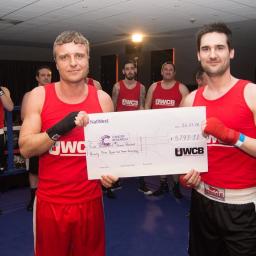
Cancer Research defends partnership after calls to ban unlicensed contestsA leading cancer charity has defended its use of amateur boxing bouts to raise funds, despite calls for the unlicensed sponsored contests to be banned.Cancer Research UK has a corporate partnership with a company called Ultra White Collar Boxing (UWCB), which offers what has been dubbed a “Fight Club experienceâ€, named after the 1999 cult film. Continue reading...
|
 |
by Rowan Slaney on (#1BGT0)
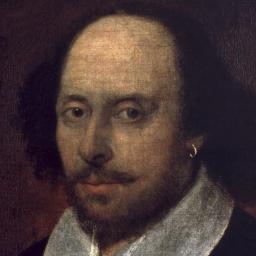
This week on Science Weekly we delve into a world not commonly ventured into by us scientists... ShakespeareTo commemorate the 400th year of Shakespeare’s death Science Weekly has found scientists from around the UK and Ireland who can reveal the science of Shakespeare. Everything from hurricanes and crowd manipulations, to ghosts and even the biology of fairies Continue reading...
|
 |
by Dean Burnett on (#1BGRY)
2016 has been a bad time for high-profile celebrity deaths, and a lot of people are sad about this. But some pundits see it as a chance to boost their own profileYou’ve probably heard that the famous person has died. Which one? Doesn’t matter. Seems to be happening a lot lately. Maybe it’s the internationally famous actor? Or the music legend? Or the household comedy name? Or the other one? Or maybe the magician? Or the wrestler?Whichever one you’re thinking about right now, you’re no doubt pretty sad about them passing away. They probably meant a lot to you, maybe they were a big part of your childhood and their work has had a lasting impression on you? Or maybe you discovered them more recently and have been devouring their back catalogue, so they’ve been a big part of your world recently? Perhaps you’ve never been a die-hard fan but their constant presence in popular culture has resulted in them providing a comfortably familiar aspect of life in a complex and ever-changing world? It could be any of these things, all of these things, or some other factor altogether. Continue reading...
|
 |
by Emma Cook on (#1BGMV)
From a young age we are told to aim high. Yet the more driven we are, the more likely we are to feel miserable, says happiness expert Raj Raghunathan. Here’s what we should try instead
|
 |
by Letters on (#1BESS)
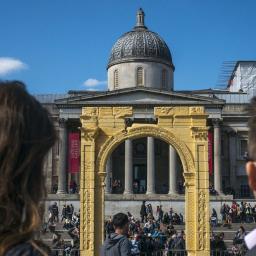
Mocking-up Palmyra in London’s Trafalgar Square (Report, 20 April) reminds me of that famous scene from Spinal Tap involving a mini Stonehenge. The intentions are good, but the outcome is lacking. The digital Triumphal Arch does, at least, draw attention to the tragic cultural losses that have occurred in Syria and elsewhere during the current conflict. But Roger Michel of the Oxford Institute for Digital Archaeology is wrong to think that a scanned copy might act as a plausible substitute.New technology allows us to reproduce the form of an ancient structure more accurately than ever, but it can never recapture the spirit of the original which is the product of true ageing and change over generations. William Morris, founder of the Society for the Protection of Ancient Buildings, rightly felt that replication leads to “feeble and lifeless forgeryâ€. Continue reading...
|
 |
by John Vidal on (#1BEPB)
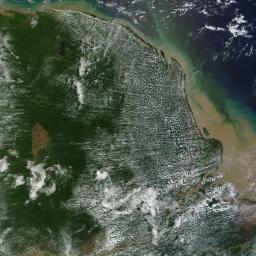
Scientists astonished to find 600-mile long reef under the muddy water in a site already marked for oil explorationA huge 3,600 sq mile (9,300 sq km) coral reef system has been found below the muddy waters off the mouth of the river Amazon, astonishing scientists, governments and oil companies who have started to explore on top of it.
|
 |
by PD Smith on (#1BEK5)
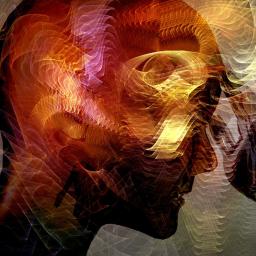
This remarkable study uses case histories to show the extent and gravity of a much misunderstood conditionThis remarkable book by neurologist Suzanne O’Sullivan, shortlisted for the 2016 Wellcome prize, explores psychosomatic disorders: “physical symptoms that mask emotional distressâ€. Through anonymised case histories, O’Sullivan shows how the mind is capable of reproducing practically any physical symptom, from palpitations to blindness or paralysis. Up to a third of people attending a neurology clinic have symptoms that can’t be explained and which may have an emotional cause. In the US, the cost of treating psychosomatic disorders is nearly double that of diabetes, some $256bn a year. O’Sullivan admits to being “astounded†by the degree of disability the condition creates. The case histories she describes offer a remarkable insight into the terrible suffering of these patients, as well as into the power of the mind over the body. Every week she has to tell someone their disability has a psychological cause, a diagnosis that is often angrily rejected: “In the 21st century, psychosomatic illness is a socially unacceptable disorder.†Her purpose in writing this important book is to raise public awareness of a much misunderstood condition, but it should also be on the reading list of every medical student.• To order It’s All in Your Head: True Stories of Imaginary Illness for £7.19 (£8.99) go to bookshop.theguardian.com or call 0330 333 6846. Free UK p&p over £10, online orders only. Phone orders min p&p of £1.99. Continue reading...
|
 |
by Daniel Bradford on (#1BDTC)
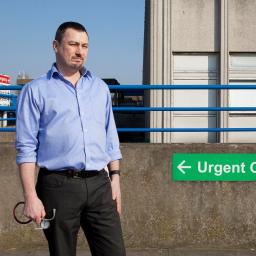
The men tumbled like dominoes. One man tried to walk to the toilet and collapsed. The wards became chaoticAs a medical student, I volunteered for lots of drug trials to make extra money. I sold my blood, my sperm – I did them all. You’re more likely to get hurt on the way to the trial unit than as a participant. After I graduated, I worked as a junior doctor in hospitals before joining a private drugs company that ran trials. I was promoted to principal investigator, the doctor in charge.I had been involved in more than 300 trials by March 2006 when I was put in charge of testing a new drug in the private wing of Northwick Park hospital in north London. Continue reading...
|
 |
by Sarah Marsh on (#1BD7P)
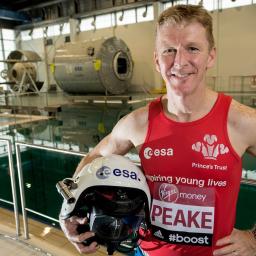
On Sunday, astronaut Tim Peake will take on the London Marathon course – just some miles above it. But what are the challenges of running in a weightless environment?As if going into space wasn’t enough of a challenge, British astronaut Tim Peake is now taking part in a marathon up there, to coincide with the London Marathon this weekend. So how on earth (or not) do you actually run a whopping 26.2 miles in a weightless environment?Related: Rocket man: the astronaut who plans to run the marathon in space Continue reading...
|