 |
by Oliver Milman on (#XDNB)
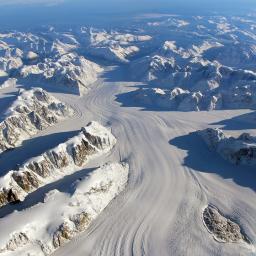
Duration of day has lengthened by a millisecond over the past 100 years as water from shrinking glaciers slows Earth’s rotation and shifts position of polesThe impact of climate change may appear to be overwhelmingly negative but there is a bright spot for those who struggle to find enough time in the day: melting glaciers are causing the rotation of the Earth to slow thereby lengthening our days, new research has found.Harvard University researchers have provided an answer to a long-held conundrum over how shrinking glaciers are affecting the rotation and axis of the Earth, calculating that the duration of a day has lengthened by a millisecond over the past 100 years. Continue reading...
|
| Link | http://feeds.theguardian.com/ |
| Feed | http://feeds.theguardian.com/theguardian/science/rss |
| Updated | 2026-10-01 02:00 |
 |
by Agence France-Presse in The Hague on (#XD9G)
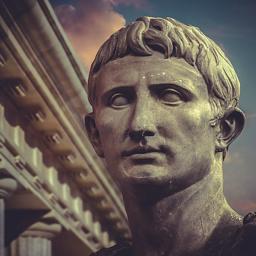
Archaeologists claim carbon dating of ancient weapons found in Kessel proves Roman emperor led massacre of Germanic tribes on Dutch soilArchaeologists claim to have proved that Julius Caesar set foot on what is now Dutch soil, destroying two Germanic tribes in a battle that left about 150,000 people dead.The tribes were massacred in the fighting with the Roman emperor in 55BC, on a battle site now in Kessel, in the southern province of Brabant. Continue reading...
|
 |
by Graham Readfearn on (#XD0G)
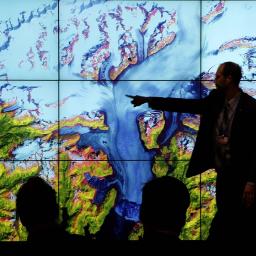
Anticipation builds for COP21 to deliver a groundbreaking deal as experts welcome draft statement to keep warming to well below 2CThere’s a cafe next door to the thronging media centre at the UN global climate talks in Paris where the constant clang of the door to the chill air outside can barely be heard above the buzz.Veteran climate scientist and biologist Prof Lesley Hughes has taken a seat with me close by and is struggling to hear herself think. Continue reading...
|
 |
by Gianluca Sarri on (#XCXJ)
The Force Awakens is in UK cinemas next week, which should give you enough time to brush up on your physics and make yourself some appropriate kit ...This piece was originally published on The Conversation.As even casual Star Wars fans will know, lightsabers are probably the coolest weapon ever to make an appearance on the big screen. Lightsaber fights are so elegant that they are almost hypnotic and, even though not all of us might have a strong enough flow of Force running through our veins, a lightsaber in the right hand is by far the deadliest weapon to be found in the universe. Continue reading...
|
 |
by Ian Sample on (#XCVB)
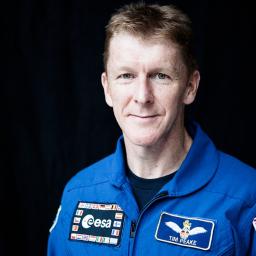
The former helicopter test pilot is used to danger, but on Tuesday the British astronaut will face new challenges aboard the Soyuz rocket, bound for the ISSThe area cleared around the Soyuz rocket at Baikonur Cosmodrome in Kazakhstan extends for more than a mile before reaching the observation area where family and colleagues gather on launch day. To watch from afar has several advantages. It is easier on the neck, for one. The roar of the 26 million horsepower engines is bearable that far out, too. The main reason, though, is more sobering. At such distance, the crowd should be safe if the Soyuz, a machine that burns 270 tonnes of fuel and oxygen in nine minutes, explodes.On Tuesday, Tim Peake, the first Briton admitted to the European astronaut corps, will ride a coach into the heart of Baikonur’s exclusion zone. After a short stop to urinate on the coach’s rear right wheel, a tradition embraced since Yuri Gagarin did the same more than 50 years ago, Peake will take his seat in the capsule on top of the rocket. At 11.03am UK time, the engines are due to light up, blasting Peake and his two crewmates into the sky. He is not expected back until June.
|
 |
by Guardian Staff on (#XCJE)
Siberian tigers, giant panda and an albino squirrel are among this week’s pick of images from the natural world Continue reading...
|
 |
by Stuart Clark on (#XABY)
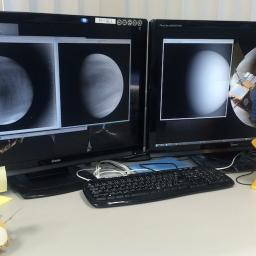
A Japanese spacecraft has achieved orbit around Venus, only five years late and on its second attempt.The Venus Climate Orbiter, called Akatsuki after the Japanese word for dawn, was launched on 20 May 2010. It arrived at Venus on 6 December 2010 and began the rocket burn that would place it into a four-day orbit around the planet. Continue reading...
|
by Peter Kimpton on (#XA6H)
Ambiguous, misunderstood or misappropriated, suggest your selection of works with words taken the wrong way either by accident or on purpose
 |
by Steve Mitchell on (#X9RA)
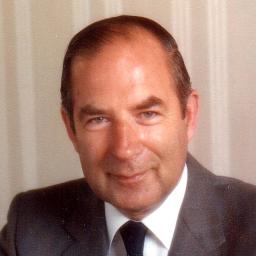
Douglas Walker, who has died aged 87, was the longest-serving managing director of the agricultural and grounds care equipment company John Deere.Doug, as he was known, was a key figure in the company’s establishment and growth in the UK and Ireland after it started trading from headquarters at Langar, near Nottingham, in January 1966. In the 25 years under his leadership it developed into a strong, well-known organisation. Continue reading...
|
 |
by Maev Kennedy on (#X8VK)
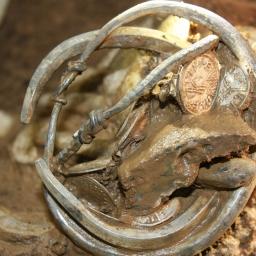
Coins and other items buried in the late 870s and found by hobby metal detectorist in farmer’s field in Oxfordshire may be worth a small fortuneA hoard of Viking silver that casts new light on Alfred the Great and the one-time ally he virtually obliterated from history has been found by a metal detectorist in a field in Oxfordshire.The hoard, described when it arrived at the British Museum as “a greasy haggis with bits of treasure sticking out at the cornersâ€, was buried in the late 870s, the period in which the hit television series Last Kingdom is set. It may have been the hastily concealed wealth of a Viking conscious of imminent regime change after the defeat of the invaders by Alfred the Great at the battle of Edington in 878. Continue reading...
|
 |
by Jenny Rohn on (#X8DG)
Jenny Rohn: Despite years of effort, women remain under-represented in science. But are there really any neat solutions?Another week, and another attempt to engage girls in the sciences being widely ridiculed on Twitter. This time it was IBM, whose hastily withdrawn campaign joins the ranks of other criticised efforts, including the European Commission’s “Science: It’s A Girl Thing†video, and EDF Energy’s “Pretty Curious†initiative.One can’t help feeling a bit sorry for IBM and other corporations whose well-meaning efforts fall flat. I personally found nothing offensive about the IBM video, which invited aspiring female engineers to subvert a so-called “girly†household object into something more interesting (examples included a hot air-driven clock). In fact, the video explicitly challenged the stereotype that women are only interested in body image. Unfortunately, the territory of “pinkification†is so sensitive and fraught that it seems to be off-limits as a hook – even one that subverts the stereotypes instead of feeding them. Continue reading...
|
 |
by Markku Markkula on (#X85F)
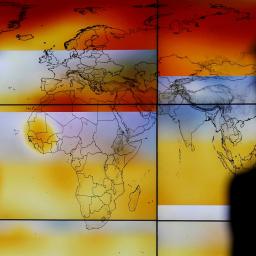
With cities and regions behind more than 70% of climate change reduction measures, it is crucial they’re included as partners in the Paris agreementCompared with previous UN conferences, there seems to be a far greater sense of optimism at the Paris climate talks. Before the start of the negotiations more than 146 countries, representing 86% of global emissions, submitted their plans to cut them. Yet this was deemed not enough: it would have only, according to the UNFCCC , limit temperature rises to 2.7C by 2100 – not the 2C scientists consider to be the maximum the world can tolerate.Related: World will pass crucial 2C global warming limit, experts warn Continue reading...
|
by Sharon Witherspoon on (#X7QP)
The social sciences have never been more vital. But they still face challenges in terms of quantitative skills and the diversity of available funding.By any measure, UK social science is in good shape. The recent Business of People report, international benchmarking reviews and case studies from the Research Excellence Framework demonstrate its many strengths. Sir Mark Walport, the government’s chief scientific adviser, has praised its contributions, most recently in strategies to tackle Ebola.We also have a robust infrastructure to meet the data challenges that face us. For the first time in decades, the main birth cohort and longitudinal studies have secure homes and infrastructure funding. The Economic and Social Research Council (ESRC) has worked hard to create its Administrative Data Research Network, and has taken innovative steps to promote the use of big data. Such investments give UK social science a real advantage in the kinds of empirical work that can be done. Continue reading...
 |
by Guardian Staff on (#X67K)
A professor from Cornell University College of Veterinary Medicine, Alexander J. Travis, explains the conservation benefits behind the first litter of puppies born through IVF. The healthy delivery of the dogs by caesarean section on 10 July marks a success that has eluded scientists since efforts began in the mid-1970s. The procedure could transform attempts to save endangered dog species, and potentially help prevent the genetic disorders that afflict so many breeds Continue reading...
|
 |
by Ian Sample Science editor on (#X66C)
Nineteen embryos, seven pregnancies, one female beagle ... scientists say procedure could save endangered species and prevent genetic disordersFrom the paint on their toes and the tips of their tails, the puppies stand out as unusual. But the litter of seven will go down in history for more than the colours that tell them apart. Now five months old and doing well, the dogs are the first to be born through IVF.The healthy delivery of the dogs by caesarean section on 10 July marks a success that has eluded scientists for 40 years since efforts began in the mid-1970s. The procedure could transform attempts to save endangered dog species, and potentially help prevent the genetic disorders that afflict so many breeds.
|
by Stuart Clark on (#X5ZT)
Searches for signs of extraterrestrial intelligence have come up empty-handed, forcing astronomers to think the ‘alien megastructure’ may be a natural phenomenonThe star KIC 8462852 exploded into the public consciousness in October when it was suggested that mysterious signals could be explained by a gigantic artificial structure drifting in front of the star and blocking some of its light.Astronomer Jason Wright, from Penn State University, told the Atlantic, “Aliens should always be the very last hypothesis you consider, but this looked like something you would expect an alien civilization to build.â€
 |
by Ian Sample Science editor on (#X5ZV)
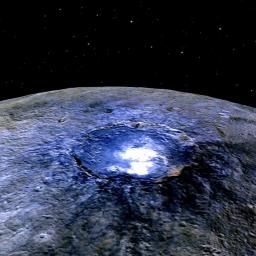
Fresh images from Nasa’s probe reveal sparkly patches on dwarf planet likely to be water vapour emanating from subsurface iceWhen Nasa’s Dawn spacecraft reached the largest object in the asteroid belt earlier this year, mission scientists were baffled to find that the alien terrain gleamed with giant bright spots.The glinting patches on the surface of Ceres sparked an intense debate among astronomers who could not work out if the shiny material was frozen water, reflective salt deposits, or even geysers blasting water vapour into space.
|
by Catalina Pimiento on (#X5AM)
Awareness of why creatures become extinct is vital, but the Discovery Channel misinformed with its claim that the Megalodon was still alive. Is Racing Extinction their attempt to make amends?In the last few years, the Discovery Channel has aired two fake documentaries (aka mockumentaries) on the fossil shark Megalodon (Carcharocles megalodon). In both they claim that this extinct species is still roaming the world’s unexplored oceans. The worrying part is not that the Discovery Channel is broadcasting false information to millions of people – as disturbing as that is – but that surveys taken by the Discovery Channel’s viewers show that 73% of them think this species is in fact still alive.Related: Did Discovery Channel fake the image in its giant shark documentary? | George Monbiot Continue reading...
 |
by Bradley Busch on (#X5ND)
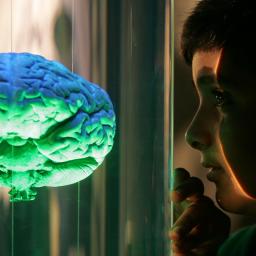
If being a teenager is hard, teaching them is harder. Here are four insights into the adolescent brain – and how it can inform classroom practice
|
 |
by Haroon Siddique on (#X58P)
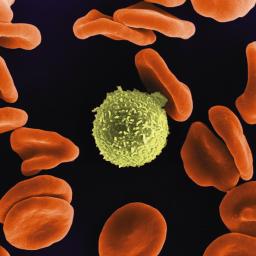
Head and neck cancer patients undergo trial involving genetically modifying their white blood cells to recognise and attack the tumourPatients with head and neck cancer are receiving a groundbreaking new treatment that involves prompting their immune systems to battle the disease.The trial, at the National Institute for Health Research biomedical research centre at Guy’s and St Thomas’ NHS foundation trust and King’s College London, involves genetically modifying patients’ white blood cells so they recognise and attack the tumour. Continue reading...
|
 |
by Stephen Curry on (#X4Q4)
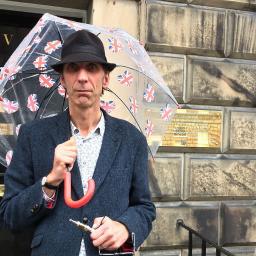
The author’s radio quest to unlock the scientific genius of James Clerk Maxwell ends in frustration, but the journey is revelatoryThere’s a potent antidote to the “Isn’t this amazing?†school of science communication and it’s called Will Self. In Self Drives: Maxwell’s Equations, which was broadcast recently on BBC Radio 4, the curious curmudgeon takes science to task once again as he goes in search of the mathematical and physical genius behind James Clerk Maxwell. In the 19th century, Maxwell’s electromagnetic theory unified electricity, magnetism and light in four compact, if redoubtable, equations, which celebrate their 150th anniversary this year.Over five short episodes, Self’s querulous quest takes him from Maxwell’s birthplace in Edinburgh to his family home in Glenlair, to the radio telescope at Jodrell Bank and the Diamond synchrotron near Oxford, and finally to Cambridge, where Maxwell studied mathematics in his youth and returned in his latter years as one of the nation’s most accomplished scientists to head the university’s Cavendish physics laboratory. Accompanying Self along the way is Akram Khan, the same physics professor who joined the errant writer on his earlier orbit of the Large Hadron Collider at CERN. I would have dubbed Khan Sancho Panza to Self’s Don Quixote but for this particular expedition the characters are reversed. It is Khan who wishes to see the poetry of science, while Self is happier to be grounded in prosaic and flawed reality. At CERN he refused truculently to worship in the cathedral of particle physics, stymied in equal measure by the difficulty of the subject matter and the boosterism of its scientific proponents. Here again the journey is mostly one of disappointment and frustration. Continue reading...
|
 |
by Anonymous on (#X4NY)
SSRIs may not be for everyone, but when anxiety dominated my life, they brought me into a world of reliefI think of it as the warm chord. I was sitting in the front room, alone. My parents had gone to bed, but I wanted to listen to a CD I’d bought. I turned the light out, to immerse myself. That in itself was strange. When you’re anxious, immersing yourself in a feeling seems like a bad idea – your skin is so thin anything might penetrate it and overwhelm you, a song or a smell or a mood. But I took the risk, and instead of fear – the heartbeat stoking, paralysing fear I’d experienced for much of the past year – there was something else. Fear had left a space, one I was invited to explore. It said: you can come out now.But alongside that, there was a positive presence, a low thrum of safety. A warm chord. Nothing to do with the music; it was more elemental than that. I sat and the world turned, but without the familiar promise of danger. A stillness settled over everything. I no longer had to hold all of existence in my hands, as if super-human vigilance could protect me from harm. Continue reading...
|
by Sheeva Weil, Leah Green, Pascal Wyse and Beakus on (#X423)
Sheeva Weil was raped in her first term at university, and spent years asking herself what she could have done to prevent it. After therapy – and now studying for a masters in trauma psychology – she explains why so many rape survivors blame themselves. And, she argues, situations like hers are more common than we thinkAnimation by Beakus
 |
by Rosie Ifould on (#X421)
It’s so easy to scoff at pseudo-profound sayings, but in my dark times I have found them comfortingIf you’re offended by swearing, apologies, because I’m about to use the word bullshit quite a lot. It’s not my fault. It’s because researchers who recently published a paper about the intelligence of people who believe in the wisdom of inspirational quotes were awfully fond of the word bullshit. It appears in the title, On the Reception and Detection of Pseudo-profound Bullshit; it’s there five times in the abstract alone; and the first keyword is – well, you can probably guess.The researchers were extremely keen to know whether certain people were more likely to believe in pseudo-profound statements, and whether that had anything to do with intelligence. You know the kind of thing: phrases such as “You can’t start on the next chapter of your life if you keep rereading the last one†or “If opportunity doesn’t knock, build a door.†Continue reading...
|
 |
by Suzanne Goldenberg US environment correspondent on (#X2P2)
Sting operation uncovers two prominent climate sceptics available for hire by the hour to write reports on the benefits of rising CO2 levels and coalAn undercover sting by Greenpeace has revealed that two prominent climate sceptics were available for hire by the hour to write reports casting doubt on the dangers posed by global warming.Posing as consultants to fossil fuel companies, Greenpeace approached professors at leading US universities to commission reports touting the benefits of rising carbon dioxide levels and the benefits of coal. The views of both academics are well outside mainstream climate science. Continue reading...
|
 |
by Letters on (#X2EB)
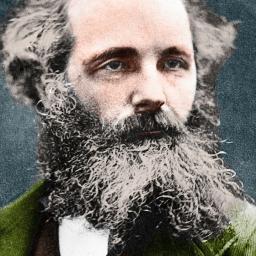
Last Wednesday BBC2 Scotland gave us an excellent hour-long programme on James Clerk Maxwell: The Man Who Changed the World – recognised as the greatest scientist between Newton and Einstein. When Einstein was asked if he stood on the shoulders of Newton, he replied “No, on the shoulders of Maxwellâ€; he gave Maxwell’s photo pride of place on his study wall (100 years on, is this Einstein’s greatest gift to humanity?, 7 December). BBC2 viewers outside Scotland were treated to the Tottenham MP’s advice surgery. Whether or not the BBC shows Maxwell more widely in future, such programmes surely justify simultaneous transmission throughout Britain. Scottish ignorance of our home-grown genius is sad enough; it’s probably even worse elsewhere.
|
 |
by Ian Sample Science editor on (#X1TS)
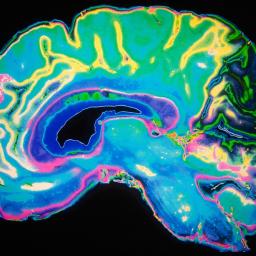
Tests show compound, similar to that found in energy drinks, clears amyloid beta plaques, which build up in the brain in early stages of Alzheimer’sScientists have discovered a chemical that destroys toxic plaques which build up in the brain in the early stages of Alzheimer’s disease.Preliminary tests found that when added to drinking water, the compound cleared amyloid beta plaques from the brains of mice with Alzheimer’s-like symptoms, and restored their cognitive function to normal.
|
 |
by Joel Golby on (#X19G)
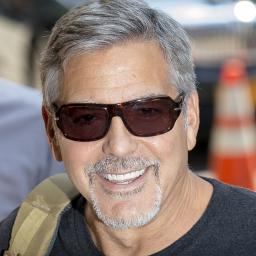
Charisma must be stopped, if any quick-witted person with nice teeth has it. No new kid on the block should be able to Farage us all with a devastating bon motFinally, researchers have figured out the deep truth of what charisma is, and it’s basically “just being quickâ€. Yeah, George Clooney: I’m on to you, buddy. According to a University of Queensland study, the ability to think and act quickly is a key column around which the most intangible of personality traits is built. They backed up their findings with a do-it-as-quick-as-you-can general knowledge quiz, and found that those who completed it quickly were viewed as more charismatic by their friends. The study also looked at the most likeable musicians, leaders and celebrities. “When we looked at charismatic leaders, musicians and other public figures, one thing that stood out is that they are quick on their feet,†research leader William von Hippel said. “Our findings show that social intelligence is more than just knowing the right thing to do. Social intelligence also requires an ability to execute, and the quickness of our mind is an important component of that ability.â€Related: If bacon-sandwich charisma defines political leadership, only Nigel Farage wins | Stefan Stern Continue reading...
|
 |
by Arwa Mahdawi on (#X16V)
It may have been ill-conceived, but it doesn’t take a rocket scientist to know that IBM’s ‘hack a hairdryer’ campaign wasn’t actually aimed at women already doing great thingsIBM promoted the video on Friday. The internet got vexed on Saturday. Things got even more heated on Sunday. IBM apologised profusely on Monday. Someone probably got sacked on Tuesday. No, this isn’t a Craig David song gone horribly wrong. It’s the timeline of an IBM marketing initiative gone horribly wrong.The tech company has just axed a campaign that asked young women to “hack a hairdryerâ€. The point of this “hackingâ€, by the way, was to encourage more women to pursue Stem (science, technology, engineering and mathematics) careers – not to increase the incidences of electrocution in the bathtub. Continue reading...
|
by David Barnett on (#X0ZN)
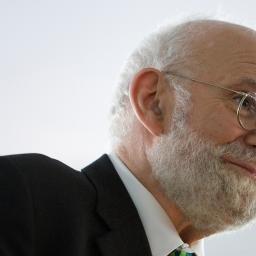
British author Stephen Baxter is writing a follow-up to HG Wells’s classic novel of Martian invasion, called The Massacre of Mankind – but War of the Worlds has a rich history of unofficial sequelsWhen HG Wells saw off the invading Martians at the end of his 1897 science fiction classic War of the Worlds, he didn’t envisage them making a comeback. But that hasn’t stopped a century’s worth of conjecture about what happened next.It seems that, despite the best efforts of HG Wells and the common cold, you can’t keep a good Martian down: 119 years on, the “official†sequel to War of the Worlds has been announced, to be penned by Stephen Baxter, one of Britain’s brightest high-concept science fiction writers. Co-author with Terry Pratchett of the Long Earth series of novels, the most recent of which was published after Pratchett’s death in March, Baxter has also collaborated with Alastair Reynolds and Arthur C Clarke, as well as having a wide body of solo work under his belt. Continue reading...
 |
by Robin McKie on (#X110)
Going feet first into evolutionary theory, the race to crack the genetic code and a memorable journey around the coast of Britain
|
 |
by Alex Wodak and Gideon Warhaft on (#X112)
After two ecstasy deaths at the Stereosonic festivals, it’s imperative that we get our facts straight about the drug, or more young people will die, say two leading experts on drug use and policyThe recent tragic deaths of two young people after taking ecstasy at the Stereosonic music events in Sydney and Adelaide prompted much media comment. Unfortunately, much of it was misinformed.Unless we can agree on the basic issues and realistic options, sadly more young people will continue to die. Ecstasy is very different from and a much less dangerous drug than “iceâ€, the subject of prime minister Malcolm Turnbull’s announcement of a National Ice Action Plan on Sunday. Continue reading...
|
 |
by Haroon Siddique on (#WZJ3)
Review on antimicrobial resistance warns that antibiotic use on animals outweighs that on humans in many countries, posing great health riskThe use of antibiotics in agriculture is fuelling drug resistance and must be cut back or even banned where they are important for humans, a report commissioned by David Cameron has warned.The Review on Antimicrobial Resistance said global use of antimicrobials in food production at least matched that by humans, extending even to the widespread application in some areas of “last resort†antibiotics for humans – which cannot be replaced when ineffective – to animals. Continue reading...
|
 |
by Catriona Jackson on (#WZDS)
The government is walking the walk and talking the talk on science, but what’s missing from the innovation agenda?The applause will be long and loud for the government’s $1.1bn national innovation and science agenda, and for good reason.The dollar figures and the breadth are impressive, with 24 initiatives spanning 11 different government departments. Continue reading...
|
 |
by Letters on (#WYTP)
The notion that scientists are easy prey to jihadism is scurrilous because of the false assertion that scientific education is uncritical (Paul Vallely, Opinion, 4 December). Putting aside the issue of whether 18 British Muslims make up a reliable sample, it can be hypothesised that it is more likely that jihadism might be a reaction against the critical scientific approach that denies the veracity of many of the events in the religious texts. What is equally disturbing is that Martin Rose of the British Council fails to understand that science is the very essence of British culture – a culture that has produced, or encouraged, scientists and philosophers of science such as Roger Bacon, Francis Bacon, Newton, Hooke, Boyle, Wallace, Darwin, Rutherford, Crick, Popper and Sanger (to name just a few). Our success in this area comes about because British scientists are critical and question authority.
|
 |
by Emine Saner on (#WYHQ)
The singer is planning an experiment at Monkey World in Dorset to see if chimps can use videoconferencing to chat to each other – or even to usWhat if the internet that humans currently use could be extended to other species?This is the kind of idea that the musician Peter Gabriel has long been interested in. As part of the Interspecies Internet project, which he has been working on with pioneers such as Vint Cerf, one of the architects of the internet, and academics such as Neil Gershenfeld, professor at the Massachusetts Institute of Technology (MIT), Gabriel is planning to run an experiment at Monkey World, the Dorset-based chimp rescue centre. Continue reading...
|
 |
by Sabrina Vourvoulias on (#WYGE)
The stress and potential harm of these simulations in schools should not be underestimated, especially when they are repeated
|
by Alex Bellos on (#WYB2)
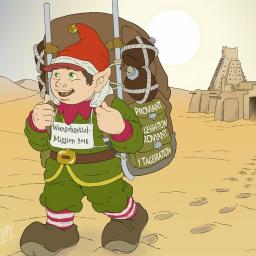
The answer to today’s puzzle about Waldemar the perspiring German elf and his whistlestop tour or the Sahara. And the results of how well (or badly) you all did.Earlier today I set you the following puzzle:Waldemar the Elf has a job to do: he must collect all the Christmas wish lists from children who live in the Sahara Desert. Starting in Timbuktu, he is able to complete the job and return to Timbuktu in 6 days. But he is an elf, which means he is very small. An elf can only carry a maximum of four days worth of elf-food. What is the minimum number of elves Waldemar needs to bring with him to complete the trip? Continue reading...
 |
by Adam Vaughan on (#WY2T)
World may have reached peak emissions, say researchers, as they predict substantial drop in greenhouse gas levels in 2015 due to decline in China’s coal consumptionWorldwide greenhouse gas emissions will fall in 2015, researchers have said, in what would mark the first time they have declined while the economy has grown substantially.Emissions have fallen in previous years but only because of financial crashes, such as the global slump in 2007. Continue reading...
|
 |
by Elsa Panciroli on (#WXWF)
Palaeontologists re-examine a 200-million-year-old fossil from Greenland, reigniting debate about the origins of mammalsHow old are you? What if, when someone asked you this question, you answered with the age of all humans? 2.3 million years, you would say. What about all primates? Around 80 million years old. If you wanted to answer for the whole of mammal-kind, you’d find the answer depends who you ask.
|
 |
by Dean Burnett on (#WXFS)
From Republican presidential candidates to hard-core Corbyn supporters, we’re used to hearing extreme views from all over the political spectrum and beyond. Why?As a British person with liberal leanings, the ongoing coverage of the US Republican race to select a presidential candidate is often baffling. Much of this is due to Donald Trump, of course. Donald Trump, the ungodly offspring of a retired golfer and a beligerent tangerine. Donald Trump, a man who once heard the word “unspeakable†and thought “challenge accepted!†Just when you think he couldn’t possibly be more openly offensive towards large groups of people, he reliably proves you wrong a few days later.Despite this, it seems a large number of people still think he’s the best person to be President, where he can bring about nuclear Armageddon by openly mocking Vladimir Putin’s height at some international summit. Continue reading...
|
 |
by Alex Bellos on (#WWR0)
A festive question about German concern for the Christmas wishes of the nomadic tribes of north AfricaHello guzzlers.Every year the German Mathematical Society runs an online puzzle advent calendar for schoolchildren in which a new puzzle appears every day from 1 to 24 December. Continue reading...
|
by Steven Gray on (#WWNQ)
On Whale Island just off Portsmouth, there is a small naval cemetery. It contains no human remains. The gravestones mark the resting place of a polar bear called Barbara and several other animals that travelled the worldName: Barbara
 |
by Paul Davies on (#WWNR)
The detection of gravitational waves will open up a new spectrum of the universe – finally demonstrating a theory presented a century agoHistory may judge 2015 as the year when mankind opened up a completely new window on the universe, exactly a century after Albert Einstein laid the scientific foundations for it. The excitement concerns the possibility of detecting one of nature’s most elusive phenomena – gravitational waves – which could pave the way for a much better understanding of black holes, neutron stars and other violent astronomical systems.Several new projects have been launched in the past few months to make gravitational waves the Next Big Thing in astronomy. Rumours have it that one of these – the US’s Advanced Laser Interferometer Gravitational-Wave Observatory (Advanced Ligo) – already “detected something†in September, but the scientists involved remain tight-lipped. Time will tell. Continue reading...
|
 |
by Andrew Green in Cape Town on (#WWN4)
In South Africa and beyond, thousands of TB cases emerge each year despite the BCG vaccine. An ambitious plan seeks to end what has become a global epidemicWhen her son Luluto was born 16 years ago, Yoliswa Qaku was eager to have him vaccinated against tuberculosis. Once he received the injection, she thought, he would be safe from the disease for the rest of his life. She learned earlier this year that this was never the case. Continue reading...
|
 |
by Ed Husic on (#WVVF)
Once the buzzword bombardment subsides, we will truly see how the major parties can dispense with old politics and work together on innovationGet ready for the buzzword bombardment.For the next couple of days, your eyes and ears will be assaulted by catchphrases aplenty: energetic talk about innovation, agility, exemplars, digital disruption, emerging ecosystems.
|
 |
by Kate Ravilious on (#WVKV)
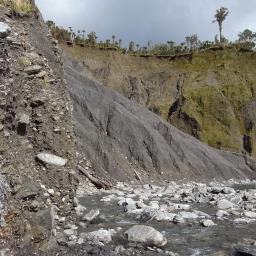
Climate change hit the headlines again last week during the Paris climate summit. The speed at which we have burned fossil fuels and increased the proportion of greenhouse gases in Earth’s atmosphere is staggering. But we are far from the first to wreak climate havoc on our planet.A mind boggling 2800 million years ago photosynthesising bacteria began to flourish, using sunlight to convert carbon dioxide and water into food, and producing oxygen as waste. Their success rebalanced Earth’s atmosphere, increasing oxygen and reducing greenhouse gases. The result was one of Earth’s most severe ice ages – the Huronian glaciation – which lasted 300 million years. Continue reading...
|
 |
by Guardian Staff on (#WVDY)
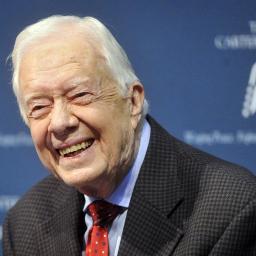
Former president given pembrolizumab, one of the most promising new drugs in the treatment of cancerFormer US president Jimmy Carter says his brain cancer has disappeared. His doctors found four small “spots of melanomaâ€, he said in August, after an operation to remove a tumour from his liver. It sounded like a fatal diagnosis at the time, but the former president said then he was “perfectly at ease with whatever comesâ€. And now it appears to have gone.It is not a miracle, however much it may sound that way. The former president’s doctors believe the melanoma – normally a skin cancer but sometimes forming inside the body – was the primary cancer, and that it had spread to the liver. Carter was given pembrolizumab, one of the most exciting new drugs in cancer treatment today. Continue reading...
|
 |
by Daniel Hurst Political correspondent on (#WV8P)
Startups to get support and foreign students of maths, science and technology encouraged to stay, in package believed to be worth $1bn over four yearsMalcolm Turnbull is set to expand on an early theme of his prime ministership by unveiling an “innovation†package believed to be worth more than $1bn over four years.Guardian Australia understands the plan to be released in Canberra on Monday will include tax incentives for early-stage companies closely modelled on the “seed enterprise investment scheme†championed by the British chancellor George Osborne. Continue reading...
|
by Shane Hickey on (#WT7J)
The US science startup Bolt Threads can do more than a spider can – it creates and spins stronger, softer, lighter and stretchier silk from scratchA spider’s silk has long been admired by scientists for being incredibly robust – five times stronger than steel – as well as flexible, elastic, soft and stable at high temperatures. They are properties that could be put to use in a wide range of consumer products.But attempts to produce the silk in large amounts have proved tricky, not least because spiders are cannibalistic and territorial so collecting the material is not economically viable. The thread itself is so fine that it would take millions of spiders to produce a kilogram of silk. Continue reading...