 |
by Guardian Staff on (#YCGW)
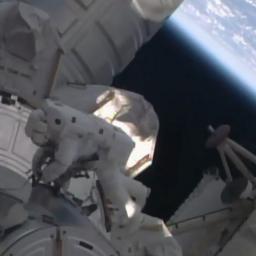
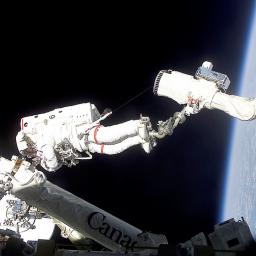
Nasa astronauts Scott Kelly and Tim Kopra venture outside the International Space Station on Monday for an unplanned spacewalk to fix a stuck railcar used by the station’s robotic arm. The surprise spacewalk started at 12.45pm GMT and was expected to last for three hours. This is the 191st spacewalk to repair the space station Continue reading...
|
| Link | http://feeds.theguardian.com/ |
| Feed | http://feeds.theguardian.com/theguardian/science/rss |
| Updated | 2026-10-01 02:00 |
 |
by Tim Radford on (#YCHX)
Scientists from Imperial College believe that intelligence may be influenced by two networks of genes, possibly controlled by a master regulatory systemBritish scientists believe they have made a huge step forward in the understanding of the mechanisms of human intelligence. That genetic inheritance must play some part has never been disputed. Despite occasional claims later dismissed, no-one has yet produced a single gene that controls intelligence.But Michael Johnson of Imperial College London, a consultant neurologist and colleagues report in Nature Neuroscience that they may have discovered a very different answer: two networks of genes, perhaps controlled by some master regulatory system, lie behind the human gift for lateral thinking, mental arithmetic, pub quizzes, strategic planning, cryptic crosswords and the ability to laugh at limericks. Continue reading...
|
 |
by Stephen Bayley on (#YC6W)
The squabbling over a threatened ban on toasters at Bradford town hall is a reminder of how significant this small domestic appliance is to our livesIn the noble environment of Lockwood and Mawson’s imperial Victorian town hall in Bradford, a symbol of domestic felicity has suddenly become a symbol of ideological conflict. Officials, in thrall to the Stalinist protocols of health and safety, are threatening to ban the Conservative councillors’ toaster, which occupies an altar-like position in the shrine that is their town hall kitchen. The stated reason is fire risk, although some may suspect that an emasculation of toast-loving Tory alpha males is a more likely rationale.Related: Do try not to get your penis stuck in a toaster. A message from the fire brigade | Dave Brown Continue reading...
|
by Jonathan Jones on (#YBY9)
With scorched capsules, space dogs and sci-fi art, Cosmonauts tells the moving and shocking story of the Soviet Union’s space programmeWhen astronaut Tim Peake blasted off into space in time for Christmas, he went in a Soyuz rocket, from the very launch pad Yuri Gagarin used to become the first human being in space in 1961.It was not really a triumph for Britain, but for Russia. If seeing Peake soar into orbit in Russian cosmonaut technology with echoes of the Soviet era whetted your appetite for Sputnik and space dogs, or if your kids are into space, or if you want to see one of the most impressive collections of space-age artefacts ever assembled in Britain, the best exhibition to visit over the holidays is Cosmonauts at the Science Museum in London. Continue reading...
 |
by Maev Kennedy on (#YBKQ)
Archaeologists are mapping the area before road is replaced and teasing secrets from the ancient landscapeSome 3,400 years before the roaring torrent of the A303 road sliced the Stonehenge landscape in half, some people cut a beautiful pit a metre deep into the chalk with no tools except picks made of red deer antlers.
|
 |
by Jonny Weeks on (#YBAM)
Tasmania’s skyline has been aglow in recent days – with vivid purple and green lights illuminating the horizon – following a huge explosion of magnetic field and plasma from the Sun’s corona. The spectacle, which had initially been threatened by the prospect of dense cloud cover, was so bright it could even be seen by city-dwellers in Hobart, where light-pollution would ordinarily limit visibility Continue reading...
|
by Nicola Davis on (#YB8H)
From the dentist's drill to the piano, we explore innovations in touch-based, or haptic, technologyNew simulators are allowing students of professions such as dentistry to get hands-on experience of dental procedures.Generic Robotics - a UK company based in Reading - is one of the companies leading this change. Nicola Davis is joined in the studio by its director, Dr. Alastair Barrow, and also by Dr. Barry Quinn, senior specialist clinical teacher at King's College London. Continue reading...
 |
by Alex Bellos on (#YB8J)
A classic brainteaser about mince pies from Britain’s master puzzlistHello guzzlers.Today’s puzzle originally appeared in the Christmas supplement of The Weekly Dispatch in 1896. It was devised by the magnificent Henry Ernest Dudeney, Britain’s greatest inventor of mathematical puzzles, who helped turn the late 19th century into a golden age for the field. Continue reading...
|
 |
by Staff and agencies on (#YAH0)
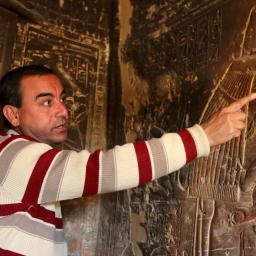
Carvings on the wall of the tomb of Maia, the boy king’s wet nurse, have led archaeologists to suspect she may have been his sister MeritatenArchaeologists believe Maia, Egyptian pharaoh Tutankhamun’s wet nurse, may have actually been his sister Meritaten.Related: Tomb raiders: what treasures could lurk inside Egypt's lost chambers? Continue reading...
|
 |
by Alan Pickup on (#YA5M)
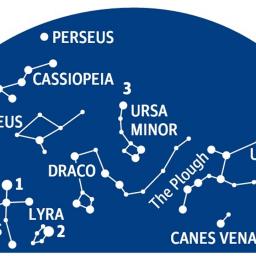
The SE quadrant at our map times belongs to Orion and the star-rich winter constellations. As if this wasn’t enough, the sky welcomes the New Year with its own fireworks display in the guise of the Quadrantids meteor shower. Continue reading...
|
 |
by Kit Buchan, Ian Tucker and Gil Reich on (#Y8YQ)
From giant fish to micropigs and lifesize personal robots – how much do you know about the scientific breakthroughs of 2015? Answers at the end Continue reading...
|
 |
by Anthony Seldon on (#Y8PG)
Every year you go all out to have the best yuletide – only to be disappointed. Anthony Seldon reveals why…Why is it that Christmas often fails to live up to our expectations? We plan for it months ahead with great enthusiasm, but when it arrives it often leaves us cold. If you recognise this description, and are facing the prospect of Christmas with some dread, read on.The reason that Christmas often disappoints can be explained, I believe, quite easily. It is because we put our own pleasure at the very heart of it. We plan in great detail what we will eat, drink and do. But the pleasure that we receive from all these things is often transitory. The show turns out to be a bit predictable, the journey home from the theatre too long. The Christmas fair proves a bit bland, while the drink fails to be as special as we had expected. We may put great thought into the presents we are going to give others, but we feel that the presents we receive lack the same thoughtfulness. Continue reading...
|
by Maggie Brown on (#Y7TW)
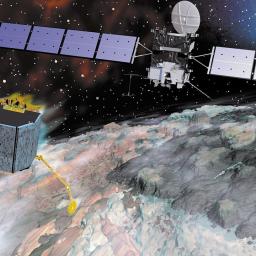
A website and virtual reality project linked to a series on risks to the Great Barrier Reef are aimed at the young generationHe may be approaching his 90th birthday, but there is little sign that Sir David Attenborough plans to slow down. “People ask me to do things. So why not? Really, that’s all,†he told the Observer on the launch of his latest project – a multi-disciplinary exploration of the 2,300km Great Barrier Reef in Australia.The Great Barrier Reef: An Interactive Journey variously offers an outline of serious coral science, updates on the increasingly marked effects of El Niño, and even a Finding Nemo-inspired game. Designed to accompany Attenborough’s new BBC TV series, which begins on 30 December, the website is an attempt to reach an even larger audience. “New mediums, all used at once, give different platforms for kids who will never watch the TV series,†he said. Continue reading...
 |
by Kit Buchan, Ian Tucker and Gil Reich on (#Y6EQ)
Test your knowledge of the notable sayings and obscure backwaters of the scientific world with the second section of our rigorously peer-reviewed quiz. Answers at the endTake part one of the quiz.
|
by Amaya Moro-Martin on (#Y627)
Two years ago we published an open letter from a Spanish astrophysicist to Mariano Rajoy on the occasion of her leaving Spanish science for a job in the US. On the eve of the Spanish elections, she writes again.
 |
by Staff and agencies on (#Y5VY)
In 2014 more people died in America from drug overdoses than from car accidents, with heroin and opioids responsible for the majority of deathsDeaths from drug overdoses have surged across the US to record levels, according to the Centers for Disease Control and Prevention.Nationwide, overdose deaths last year exceeded 47,000, more than the number of people killed in car accidents and up 7% from the previous year.
|
 |
by Oliver Milman in New York on (#Y50B)
President predicts Republicans’ continued insistence that climate change is not real is a long-term political loser while touting US as ‘key leader’ in Paris talksBarack Obama chided Republicans on Friday for standing apart from every other rightwing party in the developed world by denying the science of climate change.
|
 |
by Guardian Staff on (#Y4A9)
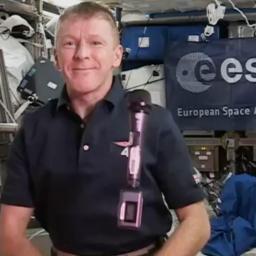
Speaking from the International Space Station on Friday, UK astronaut Tim Peake says his first three days in space have been better than he imagined. The first professional British astronaut says the most unexpected thing was ‘the blackness of space’. He arrived at the space platform on Tuesday after blasting off from Kazakhstan on a Soyuz rocket Continue reading...
|
 |
by Tim Radford on (#Y44Z)
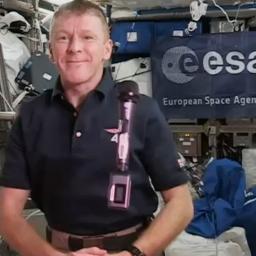
The biggest challenge Tim Peake faced during a press conference full of non-controversial questions was doing a back-flip in orbitHis first day in space was way beyond all his expectations. No, he hadn’t seen the new Star Wars film yet but all of them up there were looking forward to seeing it. He was looking forward to training – on a treadmill, harnessed to the spot – for the London Marathon.He was absolutely blown away to get a tweet from Her Majesty the Queen. And he was looking forward to calling home on Christmas Day from this “wonderfully unique place to call friends and family from.†Continue reading...
|
 |
by Anna Chancellor on (#Y43S)
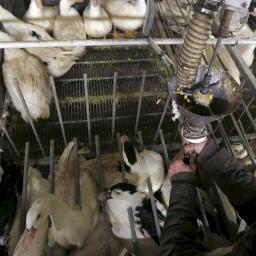
Foie gras is the enlarged, diseased liver of a duck or goose that has been tortured. It is unfathomable that anyone would buy or eat itMany years ago, my daughter and I were lucky enough to live with a duck named Daphne. We were crazy about her. Like all members of the Chancellor household, she loved swimming, eating, playing and napping.Related: Foie gras is exactly as delicious as you've heard. It should nonetheless be banned | Samantha Gillison Continue reading...
|
 |
by John Vidal on (#Y3J6)
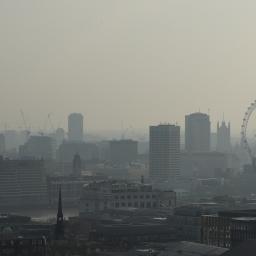
New research suggests that environmental factors are responsible for the huge majority of cancers; but opposing studies suggest it’s down to genetics and bad luck. Which you believe may depend on your own philosophyIn 1925, the surgeon Frederick Pybus compared the lungs of people who had been living in smoke-polluted Newcastle with those of people from the Northumbrian countryside. One set was clean and pink; the other black and cancerous – no prizes for guessing which was which. The results led Pybus to conduct lifelong research into the links between air pollution and cancers.The medical establishment at the time was dismissive of the smoke theory, but the scientific tide eventually turned and in 2013 the World Health Organisation finally accepted his hypothesis that the carcinogens found in soot and diesel fumes were a cause of some cancers. Continue reading...
|
 |
by Carla Valentine on (#Y39V)
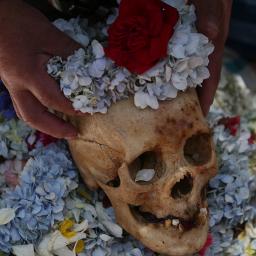
The notion of ‘human remains’ can disturb, but as a custodian of anatomical specimens, I think it’s important to understand death: it’s a big part of lifeHuman Remains.Two words, innocuous when apart but when placed together conjure up any number of negative scenarios. Perhaps it’s because headlines like “Human Remains Found In Park†or similar are so often screamed at us from the tabloids, intimating a crime has been committed. Horror stories of people living in a house “with human remains†remind us of Norman Bates and the desiccated cadaver of his mother. Maybe it’s because the organ retention scandals from Alder Hey and other hospitals in the mid 1990s, which led to the formation of the Human Tissue Authority, are so fresh in the minds of the general public that human remains are still associated with nefarious Frankenstein-ian behaviour. Whatever the cause of this discord it is erroneous: human remains are simply what is left of us as humans when we pass away. They remain. Continue reading...
|
 |
by Dean Burnett on (#Y350)
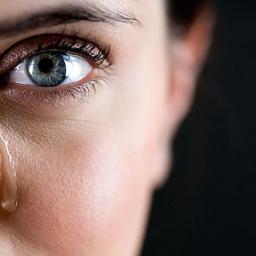
Apprentice candidate Charleine Wain recently caused a bit of a stir for crying during a board meeting. Why would this matter? What can prompt people to cry in the workplace, and is it necessarily a bad thing?Among the thousands of things Apprentice candidates can end up being criticised for, there’s being seen to cry. However, although there are plenty of legitimate reasons to have a go at anyone who actively wants to take part in that show, this one doesn’t seem fair.It’s Christmas party season right now, the time of year where every workplace decamps to a nearby bar or function room for awkward conversation between colleagues who barely know or actively dislike each other over the sub-par roast dinner. But it’s very common for one or more employees to overindulge in the free (or discounted) wine and end up a tearful mess, telling anyone or everyone that their personal life is a huge mess, or that they’ve always loved Brian from HR. Continue reading...
|
 |
by Kit Buchan, Ian Tucker and Gil Reich on (#Y34Y)
This year has seen space probes, black-footed ferrets, autonomous weapons and a solar eclipse. We’ve set the questions, now test how much attention you’ve been paying Continue reading...
|
 |
by Press Association on (#Y2EC)
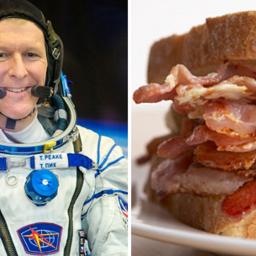
British staples of tea and bacon sarnie make former helicopter test pilot immediately feel at home in the International Space StationBritish astronaut Tim Peake has settled into life in space with some earthly comforts – tea and a bacon sandwich.Major Peake, who blasted into orbit on board a Soyuz rocket on Tuesday, said he was “loving every minute†of his first few days on the International Space Station (ISS). Continue reading...
|
by Melissa Davey on (#Y21Y)
Fertility specialists are reassuring women an updated hormone test is much more accurate than the original, after a study compared the old and new versionsA hormone test used for more than a decade is responsible for highly inaccurate readings of women’s fertility, an Australian study has revealed, but fertility specialists are urging women undergoing assisted reproductive treatments not to panic.The original version of the test, the Anti-Mullerian hormone or “egg-timer†test, was taken off the market three years ago and has not been used since then, having been replaced by updated and much more accurate versions. Continue reading...
by Ian Sample Science editor on (#Y19J)
Tim Hunt, who made comments about female students falling for male superiors earlier this year, is moving due to professor wife’s new appointmentSir Tim Hunt, the Nobel laureate whose comments about women at an international conference caused a furore earlier this year, is leaving Britain for a life in Japan.Hunt, who won the prestigious science prize in 2001, lost his honorary post at University College London after he spoke at a lunch for female science journalists in South Korea.
 |
by Tim Radford on (#Y13G)
Partial femur found in the Red Deer Cave might show that a pre-modern species of human may have overlapped with modern humans into the ice age
|
 |
by Peter Walker on (#Y071)
Dutch study finds watching a frightening movie lifts level of protein factor VIII, which contributes to blood clottingThe “bloodcurdling†horror film has long been an advertising staple in the movie industry, alerting fans to the most gruesome Hollywood releases. And now, thanks to a group of enterprising if tongue-in-cheek researchers, the effect has been proven as a medical reality.A study by doctors and academics at Leiden University in the Netherlands analysed blood samples from volunteers who had just watched either a horror film or a distinctly non-frightening documentary about the French wine industry. It found that those who sat through the horror title had higher levels of the blood-clotting protein factor VIII. Continue reading...
|
 |
by David Suzuki on (#Y0HN)
Our dominance on Earth comes with great responsibility. The Paris climate deal proves that there is hope for our planet – as long as we remember thatHomo sapiens has become so dominant a force shaping the properties of the biosphere that scientists now refer to the past two centuries as the Anthropocene Epoch – the age of the human. This role comes with a huge responsibility; one that, it seems, we have lived up to in the climate deal recently agreed in Paris.We are an infant species, evolving perhaps 150,000 years ago in Africa. For most of our short existence, we were nomadic hunter-gatherers, carrying our possessions while in search of food and anything useful. Compared to the vast herds of mammals in parts of the world, human numbers were small, our technology simple and our ecological impact readily absorbed by the biosphere. Continue reading...
|
 |
by Tim Radford on (#Y0B9)
From being the pioneers of fingerprinting to fighting modern cybercrime, the UK must capitalise on its high standing in forensics, says Sir Mark WalportBritain – which in the 19th century pioneered fingerprinting and in the 20th century genetic fingerprinting as crimefighting aids - could lead the world in forensic science, according to the government’s chief scientific adviser.The advance of science in almost every discipline means that forensic expertise can now go far beyond the criminal courts. It can establish whether or not a resident endangered species could block a planning application, whether high-priced single malt whisky is the real thing, whether a diamond is honestly or dishonestly trafficked, and whether antibiotics are counterfeit. Continue reading...
|
 |
by Kathryn Harkup on (#XZQQ)
As a chemist and crime fiction expert, I beg you to pause before poisoning the Christmas pudding. Apart from anything else, it’s not easy to pull off ...I talk and write about poison, murder and crime fiction. Many people have asked me whether I worry about people using the information I provide to go out and commit crimes. I have certainly thought carefully about what information I give out and how much detail to go into in terms of obtaining and preparing poisons. But anyone using my lectures as a step-by-step guide on how to poison someone will come unstuck very quickly. They will have to do a considerable amount of independent research to fill in the gaps even before they prepare and administer their chosen compound. You can’t just lash out in the heat of an argument and poison someone. The longer it takes someone to achieve this, the more time they have to consider what they are doing and change their mind. This is perhaps one of the reasons why, thankfully, so few murders are committed using toxic compounds.Poisoning is a lengthy and involved process and there are much “easier†ways of killing people. Statistics show that most murderers go for alternative options, such as stabbing, shooting or hitting. However, there are a very small number of individuals who have a psychological or neurological quirk that means they are prepared to do their homework and see the process through to its fatal conclusion. Of course, laws exist to make poisoning as difficult as possible, and forensic science has developed to a level that means poisoners are very unlikely to get away with it. That’s why, to give you some idea of how difficult it is to poison someone, I’ve outlined some of the considerations that need to go into the process. Continue reading...
|
 |
by Tim Radford on (#XZQS)
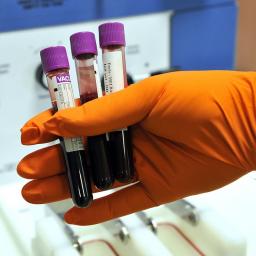
14-year study hailed as landmark step in devising effective screening, but concludes more research needed before national programme is introduced
|
 |
by Robert Heath on (#XZJP)
Emotion presented subtly in ads works far better than ramming it down your throatMid-December, and the great Christmas ad-fest is winding down. By which I mean if you haven’t already made and aired your festive mega-commercial you’ve pretty much missed the boat. But do these ads really achieve anything? Sure, they get noticed, and certainly comments about them get plastered all over the blogosphere, but do they actually generate any additional business?The great British public’s heartstrings have been strained to breaking point with this year’s slushy Christmas ads Continue reading...
|
 |
by Press Association on (#XYDT)
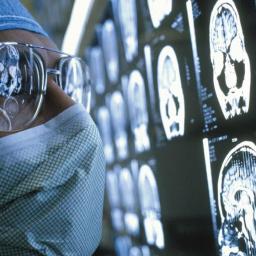
Study says environment and lifestyle factors such as toxic chemicals and radiation are main cause of disease
|
by Jason Chilvers and Matthew Kearnes on (#XZ59)
Efforts to enhance public engagement with science and democracy have lost their way. Here are some suggestions for remaking participationFor good reason the desire for public involvement in science and policy making has become something of an obsession, whether in the corridors of the recent Paris COP21 meeting, in debates over energy policy and fracking, or in the everyday practice of science. While there has been an explosion of activity and some notable successes in expanding the number of people involved in addressing today’s pressing global challenges, we see a continued focus on a few rather rigid models of participation. Initiatives repeatedly invite members of the public into rooms to deliberate over our common future, attempt to capture public sentiment about scientific issues through polls or surveys, or try to nudge citizens to adopt behaviours in line with a future that has already been largely determined.
 |
by Jack Stilgoe and Sarah Hartley on (#XZ45)
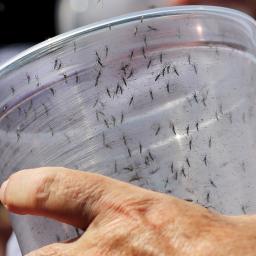
Today’s report from the House of Lords argues that GM insects have the potential to, among other things, control diseases like malaria and dengue. But, in overlooking the uncertainties of the technology, it is irresponsibly lopsided.
|
 |
by Dean Burnett on (#XZ1D)
Many people complain about the “War On Christmasâ€, but it’s even worse for people fighting it on the front line.It’s starting again. There have been mutterings for weeks, but official word from the top was passed down to us grunts today. Scouts have spotted convoys of festive items (decorations, selection boxes, all that stuff) heading out to the major supermarkets already. Continue reading...
|
 |
by Simon Jenkins on (#XYXK)
Like Major Tim I always wanted to go into space - but I never thought the state should pay for the ticket. These astronomical sums would be better spent elsewhereThe ravening hordes pounced. The media, starved of that near-extinct species, a great British news story, went berserk. They were told the first real Briton was going into space (ie, not just a woman called Helen Sharman). He was a hero, a Major Tim.Related: Tim Peake boards International Space Station and reports on ‘beautiful launch’ Continue reading...
|
 |
by Tim Radford on (#XYA0)
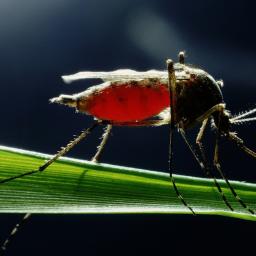
Report concludes new technologies could save lives from dieseases such as malaria, but says developement is slowed by inadequate regulatory systemBritain has a “moral duty†to step up research into genetic modification as a way of controlling insect pests and disease carriers, according to a new report from the House of Lords.
|
 |
by Ellen Brait in New York on (#XY1D)
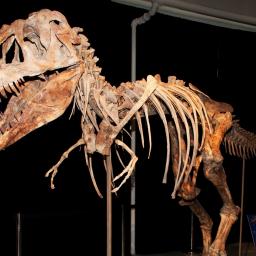
Mongolian law states that fossils such as the skull, which was brought to the US and put up for auction in 2007, must be surrendered to the governmentA Tyrannosaurus bataar skull, which was unlawfully brought into the US and put up for auction in New York in 2007, will be returned to the Mongolian government, the US Department of Justice announced on Wednesday.
|
 |
by Agence France-Presse on (#XXS1)
Ancient artefact returns to Cairo museum after two months’ work to fix botched repair that left visible crust of glue
|
 |
by Letters on (#XXHT)
What does it say about our society today when Manchester’s architect-designed Hulme Library building, which was opened in 1962 and which was recently closed due to government cuts, is to reopen as an overnight shelter for the homeless? In a further irony, running along the front of the building is an 85-foot ceramic mural which chronicles the history of the community from Roman times to the present day. Perhaps someone from The Great Pottery Throwdown might like to add a final panel.
|
 |
by Julia Kollewe on (#XXFP)
Anglo-Swedish drugmaker buys Japanese lung drug portfolio and forges alliance with Chinese biologics firmAstraZeneca is splashing out hundreds of millions of pounds on buying the lung drug portfolio of Japan’s Takeda and deepening its presence in China, despite the country’s recent slowdown.The Anglo-Swedish drugmaker wants to create a new global hub for drug development in China alongside those in the UK and Sweden, with up to 50 scientists based in Shanghai and Wuxi City. China is AstraZeneca’s second-biggest market by sales after the US, and one of its fastest growing areas. Continue reading...
|
 |
by Guardian Staff on (#XWRG)
Readers answer other readers’ questions on subjects ranging from trivial flights of fancy to profound scientific conceptsIf a space station were in a geostationary orbit, why couldn’t it just be tethered to the earth with a cable that could be ascended and descended by astronauts? This isn’t rocket science.Paul Coates, Insch, Aberdeenshire Continue reading...
|
 |
by Ben Allanach on (#XVVT)
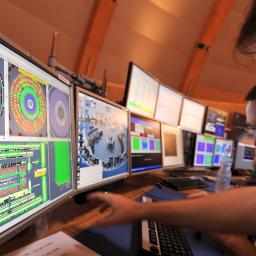
Particle theorist Ben Allanach gives his reaction to yesterday’s seminar, where ATLAS and CMS reported on what we have (and have not yet) learned from a year of the highest-energy particle collisions ever achieved
|
 |
by Press Association on (#XVKJ)
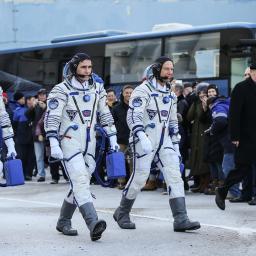
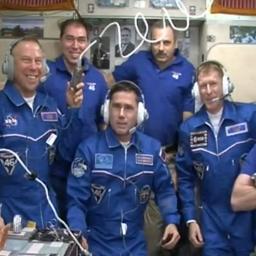
British astronaut starts his six-month stay in space after perfect rocket launch with crew on board Russian Soyuz spacecraftBritish astronaut Tim Peake has started his mission on the International Space Station (ISS) after a perfect rocket launch watched by his family.A Russian Soyuz FG rocket blasted Major Peake, 43, into a clear sky over the Baikonur cosmodrome in Kazakhstan at 11.03am GMT on Tuesday, precisely on time. Continue reading...
|
by Guardian Staff on (#XTZW)
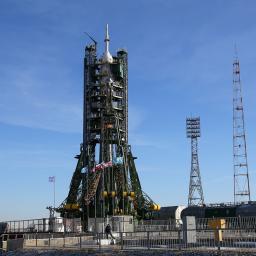
Tim Peake, a 43-year-old astronaut from the European Space Agency, enters the hatch of the International Space Station and becomes the first British national to come aboard the craft. Peake blasted off from the Baikonur Cosmodrome in Kazakhstan on Tuesday for a six-month mission at the station and is not due to return until 5 June next year Continue reading...
 |
by Guardian Staff on (#XRE9)
Frst British astronaut to join the crew of the ISS blasted off in Kazakhstan right on schedule on Tuesday morning Continue reading...
|
 |
by Ian Sample Science editor on (#XTBB)
Six-month mission begins with wobble as docking system malfunctions but British astronaut arrives safely at ISS after ‘absolutely spectacular’ sunriseIt seemed like an eternity, but finally the hatch opened. Moments before 8pm GMT on Tuesday, Tim Peake, the European Space Agency’s first British astronaut, stepped out of the Soyuz capsule and aboard the International Space Station (ISS).“It was a beautiful launch,†he said, grinning broadly, despite the ordeal of being squashed inside the Russian capsule for more than 10 hours, and a tense last-minute drama on reaching the station that will be his home for the next six months. “I hope you enjoyed the show.â€
|