 |
by Ian Sample on (#W7CJ)
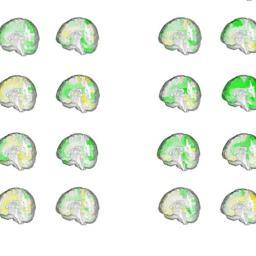
Authors say scans show need to think beyond an individual’s sex as each brain has unique “mosaic†of sex-based features plus some common to both sexes
|
| Link | http://feeds.theguardian.com/ |
| Feed | http://feeds.theguardian.com/theguardian/science/rss |
| Updated | 2026-10-01 02:00 |
by Mark Carnall on (#W6NW)
From single cells through lumbering amphibians to men with spears. We all know ‘the story of life on Earth’. But whose story is it?The scientific story of life on Earth, as told in palaeontology books for children, museum displays, documentaries and even on university courses is always the same. It begins with the creation of the universe, then the Earth, represented more often than not by exploding volcanoes. Microscopic single cells bob in the ocean, dividing and swelling, morphing into things with a noticeable front end and a back end.Skip forward a couple of billion years, and emblematic fossils, the trilobites, are scuttling around the ocean floor. Chances are that ammonites are floating around too. Then we get to the more familiar beats: the story proper finally starts. The Age of Fishes kicks off in the Devonian, 400 million years ago with fish that look a bit different to today’s fish, but not different enough for us to care. Fish-headed salamanders then triumphantly flop onto a green and verdant land. Then it’s the glorious Age of Reptiles, unanimously depicted by Tyrannosaurus rex locked in eternal conflict with mortal enemy Triceratops. From between the feet of stomping dinosaurs, ratty animals scurry about; cue an asteroid impact and the Age of Mammals begins. The rest you could fill in yourself, rat climbs a tree, becomes a monkey takes a few more steps and is then a man at last! Continue reading...
 |
by Mark Brown Arts correspondent on (#W6KY)
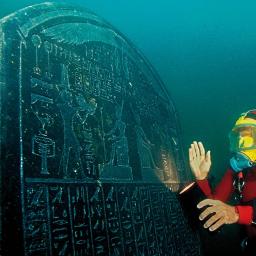
Blockbuster exhibition to feature objects from two lost cities at mouth of the Nile uncovered by underwater archaeologists
|
 |
by Guardian Staff on (#W6JH)
The most prestigious dog-breeding club in the world is considering adding non-pedigree animals to its breed registry for the first time. Has it gone, er, barking mad?Name: The Kennel Club.Age: 142. Continue reading...
|
 |
by Mark Vernon on (#W691)
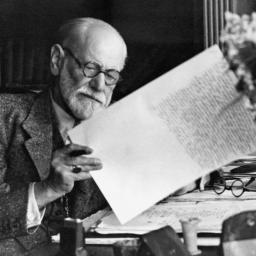
After a century of being derided, Freud’s ideas are quite rightly being re-evaluated – as they could shed light on some of medicine’s great unknownsThe unconscious has had a bumpy ride since Sigmund Freud first described the extent of his discoveries in a seminal paper published 100 years ago this month. Sceptics sneer at its mention, assuming it’s as discreditable as penis envy. Others, who sense the father of psychoanalysis was on to something, prefer to hedge their bets and not be tarnished by Freud’s mixed reputation: they refer limply to the subliminal or subconscious. Yet it could be the case that far from being past its sell-by date, the time of the unconscious is yet to come.Related: Paul Broks on 150 years of Sigmund Freud Continue reading...
|
 |
by Sophia Collins on (#W625)
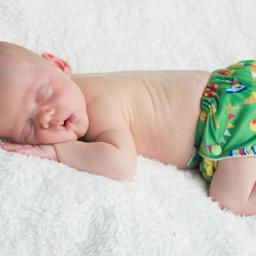
It’s best to wash nappies in non-biological detergent, right? Wrong, as a citizen science project discovered when they challenged NHS advice on the subject“I appreciate your evidence-based approach.†I said recently, in a heated discussion about washing nappies, “But while the NHS recommends using non-bio detergents on baby clothes, you aren’t likely to convince the whole country to change its view.†“Yeah,†said a colleague, “getting the NHS to change their views on anything is like trying to get a baby to sleep on demand.â€â€œChange has to start somewhere,†replied our conversation partner. Continue reading...
|
 |
by Guardian Staff on (#W5WS)
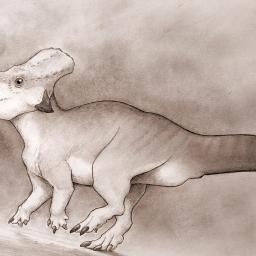
Unusual fossil of small cousin of Triceratops shows how continent was divided by shallow sea, allowing dinosaurs to evolve differentlyA scientist has uncovered the fossil of a dog-sized horned dinosaur that roamed eastern North America up to 100 million years ago.The fragment of jaw bone provides evidence of an east-west divide in the evolution of dinosaurs on the North American continent.
|
 |
by Jon Butterworth on (#W5A3)
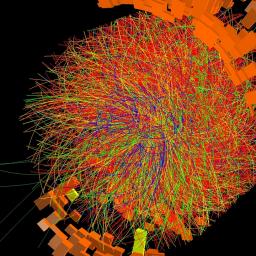
Every year, as Christmas approaches and the bankers of Geneva sit around their fondues yodelling festive tunes and melting cheese with holes in it, the Large Hadron Collider switches from protons to lead. But this year is a bit special
|
by James Wilsdon on (#W5A5)
This week, Sir Venki Ramakrishnan takes over one of the biggest jobs in British science, as incoming president of the Royal Society. We asked his fellow Fellows what they hope to see during Venki’s five years at the helm.
 |
by Jeff Sparrow on (#W4D2)
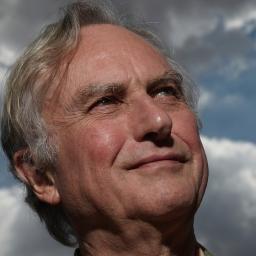
There must be another way for nonbelievers than to transform, as Dawkins and Harris have done, into toxic know-it-allsWhy are the New Atheists such jerks? Case in point: Richard Dawkins’ continuing pursuit of Ahmed Mohamed, the Texas 14-year-old humiliated in school after authorities mistook his homemade clock for a bomb.The other day, The God Delusion author called Ahmed a hoaxer and responded to suggestions “he was only a kid†by linking to a report about a juvenile Islamic State (Isis) fighter. “And how old is this ‘kid’?†Dawkins asked. Continue reading...
|
 |
by Alan Pickup on (#W499)
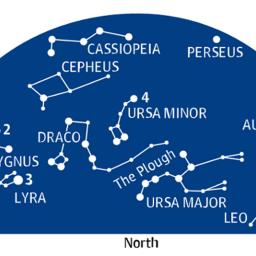
Orion stands clear of Britain’s ESE horizon at our map times as the glorious starscapes of winter invade from the east. Above Orion lies Taurus with the Pleiades and the bright star Aldebaran which is occulted by the almost-full Moon on the 23rd. Times vary a little across Britain, but for London the star is hidden from 18:10 to 19:12. Continue reading...
|
 |
by Guardian Staff on (#W3P5)
According to its fans in California, taking ‘microdoses’ of the hallucinogen enhances energy and creativity. Just watch out for the multicoloured fish swimming out of your monitor …Full name: Lysergic acid diethylamide.Age: First synthesised by Dr Albert Hoffman in Switzerland in 1938. Continue reading...
|
 |
by Jan Selby and Mike Hulme on (#W375)
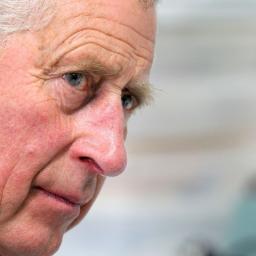
Prince Charles is the latest high-profile figure to echo claims that ‘securitise’ the conflict. But the evidence just doesn’t stack upWas the Syrian civil war partly caused by climate change? Prince Charles, for one, seems to think so. “There is very good evidence indeed that one of the major reasons for this horror in Syria was a drought that lasted for about five or six years,†he told Sky News, adding that climate change is having a “huge impact†on conflict and terrorism.The Prince is not alone on this one: he joins a chorus of voices making similar claims. In the US President Obama, Al Gore, and the democratic presidential hopefuls Martin O’Malley and Bernie Sanders have all talked of a link between climate change and the Syria conflict, Sanders going so far as to argue that climate change is “directly related to the growth of terrorismâ€. Continue reading...
|
by Fortunato Salazar on (#W30R)
Keeping Phobos and Deimos, which means ‘fear’ and ‘terror’, implies it’s totally cool to demonize our neighbor in the skyIn the last five months, Mars has become a whole lot more like … us. We have flowing water; Mars has flowing water. We have underground water; Mars has underground water. We have auroras in the night sky; so does Mars. In just the last five months, we and Mars have grown a whole lot closer, beyond our basic adjacency in the solar system. It’s reasonable to think that Matt Damon’s recent triumph of ingenuity and self-sufficiency over Martian inhospitality might soon come true.Related: Gravity will rip Martian moon apart to form dust and rubble ring Continue reading...
 |
by Lucy Rock on (#W2T4)
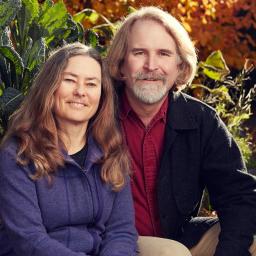
When Anne Biklé and David Montgomery fed their failing soil with organic matter, they were astonished by the results. Stimulating the microbes that live beneath the surface led the garden to flourish. Then, when Biklé was diagnosed with cancer, the couple had an idea…Juicy is the best word to describe Anne Biklé and David Montgomery’s garden, even in the dying days of autumn. Emerald green, dewy grass; a vegetable patch where leafy kale stands tall and arugula nestles low; shrubs and trees – cork bark maple, Persian ironwood and wax myrtle – screening the area from passersby and a late-flowering rhododendron bearing plump red blooms.It is this oasis that led them on a remarkable journey into another world, one that exists beneath our feet and is run by microbes, creatures invisible to the naked eye. Continue reading...
|
 |
by Nick Middleton on (#W2SF)
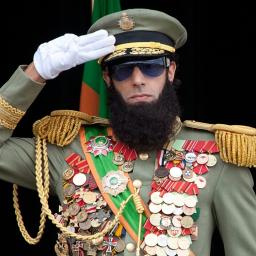
Imagine living somewhere that no one else recognised. Nick Middleton reveals why some nations don’t exist
|
 |
by Ben Ambridge on (#W2RQ)
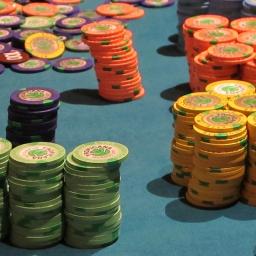
Take this simple Observer quiz to find out whether you like to take risks or prefer to err on the side of cautionAre you a risk seeker? Do you know when to hold ’em, when to fold ’em and when to walk away? What would you choose if offered £500 for sure or a gamble with a 15% chance of winning £1,000,000?Although ostensibly about risk seeking, this test is actually a test of your reasoning ability and, more generally, your intelligence. Now we can make an exception if you have some particularly unusual specific personal circumstances. Perhaps, for example, you owe £500 to a loan shark who will be calling round first thing Monday morning. Perhaps you think all forms of gambling are morally wrong. Or perhaps you think being a millionaire would make you miserable. But if not, you would be crazy not to take the gamble. Continue reading...
|
 |
by Robin McKie on (#W2P5)
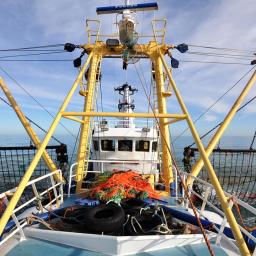
A marine archaeologist warns urgent action is needed to stop heavy modern fishing nets obliterating important historic artefactsThey are some of the country’s greatest untouched treasures, having lain undisturbed on the seabed, in some cases for centuries. But now these archaeological riches are being destroyed at an unprecedented rate before scientists or historians can get their hands on them.Once shipwrecks have been struck by fishing gear, they – and their contents – are obliterated for ever Continue reading...
|
 |
by Jamie Doward on (#W20N)
Blackadder jokes prove that Arthur Schopenhauer’s 200-year-old theory of humour still holds true todayAny aspiring comic wanting to make it big should seek inspiration not so much from the likes of Michael McIntyre but that arch proponent of philosophical pessimism, Arthur Schopenhauer.For it seems that the German thinker, not easily confused with a ray of sunshine, may have been on to something when he came up with his now 200-year-old theory of humour. Continue reading...
|
 |
by Evgeny Morozov on (#W20Q)
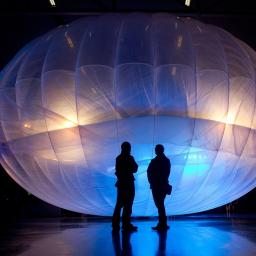
Satellites, drones and balloons can make global connectivity a reality – but this space race is about profits not altruismThe US Congress quietly passed an important piece of legislation this month. The Space Resource Exploration and Utilisation Act – yet to be signed by Barack Obama – grants American companies unconstrained rights to the mining of any resources – from water to gold. The era of space exploration is over; the era of space exploitation has begun!While the 1967 Outer Space Treaty explicitly prohibits governments from claiming planets and other celestial resources, as their property, Congress reasoned that such restrictions do not apply to the materials found and mined there. Continue reading...
|
 |
by Robin McKie on (#W20S)
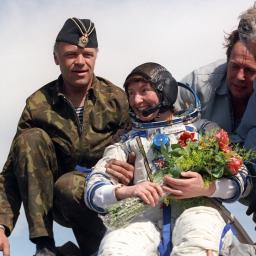
As Tim Peake prepares for a six-month stay on the space station, Helen Sharman, Britain’s first astronaut, talks about the experience that awaits himWhen Tim Peake is blasted towards the stars next month on a Russian Soyuz rocket, he will carry an unexpected but highly appropriate gift with him. He will take a book, Road to the Stars by Yuri Gagarin, that was given to him last month by a fellow astronaut, Helen Sharman. This is the copy she took into orbit in May 1991 when she became the first Briton in space.“Tim asked me if there was anything I had that I would like him to take,†said Sharman. “He wanted to make that link between me, the first Brit in space, and himself, the second. I have kept the book very safe for 24 years and now Tim is going to take it up to the international space station.†Continue reading...
|
 |
by Robin McKie on (#W1RQ)
Washington biology summit to consider ban on controversial technologyDelegates at a crucial scientific summit this week are expected to debate a ban on the use of the controversial technique of gene-editing. Hundreds of the world’s leading biologists will gather in Washington to discuss the procedure, in which genes are removed from or added to human embryos.Some researchers say gene-editing of humans could have unpredictable effects on future generations and is ethically unacceptable. They also warn that the technology could be used to create lineages of “enhanced†humans and want all work in the area halted until its implications are fully assessed. Continue reading...
|
 |
by Interviews by Rosie Ifould on (#W08T)
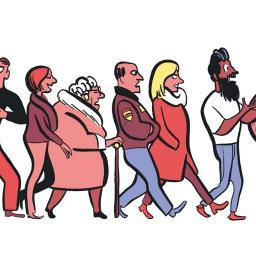
Handle awkward date silences, end a conversation with a stranger – plus chat to your children, your parents and your boss. Our panel shares their secretsChildren often don’t have the words to say what they’re feeling, and they don’t always understand what we’re looking for when we ask them questions. So if you ask, “How was your day?†and you’re met with a grunt or a shrug, it’s not because your child is trying to hide something from you. It’s because they don’t see why you could possibly want to know, or which part of their day you’re interested in. It can help to make your questions more specific: “What was the best thing about your day? What was the hardest thing?†And, of course, it helps if you are really listening. We often don’t give children our full attention. Continue reading...
|
 |
by Graham Farmelo on (#W08W)
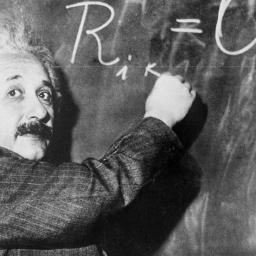
It’s 100 years since Einstein completed his theory of relativity, transforming our understanding of the universeTime magazine chose well when it named Albert Einstein as the most influential person of the 20th century. As well as being a peerless scientist, he showed great wisdom and integrity – he was an outstanding humanitarian. One hundred years ago, he completed his theory of relativity, setting out a theory of gravity that would surpass Isaac Newton’s and which continues to shape our understanding of the universe today.Einstein had emerged 10 years earlier, apparently from nowhere, to give the world’s leading scientists a series of physics lessons they would never forget. During his 20-year golden streak, ending in 1925, he did more than anyone else to reshape the understanding of space, time, energy, matter and gravity. He pioneered the crucial idea that symmetry is at the heart of fundamental laws of nature. He could be practically minded, too: with his Hungarian friend Leo Szilard, he came up with an innovative design for a fridge, which they patented in 1930. Continue reading...
|
 |
by Chris Hadfield and Randall Munroe on (#W05F)
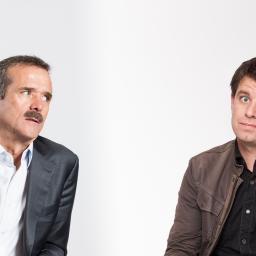
Chris Hadfield, the Canadian astronaut and internet sensation
|
 |
by Ian Sample Science editor on (#VZZ4)
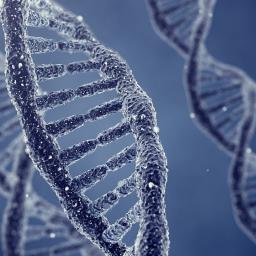
Now that the ability to selectively insert or remove genes from DNA is widespread, a ‘global discussion’ is being convened to agree fresh safeguardsThe question could hardly be more profound. Having stumbled upon a simple means to make precise changes to the code of life, should humans take control of their genetic fate, and rewrite the DNA of future generations?Once an idea explored only in fiction, the prospect is now a real one. The inexorable rise of gene editing has put the technology in labs across the globe. The first experiments on human embryos have been done, in a bid to correct faulty genes that cause disease.
|
 |
by Steven Morris on (#VZEE)
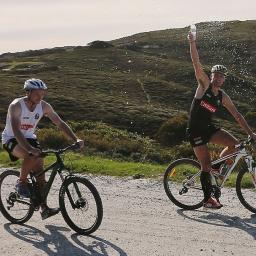
Researchers say cyclists find exercise easier when they drink ordinary sucrose – or table sugar – rather than only glucoseSwapping some specialist sports drinks in favour of water mixed with a spoonful of sugar could boost the performance of long-distance athletes, a study finds.Researchers at the University of Bath brought in a team of club cyclists and used an adapted MRI scanner to assess the impact of prolonged exercise on the levels of glycogen – stored carbohydrate – in the liver. Continue reading...
|
 |
by Guardian Staff on (#VYR9)
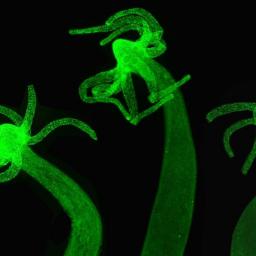
After losing its nervous system, the freshwater polyp adapts its skin cells to make them act like nerve cellsIn Greek mythology, the Hydra was a gigantic, snake-like monster with nine heads and poisonous blood and breath, which lurked in the swamps of Lerna. Heracles was sent to destroy the beast as one of his twelve labours, but when he decapitated one of its heads, two more grew back in its place. He eventually defeated it with the help of his trusty nephew Iolaus, however, by burning out the severed roots with firebrands to prevent the regrowth, then decapitating its one immortal head and burying it under a heavy rock.The real Hydra has regenerative capacities that surpass those of its mythological namesake. When it is dismembered, any fragment of its body can regenerate to form a completely new individual, and it can even remain alive after its entire nervous system has been lost. Researchers in Switzerland now report that it does so by adapting its skin cells to make them behave more like neurons. Their findings provide clues about how nerve cells first evolved, billions of years ago. Continue reading...
|
 |
by Guardian Staff on (#VY5C)
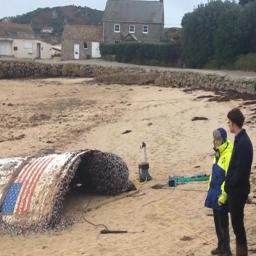
Debris from the failed Nasa SpaceX Falcon 9 lies on the shore of Tresco in the Isles of Scilly. The wreckage was spotted by a local boatman on Friday between the islands of Bryher and Tresco. It was initially mistaken for a dead whale. The rocket broke apart mid-flight on 28 June shortly after take-off from Cape Canaveral in Florida Continue reading...
|
by Tash Reith-Banks on (#VY2V)
In the third in our series on STEM and humanitarian crises, a classic engineering solution uses cardboard to help homeless people in WolverhamptonThis time of year brings additional challenges to those living on the streets: the nights are longer and colder, and plummeting temperatures and wet weather increase the risk of illness.
by Nicola Davis on (#VWZS)
Will our great-grandchildren effectively be a different species from us?Juan Enriquez and Steve Gullans are co-founders of Excel Venture Management, which builds start-ups in synthetic biology, big data, and new genetic technologies.Juan was the founding director of the Life Sciences Project at Harvard Business School and Steve was a professor at Harvard Medical School for eighteen years, applying breakthrough technologies to diseases such as cancer, Parkinson's and Alzheimer's. They join Nicola Davis down the line from Boston, Massachusetts to discuss the ideas featured in their new book, Evolving Ourselves - How Unnatural Selection is Changing Life on Earth. Continue reading...
 |
by Danny Bradbury on (#VWGF)
Indian startup Team Indus is one of just 16 remaining teams racing to the moon for a $20m prizeSometime in late 2017, a tiny vehicle will blast into space from India on a 10-day journey to the moon.As it finally lands on the lunar surface some 238,900 miles later, its fate will rest entirely on four small aluminium parts in its shock absorbers. They need to work in a vacuum, with lubrication that doesn’t freeze or jam no matter what the angle. And if they fail, there’s no one to go up and fix it – meaning that eight years of work and $20m (£13.2m) in prize money will be lost in space. Continue reading...
|
 |
by Ian Sample Science editor on (#VW62)
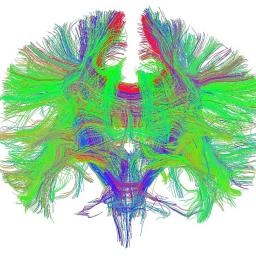
Study suggests high levels of skunk use may affect the brain’s white matter, making communication between the right and left hemispheres less efficientHigh-strength cannabis may damage nerve fibres that handle the flow of messages across the two halves of the brain, scientists claim. Brain scans of people who regularly smoked strong skunk-like cannabis revealed subtle differences in the white matter that connects the left and right hemispheres and carries signals from one side of the brain to the other.
|
 |
by Stuart Clark on (#VVWJ)
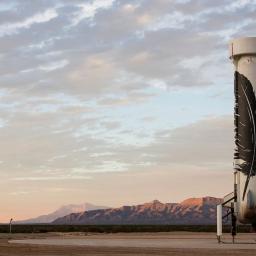
Private space company Blue Origin released a glitzy video this week showing its New Shepard rocket blasting off from West Texas, deploying a test capsule, then dropping to a precision landing back on Earth.It is an important milestone for the company. Traditionally, rockets have been treated as expendable – used once, then left to fall into the ocean. Reusable rocket technology is one way to drastically reduce the cost of launches. Continue reading...
|
 |
by Guardian Staff on (#VVRE)
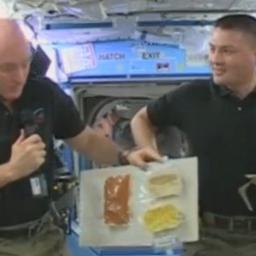
American astronauts dig into candied yams, rehydratable corn and potatoes au gratin for Thanksgiving dinner on the International Space Station (ISS). Kjell Lindgren takes a tentative bite of the freeze-dried turkey while Scott Kelly decides to try the yams instead - all in zero gravity
|
 |
by Peter Kimpton on (#VVPA)
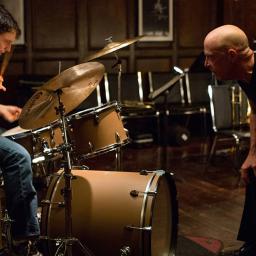
Look sharp! Get on it! Don’t stop! This week it’s time to name songs that, whether in title or lyrics, employ the imperative form. Now get started … please!
|
by Tash Reith-Banks on (#VTS2)
The recipient of this year’s Wellcome Trust Screenwriting Fellowship, filmmaker Carol Morley talks science, magic and women in film“When I was at primary school, I was really interested in science. I even wrote to Jim’ll Fix It; I think I wanted to do an experiment with test tubes and a white coats and everything, but I never heard back.†says filmmaker Carol Morley. “Of course, looking back, that’s probably for the best ...â€Morley, whose recent films include Dreams of a Life and The Falling, has just been named as the recipient of the Wellcome Trust Screenwriting Fellowship, which is awarded in partnership with BFI and Film4. Finally, without the dubious aid of a disgraced TV presenter, she’ll live her dream. From January she’ll have access to a treasure trove of scientific material and experiments galore. The fellowship, now in its third year, offers a huge prize: access to the trust’s library, archive and curio collection, visits to research institutions, a personal MRI brain scan and genome analysis, direct access to research trials and a space to work in at the Wellcome Collection. The £30,000 bursary also adds a sweetener to rival the coveted Jim Fixed It For Me medallion. Continue reading...
 |
by Tomas Chamorro-Premuzic on (#VTPC)
With Black Friday, Christmas shopping and the winter sales all approaching, what is it that makes some of us susceptible to irrational purchases?With Black Friday, Christmas shopping and the winter sales all approaching, consumers around the world will once again overindulge in systematic unplanned purchases that provide little more than a short-term emotional fix. At times, this can cause long-term problems, such as regret, debt and spiritual emptiness.It is indeed the season for impulsive buying, one of the few areas in which marketers and businesses appear to be up to speed with the science of psychology, not least because of their desire to leverage it at the expense of consumers’ rationality. From sales assistants who compliment you on your looks, to those who pour you a glass of champagne, and machine-learning algorithms that nudge you into buying things you don’t need – but still want – a big chunk of marketing budgets are devoted to stimulating reckless and mindless spending. Continue reading...
|
 |
by David Shariatmadari on (#VSZY)
Some made up words, like probble and dolsimp, are more amusing than others. Funniest of all are the likes of clunt, focky and dongl. Why?
|
by Tim White on (#VSRA)
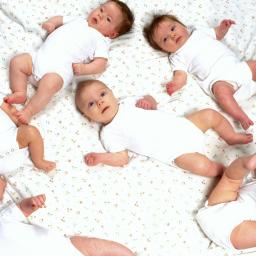
Portions of science seem to be collapsing into the entertainment industry, raising serious questions about accuracy, funding and credibilityImagine walking through a forest. You spy a wheelbarrow full of jumbled bones and teeth. After securing your selfie, who you gonna call? The Guardian? The Ghostbusters? The coroner? Just like Sherlock Holmes or CSI, all of those contacts would want answers to the same essential questions. To whom did these bones once belong? How long have they been here? How did they get here in the first place?It is easy to make up stories to account for the facts, but science and science fiction are different things. What about your wheelbarrow? If the coroner, after careful comparison, concludes that these bones are not modern human, “paleoanthropologists†might take over the investigation. This is where the fun invariably begins. We practitioners of this small and peculiar specialty are far outnumbered by scientists studying fruit fly embryogenesis, but we register media punches far above our meagre collective weight. Nothing excites us like a new bunch of old bones. And the public loves stories about human origins almost as much as those about crime, pyramids, dinosaurs, extraterrestrials, and the Kardashians.
 |
by Dean Burnett on (#VSP6)
What is the correct number of children to have in order to avoid judgment or scrutiny from strangers? Is such a thing even possible?Children. Brilliant, aren’t they? Everyone says so. I’ve got two children myself, and I love them more than anything and would do anything for them.I don’t expect anyone else to feel the same, though. Not anyone outside of my immediate family anyway. They’re MY children; why would I expect complete strangers to give a damn about how I and my wife reproduce? Continue reading...
|
by Vicky Neale on (#VSN7)
With less than a month to go before Christmas Day, it’s time to start thinking about cards. Here Oxford maths don Vicky Neale explains how to impress your friends with these stunning geometrical designs. It’s Christ-maths time, and there’s no need to be afraid.Christmas is a fantastic opportunity for me to share some maths with friends and family. One of my favourite ways to do this is by stitching geometrical designs on cards. The magic is how the straight lines produce perfect curves.Here’s how it’s done. Draw two straight lines that intersect. Draw points along each of those lines at equal distances. When you join the dots from one line to the other, as in the star and tree above and in the four images below, you get a parabola. Strictly speaking, the curve is the envelope of the family of straight lines.
 |
by Michael Safi on (#VRYA)
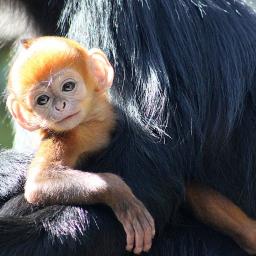
Male infant called Nangua, Mandarin for pumpkin, is fourth langur to be born at the zoo, the only one in the region to breed the endangered speciesSydney’s Taronga zoo has announced the birth of a bright orange François’ langur, one of the world’s rarest monkeys.The male infant, named Nangua – the Mandarin word for pumpkin – was discovered in his mother Meili’s arms by keepers on 7 November. Continue reading...
|
by Guardian Stage on (#VRTS)
Bestselling physicist will hit the road in autumn 2016 with a show featuring his Infinite Monkey Cage pal Robin InceThe physicist and broadcaster Brian Cox is to tour the UK and Ireland with a live show in autumn 2016.
by Paul Simons on (#VRG3)
Bonfire night years ago was a cold and frosty time, when trees had lost their leaves. But this November plenty of trees were in full leaf, despite all the wind and rain, and there was an impressive show of autumn colour.This was all thanks to rains earlier in the year that kept trees in good heath, and plenty of sunshine and mild weather in the autumn, with hardly any frost before last weekend’s cold snap. Continue reading...
 |
by Oliver Milman in New York on (#VREZ)
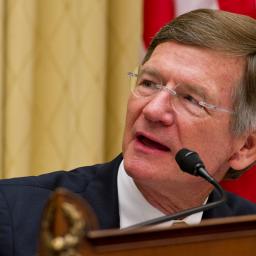
Eight key scientific bodies warn Republican congressman Lamar Smith that his committee’s investigation into Noaa could have a ‘chilling effect’ on scienceLeading scientists have accused a Republican-led committee of subjecting climate researchers to politically motivated “harassment†amid an increasingly fractious investigation into the activity of the National Oceanic and Atmospheric Administration (Noaa).Eight key scientific bodies have written to Republican congressman Lamar Smith, chairman of the House committee on science, to warn that the committee’s inquiry into Noaa could have a “chilling effect on the willingness of government scientists to conduct research that intersects with policy-relevant scientific questionsâ€. Continue reading...
|
 |
by Rodney Walshaw on (#VQTF)
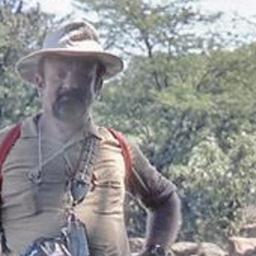
My friend and colleague, Brian Hackman, who has died aged 81, was a geologist and amateur linguist who twice narrowly escaped death on his extensive travels. As a geologist he worked for governments around the world – and as a linguist he spoke German, Russian, French, Spanish and Welsh, as well as Kiswahili, Bahasa Indonesia and Bahasa Malaysia.He graduated in geology from the Royal School of Mines in London, and joined the Royal Engineers for his national service in Germany and Egypt, where he saw action during the Suez crisis in 1956. Continue reading...
|
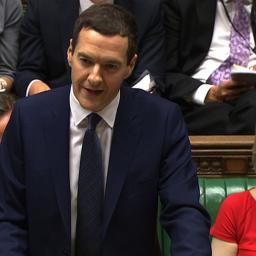
by James Wilsdon and Kieron Flanagan on (#VQNM)
George Osborne’s commitment to protect the science budget in real terms has been welcomed by many in the research community. But a lot of the detail is still to emerge. We’ve gathered a few reactions from scientists and policy experts.
 |
by Jill Treanor and Rowena Mason on (#VPT0)
George Osborne has unveiled the results of the government’s spending review; here we analyse the key points in 25 main areas Continue reading...
|
 |
by Guardian Staff on (#VQ9F)
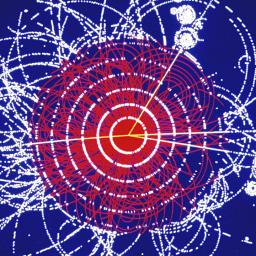
Readers answer other readers’ questions on subjects ranging from trivial flights of fancy to profound scientific conceptsScientists have apparently discovered that atomic particles have “twins†with which they can interact instantaneously over any distance, in any part of the universe. But how can they identify the partner of any particular particle?Harry Cole, Winchester Continue reading...
|