With the start of another new year, people are once again swearing off alcohol for at least a month, often for charity. What are the potential effects of suddenly cutting all alcohol from your system?Alcohol. It’s a popular social lubricant, provides pleasure, and often tastes nice. It also has long term health consequences, and imposes a heavy burden on our society. Overall, it’s a mixed blessing.At present it’s becoming ever-more fashionable, even charitable, to abstain from alcohol for the month of January. After the indulgence of the Christmas period, it’s hardly surprising people will want to do something healthy, and what could be healthier than giving up alcohol? Continue reading...
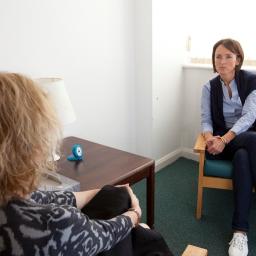
Stuck in debt, constantly overspending or not saving? Perhaps professional help could change your attitude to money. Our writer tries it outWhether it’s anxiety about paying the bills, guilt at spending, or feelings of inadequacy over our income, polls frequently show money to be a leading source of worry, and one of the main causes of rows between couples. Even the rich aren’t immune, according to Capgemini’s annual World Wealth Report, with top concerns for millionaires in 2015 ranging from how they will maintain their lifestyle to whether their offspring will mismanage their inheritances.So how do we make peace with our bank statements and instead spend the wee hours calmly contemplating whether that car alarm will ever stop? The answer, at least according to some, lies not in spreadsheets and interest calculators, but in financial therapy. A burgeoning field in the US, where the five-year-old Financial Therapy Association counts more than 250 members, financial therapy combines traditional financial advice with a more touchy-feely psychological exploration of what is driving a client’s behaviour towards money. Continue reading...
Gigantopithecus, which roamed the Earth 100,000 years ago, failed to adapt when climate change affected its favoured diet of fruitThe largest ape to roam Earth died out 100,000 years ago because it failed to adapt to eating savannah grass after climate change affected its preferred diet of forest fruit.Gigantopithecus – the closest nature ever came to producing a real King Kong – weighed five times as much as an adult man and probably stood 3m (9ft) tall, according to rough estimates. Continue reading...
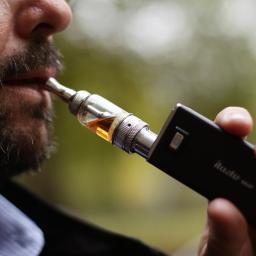
UK drug regulator’s approval of vaping device paves way for product to be prescribed on NHS for patients trying to give up smokingBritain’s drug regulators have given the go-ahead for a British American Tobacco (BAT) e-cigarette to be sold as a medicine for quitting smoking, the first such product to be given a drug licence in the UK.The decision to licence the e-Voke product means it can now be prescribed on the NHS for patients trying to give up smoking. Continue reading...
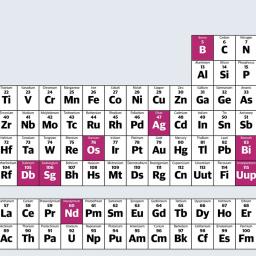
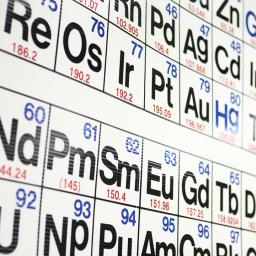
Four new atoms have been documented. They don’t exist for long enough to be much practical use, but they reaffirm the brilliance of a table of classic designConsidered as a design classic, the periodic table has all the elegance of, say, Mr Beck’s London Underground map: pleasing displays of cocktails, cupcakes and Lego bricks have been achieved by grouping them into the s-, p-, d- and f-blocks. But the table is more than a design. While the tube map has to be tweaked to catch up with the facts after each line extension, the periodic table predicts new facts. Ranking atoms by their proton tally and then classing them by electron arrangements is, first of all, a way of tidying the building blocks of matter – arranging what Prof Steve Liddle calls “an artist’s palette of all the elements from which everything is madeâ€. Alternatively, it can be seen as an incomplete jigsaw, where missing pieces indicate gaps for entirely new sorts of stuff. The challenge used to be one of discovery: elements such as germanium were tracked down to slot in. But go past uranium (atomic number 92) and outsize atoms get too unstable to exist naturally, and have to be invented. A Japanese team has just got the credit for creating element 113, while a Russian/American team in California has scored an atomic hat-trick, filling three missing numbers: 115, 117 and 118. Synthesised americium saves lives every day in smoke alarms, yet, like most invented elements, the new atoms exist too fleetingly to be of immediate practical use. But the scientists reaffirm the sturdiness of their table, and learn a good deal along the way. Continue reading...
Scientists have confirmed the discovery of four new elements. Here’s a primer on other exciting members of science’s most exclusive club. And boronAt last, the periodic table looks tidy. To nobody’s surprise, the discovery – and indeed creation – of a few atoms of elements number 113, 115, 117 and 118 has now been verified by the International Union of Pure and Applied Chemistry (IUPAC), and the seventh period is complete, giving the main table a nice, smooth bottom row. As soon as the new elements are officially named, the world’s chemistry textbooks can be reprinted with what may well be the final version. (There might be an eighth period out there too, but let’s not think about that for now.)Since we first began to understand that each element consists of a specific number of protons surrounded by the same number of electrons (and flavoured with various numbers of neutrons), it has been easy to speculate about finding more. The Russian chemist Dmitri Mendeleev first arranged them in the now familiar way in 1869, having seen the table in a dream. Henceforth, if anyone asks you what the universe is, you can give (as a short answer): “This.†So here are some of the most intriguing elements on the all-singing, all-dancing new periodic table. Continue reading...
Alexei Sayle’s review of David Aaronovitch’s Party Animals (Review, 2 December) reflects the extent to which present-day cultural life is powered by the personal grudges of children against parents, lovers against those who dumped them, and wannabes against those who scorned them. These days, as the socialist baby goes out with the communist bathwater, it’s not Cyril Connolly’s “buggy in the hall†(DJ Taylor, same issue) that inhibits writers from saying what people “might not wish to hear†so much as the rear extension.
‘To scientists, this is of greater value than an Olympic gold medal,’ says Nobel laureate in chemistrySuch is the lot of the modern-day chemist: you wait ages for a new element to turn up and then four come along at once.
The countdown conundrum cracked: how to solve it and my pick of your best solutionsEarlier today I set you the following puzzles. Fill in the blanks so that these equations make arithmetical sense:10 9 8 7 6 5 4 3 2 1 = 2016, and Continue reading...
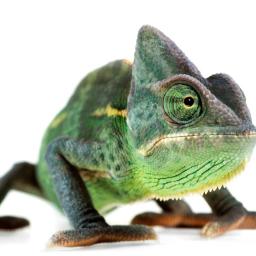
It’s not quite faster than a speeding bullet, but Rhampholeon spinosus can flick its tongue faster than a launching space shuttle, a new study has shownResearch has identified the tiny chameleon Rhampholeon spinosus as having the ultimate high-speed mouthful. When it flicks its tongue at a fly, it reaches peak acceleration 264 times the force of gravity. Continue reading...
Academic whose book Village on the Border pioneered the application of anthropological methods to British societyIn the 1950s, British anthropologists normally conducted their fieldwork overseas. Ronnie Frankenberg, who has died aged 86, broke the rules by focusing on the former slate-mining community of Glyn Ceiriog, then in Denbighshire and now in Wrexham county borough, for his first book, Village on the Border (1957).In doing so, he showed how anthropological methods could be effectively applied to British society. His choice of subject was fortuitous: he had intended to write his doctorate on the Caribbean, but his outspoken communist sympathies led to him being deported from Barbados, and the vice-chancellor of Manchester University demanded that he study within a day’s journey from the city. Needing to conduct his research in a non-English language to satisfy the conception of anthropology at the time, he hit upon the settlement in the Ceiriog Valley, not far beyond the Cheshire border. Continue reading...
by Sumita Thapar for SciDev, part of the Guardian dev on (#ZJZW)
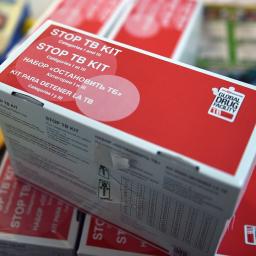
The new, sweeter tablets are provided in a smaller child-friendly dosage, meaning parents do not have to chop up adult tablets and guess at dosesA tuberculosis drug specifically designed for children – combining sweet flavours and the correct dosage in a dissolvable tablet – is expected to hit markets early this year, according to the TB Alliance, a non-governmental organisation.The tablets, which were developed through a partnership between the TB Alliance, the World Health Organisation (WHO) and the US government, are meant to improve drug regime adherence among children in the developing world. The drug is not new, but will be an improved combination of existing TB treatments such as rifampicin, isoniazid and pyrazinamide, specifically designed for children. Continue reading...
The Guardian recently published a piece on how to avoid procrastinating. But what if you want to procrastinate, and put off the inevitable for as long as possible? Just follow this helpful guide.Over the Christmas break, have you felt bad about leaving all the things you usually do? Work emails unanswered, books unwritten, blogs unblogged and That Thing Your Boss Wants hiding somewhere under the TV schedule? Procrastination and being organised is a big problem for many of us, with a host of articles, books and blogs giving us the reassurance we seek – that you’re not alone. The excellent Graham Allcott even has some top productivity tips in the lifestyle section of this very site (his book is very good, and as nobody else I can think of is releasing a book soon … nope, nobody at all ... I recommend it)But come on, be honest. Don’t those people who seem to have everything seem really ... annoying? Do people who seem to achieve everything they set their minds to get you down? Screw them. Smug gits. Make a resolution this year to give less of a damn, and learn to procrastinate like a pro. To guide you on your way to a 2016 of “mehâ€, here are my top tips:
by Chloe White, Will Davies and Charlie Phillips on (#ZJCN)
Online videos of soothing sounds known as ASMR (autonomous sensory meridian response) are increasingly popular. Fans enjoy the relaxing effects of these ‘head orgasms’. Here, the makers of ASMR YouTube channels including WhisperAudios, WhispersRed and ASMRAngel explain the appeal of sounds such as gum-chewing, hair-brushing and beard-rubbing
In the making of The Age of Loneliness, I set out to find people brave enough to tell me about their feelings on camera, and found some surprising resultsHow do you make a film about loneliness that isn’t bleak and despairing? It’s hugely important subject, and it’s reaching such epidemic proportions in Britain that I knew I had to make a film. And somehow make a film people would watch – and not run away from.Related: Loneliness is dangerous: ignore it at your peril | Philippa Perry Continue reading...
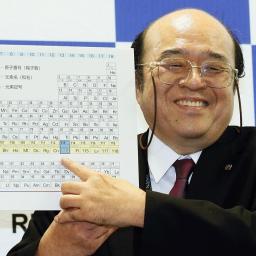
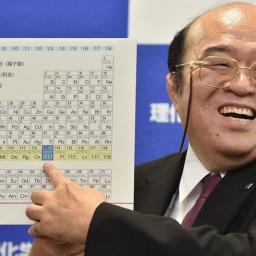
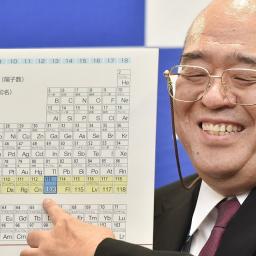
A team of Japanese scientists have met the criteria for naming a new element, the synthetic highly radioactive element 113, more than a dozen years after they began working to create it. Kosuke Morita, who was leading the research at the government-affiliated RIKEN Nishina Centre for Accelerator-Based Science, was notified of the decision on Thursday by the US-based International Union of Pure and Applied Chemistry (IUPAC)
In your pyjamas and late for an exam? Looming work commitments might have something to do with itI am late for a mathematics exam. For some inexplicable reason, I have not attended class all term, and have no grasp of the material whatsoever. I run through a building that is a conglomeration of educational spaces from my past: primary school, high school, the hospital where I studied for my PhD. When I enter lifts, they go sideways instead of up and down; when I pause to find a bathroom, all of the stalls are unsuitable in some way: hideously dirty, or door-less.Midway through my race through the corridors, I realise it is not an exam at all, but the opening night of a play, and not only have I not memorised my lines, but I cannot find the script. Then I find the script, but the font is too small to make out and I can’t find my reading glasses. Continue reading...
Nasa’s Earth Observatory has tracked down images resembling all 26 letters of the English alphabet using satellite imagery and astronaut photography Continue reading...
A countdown conundrumHappy New Year guzzlers.For a few years now, my early January ritual has been to solve the following puzzle: fill in the equation that counts down to the year that has just begun. Continue reading...
Discovery of four super-heavy chemical elements by scientists in Russia, America and Japan has been verified by experts and formally added to tableFour new elements have been added to the periodic table, finally completing the table’s seventh row and rendering science textbooks around the world instantly out of date.The elements, discovered by scientists in Japan, Russia and America, are the first to be added to the table since 2011, when elements 114 and 116 were added. Continue reading...
If you are a geology nut, you may dream of clambering up volcanoes or searching for dinosaur footprints in China, but sometimes you need go no further than your town centre to experience a cornucopia of fascinating rocks.Out in the field, geologists may have to trek across difficult terrain to find what they are looking for. But a sharp-eyed pedestrian should be able to spot a wealth of rock types during a short stroll down the average high street. Continue reading...
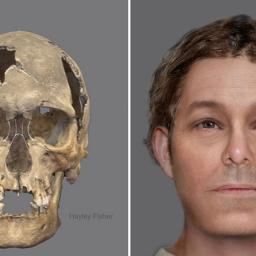
Remains found buried under playground near former execution site could be those of a man hanged for piracy in the 16th or 17th century, experts believeA skeleton discovered under a primary school playground could be that of a 16th-century pirate, archaeologists have said. The remains of a man were uncovered by council workers during survey work for an extension at Victoria primary school in Edinburgh last year.Experts at AOC Archaeology carbon-dated the bones to the 16th or 17th century and, working with forensic artist Hayley Fisher, created a facial reconstruction of the man, thought to have been in his 50s. Continue reading...
Psychiatrist who transformed the ‘world bible’ of psychiatric diagnosisThe American psychiatrist Robert Spitzer, who has died aged 83, took a homegrown system for classifying psychiatric disorders to world prominence. In 1974, the American Psychiatric Association (APA) asked Spitzer to take responsibility for a new edition of its Diagnostic and Statistical Manual of Mental Disorders, which had begun in 1952. This new edition, the third, known as DSM-3, was published in 1980 and quickly became the “world bible†of psychiatric diagnosis.The DSM acquired increasing importance in those years because of the new prominence of drugs in treating psychiatric patients. Before the 1950s, psychiatry had few effective drugs. Yet with the opening of the vast new cornucopia of psychopharmacology, it did make a difference what agent was prescribed: different disorders responded to different treatments. Accordingly, which diagnoses were included or excluded in the classification had great financial consequences. Billions of dollars in pharmaceutical profits were at stake, and some of the diagnoses, such as “major depressionâ€, could be profitable indeed. Continue reading...
Psychoanalyst Adam Phillips’s study of desire and restraint asks more questions than it answersThe Notting Hill psychoanalyst Adam Phillips sets aside one day a week from practice to write; Unforbidden Pleasures is his 20th book. He takes the subtle view that self-knowledge is a form of self-denial (to know oneself is to limit one’s possibilities) and calls his profession “an experiment in what your life might be like if you speak freelyâ€. These ideas guide his approach to writing, which he claims to let flow without sweat. The eel-like essays that result aren’t a vehicle for preordained argument so much as a way for him to discover what he thinks. You might say his readers need the patience of an analyst – except we’re the ones paying for the session.The central idea in his new book is fairly simple. Rules, and the temptation to break them, confuse our sense of pleasure with notions of self-control. What Phillips would like us to do about this is harder to grasp, and his terms are far from obvious. Forbidden pleasures, seldom defined, include running a red light. Among Phillips’s “unforbidden†pleasures – the ones he says we might want to reconsider if we’re to escape the clutches of taboo – are “morning coffee†but also “self-criticism†and “obedienceâ€. Continue reading...
It’s not as hard as you might think to set yourself clear goalsNew Year’s resolutions can be a rollercoaster of emotions. There are the highs when you set them, imagining with excitement the new life you’re going to be leading, but often also the lows of frustration and procrastination when things don’t go exactly to plan.Procrastination is more than simply “not doing something†– it’s “not doing something and feeling bad about itâ€, typically through a mixture of guilt, fear and laziness. As soon as you realise you’re procrastinating, it’s important to diagnose why and take action. You can use the acronym DUST to help with the diagnosis… Continue reading...
Europe brings big benefits for many sectors, including science. That’s why the pro-EU movement should be based in communities like yoursThis year will almost certainly be the year of the EU referendum. Although some parts of the media will portray it as a struggle between two official campaigns, the real story must be a rich national democratic debate. There are many grassroots communities emerging with vital understandings of the importance of continued EU membership. Doctors, nurses, researchers, farmers, lawyers, police, environmentalists, as well as Brits living abroad, all have much to say.As the Scottish independence referendum showed, an agile swarm of passionate activist communities can run rings around a top-down Westminster-based operation and engage voters whom politicians cannot reach. The official Britain Stronger in Europe campaign can benefit enormously by engaging with what is already a very diverse array of pro-EU campaigns, with several more emerging. The question must be not only what these campaigns can do for BSE, but what a central campaign can do to support these passionate and committed communities. Continue reading...
Journals begin withholding locations after warnings the data is helping smugglers drive lizards, snakes and frogs to ‘near-extinction’Academic journals have begun withholding the geographical locations of newly discovered species after poachers used the information in peer-reviewed papers to collect previously unknown lizards, frogs and snakes from the wild, the Guardian has learned.
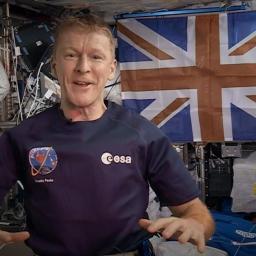
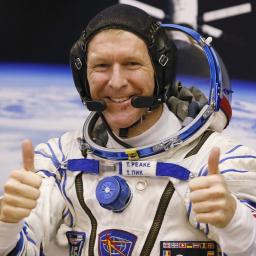
European Space Agency (ESA) astronaut Tim Peake wishes the UK and the rest of the world a happy new year from the International Space Station (ISS). The 43-year-old former army helicopter pilot is Britain’s first publicly funded astronaut and the first Briton to visit the space station. Peake is spending six months in space to maintain the ISS and perform experiments Continue reading...
Researchers have managed to halt the progression of DMD in mice using a recently developed gene-editing techniqueGene-editing injections could one day offer hope to those with the inherited disease Duchenne muscular dystrophy, research suggests.Researchers were able to halt the progression of DMD in adult mice using a recently developed technique that has been hailed as the scientific breakthrough of 2015.
After the shock general election vote, pollsters are looking to psychology to find out why the predictions were unreliableIn their mission to find out what went wrong in the general election in May, pollsters have been staring deeply into some unlikely places – including the brain.Martin Boon of ICM Unlimited has been talking to neuroscientists to uncover the telltale signs when respondents’ answers aren’t what they seem. “Brain science has come a long way since the days of crude lie detectors, which would look out for a little pick-up in pulse. It is now possible to put probes on the skulls of a respondent as they watch a speech, or a leaders’ debate, and gain direct insights into the emotional response,†says Boon. Continue reading...
Professor Linda Bauld unpicks recent headlines around a study looking at the impact of e-cigarette vapour on human cells, and finds little support for the claim that they’re as harmful as smokingJust under a year ago, I wrote a response to an article by a journalist who claimed there was no evidence that vaping is less harmful than smoking. Since then, many new studies have been published, including a Cochrane review showing their promise for aiding smoking cessation, and a comprehensive review for Public Health England that concluded, as previous reports have done, that e-cigarettes were significantly safer to users than continuing to smoke.Yet the debate in the media rages on, fuelled in part by misleading press releases from journals and academics. The latest example involves a study published online in the journal Oral Oncology in November, but press released just this week, at a time when many smokers are making new year resolutions to stop smoking. The press release cited the lead author who concluded that ‘based on the evidence to date, I believe that [e-cigarettes] are no better than smoking regular cigarettes’. Continue reading...
There’s more to losing weight after the festive binge than cutting calories – lifestyle, psychology and setting realistic goals are also key to successAfter the culinary excesses of the festive season, it is no surprise that one of the most common New Year resolutions is to lose weight. And while reaching a healthy weight can take commitment and willpower, there are some tried and tested approaches that should make the task easier.There is no doubt that people with an optimum body weight live longer and have healthier lives. Overweight or obese people are more likely to develop diabetes, heart disease, high blood pressure, cancer, osteoporosis, and experience fertility problems. They die younger too. Body mass index is not a perfect measure, particularly for heavy people who are lean and muscular, but it works for much of the population. The healthiest BMIs range from 22.5 to 25. When it reaches 30 to 35, life expectancy falls by two to four years. A BMI from 40 to 45 typically shortens life by eight to 10 years. Many deaths in overweight people are the result of vascular disease.
What have we learned this year from particle collisions at a new, record-breaking energy at CERN’s Large Hadron Collider?On 15 December the two biggest experiments at CERN’s Large Hadron Collider (LHC) reported on what has been learned this year from particle collisions at a new, record-breaking energy. The reports received some attention internationally (and there was some reaction here of course), but in the UK they were largely lost in Tim Peake’s rocket smoke. He made it to the International Space Station by the evening of the same day.The record-breaking collision energy is not simply a tribute to the memory of Roy Castle. Increased energy means increased resolution. This year, with the help of the LHC, we have looked more deeply into the heart of matter than ever before. I am thrilled that the UK has, finally, officially, joined the human space flight adventure. But I confess to some regret that CERN scheduled our report for the same day.
Dr Michael Jacobs from the Royal Free London, where Will Pooley and Pauline Cafferkey were treated, among those to receive honoursThe role of British doctors, scientists and advisors in developing treatments that helped end the Ebola epidemic that killed 11,000 people worldwide has been recognised in the New Year honours list.Dr Michael Jacobs, the consultant who treated three Britons with the disease, said he was “honoured and humbled†to receive a knighthood for his services to the prevention and treatment of infectious diseases. Continue reading...
We’ve received more than a quarter of a million photographs relating to Australia over the past 12 months – and we’ve shot and seen plenty more on our travels. Here are some of the most memorable, newsworthy, creative and talked-about images from professional and amateur photographers alike Continue reading...
British astronaut will help revellers welcome in new year when his words are beamed on to big screens during street partyA message from space will welcome in the new year for revellers at Edinburgh’s Hogmanay street party.The British astronaut Tim Peake will beam a message from the International Space Station on to screens at the event just before midnight on Thursday. Continue reading...
Kalobios is second company with ties to Shkreli now in turmoil, following Turing, which raised the price of a life-saving drug 50-fold in SeptemberKalobios, the troubled drugmaker taken over by Martin Shkreli last month, is seeking bankruptcy protection less than two weeks after his arrest for securities fraud.It is the second pharmaceutical company with ties to the former hedge fund manager now in turmoil following his indictment on charges unrelated to his involvement with them, though the drugmakers are not lacking for problems of their own. Continue reading...
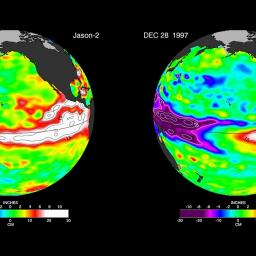
Blister of sea surface heat in Pacific Ocean can set off devastating drought, storms and rainfall around the globe – or just fade awayEl Niño is one of the most predictable climate events on the planet, according to the US National Oceanic and Atmospheric Administration, but it also has a way of keeping climate scientists guessing.In March the oceanographers predicted the current event could be the weakest on record, but in August the same agency warned it could be the strongest. Continue reading...
Lab tests find vapour from e-cigarettes can damage or kill human cells although results would not necessarily be same in living person, say researchersThe e-cigarette – the smoking alternative that has gone from nothing to a sprawling, unregulated multibillion dollar business in less than a decade – could be “no better†than traditional cigarettes, according to a new study.Research published in the Journal of Oral Oncology claims to have demonstrated that vapour from the electronic devices may damage DNA or even kill human cells in laboratory experiments. Continue reading...
News that a London clinic is rejecting dyslexic donors raises questions about the line between avoiding disease and seeking unattainable genetic perfectionIn the last season of The Bridge, the main plot hinged on the actions of the vengeful son of a sperm donor. It raised a host of unsettling questions about the obligations of biological fathers and the rights of their children.Related: Dyslexic donors turned away from largest UK sperm bank Continue reading...
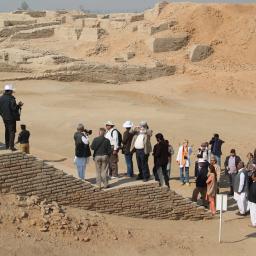
Archaeologists hope DNA from four skeletons will shed light on bronze age settlement as locals see chance to develop more than just site’s ancient heritageWazir Chand is explaining life 4,000 years ago. He points to the rocky mounds looming over a huddle of brick houses, a herd of black buffalo and a few stunted trees. The rising sun burns off a chill mist over the north-west Indian plains.
2015 was a great year for books, science books in particular. 2016 looks set to improve on this with many titles that promise to be exciting and illuminating, as well as non-existentBooks. Everybody loves books, and this includes science books. As yet another year winds down, it’s traditional to review the best books of the past 12 months, using varying criteria. One such criteria is science books, an ever popular subgenre of nonfiction.But while everyone is looking back, why don’t we get ahead of the game by looking ahead? Based on existing trends and reading habits, what science books promise to be enlightening, entertaining and informative in 2016? Continue reading...
Every day millions of internet users ask Google some of life’s most difficult questions, big and small. Our writers answer some of the most common queriesIf I were being perfectly honest, I suspect the answer is likely to be yes. Essentially, counselling provides dedicated time and space for people to talk about things that are concerning or troubling them – and that’s a luxury for many of us.Related: Talking therapies are better than pills, but you have to find the right one | Stephanie Merritt Continue reading...
New strain of tumour – the fourth transmissible cancer found anywhere – makes devils the only species known to be affected by more than one strainScientists have discovered a second strain of cancer causing the fatal facial tumour disease in Tasmanian devils, making the endangered marsupial the only species to be affected by two types of transmissible of cancer.Related: Tasmanian devils thrown a lifeline by facial tumour that threatens them Continue reading...
Toyama Bay dive shop owner joins 3.7-metre-long creature in the water, where it was ‘lively, spurting ink and trying to entangle his tentacles around me’A giant squid, rarely seen outside of deep waters, has been filmed swimming near a pier in central Japan.The 3.7-metre-long squid was spotted swimming under fishing boats at Toyama Bay on Christmas Eve. Continue reading...
Newly released National Archive files reveal late PM failed to declare diamond and emerald gifts and how the US president prepared for a cold war arms summit
White lion Brutus fathers three ‘miracle’ cubs at South African sanctuary despite having sterilisation operationA lion who fathered three cubs despite having had a vasectomy is going back to the vet to have the operation a second time.The lion, Brutus, and his partner, Nala – who live at the Drakenstein lion park near Cape Town in South Africa – surprised staff at the sanctuary when the cubs were born just before Christmas. Continue reading...
Regulator to review practices at London Sperm Bank, which screens for ‘diseases’ including dyslexia and dyspraxiaBritain’s largest sperm bank has been turning away donors with dyslexia in what it describes as attempts to “minimise the risk of transmitting common genetic diseases or malformations to any children bornâ€.In a practice branded “eugenics†by campaigners and a would-be donor, the London Sperm Bank has banned men with dyslexia or other common conditions it described as “neurological diseases†from donating. Continue reading...