 |
by Associated Press in Washington on (#V1PQ)
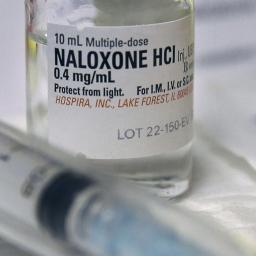
FDA approval for new version of product, based on the drug naloxone, which Irish maker says is cheaper and easier to use than injectionsThe US Food and Drug Administration has approved an easy-to-use version of the lifesaving drug that reverses heroin and prescription painkiller overdoses.The reformulated drug, sold as Narcan, comes as a nasal spray and should help first responders, police and others deliver the antidote in emergency situations. Known generically as naloxone, it reverses the effects of opioids — drugs that include legal painkillers such as oxycodone and illegal narcotics such as heroin. Continue reading...
|
| Link | http://feeds.theguardian.com/ |
| Feed | http://feeds.theguardian.com/theguardian/science/rss |
| Updated | 2026-10-01 02:00 |
 |
by Sarah Boseley Health editor on (#V1G5)
There are more than 1,000 stillbirths each year and out of a sample of 85, researchers found failures in the pregnancy care of half of themThe lives of hundreds of unborn babies could be saved if their mothers were given better care in pregnancy, according to a major report.More than 1,000 babies without any congenital abnormality die at or near term, before labour begins, in the UK every year. A team of experts reviewed in detail a representative sample of 85 of these stillbirths and found there were failures in the care of half of them. Continue reading...
|
 |
by Sarah Boseley on (#V1D1)
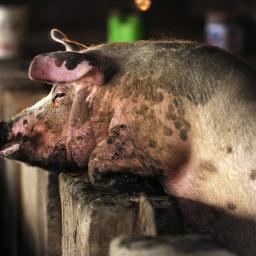
Scientists in China discover a gene that enables resistance to move between bacteria – which is likely to spread worldwide, they warnThe last line of antibiotic defence against some serious infections is under threat, say experts who have identified a gene that enables resistance to spread between bacteria in China.The gene, called mcr-1, allows a range of common bacteria, including E coli, to become resistant to the last fully functional class of antibiotics, the polymyxins. This gene, they say, is widespread in bugs called Enterobacteriaceae carried by both pigs and people in south China and is likely to spread worldwide. Continue reading...
|
 |
by Ian Sample Science editor on (#V0V3)
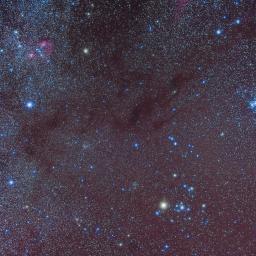
Astronomers have observed for first time a planet taking shape out of microscopic dust particles 450 light years from EarthThe primordial process that turns enormous clouds of cosmic dust into newborn planets over millions of years has been observed directly for the first time.
|
 |
by Reuters on (#V0Q9)
Thirty Meter Telescope project temporarily blocked amid protests by Native Hawaiians and environmentalists who say it would damage sacred landsThe Hawaii supreme court has temporarily blocked construction of one of the world’s largest telescopes on a dormant volcano, following a challenge by Native Hawaiians and environmentalists who say the project would damage sacred lands.The state high court handed down the order late on Tuesday, suspending until 2 December the permit for the project near the summit of the Mauna Kea volcano on Hawaii’s Big Island, court papers said. Continue reading...
|
 |
by Ian Sample Science editor on (#V0NZ)
Lab-grown tissue which produces realistic sounds marks a step forward for patients suffering from diseases or injuries which damage the voiceVocal cords that produce realistic sounds have been grown in the lab from human cells.
|
 |
by Tamsin Edwards on (#V0E4)
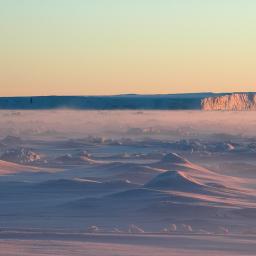
The results of our study might be surprising to some. But although it rules out very high rises, climate sceptics certainly shouldn’t be dancing in the aislesThe past, present and long term future of the Antarctic ice sheet and its surrounding ice shelves have been news over the past few months. I’m part of a team with a new study published in Nature predicting its future. You might think: what’s new?
|
 |
by Damian Carrington on (#V0E6)
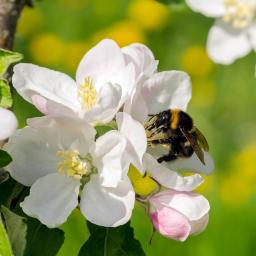
New findings on neonicotinoids have important implications as many food crops and wildflowers rely on bee pollination to reproduceThe world’s most widely used insecticides harm the ability of bumblebees to pollinate apple trees, scientists have discovered. The finding has important implications for agriculture and the natural world, say the researchers, as many food crops and wildflowers rely on bee pollination to reproduce.There is good evidence that neonicotinoids harm bees but the new research, published in the journal Nature, is the first to show a negative impact on the vital pollination services bees provide. Continue reading...
|
 |
by Kim Wall on (#V0A5)
For the next generation of hackers, micro organisms have become the new hardware and DNA strands the new softwareThe petri dish spells it out in faint, dark letters: “Ceci n’est pas un E coli.†The play on the classic painting has a twist, though: while Magritte insisted his caption was accurate since it wasn’t a pipe but an image of one, here, the canvas really is Escherichia coli. Or at least it was, before it was genetically modified for capabilities far beyond its own.Since E coli’s natural habitat – the darkness of the human intestine – doesn’t warrant light sensitivity, a sensor is added. Another upgrade instructs the bacteria to excrete an enzyme to stain the dish’s agar solution black when hit by light. The image itself is captured through a negative putting only the lit-up bacteria to work – the brighter the light, the darker the spot – and voilà : about a day later, a bacterial photograph. Continue reading...
|
by Suzi Gage on (#V03J)
Misinformation about the junior doctor contract is rife. It’s time to look at the facts and listen to why the doctors affected feel a strike is inevitableIt’s hard to miss the junior doctor contract crisis that’s going on in the NHS. The British Medical Association (BMA) has balloted its members, and if they vote to go on strike there will be three days of action at the beginning of December. But why are the junior doctors of our NHS considering striking?I spoke to a number of them while researching this article, and all were really upset that it has come to this. The frustration is evident in their voices and their words. Continue reading...
 |
by Alan Yuhas on (#TZDJ)
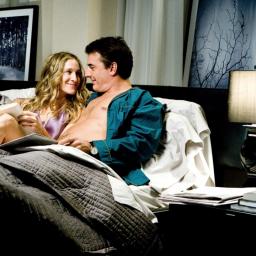
According to new research, happiness peaks when couples have sex once a week but does not increase with greater frequency – and quality mattersSex matters to couples until it doesn’t, according to new research that finds happiness peaks when couples have sex once a week but does not increase with greater frequency.“Although more frequent sex is associated with greater happiness, this link was no longer significant at a frequency of more than once a week,†said lead researcher Amy Muise. Continue reading...
|
 |
by Stephen Curry on (#TZ8J)
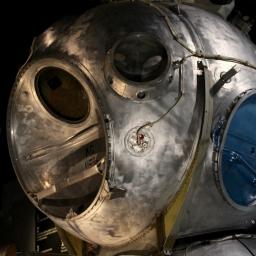
Russian and American adventures in space are revealed in vivid detail in the spectacular Cosmonauts exhibition at London’s Science Museum, and in a massive new collection of photographs from Nasa’s moon missionsLondon’s Science Museum has boldly gone where no science museum has gone before. In Cosmonauts: Birth of the Space Age it has created a dazzling, unprecedented exhibition devoted to the Russian space program. To do so, the museum has borrowed a cornucopia of treasures from no fewer than 18 different institutions. Many of the objects on show have never been seen outside Russia. Some even had to be declassified to be to be brought to London. Science museum director Ian Blatchford has described it as “unique and unrepeatableâ€. He is not exaggerating.The exhibition explores uncharted territory, as fascinating and unfamiliar as any alien world. On show are not just the outlandish technologies that the Russians flung into orbit – and to the moon, and to the planets – but also the vision and the political ambition that fuelled their national space adventure. Continue reading...
|
 |
by Andrew Simms on (#TYY8)
In the last month, experts have questioned the accuracy of current targets for both emissions reductions and the resources needed for climate action. So what does this mean for the planet?Measurement can be simply a matter of getting things to fit– or a matter of life and death. By confusing different scales and units, a friend once nearly ordered a Venetian blind that would have been three metres wide and only three inches deep. Continue reading...
|
by Ara Darzi on (#TYPJ)
One carefully worded text message encouraging people to donate organs added an extra 100,000 donors to the list, all thanks to behavioural insights
 |
by Guardian Staff on (#TYDY)
18 November 1961: Test firing of Minuteman missile, which can be launched remotely without preliminary fuelling, is a major step in America’s defence programmeCape Canaveral, November 17
|
by Clarissa Sebag-Montefiore on (#TYD7)
The French biologist turned choreographer on media fascination with his story and his new six-hour public ‘exhibition’ in Sydney, performed in the nudeNaked bodies are heaped in a mound. Faces pushed up against groins, legs indiscriminately stacked over breasts and buttocks. Everyone is as still as stone. Then, slowly, they begin to unfurl. Feet flex, limbs tentatively stretch out, backs ripple.Related: Skinny-dipping in the void: the day I toured James Turrell's art show naked Continue reading...
 |
by Ian Sample Science editor on (#TXT8)
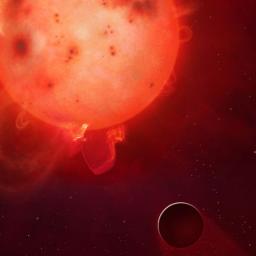
Kepler 438b, hailed as most habitable planet beyond our solar system, is regularly blasted with enough radiation to strip away its atmosphereIt was hailed as the most habitable planet ever found beyond the solar system. But now the distant world of Kepler 438b has started to look decidedly less inviting.Astronomers at the Harvard-Smithsonian Center for Astrophysics unveiled the small, rocky world circling the star Kepler 438 in January this year. A touch larger than Earth, in an orbit that keeps it warm enough for liquid water, but not too warm, the planet looked ripe for life.
|
 |
by Melissa Davey on (#TXMP)
In the race to build the first functional quantum computer, Australian researchers at the University of NSW find coding possible in siliconAustralian researchers have demonstrated that a quantum version of computer code can be written on a silicon microchip with the highest level of accuracy ever recorded.A quantum computer uses atoms rather than transistors as its processing unit, allowing it to conduct multiple complex calculations at once and at high speed. In the race to build the first functional quantum computer scientists around the world have been trying to write quantum code in a range of materials such as caesium, aluminium, niobium titanium nitride and diamond. Continue reading...
|
 |
by Hannah Jane Parkinson on (#TWBP)
The OUP is trying to be innovative by selecting the crying-face emoji for its coveted top spot, but it’s one of the least emotive – and not even a wordI have no words to describe it. Oxford Dictionaries, as owned by the Oxford University Press (OUP), has announced its “word†of the year is … not a word. It’s an emoji.To be precise, it’s the “tears of joy†emoji. Which makes me very “crying face emojiâ€, because the tears of joy emoji certainly doesn’t deserve to be emoji – sorry, word – of the year. Continue reading...
|
 |
by Ian Sample Science editor on (#TW9Q)
Disruption to gene HTR2B could affect decision-making and self-control and may explain why some people are more prone to impulsive behaviourA genetic mutation that makes people more impulsive when they consume alcohol may explain why some are more prone to drink driving, impulsive sex and random acts of violence.The mutation disrupts a gene called HTR2B which the body uses to make serotonin receptors in parts of the brain that have a governing role in decision making and self-control.
|
 |
by Sarah Boseley Health editor on (#TW6C)
Charlie Sheen is one of 35 million people living with the virus and treatments mean he is likely to be able to keep illness at bayIn 1985, when a shocked world learned that the actor Rock Hudson had Aids, and six years later, when Queen’s lead singer, Freddie Mercury, died the day after he had made his diagnosis public, HIV was a death sentence and carried a massive stigma.Related: Charlie Sheen reveals he is HIV positive: 'It's a hard three letters to absorb' Continue reading...
|
 |
by David Cox on (#TVSY)
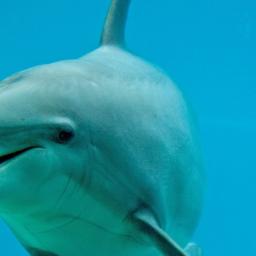
Laughter has many functions, and whilst language is a key part of human humour, psychologists think certain animals show signs of being in on the jokeThere’s a video on YouTube (above) with over three and half million views, in which a girl appears to make a dolphin giggle by doing repeated cartwheels and handstands in front of its tank at a sea world centre.We still understand relatively little about the extent to which emotions are present in animals, but could it be that the dolphin in this clip is experiencing one of the most distinctly human forms of expression – humour? Continue reading...
|
 |
by Jane Stuart Smith for the Conversation on (#TV5R)
Predictions that this Scottish dialect would be homogenised by TV and population movement have been confounded by University of Glasgow researchThe city of Glasgow has a very distinctive dialect and accent. Its famous incomprehensibility has even been demonstrated in a lab experiment, and is seemingly consistent over time. The glottal stop, where “t†sounds get dropped, was common currency well before the 20th century, as can be seen from these observations by a visitor to the city written in 1892:Strangers hurl at us a sort of shibboleth such sentences as “pass the wa’er bo’le, Mr Pa’erson†Continue reading...
|
 |
by Sally Adams on (#TTSK)
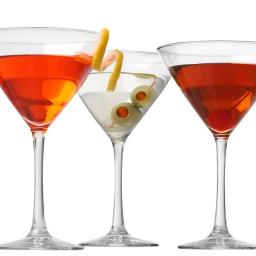
Stories that suggest alcohol can make you a better lover are very popular, but what’s the evidence behind them?Alcohol “…provokes the desire, but it takes away the performance†said Shakespeare, but was he right? It is common belief that alcohol helps us lose our inhibitions and can also act as an aphrodisiac (sometimes!). But it’s not often thought of as a performance enhancer in the bedroom. I refer you to “brewers droopâ€, the age-old nickname for temporary erectile dysfunction induced by alcohol.The notion of too much alcohol as a passion killer is backed up by anecdotal and scientific evidence, but this doesn’t seem to dampen the media fascination with it as a libido enhancer. Is there any truth behind the notion that a couple of pints can really make you a better lover or is this just another “sexy†science story? Continue reading...
|
 |
by Reuters in London on (#TT96)
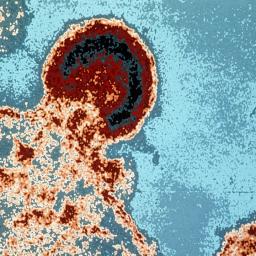
Generic medication disulfiram is found to wake the virus that causes Aids from dormancy – a step towards killing it, say researchers in US and AustraliaScientists seeking a cure for HIV/Aids have said a drug designed to combat alcoholism might be able to draw out the dormant virus from hiding in the body and allow it to be killed.
|
by Tamara Dean on (#TT6J)
Researchers at the University of New South Wales agreed to be photographed working on the ground and in the field (not to mention the water, caves and bush). Photographer Tamara Dean was on a mission to ‘represent the ways these people related to landscapes’ and to show them as heroes. Read on to find out more about their work in ecology, oceanography and climate science
 |
by Associated Press in Cape Canaveral on (#TT4T)
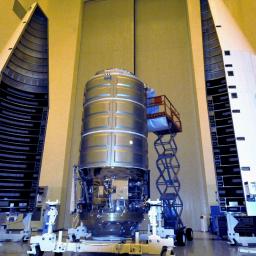
Electricity rerouted after short circuit but spare parts will not arrive in next shipment following delays to supply missions caused by failed launchesThe International Space Station has had a power cut and spacewalking repairs may be needed once a replacement part can be delivered by rocket.Nasa said on Monday that the six astronauts were left with one less power channel on Friday. A short circuit in equipment on the station’s framework was to blame. The short apparently tripped a current-switching device, resulting in the loss of one of eight channels used to power the orbiting lab. The affected systems were switched to alternate lines. Continue reading...
|
 |
by Alan Yuhas and Martin Pengelly in New York on (#TS79)
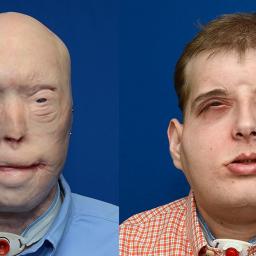
Ninety-three days after transplant, surgeons say Patrick Hardison, a retired fireman injured when a burning roof collapsed on him, is making a full recoverySurgeons in New York have declared the most extensive face transplant ever a success, saying the procedure to give a firefighter the face of a brain-dead man stands as a “historic†achievement.In August surgeons at New York University’s Langone Medical Center performed the transplant for 41-year-old Patrick Hardison, a retired fireman from Mississippi who suffered disfiguring injuries when a burning roof collapsed on him, melting his mask, in 2001.
|
 |
by Ian Sample Science editor on (#TRTW)
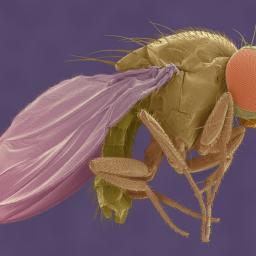
Clumps of protein which align with Earth’s geomagnetic field lines may feed information to the nervous system, creating the ability to navigateTiny biological compasses made from clumps of protein may help scores of animals, and potentially even humans, to find their way around, researchers say.Scientists discovered the minuscule magnetic field sensors in fruit flies, but found that the same protein structures appeared in retinal cells in pigeons’ eyes. They can also form in butterfly, rat, whale and human cells. Continue reading...
|
 |
by Mo Costandi on (#TR85)
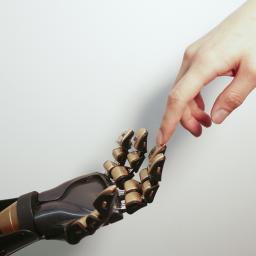
In a big step towards the development of prosthetic limbs that feel real, two research groups have developed artificial skin containing touch and heat sensorsProsthetic limbs have come a long way in the past 25 years. People who lose an arm or a leg can now be fitted with sophisticated prostheses that interface with the nervous system directly, which read the brain signals related to planning movements and translate them into commands for the device, enabling the user to control their replacement appendage by merely thinking about it.Neurally-controlled prosthetic devices can vastly improve quality of life for amputees and paralysed patients, by helping them to move and regain at least some of their independence. Ultimately, though, researchers hope to develop devices that provide sensory feedback to the user – this would not only allow for more accurate control of the prosthesis, but would also enable the user’s brain to incorporate the artificial limb into its model of the body and take full ownership of it, so that actually feels more like a part of the body than a cumbersome add-on. Continue reading...
|
by Emily Drabble and Robert Winston on (#TR7B)
To celebrate winning Royal Society Young People’s Book Prize for a third time, Robert Winston shares some of the most exciting experiments and facts from his book Utterly Amazing Science Continue reading...
by Novo Nordisk on (#TQTA)
Social, cultural and economic factors play a much bigger role in the spread of urban diabetes than previously thought, according to new research commissioned by the pioneering Cities Changing Diabetes (CCD) programmePublished today ahead of the inaugural CCD summit in Copenhagen, the study findings show that diabetes vulnerability in cities can be linked to everything from financial and geographical constraints, to traditional perceptions of health and body size – challenging current scientific understanding of the problem.“By largely focusing on biomedical risk factors for diabetes, traditional research has not adequately accounted for the impact of social and cultural drivers of disease,†explains David Napier, professor of Medical Anthropology at CCD programme partner University College London (UCL). “Our pioneering research will enable cities worldwide to help populations adapt to lifestyles that make them less vulnerable to diabetes.â€
 |
by Ian Thomson on (#TQB8)
Three books about the postwar era – by Simon Hall, Francis Beckett and Tony Russell, and Jon Savage – chart the end of the ‘great greyness’Historians love to identify a particular year as world-shaking or otherwise important, and write a book about it. Recently, popular histories have appeared of 1913 (the “year before the stormâ€), 1968 (“the year of revoltâ€), and 1980 (the “year of free marketsâ€). By comparison, the 1950s remain oddly neglected. Perhaps the decade is seen as too dreary or drab to have diverted the course of history decisively. Certainly 1950s Britain was a derelict, half-ruined place, where railway carriages were black with grime and bomb damage showed in the big cities. It was the world of the screenwriter Dennis Potter’s “great greyness†– the “feeling of the flatness and bleakness of everyday Englandâ€.In fact, Britain was on the cusp of tumultuous change in the 1950s. It was then that the sound barrier was finally broken and an “Elizabethan†age of aeronautical pre-eminence beckoned. Hair-raising cockpit dramas occurred as aviators were killed in engine flame-outs or were vaporised on impact with the countryside. Nevertheless, from these 1950s jet age catastrophes designers and engineers learned how to make commercial flight safe for us today. The science and aesthetics of faster-than-sound flight is a story that deserves to be told. Continue reading...
|
 |
by Sukhdev Sandhu on (#TQ7P)
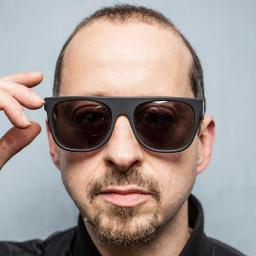
Voids, loss, a future without humans: the influential DJ/musician and Hyperdub founder is back with a new album inspired by … nothing. He explains allEarlier this year Steve Goodman, better known as Kode9, developed a weird strain of what he calls the “zero virusâ€. Ever since New Year’s Eve, when he holed himself up in his studio to begin work on his third LP, he had been looking for a concept that might explain where he was at emotionally, musically and politically. “I started reading about mathematics and the history of zeros,†he says, “and about vacuums and voids in quantum theory. Suddenly zeroes were everywhere.â€
|
 |
by Mark Tran on (#TPG4)
Public Health England finds use of such drugs has risen since 2010 while antibiotic-resistant infections continue to increaseThe use of antibiotics of last resort has risen significantly in England during the last five years as antibiotic-resistant infections continue to grow, posing a threat to healthcare.
|
 |
by Edward Bloomer, Royal Observatory, Greenwich on (#TP6Q)
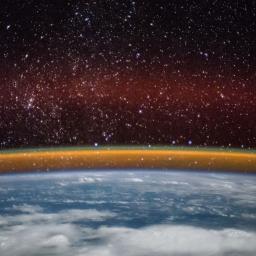
In December, the first British European Space Agency Astronaut, Tim Peake, will be heading to the International Space Station on the five-month-long Principia mission. Along with Russian cosmonaut Yuri Malenchenko and Nasa astronaut Tim Kopra, he will launch from the Baikonur cosmodrome in Kazakhstan to join the international team on board humanity’s outpost in space. Three of the currently-serving crew will transfer back to Earth as the new members take up their duties, maintaining the station’s permanent staff of six.It’s hard not to envy the experiences Tim is about to have, but happily we can keep an eye on him from here on Earth. The ISS appears to us as a fast-moving star (it is moving at almost 28,000 km/hr), but your own position coupled with the station’s orbit determines where and when to look for it. Nasa has created a user-friendly Spot The Station service to help do just that, with automated notifications for upcoming opportunities, and clear instructions that beginner astronomers will find useful. Continue reading...
|
 |
by Editorial on (#TP28)
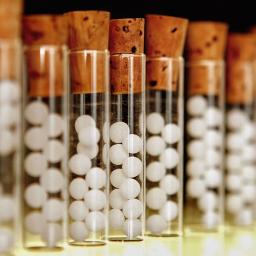
Placebos can work magic. But that’s no argument for the health service to privilege a form of mock medicine that defies science and common senseWestern medicine doesn’t know it all. There are treatments that don’t work at all well, others that work for reasons that nobody can fathom, and all sorts of others again that are still to be discovered. It is also true – as western medicine itself has firmly established – that the sugar pill can sometimes be a wonder drug. The administration of anything with the form of a treatment can do real good, and remarkably this applies even where the patient knows that “treatment†is nothing but a placebo. Administering placebos with extra ritual appears to redouble the effect, and so it would be no surprise, either, if a spoonful of mumbo-jumbo helped the medicine go down.Related: Homeopathy on prescription could be banned from NHS Continue reading...
|
 |
by Alan Yuhas on (#TN0B)
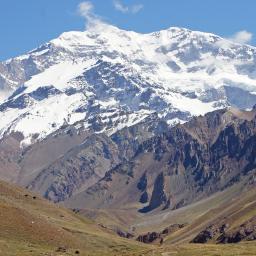
Sequenced genome of boy who was sacrificed by the Inca 500 years ago points to extent of genetic diversity in the Andes before the Spanish arrivedArchaeologists and geneticists have sequenced the genome of a boy sacrificed 500 years ago during an Incan ritual in the Andes, finding a previously unidentified lineage that hints at genetic diversity before the Spanish landed in the Americas.Spanish geneticists extracted the DNA of a mummy found in the icy heights of Aconcagua, the world’s tallest mountain outside Asia, near the border of Argentina and Chile. The mummy, of a seven-year-old boy who was sacrificed by the Inca, showed a DNA signature that has virtually disappeared in modern South Americans. Continue reading...
|
 |
by Suzi Gage on (#TMTJ)
Mycoplasma genitalium, or MG, may infect 1% of sexually active Brits. What is it?A supposedly new sexually transmitted infection has been getting a lot of media attention in the last few days, which has suggested that hundreds of thousands of people are infected with it. Is it new and are you at risk? Here are some basic questions answered. Continue reading...
|
 |
by Jon Butterworth on (#TMN7)
A new book on how Dark Matter may have finished off the dinosaurs is just one example of unexpected connections
|
by Carole Cadwalladr on (#TMMG)
Celebrities are part of a winning formula to raise awareness of science’s unsung heroes whose work transforms the worldWho knew Christina Aguilera would spearhead the great leap forward in science reporting? That the singer of top 10 hits Dirrty and Beautiful and former judge on The Voice would be the touchstone for a revolution in how society views science? But that’s the thing about scientific breakthroughs: they’re all about serendipity – or here, serendipity and the shimmer of gold trim.The awards ceremony for the third annual Breakthrough prize – a multimillion-dollar set of awards designed to celebrate and honour scientists in their lifetimes – took place at Nasa’s Ames Research Center in California last Sunday. The prize was founded, and is funded, by Yuri Milner, a Russian investor, alongside Silicon Valley luminaries including Facebook’s Mark Zuckerberg and Google’s Sergey Brin and aims to give fundamental science the kind of glitter and pizzazz that the Oscars give the film world. Continue reading...
 |
by Ed Cumming on (#TMHJ)
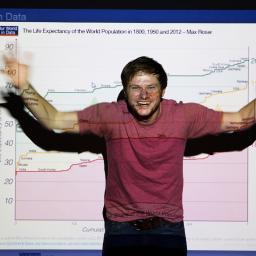
We’re hardwired to focus on bad news stories, but that is not the whole truth. Ed Cumming meets the optimistic statisticians and economists using facts to reveal why more people are healthier and happier than ever beforeNot every problem has an obvious solution, which is why during the 1850s Britain bought 300,000 tons of bird poo a year from Peru. This was guano, the wonder fertiliser that had been discovered by Europeans at the start of that century. It was shipped back to the motherland, where it helped to feed the burgeoning and rapidly industrialising population, mainly through the medium of turnips.In a modern globalised world, the idea of transporting large quantities of avian dung thousands of miles in wooden sailing boats to grow turnips seems less incongruous. For Ruth DeFries, a professor of ecology and sustainable development at Columbia University in New York, the guano craze is one example of how over the centuries human ingenuity has risen to the challenge of feeding ourselves. Continue reading...
|
 |
by Ben Ambridge on (#TMRT)
Take this simple Observer quiz to find out whether you are a true atheist or whether your faith is not as strong as you thoughtDo you believe in God? How confident are you in your view? Let’s put your belief (or lack of it) to the test.Read aloud the following statements. Don’t just think about them or mutter them to yourself – shout them out:
|
 |
by Casper Walsh on (#TMEH)
If you have violent tendencies, catching your own dinner can have a remarkable effect, argues Caspar WalshLondon’s not a place you would associate with hunting. But when I was growing up in the 70s, it was everywhere. Crime was how my father made a living. The consequences of this career choice meant that our house was constantly under threat from police raids. London for me was a dangerous place, full of predators.I cut myself off emotionally from a world I couldn’t trust and soon headed down the same destructive path as my father. I came within a hair’s breadth of a long prison sentence. Continue reading...
|
 |
by Denis Campbell Health policy editor on (#TKYW)
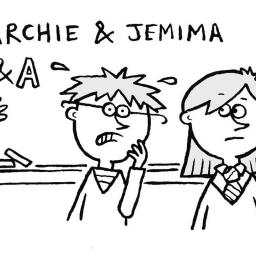
New illustrated book follows 11-year-old’s hunt for the man and woman who helped his parents conceiveThey number 49,000 in the UK, but have yet to see their existence reflected in a book, TV show or film. But now the profile of donor-conceived children is about to increase with the publication of the first book in which the main characters are boys and girls wrestling with the complexities of being born through unconventional means.Described by its author as “like Diary of a Wimpy Kid meets Tracy Beakerâ€, Archie Nolan: Family Detective, by Beverley Ward, aims to tackle the subject of the growing number of children born through donated sperm and eggs. Continue reading...
|
 |
by Yvonne Roberts on (#TKYY)
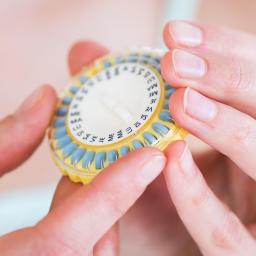
Just because the so-called medical experts tell us something, it doesn’t mean it’s trueOn Thursday, a million women experiencing the toughest time in the menopause – hot flushes, insomnia, startling mood swings – could have read the news that GPs are once again being encouraged to prescribe hormone replacement therapy (HRT).A study, published in 2003, had shown a significant increase in the risk of cancer. Last week, the health watchdog, the National Institute for Health and Care Excellence, said GPs had wrongly “lost confidence†in the drug. Women had been left to “suffer in silenceâ€. Now, according to Nice, the benefits of HRT far outweigh the risks. Continue reading...
|
 |
by Robin McKie science editor on (#TKYN)
Vets studying the muscle-wasting disease in dogs say new drugs being tested could halt its progress in humansAt first glance, the beagles running round the enclosure of the Royal Veterinary College look typical of the breed. Inquisitive and affectionate, the dogs rush from visitor to visitor, anxious to play and make contact. Endearing behaviour like this has made the beagle one of Britain’s most popular breeds.But closer scrutiny shows something unusual: some beagles look a little clumsy and weak on their paws. Occasionally one will stagger or stop in its tracks. The cause of this behaviour is straightforward. The dogs have the inherited the wasting condition muscular dystrophy. Crucially, the animals – kept at the college’s site near Potter’s Bar, Hertfordshire – suffer from a version very similar to the disease’s most common human version, Duchenne muscular dystrophy. Continue reading...
|
 |
by Deborah Orr on (#TJ5Z)
It’s a dereliction of duty if doctors are failing to discuss HRT knowledgably with patients. But symptoms vary, and so do people – and if some choose to tough out the menopause without medication, then kudos to themThe National Institute for Clinical Excellence (Nice) has published new guidelines aimed at helping women and their GPs to reach an informed decision about hormone replacement therapy. Nice reckons that around a million women could currently be suffering debilitating menopausal symptoms because HRT is under-prescribed. The clear implication is that Nice experts reckon around a million women would make a different choice if they were better informed. Some might believe HRT is more risky than it really is. Others might never have had the opportunity to choose at all.The second matter is the more straightforward. Nice says its guidelines should prove useful to GPs who aren’t “expert†in HRT. Eh? Since the menopause is a condition that all of a GP’s female patients will encounter, surely all GPs should be fairly expert, because they are all used to routinely laying out the options to women patients as they reach their mid-40s. Continue reading...
|
 |
by Ian Sample Science editor on (#TJ61)
What doctors used to call mass hysteria usually occurs among close-knit groups as anxiety weaves its way through, causing physical symptomsOn 15 February 1787, a young woman at a Lancashire cotton mill decided to scare one of her co-workers with a mouse. The prank made medical history. Terrified of the rodent, the woman on the receiving end had a fit that lasted hours. The next day, three more workers suffered violent fits. The day after, six more.Alarmed and mystified at the epidemic, the owners closed the mill amid rumours of a disease brought in by contaminated cotton. When Dr William St Clare arrived from Preston to investigate, he found 24 people affected. Three worked at another factory five miles down the road. He ended the epidemic swiftly. It was “merely nervous, easily cured, and not introduced by the cotton,†he concluded. Suitably reassured, all recovered and no more workers fell ill. Continue reading...
|
by Alan Yuhas on (#TFH7)
In a rare bipartisan moment US lawmakers opened up the possibility of mining on other worlds despite an international treaty barring sovereign claims in spaceAsteroid platinum and the briny water on Mars may soon be available for plunder, Republicans and Democrats have agreed, advancing a bill that would grant “space resource rights†and could challenge an international treaty on outer space.The US Senate passed the Space Act of 2015 this week, sending its revisions of the bill back to the House for an expected approval, after which it would land on the president’s desk. The bill has a slew of provisions to encourage commercial companies that want to explore space and exploit its resources, granting “asteroid resource†and “space resource†rights to US citizens who managed to acquire the resource themselves. Continue reading...