 |
by Guardian Staff on (#XT79)
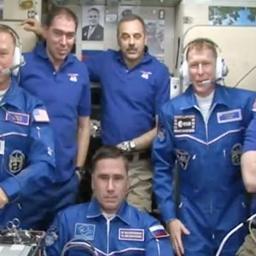
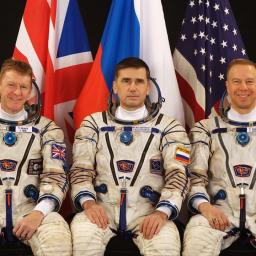
UK astronaut Major Tim Peake, Russian commander Yuri Malenchenko and US astronaut Tim Kopra join three crew members already aboard the International Space Station (ISS), having emerged from the Soyuz space capsule, which took off from Kazakhstan early on Tuesday. Peake is able to speak to team members, his wife Rebecca and his mother Angela back on earth
|
| Link | http://feeds.theguardian.com/ |
| Feed | http://feeds.theguardian.com/theguardian/science/rss |
| Updated | 2026-10-01 02:00 |
 |
by Ben Jennings on (#XT7A)
Continue reading...
|
 |
by Stuart Clark, Ian Sample and Ben Quinn on (#XQZ7)
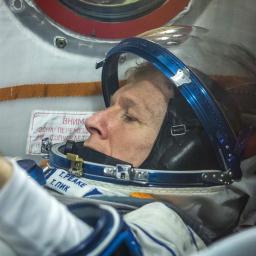
Despite some last-minute issues, the Soyuz rocket docked at the ISS, and Tim Peake, Tim Kopra and Yuri Malenchenko are boarded the ISS8.40pm GMTWe’re going to wrap it up from here now at Guardian Mission Control. We certainly enjoyed the show, and hope that you did too.We’ll leave you with some some footage from earlier of the Soyuz craft carrying Britain’s first European Space Agency astronaut, Tim Peake, as it prepared to dock with the International Space Station.8.33pm GMTSome other messages of congratulations are coming in now. Here’s the Queen’s:The Queen sends #GoodLuckTim message to #TimPeake @astro_timpeake as he joins @Space_Station #Principia #BritinSpace pic.twitter.com/KyGEjD19cQ Continue reading...
|
 |
by Tim Radford on (#XT4T)
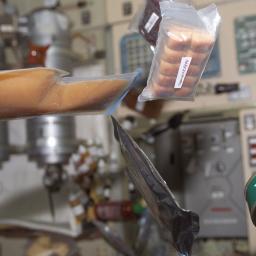
Now he’s safely aboard his new home, what will life be like for Tim Peake over the next six months as he orbits the Earth?Every 45 minutes Major Tim Peake will see a sunrise, or a sunset, regular as clockwork. At 17,500 miles an hour, he will orbit the earth 16 times a day. His new home is at one and the same time an office, workshop, gymnasium, laboratory, mess deck and dormitory, connected by cylindrical corridors and he will commute to work each day effortlessly, floating in microgravity. One of the most demanding things he will have to do is exercise to keep his muscle tissue working at all: most of us are not aware of this, but the tug of gravity keeps even the idlest of earthbound humans moderately fit. Astronauts have to exercise hard, but after months in microgravity most of them have difficulty even standing up once they return to Earth.Major Peake will gain in stature, and not just because of his elevated position: astronauts get a chance to walk tall in orbit. Most human beings get out of bed slightly taller than when they retired, slightly crushed by gravity’s remorseless tug. Astronauts stay at their full height all the time and don’t use a bed. Continue reading...
|
by Guardian Staff on (#XT3E)
Britain’s first European Space Agency astronaut, Tim Peake, prepares to dock with the International Space Station after a tense, last minute glitch with the Soyuz spacecraft forces the crew to make an unusual manual approach to the orbiting outpost. Their arrival came slightly more than six hours after blasting off from the Baikonur Cosmodrome in Kazakhstan
by Ian Sample Science editor on (#XRBN)
Failure of automatic docking system gives hair-raising end to otherwise perfect voyage for Peake and crewmates to ISSBritain’s first European Space Agency astronaut, Tim Peake, has docked with the International Space Station after a tense, last minute glitch with the Soyuz spacecraft forced the crew to make an unusual manual approach to the orbiting outpost.Related: Tim Peake: Soyuz has successfully docked with the ISS - live Continue reading...
by Editorial on (#XSJN)
The British astronaut’s journey into orbit is a reminder of the noble human purpose of space exploration outlined in the outer space treaty of 1967Tim Peake’s thrilling takeoff and journey to the International Space Station today was both a pioneering voyage to the stars for an individual Briton and a collective trip down memory lane for those who remember the glory days of the space programme. Manned spaceflight is hardly commonplace, but more than 540 people from more than three dozen nations have now orbited the Earth since Yuri Gagarin in 1961, notching up more than 129 years of space travel between them. Mr Peake isn’t even the first British astronaut to be whizzing around the planet at 17,500mph, but the seventh UK-born space traveller, although he is the first whose journey has been paid for by the UK taxpayer.And yet, however often it has been done before, however long it is since the zenith of the Apollo programme, however much we may debate where space travel properly stands in the hierarchy of the human race’s priorities, and however much we may tell ourselves that machine not human spaceflight is what truly breaches the final frontier, there is still something wonderful and inspiring about what Mr Peake did today. To slip the surly bonds of Earth in a rocket is something most of us would not dream of doing. Yet when one of us does what Mr Peake did today, some part of all of us still goes with him. Continue reading...
 |
by Dean Burnett on (#XSF4)
A long time ago in a galaxy far far away, you could still hear this barrel being scrapedDon’t know if anyone’s noticed, but there’s a new Star Wars film out this week. They’ve tried to downplay it, but news still leaked out there subtly via all possible media platforms and product tie-ins. Of course, this being such a major cultural event means there’s a lot of associated traffic revenue to be generated. Tying an article, however remotely, to a popular subject matter is just one of many tactics to increase online traffic, so of course there have been countless articles tenuously linked to Star Wars churned out. This has caused a great disturbance in the web, as if millions of search algorithms cried out in terror, and were suddenly… silenced.And yes, this article is yet another one. A general email was sent around the Guardian Science Blog network recently asking if anyone have any Star Wars articles planned, which is diplomatic code for “We need frivolous but topical: Dean, earn your keep!†The problem with this is, such is the furore around Star Wars right now that pretty much every idea for a cash-in article has been done already. Even the science of Star Wars has been thoroughly covered. Continue reading...
|
 |
by Tim Radford on (#XS6F)
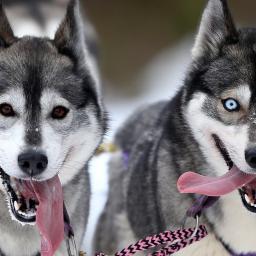
Descended from the grey wolf, domesticated dogs have been companions to humans for about 33,000 years, a genetic study has shownMan’s proverbial first best friend was probably a grey wolf that may have made contact with the first human companions about 33,000 years ago, somewhere in south-east Asia.About 15,000 years ago, a small pack of domesticated dogs began trotting towards the Middle East and Africa. Canis lupus familiaris made it to Europe about 10,000 years ago, and when civilisation began in the Fertile Crescent, and humans began to build farmsteads and villages with walls, dogs were already there to help keep guard, herd the first flocks, and demand to be taken for a walk. Continue reading...
|
 |
by Guardian Staff on (#XS3Y)
Photographs from the Eyewitness series Continue reading...
|
 |
by Matthew Berger on (#XRYA)
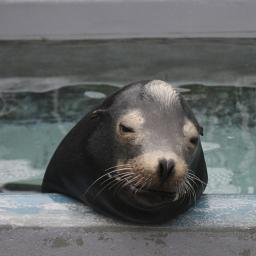
Sea lions on US west coast beaches that ingest domoic acid may face neurological problems that impair behavior and survival abilities, new study findsThe mystery of why sea lions have been stranding in droves on US west coast beaches in recent years is closer to being solved.A new study suggests that sea lions have been eating crabs and small fish laced with the algal toxin domoic acid, which causes chronic seizures and brain damage, impairing the animals’ ability to navigate, eat and generally survive in the ocean. Continue reading...
|
 |
by Dexter Dalwood on (#XRZ1)
My older brother, Hal Dalwood, who has died of cancer aged 58, was an archaeologist with a passion for communicating his subject to as many people as possible, be they other archaeologists, students, members of the public, or family members old and young.Son of Peter, an antiquarian bookseller, and Mary, Hal was born in Bristol. Our family moved to Penzance, Cornwall, in 1969. Interested in archaeology from childhood, Hal studied at Southampton University, under Professor Colin Renfrew, in the 1970s. He spent a year in Sudan teaching English before joining the archaeological digging circuit, working on excavations around Britain, at Hazleton North, Beckford, Amersham, Great Missenden, St Albans and Shetland. Continue reading...
|
 |
by Guardian Staff on (#XRVP)
Schoolchildren at London’s Science Museum watch British astronaut Tim Peake’s launch into space. Peake blasted off on Tuesday morning for the International Space Station and is set for a 40-hour a-week working schedule working on experiments. The museum has a programme that aims to use Peake’s work in space to engage children with science
|
 |
by Stephen Moss on (#XRVR)
Following the release of British astronaut Tim Peake’s spacebound playlist, tell us the music most likely to send you into orbitBritish astronaut Tim Peake has taken a 117-strong playlist on his six-month space mission, filled with lots of feelgood songs to keep the demons at bay as he and his fellow astronauts float around in space. He blasted off this morning to the sound of Queen’s Don’t Stop Me Now, U2’s Beautiful Day and Coldplay’s A Sky Full of Stars, and can look forward to lots more of the same over the next six months, by the end of which he might be a tiny bit bored by anthemic rock. Here’s the top 12 tunes that inspire me – admittedly I’m usually only looking for inspiration to write something rather than embark on a dangerous mission into the void.Related: Tim Peake: Soyuz reaches orbit heading for ISS after successful launch - live Continue reading...
|
by Jason Rodrigues on (#XRPB)
A look back at how we reported on the achievements of other British space explorersTim Peake successful launch - liveIn 1991, Sheffield born Helen Sharman became the first Briton in space when she blasted into orbit aboard the Soviet Soyuz TM-12 space capsule.Sharman, a chemist for chocolate firm Mars, won her place to go to space replying to a radio advert - “Astronaut wanted. No experience necessary.†Continue reading...
 |
by Mahita Gajanan on (#XRKJ)
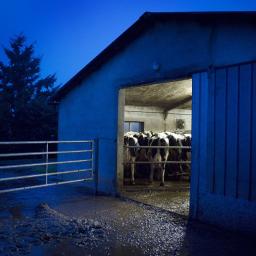
Sedative effects of night milk have not been tested on people but the high amounts of tryptophan and melatonin suggest it may be healthier than AmbienAs anyone who has suffered from insomnia knows well, drinking a glass of warm milk doesn’t always help. But it might, a new study reports, if the milk is taken from a cow at night.According to an animal study in the Journal of Medicinal Food, night milk – literally milk collected from a cow at night – contains high amounts of tryptophan and melatonin, supplements proven to aid sleep and reduce anxiety. Continue reading...
|
 |
by Guardian Staff on (#XRGH)
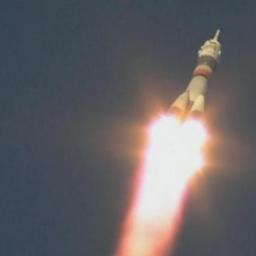
Tim Peake gives the thumbs up from the cockpit as he blasts off into space. The Russian Soyuz rocket was launched from the Baikonur Cosmodrome in Kazakhstan at 11.03am GMT on Tuesday on its six-hour journey to the International Space Station. He will spend six months on the ISS, making him Britain’s first European Space Agency astronaut on board the orbiting station
|
 |
by Ian Sample and Jessica Elgot on (#XR09)
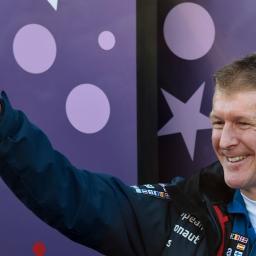
Peake and his two colleagues are already on board Soyuz rocket as final countdown to liftoff beginsBritish astronaut Tim Peake will make his landmark flight to the International Space Station on Tuesday morning after two weeks in quarantine, six years of preparation and 6,000 hours of intense training.Peake’s family, including his wife, their two young sons and his parents, will be watching from the observation site a mile from the launchpad at the Baikonur cosmodrome in Kazakhstan as the Soyuz rocket lifts off carrying the first Briton to join the European Space Agency’s astronaut corps. Continue reading...
|
 |
by Guardian Staff on (#XR15)
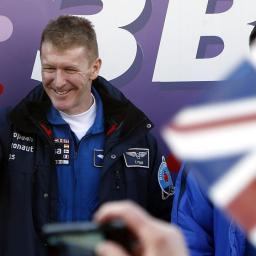
The mother of British astronaut Tim Peake jokes she wishes he had picked a safer profession like banking! Angela Peake speaks ahead of her son’s historic launch to the International Space Station. Both his parents, Angela and Nigel, were in the auditorium along with TV crews and reporters from around the world for the space crew’s final press conference before their launch from Kazakhstan. Photograph: EPA/Maxim ShipenkovTim Peake, Britain’s first ESA astronaut, set for liftoff from Kazakhstan
|
 |
by Ian Sample Science editor on (#XPRQ)
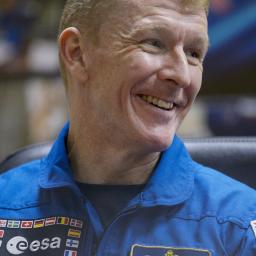
Principia mission to International Space Station opens UK to serious involvement in human spaceflight
|
 |
by Ian Sample Science editor on (#XQNS)
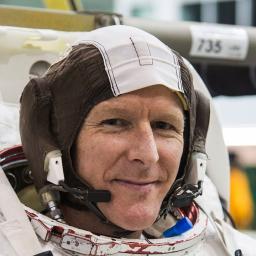
Briton’s International Space Station adventure will include experiments on the effects a journey to Mars could have on future astronautsTim Peake will spend much of his 40-hour working week on science experiments. The International Space Station is the only laboratory where research can be done in a weightless environment and hundreds of experiments are either ongoing or waiting to start.To ensure astronauts are safe when they are working in orbit, and in the future when they are sent on long-duration missions to other planets such as Mars, researchers need to understand how space affects the human brain and body.
|
 |
by Stuart Clark on (#XQJG)
This morning, Tim Peake is due to blast off in the Soyuz rocket, bound for the International Space Station. Here’s what you need to know about his missionMajor Tim Peake is a European Space Agency (ESA) astronaut who is part of a three person crew blasting off for the International Space Station (ISS) at 11.03 GMT on Tuesday 15 December. Peake was born in Chichester in 1972. He was a pilot in the Army Air Corp, and then an instructor flying Apache helicopters. After leaving the Army, he became a test pilot and then in 2009, he beat 8000 other applicants to be selected as an astronaut with ESA. Continue reading...
|
 |
by Tim Radford on (#XPF9)
As dogs don’t have very effective cheek muscles, they cannot suck. So how do they drink? A video study has captured exactly how - and why it’s so sloppyUS engineers have worked out what puts the lap into lap dog. The mechanics of a mouthful of water for a mastiff – complete with that telltale slurping noise - have been explained at last.Whether foxhound or French poodle, it’s all a matter of fluid dynamics at high speed. Continue reading...
|
 |
by Herbi Dreiner and Philip Bechtle on (#XPE5)
As we await a status report from CERN’s Large Hadron Collider - a word from the theorists
|
by Guardian Staff on (#XP27)
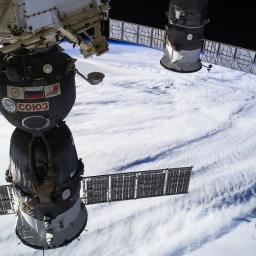
British astronaut Tim Peake says the thing he is looking forward to most on his space-flight is the view of Earth. Speaking to journalists on the eve of his landmark flight into space from Baikonur Cosmodrome in Kazakhstan, Peake says that even though he’ll be a long way from his family and friends over the festive period, the crew will be able to make a Christmas Day phone call Continue reading...
 |
by Phil Maynard, Ian Sample and John Domokos on (#XP0H)
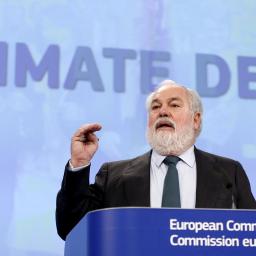
Tim Peake blasts off on Tuesday from a cosmodrome in Kazakhstan to become the first British astronaut to visit the International Space Station. He will spend 173 days in space as part of Mission Principia. His time on the ISS will be devoted to experiments on new materials in a weightless environment and investigations into how the human body reacts to zero gravity Continue reading...
|
 |
by Oliver Geden on (#XNXE)
The headline targets of the Paris Agreement on climate change invite hypocrisy from policymakers
|
 |
by Eric Hilaire on (#XNVH)
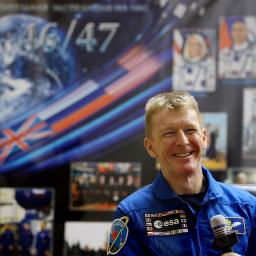
Last-minute preparations are underway for tomorrow’s launch of the Principia mission. British astronaut Tim Peake, US astronaut Tim Kopra and Russian cosmonaut Yuri Malenchenko will spend six months on the ISS Continue reading...
|
 |
by Tara Conlan on (#XNHX)
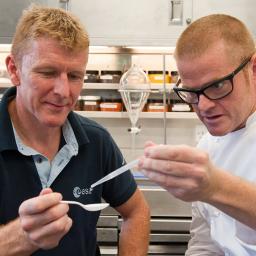
Channel 4 to air documentary on chef’s role in creating drink and food for British astronaut to take to European Space StationHeston Blumenthal has stepped in to help ensure British astronaut Tim Peake can enjoy a proper cup of brewed tea when he goes to the European Space Station.The chef’s role will be revealed in a Channel 4 documentary covering his attempt to create “multi-sensory, gravity defying foodâ€. Continue reading...
|
 |
by Susannah Lydon on (#XNFZ)
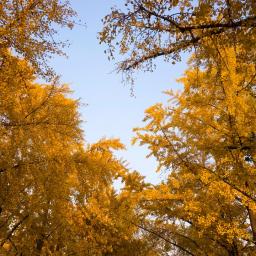
Despite being (somewhat surprisingly) named after a pubic triangle, Ginkgo biloba can help us understand atmosphere changes over nearly 300 million yearsAsk the average person to name a living fossil, the chances are they will think of the coelacanth, or perhaps horseshoe crabs. However, plant examples of living fossils are all around us, surviving from long before the rise of today’s dominant plants. The flowering plants, or angiosperms, are the basis of our food chain and include grasses and broad-leaved trees. But seed plants such as conifers and cycads, and even ancient spore producers such as ferns and clubmosses, continue to earn a living in environments where they are not squeezed out by highly efficient, flowering newcomers.
|
 |
by Neil Lawrence on (#XNAQ)
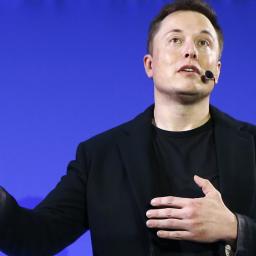
Artificial intelligence experts welcome the launch of the Elon Musk-backed venture, but open algorithms are only the first stepThere is a common misconception about what drives the digital-intelligence revolution. People seem to have the idea that artificial intelligence researchers are directly programming an intelligence; telling it what to do and how to react. There is also the belief that when we interact with this intelligence we are processed by an “algorithm†– one that is subject to the whims of the designer and encodes his or her prejudices.OpenAI, a new non-profit artificial intelligence company that was founded on Friday, wants to develop digital intelligence that will benefit humanity. By sharing its sentient algorithms with all, the venture, backed by a host of Silicon Valley billionaires, including Elon Musk and Peter Thiel, wants to avoid the existential risks associated with the technology. Continue reading...
|
 |
by Amy Fleming on (#XMF1)
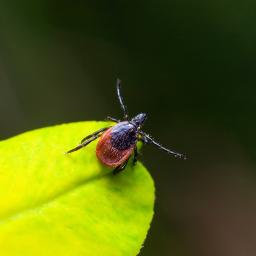
A surge in cases of the tick-borne infection Lyme disease has made some people wary of the countryside. But there’s no need to worry, if you take care‘To be honest,†enthuses Dr Tim Brooks, “it’s a fascinating disease.†As head of the Rare and Imported Pathogens laboratory at Public Health England, trying to solve the growing problem of Lyme disease (and other bugs, such as ebola) is his vocation. Lyme disease – a bacterial infection spread by infected ticks – is a particularly complex puzzle, with little reliable data available so far. It can appear in numerous forms, occasionally causing long-term neurological symptoms that could be mistaken for other conditions, such as multiple sclerosis or motor neurone disease.Following a surge in cases this year – thought to be due to increased public awareness and rising numbers of the ticks that spread the disease – the Department of Health plans to install a network of experts around the country to support GPs and hospital staff who are unfamiliar with the disease. Meanwhile, beware misinformation online. For a start, the strains differ according to country, and no, you can’t catch it from other people. An estimated 2,000 to 3,000 people in the UK come down with it each year, and most cases are straightforward to treat. Complications only arise in a minority of cases, if caught late. Here’s how to best avoid being affected. Continue reading...
|
 |
by Sam Wollaston on (#XMD4)
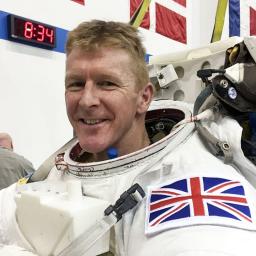
Major Tim Peake is Britain’s first European Space Agency astronaut and has all the qualities of a modern-day heroSuddenly I feel inadequate, as a human being, as a father. In many ways, I have a lot in common with Tim Peake. We’re both fine physical specimens, at the peak of health and fitness. Brilliant at what we do, but modest, we’re also family men, great dads with a couple of small boys each. We’ve even both got a Thomas.So, Thomas, what does your daddy do? Well, sometimes he goes to a boring office, but mostly he just sits on the sofa watching TV. And other Thomas? My daddy’s an astronaut, he trains in the United States and Russia, and on Tuesday he’s going in a rocket, to space. Continue reading...
|
by Ian Sample on (#XMB9)
Tim Peake tells Ian Sample about ESA’s Principia mission, how to use a jetpack, and why flying into space won’t be the most dangerous thing he’s ever doneTim Peake is a 43-year-old former army officer and test pilot, who - in 2009 - became the first British citizen to be selected as an astronaut by the European Space Agency (ESA).Tim beat over 8,000 applicants to be selected for one of only six places on ESA’s new astronaut training programme, meaning he’ll be the first Briton to fly into space without a private contract or having taken American citizenship. Continue reading...
by Press Association on (#XKGX)
Nigel Peake, father of Tim, admitted to being ‘very, very proud and just a little bit overawed’ ahead of Tuesday’s launchThe father of Tim Peake has spoke of his pride after watching the Russian rocket that will carry his son into space being lifted on to its launchpad. Nigel Peake and his wife, Angela, stood yards from the 162ft Soyuz FG rocket as it was manoeuvred into position for blast-off from the Baikonur Cosmodrome in Kazakhstan.“We’re immensely proud,†said Peake. “As you can imagine, it’s quite surreal to think you’re the father of an astronaut, especially a British astronaut. So we’re very, very proud, and just a little bit overawed by the whole operation.†Continue reading...
 |
by Radmila Topalovic, Royal Observatory, Greenwich on (#XKA6)
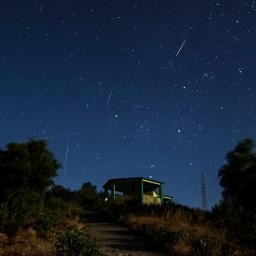
Less than two weeks before Christmas, the strong Geminid meteor shower will reach its peak, with up to 100 meteors per hour expected in the early hours of 14 December. If the weather plays ball, observers will experience a dark sky late in the evening after the waxing crescent Moon sets below the horizon – making it easier to witness the fainter streaks.The show lasts over a few weeks from 4 to 17 December as the Earth ploughs through a cloud of debris left over from the rock comet 3200 Phaethon. Most meteor showers originate from crumbling comets; however 3200 Phaethon is a 5km wide asteroid moving in a very elliptical orbit around the Sun. As it passes close to the Sun its surface bakes at a temperature of 750C, resulting in thermal fracturing in the rock. Continue reading...
|
by Jon Butterworth on (#XK4Z)
What will we learn from the past year of higher-energy collisions at the Large Hadron Collider?
 |
by Oliver Milman in New York on (#XJXE)
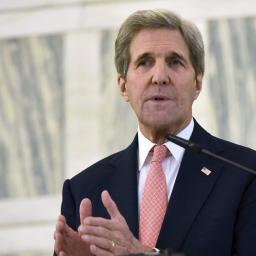
Kerry defends agreement after James Hansen, considered the father of climate change awareness, condemned talks over lack of potential for carbon tax
|
 |
by Matthew Taylor on (#XJ7A)
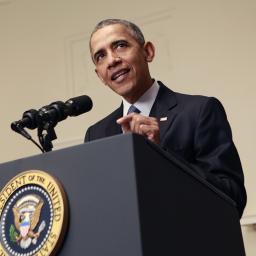
Leaders from the US, China and the EU celebrate agreement reached in Paris, with Barack Obama warning there is hard work aheadWorld leaders have hailed the 11th-hour climate deal reached in Paris on Saturday, claiming it provides the “best chance we have†of saving the planet from catastrophic climate change.
|
 |
by Paul Howard-Jones on (#XHTE)
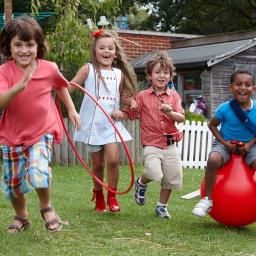
Emotions, friends and play are all crucial parts of our journey towards adulthood, says psychologist Paul Howard-JonesBefore filming the Channel 4 series The Secret Life of 4, 5 and 6 year olds I’d never imagined what following a young child through their day would feel like. It was wonderful to have the chance to listen to each child and follow the stories of their day. I thought I’d get absorbed by the science, but I kept getting pulled into the drama and being surprised by what we were observing. In the Science Room we were supposed to be witnessing events objectively, but things often got a bit emotional. Here are some things we witnessed:Related: How what we wear affects our mood Continue reading...
|
by John Naughton on (#XHS4)
Processors that use the strangeness of quantum mechanics are reportedly achieving much greater problem-solving speed than standard computers – but what will the effect on security be?‘The world is not only queerer than we suppose,†said JBS Haldane. “It is queerer than we can suppose.†Haldane was a biologist and something of a polymath (Peter Medawar, himself a Nobel laureate, described him as “the cleverest man I ever knewâ€), and whenever I read anything about quantum mechanics, it’s Haldane’s aphorism that comes to mind.Quantum mechanics is the branch of physics that studies what goes on inside atoms. It is not for the faint-hearted, not least because it teaches you that everything you know about the physical, tactile world is wrong. “Our imagination is stretched to the utmost,†the great physicist Richard Feynman wrote, “not, as in fiction, to imagine things which are not really there, but just to comprehend those things which are there.†And at the quantum level, the things that apparently are there are seriously weird. For example: subatomic particles can be in two places at the same time – a phenomenon known as “superposition†– and any pair of them can be “entangled†in such a way that they can instantly coordinate their properties, no matter how great the physical distance between them. And the strangest thing of all is that since subatomic particles are the building blocks of matter, quantum physics is ultimately, the physics of everything. Continue reading...
by Kevin Fong on (#XHQF)
Long-distance space travel presents unique challenges to science and the human body – but Kevin Fong, who is giving this year’s Royal Institution Christmas Lectures on the subject, says such obstacles will be overcomeThis year the Royal Institution’s Christmas Lectures look at the challenge of human space flight and what it takes to hurl humans into the final frontier on voyages of exploration.As a doctor I spent more than a decade travelling back and forth between the UK and Nasa’s Johnson Space Center in Houston, working as a visiting researcher on projects ranging from studying the effects of the space environment on ageing physiology to artificial gravity systems. At the same time I was completing my junior medical training in anaesthesia and intensive care. It was odd trying to splice those two lives together. Working on an intensive care unit overnight, heading to the airport at the end of the shift, grabbing some sleep on the plane, and then arriving the next day in a meeting room in Houston, where people were sitting around talking about how to send people safely to Mars. Continue reading...
 |
by Ben Ambridge on (#XHQD)
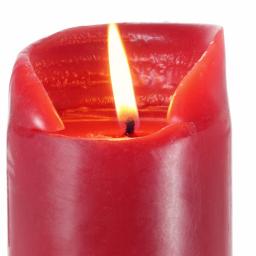
Take this simple Observer quiz and find out how flexibly you thinkHere’s a test that will really get on your wick. You have a small candle, a box of drawing pins and a book of matches. Your task is to attach the candle to the wall so that it does not drip on to the floor below it. What do you do?
|
 |
by Vaughan Bell on (#XHJW)
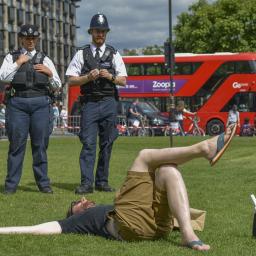
Legislation on mind-altering substances – famously hard to test scientifically – will only lead to the wrong people profitingThe relationship between politics and science has never been easy, but there has rarely been a more embarrassing mismatch than in our drug laws. Supposedly a measure to protect the health of the nation, we have arrived at a situation where some of the most dangerous drugs are legal, some of the least dangerous are prohibited, and where many of the dangers from drug use arise from their illicit supply. But even by the standards of this self-imposed prohibition of science, the new Psychoactive Substances bill is a work of monumental ignorance that has taken drug legislation beyond the point of farce into the realm of surreal fantasy.The motivation behind the bill is the wave of new psychoactive substances or legal highs. Grey market labs have rifled the scientific literature to create substances that produce similar effects to popular street drugs like cannabis, ketamine and ecstasy, but are different enough to avoid existing bans and are often significantly worse for your health. To try to address this problem, the government is trying a radically new approach: pretending that one of the most difficult problems in neuroscience – and one of the deep mysteries of consciousness – doesn’t apply to them. It’s a bold move, to say the least. Continue reading...
|
 |
by Guardian Staff on (#XH38)
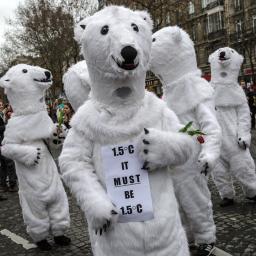
While the summit delegates herald their ambitious targets, scientists and campaigners have mixed views of the agreementThe agreement is extremely welcome. However, we should also be cautious. It is clear that the 1C temperature rise over pre-industrial levels that we have seen so far has triggered a whole range of effects including melting of mountain glaciers, significant sea-level rise, devastating droughts, and flooding. These effects are likely to get much worse with even modest future increases. Keeping temperatures to manageable levels also assumes that we know what the precise link is between atmospheric greenhouse gas concentrations and the global temperature response. We don’t know this, nor the nature and strength of natural feedbacks in the climate system that might drive future warming.
|
 |
by Robin McKie Science editor on (#XGZG)
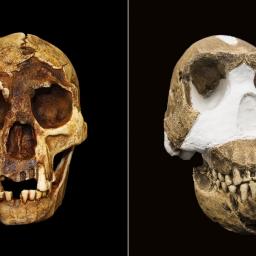
A spectacular series of fossil discoveries, now going on public display, has transformed the study of our early ancestorsA stark demonstration of the dramatic changes that have swept through the science of human evolution will be revealed this week at London’s Natural History Museum. A wall of skulls has been built at the entrance of its new human evolution gallery, graphically showing how our understanding of our seven-million-year journey from ancient apeman ancestors to Homo sapiens has been transformed in recent years.In just over a decade an unprecedented number of new species have been uncovered by palaeontologists, from the Hobbit man of Flores to the Denisovan cavemen of Siberia. Most will be displayed on the wall of skulls. Continue reading...
|
 |
by Oliver Milman on (#XFMM)
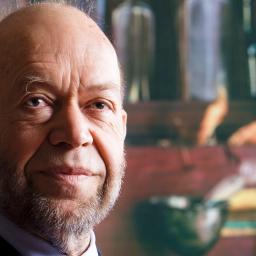
The former Nasa scientist criticizes the talks, intended to reach a new global deal on cutting carbon emissions beyond 2020, as ‘no action, just promises’Mere mention of the Paris climate talks is enough to make James Hansen grumpy. The former Nasa scientist, considered the father of global awareness of climate change, is a soft-spoken, almost diffident Iowan. But when he talks about the gathering of nearly 200 nations, his demeanor changes.
|
 |
by Ruth Whippman on (#XFH8)
New research shows that unhappy and stressed people are no more likely to succumb to ill-health or premature death than their cheerier counterpartsThe happiness industry – now contracted to consult with everyone from corporate America to the US military – thinks your well-being is a matter of individual effort and personal responsibility. This is the American dream applied to the soul: the faith that if we put in enough emotional elbow grease, if we read enough self-help books and practice mindfulness and think positive and meditate and keep a gratitude journal, then we can pull ourselves up by our bootstraps from misery to joy.A thousand inspirational virtual photo-cards declare that ‘happiness is a choice.’ Even the dictionary agrees. Although the word happiness originally came from the Middle English word “hapâ€, meaning chance or good luck (think ‘happenstance’ or ‘perhaps’), any idea that our own wellbeing may be outside of our direct control has been firmly squashed. Merriam Webster’s online dictionary now declares that the old definition of the word happiness as “good fortune†has become obsolete.
|
 |
by Luke Holland, Tom Seymour & Graeme Virtue Illu on (#XF91)
We search for science fact in the world’s most popular science fictionObi-Wan Kenobi called it an “elegant weapon for a more civilised ageâ€, but it’s more like a humming glowstick that’s also lethal. “Lightsabers appear to work like superheated swords, able to slice through metal, human or alien tissue,†says Dr Iain Beardsell FRCEM, a consultant in emergency medicine. “So any victim would probably be taken to the nearest UK major trauma centre, possibly by air ambulance.†Even a glancing blow would likely cause so much trauma, the doctor-paramedic team would place the patient into a drug-induced coma using a “rapid sequence induction of anaesthesia and intubationâ€. But it’s not all bad news. “There is a chance a patient with these injuries may well survive,†says Beardsell. “One advantage of being struck by a lightsaber rather than a conventional blade might be the immediate cauterisation of the wound from the associated heat, stopping bleeding instantly.†So if a Sith Lord scythed your hand off, it could be reattached? “Possibly,†he says. “Hours of plastic surgery would be required, but the clean edges would actually aid the procedure. It would preserve the limb beautifully.†GV Continue reading...
|
 |
by Reuters in San Francisco and Bengaluru on (#XEXV)
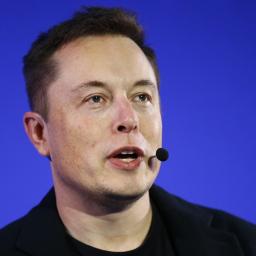
Non-profit research company OpenAI to seek ‘a good outcome for all over its own self-interest’, say Tesla boss and others donating a combined $1bnSome of the most prominent executives in the technology industry including the Tesla and SpaceX boss Elon Musk are backing a non-profit artificial intelligence research company with funding of $1bn.
|