 |
by Emma Howard on (#VQ76)
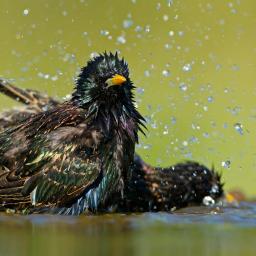
Behaviour could be one cause of the unusual drownings of the birds in large groups in England and WalesStarlings have been consistently drowning in large groups in a phenomenon yet to be fully explained by scientists, according to new research led by the Zoological Society of London (ZSL).In 12 separate incidents recorded between 1993 and 2013 in England and Wales, starlings were found drowned in groups of two to 80. In 10 cases, at least 10 starlings were found drowned at a time, the research published in the journal Scientific Reports on Wednesday shows. Continue reading...
|
| Link | http://feeds.theguardian.com/ |
| Feed | http://feeds.theguardian.com/theguardian/science/rss |
| Updated | 2026-10-01 02:00 |
 |
by Open thread on (#VQ50)
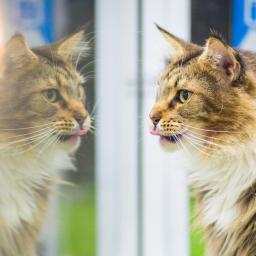
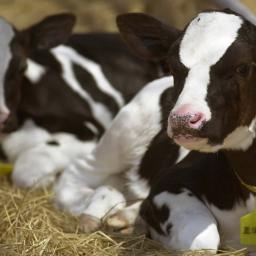
This is precisely what a company in China is offering. So, if you had the cash, would you duplicate your dog, copy your cat and double your bunny?The biggest cloning factory in the world is due to open in China next year. It’s purpose will primarily be to produce a million calves a year, to stem the shortage of beef in the country, where farmers struggle to meet demand.On top of that, the company, BoyaLife, says it will provide clones of family pets. There is already an industry in cloning pets, but the procedure is expensive, and some argue that the result will not be a success, since much of an animal’s behaviour is down to the way it is treated. Continue reading...
|
 |
by Stuart Clark on (#VQ2G)
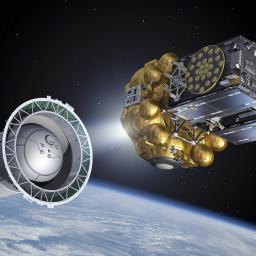
A pair of stranded satellites will perform a test of Albert Einstein’s general theory of relativity that they were not designed to do. The results will be more precise than previous testsIt’s a total fluke. No one was thinking about making the most precise test yet of general relativity when the Soyuz rocket lifted off from French Guiana on 22 August 2014. The European Space Agency was launching Galileo 5 and 6, a pair of navigation satellites to break Europe’s reliance on the American GPS system.At first everything appeared to be going well. The rocket cleared the launch pad and sped away from the surrounding rain forest on its way to space. But trouble was brewing inside the rocket’s upper stage, the final motor that would put the satellites into their operational orbit. Continue reading...
|
 |
by Arthur Neslen on (#VPVP)
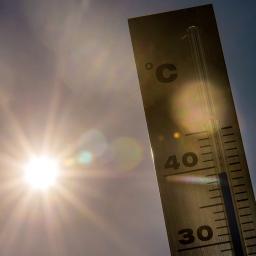
UN weather body says man-made global warming and El Niño oceanic phenomenon made 2011-2015 the warmest five-year period on recordClimate change made 2011-2015 the warmest five-year period on record, according to the World Meteorological Organisation’s (WMO) state of the global climate report.
|
 |
by Jon Butterworth on (#VPJA)
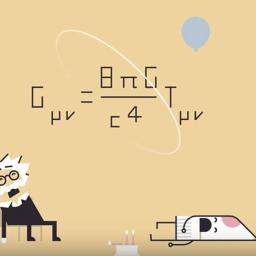
One hundred years ago, as time is measured on Earth, Einstein published his theory of General Relativity. A short video and some links to mark the occasion
|
 |
by Ben Child on (#VPAN)
Film based on the life of pioneering US astronaut has been orbiting in Hollywood since at least 2003, when Clint Eastwood was attached to directRyan Gosling could be in line to star as the first man on the moon, Neil Armstrong, in a new biopic from Whiplash’s Damien Chazelle, reports Deadline.Related: Hey, Ryan Gosling, you've given girls guidance, now let us return the favour Continue reading...
|
 |
by Elle Hunt and Michael Safi on (#VNDZ)
The scientist and leading atheist faces a barrage of criticism after posting comments on Twitter about Muslim teenagerRichard Dawkins has sparked a wave of criticism after appearing to draw a tenuous link between Ahmed Mohamed, the Texas Muslim teenager whose homemade clock was mistaken for a bomb, and a child forced by Islamic State militants to behead his victim.
|
 |
by Press Association on (#VP5F)
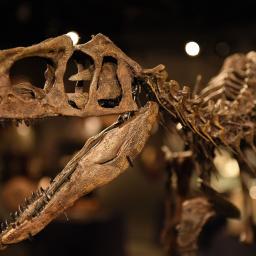
Rare remains of juvenile carnivorous dinosaur estimated to be up to 155 million years old could sell for £500,000A rare almost-complete skeleton of a young dinosaur is expected to fetch up to £500,000 at auction.The remains of the Allosaurus, one of the largest dinosaurs of the late Jurassic period, are believed to be the most complete juvenile of the species discovered so far. Continue reading...
|
 |
by Claire Armitstead on (#VP0P)
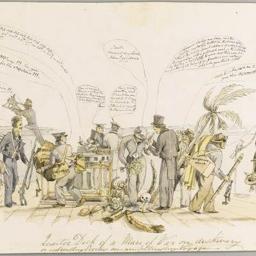
Artwork painted to amuse crew during the 1832 expedition that inspired Charles Darwin’s theory of evolution is to be sold at Sotheby’s in London next monthA cartoon of Charles Darwin and the crew of the HMS Beagle – believed to be the only image of the great naturalist on the voyage that inspired his theory of evolution – is to be sold at auction in December.
|
 |
by George Monbiot on (#VMHT)
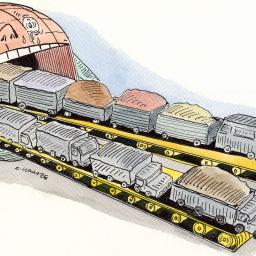
Economic growth is tearing the planet apart, and new research suggests that it can’t be reconciled with sustainabilityWe can have it all: that is the promise of our age. We can own every gadget we are capable of imagining – and quite a few that we are not. We can live like monarchs without compromising the Earth’s capacity to sustain us. The promise that makes all this possible is that as economies develop, they become more efficient in their use of resources. In other words, they decouple.There are two kinds of decoupling: relative and absolute. Relative decoupling means using less stuff with every unit of economic growth; absolute decoupling means a total reduction in the use of resources, even though the economy continues to grow. Almost all economists believe that decoupling – relative or absolute – is an inexorable feature of economic growth. Continue reading...
|
 |
by Letters on (#VMHW)
With the publication of the spending review on Wednesday (Report, 24 November), it’s imperative the government invests in psychological therapies. Failure to address mental health issues, including anxiety and depression, devastates lives, puts a huge strain on the government budget and undermines economic productivity. Psychological health problems have a worse impact on people’s happiness and life satisfaction than physical health problems. In financial terms, the cost of mental ill health in England has been estimated to be £105bn per year.Fortunately, a number of evidence-based psychological therapies exist and are effective. Investment in psychological therapies to date has been a success, but it is a success that could be multiplied. The improving access to psychological therapies programme is only funded to reach “at least 15%†of the people who need it, and retention and recovery rates could be improved. Everyone with a need for psychological therapy should be able to access it within 28 days. We urge more research funding to show which therapies work best for which people. And we advocate training to ensure the NHS workforce can deliver in practice the full range of evidence-based therapies that it offers in theory. We believe this would go a long way towards improving the wellbeing of the nation and the state of the public finances.
|
 |
by Owen Bowcott Legal affairs correspondent on (#VM29)
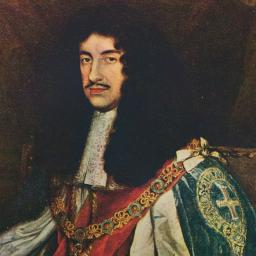
Privy council to rule on claim by Norman Murray Pringle that he is rightful heir to baronetcy of Stichill due to an affair in early 20th centuryAn accountant from High Wycombe could become the next baronet of Stichill if the UK’s most senior judges rule in his favour in a legitimacy test case pioneering the use of DNA to prove aristocratic entitlement.The seven judges of the judicial committee of the privy council will consider on Wednesday whether an affair in a previous generation has tainted the bloodline in an attempt to resolve the family discord. Continue reading...
|
 |
by Martin Jarvis on (#VKHY)
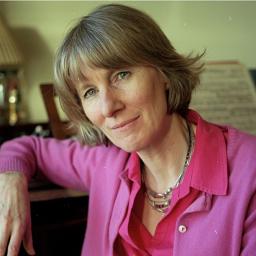
Leading behavioural scientist in the field of cancer preventionJane Wardle, who has died aged 64 from cancer, was an outstanding behavioural scientist in the field of cancer prevention. Alongside the clinical gifts of empathy, listening and insight into human motives, she had a rigorous, quantitative approach to research. She made major contributions to screening, early diagnosis and survivorship – maximising the chances of good longterm outcomes – in the process taking behavioural prevention from a somewhat marginal position to the very heart of Cancer Research UK’s activities. Her contribution went far beyond her studies – she trained a generation of behavioural scientists and helped to transform the field in a way that will have an enduring impact.Jane saw that effective cancer prevention needs both a science of what drives behaviour (for example, the control of food intake) and then well-designed interventions to use that understanding to help change behaviour to reduce cancer risk. She made important contributions at both levels. Continue reading...
|
 |
by Dean Burnett on (#VJYB)
The Sun’s recent controversial front page is just the latest in a long line of worrying claims and reports based on stats, surveys and polls that turn out to be less reliable than you’d hopeYesterday saw an angry backlash against The Sun’s front page which stated that one in five Brit Muslims are sympathetic to Jihadis. A very worrying finding; there are about three million Muslims in the UK, and 600,000 of them support violent terrorists? A terrifying thought, in the wake of the recent Paris attacks.Luckily, many people have taken The Sun to task and shown how the data they base this claim on actually says nothing of the sort. But The Sun shouldn’t really be singled out for this behaviour: it happens all the time. Last week saw the Daily Mail front page saying 60% of Britons think we should bomb Syria, while Jeremy Hunt was criticised by statisticians for his misleading claims about weekend hospital visits. Given the power and influence these people or publications wield, these dodgy statistics are genuinely dangerous. Continue reading...
|
 |
by Tom Phillips in Beijing on (#VJ44)
Tianjin facility aims to produce thousands of cow embryos as well as racehorses and sniffer dogsThe scientist behind plans to build the world’s largest animal cloning factory in China has hailed the venture as an “extremely important†contribution that could help save critically endangered species from extinction.Xu Xiaochun, the chief executive of BoyaLife, the company behind the 200m yuan (£20.6m) project, said it would begin operations in the first half of 2016 in Tianjin, a city about 160km (100 miles) from Beijing. Continue reading...
|
 |
by Tim Radford on (#VGY1)
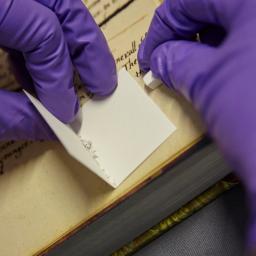
The ultra-thin ‘uterine’ vellum of medieval books has puzzled scientists for years. Is it really made of foetal tissue? Scientists have found the truth at last Continue reading...
|
 |
by Ian Sample Science editor on (#VGX5)
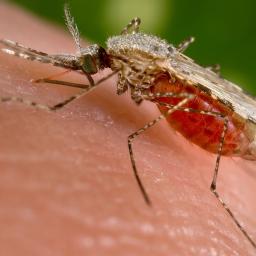
Scientists aim to tackle malaria by creating insects unable to spread the parasite, but caution urged over unpredictable ecological consequencesHundreds of genetically modified mosquitoes that are incapable of spreading the malaria parasite to humans have been created in a laboratory as part of a radical approach to combating the disease.The move marks a major step towards the development of a powerful and controversial technology called a “gene drive†that aims to tackle the disease by forcing anti-malarial genes into swarms of wild mosquitoes.
|
 |
by Maev Kennedy on (#VGWK)
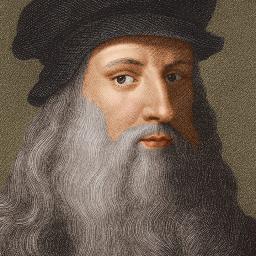
Museum to celebrate scientific side of Renaissance painter – with drawings and models of his pioneering ideas for flying machines and building equipment
|
 |
by Alex Bellos on (#VGBG)
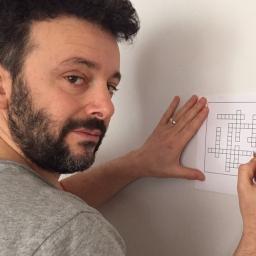
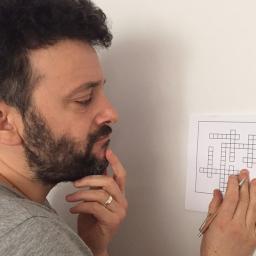
Here’s the solution to the self-enumerating crossword puzzle.Earlier today I asked you to fill in the grid below with entries of the form[NUMBER][SPACE][LETTER](S) Continue reading...
|
 |
by Ian Sample Science editor on (#VG4S)
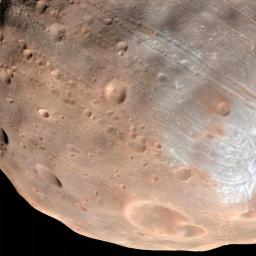
Mars will become the fifth ringed planet as the largest of its two moons disintegrate - in 20 to 70 million years, according to new dataMars is on course to become the fifth ringed planet in the solar system according to astronomers, who claim that its mini moon, Phobos, will one day disintegrate into a hoop of dust and rubble.The small ball of rock is spiralling inexorably down towards Mars; when the tidal forces become too strong to withstand, Phobos will be ripped apart to leave a huge ring of material, much like that seen around Saturn, researchers say.
|
 |
by Rick Delbridge on (#VG19)
A new university initiative encourages creative approaches to solving some of today’s hardest problemsThere are increasing calls for cross-disciplinary research as a way to address society’s greatest challenges. This week’s Government spending review is likely to point towards more joined-up funding for research in the UK. Last week’s review of Research Council funding spoke about the benefits of interdisciplinary research. Realising those benefits will require more experiments in collaborating inside and outside universities.The Wellcome Trust recently announced £75m for transdisciplinary research on public health and the environment. Last month, Sir Mark Walport, the UK Government’s Chief Scientific Adviser, wrote of the “invaluable insights†that anthropologists and other social scientists provided in tackling the Ebola crisis: Continue reading...
|
 |
by Philip Hoare on (#VFQ7)
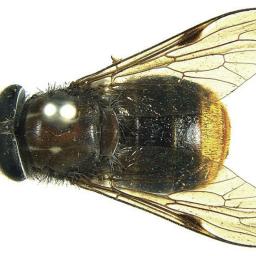
A blind cave arachnid has been named after a Lord of the Rings character soon after the naming of a golden-bottomed fly – these creatures deserve better from us homo sapiensBlame Carl Linnaeaus. The father of modern taxonomy started it all when – possibly mind-numbingly bored by the prospect of assigning Latin binomials (double-barrelled genus/species names) to every living species – he decided to have some fun with the blue whale. The larky Swede dubbed it Balaenoptera musculus – big-winged mouse. Hilarious, eh? Ever since, the conformities of scientific naming have produced in-jokes, excruciating puns and dodgy cultural references. Hence the latest, a new species of blind cave arachnid or harvestman from south-eastern Brazil has sent scientists to their much thumbed copies of the Lord of the Rings. Pale and rather elegant, Iandumoema smeagol refers to Smeagol, the hobbit who became the troglodytic, sibilant-voiced Gollum.Related: When it comes to conservation, common names count | George C McGavin Continue reading...
|
 |
by Maev Kennedy on (#VFKX)
Archaeological study dismisses abbey’s links to King Arthur and Joseph of Arimathea, saying many stories were created to raise funds after a fire
|
 |
by Oliver Milman in New York on (#VFCW)
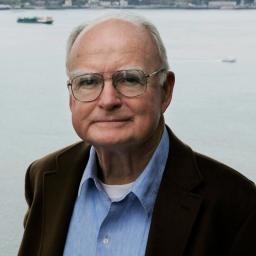
William Ruckelshaus, who this week will receive the presidential medal of freedom, says candidates are harming US’s reputation ahead of Paris climate talksThe man considered the father figure of environmental protection in the US has attacked Republicans for “going through all the stages of denial†over climate change, accusing leading presidential contenders Donald Trump and Marco Rubio of ignoring science for political gain.
|
by David Walker on (#VFBR)
Spending decisions ignore evidence in favour of politics, as the horsetrading over plans to slash budgets for scientific research showsOn the clock counting down to George Osborne’s spending statement on 25 November, it’s five to midnight. The most goody two-shoes departments settled with the Treasury first. They include communities and local government, leaving councils in England to infer that if the department can lop off a third of its budget for staffing and buildings, prospects for its grant to councils are grim.Elsewhere in Whitehall, until this weekend, the line has been defiantly “it’s not over till it’s overâ€. The Paris killings have reverberated around the Home Office and the Foreign Office but Osborne has now confirmed that all departments have settled their spending plans. What’s clear in this spending round is that, yet again, it’s every department for itself. To meet the Treasury’s demand for cuts, departments are playing beggar my neighbour and its latest variant, shoving the costs onto households and business – by turning tax credits for research and development into loans, for example. Continue reading...
 |
by Alex Bellos on (#VETF)
Here’s a self-referential puzzle for our self-obsessed age.Hello guzzlers.First I’d like to introduce my friend Lee Sallows, who is a master at writing sentences that count the number of letters they contain. Like this classic: Continue reading...
|
 |
by Sarah Boseley Health editor on (#VDXQ)
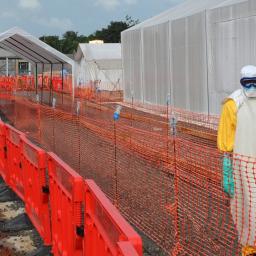
Report suggests World Health Organisation should lose its role in declaring disease outbreaks to be international emergencyThe World Health Organisation should be stripped of its role in declaring disease outbreaks to be an international emergency following the catastrophic failure to warn the world of the dangers of Ebola in west Africa last year, according to an independent panel of experts.The recommendation is made in a report, published in the Lancet medical journal, by 20 experts convened by the Harvard Global Health Institute and the London School of Hygiene and Tropical Medicine, who analysed the response to the Ebola epidemic. Continue reading...
|
 |
by Ben Ambridge on (#VC5C)
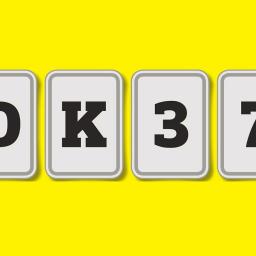
Take this simple Observer quiz to find out your overall intelligence levelAlthough a full IQ test takes an hour or more and costs hundreds of pounds, performance on this one simple test is highly predictive of your overall intelligence.Look at the four cards above. We know for a fact that each card has a letter on one side and a number on the other. Truthful Terry says: ‘Every card that has a D on one side has a 3 on the other.’ What is the fewest number of cards you need to turn over to find out whether Truthful Terry is actually telling the truth? And which ones? The answer is shown at the bottom of the page. Continue reading...
|
 |
by Jon Butterworth on (#VC3Q)
A century and a half ago, James Clerk Maxwell submitted a long paper to the Royal Society containing his famous equations. Inspired by Michael Faraday’s experiments and insights, the equations unified electricity, magnetism and optics. Their far-reaching consequences for our civilisation, and our universe, are still being explored
|
 |
by Alice Roberts on (#VC21)
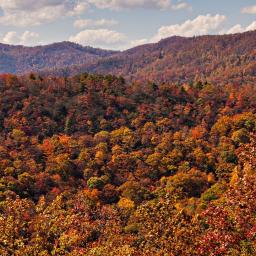
Evolution provides the answer – or, rather, a whole lot of intriguing answersThe stunning display of autumn is almost over – a few tattered yellow and russet leaves still cling to almost bare branches. I’ve loved these last few weeks, getting out into the woods to soak my retinae in the reds, oranges and yellows against lingering green. With all that wealth of colour at my feet as well, it’s impossible not to come home with leaves stuffed in pockets. Some of them will be laminated and turned into bookmarks or mobiles. Musing on variation within a leaf, I found one miniature escutcheon emblazoned with a broad V-shaped stripe of yellow and orange, on a green background. I thought I’d never seen anything like it before, but having found one I started to find more and more.Most likely, then, I’ve seen these patterned leaves many times before, without seeing them. Continue reading...
|
|
by Robin McKie on (#VB8G)
The Lisa Pathfinder will test equipment for an orbiting observatory that will peer into the universe’s darkest cornersIt was perhaps the greatest scientific achievement of the 20th century. And next week space scientists will celebrate the 100th anniversary of the publication of Albert Einstein’s theory of general relativity in fitting style – by launching a probe to help demonstrate the accuracy of the theory’s last unproven prediction: the existence of gravitational waves.At 4.15am on 2 December, the satellite, known as Lisa Pathfinder, is scheduled to be blasted into orbit from the European Space Agency’s centre in Kourou, French Guiana. It will carry equipment that will be tested as components for a future orbiting gravitational wave observatory. Continue reading...
|
 |
by Robin McKie on (#VB8J)
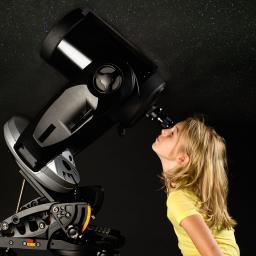
As satellites such as the European Space Agency’s Gaia provide astronomers with increasingly vast amounts of data, amateur observers, including schoolchildren, will help analyse the secrets of the starsWithin the Draco constellation, in the far northern sky, scientists have discovered a star, 700 light years from Earth, that has a distinctly unhealthy appetite. It is devouring its stellar companion. As the smaller of the two spins round the larger, the little cannibal is ripping streams of matter from its partner. Even odder, both stars have used up all their hydrogen fuel and now face a spectacular end to their existences – as fodder for supernovae explosions.For good measure, the two stars of Gaia14aae perfectly eclipse each other, as seen from Earth, a feature that could prove to be of key importance for astronomers. Eclipses allow scientists to calculate the masses of binary stars with unprecedented precision, and will give them a handle on understanding the behaviour of this extraordinary pair as they circle each other in their stellar dance of death.But what also excites scientists is the fact that it took groups of professional astronomers working with amateur colleagues to pinpoint this extraordinary object – and that teamwork could prove to be a powerful force in future. Indeed, many believe that amateurs, including children, working with professionals, could prove a highly effective combination. Continue reading...
|
 |
by Jim Powell on (#VA82)
The aftermath of the Paris attacks, Europe’s refugee crisis, a juvenile dinosaur under the hammer – the best photography in news, culture and sport from around the world this week Continue reading...
|
 |
by Graham Long on (#V9AV)
Fordingbridge, New Forest The giant funnel fungus is widespread but not common, and this find is worthy of note. It’s good to have friends who use their eyes“You’ve really got to see them,†he said excitedly as he came into the coffee morning. “They’re huge, bigger than dinner plates.†Veteran scouter Bill Edwards is in his mid-80s and walks everywhere. Over the year he uses many of the local footpaths and is a keen observer of the countryside. Last winter he spotted active honeycombs hanging from the branches of a bush alongside a stream. He noticed, too, a yellow brain fungus, growing on oak, whose lobes and folds were so expanded that from a distance it looked like a daffodil. This time he’d been using the path that links two parts of the town, along the line of the old railway with housing estates at each end. It runs along the perimeter of a school and it was there on the margins of the woodland that he’d seen them.Related: Country diary: Oxen Wood, Northamptonshire: A splash of real colour bursts out of an oak twig Continue reading...
|
 |
by Nicky Woolf in New York on (#V8M5)
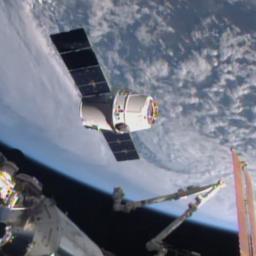
SpaceX joins Boeing in planning first private manned launches to International Space Station, provisionally set to take place before the end of 2017Manned commercial space flight took a giant leap forward as Nasa signed its first mission orders with California-based private spaceflight company SpaceX to transport astronauts to the International Space Station.
|
by Editorial on (#V87M)
The spread of intensive farming in the developing world means were are picking a fight with evolution. This is one we are bound to loseAntibiotic resistance may not seem as urgent as terrorism or the NHS funding shortfall. But it is actually a threat that could kill many more people and degrade the quality of civilised life much more. Chinese scientists have discovered a gene in bacteria that conveys resistance to colistin, a drug presently used in humans when other antibiotics won’t work but also used on a large scale in pig farms. It’s bad enough that such a gene has emerged – and will obviously be favoured by natural selection. What’s worse is that it’s found in a plasmid, a ring of DNA that can be passed directly between different strains of bacteria as well as being simply inherited. Just as we can catch infections from other people, the bacteria that cause them can now transmit to each other an immunity to our countermeasure.The new mutation is only found in one (large) class of dangerous bacteria and it only confers resistance to one particular antibiotic. But when that is the drug of last resort it’s frightening, and the overuse of antibiotics makes it almost certain that similar mutations will emerge, and spread, in other bacterial populations. The crisis is not just caused by human overprescription. The use of antibiotics in agriculture is a much greater scandal still. Animals are routinely dosed so that they can tolerate the overcrowding essential to factory farming. This is not only cruel but enormously shortsighted. The populations of food animals in south-east Asia provide a reservoir of infection for humans: we see this in the successive waves of flu that originate among the ducks and chickens there and then spread round the world. As more of the world eats more meat, farming will become more economically efficient, which is to say more cruel and more dependent on routine antibiotic dosage. This is a global problem and it will become a global health crisis, too. Continue reading...
 |
by Tash Reith-Banks on (#V7ZF)
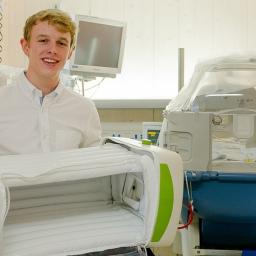
The second in our series on how STEM can help to relieve humanitarian crises focuses on James Roberts, inventor of the inflatable incubatorTuesday was World Prematurity Day. According to the World Health Organisation, more than a million babies a year die of complications arising from premature birth. The WHO also estimate that around 75% of those deaths are preventable with better access to simple forms of care.
|
 |
by Tom McCaskie on (#V7XN)
Anthropologist and sociologist whose books explored the role of belief in the lives of the Yoruba people of south-western NigeriaJohn Peel, who has died aged 73, was a leading figure in the British study of Africa whose particular area of expertise was the Yoruba people of south-western Nigeria. He pioneered the understanding that African societies and cultures were richly complex entities that might stand comparison with any others around the globe; his work helped to emancipate Africans from scholarly neglect, and the dismissive attitudes born of the slave trade, colonialism and racism.His work on the Yoruba portrayed a culture of immense sophistication in its beliefs, values, perceptions and organisation. John’s primary interest was in belief (he was himself a practising Anglican), and he demonstrated the ways in which Yoruba people adopted mission Christianity and then transformed it into something that addressed their own needs and aspirations. In so doing he showed an acute awareness of the continuities between the Yoruba past, present and possible future. Continue reading...
|
 |
by Jacob C Dunn on (#V7BC)
Sexual competition has made sperm the most diverse - and fascinating - cells in the animal kingdomThis piece was first published on The Conversation.Most people probably think of sperm as the microscopic tadpole-like things wriggling around in human semen. But there is an astonishing amount of diversity in the size, shape and number of sperm produced by male animals. In fact, despite performing the very same function in all animal species (fertilising eggs), sperm are the most diverse cells found among animals. Continue reading...
|
 |
by Rebecca Schiller on (#V716)
One in 200 pregnancies in the UK ends in stillbirth. The government is investing in machines, but what’s really needed is better quality care of pregnant mothersKate Nelson was pregnant with twins four years ago when she began to feel ill and couldn’t keep food or water down. At the hospital she saw yet another overstretched clinician who didn’t know her or her history. Kate knew something was wrong and told them so. But despite her complex multiple pregnancy, her concerns were dismissed. The system that all too often treats women like idiot visitors crashing around in their own bodies told her to go home, put her feet up and stop worrying.Her husband called me (her doula – someone who supports a woman during the birth process) later that day. I could barely make out his words as he told me that Kate was in a coma, their son Thomas had been stillborn and his brother Henry was being rushed to Great Ormond Street Hospital with life-threatening complications. He asked me which of them he should stay with. I didn’t know what to say. Continue reading...
|
 |
by Ian Sample on (#V5Z6)
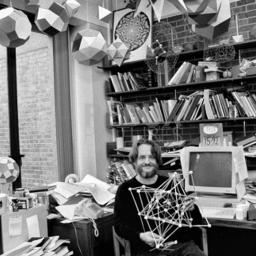
John Conway sheds light on the true nature of numbers, the beauty lying within maths and why game-playing is so important to mathematical discoveryJohn Conway is Emeritus Professor of Mathematics at Princeton University.
|
 |
by Ellen Brait in New York on (#V50T)
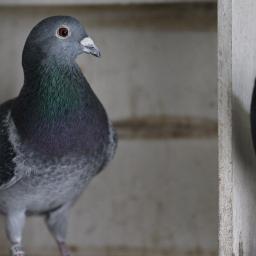
Three experiments found that the birds can pick out diseased breast tissue with an accuracy rate of up to 99% and could help develop new imaging techniquesPigeons can distinguish between healthy and cancerous tissue in x-rays and microscope slides with an accuracy rate of up to 99%, according to a new study in Plos One.In a series of three experiments, led by Richard Levenson, professor of pathology and laboratory medicine at the University of California Davis Medical Center, it was found that pigeons have the capacity to learn how to identify whether an image shows healthy or cancerous breast tissue. The birds “share many visual system properties with humansâ€, according to the study.
|
 |
by Peter Bradshaw on (#V4ZM)
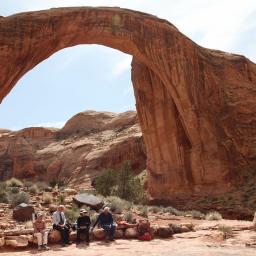
This charming documentary charts the progress of four retired astronomers as they talk about life, the universe and everything under the starsThere is enormous charm and food for thought in Alison Rose’s documentary about four retired, snowy-haired English astronomers and their road-trip reunion in the American south-west; they are recreating a journey they took together decades previously, as gung-ho twentysomething students at the California Institute of Technology.Donald Lynden-Bell, Roger Griffin, Neville “Nick†Woolf and Wallace Sargent are four eminently likable and distinguished academics who appear like gentleman explorers as they tackle a hike in the burning sun that might dismay people much younger. Their final goal is the remarkable Rainbow Bridge in Utah; on the way, they chat to each other and Rose about astronomy, the unimaginably vast reaches of the universe, about life on other planets and on our own. Oddly, the film reminded me of Patricio Guzmán’s Nostalgia for the Light (2010), about astronomers in 1970s Chile, who found in this discipline an escape from tyranny. Star Men isn’t political like this, but it finds an extraterrestrial strangeness or majesty in the American wilderness, just as Guzmán found it in Chile’s Atacama desert. Continue reading...
|
 |
by Reuters on (#V4MV)
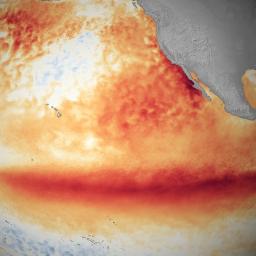
New data adds to signs that a weather pattern known for causing extreme droughts, storms and floods could become one of the strongest ever in 2015A key indicator for the strength of El Niño has reached a record high, the US weather agency said, adding to signs that a weather pattern known for causing extreme droughts, storms and floods could become one of the strongest ever.El Niño, the “little boyâ€, is driven by warm surface water in the eastern Pacific Ocean and its strength is measured by how much higher temperatures are over three-month averages. Continue reading...
|
by Sarah Boseley Health editor on (#V4FW)
Under NHS England proposals, patients will be given drugs normally too expensive for the NHS while data is collected to establish their valueNew cancer drugs that show promise but are too expensive for the NHS could be made available to patients for two years to collect data on their value, NHS England has proposed.The plans, which now go out to consultation, are an attempt to solve a thorny ethical and political issue that has provoked damaging headlines for governments for many years. Continue reading...
 |
by Ian Sample Science editor on (#V4CH)
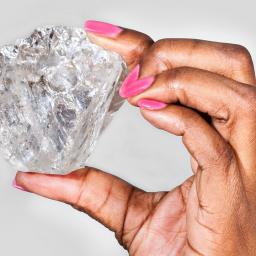
Lucara mining firm attracts many inquiries to buy 1,111-carat gem but says stone not yet valued as it’s too big for onsite equipment and must be flown to AntwerpThe Canadian mining company which this week unearthed the world’s largest diamond in more than a century says it cannot put a value on the 222g (7.8oz) stone.The 1,111-carat gem was hauled from an open pit mine in central Botswana, by the Lucara Diamond Corporation, a Vancouver based firm. Continue reading...
|
 |
by Guardian Staff on (#V3KW)
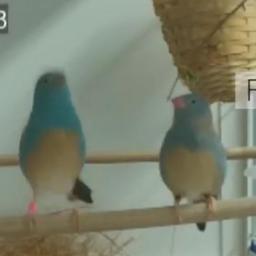
High-speed footage of two blue-capped cordon bleu birds tapping their feet on a branch whilst singing in order to attract the attention of the opposite sex. Scientists at Japan’s Hokkaido University found that both males and females used the technique to seduce their targets. The steps have not been seen before because they are too fast for the naked eye to spot Continue reading...
|
 |
by Ian Sample Science editor on (#V3CN)
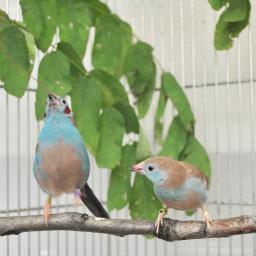
To woo potential mates, the blue-capped cordon bleu performs a high-speed tap dance too fast for the human eye to see, new research has foundHumans buy flowers. Capuchins throw stones. Giant tortoises bellow. But the blue-capped cordon bleu, a small finch found in Africa, really knows how to win over a mate.
|
 |
by Oliver Milman in New York on (#V35M)
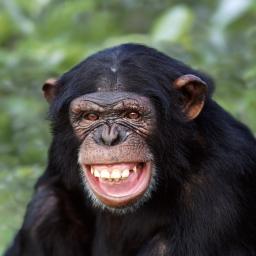
NIH sees ‘no further justification for invasive biomedical research’ and will transfer remaining 50 chimps to an ape sanctuaryThe US National Institutes of Health will wind up its programme of medical research upon chimpanzees, announcing that 50 of its remaining great apes will be sent to sanctuaries.
|
 |
by Michael Halpern on (#V2DQ)
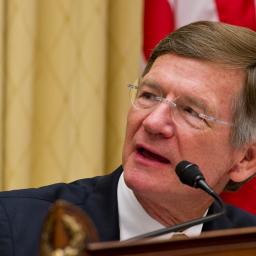
Lamar Smith has targeted government climate change researchers with a subpoena that demands all their notes and correspondence relating to a recent study
|