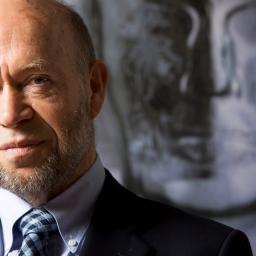
James Doty’s prospects were bleak, but then one summer he was taught a new, compassionate way to thinkWhen I speak in my capacity as a professor of neurosurgery at Stanford University or as an entrepreneur with a company worth $1.3bn, there is an assumption that I had a privileged background, one of affluence. In fact I grew up in poverty on public assistance with an alcoholic father and a mother impaired by a stroke who was chronically depressed and attempted suicide many times. My father was jailed repeatedly and we were evicted from our home on quite a few occasions.Related: Why babies are so good with wookiees Continue reading...
It’s all about making the right choices, not being too ambitious … and expanding your willpowerAs 2015 draws to a close, perhaps you’re thinking about what you’d like to do differently next year. Whether it’s holding your tongue, spending more wisely or simply eating a more varied diet, the days are approaching when new year’s resolutions are set.According to a YouGov survey last December, 2015 was the year in which 63% of us planned to turn over a new leaf. Losing weight, getting fitter and eating more healthily topped our wish list, while 12% of us strove to achieve a healthier work-life balance. How many achieved their goals is unclear, but, if experience is anything to go by, there are good grounds to be pessimistic. Of those surveyed, 32% pointed out that their resolutions are usually broken by the end of January, while only 10% said they never break one. Continue reading...
When is a circle a circle? And what does your ability to name the shape say about your attitudes to the rest of society?Here’s a simple question that can tell us an awful lot about you. Is this a circle?If you said: “Yeah, sure, close enough,†then you are probably politically liberal, and strongly support the idea of government aid for the homeless and unemployed. You are also likely to support same-sex marriage and legalisation of marijuana for recreational use. Continue reading...
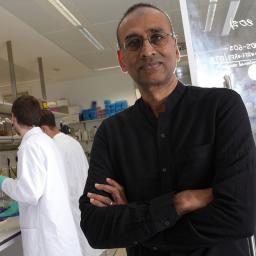
Venkatraman Ramakrishnan takes over the Royal Society at a time when the need for leadership and education is at its greatestThe distinguished scientist Venkatraman Ramakrishnan is not an easy person to dislodge from a given path. Indeed, there are times when the Indian-born biochemist – who has taken up the presidency of the world’s oldest scientific organisation, the Royal Society – can display remarkable obstinacy. This was illustrated in October 2009, when Venki – as he is universally known – was told he was to be awarded the Nobel prize for chemistry.Far from celebrating, Venki refused to believe the news and accused his caller – from the Royal Swedish Academy – of being a lousy hoaxer. “We have quite a few pranksters in the lab and I thought this was one of them,†Venki told the Observer in a 2013 interview. “I even congratulated the man, ironically, on his Swedish accent.†Continue reading...
by Associated Press in Cape Canaveral, Florida on (#WRVT)
High wind threatens once again to delay launch of 7,400lbs of food, clothes and toiletries – as well as Christmas presents – to International Space StationHigh wind has once again threatened to keep space station supplies stuck on Earth.
Pictures taken during historic flyby of dwarf planet show details of mountains, craters and ice fields on its surfaceNasa’s New Horizons spacecraft has returned the sharpest pictures of Pluto to date, taken during the probe’s historic flyby of the dwarf planet in July.The images released by the US space agency on Friday show details of Pluto’s surface, including mountains, craters and ice fields, at a resolution better than 80 metres per pixel. This is 10 times the resolution of previous pictures, and displays a wealth of information on the planet, as well as the moon Charon and its other satellites. Continue reading...
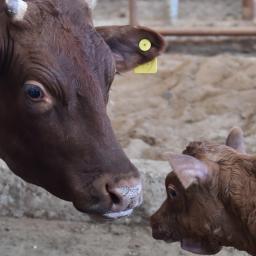
Plans to clone cattle to meet China’s growing demand for beef threaten to take the country down a dangerous road to pollution, food insecurity and ill healthA biotech consortium in China has announced that it intends to open a facility near Beijing with the aim of cloning up to a million cows a year to meet the country’s growing demand for beef. The factory won’t stop at cows. It also plans to clone racehorses, pets and even sniffer dogs. But the vast majority of animals it produces will be calves for meat production.In Beijing I read this news with incredulity and dismay. In 2009, I directed the first documentary about China’s rising consumption of meat and the growing industrialisation of its food sector, including livestock production. In the film, What’s for Dinner?, I explored a nexus of problems related to intensive animal agriculture: environmental pollution, food security, public health (including the use of antibiotics and hormones in feed), climate change and animal welfare. Continue reading...
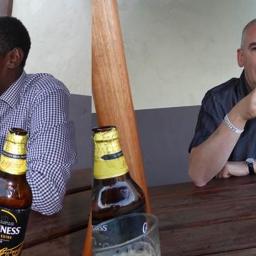
A love of beer made them friends, but Steve Lancaster and Anthony Gachanja’s mission to bring chemistry to Kenya has changed African science foreverThey come from very different worlds, yet have remarkably similar tales to tell. One hails from the outskirts of Barnsley, in the small south Yorkshire mining village of Darfield. The other was brought up under the shadows of the magnificent slopes of Africa’s second-highest mountain, Mount Kenya.
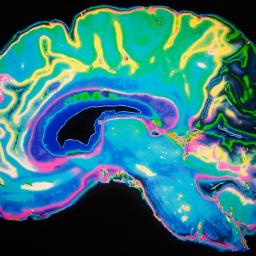
A new study has given credence to the idea that gender is more cultural than biological. It won’t stop the human urge to seek out like minds and avoid unlike ones – but it can remind us that our strength is in our infinite diversityA study led by Daphna Joel at Tel Aviv university has shown that there’s really not much in the way of difference between male brains and female brains. There are features that are more prevalent in the brains of women and features that are more prevalent in the brains of men. But human brains tend to have a highly individual mix of such characteristics.Interestingly, while hardly anyone has anything like the full set of mostly male features or the full set of mostly female features, by no means everyone with a significant collection of “female end†features is female, and vice versa. What’s more, many of these characteristics aren’t fixed. Environment and experience also play their part in shaping the brain, increasing its individuality. Continue reading...
Programme presented by the Daily Mail’s Quentin Letts failed to make clear that the Met Office’s views on climate change were backed by most scientists
Next April, Briton Tim Peake will run the London marathon in space – on the International Space Station – at the same time as the real race on earth. He explains the challenges he faces – and the virtual course he will followWhat happens when you hit the wall in space? This is not a daft question from a
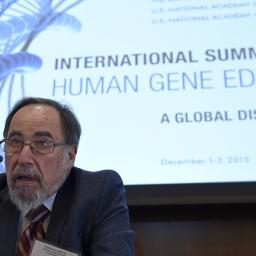
This week’s summit has explicitly left the door open and unlocked for gene editing for human reproduction. This concerns us all: we need a wider debateAn international summit on human gene editing drew hundreds of people to Washington DC for three days this week, with many more joining online. The meeting, which wrapped up on Thursday, was convened by the scientific academies of the United States, the United Kingdom, and China. Its central issue: whether or not powerful new molecular engineering techniques should be used to create genetically modified children.The summit was not designed to produce consensus among the participants, a mix of scientists, academics, ethicists and others, but its organizing committee released a statement at the end of the deliberations. Perhaps unsurprisingly, its conclusion was inconclusive. Continue reading...
54 years ago today Enoch Powell confirmed that ‘the pill’ could be prescribed on the NHS. Vanessa Heggie explains how the first British trial of the contraceptive pill, in 1960, led to nearly a third of participants becoming pregnant.It’s not the speech we remember Enoch Powell for, but on 4 Dec 1961, in his role as Minister for Health, he confirmed in the House of Commons that ‘birth control pills’ could be prescribed on the NHS. This was in response to a rather pointed question from fellow Tory, Nicholas Ridley about the cost of the pills; at the going rate of 17 shillings a month, that meant a subsidy from the NHS of at least 15 shillings per prescription (about £15 in today’s money) and Ridley thought Powell should try to restrict access to the drug. Powell refused to lay down any rules about the prescribing of the Pill – aside, of course, from making it available only to married women.
As the Paris climate change conference takes place, author Tim Flannery talks to Ian Sample about the prospects for preventing irreversible climate changeProfessor Tim Flannery, author of Atmosphere of Hope, gives his assessment of new technology designed to remove CO2 from the atmosphere and the importance of the Paris summit. Continue reading...
Richard Branson says ‘Cosmic Girl’, a former Virgin Atlantic airliner, will be adapted to carry and release Launcher One rocket at high altitudeA 747 jumbo jet will be adapted for use as a launchpad for a Virgin Galactic spaceship, Sir Richard Branson has announced.
Experts, however, say altering DNA of human embryos for clinical purposes is unacceptable given unknown risks todayA landmark meeting of scientists convened to debate the future of human gene editing has ruled out a ban on modifying human embryos that are destined to become people.But the experts made clear that altering the DNA of human embryos for clinical purposes was unacceptable given the unknown risks today and noted that even the most compelling cases to use the procedure were limited. Continue reading...
We are responding to Simon Jenkins’s opinion piece, (Every faith spawns its fables and myths. The trick is to puncture them, 26 November) which discusses our major archaeology research published last month on Glastonbury Abbey. Mr Jenkins used our research to make a broader point about religious “mythmaking†in the Middle Ages right up to modern-day extremist beliefs. However, we wanted to address some of his misinformed comments about the research being “nonsenseâ€.This was a four-year research project focused on the archaeological excavations that have taken place at Glastonbury. Historians have understood for many decades how the monks spun Glastonbury’s myths. However, our work challenges some of the archaeological “myths†spun by 20th-century excavators themselves – with a detailed, comprehensive analysis, assessment and interpretation of all known archaeological records from 36 separate digs at the abbey between 1904 and 1979, none of which has ever been published. Continue reading...
Display of volcanic lightning inside giant smoke and ash cloud over Europe’s tallest active volcano is Voragine crater’s first eruption in two years
Genetic markers in the sperm of obese men have the potential to affect brain development and appetite control, study suggestsThe children of overweight men may be at greater risk of obesity due to genetic changes carried in their father’s sperm, a study suggests.Scientists found a pattern of genetic markers in the sperm of obese men that have the potential to affect brain development and appetite control. The changes were absent in the sperm of lean men.
Highest ranking Soviet spy in Israel, recruited by the KGB in 1963, who became an internationally known epidemiologist while working for MoscowIt is, frankly, a wonder that Marcus Klingberg, who has died aged 97, lived as long as he did. A Polish Jew who fled Warsaw in 1939 as the Germans invaded (and eventually murdered his family), he served in the Red Army as a medical officer, was wounded and placed behind the lines to fight epidemics of typhoid fever, dysentery and a deadly fungal toxin. After the second world war, he went to Israel, where he served in the Israeli army, became a respected epidemiologist, and worked at Israel’s top secret chemical and biological weapons laboratory at Ness Ziona, dedicated to the study of rare and deadly infectious diseases, including the plague and West Nile virus.In 1963, Klingberg was recruited by the KGB. He served Moscow faithfully for two decades, becoming the highest ranking Soviet spy in Israel. He was caught in 1983, aged 64, after the intervention of a Russian double agent. He tried twice to kill himself under interrogation, confessed, and was sentenced to 20 years in jail, the first 10 served in solitary confinement, where he suffered from serious heart problems. Thirty-nine members of the Israeli parliament, the Knesset, and Amnesty International launched separate appeals for his early release. Continue reading...
by James Hansen, Kerry Emanuel, Ken Caldeira and Tom on (#WH21)
To solve the climate problem, policy must be based on facts and not prejudice. Alongside renewables, Nuclear will make the difference between the world missing crucial climate targets or achieving them
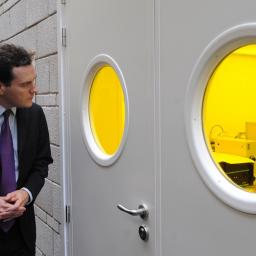
George Osborne’s announcement last week of a piecemeal, flat-value research budget signals a worrying lack of political ambition for UK scienceThe chancellor of the exchequer’s announcement of the spending review in the House of Commons last week was a canny political performance. George Osborne used £27 billion gifted to him by the revised forecasts of the Office of Budgetary Responsibility to wrong-foot many commentators. His deft shimmy reversed plans for tax credit cuts, and gave every appearance of leaving high-visibility public services in the clear.
Cuttlefish are well known for their ability to transform their visual appearance, blending in with their background to hide from would-be predators. A new study shows they also respond to danger by clamping down on the electrical signals they emit.Cuttlefish, squid and octopus can change colour in milliseconds, rapidly recloaking themselves in the face of danger. A new study, reveals that cuttlefish also respond to predators by freezing, dramatically reducing electrical signals that might give them away.The paper, published in Proceedings of the Royal Society, builds the case for this new mode of crypsis through a series of clear observations and experiments. Continue reading...
Climate change scientist James Hansen says current ‘half arsed’ plans to reduce emissions will lead to dangerous climate change and calls for an honest carbon price to cut fossil fuel useOne of the world’s leading atmospheric scientists has told the UN that its present attempt to limit emissions is “half-arsed and half-baked†and risks handing the next generation a climate system that is out of their control.James Hansen, former head of Nasa’s Goddard Center and the man who raised awareness of climate change in a key Senate hearing back in 1988 said that the UN meeting was on the wrong track by seeking a 2C maximum rise in temperatures. Continue reading...
These striking images are of cutting-edge research and are the top ten submitted to an annual competition held by Parkinson’s UK in memory of scientist Dr Jonathan Stevens. Parkinson’s is a degenerative neurological condition for which there currently is no cure Continue reading...
Swedish research shows women who put on weight after first pregnancy increase risk of stillbirth by 30-50% and likelihood of infant death by up to 60%Women who put on weight after their first pregnancy are more likely to have a stillborn second child or a baby who dies within the year than those whose weight remains stable, new research shows.A study carried out in Sweden confirms that the increased risk of the baby’s death in the womb or within its first year of life is real in women who put on even a modest amount of weight – about 6kg (13lb) – between pregnancies. It affects all women, not just those who are overweight or obese when they get pregnant for the first time. Continue reading...
New research hints that far from being the greedy, clumsy bird of legend, the dodo was a resilient animal whose demise was caused by an ecological disaster“You Dutch people killed the dodo. And now that they are extinct, you come back for their bones as well!†A thing you might hear when you are a Dutch palaeontologist excavating dodo bones on Mauritius. It is an understandable sentiment, but a wrong one.Despite its iconic status, we have very few clues about where the dodo came from, and how and when it arrived on the remote island of Mauritius, located about 500 km east of Madagascar. DNA evidence indicates that the dodo’s closest living relative is the Nicobar pigeon, a glossy-feathered ground-dwelling pigeon from Southeast Asia. The dodo’s ancestor may have island-hopped from Southeast Asia all the way down to the isolated Mascarene Islands, but the details of its journey remain fuzzy at best. After millions of years of idyllic island life, humans, in the form of Dutch sailors eager to stretch their legs after months on sea, arrived on Mauritius in 1598. As is often the case, catastrophe ensued. Less than a century after the first humans set foot on the island, the dodo had left the stage. Continue reading...
The international summit on human gene editing concludes tomorrow. This is why they must agree to allow scientists to pursue work on human DNAAn international summit on human gene editing is underway in Washington DC. Scientists and other specialists, myself among them, are gathered here to discuss the potential of powerful new technologies to make changes to human DNA. A major question for those attending is whether gene editing of human embryos for therapeutic reasons should be on the table or categorically ruled out.All of us need gene editing to be pursued, and if possible, made safe enough to use in humans. Not only to pave the way for procedures on adult tissues, but to keep open the possibility of using gene editing to protect embryos from susceptibility to major diseases and prevent other debilitating genetic conditions from being passed on through them to future generations. Continue reading...
Readers answer other readers’ questions on subjects ranging from trivial flights of fancy to profound scientific conceptsAll the moreish foods and drinks seem to be bad for us. Does this mean our evolution has taken a wrong turn?Tim Burton, Whissonsett, Dereham, Norfolk Continue reading...
Survey measuring gap between public perception and reality reveals Americans vastly overestimate the number of immigrants and atheists in USHow well do you really know your country? Take our quizAmericans think there are almost twice as many atheists in their country than there actually are, according to a new poll. They also overestimate the number of immigrants, but do guess correctly the percentage of women who work.The survey by Ipsos Mori released on Wednesday measures misconceptions around the world – and in America some of the biggest concern money. On average, Americans think that the wealthiest 1% of people in the country own 57% of all wealth, 20 percentage points higher than reality. Continue reading...
Experts point to damage caused by erosion and pollution, raising major concerns about degraded soil amid surging global demand for foodThe world has lost a third of its arable land due to erosion or pollution in the past 40 years, with potentially disastrous consequences as global demand for food soars, scientists have warned.New research has calculated that nearly 33% of the world’s adequate or high-quality food-producing land has been lost at a rate that far outstrips the pace of natural processes to replace diminished soil. Continue reading...
2C, the widely reported safe global warming limit, would still mean devastation for many countries that are pushing for a more ambitious target for a climate deal in Paris – but is 1.5C realistic?2C - it’s become shorthand for a safe, equitable climate deal. But the science and the UN’s position is unequivocal that if the world warms 2C above the pre-industrial age by 2100, many countries will face unbearable devastation.Of the 195 countries present at the UN climate conference in Paris, 106 of the poorest have said a target of 1.5C is the only acceptable pathway for humankind. The head of the UN’s climate process, Christiana Figueres, has also backed this goal. Continue reading...
Recently published research raises the intriguing possibility that as far as our brains are concerned, we may all be bi-gendered to varying degreesIn an arguably transphobic tirade, Germaine Greer recently decreed that “Just because you lop off your penis and then wear a dress doesn’t make you a ******* womanâ€. The resultant backlash included attempts to prevent her lecture at Cardiff University and Elton John muscling in to the debate, accusing her of “living in another centuryâ€. What it means to be male and female remains controversial, emotive and intriguing in both society and science.Being a woman or a man or otherwise is more than simply a difference in our genitalia. Our gender often goes to the core of how many of us identify ourselves. Can a twenty-first century understanding of potential similarities and differences in brain structure between the sexes provide us with useful information? I think so.
In her new book Mathematics and Art, historian Lyn Gamwell explores how artists have for thousands of years used mathematical concepts - such as infinity, number and form - in their work. Here she choses ten stunning images from her book that reveal connections between maths and art.When I was a graduate student in art history, I read many explanations of abstract art, but they were invariably inadequate and misleading. So after completing my PhD, I went on to learn the history of biology, physics, and astronomy, and to publish a book detailing how modern art is an expression of the scientific worldview.Yet many artworks also express the mathematics and technology of their times. To research Math and Art I had to learn maths concepts like calculus, group theory and predicate logic. As a novice struggling to understand these ideas, I was struck with the poor quality and confusing content of illustrations in most educational books. So I vowed to create for my book a set of cogent math diagrams that are crystal-clear visualizations of the abstract concepts. Continue reading...
The answer to the mystery of leaders’ ultimate fate could be revealed behind two doors at the end of a tunnel into a platform at Tenochtitlán’s Great TempleArchaeologists in Mexico have found a passageway and two sealed chambers beneath one of the largest temples of the ancient Aztec capital, raising hopes that excavations will uncover a ruler’s tomb beneath the city.The tunnel, only 18in wide and 5ft high, leads 27ft directly into a circular ceremonial platform at the Great Temple or Templo Mayor complex of Tenochtitlán, the ruined Aztec capital that overlaps with modern Mexico City. At the end of the tunnel the archaeologists found two sealed doors. Continue reading...
‘Deep and disturbing questions’ surrounding diseases and designer babies examined at summit as experiments get closer to altering human heredityAlternating the promise of cures for intractable diseases with anxiety about designer babies and eugenics, hundreds of scientists and ethicists from around the world began debating the boundaries of a revolutionary technology to edit the human genetic code.“We sense that we are close to being able to alter human heredity,†Nobel laureate David Baltimore of the California Institute of Technology said Tuesday in opening an international summit to examine what he called “deep and disturbing questionsâ€. Continue reading...
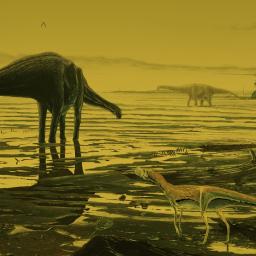
Prints the size of dustbin lids discovered by researchers, who say that the tracks were probably created by many dinosaurs over thousands of yearsAncient tracks from sauropods that plodded through a lagoon in the middle Jurassic period have been uncovered on the Isle of Skye, making the spot the largest dinosaur site in Scotland.The zigzag pattern of giant prints was spotted on a slab of rock reaching out to sea on the north eastern tip of the island by researchers from Edinburgh University.
Black Shoals is a planetarium that tracks trading in real time, turning the flow of global capital into a twinkling night sky. Just watch out for the black holes …A black dome, dotted with thousands of tiny stars, hangs in the vaulted bowels of Somerset House in London. The stars blink and flash, then begin to form misty galaxies, like the evolution of the universe replayed at warp speed. Suddenly there’s a great flash, and the whole thing lights up with the white heat of the Big Bang.“That’s Wall Street waking up,†says Joshua Portway, lounging on a bean bag under the dome beside fellow artist Lise Autogena. “A huge amount of money just changed hands.†Continue reading...
Research published yesterday, showing that brains don’t come in male and female forms, fits with what we know about gendered behaviourIt’s the first thing we want to know when a newborn arrives. We state it on every form we fill out. We mark it with pronouns, names, clothing, and hairstyle. It’s the first thing we register about a person.Sex categories – whether you have female or male genitals – are fundamental for reproduction. They are also the principal way we carve up the social world. No surprise then that scientists and the general public alike often assume that sex categories are no less essential to how we think, feel, and behave, taking it for granted that there are female and male natures subserved by a “female brain†and a “male brainâ€, respectively. Continue reading...
The signs are clear in this document: the public is not going to be allowed much of a role in defining the public goodThe eagerly awaited Nurse Review of UK Research Councils has just landed. It arrives at a critical juncture, as decisions are made about overall UK public sector research funding and about the status and role of the institutions that will be responsible for spending the allocated budget. In that context it is to be expected that the review focuses on the nature, importance and impact of research, and on high-level adjustments to the current system. The broad, integrating thrust of those proposed administrative and governance changes is politically timely.As the review clearly states, research delivers for society, both in terms of knowledge that adds to our culture and in underpinning innovations that can improve our quality of life and contribute to economic growth. In this societal context the recommendations call for ‘an effective dialogue and understanding between researchers, politicians and the public’, and the very last recommendation reads: ‘Society and its elected representatives should be engaged in high-level questions about the overall direction of science and research, such as top-level allocation of resources, or in respect of needs that society might like to see addressed by research’. Taken in conjunction with the statement in the review that a successful research endeavour requires: ‘a compact that bonds science and society’, I looked avidly in the rest of the review for some pointers as to what this all might imply. Continue reading...
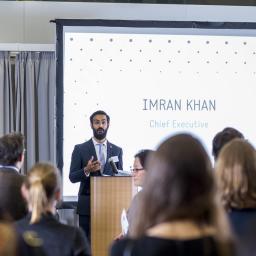
In a landmark essay to mark the relaunch of the British Science Association, Chief Executive Imran Khan argues that science is too important to be left to scientists alone
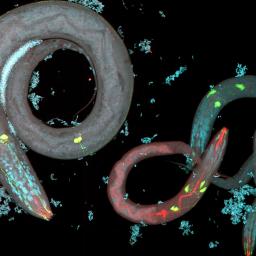
Tests on roundworms show antidepressant drug can prolong life by more than 30%, but only extends young adulthood, and has no effect on later life stagesIn work that risks rousing a chorus of tuts from the older members of the population, scientists have extended lifespan by making youth last longer.The remarkable discovery came from tests which showed that a drug capable of prolonging life by more than 30% worked by expanding only young adulthood, and had no effects on later life stages.
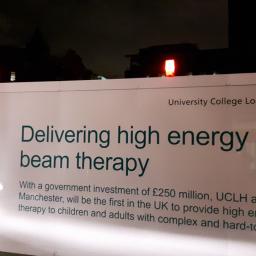
Paul Schaffer from TRIUMF - Canada’s national laboratory for particle and nuclear physics and accelerator-based science - gives a Perimeter Institute public lecture on how accelerators are used to develop diagnostic and therapeutic medical tools and techniquesI reviewed Michael Hiltzik’s excellent book “Big Science: Ernest Lawrence and the Invention that Launched the Military-Industrial Complex†for Nature recently. Lawrence built the first particle accelerators, and started a chain of technological advances which has currently got us as far as the Large Hadron Collider at CERN, where I do my science. I was, and am, well aware of the many other uses of accelerators beyond particle physics, but it was a surprise to me, reading Hiltzik’s book, to discover that medical applications featured so early on in Lawrence’s programme at Berkeley. Indeed, they seem to have played a comparable role to that of basic physics research in motivating his push for bigger and better machines.Dr Paul Schaffer is Associate Laboratory Director of TRIUMF’s Life Sciences Division, and is giving a public lecture on where nuclear medicine has got to now. The video will appear below live, and a recording will be uploaded to the same place afterwards. You can sign up for an email reminder here.
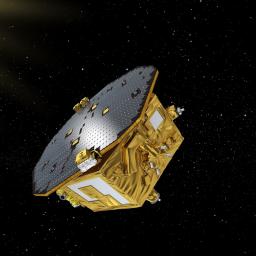
Tomorrow’s mission is designed to test technology which, if successful, will allow us to “listen†to the universe using Einstein’s general theory of relativitiyTomorrow at 04:15 GMT, the European Space Agency (ESA) will launch the LISA Pathfinder spacecraft from Kourou, French Guiana. The choice of date is no accident. December 2nd is the 100th anniversary of Albert Einstein’s general theory of relativity, the best theory we have of gravity.LISA Pathfinder is a pioneering mission designed to test new technology that will allow us to use Einstein’s theory to study the universe in more detail than ever before. If all goes well, astronomers will eventually find themselves with the equivalent of a new sense, like adding sound to vision. Continue reading...
The life sciences industry is ever-increasing, and some of the research is inspired by and derived from some surprising sourcesLife sciences is one of our fast-growing industries, encompassing a wide range of scientific disciplines from anatomy to zoology.Described by politicians as a “jewel in the crown†of the UK economy thanks to its impressive growth, the sector has a total annual turnover of £56 billion and accounts for 183,000 UK jobs (UKTI Inward Investment Report 2014 to 2015). Continue reading...
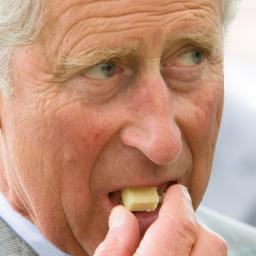
British future monarch given prize for organic farming by French and says he fears traditional cheese will disappear in a world of genetically modified producePrince Charles has revealed he fears for the very existence of traditional French cheeses as he received a prize in Paris for his long-term commitment to organic farming.
Dr Evans–Galea, a leader in the field of gene therapy, talks about the challenges she has faced, but also the increasing visibility of female scientists in her field, and her professional mission: finding a cure for Friedrich ataxia