 |
by Alex Bellos on (#T0FJ)
Scissors at the ready! Here’s a crafty craft puzzleHello guzzlers.Today’s puzzle is one for your hands, not just your head. Continue reading...
|
| Link | http://feeds.theguardian.com/ |
| Feed | http://feeds.theguardian.com/theguardian/science/rss |
| Updated | 2026-10-02 03:45 |
 |
by Alex Bellos on (#T0FM)
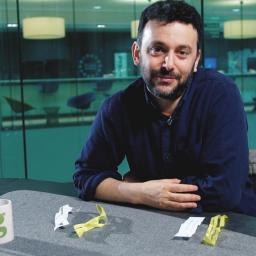
You’ll have to be crafty in more than one sense of the word to solve this week’s puzzle. To solve it, you will need some scissors and either some paper, or, if you have 5p to burn, a heavy-duty plastic bag. Can you create the impossible braid? Alternatively, here’s a written version of the puzzle Continue reading...
|
by Steve Smith on (#T0C4)
The Eurosceptics say universities would be unaffected, or even improved, by a Brexit. They are wrong, says this vice-chancellorMany UK universities have voiced support for the country’s continued membership of the European Union, ahead of the forthcoming referendum. Their arguments, however, have often focused on the financial benefits to the UK higher education sector, prompting Eurosceptics to deride such a defence as self-serving and overblown.Of course, the funding the UK receives from Europe for research is important - but money is not the main issue. We also need to consider the kind of research environment that would develop in the EU without our membership. Continue reading...
Why legendary science broadcaster Robyn Williams won't broadcast "shameless" climate science deniers
by Graham Readfearn on (#SZW8)
After 40 years of fronting ABC Radio National’s Science Show, Robyn Williams says climate science deniers have said nothing different ‘for bloody years’To say that Robyn Williams is a bit of a legend of science broadcasting on the radio is a bit like saying David Attenborough is a dab hand at nature documentaries on the telly.The “legend†epithet just feels a bit superfluous but is, in any case, annoyingly necessary to introduce a broadcaster to those not familiar. Continue reading...
 |
by Ian Sample Science editor on (#SZVY)
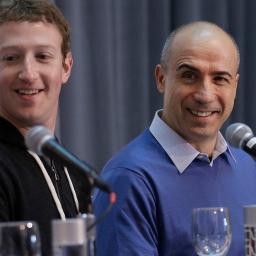
British researcher John Hardy among those to win a Breakthrough prize at ceremony hosted by Seth MacFarlane in the USScience is starting to pay big for a small minority who land major prizes. At a ceremony in California on Sunday night, six researchers became substantially wealthier when they were handed Breakthrough prizes, set up by the Russian billionaire Yuri Milner along with some of the biggest names in Silicon Valley.Among those honoured were Karl Deisseroth of Stanford University and Edward Boyden of MIT for developing a procedure called optogenetics – a means of turning neurons on and off using light. They took home $3m (£2m) apiece for winning the Breakthrough prize in life sciences. Continue reading...
|
 |
by Ian Sample Science editor on (#SZQD)
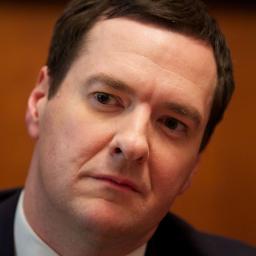
George Osborne warned by chair of science and technology committee over depleted Treasury support for research facilitiesBritain will lose its status as a world-leader in research unless investment in science is ramped up to bring the UK in line with the spending of other nations, MPs warn.While science has traditionally been one of Britain’s strengths, spending on research now lags far behind other countries, leaving the UK 12th in the EU in terms of the amount it invests as a portion of GDP.
|
 |
by Letters on (#SZ8C)
I write as a retired food technologist who spent many years working in the food industry. Joanna Blythman’s article (Food labels have passed their sell-by date, 5 November) is the first sensible article on this subject that I have ever seen in the media.The legislation which at first insisted that food had a “sell by†date started as a very laudable way of ensuring that retailers could not pass off old food as fresh. Enforcement agents (environmental health officers) could easily initiate prosecutions against cheats. However, more detailed good intentions soon led to “mission creepâ€, and with the introduction of “use by†and “best before†dates turned also into guidance to food consumers as to how to control the contents of their larders. Continue reading...
|
 |
by Ben Ambridge on (#SY4C)
Take the Observer quiz and find out what your responses say about you
|
|
by Pete Guest on (#SXZZ)
A waxing crescent moon on the nights of 17 and 18 November means the sky will be dark enough for a good view of the spectacular annual light show Continue reading...
|
 |
by Chris Wright on (#SXTF)
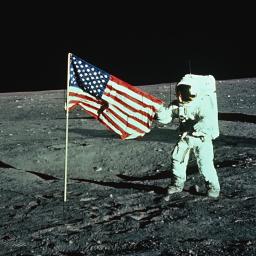
Life-defining moments are all very well, but then what? Chris Wright has made a study of what it means to move onOne day Alan Bean decided it was time for a change of career. History would always remember him as the fourth man to walk on the moon, during the Apollo 12 mission in 1969; he’d served on Skylab, too. But he wanted to do something else. So he took to his great passion, painting, and has had considerable success for the best part of 40 years. But he’s only ever painted one thing: astronauts on the surface of the moon.Moving on from a defining moment can be challenging – and not just for moonwalking astronauts. Many of us are aware of a moment when we think: well, that’s it – everything else is an afterthought now. For some it is the kids leaving home; for others it might be the highest point they reach in a corporate career. For many the pivotal moment of their life is about tragedy or loss. But it is all punctuated by the same urgent question: now what? Continue reading...
|
 |
by Guardian Staff on (#SXCQ)
Transparency of research is essential in drugs trialsWe would like to reassure Dr Aseem Malhotra that the Academy of Medical Sciences is taking great care to ensure independence and inclusivity in our inquiry into how society judges the safety of medicines (“How too much medicine can kill youâ€, Comment).The project will explore three crucial issues that have an impact on society’s interpretation of evidence: the methods used to collect and evaluate evidence, possible conflicts of interest arising in the process of evidence gathering and evaluation, and the process of communicating evidence within the profession and to the public. Continue reading...
|
 |
by Robin McKie on (#SX35)
Committee to warn that vital research is suffering after funding freeze, sending it below that of industrial competitorsGeorge Osborne will get a reprimand this week from an all-party committee over his handling of the country’s funding of science.Britain’s £4.7bn science budget has been frozen in cash terms for the past five years and has slumped to a level well below that of most of our industrial competitors, including Germany and the US, MPs will warn. Continue reading...
|
 |
by Robin McKie Science and technology editor on (#SX29)
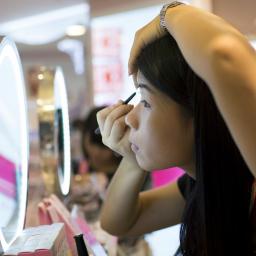
Move to help Beijing alter laws and halt animal experiments for European beauty productsBritain has been training Chinese scientists in techniques that could replace the use of animals in cosmetic safety tests.The programme, which has been running for more than a year, is intended to lead to Chinese authorities banning all animal testing for toiletries, lipsticks, moisturisers and other beauty products. Continue reading...
|
 |
by Sarah Boseley on (#SVJ5)
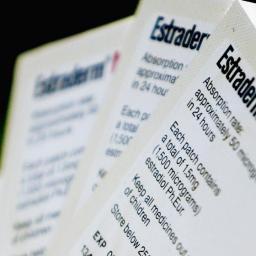
Campaign funded by treatment manufacturer could mislead women before official menopause guidance is released, some scientists fearA PR campaign to promote the use of hormone replacement therapy in women is under way before official guidance on how to treat the menopause is released, causing some scientists concern that the cancer dangers of the drugs will be underplayed.The campaign, run by the Weber Shandwick agency and funded by a drug manufacturer that provides the treatment, has already put out a survey saying women are unnecessarily worried about the risks of HRT. It is preparing a further release about the attitudes of GPs to prescribing the drugs. Continue reading...
|
 |
by Jim Powell on (#SW0R)
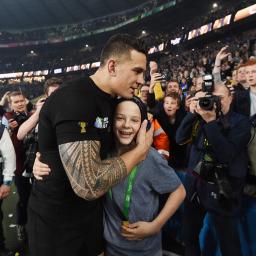
The Sharm el-Sheikh plane crash, Europe’s refugee crisis, Sonny Bill Williams at the Rugby World Cup Final 2015 – the best photography in news, culture and sport from around the world this week Continue reading...
|
 |
by Yanan Wang for the Washington Post on (#SVW4)
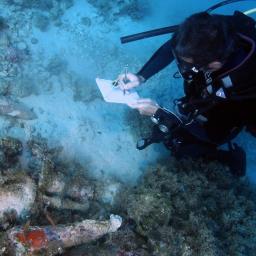
Archaeologists find remains of 22 ancient merchant ships whose cargos reveal centuries-old trade routesIn the Fourni archipelago of the Greek Aegean region, towering underwater cliffs descend into the darkness. Marine archaeologists comb these murky depths for objects made by human hands – a ceramic shard encrusted with sea sponges, or an ancient vase that an eel has claimed for its home.Here, through the centuries, human handiwork has been absorbed by its natural aquatic surroundings, with rock and reef steadily growing around any remnants of life from early western civilisation. The seeming improbability, then, of finding substantive artefacts in the patchwork makes discovery all the more exciting. Continue reading...
|
 |
by Nicola Davis on (#SVRF)
Psychologist Rob Bretherton talks about his new book and the way suspicion can overcome rationalityThere is not so much of a difference between conspiracy theorists and the rest of us. We are drawn to the idea of conspiracy because it resonates with us; we understand the idea of people being self-interested and not having our best interests at heart, and having hidden motives and getting together to do shady stuff. Conspiracy theories extend upon that and tap into these assumptions and fears we have about the world. But we all have them, that’s why conspiracy theories make sense to us all. Continue reading...
|
 |
by Eric Hilaire on (#ST87)
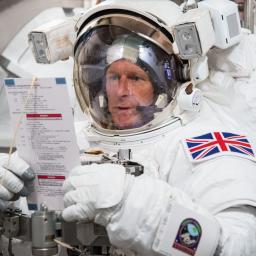
A look at the the preparation and training leading up to Tim Peake’s mission to the International Space Station, due to blast off in December Continue reading...
|
by Yasmin Khan on (#ST3Y)
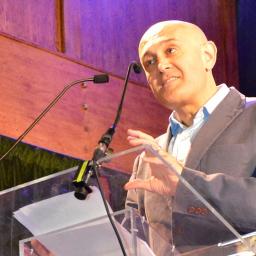
Jim Al-Khalili, physicist and Ziauddin Sardar, chair of the Muslim Institute, talk science, western colonialism and religious rigidityTwo important figures came head-to-head at Conway Hall, to discuss Islamic versus Humanist perspectives on science and the modern world. Jim Al-Khalili made the final public appearance of his term as president of the British Humanist Association during this stimulating, and at times provoking, debate with Ziauddin Sardar, chair of the Muslim Institute.Al-Khalili advocated the values of the European Enlightenment, arguing that ever since the “Age of Reason†took hold during the 18th century, Humanists have looked to science instead of religion to explore and comprehend the world. Sardar upheld the view that it is the combination of faith and reason that offers a fuller understanding of the world, maintaining that it was this worldview that enabled the development of science in the Islamic golden Age. Continue reading...
 |
by Damien Walter on (#SSC9)
The imaginary constructions of science fiction fill us with awe at their alien vastness. Which have you explored, and what was the most overwhelming?Sci-fi fans call it “sensawundaâ€, that awe and amazement that the best science fiction stories can inspire in us. The entire world felt it recently when scientists declared that observations of a distant star might have revealed an alien megastructure. Did inhabitants of the KIC 8462852 star system encase their sun in solar panels to harvest energy? Or was this our generation’s canals on Mars moment? The sensawunda effect is so powerful that, even with scant real evidence, we are swept into believing.The unlikely cause of KIC 8462852’s strange emanations is speculated to be a partially constructed Dyson sphere. Imagine the Death Star from Return of the Jedi, in its partially constructed state, but on a scale large enough to swallow a star. Engineering on this scale is as far beyond human capacity today as building a skyscraper was to our cave-dwelling ancestors. Imagine the power of of a civilisation that can capture a star. Then imagine the drama that might stop the construction work partway, a very real war among the stars. There, that is sensawunda! Continue reading...
|
by Kieron Flanagan on (#SS6D)
Funding cuts are not the only thing that should worry scientists: plans to put all research funding in England into a single body should also be of concern, and will raise eyebrows in Scotland, Wales and Northern Ireland.
 |
by Ian Sample science editor on (#SS0Z)
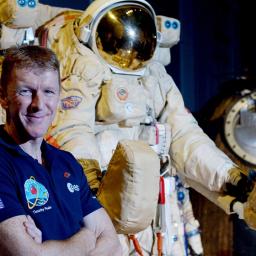
As he packs his bags for the International Space Station next month, Major Tim Peake hopes to inspire the next generationMajor Tim Peake, Britain’s first official astronaut, has packed family photos, Christmas gifts and a pack of balloons for his trip to the International Space Station, and confessed his only fear ahead of the mission is leaving something behind.In a final pre-launch briefing at the Science Museum in London on Friday, Peake said he hoped his six-month mission, which begins at a Kazakhstan launchpad on 15 December, would inspire the next generation to study science, maths and engineering. Continue reading...
|
 |
by Henry Nicholls on (#SS11)
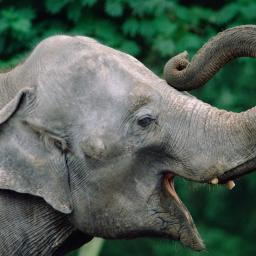
Elephants use their trunks to blast air at inaccessible food, bringing it within rangeMineko and Suzuko are female Asian elephants at Kamine Zoo in Japan and can use their trunks to blast air at inaccessible food, driving it within reach. Continue reading...
|
 |
by Oliver Burkeman on (#SRXB)
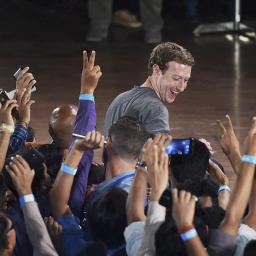
Facebook, Candy Crush, Bananagrams ... million-dollar ideas are simpler to come up with than you think
|
 |
by Kate Lyons on (#SRK6)
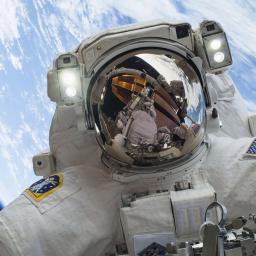
Nasa may be accepting applications, but even if you are the right nationality, in tip-top condition and with an off-the-planet CV, you still need a lot of luckNasa has announced it will be accepting applications for astronauts to pave the way for a new generation of space exploration. Sadly, only alpha Americans may apply. But space isn’t just about America. Next month, Tim Peake will become the first British astronaut to travel in space for more than 20 years. A dozen other nationalities have boldly gone. The cosmos has never been so, er, cosmopolitan. Continue reading...
|
 |
by Rebekah Higgitt on (#SRG4)
Inspired Halloween costumes, decorations and fancy dress with a history of science theme (the winner is... number 8!) Continue reading...
|
 |
by Nicola Davis on (#SRCK)
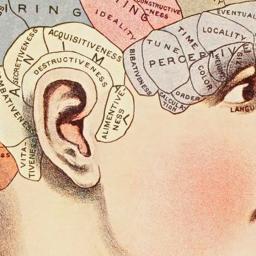
Neuroscientist David Eagleman discusses how neuroscience and technology are reshaping how we understand our brainsThis week's guest is David Eagleman, assistant professor of neuroscience at Baylor College of Medicine, Houston, where he directs the Laboratory for Perception and Action as well as the Initiative on Neuroscience and Law. He's written numerous books on neuroscience, along with the international fiction bestseller, Sum. He discusses his latest book The Brain - The Story Of You, which guides us through the world of extreme sports, criminal justice, facial expressions, genocide, brain surgery, gut feelings, robotics and how our brains construct our own subjective reality.Subscribe for free via iTunes or our SoundCloud account to ensure you don't miss a single episode Continue reading...
|
by Scott Ludlam on (#SQQG)
Peak nuclear has passed. There’s no science to support an Australian nuclear industry, says Senator Scott Ludlam
 |
by Jessica Murphy in Ottawa on (#SQCQ)
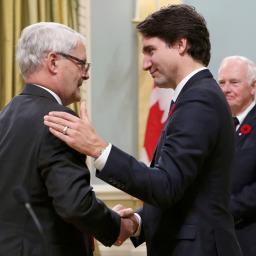
Reactions have been largely positive to Justin Trudeau’s cabinet, the first in Canada’s history to have equal numbers of men and womenIf Canada’s new prime minister wants his government to reach for the stars, he has probably called on the right man for at least one cabinet job: appointing the first Canadian in space as his transport minister.Marc Garneau, a 66-year-old former astronaut and Canadian Space Agency president, was sworn in on Wednesday as the country’s new Liberal government officially took power. Continue reading...
|
by Alan Yuhas in New York on (#SQ6D)
From ancient lakes to a stripped atmosphere, the planet has given up several secrets in 2015 thanks to the Curiosity rover and teams all around the EarthWith a rover trundling over red soil, a spacecraft diving through the atmosphere and teams at work all around the Earth, Mars has given up a string of secrets to Nasa in the last year. Here are some of the major discoveries of 2015. Continue reading...
 |
by Guardian Staff on (#SPZ3)
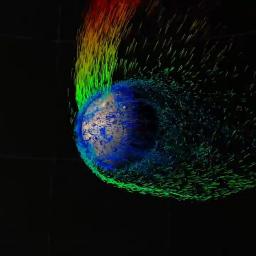
A Nasa simulation shows how solar winds have over time stripped Mars of its atmosphere, which scientists say left the once warm and wet planet, cold and barren. The animation, released by Nasa on Thursday, is based on data obtained by the Maven spacecraft orbiting Mars Continue reading...
|
 |
by Letters on (#SPX5)
If passed, the off-patent drugs bill, which has its second reading in the Commons on 6 November, would allow doctors to prescribe existing drugs for new clinical uses, meaning that those which are no longer subject to marketing protection can be licensed by the MHRA (Medicines and Healthcare products Regulatory Agency). This could have a major impact on the future of medical research and treatments, namely breast cancer prevention. For instance, tamoxifen was historically used as a treatment, but ground-breaking clinical trials have shown that it can stop the disease occurring in the first place. We need the government to back this bill so doctors are legally allowed to prescribe tamoxifen – and numerous other drugs – in new ways. Off-patent drugs are sitting on shelves gathering dust because pharmaceutical companies have no incentive to endorse them. As a charity entirely dedicated to the prediction and prevention of breast cancer, this bill is of critical importance to us as it plays a crucial role in preventing the disease for future generations.
|
 |
by Ellen Brait on (#SPV0)
Prehistoric carnivores had 9.5in ‘sickle claw’, and quill knobs on lower arm bones are first documented evidence that a large raptor had feathersA dinosaur discovered in South Dakota had feathers on a raptor’s body, large claws and wings, according to a study published by the University of Kansas Paleontological Institute.
|
 |
by Alan Yuhas on (#SPTA)
Nasa reveals that Mars has its own northern lights and loses atmosphere with surprising speed, which could explain how the planet became dry
|
by Ian Sample Science editor on (#SPKY)
Genetically engineered cells successfully used to treat aggressive form of childhood leukaemia, but landmark treatment had only been tested on miceA baby girl with aggressive leukaemia has become the first in the world to be treated with designer immune cells that were genetically engineered to wipe out her cancer.The one-year-old, Layla Richards, was given months to live after conventional treatments failed to eradicate the disease, but she is now cancer free and doing well, a response one doctor described as “almost a miracleâ€.
 |
by Lindsey Kratochwill on (#SPBN)
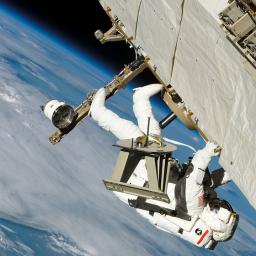
To qualify for the rigorous, two-year selection process, aspiring space travelers must have a college degree in a Stem field, work experience and be in good health. Insider tip: it wouldn’t hurt to be a teacher or pick up scuba divingOn Wednesday, Nasa put out the call thousands have been waiting for. At the cusp of a new era in US manned-spaceflight, the agency has announced it is seeking applicants for the next class of astronauts.It’s an occupation plenty have dreamed about as kids, but what does it take to actually make it to the moon or the International Space Station? And how do you know you have the skills? Continue reading...
|
 |
by Paul Ibbotson and Michael Tomasello on (#SNYF)
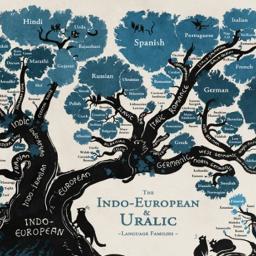
At the heart of our unique language ability lie other forms of cognition and cooperation, argue Paul Ibbotson and Michael TomaselloThe natural world is full of wondrous adaptations such as camouflage, migration and echolocation. In one sense, the quintessentially human ability to use language is no more remarkable than these other talents. However, unlike these other adaptations, language seems to have evolved just once, in one out of 8.7 million species on earth today. The hunt is on to explain the foundations of this ability and what makes us different from other animals. Continue reading...
|
 |
by Stephen Curry on (#SND8)
The campaign trail is unfamiliar to most scientists – but sometimes it can’t be avoided. Stephen Curry reflects on Science is Vital’s most recent excursion.Campaigning is a strange game for scientists. To be politically effective, the message needs to be simple and repeated again and again. That’s what those of us involved in Science is Vital have been doing for the past couple of months.But this practice doesn’t sit well with our scientific training, which is all about delving into the details (right down to the atomic and molecular level in my case), and never saying anything without caveats, (except perhaps occasionally). Continue reading...
|
 |
by Stuart Heritage on (#SNBP)
Guilt, shame, envy … now we know which emotions officially didn’t make the cut for the original crossover smash, it’s time to suggest a few for a second journey into Riley’s mindInside Out was an almost completely perfect film. Adolescents could relate to it. Adults could reminisce about it. Children who enjoy watching their parents burst into shuddering fits of tears for seemingly no reason also managed to get plenty out of it. This universal appeal was, in part, down to the well-balanced blend of emotions represented in the film.There was Joy, there was Sadness, there were Fear and Anger and Disgust. However, a featurette included on the Inside Out DVD reveals that 26 emotions were initially considered for the film. Greed was one that didn’t make the cut, as were Hope, Guilt, Shame, Pride, Envy, Gloom, Despair and Embarrassment. Schadenfreude was even in the running, before he was hilariously kicked to the kerb, the idiot. Continue reading...
|
 |
by Sara Bruhns and Jacob Haqq-Misra on (#SN84)
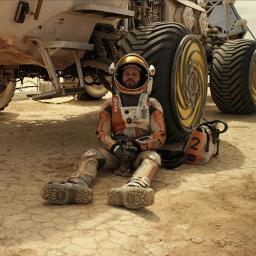
Ambitious plans to settle the red planet may conflict with international law. Sara Bruhns and Jacob Haqq-Misra suggest an alternative approach.NASA has released a report containing detailed plans for a human mission to Mars. This has been a long-standing goal for NASA and their report outlines the challenges of Mars exploration in three stages. The first, ‘Earth Reliant’, stage focuses on research aboard the International Space Station. The ‘Proving Ground’ stage puts humans deeper into space for research, while remaining a few days from Earth. The ‘Earth Independent’ stage completes the plan by getting humans to the surface of Mars.NASA is not the only organization preparing to send humans to the red planet. SpaceX, Dennis Tito’s Inspiration Mars Foundation, and Mars One have all expressed an aim to visit and in some cases even colonize Mars. Continue reading...
|
by Phil Gates on (#SMM6)
Bollihope, Durham Splashed with water from the burn the wet rock matrix darkens to reveal the coral’s white filigreeStanding under a leaden sky on this bleak moorland, with a bitter wind blowing over Harnisha Hill, it was difficult to imagine that the Frosterley marble that we had come to find was once a coral reef in a tropical sea.It has taken 325m years of tectonic plate movement, at a pace slower than a fingernail grows, to bring it to this valley from its equatorial origin. Continue reading...
 |
by Guardian Staff on (#SMHJ)
Nasa releases close-up footage of the sun, taken by the Solar Dynamics observatory, which orbits the star and captures images across 10 wavelengths of invisible ultraviolet light. Each wavelength is assigned a colour to help scientists differentiate between them, resulting in beautiful footage which shows activity on the surface in spectacular detail Continue reading...
|
by Australian Associated Press on (#SM4H)
Kangaroos produce relatively little methane, but study suggests transplanting gut micro-organisms into sheep or cattle would not help reduce emissionsNew analysis of kangaroo farts suggests their low methane levels could have implications for farmers in the fight against climate change.It has long been known that kangaroos – unlike sheep and cattle – produce little of the potent greenhouse gas methane.
 |
by Chitra Ramaswamy on (#SKCT)
It’s technology’s biggest puzzle: although smartphones, laptops and even electric cars get lighter, cheaper and double in power every few years, they still die when you most need them. How close are we to perfecting a ‘super battery’ that charges at lightning speeds and lasts for days?My battery has died – anyone got a spare charger? It’s a cry with which most of us with a phone, laptop, or even an electric car, can sympathise. The mild but persistent irritation of a phone fading to black when you most need it. The never-ending pursuit of plug sockets. The sinking feeling when you realise you’ve picked the only train carriage with no power. The conflicting advice on how to prolong the life of your ever-sickening battery combined with the dark knowledge that it will die in a few years anyway. The nightly routine of charging your phone before bed.“The issue with existing batteries is that they suck,†Elon Musk, chief executive of Tesla, said in May at the launch of the Powerwall, a sleek new battery. It’s a mystery up there with dark matter and the question of why you still can’t buy a toaster that browns both sides of the bread equally: why do batteries suck? Continue reading...
|
 |
by Ian Sample Science editor on (#SKBM)
Radical combination of antibodies and antibiotics could effectively clear up “superbug†infections and TB, as well as reducing harm to healthy microbesA precision drug therapy that wipes out bugs that hide in the body could help clear up persistent infections that do not respond to standard antibiotics.The treatment works by tagging antibiotics onto antibodies which home in on pathogens and deliver a lethal dose of drug directly to the heart of the infected tissues.
|
 |
by Ian Sample Science editor on (#SJVK)
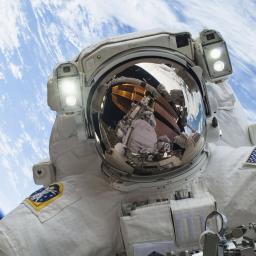
Space agency says astronauts will pave the way for putting humans on the surface of Mars, as it accepts applications for the first time since 2011A new class of astronauts is being sought by Nasa, now that a return to crewed missions from American soil is on the horizon.The US space agency said it would accept applications for its astronaut corps from 14 December to mid-February 2016 and announce the successful candidates in mid-2017.
|
by Dean Burnett on (#SJSQ)
Robin William’s widow Susan has revealed the beloved actor was struggling with dementia with Lewy Bodies. This may help to explain his tragic actions, as despite being relatively unfamiliar, it is a deeply serious and unpleasant conditionNearly a year and half ago, I wrote a piece about suicide and depression in the wake of Robin Williams’ death. You may have read it. A lot of people did. I didn’t expect to have revisit this subject again, and yet here we are. But for good reason.The original piece, and the unpleasant comments from numerous people that first inspired it, stemmed from the widespread assumption that Robin Williams ended his life due to struggles with depression, a condition he was known to have dealt with often. Continue reading...
 |
by Guardian Staff on (#SJH4)
Readers answer other readers’ questions on subjects ranging from trivial flights of fancy to profound scientific conceptsIf you’re dreaming that a fierce beast is chasing you, thus potentially triggering the fight or flight reaction, does your body produce adrenaline even if you’re asleep?Angela Brassley, Ilsington, Newton Abbot, Devon Continue reading...
|
 |
by Dean Burnett on (#SHR2)
Twitter recently introduced ‘hearts’ and ‘likes’ instead of stars and favourites. Is this seemingly-innocuous change part of an ongoing attempt to wipe out the more dedicated users?Enthusiastic Twitter users are currently reeling from a huge shift in the way the omnipresent social network functions. The owners and operators of Twitter have introduced a virtual-world altering shift, on a par with the collapse of the Roman Empire in ancient times, or the first demonstration of nuclear weapons in the 20 century. Understandably, people are shocked, outraged, exasperated, even scared in some cases.For those of you not on Twitter, what happened is this: until now, if you liked a tweet, you had the option of tagging it as a “favouriteâ€, via a little yellow star icon underneath it. Now, this option is gone, taken from us without warning and cast into the endless void never to return, like George Osborne’s credibility. Instead of “favouritesâ€, you now have to “like†a tweet, and instead of a yellow star, it’s a red heart. Obviously, this is an unspeakable outrage, with some proposing “extreme†measures to address it. Continue reading...
|
 |
by Leigh Phillips on (#SHFH)
Progressives need to rediscover their Promethean ambitions and counter green ideologies that hold us back and won’t save the planetDespite the anti-capitalist rhetoric of green-left writers like Naomi Klein and Bill McKibben, and the anti-corporate street protests of environmental NGOs, could it be that their small-is-beautiful, degrowth, localist, organic, anti-GMO and anti-nuclear approach to solving climate change and biodiversity loss is in fact working in service of neoliberalism (while not even doing much to help the planet either)?Ever since The Population Bomb, the 1968 bestseller by serial-Chicken-Little and anti-natalist Paul Ehrlich, warning that four billion would die of starvation by the end of the 1980s, and the Club of Rome’s 1972 report Limits to Growth that predicted civilizational “overshoot and collapse†within decades, neo-Malthusians have been telling us we need to degrow the economy and retreat from a Western, consumerist, high-technology, unsustainable way of life, or else Hobbesian doom is all but a fortnight away. Continue reading...
|