 |
by Annalisa Barbieri on (#SHEH)
Every day, millions of internet users ask Google some of life’s most difficult questions, big and small. Our writers answer some of the most common queries
|
| Link | http://feeds.theguardian.com/ |
| Feed | http://feeds.theguardian.com/theguardian/science/rss |
| Updated | 2026-10-02 03:45 |
 |
by Ali Catterall, Andrew Mueller, Ben Arnold, Jack Se on (#SHA0)
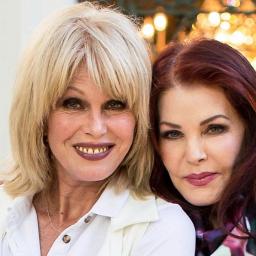
More seaside cop shenanigans; a major survey of postwar British popular culture; Elvis Presley at 80. Plus, a physicist finally explains why the sky is blueThe spirited Brighton-based cop show continues, with cases including a client dying on a working girl, a couple of light-fingered farmhands, a distraction burglary – and a Ravey Davey drug-dealing throwback Continue reading...
|
 |
by Tom Chatfield, Leah Green and Louis van Kleeff on (#SH96)
We all know that too much time with tech is bad for the mind, but even resisting temptation is taking its toll on us, argues Tom Chatfield. Those phantom messages, where you imagine your phone vibrating – that’s your body trying to tell you something. Over half of us now suffer from nomophobia – anxiety of being out of phone contact – and our willpower and attention are suffering as a result
|
 |
by Corey S Powell on (#SH5G)
Physicists have spent decades trying to reconcile two very different theories. But is a winner about to emerge – and transform our understanding of everything from time to gravity?It is the biggest of problems, it is the smallest of problems. At present physicists have two separate rulebooks explaining how nature works. There is general relativity, which beautifully accounts for gravity and all of the things it dominates: orbiting planets, colliding galaxies, the dynamics of the expanding universe as a whole. That’s big. Then there is quantum mechanics, which handles the other three forces – electromagnetism and the two nuclear forces. Quantum theory is extremely adept at describing what happens when a uranium atom decays, or when individual particles of light hit a solar cell. That’s small.Related: Sign up to the long read email Continue reading...
|
by Paul Evans on (#SH3M)
Wenlock Edge Shropshire The birds are set to turn fruit unpalatable or poisonous to us into flying fuelSloe berries don’t taste to me of their midnight colour or the bloom on their skins as blue as the sky might be high above this fog. To the touch they feel ripe enough, even though it’s warm and there’s no purging frosts yet. They roll smoothly in the mouth.The first bite releases a bitter wave which sweetens into damson. Then, like wearing a gum shield, an anaesthetising astringency covers my teeth and gums. Continue reading...
 |
by Agence France-Presse on (#SGT4)
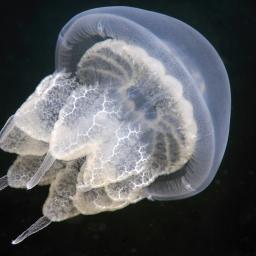
Discovery by Stanford University researchers could challenge assumption that ability to ‘push’ water is a widely desired evolutionary traitFor the longest time, science has assumed that in order to run, swim, or fly, animals and humans must exert pressure on the ground, water or air around them to project themselves forward.
|
 |
by John Vidal on (#SGNP)
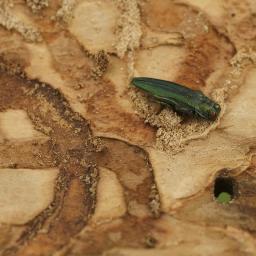
Asian emerald ash borer, given the maximum risk rating to the tree species, is ‘moving uncontrolled’ through Russia having established itself in US and CanadaA tiny beetle could wipe out Britain’s ash trees much faster than the established ash dieback disease which is expected to eventually kill millions of the trees, according to the government’s leading authority on pests and pathogens threatening UK forests.“The emerald ash borer is moving uncontrolled through Russia. It flies long distances, moves quickly and can reproduce in the UK,†said Nicola Spence, chief plant health scientist. The beetle has not has yet arrived in the UK, but she warned: “There is a high risk of it being introduced and establishing itself.†Continue reading...
|
 |
by Alan Yuhas in New York on (#SGA4)
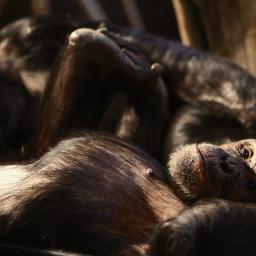
Scientists claimed that Dutch chimpanzees who joined a group in Scotland modified their calls for food in line with the locals – but not everyone agreesDo Edinburgh chimps hoot with an accent? And could Dutch newcomers pick up their Scottish lilt?These are the questions dividing primate researchers, some of whom have disputed a high-profile study that asserted a troop of chimps changed their calls to match the locals, and that the findings shed light on the evolution of language. Continue reading...
|
 |
by Stephen Moss on (#SFSQ)
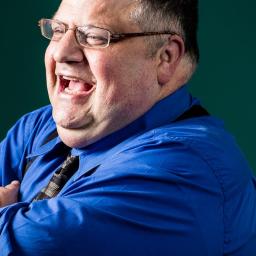
His first book was about the Grateful Dead. His second, about autism, has just taken the Samuel Johnson prize. Meet neuro-warrior Steve Silberman, friend of Allen Ginsberg and ‘gay coach’ to Oliver SacksSteve Silberman hasn’t slept: a combination of jetlag, excitement and genuine surprise at winning the Samuel Johnson prize for non-fiction. These morning-after interviews with happy, sleepy authors can be rather ritualised, but Silberman is a delight: a bulky (think John Goodman) American whose black braces just about keep his baggy trousers up, and who talks non-stop about his book – a history of changing perceptions of autism over the past 80 years – and the curious art-meets-science life that produced it.Neurotribes is the first popular science book to win the prize – an important breakthrough, he says, not least because “science is under attack in America, particularly from Republican party presidential candidates. Ben Carson, who is himself a doctor, touts his disbelief in evolution.†Silberman reckons the book won because it combines “history, science and real-time interactions with peopleâ€, and that the judges responded to its optimistic conclusion that people with autism, marginalised for so long despite having much to offer, were being embraced at last.
|
 |
by Associated Press on (#SFPZ)
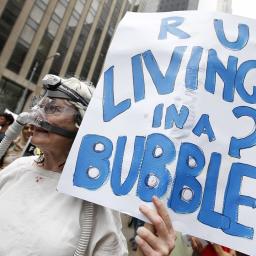
In a recent poll, two-thirds of Americans say they accept climate change, and the vast majority say human activities cause it – but they aren’t very worriedMost Americans know the climate is changing, but they say they are just not that worried about it, according to a new poll by The Associated Press-NORC Center for Public Affairs Research. And that is keeping the American public from demanding and getting the changes that are necessary to prevent global warming from reaching a crisis, according to climate and social scientists.As top-level international negotiations to try to limit greenhouse gas emissions start later this month in Paris, the AP-NORC poll taken in mid-October shows about two out of three Americans accept global warming and the vast majority of those say human activities are at least part of the cause. Continue reading...
|
 |
by Emma Howard on (#SF9F)
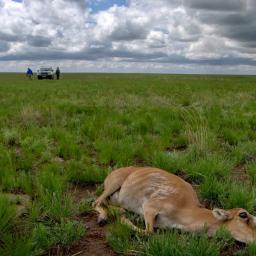
Scientists are struggling to explain the mass die-off of at least 150,000 endangered saiga antelopes in Kazakhstan earlier this yearMore than half of the world’s population of an endangered antelope died within two weeks earlier this year, in a phenomenon that scientists are unable to explain.Related: Kazakhstan's mass antelope deaths mystify conservationists Continue reading...
|
by Alexandra Loske on (#SF6A)
With the opening of a new exhibition on Georgian exotic creatures at the Royal Pavilion, Brighton, its curator reveals the story of the first giraffe in BritainName: George IV’s giraffe
 |
by Michael Billington on (#SEYE)
Southwark Playhouse, London
|
by Mairi Levitt on (#SEMY)
New technology could bring about the much debated designer baby, but a parent’s desire to do the best for their child could create sociological problems
 |
by Stuart Dredge on (#SEBF)
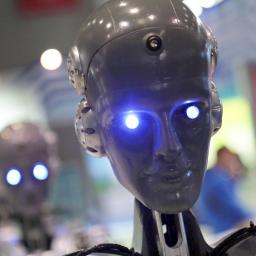
Silicon Valley Robotics boss says robots can spare people from having to interact human-to-human
|
 |
by James Tilley for the Conversation on (#SE77)
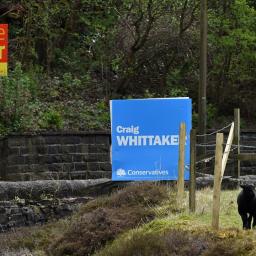
The accepted wisdom is that the young are more radical than the old. But is this true, and if it is, why should our politics change with the years?Any man who is under 30, and is not a liberal, has no heart; and any man who is over 30, and is not a conservative, has no brains.This maxim – variously attributed to Winston Churchill, Benjamin Disraeli and Victor Hugo, among others – neatly captures the common notion that to be on the left of the political spectrum is to be young and idealistic, while to be on the right is to be older and more pragmatic. But is there any evidence for this? Continue reading...
|
 |
by Alok Jha on (#SE2K)
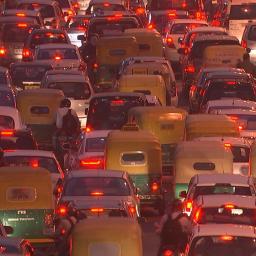
The city’s toxic air has been linked to allergies, respiratory conditions, birth malformations and increasing incidence of cancers. But as a recent car-free experiment showed, action to cut pollution can be effectiveFor a few hours one morning two weeks ago, private cars were banned from driving into the heart of old Delhi. It was hard to tell at the messy road junction in front of the historic Red Fort and the shopping street of Chandni Chowk, though, which was still crammed with auto-rickshaws and buses barrelling along the roads with seemingly little regard for any traffic rules.
|
 |
by Nicholas Lezard on (#SE2H)
From the microscopic to the macroscopic, this is an original and gripping look at the universe and our place in itThose who remember Douglas Adams’s The Hitchhiker’s Guide to the Galaxy will recall the Total Perspective Vortex, a device that shows the entire universe (cleverly extrapolated from a piece of fairy cake) to anyone placed inside it. The resulting feeling of complete insignificance is enough to shatter the victim’s mind permanently.I am pleased to report that this book, which aims to show us our place in the grand scheme of things, will not make you lose your marbles. However it may, to use the parlance of a bygone era, blow your mind a bit. In one four-page period, my marginal notes went from “!†to “!!†to “!!!†Continue reading...
|
by Michael Rosen on (#SDVF)
The English spelling, punctuation and grammar test’s apparent purpose is to examine children’s knowledge of language. I think its main purpose is to grade childrenI can understand that you may not have had a chance to look at the 2016 sample test [pdf] for key stage 2 English grammar, punctuation and spelling. It suffers from a severe case of terminology-itis. The symptoms are: a) an assumption that there is universal agreement on all the names, structures and functions of bits of language in this test – there isn’t; b) the best way to achieve coherence and effectiveness in children’s writing comes from getting them to learn these names – there is no evidence for this; c) that the hours of teaching-time required to teach these names could not be better spent helping children to do detailed comparative work on different kinds of texts, investigating, interpreting and experimenting, while keeping in mind the objective of enabling all children to write coherently and interestingly.Related: Is good grammar still important? Continue reading...
 |
by Guardian Staff on (#SDNZ)
A bright green fireball, thought to be a meteorite, falls across the sky above Bangkok on Monday. Footage recorded by a dashcam shows the light, which was spotted all across the region in Thailand, light up the darkness with the Thia Astronomical Society stating that the phenomenon could be identified as a “fireball†due to its level of brightness. A similar event was also recorded in Poland on Saturday Continue reading...
|
 |
by Associated Press in Florida on (#SD2S)
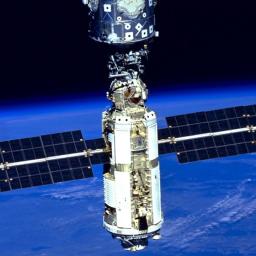
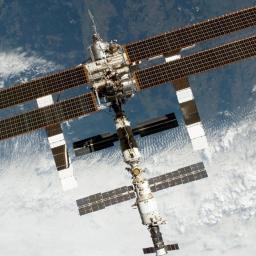
The manned satellite has been inhabited by 220 people from 17 countries, with the first Briton due in DecemberThe International Space Station – the manned satellite that constantly circles the Earth in low orbit – clocked up 15 years of continuous occupation on Monday.Since the first permanent crew moved in on 2 November 2000, 220 people representing 17 countries have come and gone. Most of those visitors have been American – a result of all the space shuttle flights that were needed to deliver station pieces. Continue reading...
|
 |
by Agence France-Presse in Miami on (#SCVH)
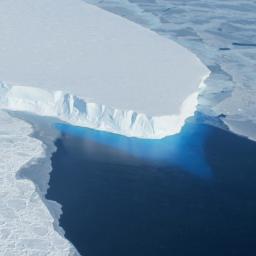
Nasa research finds ice in the region has gone into ‘irreversible retreat’ and claims effect is ‘unstoppable’A key area of ice in west Antarctica may already be unstable enough to cause global sea levels to rise by three metres of ocean rise, scientists said on Monday.The study follows research published last year, led by Nasa glaciologist Eric Rignot, warning that ice in the Antarctic had gone into a state of irreversible retreat, that the melting was considered “unstoppable†and could raise sea level by 1.2 metres. Continue reading...
|
 |
by Daniel Hurst Political correspondent on (#SCQN)
The health minister, Sussan Ley, says 17 over-the-counter medicines will be taken off Pharmaceutical Benefits Scheme from 1 JanuaryThe Turnbull government has confirmed it will press ahead with removing common medicines such as paracetamol and aspirin from the list of subsidised drugs.Related: Painkillers and antacids may be removed from subsidised medicines list Continue reading...
|
 |
by Ian Sample Science editor on (#SCDK)
Alarming trend among less-educated 45- to 54-year-olds largely thought to be a result of more suicides and the misuse of drugs and alcoholA sharp rise in death rates among white middle-aged Americans has claimed nearly as many lives in the past 15 years as the spread of Aids in the US, researchers have said.The alarming trend, overlooked until now, has hit less-educated 45- to 54-year-olds the hardest, with no other groups in the US as affected and no similar declines seen in other rich countries.
|
 |
by Guardian Staff on (#SCKQ)
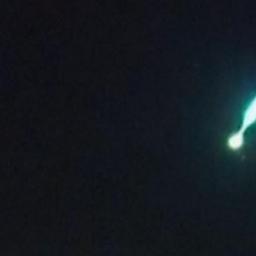
Dashcam captures a bright fireball, believed to be a meteor burning in the sky, above Poland on Saturday. A huge green light is seen shooting across the sky over Nowy Dwór Mazowiecki in eastern Poland, burning bright and then disappearing out of sight Continue reading...
|
 |
by Denis Campbell and agencies on (#SCHG)
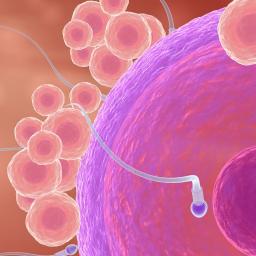
Fourteen healthy children have been fathered by previously infertile men in Japanese trial using round spermatid injectionFourteen babies have been born following the injection of very immature sperm cells into eggs – a technique that could help infertile men to become fathers, scientists say.The 14 children were born to 12 men and their partners in Japan after round spermatid injection (Rosi), which has been banned in the UK since the 1990s due to concerns for the health of any children it might create. Continue reading...
|
 |
by Guardian Staff on (#SC85)
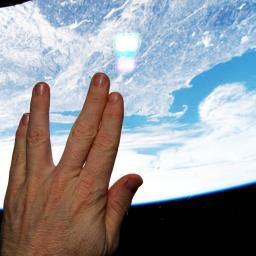
The International Space Station celebrates its 15th anniversary of human occupation on Monday. Since the first permanent crew moved in on 2 November 2000, 220 people have come and gone, representing 17 countries. More than 26,500 meals have been dished up and the complex has grown from three to 13 rooms Continue reading...
|
 |
by Patrick Barkham on (#SC66)
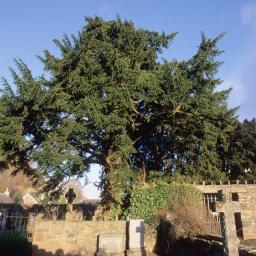
The Fortingall yew in Perthshire has started to produce red berries, suggesting a change of sex in one of its branches. It’s an unusual – but not unprecedented – switchAfter possibly 5,000 years alive, doing anything other than dying would be a surprise. But Britain’s oldest tree is very much alive – and has amazed observers by apparently changing sex.Fortingall yew in Perthshire is justly famous as one of the oldest living things in Europe, although no one knows its true age because its most ancient parts have decayed and disappeared. Continue reading...
|
 |
by Nicky Woolf in New York on (#SC4X)
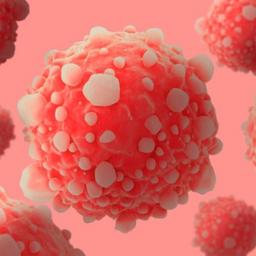
Imlygic programs viruses to attack only cancer cells and gives patients more humane options – potentially ‘a complete change in the game’ in treatmentA new cancer treatment strategy is on the horizon that experts say could be a game-changer and spare patients the extreme side effects of existing options such as chemotherapy.Chemotherapy and other current cancer treatments are brutal, scorched-earth affairs that work because cancer cells are slightly – but not much – more susceptible to the havoc they wreak than the rest of the body. Their side effects are legion, and in many cases horrifying – from hair loss and internal bleeding to chronic nausea and even death. Continue reading...
|
 |
by Guardian Staff on (#SC4Z)
Nasa marks 15 years of humans living on board the International Space Station (ISS) on Monday. Members of the ISS Expedition 45 spoke from on board the ISS to mark the milestone occasion. ISS commander Scott Kelly says the space station serves as the most important experiment they conduct as a moving vehicle keeping humans alive for long periods of time Continue reading...
|
 |
by Nadja Sayej on (#SBXX)
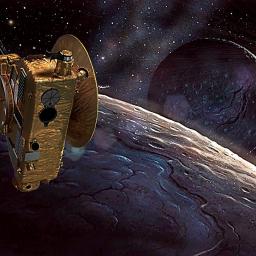
He has seen the impossible, painting outer space long before man got there. He has made book covers for Arthur C Clarke and spaceships for Doctor Who. David A Hardy is the oldest living space artist ... and he has never made a mistakeIn 1950, a 14-year-old boy found an astronomy book at his local library. As he pored over it, a light bulb lit up over his head. “It inspired me, really, to do it myself,†says that boy, David A Hardy, 65 years on. Not to become an astronaut, but to draw outer space with incredible military accuracy. Today, he is the world’s oldest living space artist. He’s 79 and he lives in the suburbs of Birmingham, churning out visions of the universe while his wife makes him cups of tea.Chances are, if you’ve read books by Isaac Asimov and Arthur C Clarke, the covers were painted by Hardy. He worked with Sir Patrick Moore for over half a century. He has created spaceships descending upon Big Ben for Doctor Who and the Daleks. His art has been the backdrop for Pink Floyd gigs, and he counts the Rolling Stones and Queen among his collectors. Continue reading...
|
 |
by Frances Grant on (#SBSP)
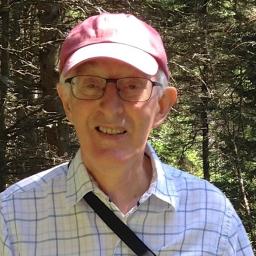
My husband, Adrian Grant, who has died aged 67 of ocular melanoma, had a distinguished career as an epidemiologist.Initially an obstetrician, he was inspired by a course in medical demography in 1979 to join the newly created National Perinatal Epidemiology Unit in Oxford, under the charismatic Iain Chalmers. There Adrian established the Perinatal Trials Service with Diana Elbourne, who later became professor of healthcare evaluation at the London School of Hygiene and Tropical Medicine. Together they pioneered the most productive international perinatal trials research initiative in the world, enabling mothers, midwives and medics alike to base their practices around the time of birth on robustly researched evidence. Continue reading...
|
 |
by Caren Chesler on (#SBN3)
Many couples who have dealt with infertility struggle with what to do and stop paying storage fees, but the number of embryo donations is on the riseEvery four months, my husband and I receive a bill from Cornell Center for Reproductive Medicine and Infertility, asking us for another $250 to continue storing our embryos. We’ve had four embryos sitting on ice, so to speak, since 2010, when I underwent fertility treatments to have my son. The treatments yielded six embryos; we used two, and we held on to the rest in case we wanted another child.But it’s now been four and a half years, we’ve paid $4,500 to keep the embryos preserved, and I don’t even know if they would work if we wanted to use one. I think of how fresh a frozen steak looks after just a couple of months. Indeed, a recent study said women who used frozen, or cryopreserved, eggs to have a baby had a lower success rate than those who used fresh eggs, or oocytes. The same may hold true for frozen embryos. Continue reading...
|
 |
by Ian Sample Science editor on (#SB7C)
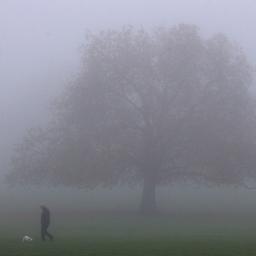
Rain last week and now a high pressure system over Britain mean conditions have been perfect for fog to form and lingerThe fog blanketing parts of the UK is known to meteorologists as radiation fog. It has nothing to do with radioactivity, though.Common in the winter, radiation fog builds when the land cools under clear night skies by thermal radiation. As the ground chills, so does the air directly above. And since cooler air holds less moisture, the further the temperature drops, the more moisture condenses to form layers of fog. Continue reading...
|
 |
by Nicola Davis on (#QT69)
George Boole’s home city of Lincoln, 200 years after his birth, is set to celebrate his achievements as part of a digital arts festivalWith a steely glare, a starched collar and a pair of truly prodigious sideburns, he is the digital pioneer you have almost certainly never heard of. Now, 200 years after his birth, George Boole is finally to get the acclaim he deserves.A prodigy with a penchant for self-education, Boole was a teenage schoolteacher who rose to become the first professor of mathematics at what is now University College Cork, in 1849. Along the way he penned two seminal books: The Mathematical Analysis of Logic in 1847 and later, in 1854, An Investigation of the Laws of Thought. Continue reading...
|
by Sarah Boseley on (#S9PP)
Research by London Cancer shows cancer cases diagnosed in A&E are often at a late stage when treatment options are limitedA quarter of people diagnosed with cancer after going to A&E in London with symptoms are dead within two months, according to new research.The figures from London Cancer, which brings together services in hospitals in north-east and central London and west Essex, are stark but reflect the reality for patients diagnosed at a late stage of disease, when the cancer has probably spread. Continue reading...
 |
by Kate Ravilious on (#S9E6)
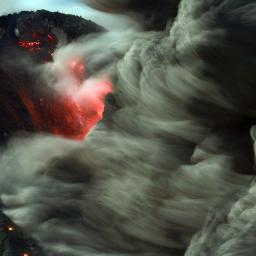
Every so often Earth’s volcanoes come to life in spectacular fashion. Geologists have uncovered ten of these dramatic magma-spewing episodes to date. At least four are thought to be behind mass extinction events, including Earth’s most devastating extinction at the end of the Permian period around 250 million years ago. But strangely life on Earth sailed through the most recent eruptive episode, around 60 million years ago, seemingly unscathed. Now a new book sheds light on why some volcanic outpourings are so much more catastrophic to life than others.In The Worst of Times, Paul Wignall, a geologist at the University of Leeds, explores the connection between supercontinents and mass extinctions. At the end of the Permian, Earth’s landmasses were joined into one huge continent, called Pangea. When the volcanoes began to erupt, across what is now Siberia, they spewed out enough lava to cover an area the size of western Europe. The resulting global warming and ocean acidification wiped out 90% of all species. By contrast, the most recent outpouring of lava, in the North Atlantic around 60 million years ago, caused some global warming, but failed to bring about a mass extinction event. Continue reading...
|
 |
by Alan Pickup on (#S9E8)
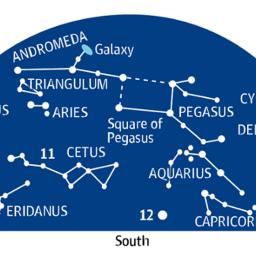
Venus and Jupiter still dominate our predawn sky, though they are drawing apart after their spectacular conjunction a week ago. Mars is involved too, but the other bright planets, Mercury and Saturn, are out of sight as they track around the Sun’s far side. Continue reading...
|
 |
by Guardian Staff on (#S8WE)
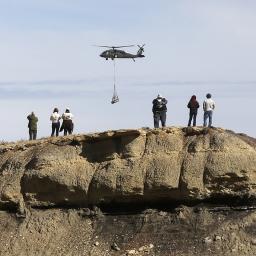
The US national guard assist in the transportation of the full skeletal remains of a baby Pentaceratops. The plant-eating dinosaur had large horns and once roamed what is now North America tens of millions of years ago. The fossils first caught the attention of palaeontologists at the New Mexico Museum of Natural History and Science during a trek through the Bisti Wilderness, San Juan County, in northwestern New Mexico in 2011 Continue reading...
|
 |
by Ben Ambridge on (#S85K)
If someone told you their pet rabbit had gone missing, would you believe them?How good are you at telling if someone is lying? Below are two transcripts from appeals for a missing pet by owners who claim to have lost them. Who do you think is telling the truth?Angie: I’m really worried about Fluffy [frowns]. I haven’t seen her for two days now, and I’m concerned that something has happened. I just couldn’t bear it if she was, you know, taken from us. I just really hope she’s OK and will come back soon. Continue reading...
|
 |
by Adam Rutherford on (#S7YE)
From Newton to Higgs, British science has helped shaped the world. Cutting its funding is not just shortsighted, it’s illogicalLast week, I stood 100 metres directly above a spot colder than the deepest realms of the cosmos. I was chatting to two British physicists, Kay Graham and Jaime Norman, deployed from their bases at the universities of Birmingham and Liverpool to the Large Hadron Collider, straddling the Swiss-French border. There they are studying the strong nuclear force, one of the four fundamental forces in the universe. Below our feet, protons were circumnavigating the 27km ring, and smashing into one another at more than 99% the speed of light. The superconducting magnets that accelerate them are cooled to -271C, just 2C above absolute zero, the lowest temperature possible. Deep space is around 3C above absolute zero.The LHC is the most complex machine ever built. Why would we build such a thing? Well, for lots of reasons. But the main one is because throughout our history we have extended our reach beyond our grasp. We are explorers – the land beneath our feet, the seas ahead of us, the space above, and nowadays, the subatomic world within. The LHC is truly the most impressive experiment I’ve ever seen, and testament to how, if we put our collective minds to it, we can accomplish anything. Continue reading...
|
 |
by Tim Dee on (#S7XM)
Written with a poet’s eye, this remarkable summation of a lifetime’s study of plants is a rhapsodic labour of loveTo vegetate is an odd verb, sometimes even an unpleasant one. But Richard Mabey’s great book is positively fuelled by the curious green energy of its contradictory meanings. To vegetate: to grow and cover the ground, but also to be apparently inactive. The word grafts with its opposite and cleaves to plant life. Take the potato, for example, and the couch potato: the vegetable world is the permanently growing skin of the earth, but it also seems to be just there, covering almost everything but doing almost nothing.The Cabaret of Plants: Botany and the Imagination performs around this paradox, exploring its tensions, revelling in its surprises, and urging us to bin any notion we might have of plant life being somehow passive or a static backdrop for the more go-getting life of our planet. Plants, Mabey believes, are more than simply attractive or useful, having “strange existences and unquantifiable powersâ€, which lend them “alternative solutions to livingâ€. It is not ridiculous, although he says he is “embarrassed†to think of them as having “selvesâ€. Continue reading...
|
 |
by Lucy Rock on (#S7YG)
Paediatric oncologist Dr Jim Olson talks about his latest pioneering idea – using scorpion venom to ‘paint’ cancer cellsJim Olson is a paediatric oncologist whose research is being talked about around the world thanks to some innovative thinking – and scorpions. Based at the Fred Hutchinson Cancer Research Center in Seattle, he leads a team whose biggest success is “tumour paintâ€, a drug that attaches to cancer cells, lighting them up so it is easier for surgeons to operate successfully.The paint was developed from chlorotoxin found in scorpion venom and is currently being tested in clinical trials. So excited was Olson, 52, by this discovery that he had the knot of bonds at the centre of the chlorotoxin molecule tattooed on his upper arm. Decorating his office are framed photographs of his patients at Seattle Children’s Hospital, who are clearly the motivation for his work: he is driven by a desire to tell more parents their children will survive. Continue reading...
|
 |
by Aseem Malhotra on (#S7DQ)
It’s patients who lose out if doctors and professional journals stop asking the right questionsDuring a recent clinic consultation, I saw Mary, in her early 60s, with type 2 diabetes. She was concerned that the muscle pains in her legs may have been a result of the cholesterol-lowering statin drug she was taking. “But I’m scared of stopping it.†She explained how a specialist nurse had told her a clot could break off from her aorta, travel to her brain and cause a massive stroke.I assured her that even in those with established heart disease, who stand to gain most from taking the drug, the risk of death from stopping the medication for two weeks to see if the side-effects would go was close to 1 in 10,000 . Continue reading...
|
 |
by Robin McKie Science editor on (#S7DS)
Life Study, which was intending to follow babies through their lives, is abandoned after failure to recruit enough mothersAn ambitious study to collect data about British babies and follow them through their lives has been abandoned less than a year after it was launched.It was hoped more than 16,000 prospective mothers would be recruited for the project, called Life Study. But by September, only 249 women had agreed to take part. As a result, the Economic and Social Research Council (ESRC), which oversaw the study, announced last week it would close. The project, which was also backed by the Medical Research Council, had already consumed more than £9m. “We had hoped to use Life Study to find out why some people – including those from ethnic minorities – are more susceptible to environmental factors than others,†Jane Elliott, the ESRC’s chief executive, told the Observer. “However, we could not recruit the numbers of prospective mothers we needed and so we had no alternative but to call a halt to the project.†Continue reading...
|
 |
by John Vidal on (#S76M)
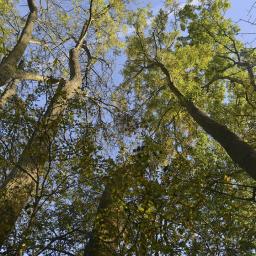
Scientists have proposed a radical solution to help trees develop resistance to ash dieback. But critics fear there could be unpredictable effectsGenetically modified ash trees could replace the 80 million expected to die in the next 20 years from a deadly fungus, scientists have proposed.The radical solution to the greatest woodland disaster of the last 50 years is being explored by research teams at London and Oxford universities with backing from the Department for Environment, Food and Rural Affairs, science bodies and the Forestry Commission. Continue reading...
|
 |
by Robin McKie Science editor on (#S75S)
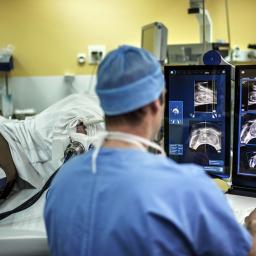
British doctors develop revolutionary new therapy that can precisely target tumours without surgeryBritish doctors are developing a revolutionary new therapy for cancer and associated conditions based on the use of high-powered beams of ultrasound.The researchers – working at the Institute of Cancer Research (ICR), at the Royal Marsden hospital in Sutton, outside London – have already used the technology to kill harmful tissue deep inside the bodies of patients suffering from metastatic bone lesions – without recourse to any form of surgery. And in future, doctors believe they will also use ultrasound to zap prostate, breast and other tumours. “This technology has immense potential,†said Professor Gail ter Haar, who is based at the institute. Continue reading...
|
 |
by Guardian Staff on (#S60C)
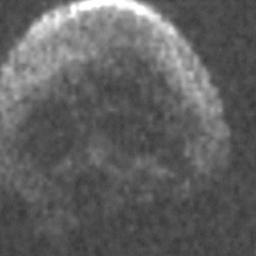
A large asteroid that scientists only discovered this month will make a relatively close approach to Earth on Halloween night. Paul Chodas, manager for the Center of Near Earth Studies at NASA’s Jet Propulsion Laboratory, says that despite its spooky appearance, the skull-shaped asteroid is ‘not going to pose any hazard to the Earth’ during its flyby Continue reading...
|
by Rebekah Higgitt on (#S5R8)
The H Word blog’s Halloween special looks at the displayed bodily remains of six scientific savants - from the intruiging to the odd, via the frankly ghoulishAdmirers of science usually like to think that they’re above the talismanic, fetishist practices they’d associate with superstition, magic and religion. Yet, as was discussed recently at a seminar on Savant Relics, there are a surprising number of objects and bodily remains of scientific individual that have been preserved and are, often, treated with the kind of ritual and endowed with the kind of aura that is elsewhere reserved for saints.They are distinctly odd things through which to celebrate the memories of individuals admired for their scientific work: too corporeal for transcendent genius and too wrapped in mystique for sceptical science. While in some cases there was a scientific or medical motivation, it being hoped that something might be learned from an examination of the remains of someone remarkable, others are simply relics. And like religious relics they often play a role in ceremony, endow a place with symbolic significance or form an object of pilgrimage. They are also rather gruesome: be warned... Continue reading...
 |
by Augusta Ford on (#S5H0)
Augusta Ford was used to dealing with grief and loss in her work as a psychotherapist. Then her husband died. Would her years of experience help in her own grieving process?He died, and I watched, at 5.35am on 8 February this year. It took perhaps 27 minutes, the irreversible slide that moved him from life into death, me beside him, mute with acceptance and resignation. He said: “Get the nurse.†And I realised that he was in the grip of something greater and more potent than himself. Something else was in the room with him, and it felt discomfortingly familiar.My husband was 52, and an unusually determined man. His working life had been consumed by business, deals each one more ambitious than the last. Soon after we met I remember him telling me that he began any deal expecting a 5% chance of it succeeding. To me, a psychotherapist not an entrepreneur, this seemed incomprehensible. But when he was offered a drug trial in America, his own odds of survival were 30%. This was not fine, he said, but it was better than 5%. This 30% possibility was one I understood. Continue reading...
|