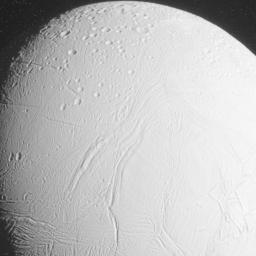
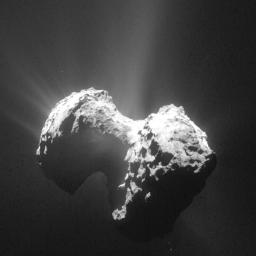
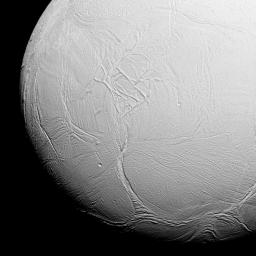
Nasa’s Cassini spacecraft captures images of Saturn moon’s underground ocean. The spacecraft’s close flyby of icy moon Enceladus reveals more about the deep saltwater ocean hidden inside the planet which was discovered last year by researchers. The images show the pale, grooved and cratered surface of the moon, and several bright streaks of vapour plumes erupting from its south pole. Photograph: AP Continue reading...
Cassini spacecraft images as it flew by Enceladus capture the grooved and cratered surface of the moon, and the bright streaks of vapor plumesA Nasa spacecraft that dived through a geyser plume on one of Saturn’s moons, closer to the surface than ever before, has delivered the first images and data from its “taste†of an underground ocean.The Cassini spacecraft made its lowest pass over Enceladus on Wednesday, flying only 30 miles above the moon’s south pole and through jets of freezing water vapour and other molecules erupting from below ground. Continue reading...
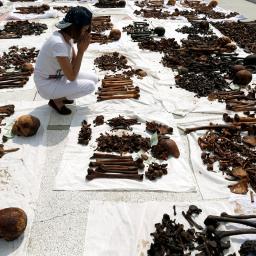
The Guardian’s picture editors bring you the best photographs from around the world, including resting racehorses, Diwali preparations and an exhumation Continue reading...
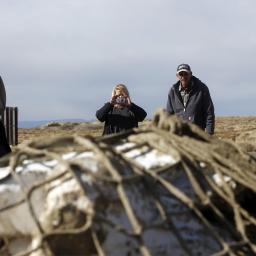
After years of hard work, paleontologists and the national guard excavated the first baby skeleton of the rhinoceros-like Pentaceratops to ever be recoveredThis was something that had never been seen before – the full skeletal remains of a baby Pentaceratops, a plant-eating dinosaur with large horns that once roamed what is now North America tens of millions of years ago.The fossils first caught the attention of paleontologists with the New Mexico Museum of Natural History and Science during a trek through the badlands of the Bisti Wilderness in north-western New Mexico in 2011. Continue reading...
Spiritualism fascinated the 19th century public and was furiously debunked by scientists. But its modern, “scientificâ€, incarnations are just as sinisterIn the run up to Halloween , many of us are open to a frightening supernatural adventure. A good scare can be a bonding experience, and in this spirit many of us have dabbled with Ouija boards, either in earnest or jest - perhaps even getting slightly phased by the apparent disembodied messages, sometimes surreal and foreboding, emanating from the board. While there is no evidence that we can truly communicate with the dead, phenomena like the Ouija board and automatic writing can truly give us a fascinating insight into our own psychology, and serve as a reminder that we can all too easily fool ourselves.Our fascination with words from beyond the grave is nothing new. In the mid- 19 century, the growing spiritualist movement had begun to experiment with ghostly messages transcribed by table-turning, a precursor to the modern Ouija board. In table turning, the alphabet was inscribed on a table, upon which all participants laid their hands. Seemingly ethereal whisperings would soon appear from the void as the table tilted towards the imprinted letters. Such demonstrations of spiritualism convinced many in high society that a new force, perhaps a mystical one, was behind the haunting messages. Continue reading...
If we talked about the fact that DNA accounts for most of our brain power, we could begin to change destinies written in our genesI often listen to The Life Scientific on BBC Radio 4, and just as often switch it off after 15 minutes because I can’t follow the science. This is probably because I’m not quite intelligent enough. Or was I simply raised in an insufficiently nurturing environment? Last week, Jim Al-Khalili interviewed Prof Robert Plomin, a behavioural geneticist who specialises in the inheritability of intelligence. His subject is a taboo for many because it raises the spectre of the discredited “science†of eugenics.Plomin has spent the last several decades examining 10,000 pairs of identical twins, as well as adopted children. His conclusion, and he considers it cast iron, is that DNA accounts for up to two thirds of your intelligence, while environment – whether educational, familial or societal – accounts for only around 20% of variation. Continue reading...
Site rejects calls to take down Heartland Institute campaign raising funds to host a rival conference alongside the Paris climate summit in DecemberCrowdfunding site Indiegogo has been criticised for carrying a campaign raising money for the Heartland Institute, a thinktank that casts doubt on climate science, to run a rival conference alongside a landmark UN summit in Paris in December.The Pandemonium in Paris campaign will direct funding to a “counter-conference†attended by allied libertarian organisations, including the Cato Institute, the Committee for a Constructive Tomorrow and the Competitive Enterprise Institute. Continue reading...
by The Moscow Times, part of the New East network on (#S353)
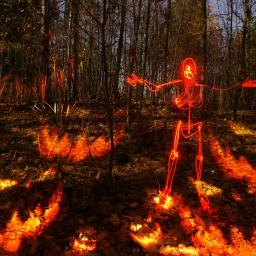
With politicians wanting to ban the holiday for being too American, The Moscow Times suggests eight subversive costumes to consider on Hallow’s eveHalloween has always been controversial in Russia, regarded by politicians as evidence of moral corruption and American infiltration, with annual calls for celebrations to be banned.But attempts to censor proceedings often serves to make them more interesting. So, here are eight creative costume suggestions that are not only easy to assemble but up-to-date with the Russian zeitgeist. Continue reading...
From tracking cows and Peruvian asparagus to monitoring harmful algae blooms, satellites offer the food industry valuable informationThe first successful weather satellite, TIROS-1, was launched in 1960. The images, though a bit blurry, picked up a typhoon 1,000 miles east of Australia. This satellite only lasted 78 days in orbit but it showed the benefits of space observations, ushering in an era of much more accurate weather information that has helped save lives and protect livelihoods.Today there are more than 200 non-military operational satellites looking at the Earth and agriculture is a key beneficiary of the boom in this technology. As innovation drives down the cost of getting a satellite into orbit, and more data becomes available, increasing numbers of farmers are set to benefit. Continue reading...
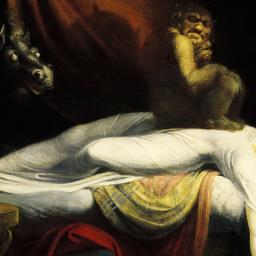
Tales of things that go bump in the night have existed for centuries, but they may in fact be part of a surprisingly common neurological phenomenonIt’s known as “Ghost Depression†in China, “Kanashibari†in Japan, meaning to be bound or fastened by metal strips, and “Karabasan†or ‘The Dark Presser’ in Turkey. The latter sounds oddly like a 1980s metal band, but these three terms all refer to the same thing – the often terrifying and little understood ordeal of sleep paralysis, which is believed to have left various imprints on our culture throughout the millennia, from tales of ghosts in the night to visits from aliens.Over the past few months, sleep paralysis has made its way to the big screen for the first time in the shape of new docu-drama The Nightmare. With the help of a variety of special effects, director Rodney Ascher brings to life the often terrifying bedtime experiences suffered by individuals around the world. And they’re more common than you might think. Studies suggest that around 8% of the general population, 28% of students and 32% of psychiatric patients have experienced sleep paralysis at least once. Continue reading...
A globally coordinated response is needed to ensure new treatments, like those devised by the Nobel medicine prize winners, reach all patientsWhat does it take to bring the fruits of scientific innovation to vulnerable patients in the world’s poorest communities?The discoveries recognised by the 2015 Nobel prize for medicine are perfect examples of the journey from test tube to bedside, and tell a fascinating geopolitical story of how effective drugs for neglected diseases are discovered, made, and distributed. Importantly, they show what happens when we work together for patients, not just profits. Continue reading...
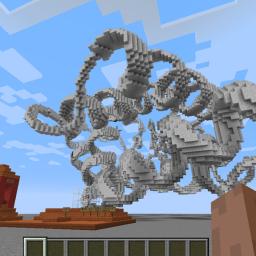
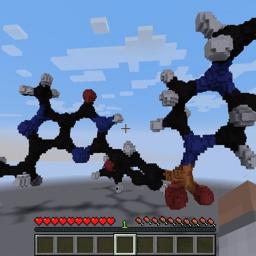
University of Hull’s MolCraft project aims to make exploring molecular structures fun and engaging for young scientistsTens of millions of children play Minecraft, but now the game could help them take their first steps into the world of biochemistry too.Students at the University of Hull have created a Minecraft world called MolCraft, which aims to introduce children to topics including the structures of proteins and chemicals. Continue reading...
We speak to Frank De Winne, head of the European Astronaut CentreWhen will humans return to the surface of the moon? How are space explorations affected by political tensions and what do astronauts really think about Hollywood's version of space?We discuss all this and more with former Belgian air force test pilot and first-ever European commander of the International Space Station Frank De Winne. Continue reading...
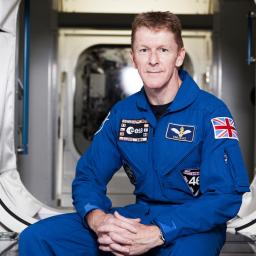
British astronaut Tim Peake will blast off into space this December. Send us the questions you and your students would like us to ask him in interviewTim Peake will find himself a very long way from home this Christmas – so far that he will be out of this world.The former helicopter test pilot has been chosen to be Britain’s first European Space Agency (ESA) astronaut. He will be sent to space on 15 December and won’t return for five months. Continue reading...
The facility is planned to generate millions of Higgs bosons, far more than the current capacity of the Large Hadron Collider at Cern on the Swiss-French borderChina will begin work on the world’s largest supercollider in 2020, a mega-machine aimed at increasing understanding of the elusive Higgs boson, state-run media has reported.The facility, designed to smash subatomic particles together at enormous speed, will reportedly be at least twice the size of Europe’s physics lab, the Swiss-based Cern, where the Higgs boson was discovered. Continue reading...
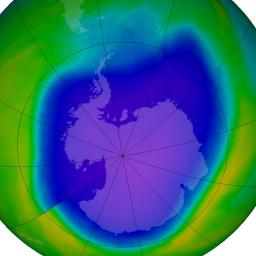
UN weather and climate agency says hole over Antarctica is larger due to colder stratosphere but will shrink againThe UN’s weather and climate agency said on Thursday there was no cause for alarm about a record-size hole this month in the ozone layer which shields life on Earth from the Sun, as it should shrink again.The ozone hole that appears over Antarctica fluctuates in size, normally reaching its widest in the polar spring as extreme cold temperatures in the stratosphere and the return of sunlight unleash chlorine radicals that destroy ozone. Continue reading...
The online building game offers a way to explore the world of molecules like no otherThis piece was first published on The ConversationChildren should be playing more computer games in school. That idea might enrage you if you think kids today already spend too much time staring at screens or if you are already sick of your offspring’s incessant prattling about fighting zombies and the like. But hear me out. Continue reading...
Scientists reveal the Rosetta probe has found high levels of oxygen in the atmosphere around comet 67P/Churyumov-Gerasimenko. The unexpected data contradicts current thinking that the majority of the comet’s quantity of free oxygen, which is highly reactive, over time should have combined with hydrogen to form water. The most likely answer as to why is believed to be in the ‘dark nebula’, the birth place of the solar systemRead: Rosetta finds oxygen on comet 67P in ‘most surprising discovery to date’ Continue reading...
A study in Lancet Psychiatry this week was reported as if exercise and counselling are magic cures for CFS. A closer reading of this timely research is requiredChronic Fatigue Syndrome (CFS) is characterised by chronic disabling fatigue where no medical disease has been found to explain it. Fatigue syndromes have been described under a variety of different names over many centuries. And for just as long they have been regarded with suspicion and judgment. The modern conception of CFS came to the fore in the 1980s, when it was briefly (and pejoratively) labelled “yuppie fluâ€. Myalgic encephalopathy (ME) is a related condition considered by some to be synonymous with CFS and by others as something entirely separate. What sufferers with both these illness labels agree upon is that the word “fatigue†does not begin to do justice to a symptom that leaves those affected confined to their beds for months or even years at a time.Related: Chronic fatigue patients criticise study that says exercise can help Continue reading...
A pioneering project to cure children crippled by fluoride poisoning holds hope for tens of millions of peopleRelated: 11 views on improving water supplyFor years the people of Tapatjuri, a remote village in northeast India, thought evil spirits were tormenting them. It was the only way they could explain why hundreds of people in their community were crippled, with bones bent so badly out of shape that many could not wash, eat, or leave their houses without help.
Biomedical research has faced criticism for being unreliable, but today’s report from the Academy of Medical Sciences might change all thatSome time in 1999, as a 22 year-old fresh into an Australian PhD programme, I had my first academic paper rejected. “The results are only moderately interestingâ€, chided an anonymous reviewer. “The methods are solid but the findings are not very importantâ€, said another. “We can only publish the most novel studiesâ€, declared the editor as he frogmarched me and my boring paper to the door.I immediately asked my supervisor where I’d gone wrong. Experiment conducted carefully? Tick. No major flaws? Tick. Filled a gap in the specialist literature? Tick. Surely it should be published even if the results were a bit dull? His answer taught me a lesson that is (sadly) important for all life scientists. “You have to build a narrative out of your resultsâ€, he said. “You’ve got to give them a storyâ€. It was a bombshell. “But the results are the results!†I shouted over my coffee. “Shouldn’t we just let the data tell their own story?†A patient smile. “That’s just not how science works, Chris.†Continue reading...
Thanks to our pronunciation rules, when you do algebra on the alphabet, everything reduces to 1Many words in English are homophones. That is, they are pronounced the same but are spelt differently.For example AISLE and ISLE Continue reading...
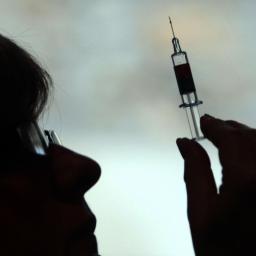
Two studies find cholesterol-lowering drug impairs immune system’s ability to tackle flu virusVaccination against flu appears to be less effective in people who take statins, according to two new studies.The drugs, to lower cholesterol in people at risk of heart disease, are widely prescribed by GPs. Many taking them will be over 65 and offered a flu jab as the winter approaches. But the studies, published in the Journal of Infectious Diseases, suggest that they may not be well protected. Continue reading...
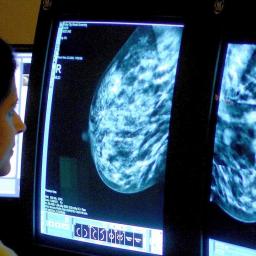
Rate of aggressive breast cancers that have already moved to other parts of the body has not fallen in decades despite screening programmes, study findsA new report has raised fresh questions about the value of mammograms, with the United States recording no reduction in the rate of cancers that have already spread far beyond the breast before they are found.The report, in Thursday’s New England Journal of Medicine, is by three cancer specialists and is based on federal statistics going back to the 1970s. Continue reading...
Herpes simplex virus type 1, which causes cold sores around the mouth, is present in more than 3.7bn people, says organization amid push for vaccineTwo-thirds of the world’s population under 50 have the highly infectious herpes virus that causes cold sores around the mouth, said the World Health Organization in its first estimate of global prevalence of the disease.More than 3.7 billion people under the age of 50 suffer from the herpes simplex virus type 1 (HSV-1), usually after catching it in childhood, according to a WHO study published on Wednesday. Continue reading...
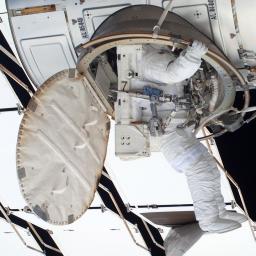
On Thursday, Kelly will break the US record for longest single space flight. He and twin Mark are also part of a unique study on the effects of space on the bodyThe commander of the International Space Station will break the record for the longest single flight by a US astronaut on Thursday by clocking up 216 days in orbit.Scott Kelly, who performed his debut spacewalk on Wednesday, will surpass the previous record of 215 days set by the Spanish-American astronaut Michael López-AlegrÃa in 2007.
In the next week, our planet will experience one near miss and one impact. What else is heading our way?Every day, Earth is hit by something from space. It is a sobering thought that we live on the celestial equivalent of a dartboard, especially since we are taught that the dinosaurs were wiped out by the impact of a giant asteroid 65m years ago.Astronomers at the European Space Agency’s Near Earth Object Coordination Centre (NEOCC), in Frascati, Italy, place objects that show even the slightest hint of striking our planet in the next century on a risk list, which currently contains 524 objects. Continue reading...
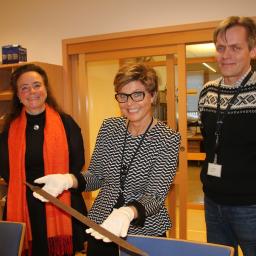
After more than a millennium buried in the snow of Norway’s mountains, a surprisingly well-preserved sword sheds light on the Viking ageSome time near AD750, someone left a Viking sword along a mountain plateau in southern Norway. On a late October day more than 1,250 years later, a hiker named Goran Olsen picked it up. Continue reading...
Six women will spend eight days in mock spacecraft simulating flight conditions and perform tasks to assess their suitabilityA crew of six Russian women have been locked away in a mock spaceship as part of an eight-day experiment to simulate conditions for a potential mission to the moon in 2029.The experiment, the first of its kind to feature an all-female crew, is designed to “test the psychology and physiology of the female organism,†the space institute organising it said. The participants will be let out next Thursday. Continue reading...
Nasa astronaut Scott Kelly takes his first space walk just hours before setting a new US flight record. Kelly will break the American record for NASA’s longest single space trip that has stood at 215 days — more than seven months — since 2007. Kelly has been living on the International Space Station (ISS) since March this year. He’ll remain there until March 2016 Continue reading...
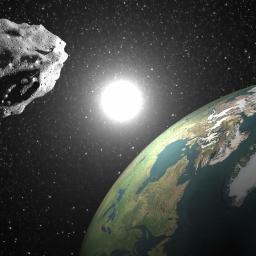
Although its sudden discovery has spooked scientists, astronomers confirm that the 1,300ft-wide space rock will remain further away than the moonA Halloween asteroid is due to scream past the Earth on the last day of the month, missing the planet by just 300,000 miles – frighteningly close by astronomical standards.But scientists say there is no need to be scared, even on Halloween. The space rock, travelling at around 22 miles per second, will remain further away than the moon. Continue reading...
Electric eels curl up to amplify their shocks when tackling large preyThe electric eel boasts what must surely be one of the most sophisticated and versatile weapon systems in the whole animal kingdom. This large Amazonian fish is well known for its ability to discharge pulses of electricity that are powerful enough to incapacitate a human, or even a horse. But its electric organ also acts as a tracking system, enabling the eel to locate fast-moving prey rapidly and precisely, and as a wireless Taser, with which it can stun prey and control their movements from a distance.Research published today in the journal Current Biology reveals yet another of the electric organ’s remarkable features. When struggling to capture large prey, the electric eel curls its long, flexible body to bring its tail round towards its head. This simple manoeuvre not only traps the prey, but also superimposes the electrical fields generated by the opposite ends of the eel’s body, concentrating the fields and doubling their strength so that the eel can subdue its unruly victim. Continue reading...
Readers answer other readers’ questions on subjects ranging from trivial flights of fancy to profound scientific conceptsWe see a small part of the electromagnetic spectrum as colours. Do the parts we can’t see have colour? If not, why not? If they do, can they be described in a way we can comprehend?David Taylor, Spancil Hill, County Clare, Ireland Continue reading...
Charities hit back at Oxford University research on benefits of exercise and behaviour therapy, claiming they can worsen symptomsPeople with chronic fatigue syndrome and ME have criticised the findings of an Oxford University study that suggests gradual exercise could help with their condition – which leading charities say could worsen symptoms.Researchers found graded exercise therapy (GET) and cognitive behavioural therapy (CBT) had a marked effect on symptoms such as extreme tiredness, joint aches and memory lapses. Continue reading...
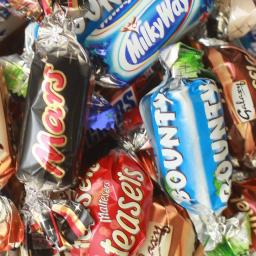
Famed for its chocolate, Mars wants to reduce the number of food safety scares through the creation of its Global Food Safety CenterListeria, E coli, adulterants and fungal toxins are all too common in food supplies around the world, sickening and even killing untold numbers of people every year.
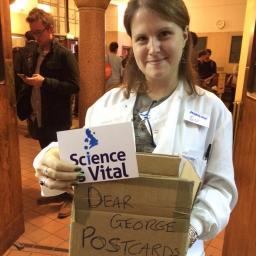
Campaign group Science is Vital rallied passionate, good-natured support for UK science at their ‘Science: As Vital As Ever’ event in Conway Hall on Monday 26th October. With the Comprehensive Spending Review in November threatening further cuts to the UK research budget, scientists and supporters of science came together to argue the case for the social, cultural and economic value of science. And to plead with George Osborne not to let the UK research base endure another five years of decline. The event drew a capacity crowd and heard speeches from many of the country’s most prominent advocates for science. Scientist and photographer Robert Dickinson captured some of the highlights. The campaign continues online. Continue reading...
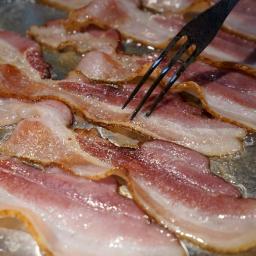
Rocked by the news that processed meat could be terribly bad for you? Well, chimney sweeping, salted fish and fracking also appear on the list compiled by the International Agency for Research on CancerAfter Monday’s bombshell news from the World Health Organisation that bacon, ham and sausages are carcinogenic, you can be forgiven for wondering just what exactly is safe for you to come into contact with – let alone eat.Handily, the International Agency for Research on Cancer – a body that collects and publishes cancer figures worldwide – has a list of the 116 substances and activities (for some of them are more verb than noun) that are now considered to cause cancer. Continue reading...
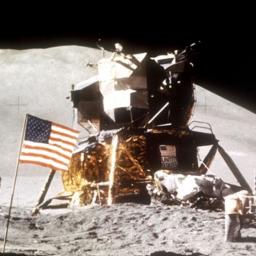
After the Apollo missions, Richard Nixon donated 270 moon rocks to the world. Now, only 180 are accounted for – the rest are missing. There’s a market in fakes, plus an undercover operation called Lunar Eclipse to track down the forgers. Photographer Annabel Elgar has trooped all over the world to track down the remaining rocks for her series Cheating the Moon. But which are real and which are fakes? Continue reading...
Consensus builds among scientists though review of evidence also finds there is not enough data on whether pesticide causes population declineThere is a strong scientific consensus that bees are exposed to neonicotinoid pesticides in fields and suffer harm from the doses received, according to a new analysis of the all the scientific evidence to date.
Imlygic, which bursts melanoma cells open and triggers immune response, can shrink localised tumours but is not proven to extend life, says FDAThe US Food and Drug Administration has approved a first-of-a-kind drug that uses the herpes virus to infiltrate deadly skin cancer tumours, reducing their size in some cases.Related: The Guardian view on meat and cancer: a little of what you fancy will do you no harm | Editorial Continue reading...
Nasa probe will fly within 30 miles of the moon’s south pole, sampling water vapour in a bid to learn more about vast frozen underground oceansThe Cassini spacecraft is in for an icy shower as it passes within 30 miles (50km) of one of Saturn’s many moons on Wednesday.Jets of of water vapour and frozen particles erupting from the south pole of the moon, Enceladus, are expected to provide the best sampling yet of its underground ocean. Continue reading...
Doing energetic dance routines together makes people feel more connected and raises their pain threshold, psychologists have foundPsychologists in Oxford may have unravelled the mysterious appeal of Gangnam Style, the Macarena, and the Village People’s YMCA, all in one fell swoop.The dance crazes rose to prominence in three separate decades, but all require an unwavering dedication to synchronised movement and exertion that seems natural only to wedding reception DJs.
I share some of Patrick Barkham’s views about the annual moving of clocks, forward and back (Notebook, 27 October), but he is wrong to suggest that there is anything irrational in the asymmetry of the times when the clocks are moved. The Earth moves round the sun in an ellipse, rather than a circle, thus the times between the two equinoxes, spring to autumn and autumn to spring, are not equal. The tilt of the Earth’s axis to the plane of the orbit introduces a further asymmetry. For most of the first half of the year, the sun time is behind our clock time and ahead for the second half. We do not, of course, have to do anything with the clock. We could just decide to move the nation’s timetable to an hour earlier in summer and move it back in the autumn. An alternative would be to start the day at 8am instead of 9am, which would have the effect of BST all the year round.
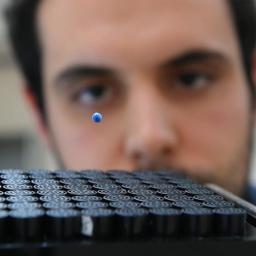
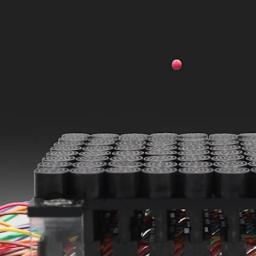
Scientists Sriram Subramanian and Asier Marzo explain how new sonic tractor beam technology lifts and spins objects in the air using only the forces produced by a field of ultrasonic waves. The technology allows for what the scientists call “containerless transportationâ€, which could find uses in applications where material is dangerous to handle, or at risk of being contaminated by people or machinery, in particular medicine Continue reading...
Scientists in Spain demonstrate new technology that uses a field of ultrasonic waves to grab tiny objects and move them around. The technology works by using an array of flat speakers to produce acoustic holograms. Just as visual holograms are produced in 3D from interfering light waves, so acoustic holograms are made by interfering sound wavesRead the force awakens: tractor beam becomes a reality
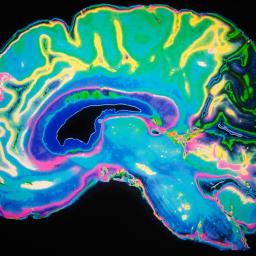
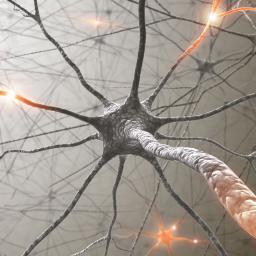
Scientists hope to start trials in dementia patients after rat study suggests drug reduces brain inflammation and encourages neuron growthAn inexpensive drug used to prevent asthma attacks in children and adults may help to rejuvenate ageing brains, according to a study in rats.Researchers found that a six week course of the drug, montelukast, improved memory and learning in older rodents, with their performance in cognitive tests nearly matching that of much younger animals.
Nasa begins a three-day workshop to discuss landing sites for human missions to Mars, but without a budget is such a mission just a flight of fantasy?Nasa begin a three-day discussion about where to land humans on Mars today. The workshop takes place at the Lunar and Planetary Institute (LPI), Houston, Texas.The website says, “The purpose of this workshop is to identify and discuss candidate locations where humans could land, live, and work on the martian surface.†The agency will also stream the entire event (see viewer above).
Our new study proves the harm to child health, so cutting public consumption makes political senseIn October 2013, the Mexican Congress did the unthinkable. They passed a peso-per-litre tax on sugared beverages, as well as a similar tax on junk food. This, in a country where some counties still don’t have potable water and where the poverty rate is 52%. Last week, the Mexican Congress did something even more unthinkable. They gutted their tax, cutting it by half. This, despite soda tax revenues that topped $19bn a year, and despite a diabetes prevalence rate of 12% compared with the US rate of 9.3%.The tax caused sugary drink consumption in Mexico to drop 6%. The Instituto Nacional de Salud Publica (the public health officials) called this a success; Hacienda (the treasury department) called it a failure. Why did they gut the tax when it provided revenue to a cash-strapped exchequer? Continue reading...
by Kieron Flanagan, David Walker and James Wilsdon on (#RQPT)
Whatever the outcome of November’s spending review, uncertainties about the size and shape of the UK’s research system are set to persist well into 2016.