 |
by Taylor Glenn on (#RQHQ)
Having only one child is something many people frown upon, but the reasons for this are unscientific and unfounded.Maybe it’s my age. Maybe it’s not feeling up to incubating another human. Maybe it’s my unshakeable dislike of Dustbuster-shaped family cars, or the thought of having worse than a one-to-one ratio of parents to children at any given time. Whatever my reasons, I’ve experienced surprising resistance since I started admitting we might be stopping at just the one. “Wait till you hit 40 and panic!†and “But she’ll be so lonely!†or “Oh, hooray! You’re pregnant again, right? Oh my god, sorry, it’s just your billowy top.â€Here I thought I’d be freed of childbearing harassment once I’d had a child. (Incidentally there’s a good post about nosing in on women’s fertility status that recently went viral). When people used to ask if I was “trying for a baby†I’d go Full Snark and say things like “Nope, we’re trying for a panda. It’ll be tough, genetically – but the world needs more.†Being confronted about having an “only†has rendered me more tongue-tied. It can feel like no-man’s land: you’re an ousted traitor of the No Kids Club, but if you didn’t know better, you could be made to feel like you’re not a real parent unless you double down.
|
| Link | http://feeds.theguardian.com/ |
| Feed | http://feeds.theguardian.com/theguardian/science/rss |
| Updated | 2026-10-01 02:00 |
 |
by Guardian Staff on (#RR9M)
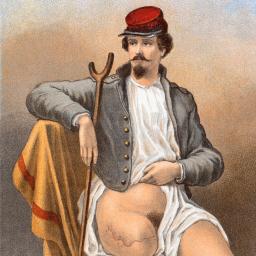
With caesareans, fingers being amputated and jaws being reset, these gruesome yet exquisite drawings of the living – and the dead – hark back to a time when the cutting edge of medicine was, frankly, terrifying Continue reading...
|
 |
by Reuters on (#RQ08)
Tsar Alexander III’s remains to be used to help identify the last two children of Tsar Nicholas II, murdered in 1918Russian investigators say they plan to exhume the remains of Tsar Alexander III, father of murdered Tsar Nicholas II, in the latest twist to authenticate the remains of the slain royal family.Related: Ex-tsar Nicholas II executed: from the archive, 22 July 1918 Continue reading...
|
 |
by Staff and agencies on (#RPW6)
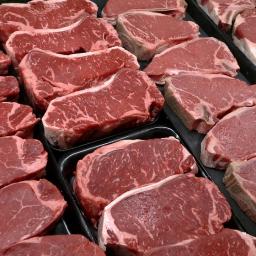
World Health Organisation finds processed meats such as sausages and ham carry an increased risk of bowel cancer, and red meat ‘probably’ does tooAustralians do not need to stop eating red meat but should limit their intake, say experts responding to international research showing it can increase the risks for certain types of cancer.Related: Barnaby Joyce plays down research linking processed meats to cancer Continue reading...
|
 |
by Damien Gayle on (#RPTV)
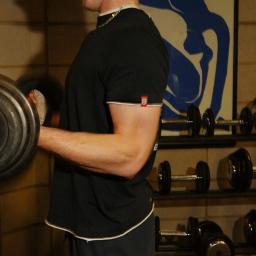
One in 20 use amphetamine for same purpose, survey reveals, with many feeling pressured to achieve a certain body imageMore than 30% of gym-goers in the UK use some form of drug or dietary supplement to lose weight, a study has found, amid fears body image anxiety fuels a rise in the use of performance and image-enhancing drugs.More than 5% of people who regularly attend gyms have gone further by using the illegal stimulant amphetamine for this purpose, according to researchers from the University of Hertfordshire, who have presented their preliminary findings to MPs. Continue reading...
|
 |
by AFP in Athens on (#RP4Y)
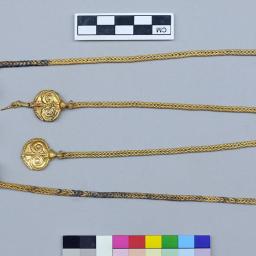
US archeologists found the wooden coffin of the unknown soldier on the Peloponnese peninsula, with jewellery, a bronze sword and ivory combs insideUS archaeologists in Greece have uncovered the skeleton of an ancient warrior that has lain undisturbed for more than 3,500 years along with a huge hoard of treasure, according to the Greek culture ministry.The treasure is “the most important to have been discovered in 65 years†in continental Greece, the ministry said. Continue reading...
|
 |
by Guardian Staff on (#RNXZ)
The World Health Organisation (WHO) says that eating processed meat can lead to bowel cancer in humans, and red meat is a likely cause of the disease. The report was released on Monday and was carried out by WHO’s International Agency for Research on Cancer (IARC). Dr Kurt Straif, head of the IARC monographs programme, says that the risk of developing colorectal cancer increases with the amount of processed meat consumed Continue reading...
|
 |
by Alex Bellos on (#RNR3)
Will we all be eating brains by sunset, or will the virus die out of its own accord? Here’s the solution to today’s puzzle about the zombie virusEarlier today I set you a Halloween puzzle with the following set-up:An infected zombie has a 1/3 chance of passing the infection to a single human, a 1/3 chance of passing the infection to two humans, and a 1/3 chance of passing the infection to no one. No one in the UK is infected by the zombie virus until a single zombie arrives. Continue reading...
|
 |
by Alex Bellos, Ian Anderson, Tash Reith-Banks and Pa on (#RNR5)
Did Alex Bellos’s Halloween problem scare the living daylights out of you, or did you slay the beast? What are the chances that the UK’s zombie outbreak will infect two people or less? What are the chances it will it just die? On average, how many humans will each zombie infect? And what is really spooky about the answers? Continue reading...
|
 |
by Charlotte Burns on (#RNJS)
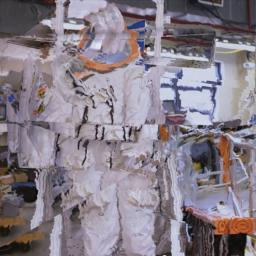
The young artist’s new work at New York’s Whitney tries to make viewers feel as though they’re floating in the heavens – with help from Aretha FranklinFrom space, the Earth appears to plunge into night every 45 minutes. Floating over the dark planet on a moonless night in a sky blacker than you thought possible, all the Earth might look like to you, says Nasa astronaut David Wolf, “is the absence of stars … You can reach into a shadow so black that your arm can appear to disappear.â€Wolf went for a walk over the world from the Mir Space Station in the late 1990s and saw the Earth seemingly vanish. His recollection so moved New York-based artist Rachel Rose when she heard it on NPR that she went to considerable lengths to track him down for a personal retelling. “I sent handwritten letters, emails and cold-called any source I could find linked to him on the internet. I tried everything for around three or four months. I didn’t think I would be able to get to him,†she says. Continue reading...
|
 |
by Damian Carrington on (#RNGE)
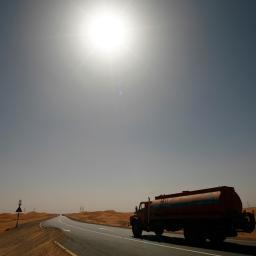
Oil heartlands of Abu Dhabi, Dubai, Doha and Iran’s coast will experience higher temperatures and humidity than ever before on Earth if the world fails to cut carbon emissionsThe Gulf in the Middle East, the heartland of the global oil industry, will suffer heatwaves beyond the limit of human survival if climate change is unchecked, according to a new scientific study.The extreme heatwaves will affect Abu Dhabi, Dubai, Doha and coastal cities in Iran as well as posing a deadly threat to millions of Hajj pilgrims in Saudi Arabia, when the religious festival falls in the summer. The study shows the extreme heatwaves, more intense than anything ever experienced on Earth, would kick in after 2070 and that the hottest days of today would by then be a near-daily occurrence. Continue reading...
|
 |
by Guardian Staff on (#RNGJ)
The following Q&A was produced by the World Health Organisation’s International Agency for Research on CancerQ. What is processed meat?A. Meat is described as processed when it has been transformed through salting, curing, fermentation, smoking or other processes to enhance its flavour or improve preservation. Most processed meats contain pork or beef, but they may also contain other red meats, poultry, offal and meat by-products such as blood. Continue reading...
|
by Hannah Ellis-Petersen on (#RM8H)
Nine held by police after blocking entrance to mine on Lord Ridley’s Northumberland estate and forcing operations to shut down
by Suzi Gage on (#RN0R)
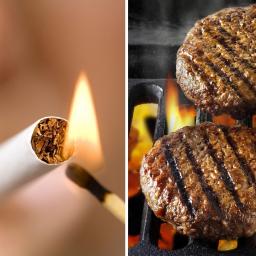
Comparing smoking to bacon in terms of risk of cancer is extremely misleading, despite the strength of evidence being similarVegetarians are probably breathing a sigh of relief today as headlines are warning us that processed and cured meats cause cancer. But the way this message has been framed in the media is extremely misleading.Comparing meat to tobacco, as most news organisations who’ve chosen to report this have done, makes it seem like a bacon sandwich might be just as harmful as a cigarette. This is absolutely not the case. Continue reading...
 |
by Sarah Boseley Health editor on (#RMPB)
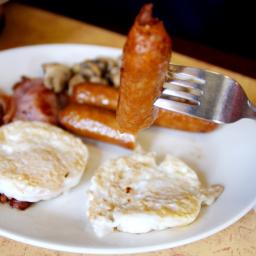
UN health body says bacon, sausages and ham among most carcinogenic substances along with cigarettes, alcohol, asbestos and arsenicBacon, ham and sausages rank alongside cigarettes as a major cause of cancer, the World Health Organisation has said, placing cured and processed meats in the same category as asbestos, alcohol, arsenic and tobacco.The report from the WHO’s International Agency for Research on Cancer said there was enough evidence to rank processed meats as group 1 carcinogens because of a causal link with bowel cancer.
|
 |
by Tomas Chamorro-Premuzic on (#RMSZ)
From Uber to Airbnb, ratings rule our world, but the system is far from perfectUber drivers are motivated to offer a better customer experience by being rated by every passenger at the end of each journey. Likewise, their passengers are incentivised to behave politely because their drivers rate them in turn. A recent version of the Uber app even allows passengers to see those ratings. And although anyone – driver or passenger – can have a bad day, it is valuable to see a person’s average rating, namely to describe, with a simple and standardised measure, how good a passenger or driver he or she is. It sums up how people behaved in the past, and predicts how they are likely to behave in the future.But perhaps the most attractive element of this system is that it puts pressure on people to gain and maintain a desirable reputation, something they may not feel compelled to do otherwise. I go to great lengths to maintain my almost perfect 4.9 Uber rating, but I don’t really care what regular taxi drivers think of me – a feeling that appears to be mutual. Continue reading...
|
 |
by Jason Burke in Delhi on (#RMH5)
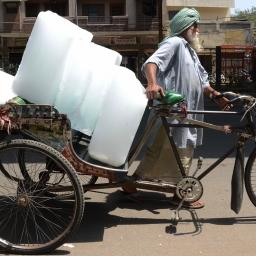
As economy and population expand, government looks for new ways to keep homes comfortable and stop crops being ruined before they get to marketNarendra Sharma dreads the summer. Temperatures climb above 40C even before the sun has hit the pitted, potholed surface of the streets through which he pushes his vegetable barrow day after day. Even when dusk falls there is little respite.“It’s tough, even if you are used to it. And the worst of all is that I lose money,†he said. Continue reading...
|
 |
by Rory Carroll in Los Angeles on (#RMH7)
It is an integral part of modern life, but now the US is waking up to the environmental cost of such massive energy consumptionIt was a sun-drenched afternoon, with another autumnal heatwave cooking the concrete of Los Angeles, but Joanne Pilecki hugged her green fleece close as she stepped into a cinema foyer.
|
 |
by Ian Sample on (#RM6N)
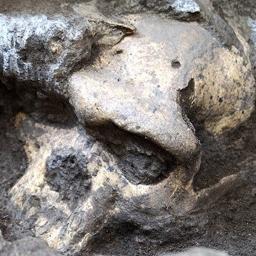
Dr Richard Leakey on paleoanthropology, what still surprises him about hominids and the the technology that could revolutionise the study of our ancestryDr Richard Leakey has been immersed in paleoanthropology for over 50 years. From 1968 to 1999 he built up Kenya's National Museums, and led an international research effort studying human evolution within the Turkana Basin in northern Kenya.Speaking to the Guardian's Rowan Slaney, he tells us what continues to surprise him about hominids and explains the technology that could revolutionise the study of our ancestry. In turn we asked: how certain can we be that humans originated in East Africa? Continue reading...
|
 |
by Alex Bellos on (#RM6Q)
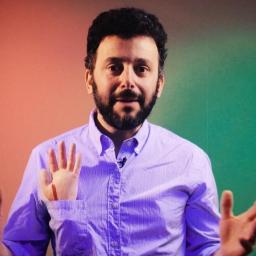
This year’s seasonal flu is the zombie virus. But how far across the population will it spread?Greetings, guzzlers.As it’s Halloween this week... Continue reading...
|
 |
by Alex Bellos, Ian Anderson, Tash Reith-Banks and Pa on (#RM5M)
This week’s Halloween brain-eater, sorry, brainteaser, was devised by an expert in the spread of diseases such as Ebola. The world is overrun with zombies, and the first has just arrived in the UK. Will the zombie outbreak die out, or are we all in mortal peril? Can you solve it? Continue reading...
|
by Melissa Davey on (#RKVW)
The Roy Morgan poll found 91% of those surveyed said marijuana for medical purposes should be made legal, with strongest support in the 50-plus age groupOnly 7% of Australians surveyed for their views on medical marijuana said they were opposed to the drug being made legal for medicinal purposes, a new survey shows.In a poll released by Roy Morgan Research on Monday, 644 Australians aged 14 and above were asked: “In your opinion should the use of marijuana for medicinal purposes be made legal or remain illegal?†Continue reading...
by Daniel Hurst Political correspondent on (#RKK5)
It is not yet clear whether Malcolm Turnbull’s choice signals a new openness by the government to consider nuclear power generationA vocal advocate of nuclear power in Australia, Dr Alan Finkel, is set to be named as the country’s next chief scientist.The appointment of Finkel, an engineer and former neuroscience research fellow who has served as the chancellor of Monash University since 2008, is due to be announced by Malcolm Turnbull this week. Continue reading...
by Jack Stilgoe on (#RJ0D)
Jack Stilgoe: Matt Ridley’s argument for cuts to science is dangerous because it is half-rightBritish policymakers are deep in the throes of another spending review, which means that science must rehearse its arguments for public support. Civil servants in the department of Business Innovation and Skills will join learned societies and national academies in trying to persuade the Treasury – again – that their work is important enough to avoid the deepest cuts. Meanwhile, scientists themselves are mobilising around the message that ‘Science is as vital as ever’. They should all be praying that George Osborne isn’t listening to Matt Ridley.In a new piece for the Wall Street Journal, Ridley argues against public science funding by revealing ‘the myth of basic science’. He is half-right, and a talented polemicist who is half-right can be a dangerous foe. Continue reading...
 |
by Ben Ambridge on (#RJM1)
Scientists have long looked for physical markers of our inner lives. Now it turns out that the length of your fingers reveals much about you. Take this test to find outDid you know you can measure your personality with a ruler? First, measure the length of your index finger from crease to tip. Then do the same for your ring finger. Divide the first number by the second to calculate your 2:4 digit ratio. For example, my index finger is 7.8cm and my ring finger is 8.2cm, so my ratio is 7.8÷8.2=0.95, which is precisely the average for a man. For a woman it’s 0.97. Continue reading...
|
 |
by Rob Penn on (#RHXK)
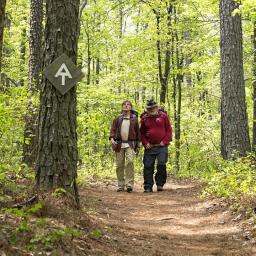
Spending more time ‘forest bathing’ can have a positive effect on depression. Rob Penn on what we owe treesIn autumn our woodlands are at their most enchanting. The sunlight angles gently in to create a changing mosaic of gold and brown; leaves twist and stall as they fall to the floor; branches chatter in the strengthening winds. It is the time of year when trees seem keenest to communicate with us, and when our bond with them is most vital.The polymath American biologist EO Wilson first propounded his theory of biophilia – that we have a deep affiliation with other forms of life, like trees, which is instinctive and rooted in our biology – in the mid-80s. Around the same time, Professor Roger S Ulrich completed one of the first and best-known studies in the interdisciplinary field now known as environmental psychology. Ulrich’s conclusion – that patients recovering from surgery in rooms with a window facing natural surroundings took less medicine for pain relief than patients with a window facing a brick wall – was groundbreaking. Continue reading...
|
 |
by Mark Miodownik on (#RHP3)
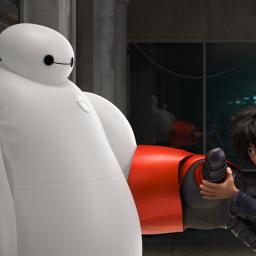
Disney’s robotic healthcare assistant may become a reality, thanks to advances in inflatable technologyFor those who thought inflatable technology began and ended with air beds and water wings, think again. The latest trends suggest that inflatables will soon be taking on important roles in hospitals and farms – as a part of robotics.The vast majority of robots in the world reside in factories – they are solid mechanical machines with arms that can grip, hold objects, and carry out tasks such as assembling, painting, or welding. Their ability to be accurate, reliable and to work 24/7 has long made them attractive to manufacturers and they are now catching the eye of hospital managers who are under increasing pressure to provide services but lack the funds to pay the staff to do them. Robotic surgical systems have been in use for more than a decade, providing help and increased accuracy for some operations, but they are niche. Arguably a much bigger impact can be made by using robots to help with more mundane but far more numerous tasks, such as lifting patients on to beds and helping them to the bathroom. Continue reading...
|
 |
by Robin McKie Observer science editor on (#RH1T)
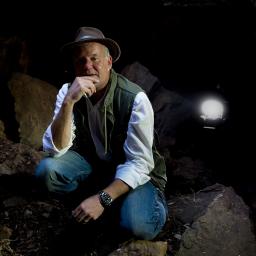
The palaeontologist whose team found Homo naledi has been criticised for rushing his findings and making basic errorsIt remains one of the most dramatic human fossil finds of recent years. In 2013, in a tiny, cramped chamber in the Rising Star cave near Johannesburg, researchers led by palaeontologist Lee Berger uncovered several thousand bones of ancient humans. The team now concludes that these are the remains of a previously unknown species, Homo naledi.The news, announced last month, made headlines around the world. However, the discovery has since become mired in controversy. Some scientists claim the bones belong to an already known species of human, Homo erectus. Others have criticised Berger for claiming that the remains come from a deliberate burial, while several have complained that he has not been able to date his finds. Continue reading...
|
by Gillian Lockwood on (#RGT0)
Advances in technology such as flash-freezing of embryos have improved success rates but over-35s should be aware there are no guaranteesIt is 30 years since the first successful frozen egg pregnancy was conceived. For many years, egg freezing was considered to be a low-chance option for fertility preservation, needing 100 eggs to get one live birth.Related: Egg freezing is the tempting option if you’re desperate for a child: but can women be sure it’s the right choice? Continue reading...
 |
by Evgeny Morozov on (#RGPD)
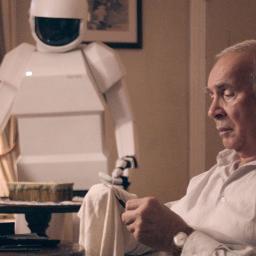
Across the world, tech companies are engineering a future of robot helpers and smart healthcare for the elderly. But this new vision of the welfare state lacks one crucial element: dignitySingapore’s old people have never had it so good: now, there’s a robot to help them keep fit and healthy. RoboCoach, their new best friend, offers both encouragement and exercise tips. Its message is unambiguous: get your exercise routines wrong – skipping them no longer seems optional – and you put extra strain on the country’s overstretched public finances.As Singapore’s minister for communication and information put it, RoboCoach “is able to ensure that old people perform the exercise routines correctly so as to get maximum benefit from their workoutsâ€. Free advice to Singaporean authorities: why not couple RoboCoach 2.0 with a fancy wristband like Pavlok, sending an electric shock every time its users slack off and deviate from established objectives? Continue reading...
|
 |
by Toby Helm and Henry Zeffman on (#RGDN)
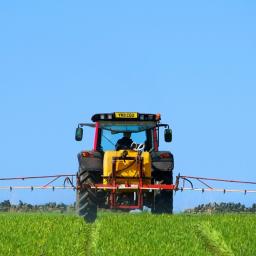
Only the top 10% of farmers would be able to survive due to severe drops in EU subsidiesA British exit from the European Union would have a devastating effect on the nation’s farmers, leaving only the most efficient 10% able to survive without the multi-billion pound subsidies currently handed out by Brussels, says a new report.The study, titled Preparing for Brexit by the independent London-based analysts Agra Europe – who track EU and UK policy, also warns that leaving the EU could damage UK food exports, cause large multinational food companies to relocate away from the UK, and choke off the supply of much-needed seasonal labour from eastern Europe. Continue reading...
|
 |
by Alan Yuhas in New York on (#RFQA)
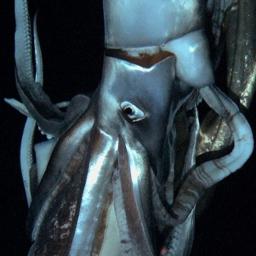
Three young squid caught by marine biologists are the spitting image of their gigantic parents – if nearly 1,000lbs and 50ft smallerMarine biologists have captured three young giant squid, Japanese researchers reported, in what would be the first confirmed catch of very young juveniles of the elusive creature.The young squid, caught off south-western Japan, are replicas of their gigantic parents who live in the deep. Two were caught together; all three weighed less than 1lb and spanned 5-13ins. Adults can reach 50ft and 1,000lbs. Continue reading...
|
 |
by Scott Kelly/EPA on (#RFNS)
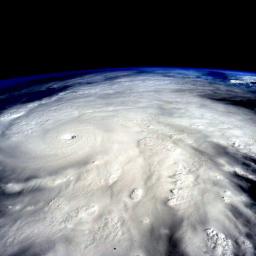
Photographs from the Eyewitness series Continue reading...
|
 |
by Letters on (#RF6G)
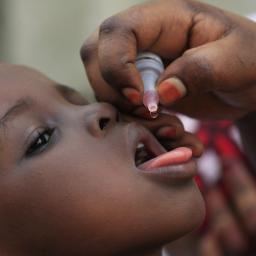
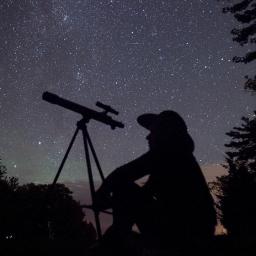
Today, for World Polio Day, we are joining together to give One Last Push in the battle to end polio for ever.The worldwide campaign against this terrible disease is now reaching a crucial moment. Last year, the World Health Organisation declared India to be polio-free. In July 2015 it announced that Nigeria is also on course for a polio-free future with no new cases detected for 12 months. Only Pakistan and Afghanistan have reported cases of wild poliovirus this year – and total cases are in steep decline. Continue reading...
|
 |
by Alan Yuhas in New York on (#RE69)
TB145, a medium-sized chunk of rock and ice could that cause ‘continental-scale devastation’, will fly by at a distance slightly farther away than the moonA large asteroid discovered only weeks ago will tear past the Earth on Halloween, Nasa has announced, estimating that it will come closer than any object of its size in the next 20 years.The asteroid, nicknamed “the Great Pumpkin†and “Spooky†but technically known as TB145, is an estimated 1,300ft (400 meters) wide – 20 times bigger than the meteorite that screamed across the Russian sky and exploded over Chelyabinsk in 2013, shattering windows with shock waves and debris that injured more than a thousand people. Continue reading...
|
 |
by Ian Sample in Cologne on (#RDZ1)
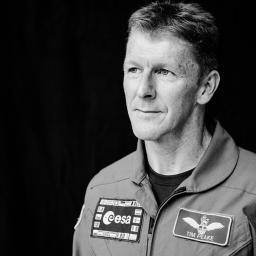
In an exclusive interview, first British ESA astronaut Tim Peake reveals that despite the dangers of space, his biggest fear is something happening to prevent launch dayHanging on the wall above model rockets and space capsules in the atrium of the European Astronaut Centre in Cologne is a screen showing a timetable of the day’s events. The hall is busy with payload training. Chinese class is underway. After lunch is a lecture on astronaut protective socks. The last event, at 5.30pm, is “Tim’s farewellâ€.The send-off is for Tim Peake, a 43-year-old army major and former helicopter test pilot, who in 2009 was chosen to be Britain’s first European Space Agency (ESA) astronaut. After this week, the staff here will not see him again until May 2016. By then, Peake will have blasted into space, lapped the planet more than 2,700 times, and fallen through the atmosphere in a fireball.
|
 |
by Averil Macdonald on (#RDT9)
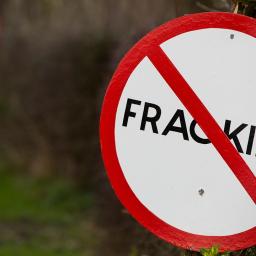
I was criticised for my comments saying women react differently to men because of their understanding of science. Here’s what we should doI have spent my career communicating to people about the importance and excitement of science in their daily lives and hopefully inspiring younger people, particularly girls, to study and build careers in science and technology. It is vital for our country’s continued economic health that we maintain and grow the science base, and women have had and will have increasingly a bigger role to play in that.Related: Women 'less likely than men to support fracking, due to instinct' Continue reading...
|
 |
by Susanna Rustin on (#RD1E)
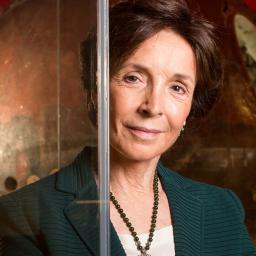
Academic posts at Oxford and Cambridge, a stint as head of an NHS trust, and now chair of the science museum: whatever Jeffrey’s travails, Dame Mary Archer knows she’s been lucky. Here she talks about women in science, museum cuts – and the husband-shaped elephant in the roomDame Mary Archer has brought a book along to our interview. The Meaning of Success: Insights from Women at Cambridge was published last year by the university where she used to teach. “Its thesis, that success for a woman is perhaps more broadly based than for a man, is absolutely true,†she says briskly. In other words, when it comes to life-work balance, she thinks women are more bothered than men about life.It is early on Monday morning, and we are drinking tea at the Science Museum in London. In January, Archer became chair of its board of trustees, an appointment made by the prime minister. This is the first interview she has given to a national newspaper since then. She is a formidable presence, immaculately presented in a green suit and jewellery to match her striking eyes on the day we meet, and so encased in her new persona of culture-sector grandee that I can’t help but feel impertinent as I weigh up the questions I plan to ask about her starring role in one of the most famous political scandals of the last century. Continue reading...
|
by Stuart Clark on (#RCZP)
The largest astronomical image ever made has been released by astronomers, together with an online tool to help you explore it.Lose yourself in the glorious star fields of the Milky Way. Astronomers at the Ruhr-Universität Bochum (RUB) have compiled the largest astronomical image ever made and released it to the general public.The full image is a mosaic of 268 individual images. It is contained in a single data file of 194 Gigabytes. Made up of 46 billion pixels, it is so huge that the astronomers have provided an online tool to help view it. Continue reading...
 |
by Olivia Maynard on (#RCMV)
E-cigarettes are used by millions in the UK, but information about them is sometimes conflicting. So what is the current evidence on them?It has been described as a ‘disruptive technology’ potentially capable of breaking our fatal relationship with tobacco. So the setting for a public debate on e-cigarettes - a museum part-funded by the tobacco industry, in a city home to the global headquarters of one of the largest tobacco manufacturers - was perhaps ironic. Yet on Wednesday evening, I found myself at the M-Shed in Bristol, watching just that: a debate about whether e-cigarettes could be part of the solution to the tobacco epidemic.To mark the launch of a new Integrative Cancer Epidemiology Programme, linked to the Medical Research Centre Integrative Epidemiology Unit at the University of Bristol, Professor Marcus Munafò (Professor of Biological Psychology at the University of Bristol) and Professor Linda Bauld (Professor of Health Policy at the University of Stirling), both collaborators of mine, discussed e-cigarettes. Professor Gabriel Scally (Public Health Doctor and former Regional Director of Public Health for the South West of England) chaired the discussion. Continue reading...
|
 |
by Jo Blason on (#RCAW)
A newborn seal pup, a new species of tortoise and wild yaks are among this week’s pick of images from the natural world Continue reading...
|
 |
by Andy Brunning on (#RC9Q)
Sometimes you just want a caffeine hit to wake you up, but if you appreciate the finer points of a cup of coffee, it’s worth going right down to the chemistry of the water, milk, sugar – and salt
|
by Oliver Balch on (#RC6H)
Harnessing data for healthcare provision and research is improving, but barriers such as privacy concerns, mistrust and medical culture are holding it backWhen Anil Sethi’s sister was diagnosed with stage four breast cancer, it reinforced to him the lack of control patients in the US have over their own health data. In a fragmented system, where a patient may see many clinicians across different states who are all bound by strict data disclosure regulations, it can be a rigmarole to have to explain each time their current and past medications, the results of recent lab tests, past diagnoses and so forth.Sethi’s response is Gliimpse. The veteran healthcare entrepreneur is developing an app which aims to digitise health by downloading “health information that is available to [patients] on distributed and fragmented portalsâ€. It will give people an online mechanism for collating essential medical data and converting it into a more understandable format.
Coalition committee tries to balance climate science briefings by inviting denialists from thinktank
by Graham Readfearn on (#RBDJ)
Climate scientists have been briefing Australian politicians this week. But one session did not go to planAustralian MPs and senators have been attending briefings in Canberra this week by some of our country’s world-leading climate scientists.
 |
by Stuart Clark on (#RATP)
Nasa’s veteran Cassini spacecraft is on course for a daring encounter with Saturn’s moon Enceladus on 28 October. It will pass the icy moon at an altitude of just under 30 miles.Enceladus is the sixth largest moon of Saturn, orbiting the planet at a distance of 147,886 miles from its centre. It has intrigued scientists since 2005 when Cassini recorded plumes of water jetting from its south pole. The close pass next week is designed to make Cassini plunge through these vapour curtains. Continue reading...
|
 |
by Guardian Staff on (#RAB9)
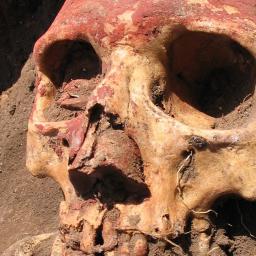
Disease has been present for twice as long as previously thought, and was originally spread by human-to-human contact, not fleas, says new studyPlague has been a human scourge for more than twice as long as had previously been thought, new research suggests. Continue reading...
|
by Daniel Freeman and Jason Freeman on (#R9BP)
The benefits of reducing alcohol consumption hit the headlines this week, but how can we begin to address the deeply-rooted issue of problem drinking?“What is most unhealthy is this identification we have … where we identify having a good time with drinking alcohol, having a shit time with drinking alcohol, being happy with drinking alcohol, being sad with drinking alcohol. It is too much of an ever-present, regardless of our mood.â€Nicola Sturgeon, speaking to Alastair Campbell in this month’s GQ, has a point. Sturgeon was referring to Scotland but her comments could easily be applied to the rest of the UK. Indeed with almost a quarter of men and 18% of women in England exceeding the recommended weekly limits for alcohol consumption, it seems the time has come for an urgent discussion about the implications of our infatuation with booze. Continue reading...
 |
by Guardian Staff on (#R8K0)
A Nasa animation demonstrates how a star would be ripped apart if it got too close to a black hole in space. When a star enters close proximity to a black hole, intense tidal forces rip the star apart. Stellar debris is flung outward at high speed while the rest of the star descends towards the black hole, causing a flare Continue reading...
|
 |
by Suzanne Goldenberg, US environment correspondent on (#R84H)
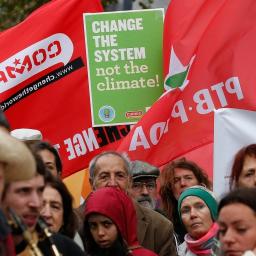
Full-page newspaper advertisement by ex-military and foreign policy leaders is aimed at Republicans who want to block action on cutting carbon emissionsNearly 50 leaders of America’s defence and foreign policy establishment are calling on political and business leaders to “think past tomorrow†and lead the fight on climate change.
|
by Oliver Milman on (#R81V)
Turnbull earned a standing ovation at a celebratory dinner in Canberra on Wednesday when he handed out the prime minister’s prizes for scienceAt an awards ceremony for the nation’s leading scientists, Malcolm Turnbull has promised to build an Australia that “invests in science and puts it right at the centre of our national agendaâ€.