 |
by Dean Burnett on (#QNZ7)
This week’s apparent discovery of a megastructure orbiting a star surely means extraterrestrial tourists will soon start arriving. They’ll need this handy guide ...A number of media sources are reporting that astronomers have spotted what may be a giant megastructure orbiting a distant star. Such a thing could only be the work of advanced aliens, capable of engineering and building on such a scale that it becomes visible from light years away.In fairness, it’s probably not that. That’s just one interpretation of the unusual readings from a certain star, and an unlikely one at that. But it’s the most interesting interpretation, so obviously it’s getting the most attention. Continue reading...
|
| Link | http://feeds.theguardian.com/ |
| Feed | http://feeds.theguardian.com/theguardian/science/rss |
| Updated | 2026-10-01 03:45 |
 |
by Trevor Baker on (#QNXA)
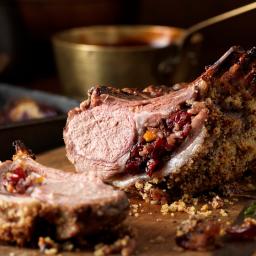
A new scientific review suggests the relentless barrage of food images we see might be affecting our attitude to food. Is it time for the government to get involved?
|
 |
by Mo Costandi on (#QNVT)
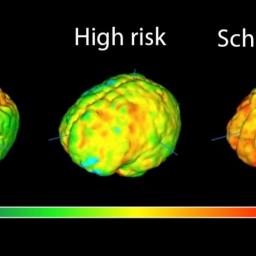
New research links the onset of psychosis to the brain’s inflammatory response
|
by Pete Etchells on (#QNVW)
Replication is the bedrock of science. But what happens when a scientist can’t – or won’t – share the experimental materials that allow it?It’s a simple question, but one that’s essential to science: if I repeat an experiment, how reliably can I get the same result? But it’s a question that you can’t ask without the right materials. It’s like baking a cake – if you’re not given enough instructions in the recipe, or told what sort of ingredients you’re supposed to be using, you might end up with a carrot cake when you thought you were making a Battenberg.For psychological research, replication is big business at the moment. In August this year, the Reproducibility Project - a groundbreaking attempt to systematically assess the reliability of published psychological research findings - delivered a grim result. Of 100 experiments that were replicated, the original findings were only reproduced in just 36% of cases. Some news outlets saw this as an opportunity to take a dig at the entire discipline, as if this was somehow conclusive evidence that psychology wasn’t a real science. But low replication rates are an issue that extend beyond psychology – cancer biology is facing the difficult reality of irreproducible results, and a recent analysis of 67 economics papers found that even if the original authors helped out, only 49% of results were reproducible. Other outlets reported much more thoughtfully on the findings from the Reproducibility Project though, and highlighted that the real take-home message was aimed squarely at psychologists: there’s more work to be done. We need more replication studies, and they need to become an acceptable, respected, and ingrained part of psychological research life. Continue reading...
 |
by James Walsh on (#QNVE)
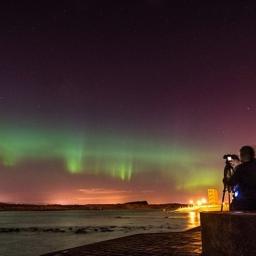
Getting to see aurora borealis is down to the whims of space weather, which is almost as unreliable as British weather
|
 |
by Guardian Staff on (#QNVH)
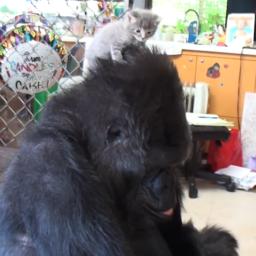
Koko the gorilla gets her birthday wish on 4 July when a litter of kittens pays her a visit at a sanctuary in Redwood City, California. Her keepers say Koko communicates with them using sign language, asking for one of the kittens to be put on her head
|
 |
by John Gallagher on (#QN6N)
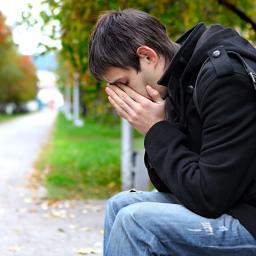
Are we witnessing a renaissance of crying? Do men now blub? A nuanced emotional history explodes the myth of the stiff upper lipWhat to do with the tears of the past? Tears matter because they’re everywhere, from the ecstatic religious narratives of the middle ages to the diaries of 20th-century cinemagoers who enjoyed a good blub in the dark. The problem is that tears don’t speak a universal language. People who lived centuries ago didn’t necessarily cry in the way we do, or at the same things, or even understand the act of weeping in a way that makes sense to us. This can be confusing, even infuriating – what were these people doing? – but, looked at another way, it can be an opportunity. Like reading an old document and coming across a joke you don’t get, digging into how, when and why people wept can offer surprising new insights into the lives, beliefs and assumptions of past centuries.Thomas Dixon’s Weeping Britannia takes as its central premise that the British “stiff upper lipâ€, far from being the defining characteristic of the nation throughout its history, was in fact the creation of a particular historical moment, out of which has grown a transhistorical myth of national restraint. British history, Dixon argues, was far more tearful – and far more interesting – than the myth of the stiff upper lip would suggest. Returning again and again to William Blake’s assertion that “a tear is an intellectual thingâ€, and thus something that can be interrogated and understood, Dixon presents a wide-ranging, enjoyable and accessible history of British weeping. Continue reading...
|
 |
by Nicola Davis, Ian Sample and James Randerson on (#QN4K)
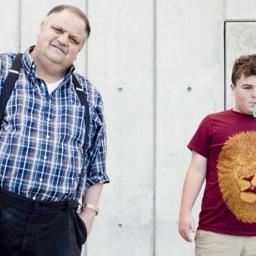
Technology writer Steve Silberman's new book charts the evolution of autismHow have our attitudes to autism changed since the disorder's first definition in 1943?Steve Silberman is an American journalist who writes about technology for Wired magazine and the New Yorker. His new book Neurotribes is a thorough study of how autism has evolved. Silberman's new book charts the evolution of autism, from its origins in the shadows of the second world war, up to the current campaign to reframe autism as something to be accepted and accommodated, rather than eradicated. Continue reading...
|
 |
by Guardian Staff on (#QN1Q)
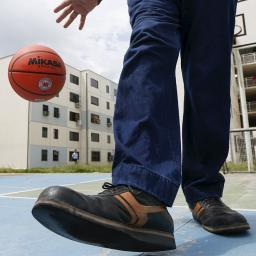
Jeison Orlando Rodriguez Hernandez, a 20-year-old man from Venezuela has broken the Guinness world record for the largest feet. His right foot measures 40.1cm (1ft 3.79in), and his left half a centimetre less. He takes US size 26 shoes. Even though Hernandez is shorter, his feet beat those of the world’s tallest man, Sultan Kosen, whose shoe size is US 24
|
by Graham Readfearn on (#QMN2)
Expect attempts to undermine the credibility of climate science to ramp up as major Paris climate talks approachIt’s OK everybody. Panic over.I’ll bet I’m not the only one to be feeling all tickety-boo at the news that human-caused climate change probably isn’t anything to get worked up about and that we can all go back to worrying about deforestation, rampant over-consumption of the world’s natural resources, the collapsing ocean ecosystem and whether or not Donald Trump’s hair might be real. Continue reading...
 |
by Sarah Boseley Health editor on (#QMD9)
Common procedures and chemotherapy will be virtually impossible if problem is not tackled urgently, researchers sayRoutine surgery and chemotherapy may become all but impossible unless urgent action is taken to halt the waning efficacy of antibiotic drugs, according to research.
|
 |
by Ian Sample, science editor on (#QKKZ)
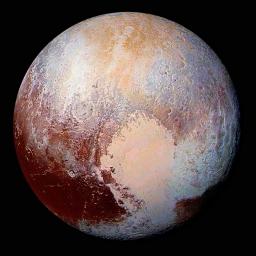
Researchers present collection of New Horizons data, revealing water icebergs on ‘a surface unlike any planetary surface we’ve ever seen before’The moment Pluto was transformed from a fuzzy spot on the edge of the solar system to an exotic world with a spectacular landscape will be recorded by historians as 15 July 2015.When Nasa’s New Horizons spacecraft barrelled past Pluto the day before, it became the first mission to visit the object. A day later, the probe made contact with Earth. Since then, scientists on the team have released one breathtaking image after another, revealing vast, smooth plains, towering ice mountains and an inviting blue haze of hydrocarbons.
|
 |
by Ian Sample Science editor on (#QKA0)
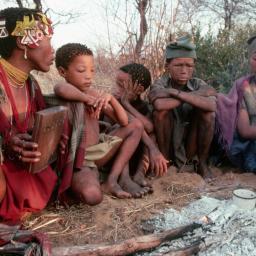
Study of sleep patterns of groups living in Tanzania, Namibia and Bolivia with lifestyles similar to our paleolithic ancestors shows similar late-night habits to humans with internet and TV-based routines
|
 |
by Damien Gayle on (#QK39)
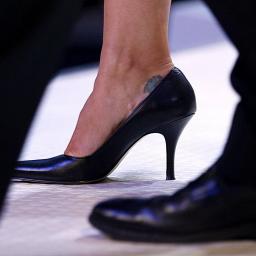
People who have tattoos report higher levels of verbal aggression and reactive rebelliousness – and the more tattoos they have, the angrier they areWhen it emerged that Samantha Cameron, the wife of the prime minister, had an image of a dolphin etched on her ankle, it seemed the link between tattoos, aggression and rebellion had been well and truly severed.But research has found that people with tattoos report higher levels of verbal aggression, anger and rebelliousness. And the more tattoos they have, it found, the more angry and rebellious they are. Continue reading...
|
 |
by Lisa O'Carroll on (#QK2Y)
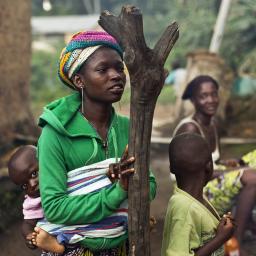
Scientists studying survivors of recent outbreak in west Africa say some women never contracted the virus despite having Ebola antibodiesA study of Ebola survivors in west Africa has found a group of women who appear to be immune to the deadly virus.The discovery was made by a team of British and European scientists who are studying Ebola survivors in Guinea. Continue reading...
|
 |
by Associated Press in San Francisco on (#QGFK)
|
 |
by Ian Sample Science editor on (#QFWP)
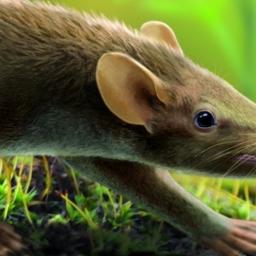
Spinolestes xenarthrosus’s 125m-year-old remains, found in Cuenca, Spain, with earlobe, lung, liver and furry pelt, is 60m years older any other mammal found with soft tissues preserved
|
 |
by Suzanne Goldenberg US environment correspondent on (#QDSZ)
Study predicts plants will start budding three weeks sooner by end of century as climate change exerts direct effect on seasonal calendarScientists have confirmed what gardeners have long suspected: spring is coming much earlier in the US, with plants projected to bud three weeks earlier by the end of the century because of climate change.
|
 |
by Richard P Grant on (#QFR3)
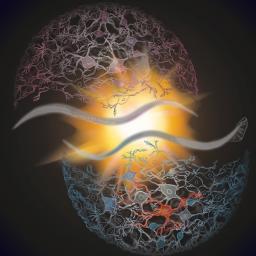
Research into genetically encoded sex differences could tell us not just about sexuality, but also about how we learn thingsIt is said – often as if it’s a bad thing – that a man thinks about sex every 7 seconds. Even if the reality is slightly less fantastical, it’s not too difficult, from an evolutionary standpoint, to understand why this might be. The most successful organisms are those that are able to reproduce most prolifically in their given ecological niche. The plants and animals you seen around you today exist because they are the ones whose genomes were able to survive better than their competitors in the fight for limited resources.It’s not a major stretch to think that if an animal invests a significant chunk of its daily routine into seeking out opportunities to reproduce – to have sex – it’s more likely to succeed in that aim, and therefore be more evolutionarily successful. And an animal with even a rudimentary neural system would therefore be expected to use a substantial proportion of its processing ability to find a sexual partner — up to a point of course. Some neurons are presumably always going to be necessary for obtaining food, avoiding predators, checking iPhones, etc. (What plants think is still a mystery of course – I guess nobody’s yet asked a cabbage about sex). Continue reading...
|
 |
by Homa Khaleeli on (#QFKE)
Our bodies naturally adapt to cold, dark winter conditions. Scientists think the rise of warm houses and bright lights has baffled our immune systemsIt’s time to turn down the heating and switch off the lights – all this cosiness is making us ill. At least that sounds like the advice from new research which suggests the “endless summer†we have created in our homes could be playing havoc with our health, and even causing early deaths.Scientists now believe that up to a quarter of our genes are seasonal – and that those controlling our immunity become more active in cold months than during summer days, helping us to fight off diseases such as flu. Continue reading...
|
by Amy Westervelt on (#QEZP)
Amid concerns over the impact of disease and wind farms on bats, researchers are working to quantify the ecosystem benefits of the insect-eatersCalifornia almond grower Glenn Anderson never paid much attention to the bats in his barn, or in his orchard, before the non-profit Bat Conservancy of Coastal California showed up in his part of the Central Valley a few years ago offering farmers bat houses.The small layered structures provide shelter and breeding areas for bats. Anderson says he was happy to put a few up around his property, but it took a few years for the bats to show any interest. It wasn’t until several of his neighbours began planting corn that they seemed to move in for good. Continue reading...
 |
by Sarah Boseley Health editor on (#QEWA)
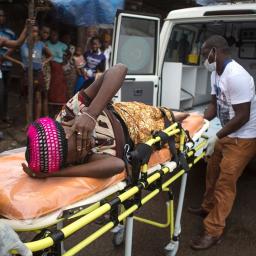
The Ebola outbreak has killed about 11,312 people in west Africa, and affected the US and Spain, where people returning from the region have died and transmitted the infection to several nurses. We examine the background to the disease, its spread and its impactWest Africa experienced the biggest outbreak of the Ebola virus ever known, causing thousands of deaths, devastating fragile healthcare systems and damaging the economies of countries, some of which were still recovering from civil war. At the peak of the epidemic, in autumn 2014, infections were doubling every few weeks. The World Health Organisation said there had been 28,457 officially recorded cases by 4 October 2015, almost all in Sierra Leone, Liberia and Guinea, with about 11,312 deaths, but many go unrecorded and the true figure is thought to be two to three times higher. However the forecast by the US Centres for Disease Control (CDC) in September 2014 that if nothing changed there could be 1.4 million cases by late January proved to be unduly pessimistic. For the first time since the outbreak began, there were no new cases officially recorded in the week to 7 October. Serious concerns about the spread of the virus to countries bordering the epidemic region intensified when a child died of Ebola in Mali, having travelled while sick for hundreds of miles by bus, but Mali, just like Nigeria, managed to close down the outbreak. Outside Africa, two nurses were infected while caring for a patient in Texas, who flew from Liberia before exhibiting symptoms, as was a nurse who treated a missionary repatriated to Madrid. In both cases, the patients died but the nurses recovered. A doctor returning to New York from Liberia fell sick and British nurse Pauline Cafferkey, who had volunteered in Sierra Leone, was also diagnosed, but both survived. Cafferkey fell ill again last week and is being treated at the Royal Free Hospital, in London, where she is “critically illâ€.
|
 |
by Alison Flood on (#QEV4)
Charles Darwin is vying with Immanuel Kant and Plato in a poll to decide on the most influential scholarly book of all timeMary Wollstonecraft, Stephen Hawking and Charles Darwin are jostling for the top spot on a line-up of the top 20 academic books that changed the world.Put together by a panel of expert academic booksellers, librarians and publishers from a list of 200 titles submitted by UK publishers, the top 20 ranges from Wollstonecraft’s 1792 feminist manifesto A Vindication of the Rights of Woman, to Hawking’s exploration of the universe, A Brief History of Time, and Darwin’s transformative laying out of his theory of evolution, On the Origin of Species. Continue reading...
|
 |
by Bill McKibben on (#QEKW)
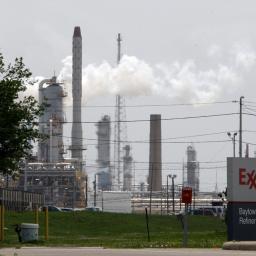
The truth of Exxon’s complicity in global warming must to be told - how they knew about climate change decades ago but chose to help kill our planetI’m well aware that with Paris looming it’s time to be hopeful, and I’m willing to try. Even amid the record heat and flooding of the present, there are good signs for the future in the rising climate movement and the falling cost of solar.But before we get to past and present there’s some past to be reckoned with, and before we get to hope there’s some deep, blood-red anger. Continue reading...
|
by Ian Sample Science editor on (#QEH1)
Most recent images from Hubble space telescope show giant red spot on planet’s atmosphere has continued to shrink and has become more circular
 |
by Mo Costandi on (#QEEV)
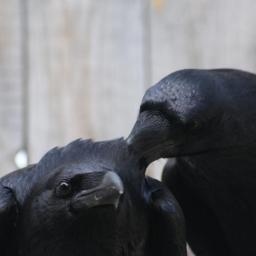
Ravens spontaneously cooperate to solve problems, but prefer to do so with some individuals over othersWe often use the phrase ‘birdbrain’ as a mild insult, to mean someone who is dim-witted or acts stupidly. Birds’ brains are indeed much smaller, and far less convoluted, than our own, but our feathered friends have had a bad press, and some of them – the corvids, in particular – are capable of remarkable feats of intelligence.Crows, for example, can apparently contemplate death, and have tool-making abilities that are at least as sophisticated as, or may even surpass, those of monkeys. And Clarke’s nutcrackers can harvest tens of thousands of pine seeds, and cache them in thousands of different locations. If they notice another nutcracker watching them burying their food supply, they return later on to hide that cache elsewhere. When winter sets in, they can retrieve the seeds from all the locations, relying solely on spatial memory. Continue reading...
|
 |
by Guardian Staff on (#QE96)
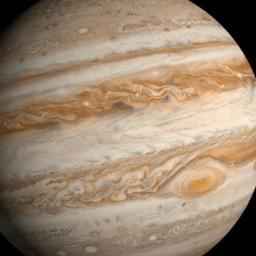
Nasa’s Hubble space telescope shows never-before-seen details of Jupiter. The high-resolution imagery and maps are the first results from a programme to investigate the solar system’s outer planets. The observations are designed to capture a broad range of features, including winds, clouds, storms and atmospheric chemistry Continue reading...
|
 |
by Fraser MacDonald on (#QE15)
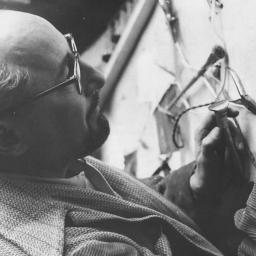
70 years ago, America’s first successful liquid-fuelled rocket was launched. But politics prevented its designer, Frank Malina, becoming a hero of the space raceThe recent announcement of a discovery on Mars may have been big news but NASA and the Jet Propulsion Laboratory (JPL) were still a little coy about calling it “waterâ€. A pattern of hydrated salts called “recurring slope lineae†doesn’t, to be honest, sound quite so refreshing. But this kind of careful language runs deep in JPL’s institutional history – starting with its own name. Few people these days talk of “jet propulsionâ€; even when the phrase emerged in 1943, it was a euphemism for a word that engineers worried might get the public a little too excited: “rocketâ€.The problem with “rocket†was that the word was so often synonymous with cranks and fantasists, people who were more into sci-fi than sober science. The founders of JPL – Caltech aerodynamicist Theodore von Kármán and his PhD student Frank Malina – wanted none of the cultural baggage of the R-word, they just wanted to get into space without breathless media speculation. And there’s the problem. JPL may be well known but its founder Frank Malina is not the household name he deserves to be. His achievements are central to the birth of the Space Age yet at the moment when his contribution to astronautics should have been recognised, he was rewarded instead with years of FBI harassment. Continue reading...
|
by Felicity Callard and Des Fitzgerald on (#QDT2)
A new book argues for less focus on structures and funding for interdisciplinarity, and more on the everyday highs and lows of collaboration.Interdisciplinarity is everywhere. From research funders to journal editors, policymakers to think tanks – all seem to agree that the future of research lies outside firm disciplinary boundaries. The British Academy, for example, is leading an inquiry into “the relevance of interdisciplinarity to innovation†and “how academics can forge a career path in interdisciplinary research.†Last month, Nature, arguably the world’s most influential academic journal, published a special issue on interdisciplinarity.
 |
by Press Association on (#QD56)
Researchers claim deaths could be reduced if UK GPs were given a greater awareness of cancer symptoms in order to reduce late diagnosisAt least 2,400 cancer patients die needlessly every year because their GP does not refer them to a specialist quickly enough, research has suggested.The two-week wait means patients should see a specialist for their first appointment within two weeks of seeing a GP with suspected cancer symptoms. Continue reading...
|
 |
by Associated Press in Washington on (#QCDH)
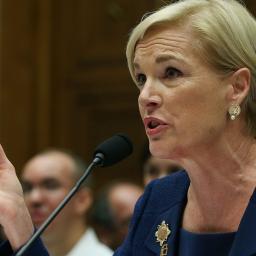
In response to furor over undercover videos, the organization’s move is intended to take away any basis for attack ‘to advance an anti-abortion political agenda’Responding to a furor over undercover videos, Planned Parenthood says it will maintain programs at some of its clinics that make fetal tissue available for research, but will no longer accept any sort of payment to cover the costs of those programs.Anti-abortion activists who recently released a series of covertly filmed videos have contended that Planned Parenthood officials sought profits from their programs providing post-abortion fetal tissue to researchers. Planned Parenthood said the videos were deceptively edited and denied seeking any payments beyond legally permitted reimbursement of costs. Continue reading...
|
 |
by Ian Sample Science editor on (#QC9D)
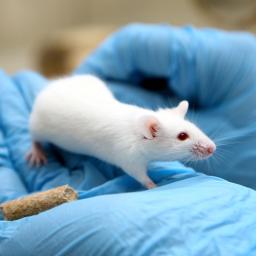
Survey of thousands of animal studies for drugs to combat disease finds majority not rigorous enough, leading to trials that waste time, money and sufferingThe search for new drugs to combat major diseases is being set back by shoddy animal research, according to work by two teams of scientists.An Edinburgh University survey of thousands of animal studies found that the majority were not rigorous enough to rule out effects that routinely inflate the benefits of new treatments. Continue reading...
|
 |
by Emma Howard on (#QAW1)
Level of belief has increased seven percentage points in the past six months as climate change brings weather events closer to homeAround 70% of Americans believe in the science behind global warming - the highest level of acceptance in the US since 2008 - according to a new survey.The level of belief has increased seven percentage points in the past six months, the polling by the University of Michigan and Muhlenberg College shows. Continue reading...
|
 |
by Guardian readers on (#QAMV)
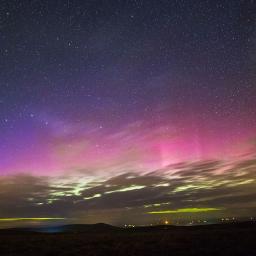
The aurora borealis is expected to be visible in Britain for the next few weeks. We’d like to see your pictures and videos
|
 |
by Jonny Weeks on (#QAEE)
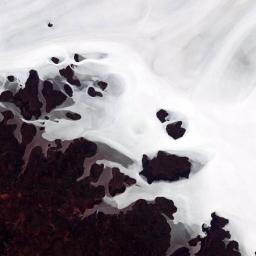
International Space Station astronaut Scott Kelly has been taking a series of remarkable images of Australia from his vantage point 400km above the Earth. His colour-enhanced images, shot with a Nikon D4 camera, portray a vivid and sometimes unrecognisable landscape. Kelly’s photographs, which he posts on Twitter, have been shared thousands of times since he began his year-long mission in March 2015 Continue reading...
|
 |
by Oliver Milman on (#QA68)
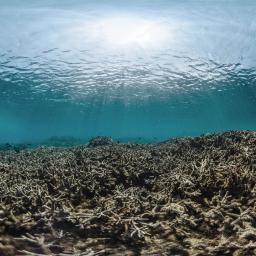
Important ecosystems could be massively damaged by 2050 unless greenhouse gas emissions and localised pollution is drastically reduced, researchers sayThe food chains of the world’s oceans are at risk of collapse due to the release of greenhouse gases, overfishing and localised pollution, a stark new analysis shows.A study of 632 published experiments of the world’s oceans, from tropical to arctic waters, spanning coral reefs and the open seas, found that climate change is whittling away the diversity and abundance of marine species. Continue reading...
|
 |
by Suzi Gage on (#QA6J)
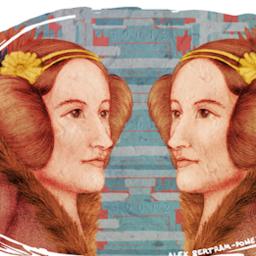
Ada Lovelace Day celebrates women in science, highlighting role models to inspire the next generationHappy Ada Lovelace Day everyone! Today is a day to celebrate inspirational women in science, technology, maths and engineering, in the hope that by shining a light on such people and increasing their visibility, they can inspire future generations.Ada Lovelace Day was founded in 2009 by Suw Charman-Anderson, and part of her reason for doing this was a worry that women in tech were invisible. The idea was a positive one - rather than highlighting the problem, highlight the unseen women and shout from the rooftops about all the amazing things they’ve achieved. Ada Lovelace was an obvious choice of mascot for such an endeavour. Continue reading...
|
 |
by Oliver Holmes on (#QA11)
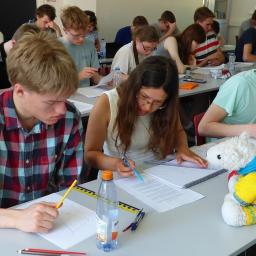
For every nine boys in international mathematics competitions, there is just one girl. But critics say a female-only olympiad risks making the division worseWhen Lisa Lokteva realised as a child that she was a maths whizz, her grandmother gave her a present. “Here is a book about female mathematicians,†her grandmother said. “Read it and learn how bad their lives are.â€Now 18, Lokteva is a bronze medallist and the only female member of the Swedish maths team at the International Maths Olympiad (IMO) this year. Continue reading...
|
 |
by Alex Bellos on (#Q8CV)
Were you checkmated or did you find the solution to the classic and other mutilated chessboard puzzle? The answer is hereWant to see the solution in a video? Click hereEarlier today I set you two mutilated chessboard puzzles.1) The classic: Continue reading...
|
|
by Alex Bellos, Ekaterina Ochagavia, Paul Boyd and Pe on (#Q8CX)
The chessboard was mutilated in two ways, but did you solve how to cover it with dominoes or were you outmanoeuvred? Continue reading...
|
by Guardian Staff on (#Q7HJ)
Astronauts on the International Space Station dissolve an effervescent tablet in a floating ball of water in footage released on YouTube. Astronaut Scott Kelly extracts a floating ball of water, into which he inserts coloured ink and an effervescent tablet to watch it dissolve and release gases in mid-air. The images were captured using a camera capable of recording four times the resolution of normal high-definition cameras Continue reading...
by Kate Sheppard for The Huffington Post, part of the on (#Q79Q)
William Borucki warns that unless we protect our planet it could become like many other dead worlds, reports the Huffington PostExploring new stretches of the galaxy brought Nasa scientist William Borucki back to Earth.
 |
by Vanessa Heggie on (#Q6W0)
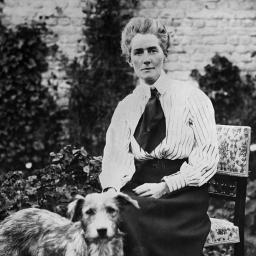
100 years ago today Edith Cavell was executed by a German firing squad for smuggling Allied soldiers out of occupied Belgium. Vanessa Heggie explains how a nurse became a spyAt dawn on 12 October 1915 the British nurse Edith Cavell was killed by a firing squad, after a German military court found her guilty of helping Allied soldiers escape from occupied Belgium. It was strongly implied that she was also involved in espionage, passing information about German military movements and plans back to the UK. The British Government denied that she was a spy, but recently the ex-head of MI5, Dame Stella Rimington, has revealed new evidence that strongly suggests Cavell was involved in smuggling information as well as men.However much Cavell knew about the information being carried on the bodies of the men she saved – written on cloth and sewn into clothes, or hidden in shoes – her death made her a popular martyr, as her execution provoked a strong public reaction of horror. Author Arthur Conan Doyle said: Continue reading...
|
 |
by Alex Bellos on (#Q6QN)
The mutilated chessboard is a classic puzzle. But can you square up a solution to the other problem?Want to see more? Watch a video explanation of the puzzle here
|
 |
by Alex Bellos, Ekaterina Ochagavia, Paul Boyd and Pe on (#Q6QQ)
Can you cover a chopped into chessboard? Watch Alex setting a two-part problem needing some alternative thought and moves. The first involves the classic mutilated board problem, but then there’s also the other problem. Confused? Don’t be. Watch Alex setting it all up here.
|
 |
by Nicola Davis on (#Q6PW)
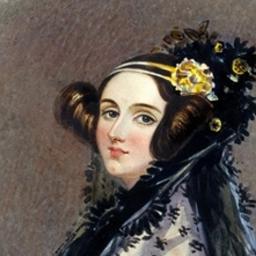
Two hundred years after her birth, the Science Museum in London celebrates Byron’s daughter, the woman who prophesied the computer ageIn the bowels of London’s Science Museum, Dr Tilly Blyth gingerly opens an envelope. Inside is a lock of long, dark hair tied with a green ribbon. It’s a curiously poignant moment. The lively, intelligent woman to whom it belonged died young, but her mathematical work with computer pioneer Charles Babbage has seen her become a paragon for women in science and technology. Gazing down at the tresses, the centuries seem to shrink away. Ladies and gentlemen, Ada Lovelace is in the room.It’s an impression Blyth hopes to share. Curator of a new exhibition at the museum opening on “Ada Lovelace dayâ€, she is hoping to breathe life back into the tale of Lord Byron’s daughter in the year of her 200th birthday, bringing together the locks with portraits, letters and artefacts to allow visitors to capture a glimpse of Lovelace “as an individualâ€. Continue reading...
|
 |
by Heather Stewart on (#Q6QS)
The economic commentator examines how our attitude to risk leads to disasterCareering along a French motorway, Greg Ip caught sight of a thought-provoking sign: “La vitesse aggrave tout†– “speed makes everything worseâ€. The faster we drive, the more extensive the damage when something goes wrong. He had already had good reason to ponder the nature of risk as a journalist and economic commentator covering the catastrophic financial crisis that swept through markets from 2007. In the run-up to the crash, consumers and even policymakers had come to believe that smart regulators and forward-thinking bankers had made the world of money a much safer place.The fundamental insight of Ip’s new book, Foolproof, is that this very belief was a key factor in the lead up to the crash. When people believe they are safe, they take more risks – they drive faster, in motoring terms – and “speed makes everything worseâ€. Or as the economist Hyman Minsky, whose work Ip revisits, put it: “Stability is destabilising.†Continue reading...
|
by Eleanor Robertson on (#Q6GQ)
Artificial wombs, able to gestate a foetus outside the body, will completely upend feminism’s accepted arguments on bodily autonomy – for good or illHold onto your ovaries folks, womb transplants are here. Ten UK women have been approved for the procedure, and babies born from donated uteruses could crawl among us as early as next year.Leaving aside the ethical considerations of womb transplantation, our ability to gestate humans in novel locations is developing so quickly that it’s worth looking ahead to the next development: artificial wombs, or ectogenesis. Continue reading...
 |
by Tom Kerss, Royal Observatory, Greenwich on (#Q5T0)
On a cold December night in 1758, a German farm-owner from Dresden stood resolute in the quiet, frosty air, spellbound at the image in the eyepiece of his telescope. It must have felt like a gift from the heavens. After all, it was Christmas night and Johann Georg Palitzsch had become the first person to witness the return of a long-awaited visitor; a tumbling snowball seven miles wide from beyond the orbits of Uranus and Neptune – as yet undiscovered worlds. The object in question was already a legend and its return had been foretold by one of the greatest astronomers of the age. Palitzsch knew he had recovered Halley’s Comet.In 1705, 18 years before Palitzsch was born, Edmund Halley – already a prolific scientist with decades of experience – lent his considerable intellect to the long-standing problem of comets, with the benefit of a deep understanding of gravitation. Two decades earlier Halley had edited the work of Isaac Newton, who had himself addressed the apparently strange behaviour of comets, demonstrating that his theory could adequately explain their motion. Halley undertook a systematic study of past sightings, and as a result presented to the world that most scientific of things – a prediction. He realised that four recorded apparitions in 1456, 1531, 1607 and 1682 could have been the result of one object in a periodic, highly elliptical orbit around the Sun. If he was right, his computed orbit suggested that the comet would return again in 1758. Continue reading...
|