 |
by Suzanne Goldenberg, US environment correspondent on (#PNXZ)
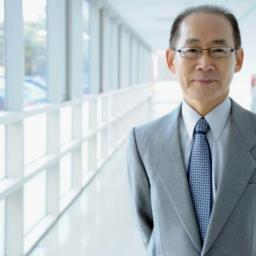
In a vote Tuesday, Hoesung Lee was chosen to replace Rajendra Pachauri, who was forced to step down after being accused of sexual harassmentThe United Nations Nobel-winning climate science panel – the ultimate authority tracking the extent of global warming and its consequences for humanity – has a new leader after 13 years.
|
| Link | http://feeds.theguardian.com/ |
| Feed | http://feeds.theguardian.com/theguardian/science/rss |
| Updated | 2026-10-01 03:45 |
 |
by Guardian Staff on (#PNC0)
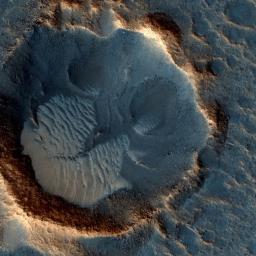
The Mars Reconnaissance Orbiter has provided stunning images of the planet’s surface, depicting landing sites from the film and volcano-like moundsBlockbuster movie The Martian has inspired Nasa to release photos showing real-life locations from the film on the Red Planet.Two landing sites for the Ares 3 and Ares 4 missions depicted in the movie can be seen in the images beamed to Earth by the Mars Reconnaissance Orbiter spacecraft. Continue reading...
|
 |
by James Randersonand Ian Sample on (#PKQ9)
Takaaki Kajita and Arthur McDonald win for discovery of neutrino oscillations, which show that neutrinos have massThe Nobel prize in physics has been awarded to Takaaki Kajita and Arthur McDonald for discovering that elusive subatomic particles called neutrinos weigh something more than nothing.
|
 |
by Ian Sample Science editor on (#PMQZ)
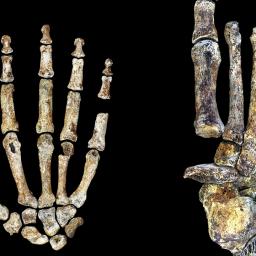
Bone analysis of newly discovered Homo naledi reveals curved fingers for arboreal living but feet of modern humans, indicating unique combined ability among genusAn extinct human relative found in a dark, cramped cave in South Africa was adept at both swinging in the trees and walking on two feet, making it unique among our known ancient forerunners, scientists say.A fresh analysis of hand and foot bones of Homo naledi, the latest addition to the human genus, shows that while the creature’s foot resembles that of modern humans, its fingers are curved, in an unmistakable sign of arboreal living.
|
 |
by Guardian Staff on (#PMJG)
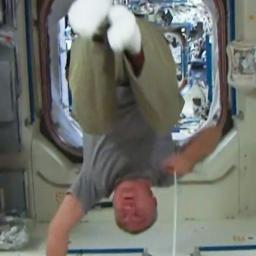
Astronauts on board the International Space Station are filmed performing tricks in microgravity. One astronaut is cheered on by colleagues as he tries to walk a tightrope and another does repeated somersaults. The tricks which include throwing fruits and balls at each other were suggested by psychologists for humans spending long periods of time as they orbit Earth. The video was filmed in 2014 but has only just been released
|
 |
by Alan Yuhas in New York on (#PMFG)
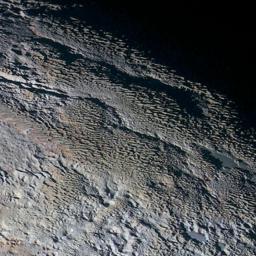
The space agency will reveal latest data and photos of the planet and its moon from New Horizons spacecraft Thursday, adding to its unprecedented collectionThe newest images and data from Pluto continue to astound Nasa scientists, lead researcher Alan Stern said on Monday, telling a university hall that “2015 will be a year in textbooks forever†as the point when mankind unveiled the world on the edge of its solar system.“This world is alive,†Stern said of Pluto to a packed room at the University of Alberta. “It has weather, it has hazes in the atmosphere, active geology.†Continue reading...
|
 |
by Guardian Staff on (#PM9E)
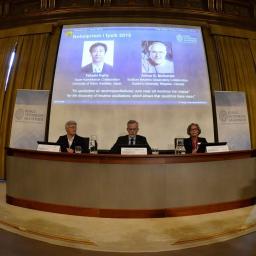
Winner of the 2015 Nobel prize for physics Arthur McDonald says he had a eureka moment in his research. The physicist is interviewed here from his home in Canada during a press conference in Sweden announcing that he was to share the prize with Japanese physicist Takaaki Kajita. The Nobel committee said their discovery changes our understanding of the innermost workings of matter Continue reading...
|
by Stuart Clark on (#PM79)
The prize goes to a discovery about the properties of neutrino particles that has saved us from worrying that Earth might end in an icy deathAstronomers called it the solar neutrino problem. It was much more than a problem. Upon its discovery in the late 1960s, it meant that the sun could be dying. And if the sun died, so would life on Earth. But thankfully the latest winners of the Nobel prize for physics, Takaaki Kajita and Arthur B McDonald, have been addressing such concerns to great success.
 |
by Adam Gabbatt on (#PKZC)
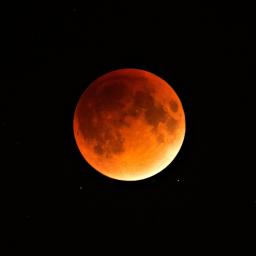
Over a week after blood moon doomsday forecasts were proven wrong, eBible Fellowship leader Chris McCann says ‘the world will pass away’ on 7 OctoberWhile our planet may have survived September’s “blood moonâ€, it will be permanently destroyed on Wednesday, 7 October, a Christian organization has warned.Related: Apocalypse now and again … your choice of dates for the end of the world Continue reading...
|
 |
by Dr Robert Zubrin on (#PM9G)
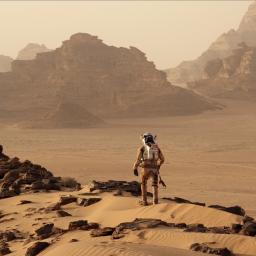
The release of Ridley Scott’s space hit coincided with the discovery of water on the red planet, which leads us to ask – how realistic is it, technically? A leading aerospace engineer offers his opinionOverall it’s a very good movie, and while there are mistakes in it, it is the first genuine Mars movie. It is the first movie that attempts to be realistic and that is actually about human beings grappling with the problems of exploring Mars, as opposed to various movies set on Mars that are essentially either shoot ’em ups or horror films. It does not engage in fantasy: no monsters, no magic, no Nazis. However, there are a number of technical mistakes.Related: The Martian review – Matt Damon shines as stranded astronaut Continue reading...
|
by James Pickett on (#PKXH)
Dementia is now a government priority but 70% of researchers leave four years after their PhD. We need to improve the career path before its too lateDementia is in the public and political spotlight like never before, as society wakes up to the fact that it poses one of the greatest threats to the health and wealth of our country.The numbers are stark: 850,000 people in the UK are currently living with dementia, at an estimated cost of more than £26bn a year. By 2021, one million people will have the condition. Continue reading...
 |
by Ian Sample and Peter Walker on (#PKHA)
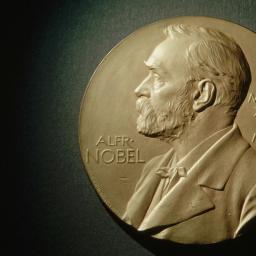
Results and reaction as it happened for second of this week’s three top science prizes. It went to the Japanese and Canadian scientists for their work to reveal how neutrinos – elusive subatomic particles – change identities or ‘flavours’, and expand our understanding of the innermost workings of matter and the universe
|
 |
by Guardian Staff on (#PKTJ)
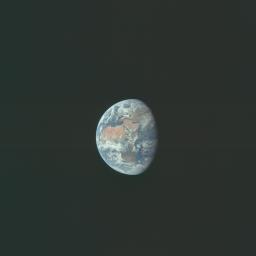
More than 10,000 photos taken by astronauts have been uploaded to Flickr from Nasa’s Project Apollo Archive, as Aisha Gani reports
|
 |
by Stephen Curry on (#PKQX)
Last week saw the publication of the latest world university rankings. But until the purveyors of these league tables address the uncertainties in their data, no-one knows where they really standThe Times Higher Education World University Rankings were announced last week to much fanfare, at least in certain corners of academia. They were “bigger, better and more comprehensiveâ€, according to their editor, Phil Baty.Such ranking exercises are a big and growing industry. This year the Times Higher has assessed 800 institutions, double the number considered last year. And their ranking is now one only one of at least ten different schemes for grading the world’s universities. No institution wishing to compete globally – or even nationally – can afford to ignore them. Continue reading...
|
 |
by Guardian Staff on (#PKP0)
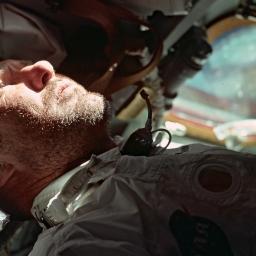
Photographs from the Eyewitness series Continue reading...
|
 |
by Kareem Shaheen, Glenn Swann and Cath Levett on (#PHGV)
The Syrian desert city known as the Venice of the Sands has suffered another act of vandalism by Islamic State (Isis), with the destruction of the triumphal arch. We look at what has been blown up in recent months by the Islamist militants described as ‘barbarians’ by Syria’s head of antiquities Continue reading...
|
by GrrlScientist on (#PHG1)
People were evacuated after the Chernobyl accident, but what happened to the local wildlife? A new study shows that wildlife in the Chernobyl disaster zone is thriving, indicating that the presence of humans is more damaging to wildlife than is radiation poisoningAfter a fire and explosion destroyed the Chernobyl Nuclear Power Plant in 1986, more than 100,000 people were permanently evacuated from the area to avoid radiation levels that were twenty times greater than the Hiroshima and Nagasaki bombings. But what happened to the local wildlife? According to a letter published today in the journal, Current Biology, scientists report that the Chernobyl disaster area is home to a rich and varied wildlife community, indicating that the mere presence of people is more damaging to wildlife than is radiation poisoning. Continue reading...
 |
by Ian Sample Science editor on (#PG23)
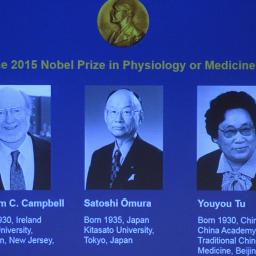
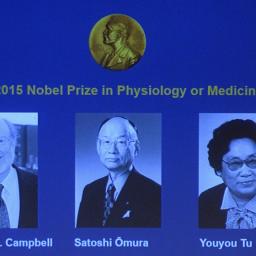
Campbell and Ōmura win for their work on a therapy against roundworm, sharing the prize with Tu for her work on a therapy against malariaThree scientists from Ireland, Japan and China have won the Nobel prize in medicine for discoveries that helped doctors fight malaria and infections caused by roundworm parasites.Tu Youyou discovered one of the most effective treatments for malaria while working on a secret military project during China’s Cultural Revolution. Continue reading...
|
 |
by Aisha Gani on (#PHA4)
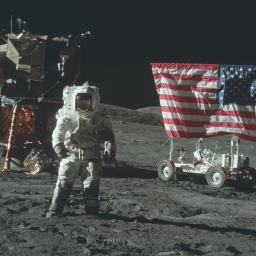
More than 10,000 high-resolution Nasa images taken on Apollo missions have been shared online, from first steps on the moon to mundane tasksFrom panoramic images of lunar surfaces to ethereal shots of Earth from space and Neil Armstrong taking mankind’s first steps on the moon: an archive of more than 10,000 Nasa photographs taken by Apollo astronauts has landed on Flickr.Every photograph taken on the moon by astronauts using Hasselblad cameras strapped to their chests is included in the collection in high resolution and unprocessed, as well as images of their journeys between Earth and lunar orbit. Continue reading...
|
 |
by Arthur Neslen on (#PH19)
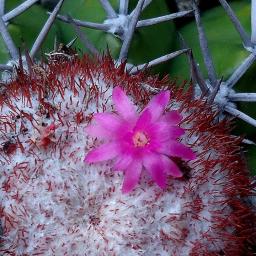
Illegal trade is causing shocking decline in plants that are vital to desert ecosystems, most comprehensive global assessment yet revealsNearly a third of the world’s cacti are facing the threat of extinction, according to a shocking global assessment of the effects that illegal trade and other human activities are having on the species.
|
 |
by Guardian Staff on (#PGX1)
Sotheby’s offers a tour around Integral House, designed by maths megastar James Stewart. Stewart made a fortune with a calculus text book but was also an architect. ‘Integral’ refers to a concept within calculus, the maths of flowing change. The property is on the market with Trilogy Agents for £11.4mWatch the full video on Trilogy Agents’ YouTube channel Continue reading...
|
 |
by Tom Phillips in Beijing on (#PGVH)
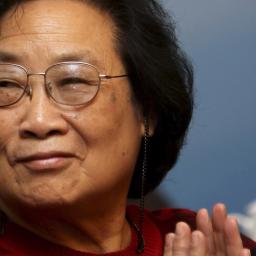
Tasked in 1969 with finding a cure for malaria, China’s first laureate in medicine looked to nature and traditional medicineIt was 21 January 1969 when Mao Zedong gave a 39-year-old scientist from Zhejiang province the challenge of her life.
|
 |
by Rebekah Higgitt on (#PGCG)
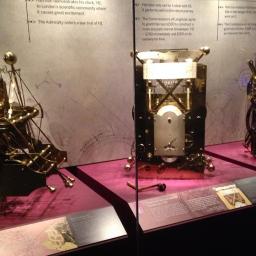
As a National Maritime Museum exhibition on the 18th-century quest for longitude tours the US, curator Rebekah Higgitt looks at how it was made, moved and has mutated along the wayThe exhibition that I co-curated at the National Maritime Museum, Ships, Clocks and Stars: The Quest for Longitude, continues to live on even though it has long since ended its original Greenwich run. Earlier this year it was shown at the Folger Library in Washington DC and is now open at Mystic Seaport, the Museum of America and the Sea based in Connecticut, until March 2016. Later that year it will travel to the Australian Maritime Museum.My connection with the exhibition ended when it closed at the NMM in January. Because I had moved jobs, the process of loaning objects and touring the exhibition has gone on without me. It was, then, a treat to see them again in this video from Mystic, like catching a glimpse of old friends. Continue reading...
|
 |
by Guardian Staff on (#PGB8)
The Nobel prize for medicine award is announced on Monday at the Nobel Assembly, Karolinska Institutet in Stockholm. The award has gone to William C Campbell, Satoshi ÅŒmura and Youyou Tu for their work on developing medicines that fight malaria and infections caused by roundworm parasites. Campbell and ÅŒmura share an award while Youyou Tu received his own
|
 |
by Alex Bellos on (#PGBA)
James Stewart’s calculus text books made him very rich. He spent his fortune on Integral House, an award-winning architectural marvel inspired by calculus, which is now on sale after he died last yearJames Stewart was an unlikely literary sensation.The Canadian mathematician made a multimillion-dollar fortune by writing calculus textbooks for universities and high schools. Last year alone he sold 500,000 books, accounting for about $26.6m (£17.5m) in sales, according to his estate. Continue reading...
|
 |
by Ian Sample and Peter Walker on (#PFYS)
The first of three prestigious science prizes on the first day of Nobel week are revealed: William Campbell and Satoshi Omura for their work on a therapy against roundworm, shared with Youyou Tu, for a therapy against malaria12.02pm BSTWe’re now bringing down the curtain on this blog. Read the latest story on today’s winners here. Tomorrow it’s the Nobel Prize for Physics – join us again.12.00pm BSTSarah Bosely has some details on avermectins, the drugs combating some parasites developed by Campbell and Ōmura.The avermectins are a group of naturally occurring compounds, which have strong insecticidal and anti-worm properties. One of the family, ivermectin, was a breakthrough discovery in 1987 in the treatment of river blindness (onchocerciasis), one of the neglected tropical diseases that wreck the lives of many millions of poor people in the developing world and are rarely a goal for drug developers because there is no market in wealthy countries.The earlier drugs for river blindness had serious side-effects and were not as effective as ivermectin, which kills the larval Onchocerca volvulus worms – microfilariae – that live in the subcutaneous tissue of an infected person. Continue reading...
|
 |
by Press Association on (#PG4F)
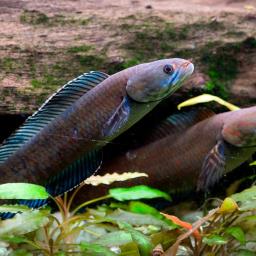
Species new to science found in the Eastern Himalayas over the past five years include 133 plants, 26 species of fish, 10 new amphibians – and one mammalA monkey which sneezes in the rain and a “walking†fish are among more than 200 new species discovered in the Eastern Himalayas in recent years.
|
 |
by Victor Galaz on (#PFZR)
We are just starting to understand the effects that algorithms have on our lives. But their environmental impact may be even greater, demanding public scrutiny. Victor Galaz and colleagues present a new manifesto - the Biosphere Code.
|
 |
by Gaia Squarci, Laurence Cornet, Pascal Perich, Soph on (#PFQW)
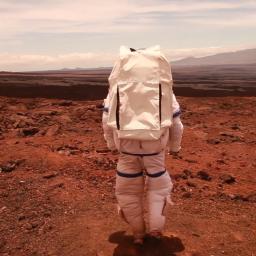
Water has been found on Mars – but if the red planet can support life, what will it be like for any humans who go there? Six future crew members of a possible Nasa mission spend up to 12 months in confinement in a Mars-like landscape in Mauna Kea, Hawaii, to work out how humans would react to long-duration space travel
|
by Archy de Berker and Sven Bestmann on (#PFKX)
Recent hype surrounding neuroenhancing drugs should set alarm bells ringing for scientistsA great deal of excitement has been generated in recent weeks by a review paper examining the literature on the drug modafinil, which concluded that “modafinil may well deserve the title of the first well-validated pharmaceutical ‘nootropic’ [cognitive enhancing] agentâ€. Coverage in the Guardian, Telegraph, British Medical Journal, and the Independent all called attention to the work, with a press release from Oxford University trumpeting “Review of ‘smart drug’ shows modafinil does enhance cognitionâ€.Related: Is modafinil safe in the long term? Continue reading...
 |
by Australian Associated Press on (#PEP0)
With over-the-counter sales under scrutiny, National Drug and Alcohol Centre researchers find increase was driven largely by accidental overdosesDeaths related to codeine, which soon could be available only on prescription, more than doubled in Australia between 2000 and 2009.Related: Doctors and pharmacists at odds over plan to make codeine prescription-only Continue reading...
|
by Editorial on (#PED1)
There is still a hard road ahead, but progress on tackling the causes of global warming has far outstripped expectationsReliable weather forecasting is notoriously difficult. But with two months to go, it looks as if the sun may shine on the Paris climate change summit in December. This is the 21st meeting of the Conference of the Parties to the climate change agreement. The first was opened in Berlin in 1995 by Germany’s environment minister, a young Angela Merkel, and that the political and economic landscape looks so favourable owes something to her lasting commitment.Agreement is not a done deal, but countries responsible for 75% of the world’s carbon emissions have now set targets for cuts in carbon emissions. On Friday, India, which is now the third-biggest emitter of greenhouse gases, became the last of the major economies to file its pledge. It has promised to source 40% of its electricity from renewables by 2030. When the targets put forward by all the major polluters are assessed, it is reckoned that as long as they are honoured, these levels of emissions would hold global warming at 2.7C above the pre-industrial era. That is still too far above the 2C considered the limit to prevent dangerous climate change; but it is much lower than feared. Continue reading...
 |
by Steve Ward on (#PEA9)
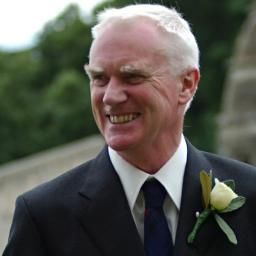
My friend Roger Hughes, who has died of pulmonary fibrosis aged 71, was the Lloyd Roberts professor of zoology at Bangor University.Youngest of three children of Caroline (nee Lingard) and Robert Hughes, both schoolteachers, Roger was born in Padiham, Lancashire. From an early age he was interested in ponds, streams and woods, and fishing in the local streams for trout. He attended Accrington grammar school, then the University College of North Wales (now known as Bangor University) and was awarded first-class honours in zoology in 1965. At the university’s marine laboratories he gained a PhD for research into the feeding and reproduction of a bivalve mollusc. Continue reading...
|
 |
by Richard Luscombe in Miami on (#PDMM)
Major discoveries and colourful characters are helping the agency launch a public-relations offensive as it seeks to maintain a record of impressive achievements on a shoestring budgetAs space exploration goes, it looked like a good week for Nasa.The revelation that scientists had discovered water on Mars – or, more accurately, uncovered evidence of certain chemicals in rocks that suggested recent liquid flows – piqued interest in the Red Planet ahead of this weekend’s launch of the sci-fi blockbuster The Martian. Continue reading...
|
 |
by Sara Solovitch on (#PDCR)
Performance anxiety doesn’t just hold you back – it’s contagious. Sara Solovitch learns how to deal with hersA few weeks ago I was due to play the first movement of Beethoven’s “Tempest†Sonata at my piano teacher’s student recital. I had worked on the piece for months. Sitting in my teacher’s studio, I told myself I wasn’t nervous – I was excited. This distinction came by way of a Harvard Business School study, which found that people who view their anxiety as excitement actually perform better on all kinds of tasks, from public speaking to karaoke singing. In other words, it’s about rebranding your fear.Two years earlier I had set out on a quest to overcome a lifetime of performance anxiety. I had studied the piano seriously as a girl but quit when I was 19, in large part due to stage fright. When I returned to the piano 30 years later, I discovered that while my fingers could no longer fly across the keys, my fear was right where I’d left it. Continue reading...
|
 |
by Alice Roberts on (#PD4N)
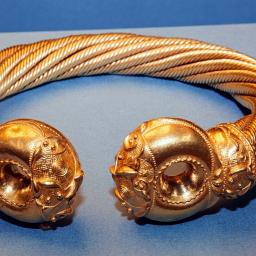
A close examination of Celtic craftsmanship reveals a scientifically sophisticated people with good links to the rest of EuropeA farmer, ploughing a field near Snettisham in Norfolk in 1948, turned up what he thought was a bit of an old brass bedstead. But it was gold, not brass, which he’d discovered and this was just the first piece of the richest iron age hoard ever discovered in Europe, including more than 200 torcs and fragments of torcs: neck rings made of gold, silver and bronze. Today, the collection is in the British Museum, and earlier this year, I was lucky enough to get a close look at some of these beautiful treasures.These objects amply demonstrate the artistic flair and impressive technical abilities of iron age artisans Continue reading...
|
 |
by Caty Enders on (#PCZ4)
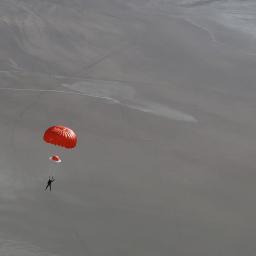
Private companies argue they’re democratizing space exploration by offering it to celebrities and millionaires. But in New Mexico, locals are footing the billThe craft broke up in the clear sky 45,000 feet over the Mojave desert. During a VirginGalactic test flight on a still October morning, pilot Michael Alsbury accidentally pulled a lever, prematurely deploying Spaceshiptwo’s silver scissor wings. With a sound “like paper fluttering in the wind†the drag tore apart the fuselage and its logos for Land Rover and Grey Goose.What was left was a flowering of red fabric in the scraggly bushes, the chute marking the site where co-pilot Peter Siebold floated 10 miles to earth. Alsbury did not survive. Continue reading...
|
 |
by Vanessa Thorpe, arts and media correspondent on (#PCJQ)
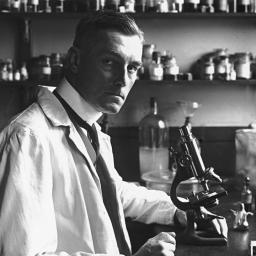
Met police exhibition shows how Sir Bernard Spilsbury, the father of forensics, transformed detective workIn the summer of 1924, onlookers crowded around an infamous seaside murder scene, peering over the gate of the cottage near Eastbourne where typist Emily Kaye had been lured to her death by a man she thought was the answer to her romantic prayers. Amid a fever of national interest, the cottage’s leaseholders sold tickets and offered cold drinks to coachloads of tourists.This week the details of this historic crime, a case that changed police investigations for ever, will be revealed to an even wider public at the Museum of London. Known as “the Crumbles murderâ€, after the quiet coastal area where it took place, the crime and its lurid details will form a central part of the first exhibition to display the grim contents of the Metropolitan police archives, known as the Black Museum. Continue reading...
|
 |
by Robin McKie, Science Editor on (#PCJS)
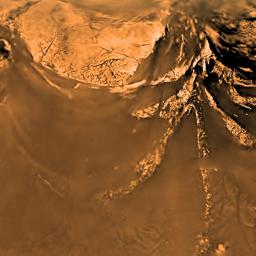
Space engineers bid to launch missions to explore oceans on moons of Jupiter and Saturn, including Titan and EuropaWithout water, life as we understand it would be impossible. It is the one substance upon which our existence depends. And now it has been found streaking down the red, dusty slopes of the hills of Mars.The discovery, announced by Nasa last week , that the Red Planet has running water has provided scientists who are seeking life there with a major boost. As Jim Green, Nasa’s director of planetary science, put it: “If you look at Earth, water is an essential ingredient. Wherever we find water, we find life.†Continue reading...
|
 |
by Jamie Doward on (#PCC3)
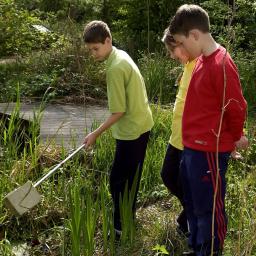
Bosses say revamp is vital to cope with increasing visitor numbersA long-simmering row over plans to overhaul a corner of one of Britain’s best loved museums has burst into the open, with its director publicly defending the move.Sir Michael Dixon, head of the Natural History Museum in London, has come under fire over plans to transform a wildlife garden in the museum’s grounds. He says the change will allow for the creation of a new entrance to the museum, necessary because visitor numbers have soared since free admission was introduced in 2001. Continue reading...
|
 |
by Robin McKie Science editor on (#PCAA)
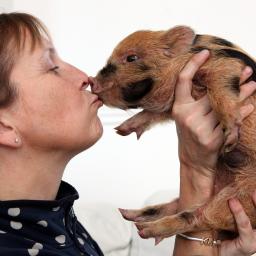
Animals may suffer ‘horrific impairments’ as a result of genetic editing techniques developed at Beijing genomics insititute, claims RSPCATiny pigs, created by genetic editing techniques pioneered at a Chinese science centre, are to be sold as pets in the near future. The prospect has triggered a furious row between animal rights groups and scientists.Some say the creation of pet micro-pigs could cause considerable pain to the animals. Others say the use of gene editing techniques would be an improvement in standard animal breeding methods and cause less suffering. Continue reading...
|
by Jon Butterworth on (#PB8Q)
A new series of Perimeter Public Lectures starts with a word from the boss, on a “very powerful clue†that he says may spark a new scientific revolution
 |
by Tom Lamont on (#PAX3)
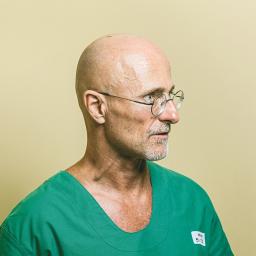
Italian surgeon Sergio Canavero says he will change medical history as soon as 2017 – he even has a volunteer. Can it be done?Outside a large concrete hospital in Turin, Sergio Canavero speaks in formal Italian, trying to persuade a pair of security guards to let us use the staff car park. It is hot. The guards sit inside a shaded hut and peer out at Canavero, who is 51, short and fit, dressed in T-shirt and sandals, tufts of grey hair around his head giving way to a bald, caramel-coloured dome on top. “Allora,†Canavero begins, explaining to the guards that he used to be employed at the hospital, a surgeon in the neurology department, and is back for a visit.At the end of his speech, he moves a stiff hand across his neck, a cut-throat gesture that would represent a threat if made by almost anyone else. The guards grin in recognition and wave us through. “I told them I’m the guy who’s going to do the first human head transplant,†Canavero tells me. “Italians are suckers for a celeb.†Continue reading...
|
 |
by Guardian Staff on (#PANK)
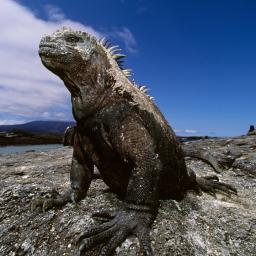
Marine iguanas found by Darwin on the Galapagos Islands confirm the existence of sea-dwelling dinosaursThe following passage from Lyell’s Elements of Geology may startle many - an account of miniature primaeval monsters yet existing in
|
 |
by Guardian Staff on (#P9W6)
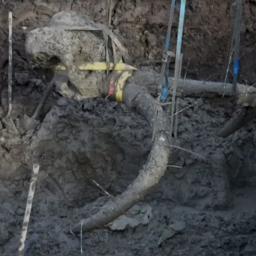
A Michigan soy farmer made the astonishing discovery while he and a friend were digging in his soy field. James Bristle, from Lima township just south-west of Anne Arbor, told media that what he initally thought was a fence post turned out to be a rib bone and the first part of a woolly mammoth skeleton, including its skull and tusks Continue reading...
|
 |
by Associated Press in Lima Township, Michigan on (#P9PT)
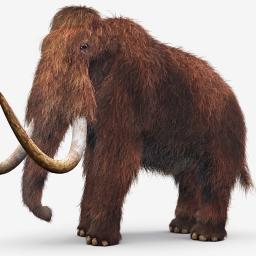
James Bristle and a friend were digging in his southern Michigan soybean field when they unearthed, a skull and two tusks, along with numerous vertebraeJames Bristle and a friend were digging in his southern Michigan soybean field when they unearthed what looked like a bent fence post, caked with mud. Instead, it was part of a pelvis from an ancient woolly mammoth that lived up to 15,000 years ago.A team of paleontologists from the University of Michigan and an excavator recovered about 20% of the animal’s skeleton this week in Washtenaw County’s Lima Township. Aside from the pelvis, they found the skull and two tusks, along with numerous vertebrae, ribs and both shoulder blades. Continue reading...
|
by Katy Stoddard on (#P97R)
Giovanni Schiaparelli was the first to observe a network of canals on the surface of Mars, as revealed in this 1882 letter to the Manchester GuardianNasa has found evidence of flowing water on Mars, giving new hope that our nearest planetary neighbour may support life.Uniform, seemingly networked channels were first observed by astronomer Giovanni Schiaparelli in 1877; George RR Martin defines Schiaparelli’s discovery, and the mistranslation of ‘canals’ not ‘channels’, as the start of our cultural obsession with life on Mars. Continue reading...
 |
by Francesca Perry on (#P8ZS)
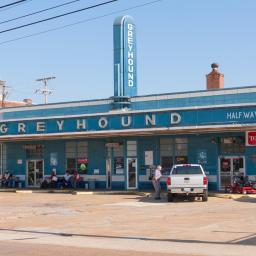
City links: We track down havens of stability, Canada’s weird ghost town and the German city nestled in Brazil in this week’s best city storiesThe best city stories from around the web this week include a ranking of the most and least emotionally stable places in the US and UK, a peek inside a bizarre Canadian ghost town, noise maps of busy US cities and a look at a traditional German city in the heart of southern Brazil. We’d love to hear your responses to these stories: just share your thoughts in the comments below. Continue reading...
|
 |
by Oliver Burkeman on (#P8QT)
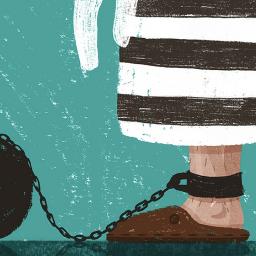
‘That Smeg fridge expresses something about who you want to be. So you buy it’Sometimes it’s nice to learn that a psychological phenomenon has a name, if only so I no longer have to think of it as Me Being Uniquely Irrational And Self-Defeating. So it is with the Diderot effect – which, I learned recently (via Lifehacker), is the term for when you buy something new, but then it makes your other possessions look timeworn by comparison, so you end up replacing them, too. The inspiration here is Denis Diderot’s 1769 essay Regrets For My Old Dressing Gown, in which he recounts being given a luxurious replacement. “My old robe was one with the other rags that surrounded me,†Diderot laments. But “all is now discordantâ€. Before long, he’s obliged to replace his furniture and paintings as well: “I was the absolute master of my old robe. I have become the slave of the new one.â€You already knew, of course, that consumerism exploits psychological weaknesses to get us to buy stuff we don’t need. We fall victim to “hedonic adaptation†(the way new possessions become part of the backdrop), along with “upward social comparison†(if you succeed in keeping up with the Joneses, you’ll just pick new Joneses to try to keep up with). But the Diderot effect adds a twist. We use possessions to help construct our identities, and we need those identities to feel consistent. A consistently shabbily dressed person might be signalling that her mind’s on higher matters; a consistently smart one that she values good taste. But someone who’s a random mixture of both just seems weird. In the words of the anthropologist Grant McCracken, products are deliberately marketed in “Diderot unities†– groups whereby, once you’ve purchased one, you’ll feel you need the others. Now that you’re ordering that new dining table from the catalogue, shouldn’t you consider those glasses and plates, too? Continue reading...
|
by Pete Etchells on (#P8FR)
Under the guidance of our resident expert Dr Dave Hone, we’re starting a new palaeontology blog, and we’re looking for exceptional writers to expand our coverageThe Guardian Science Blog Network recently turned five years old, and to mark the occasion, we asked our readers what they thought of the network, and whether there was anything they would like us to consider in looking towards the future. The comments we received were insightful, thoughtful, and at times, fascinating, and we hope to be taking many of them on board over the course of the next year.One point to come out of the discussions surrounding that survey was to expand the palaeontology content on the blog network. Our resident Lost Worlds blogger, Dr Dave Hone, is doing a fantastic job of providing expert insights into the latest research about dinosaurs and pterosaurs, but palaeontology covers a wealth of other areas of prehistory – the Earth’s autobiography also includes significant chapters on plants, mammals, and invertebrates. And let’s not forget museums; just as important as finding out the story of life on Earth, is understanding how we present that rich and amazing for all to see. Continue reading...