by Henry Nicholls on (#P8E3)
A female sand tiger shark will begin a pregnancy carrying multiple embryos. Only two – at most – ever emergeIt makes for gruesome but fascinating reading.
| Link | http://feeds.theguardian.com/ |
| Feed | http://feeds.theguardian.com/theguardian/science/rss |
| Updated | 2026-10-01 03:45 |
 |
by Kate Lyons on (#P8CK)
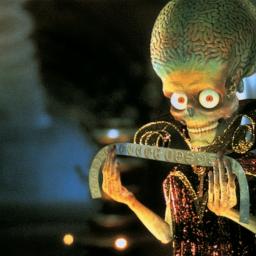
Awful as it is to have to admit, we’re more likely to find microbes than a Martian iguana or a mist of sentient atoms – and that’s only if we manage to analyse the evidence without contaminating itThis week Nasa announced it had found evidence of liquid water on the surface of Mars. The space agency said the “dark streaks†on the walls of the Garni crater were proof of flowing water on the planet, evidence that a habitable environment was “at least possibleâ€; and they might show them the most likely sites for finding life on Mars.This was huge news, prompting headlines around the world and excitable, scientifically undereducated types like myself to believe the first interplanetary BBQ with our new friends was just decades away. Continue reading...
|
 |
by Seth Shostak on (#P89Z)
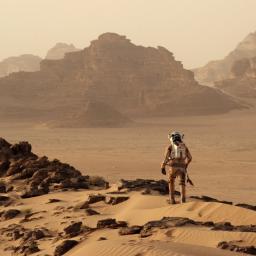
Nasa’s discovery of water on the red planet are like Xs on a treasure map – and bring us a small step closer to discovering Martian life
|
 |
by Phil Harrison, Kate Hutchinson, Luke Holland, Rach on (#P8A1)
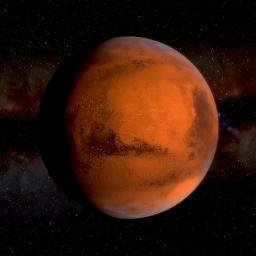
Every Friday, we review things that desperately need appraising but seldom receive the critical treatment they deserve. We also review things that really don’t need appraising at all. We’ll review your suggestions, too – suggest in the comments or @guideguardianMars – REVIEWED Continue reading...
|
 |
by Stuart Husband on (#P86V)
As The Martian opens, we celebrate the greatest space heroes in culture Continue reading...
|
 |
by Guardian Staff on (#P7TE)
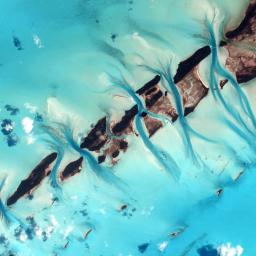
Astronaut Instagrams, ship plumes and kettle lakes are among the images captured by European Space Agency and Nasa satellites last monthAstronaut Scott Kelly posted this picture of the Bahamas taken from the International Space Station on Twitter on 19 July with the caption: “#Bahamas, the strokes of your watercolors are always a refreshing sight.†Continue reading...
|
 |
by Ian Sample Science editor on (#P5W2)
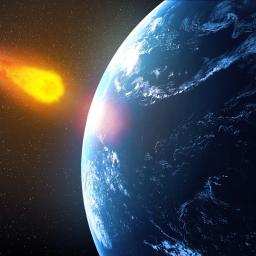
Research on the Deccan Traps in India reveals massive rise in lava flows around time of impact of Mexico’s Chicxulub crater 65m years ago, increasing the catastrophe for ecosystemsThe asteroid that slammed into Earth and heralded the doom of the dinosaurs triggered a surge in volcanic eruptions that made the catastrophe even worse, researchers claim.Scientists analysed prehistoric lava flows in India and found that soon after the massive impact, volcanic eruptions became twice as intense, throwing out a deadly cocktail of sulphur dioxide and carbon dioxide.
|
 |
by First Dog on the Moon on (#P7AN)
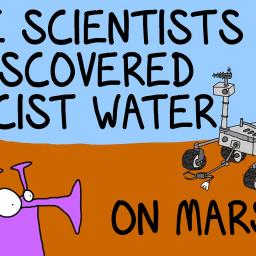
Humans are amazing. We can fly a spaceship to Mars but we can’t clean the Mars Rover – or Earth, for that matter Continue reading...
|
 |
by Sarah Boseley Health editor on (#P6JP)
Swedish study sheds new light on link between height and disease – but smoking, obesity and poor diet are still greater risksTaller men and women are more likely to develop cancer than their shorter peers, according to a major study that sheds new light on the link between height and the disease.Related: Underweight people face significantly higher risk of dementia, study suggests Continue reading...
|
 |
by Peter Kimpton on (#P63A)
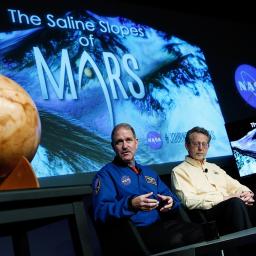
Is there life on Mars? What’s in the woodshed? Is there a secret lover? What’s in your pocket? Universal to personal, discover and uncover music that captures a eureka moment
|
 |
by Letters on (#P5X8)
Your article (How bronze age Britons dragged ancient dead into land disputes, 1 October), reminds me of Norman Lewis, in An Empire of the East, describing his encounter with the stone age culture of the Dani people of Irian Jaya in the early 1990s. “Persons of great power and influence … were not cremated in the usual way but smoked over a slow fire for several months and thereafter hung from the eaves of their houses.
|
 |
by Ian Sample Science editor on (#P5KR)
US research analysing 35,000 volunteers’ preferences for wide variety of different faces finds sexual attraction is not based on genetics or other influences
|
 |
by Arthur Neslen Brussels on (#P55P)
Bid for exclusion by 14 countries and three regions would make two-thirds of Europe’s population and arable land GM-freeHalf of the European Union’s 28 countries and three of its regions have opted out of a new GM crop scheme, in a blow to biotech industry hopes.Under new EU rules agreed in March, 14 countries have now told Brussels they will send territorial exclusion requests to the big agricultural multinationals including Monsanto, Dow, Syngenta and Pioneer. Continue reading...
|
 |
by Guardian Staff on (#P547)
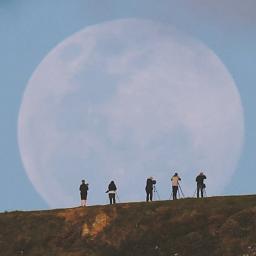
Timelapse of a ‘supermoon’ rising over a hill in Wellington, New Zealand. Astrophotographer Mark Gee captured the footage on Sunday. At its closest point, known as perigee, the moon was 225,622 miles (363,104 km) from Earth. At the moon’s most distant point, known as apogee, it is 252,088 miles (406,696 km) awaySuper blood moon: red lunar eclipse seen around the world Continue reading...
|
 |
by Marina Hyde on (#P4WP)
The star’s view on the origins of the universe is certainly the most earthshaking revelation in his most recent interview – but Jesus and the reality of life behind bars aren’t far from his thoughts eitherIt is typically intriguing of Justin Bieber to choose cosmology for his first foray into scientific debunking, when many feel he could provide a more elegant rebuke to Darwinism. Either way, it’s bad news for Cern (Twitter followers: 1.24 million) as Justin (Twitter followers: 68 million) finally starts using his power for good – in this case, to explain how ludicrous the so-called origins of the universe are.“I’m the type of dude who always wants to figure it out,†explains the What Do U Mean hitmaker. “Science makes a lot of sense,†he concedes. Or does he? “Then I start thinking — wait, the ‘big bang’. For a ‘big bang’ to create all this is more wild to think about than thinking about there being a God. Imagine putting a bunch of gold into a box, shaking up the box, and out comes a Rolex. It’s so preposterous once people start saying it.†Continue reading...
|
 |
by James Millen on (#P4V6)
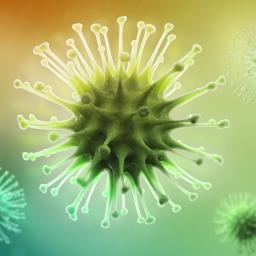
A recent proposed microbe experiment based on Schrödinger’s counter-intuitive theory would have a scale so small as to be almost meaningless, and other challenges such as consciousness also come into play
|
 |
by Dean Burnett on (#P4NC)
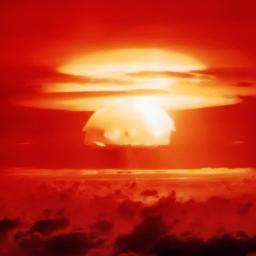
Jeremy Corbyn has recently been criticised for saying he would never use nuclear weapons. Quite right! This stance clearly overlooks the many scientifically-proven benefits of plunging the world into a fiery radioactive hellJeremy Corbyn has said in an interview that, if he were prime minister, he would refuse to use the UK’s Trident nuclear weapons system. This has caused much debate and controversy. And rightly so! This naive and blinkered stance clearly doesn’t take into account the many scientifically-proven benefits of widespread global nuclear destruction so would deny people the many advantageous offered by a world scoured of life and civilisation. Such as… Continue reading...
|
 |
by Vanessa Woods on (#P4J2)
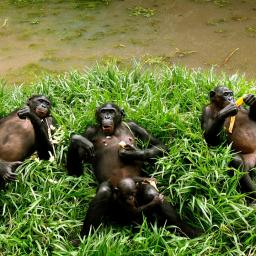
It was love at first sight for Brian and Malou … and she had realised I was the ‘other woman’She had glossy black hair and eyelashes that arrived a minute before she did. She sashayed past me, threaded her fingers through my husband’s hair, and let her eyes work their magic. He was gone. Her name was Malou, and she had been found stuffed in someone’s hand luggage on the x-ray machine at an airport in Paris. Bonobos fetch up to $15,000 on the black market, and Malou was on her way to end up as someone’s pet in a cage in Russia. When airport officials discovered her, they almost euthanised her. But luck was on her side, and she was sent back to where she came from, the Democratic Republic of Congo. Her mother had been shot for bushmeat, so Malou could not have survived in the wild. Instead, she arrived at Lola Ya Bonobo, the only bonobo sanctuary in the world and home to more than 60 orphans just like her. My husband and I were there studying how their minds were both similar and different to ours.Related: Bonobos have mastered the art of babytalk, new research shows Continue reading...
|
 |
by Ian Sample Science editor on (#P3QG)
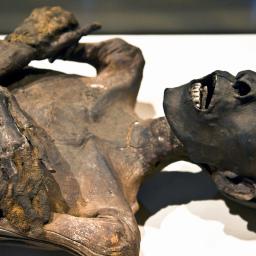
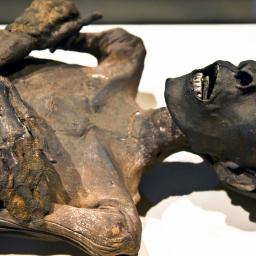
New study of ancient death rituals reveals evidence how bodies were smoked over fire, kept in peat bogs, brought out for special occasions, or even cobbled together in partsBronze age Britons may have mummified their dead by tossing them into peat bogs or smoking them over a fire, according to archaeologists who have studied the bones of hundreds of ancient locals.The leathery corpses may have been kept in homes for decades and rolled out for special occasions, or used to assert families’ legal rights to the land their deceased ancestors had worked in the distant past, they said.
|
 |
by Sophia Teoh on (#P3VN)
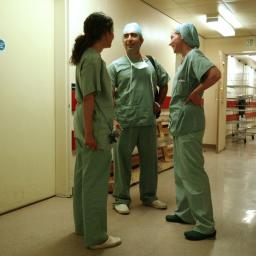
As someone within the profession who is directly affected, I can reveal many reasons why the proposed NHS junior doctor contracts are enraging medicsSome of you may have been following the news about junior doctor contracts. You may have heard about the recent protest in Westminster. It will be unsurprising if you haven’t - coverage has been fairly scanty. The term “junior doctor†encompasses all doctors who are not consultants or fully fledged GPs. I qualified in 2006 and have worked for the NHS for the last nine years, and am currently a paediatric registrar. I am a junior doctor and I am angry.
|
 |
by Staff and wires on (#P3RC)
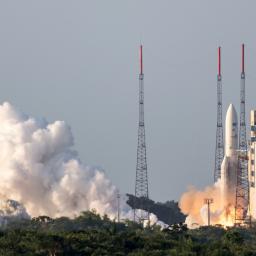
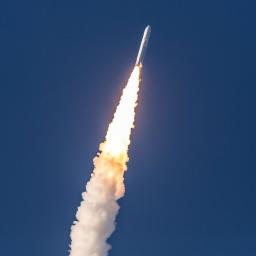
The $500m Ariane 5 rocket is the first of two national broadband network satellites designed to bring fast internet to rural and regional AustraliansThe first of two national broadband network satellites designed to bring fast internet to about 200,000 Australians in remote areas has been successfully launched.The $500m satellite was launched aboard a 780-tonne Ariane 5 rocket from French Guiana on Thursday morning. The rocket reached speeds of more than three kilometres a second as it covered the first 450km of its 36,000km journey into orbit. Continue reading...
|
 |
by Guardian Staff on (#P3NY)
The Ariane 5 rocket carrying a satellite – nicknamed Sky Muster – launches from Guiana space centre in South America. The NBN Australia satellite is designed to deliver high-speed internet to 200,000 Australians living in remote locations, such as Christmas and Norfolk Island. The makers have acknowledged the risk that the satellite could fail in orbit before it is even tested Continue reading...
|
 |
by Ben Quinn on (#P2EV)
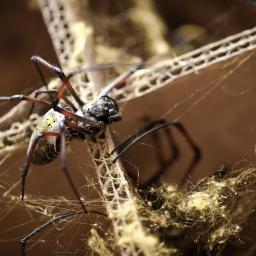
Elsa Fricker says she has had fever, dizziness and migraines since visiting In With the Spiders but London Zoo says species are docile and unlikely to biteLondon zoo is investigating claims by a woman who believes she was bitten by a spider while visiting a new exhibition designed to bring visitors face to face with arachnids.Elsa Fricker, 33, was reportedly admitted to hospital where surgeons were due to remove an abscess that she says was caused by the bite. Continue reading...
|
 |
by Guardian Staff on (#P2CH)
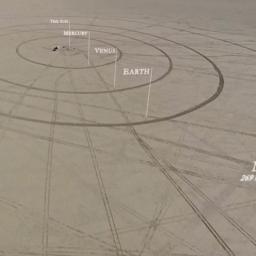
Two film makers recreate an accurate scale model of the solar system in Nevada’s sandy Black Rock Desert. Wylie Overstreet and Alex Gorosh needed seven miles (11.2 km) for all the planets to successfully orbit around the sun. Once the planet models were in place, they captured the illuminated spheres rotating around the model sun at night with timelapse footage Continue reading...
|
 |
by Letters on (#P2CJ)
Within the space of a few weeks liquid water has been declared to exist on Mars (Is there life on Mars ? Running water may give a hint, 29 September), the Saturnian moon Enceladus and Pluto (Telegraph, 17 July). This must also surely spell out an abundance of Earth-like bacterial life for the simple reason that these planetary bodies must have had routes of physical connection over the past four billion years. The clear example is in Martian meteorites that blasted off the surface of Mars and fell on Earth as meteorites. In the cosmic context our planetary system is a small place and likely to be intimately interlinked. Water everywhere must mean life everywhere.
|
 |
by Mo Costandi on (#P290)
Human endogenous retroviruses may cause or contribute to some forms of amyotrophic lateral sclerosisSleeping viruses that lurk inside the human genome may “reawaken†and contribute to the development of motor neuron disease, according to new research published today in the journal Science Translational Medicine.
|
 |
by Haroon Siddique on (#P21R)
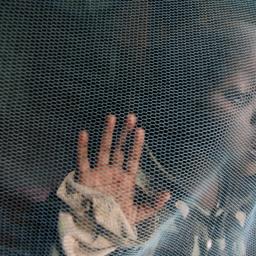
Protective variant most common among children in Kenya, where it offered greatest protection, while effect was less for other African populations studiedGenes have been identified in African children that reduce their risk of contracting severe malaria by up to 40%.The locus, or position of the resistant genes on the genome, was found near a cluster of genes called glycophorins, which are involved in the malaria parasite’s invasion of red blood cells. Continue reading...
|
 |
by Guardian Staff on (#P1EJ)
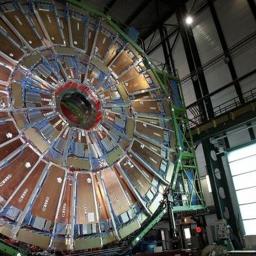
Readers answer other readers’ questions on subjects ranging from trivial flights of fancy to profound scientific conceptsIf one accidentally wandered into the Large Hadron Collider while particles were being hurled around at unimaginable speeds, would they pass through the human body without trace, or would they render one what a layman might describe as “toast�Mark Lloyd, London WC1 Continue reading...
|
 |
by Ian Sample and Laurence Topham on (#P0RS)
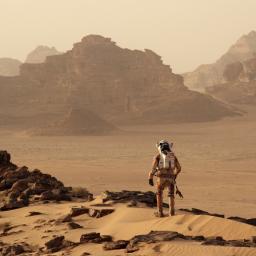
Mars has captured the popular imagination for hundred of years. But hang on – didn’t Nasa discover evidence of water on the red planet a while ago? So what’s different this time around? And even if we did discover signs of life, space agencies are forbidden from contaminating alien ecosystems, so could we even check it out? Ian Sample explains
|
 |
by Ameenah Gurib-Fakim on (#P0K9)
The Mauritian government is offering tax breaks for scientists who move against the brain drain. Policies like this are vital says President Ameenah Gurib-Fakim
|
 |
by GrrlScientist on (#P0CB)
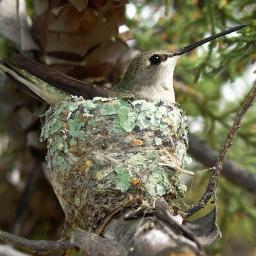
Hummingbird eggs and babies are a favourite snack for nest-robbing jays, so what’s a mother to do to protect her family? According to a new study, it’s best to build her nest near or under a hawk nestTiny hummingbird eggs and babies are a favourite snack for nest-robbing jays, so what’s a mother hummingbird to do to protect her family? According to a study published recently in the journal, Science Advances, the hummingbird cleverly builds her nest near or under a hawk nest. The reason for this seemingly risky behaviour? When hawks are nesting nearby, jays forage higher above the ground to avoid being attacked from above by the hungry hawk parents. This elevation in the jays’ foraging height creates a cone-shaped jay-free safe area under the hawk nests where mother hummingbirds, their babies and nests, enjoy dramatically increased survival rates. Continue reading...
|
 |
by Ian Sample Science editor on (#NYG7)
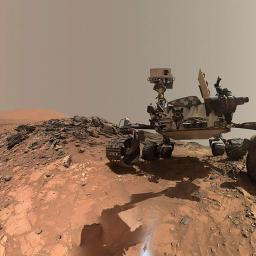
Curiosity rover already on red planet cannot study streaks left by flowing water because it could be carrying bugs from EarthNasa scientists may still be celebrating their discovery of liquid water on Mars, but they now face some serious questions about how they can investigate further and look for signs of life on the red planet.The problem is how to find life without contaminating the planet with bugs from Earth. Continue reading...
|
 |
by Lidija McKnight on (#P045)
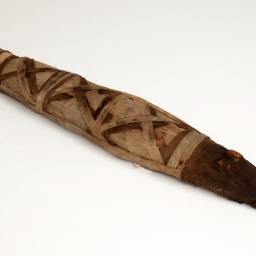
With the opening of a major new exhibition on mummified animals from ancient Egypt, curator Lidija McKnight celebrates the discovery of a crocodile with eight heads
|
 |
by Letters on (#NYP4)
Your report (Last British resident in Guantánamo to be freed after 13 years held without charge, 26 September) is welcome news. However, Shaker Aamer’s nightmare years of abuse and torture will be over only when he is safely home. This is the first time the Pentagon has announced a detainee transfer prior to a 30-day period for approval by US Congress. The UK government should demand his immediate return. He has suffered enough.
|
 |
by Dr David Givens on (#NYJC)
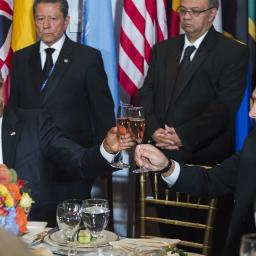
The gestures of the US and Russian presidents told stories that clashed as much as their words, a body-language expert explains in an analysis of their behaviorThe United Nations general assembly gives us a rare chance to see world leaders speak from the same podium – and sometimes interact with one another, too.Barack Obama, Vladimir Putin and Raúl Castro have all spoken from the stage this week – and the US president has publicly shaken hands with his Russian and Cuban counterparts. But what does their body language tell us about them? Continue reading...
|
 |
by Kate Connolly in Berlin on (#NXW5)
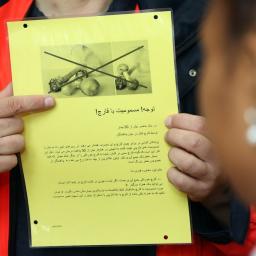
Toxicologists blame 40 cases, with one fatality so far, on mainly Syrian arrivals mistaking poisonous fungi such as the death cap for foodMost refugees have already defied the odds by the time they arrive in Europe, having typically undertaken perilous journeys across land and sea. But once they have reached Germany they are not out of danger, according to mushroom experts and doctors, who warn record numbers of people are becoming ill after eating poisonous mushrooms.
|
 |
by Dave Bry on (#NXX4)
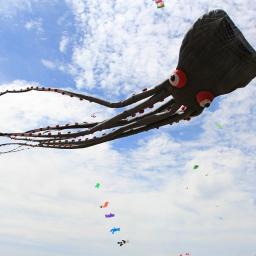
Now that we know that there is water on Mars, will it soon be accepted knowledge that octopuses trace their evolutionary roots back to the planet?
|
 |
by Joanna Walters on (#NXGP)
As the UK reacts to allegations about David Cameron in his youth, the US grapples with tragic results of brutal initiation ceremonies – practices with strong ties to class structure and demonstrations of masculinity, experts sayWhere were you when #piggate broke? Did you squeal with laughter and disbelief? Did you shamefully recall some embarrassing youthful memories of your own?Public reaction to Lord Ashcroft’s claims about David Cameron has ranged from shrieks to mere shrugs, but the story also offered a fresh glimpse into the mystique of the elite. Whether harmless or destructive, such rites take place in social contexts that are breeding grounds for unbridled behavior.
|
 |
by Guardian Staff on (#NX3P)
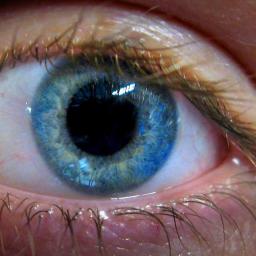
The world’s first embryonic stem-cell operation has the potential to save the sight of hundreds of thousands of Britons. Speaking on ITN’s Good Morning Britain, Dr Hilary Jones explains the first operation, which was carried out a month ago at Moorfields Eye Hospital, involves growing a sheet of cells from an embryonic stem cell which is transplanted into the back of the eye
|