 |
by Kate Ravilious on (#Q5SY)
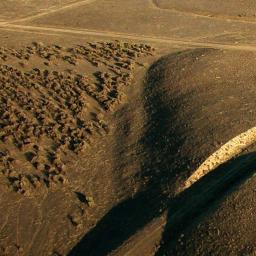
Today no-one doubts that the Earth’s surface is made up from a moving jigsaw of tectonic plates. Primary school children learn that South America was once connected to Africa, and that India’s collision with Asia pushed up the Himalayas. In hindsight plate tectonics seems obvious, and yet just 60 years ago the prevailing view was that continents were fixed in place.Back in 1912 Alfred Wegener, a German geophysicist, noticed that if Earth’s landmasses were pushed together their boundaries appeared to fit loosely together, leading him to hypothesise that continents slowly drift around the Earth. But the idea was met with scepticism, and it wasn’t until 1965 that the tide of opinion really changed. The trigger was a paper published fifty years ago in the Philosophical Transactions of the Royal Society of London, titled “The fit of the continents around the Atlantic†. Continue reading...
|
| Link | http://feeds.theguardian.com/ |
| Feed | http://feeds.theguardian.com/theguardian/science/rss |
| Updated | 2026-10-01 03:45 |
by Anita Sethi on (#Q4YD)
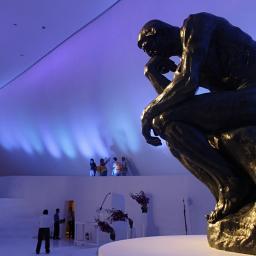
This compendium of emotions from around the world makes you feel we need more words for our feelings, not fewerSo riveting are these miniature essays exploring 156 emotions that if anyone interrupts your reading, you’ll probably feel irritated. Eloquently interweaving scientific, philosophical and literary thought, from ancient to modern beliefs, the book is “a gesture against those arguments that try to reduce the beautiful complexity of our inner lives into just a handful of cardinal emotionsâ€.It ranges far beyond Descartes’s six “primitive passions†– wonder, love, hatred, desire, joy sadness – showcasing words from around the world including “toska†(for Nabokov, “toska†was “a longing with nothing to long forâ€) and “basorexiaâ€, the sudden urge to kiss someone. Continue reading...
 |
by Nick Chater on (#Q4G0)
The hidden factor behind our sense of fairness is a desire to negotiate our way through lifeA four-year-old girl sees three biscuits divided between a stuffed crocodile and a teddy bear. The crocodile gets two; the bear one. “Is that fair?†asks the experimenter. The girl solemnly judges that it is not. “How about now?†asks the experimenter, breaking the bear’s single biscuit in half. The girl cheers up: “Oh yes, now it’s fair. They both have two.†Strangely, children feel very strongly about fairness, even when they scarcely understand it.Adults care about fairness too – but how much? One way to find out is by using the ultimatum game, created by economist Werner Guth. Jack is given a pile of money and proposes how it should be divided with Jill. Jill can accept Jack’s “ultimatumâ€, otherwise the deal is off, and neither gets anything. Continue reading...
|
 |
by Ben Ambridge on (#Q4E4)
Take our personality quiz to find out whether you have an analytic or intuitive thinking styleDo you know your thinking style? Find out with these three questions…a) A notebook and pencil cost £1.10 in total. The notebook is £1 more than the pencil. How much does the pencil cost? Continue reading...
|
 |
by Matthew Green on (#Q4E2)
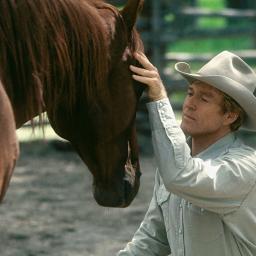
‘Equine therapy’ may sound new age, but the latest neuroscience suggests it has real benefits, says Matthew GreenWith her ballerina-like grace and stand-offish demeanour, Isis does not strike visitors as an obvious candidate for the messy work of unearthing deeply buried feelings of grief or shame. Even if they can get past the fact that she is a horse.The chestnut Arabian mare is at the leading edge of an emerging school of therapy that promises a path to healing that is equally open to survivors of war as to those from broken relationships. While there have been few formal studies, there are signs that this seemingly old-fashioned form of therapy could chime with discoveries from neuroscience on how new pathways can be laid down in the brain. Continue reading...
|
 |
by Elizabeth Day on (#Q3KZ)
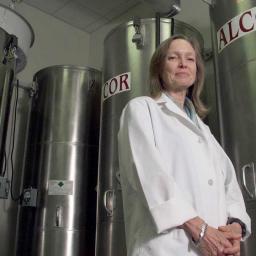
Cryonics – the preservation of animals and humans at ultra-cold temperatures – is booming in the US, notwithstanding the $100,000 minimum price tagCall the headquarters of Alcor in Scottsdale, Arizona, and you are greeted by a recorded message. “If you would like to report the death or near-death of an Alcor member,†says a chirpy midwestern voice, “please press two.â€The Alcor Life Extension Foundation – to give it its full title – has an unexceptional grey concrete exterior that resembles a regional bank branch. Inside, however, are the bodies or brains of 138 dead people, stored in vats of liquid nitrogen in the hope that, at some point in the future, advances made in science will be capable of bringing them back to life. Continue reading...
|
 |
by Robin McKie Science editor on (#Q3G2)
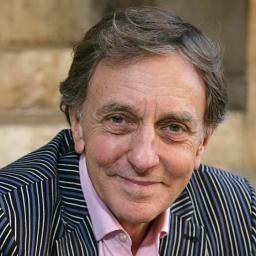
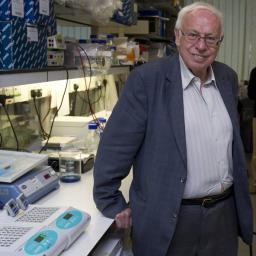
Leading biologist leaves writers’ association post in protest at ‘unbalanced’ stance on reporting of storyA new dispute has erupted over the fate of Sir Tim Hunt, the Nobel prizewinner accused of making sexist remarks at an international conference earlier this year. Sir Colin Blakemore, one of Britain’s leading scientists, has resigned as honorary president of the country’s science writers association over its support for the journalist whose reports led to Hunt’s dismissal.Blakemore said he had been frustrated by the decision of the Association of British Science Writers (ABSW) to continue to give unconditional support to Connie St Louis, who first claimed Hunt had made sexist remarks. Continue reading...
|
by Jon Butterworth on (#Q2T3)
Last week the physics Nobel prize was awarded for neutrino science. The physics behind that, and how it was discovered, is important and fascinating. And there’s another excellent feature in the announcement, too
 |
by Kim Willsher on (#Q2GR)
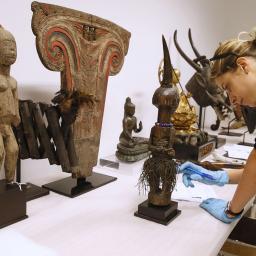
The future had looked bleak after Jacques Chirac took half of the museum’s collection for his own grand legacy projectFor years they’ve lain in dim corridors gathering dust, only rarely making forays into the wider world. They are some of the world’s most fascinating discoveries, which help tell the story of human evolution. Now treasures ranging from the remains of Cro-Magnon man to the celebrated 23,000-year-old Venus of Lespugue – as well as René Descartes’s skull – are once again to go on show with the rebirth of one of the world’s greatest museums of prehistory.More than a decade ago Paris’s Musée de l’Homme was facing extinction. Former president Jacques Chirac had purloined half of its collection for his grand legacy project, the Quai Branly museum of arts and civilisations, leaving the mankind museum without a raison d’être. Continue reading...
|
 |
 |
by Becky Barnicoat and Chris Broughton on (#Q1VR)
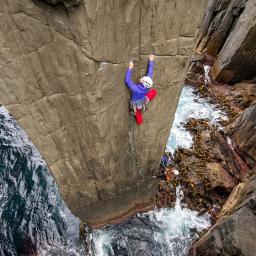
From avoiding lava bombs while volcano boarding, to slacklining over a 300ft gorge. What makes some people risk their life for their sport?Any snowboarder visiting the island of Tanna in the South Pacific, as I did in 1995, would have had the same thought when they set eyes on its volcano. Mount Yasur has a near-vertical, 1,000ft pumice slope on its north side, and I looked at its treeless, virgin face and said to myself, “I’ve got to go down that.â€
|
 |
 |
by Rebecca Schiller on (#Q0AE)
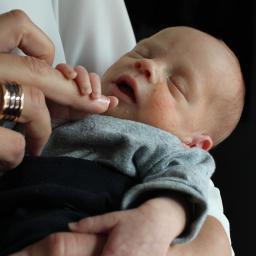
Developments such as ovarian tissue transplants and single embryo transfer are making motherhood a graspable reality, but services must be safe and accessibleI have been lucky. My children were created and were born with relative ease. Speaking to those who I know have struggled with infertility gives some small insight into the complex series of physical, emotional, financial and medical transactions that operate on a intensely heightened plane of reality.For the one in six couples in the UK who struggle to conceive, the news of successful ovarian tissue transplants leading to pregnancy could bring new hope. A Danish study followed women who underwent the procedure after cancer treatment had reduced their fertility. The transplanting of frozen tissue was found to be safe and a third of women went on to become pregnant – half without the need for IVF. The procedure offers tangible results, not just for cancer patients but also for women who want to postpone motherhood until later in life. Equally heartening is the news that womb transplants are soon to take place in the UK as part of a clinical trial. Continue reading...
|
 |
by Maev Kennedy on (#Q08V)
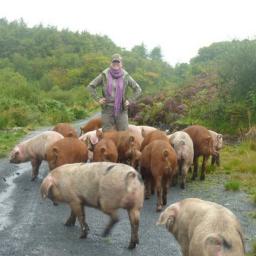
Archaeologists find stone tools left on Islay by hunter-gatherers about 12,000 years ago, long before humans were thought to have been thereStone tools left by ice age hunter-gatherers who camped out on the east coast of the Scottish island of Islay about 12,000 years ago have been uncovered thanks to a herd of pigs that began rooting up stone implements on the shore.The finds push the earliest evidence of human activity in Scotland back by more than 2,000 years – it had been thought that the earliest settlers crossed the landbridge after the ice age, about 10,500 years ago – and by 3,000 years on Islay. Continue reading...
|
 |
by Bruce Ross-Smith on (#Q04B)
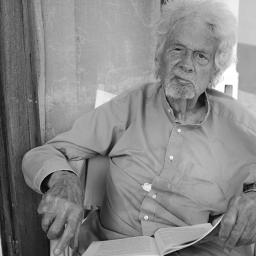
The social anthropologist Sir Jack Goody gained a BLitt in 1952 at Oxford, under Edward Evans-Pritchard, rather than a doctorate. That came two years later at Cambridge, with Meyer Fortes, and Goody wrote perceptively about both figures in The Expansive Moment: The Rise of Social Anthropology in Britain and Africa 1918-70, published in 1995.In 1983 he helped to initiate the archive of 250 or so sound and film recordings of leading anthropologists and others that has been carried forward by his friend and colleague Alan Macfarlane as part of the Cambridge Rivers Project, named after an earlier pioneer of the discipline, WHR Rivers. Goody himself was interviewed in 1991 by his friend since undergraduate days at St John’s College, Eric Hobsbawm. Continue reading...
|
 |
by Lisa O'Carroll on (#PZNN)
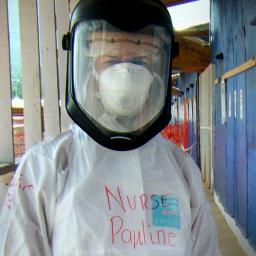
Nurse’s readmission with complications arising from infection is a reminder of how devastating virus can be even to survivorsLast week the Scottish nurse Pauline Cafferkey was in celebratory mood as she met the prime minister’s wife, Samantha Cameron. She flew down to London after being selected for a Pride of Britain award by the Daily Mirror and joined other winners and families for a reception at No 10 Downing Street.Cafferkey had contracted Ebola when volunteering for Save the Children’s Kerry Town hospital outside Freetown in Sierra Leone last December. After successful treatment at the high-level isolation unit at the Royal Free hospital in London, she was discharged three weeks later. Continue reading...
|
by Florian Koch and James Patterson on (#PZMC)
The scientific community has helped to generate the momentum behind the sustainable development goals. By linking evidence to policy in timely, thoughtful and sensitive ways, scientists can now contribute to the task of implementation.A flurry of commitments are being made this year that will shape the world over the next fifteen years, including the agreement of the Sendai Framework for Disaster Risk Reduction, the UN conference of parties (COP) on climate change in Paris, and the leaders’ declaration from the last G7 Summit on phasing out fossil fuels by the end of the century.Throughout 2015, the sustainable development agenda is high on international and national agendas, creating a window of opportunity. Central to this are the sustainable development goals (SDGs), which were formally endorsed at the United Nations last month. The SDGs provide a positive and inspiring roadmap towards a just and sustainable society. They aim to tackle a wide range of social issues (including poverty, health, education, gender, and inequality) as well as environment and resource issues (such as water, food and energy security, climate change, oceans and biodiversity) in an integrated way. However, more work is required to identify how such ambitious goals can be realised. Continue reading...
 |
by Damien Walter on (#PZK0)
Since HG Wells’s War of the Worlds, the genre has used the red planet as a theatre for the battle between utopian science and violent natureMars has always been, as cosmologist Carl Sagan wrote, a “mythic arena onto which we have projected our Earthly hopes and fearsâ€. For the ancient Greeks, the red dot in the night sky was an aspect of Ares, god of war, who unleashed conflict when the balance was lost between Apollo – god of reason – and Dionysus, god of the irrational and chaos. This conflict between Apollonian reason and Dionysian chaos has been projected onto Mars ever since.The canals that the astronomer Giovanni Schiaparelli claimed in 1877 to see on the surface of Mars were taken as evidence that, like newly industrialised nations of Europe, “Martians†might be reasoning, civilised creatures. Later observations proved the canals to be illusions, but the idea of a Martian civilisation took hold, and became the mainstay of stories about the red planet. Continue reading...
|
 |
by Dean Burnett on (#PZ4X)
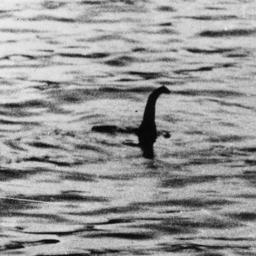
Are you the kind of person who relies more on your senses or your sixth sense?Dean Burnett helps you get to the truth Continue reading...
|
 |
by Mike Galsworthy on (#PYN4)
Brexit would damage our research base, our economic prospects and our place in the world. The Scientists for EU campaign will make a compelling case for “inâ€.This morning, the Scientists for EU campaign is officially launched. Our 6,400 grassroots supporters on Facebook are now joined by an advisory board comprising some of the UK’s leading scientists, including Lord Martin Rees, Sir Tom Blundell and Dame Anne Glover. The cross-party campaign also has representation from Labour, Conservatives and the Liberal Democrats. Together we will be fighting for the UK to remain part of the EU.Six months ago, most political arguments for staying in the EU focused on single markets and top tables. However, the terms of the EU referendum are changing. At the party conferences over the last few weeks, research and universities have featured more prominently in pro-EU speeches. Continue reading...
|
 |
by Robin McKie on (#PYJA)
Thousands of optical sensors beneath the surface of the south pole detect neutrinos from deep space, giving clues to cosmic eventsThey have had to sort through 100 billion subatomic particles to perfect their craft, but physicists using the IceCube Observatory in Antarctica now believe they are on course to create a new science: neutrino astronomy.Neutrinos emanate from many sources, including black holes and energetic galactic cores and are known to come in three interchangeable forms, or flavours – a discovery that has won Takaaki Kajita and Arthur McDonald the 2015 Nobel prize for Physics. By learning how to channel neutrinos inside their instruments, physicists can look at distant, explosive events in a new way. Continue reading...
|
 |
by Dean Burnett on (#PYBX)
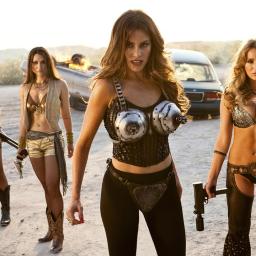
Female comic and video game characters often engage in combat while wearing outfits that are very revealing, particularly around the breast area. This is because the scientific properties of breasts mean they’re formidable weapons which shouldn’t be concealedForget guns. Forget nukes. The real ultimate weapon? Breasts.Exposed breasts are a significant tactical advantage. In pop culture, large-breasted women fighters invariably wear very revealing, breast-emphasising outfits. There are numerous examples in comics (Wonder Woman, Power Girl, Psylocke, Emma Frost, Zatanna, Black Cat, She Hulk etc.) and video games (Lara Croft, Bayonetta, Blaze, Ivy, Rayne, Mai etc.) Presumably such capable individuals would be able to wear what they like, so why would they choose to expose so much skin to danger? Continue reading...
|
 |
by Fraser MacDonald on (#PYBQ)
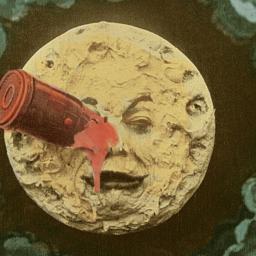
More than 150 years ago, a church minister from Monimail in Fife first suggested that rockets could fly to the moon and go faster in the vacuum of space - before Jules Verne
|
 |
by Ian Sample and Nicola Davis on (#PYBZ)
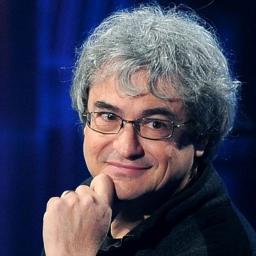
From black holes to Einstein's theory of relativity, Carlo Rovelli's acclaimed book condenses the revelations of modern physics into just 78 pages - listen to find out moreCarlo Rovelli is an Italian theoretical physicist and writer who currently works in Marseille. His work is mainly in the field of quantum gravity, where he is among the founders of the loop quantum gravity theory. His book Seven Brief Lessons On Physics has sold more copies in Italy than any other book, 50 Shades of Grey included, and it's just been published in English.He spoke to Ian Sample and Nicola Davis about the beauty and mind-bending implications of modern physics. Continue reading...
|
 |
by Stuart Clark on (#PX7X)
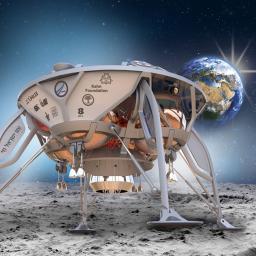
The Google Lunar X prize, which aims to award $30m (£19.6m) to the first private company to land a spacecraft on the Moon, has entered its final phase.An Israeli company, SpaceIL, has submitted a signed launch contract with Elon Musk’s SpaceX to the competition’s organisers. Continue reading...
|
 |
by Alan Yuhas in New York on (#PX4F)
First spacecraft ever sent to the dwarf planet continues to transmit data after sending the first color images of Pluto’s atmospheric hazes last weekPluto has blue skies and exposed, bright red water ice, Nasa announced on Thursday, as the first spacecraft ever sent to the dwarf planet continues to send data from the edge of the solar system.Nasa’s New Horizons probe sent the first color images of Pluto’s atmospheric hazes to Earth last week, revealing that the mysterious mix of particles scatter blue light when sunlight reaches them. Continue reading...
|
 |
by Guardian staff on (#PX3A)
Patients welcome results for treatment from pharmaceutical firm Roche, which says it could also treat the primary-progressive form of the diseaseA new drug for multiple sclerosis can cut relapses by almost 50% more than the current standard treatment, its manufacturer claims, raising the hopes of sufferers of the disease.The Swiss pharmaceutical giant Roche announced the headline results for its drug, ocrelizumab, but has not published the detailed outcome of its trials. Continue reading...
|
 |
by Adam Gabbatt on (#PWXH)
Chris McCann of the eBible fellowship admits it was ‘surprising’ the world did not end on 7 October but says they will ‘keep studying the Bible’ for cluesThe leader of a Christian group who claimed that the world would end on Wednesday has admitted his prediction was “incorrectâ€.
|
 |
by Ian Sample Science editor on (#PWWB)
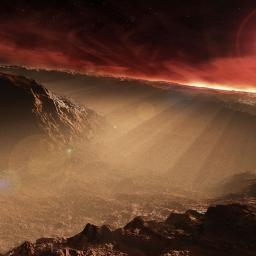
To convince most scientists, a mission would need to spot physical remnants of life, such as microbial fossils that retain a cellular structureThe first box scientists need to tick in the hunt for alien life is the presence of water. Life as we know it cannot emerge and survive without water, so a planet needs water to be habitable. Mars had lakes and oceans in the distant past, but now only very salty brines flow there. Continue reading...
|
 |
by Associated Press on (#PWVV)
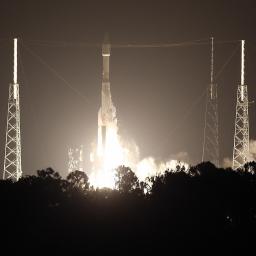
The Atlas V rocket is carrying a payload for the National Reconnaissance Office and 13 research nanosatellites for Nasa and the NROA rocket carrying a secret payload for the US government has successfully launched from the central California coast.The Atlas V rocket lit up the sky at 5.49am Thursday, lifting off from Vandenberg air force base toward low-Earth orbit. Continue reading...
|
 |
by Ian Sample Science editor on (#PWT8)
Nasa researchers believe some ancient lakes could have lasted for up to 10,000 years, which was enough time for life forms to take holdAncient lakes that came and went over millions of years in the Gale crater basin on Mars may have persisted long enough for life to evolve in them, researchers have said.Nasa scientists analysed fresh images sent back from the Curiosity rover and found evidence of lakes in the basin that lasted for up to 10,000 years at a time – potentially long enough to support life.
|
 |
by Haroon Siddique on (#PWPX)
New work is based on modification of genetic information in DNA but has brought sceptical response from some expertsResearchers claim they have come up with an algorithm that can predict the sexual orientation of males with up to 70% accuracy.The team behind the research, presented at the American Society of Human Genetics annual meeting in Baltimore on Thursday, believes they have come up with the first example of a predictive model for sexual orientation based on a molecular marker. Continue reading...
|
 |
by Ian Sample, science editor on (#PWC8)
Blue Brain Project supercomputer recreates part of rodent’s brain with 30,000 neurons connected by 40m synapses to show patterns of behaviour triggered, for example, when whiskers are touchedA piece of living brain has been reconstructed in a supercomputer in what amounts to one of the most sophisticated neural simulations ever created.The digital lump of rat brain, made from ones and zeroes, mimics the behaviour of about 30,000 neurons connected to one another by 40m synapses. Continue reading...
|
 |
by David Childs on (#PWAF)
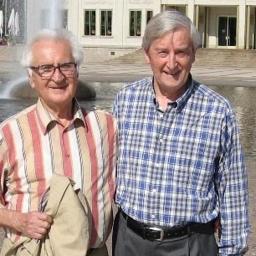
My friend Walter Friedrich, who has died aged 85, was an academic psychologist and political thinker who played an influential role in events leading up to the first democratic elections in East Germany in 1990.In 1994, in a long conversation with me, Egon Krenz, the former East German communist leader, revealed that it had been Walter who had convinced him that the developing dramatic situation in Leipzig, in October 1989 – when thousands of citizens demonstrated to demand greater democracy – could not be resolved by armed force. The Stasi chief, Gen Erich Mielke, was ready to use force, but Krenz overruled him. Had Mielke prevailed, events would have unfolded very differently. Continue reading...
|
 |
by Richard P Grant on (#PV4G)
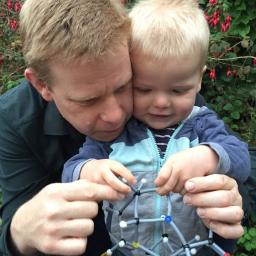
Life-saving basic research is under threat. Tell George Osborne what you think of that.When Howard Florey, with his team in Oxford, developed penicillin, he had not set out to save countless lives around the world. He and the men and women who worked with him were scientists, interested in puzzling out how things work, how the universe is put together; thinking God’s thoughts after Him.Joshua and I have reasons to be grateful to the work of Florey’s team: I could well have died as an infant, and Joshua could be blind. Scarlet fever and periorbital cellulitis are, for the time being, readily curable. Continue reading...
|
 |
by Stephen Curry, Jenny Rohn and Richard P Grant on (#PV4J)
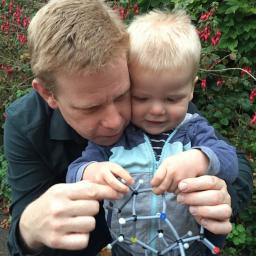
The government’s plans for science will be announced in the comprehensive spending review in November, but the science budget is once again in the firing line. Science is Vital has launched a new campaign to fight off the threat of cuts of 25-40%. Even a flat cash settlement would be a backward step. As part of the campaign, we are asking everyone to send a postcard to Chancellor George Osborne with the message that the UK should be looking to invest in science, not cut it. We invited the Guardian science bloggers to kick things off. Here are their postcards.We will need many more postcards to make sure George gets the message – so please take inspiration from the bloggers and join in! Continue reading...
|
 |
by Mark Tran on (#PTZF)
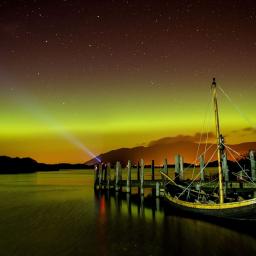
The aurora borealis, a relatively common occurrence within the Arctic circle, was seen in northern England, north Wales, Northern Ireland and ScotlandParts of Britain revelled in a celestial light show on Wednesday night as the northern lights were clearly visible in northern England, north Wales, Northern Ireland and Scotland.The aurora borealis – usually caused by solar particles colliding in the atmosphere – is a more common occurrence much further north around the Arctic circle. Continue reading...
|
 |
by Hayley Birch on (#PTP6)
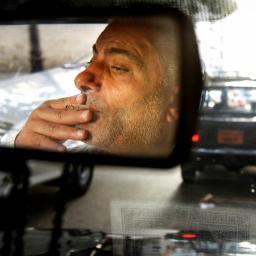
Research has shown that city-living has been linked to depression and anxiety – but what is it, exactly, that makes urban life so stressful? And what can be done to make the world’s cities more habitable?“Sitting constantly in dilapidated cars wrecks their spines, and the ceaseless shouting that goes on in the streets of Cairo destroys their nervous systems,†Khaled Al Khamissi wrote in his 2007 book Taxi, a collection of conversations with 58 of Cairo’s 80,000 taxi drivers. “The endless heavy traffic drains them psychologically and the struggle to make a living … strains the sinews of their bodies.â€
|
 |
by Sarah Boseley Health editor on (#PSTE)
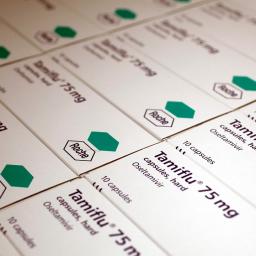
Report says there is a lack of good data on how well Tamiflu works in the community, after missed opportunity during swine flu outbreakNew trials are urgently needed to establish whether the anti-flu drug Tamiflu would help save lives in a pandemic, experts have said.
|
 |
by Guardian Staff on (#PSTC)
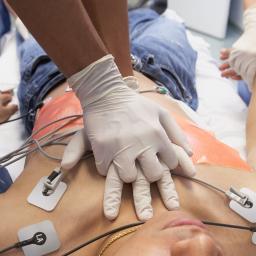
Simple procedure could potentially save NHS millions as it can dramatically reduce unnecessary emergency admissionsA simple blood test could rule out a heart attack in two-thirds of people arriving at A&E with chest pains, potentially saving the NHS millions of pounds, a new study shows.There are around 18,000 heart attacks each year in the UK, but around one million people come to A&E with chest pains. The test measures troponin, a protein released from the heart during a heart attack. Continue reading...
|
 |
by Letters on (#PS4D)
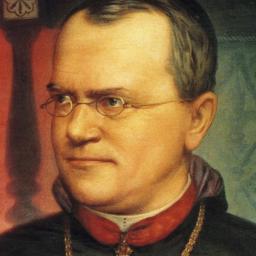
Both Mona Chalabi’s BBC3 programme on 5 October and her Guardian article (We’re all racist, but white racism is worse, 6 October) were fascinating and worrying. But what neither she nor anyone else mentioned was how most racism implies the surely fallacious assumption that biological and cultural characteristics are transmitted together.Until the work of Gregor Mendel was rediscovered in 1900 and the study of genetics began, it was difficult to begin to appreciate the difference. The word “race†had been used for a family (eg “a royal race of kingsâ€), a nation, or almost any social or political unit – even “the human raceâ€. But by now the implications of the difference in transmission surely ought to be more generally known than they seem to be, even among those more sophisticated people who use the word “ethnicity†(along with “ethnic†and “ethnogenesis) in a way that seems to reflect the same conflation of biology and culture. The confusion is reflected in many of the myths treasured in national histories. Of course sorting out the difference will not stop prejudice, but it might help to undermine it.
|
 |
by William Lamb on (#PRYF)
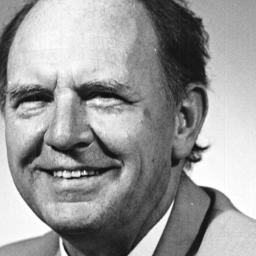
My father Joseph Lamb, who has died aged 87, was professor of physiology at the University of St Andrews, chairman of the Save British Science society (SBS) and the initiator of one of the first shareholder campaigns to tackle excessive executive pay.He was born in Brechin, near Aberdeen, the son of Joe, a tenant farmer, and Agnes (nee Fairweather), a schoolteacher. He contracted tuberculosis at an early age and spent a year reading encyclopedias during his recovery. He was a self-proclaimed “idle chap†at Brechin high school, although he went on to shine at physics. He won a place to study medicine and gained a PhD at the University of Edinburgh, after a brief spell maintaining radio masts for the RAF at Bletchley, in Buckinghamshire. Continue reading...
|
 |
by Ian Sample Science editor on (#PRT8)
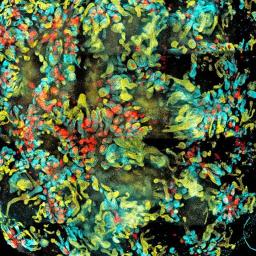
Scientists in Australia succeed in growing ‘organoids’ comparable to early stage of a baby’s kidneys that have collecting ducts and filtering units called nephons
|
by Guardian Staff on (#PRAH)
Aziz Sancar and Tomas Lindahl speak after winning the Nobel prize for chemistry, along with Paul Modrich. The trio were recognised for their work mapping how cells repair damaged DNA and safeguard the genetic information. Their work has provided knowledge of how a living cell functions and can be used for the development of new cancer treatments Continue reading...
 |
by Caroline Grigson on (#PR8N)
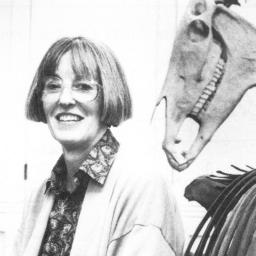
Archaeozoologist whose body of work shines a light on the historical relationships between people and animalsJuliet Clutton-Brock, who has died aged 82, was a pioneer in the relatively new field of archaeozoology – the study of animal remains from archaeological sites – which aims to shed light on the relationships between people and animals in the distant past. The focus is particularly upon the where, when, how and why of the transformation of wild animals, hunted mainly for food, skins and fur, into tame, domesticated creatures, to be slaughtered as sources of meat and leather, or exploited when alive to provide milk and wool, carry loads, pull ploughs and be ridden, and as human companions.Juliet’s numerous books outlined the development of these relationships, encompassing not only her own seminal researches, but also drawing together information from a wide variety of sources and incorporating the results of radiocarbon dating and DNA analysis as they became available. They included Domesticated Animals from Early Times (1981), Horse Power: A History of the Horse and Donkey in Human Societies (1992), Two Hundred Years of British Farm Livestock (1989, in collaboration with Stephen Hall), and the Eyewitness Guides: Dog (1991), Cat (1991), Horse (1992) and Mammals (2002). She had a particular interest in dogs and was the author of at least 20 scientific papers on them and co-author of an 82-page paper, A Review of the Family Canidae, published by the Natural History Museum. Continue reading...
|
 |
by Ian Sample and Haroon Siddique on (#PQ9A)
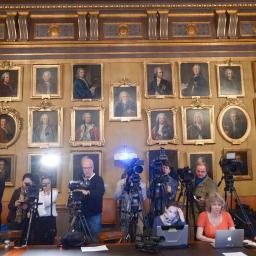
See how the action and reaction unfolded as Tomas Lindahl, Paul Modrich and Aziz Sancar shared the Nobel chemistry prize for their work showing how cells safeguard genetic information
|
 |
by Ed King for Climate Home, part of the Guardian Env on (#PQD6)
Show did not make clear climate sceptics are a minority voice, broadcaster admits, in ‘an unfortunate lapse’ of editorial policy, reports Climate HomeThe BBC has apologised for airing a half-hour radio show earlier this year in which a series of high-profile climate sceptics lined up to disparage the science behind global warming.
|
 |
by Sarah Boseley Health editor on (#PPKT)
Ten out of 32 women who wanted to become pregnant and had transplant succeeded in having a baby, and none had cancer recurrence as a resultOvarian tissue transplants for women who want to have a baby after cancer treatment appear to be safe and are very successful, according to a team of experts in Denmark, where the procedure is routinely offered.One in three young women who had a transplant and wanted to become pregnant succeeded in having a baby, analysis of results over the last 10 years has shown. Half of the children were conceived naturally, without the help of IVF. Continue reading...
|
 |
by Dean Burnett on (#PP8F)
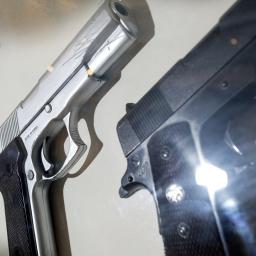
Much has been said about gun control in the wake of yet another mass shooting in the US, but the heated and divided nature of the debate means that a fundamental question is often overlooked; why is it people actively want guns in the first place? The answers are not as obvious as you may thinkOnce again, we’ve had yet another mass shooting in the US. That the previous sentence can even be written in a serious manner is a bleak summary of the situation. Even President Obama has clearly lost patience with the regularity of such horrific occurrences.As ever, the fallout includes endless scapegoating, political posturing and analysis. It all boils down to a large number of people not wanting to lose their guns under any circumstances.
|
 |
by Nicola Slawson on (#PP61)
Expert tells headteachers that pupils could go on to have 40 jobs and the education system must adapt to the changing worldChildren today could end up working to the age of 100 in as many as 40 different jobs, a futurologist has predicted.Rohit Talwar, who helps businesses look at what the world might look like in five to 50 years, told headteachers that the education system was behind with how fast the world was changing and that they must prepare students now for the world of the future. Continue reading...
|