 |
by Henry Nicholls on (#93M9)
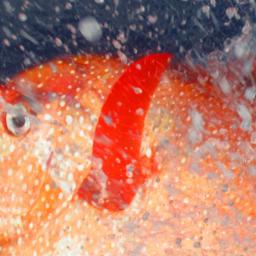
New research demonstrates a remarkable adaptation in a fish. It has a warm heart Continue reading...
|
| Link | http://feeds.theguardian.com/ |
| Feed | http://feeds.theguardian.com/theguardian/science/rss |
| Updated | 2026-10-01 05:30 |
 |
by Jenny Rohn on (#93J9)
A possible solution to one of the world’s most pressing problems might be lurking in my own back garden: my son and I see what we can do about it Continue reading...
|
 |
by Guardian Staff on (#93GM)
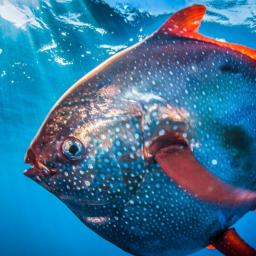
Footage from Science magazine, released on Thursday, shows the first warm-blooded fish to be discovered. The opah, found off the US, Australia and other countries, swims using its pectoral muscles to generate warmth. The fish's internal system has been compared to a car-radiator system, similar to endothermic mammals and birds that can maintain their body temperature, regardless of their environment Continue reading...
|
 |
by Guardian Staff on (#93DT)
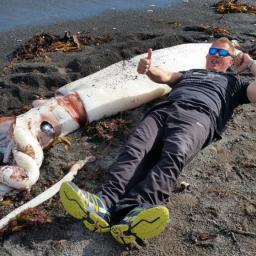
Pictures released by Kaikoura Marine Centre and Aquarium shows a dead giant squid, found on Tuesday. The squid was nearly two metres long, with one tentacle reaching an additional five metres. it was found by a man walking his dog at South Bay in Kaikoura. The local marine centre has since moved the squid to a freezer with glass windows so it can be viewed by the public. The aquarium says some samples will go to Auckland and Otago Universities for research Continue reading...
|
by Graham Readfearn on (#938Q)
Danish climate contrarian Bjorn Lomborg was rejected by the University of Western Australia. Was this really Australia’s own “Scopes Monkey Trial� Continue reading...
 |
by Hannah Devlin Science correspondent on (#92HB)
Study shows that modern hunter-gatherer tribes operate on egalitarian basis, suggesting inequality was an aberration that came with the advent of agriculture
|
 |
by Mo Costandi on (#92AR)
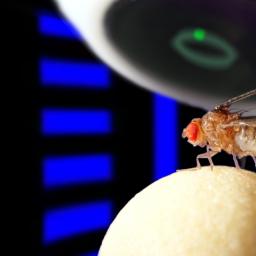
Neurons in the fruit fly brain track orientation much like ‘head direction’ cells in the mammalian brain Continue reading...
|
 |
by Ian Sample, science editor on (#9220)
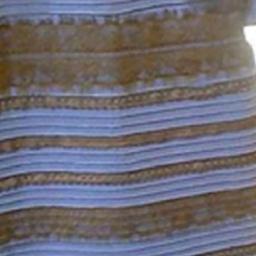
Gold and white or blue and black? Why did people see The Dress so differently? Researchers believe the key might lie in our exposure to artificial lightThe image of The Dress that went viral this year and split friends and families over the colour of its stripes has sparked a fresh debate among scientists.The close-cropped picture of the garment became an internet sensation when it appeared on Tumblr in late February. Its horizontal stripes were black and blue. Or were they white and gold?
|
 |
by Alison Benjamin on (#91PP)
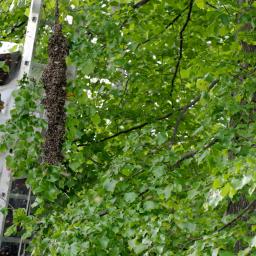
Novice beekeepers need to be vigilant for the moment a queen bee will lead workers to find a new hive, especially in cities and towns where swarms can cause disruption – even if they are harmless and nothing to fuss over Continue reading...
|
 |
by Maev Kennedy on (#913X)
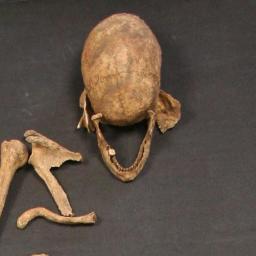
Scientists have diagnosed strain of leprosy on man from Scandinavia who died in Essex in the fifth or early sixth centuryA Scandinavian man who died 1,500 years ago in Essex suffered from leprosy, and may have been the first to bring the strain to Britain.
|
by Haroon Siddique on (#911R)
US study of more than 16,000 people suggests damage is done by depressive symptoms accumulating over timeLong-term depression in people over 50 could more than double their risk of suffering a stroke, with the risk remaining significantly higher even after the depression allays, research suggests.The US study of more than 16,000 people, which documented 1,192 strokes, found that onset of recent depression was not associated with higher stroke risk, suggesting the damage is done by depressive symptoms accumulating over time. Continue reading...
 |
by Steve Caplan on (#90ZN)
Has it become harder for graduate students to thrive, and are our best potential scientists giving up on academia? Continue reading...
|
 |
by Beth Maher on (#90WW)
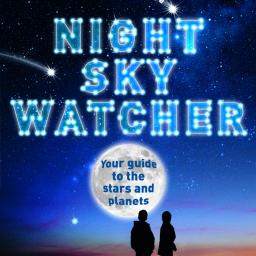
The Royal Society has revealed the six contenders in the running for the 2015 Royal Society Young People’s Book Prize, awarded annually to the best science book for children aged up to 14.The winning book will be chosen by groups of young people from over 100 schools and youth groups across the UK. See the full shortlisted below. Continue reading...
|
 |
by Dean Burnett on (#90TK)
Outrage at fox hunting and anti-vivisection campaigns are just two examples of people putting animals first. But why do we favour other species over our own? Continue reading...
|
 |
by Reuters on (#90G6)
The British soprano has postponed her trip aboard a Russian Soyuz capsule, citing family reasons Continue reading...
|
 |
by Guardian Staff on (#8ZXA)
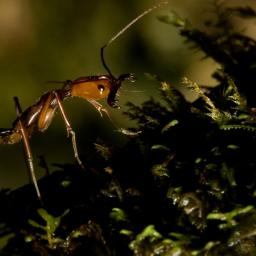
Trap-jaw ants use their powerful jaws to perform jumps in order to hurl themselves away from waiting antlions. Scientists have found that the enormous power of the trap-jaw ant's mandibles comes from a pair of large, contracting muscles in the head. The ant's jaws open to 180 degrees before snapping shut at more than 60 metres per second (140 miles per hour). The whole action takes place 2,300 times faster than the blink of an eye Continue reading...
|
 |
by Hannah Devlin, science correspondent on (#8ZTY)
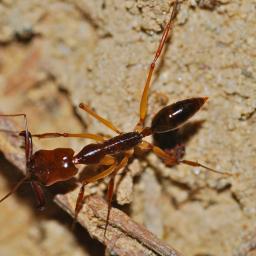
Trap-jaw ants are known as fast biters, but researchers have proved that their astonishing leaps, propelled by 140mph muscle movements, are an escape tacticThey have the fastest bite in the animal kingdom, but the trap-jaw ants’ explosive mandibles also serve a less violent purpose, according to scientists. The insects regularly use their spring-loaded jaws to perform “escape jumps†when face-to-face with a predator.The ant’s jaws open to 180 degrees before snapping shut at more than 60 metres per second (140 miles per hour). The whole action takes place 2,300 times faster than the blink of an eye. Continue reading...
|
 |
by Stuart Dredge on (#8ZCT)
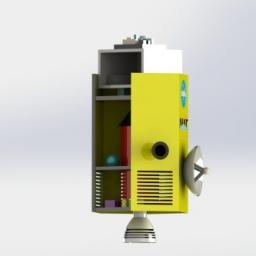
Emergency Asteroid Defence Project needs funding for its research into spaceships that can ‘deflect or disperse’ asteroids and comets Continue reading...
|
 |
by Ashifa Kassam in Madrid on (#8Z5S)
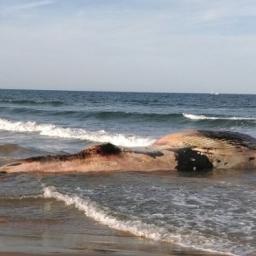
Experts in Valencia investigate death of six-tonne fin whale, which showed no sign of collision with vessel or being caught in netZoologists in Valencia are investigating the death of a six-tonne whale that washed up near the shore this week.
|
by Matthew Freeman on (#8YQH)
Of course the EU’s frustratingly bureaucratic, but it pays for much of the UK’s science research and innovation Continue reading...
by Vanessa Heggie on (#8YHT)
Thomas Browne was a seventeenth century doctor who championed rational thinking, challenged established thought, and investigated the natural world. Yet he first became famous for writing about his religious faith. Continue reading...
by Patrick van Zwanenberg on (#8YH7)
Controversy over a new evaluation of glyphosate, the world’s most widely used herbicide, lifts the lid on aspects of chemical safety regulation that often remain hidden from public view. Continue reading...
 |
by Henry Nicholls on (#8YFG)
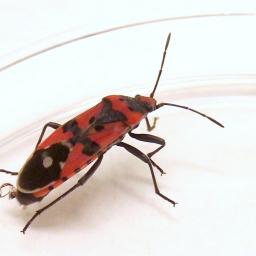
It seems an obvious result: researchers lop off part of an insect’s penis and find it doesn’t work so well. But is this as cut and dried as it seems? Continue reading...
|
 |
by Sarah Boseley Health editor on (#8XWJ)
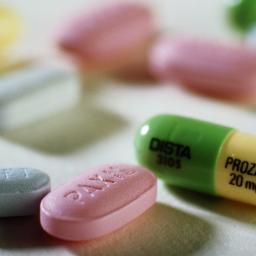
Peter Gøtzsche argues that most prescriptions could be stopped without causing harm, but other experts strongly disagreePsychiatric drugs do more harm than good and the use of most antidepressants and dementia drugs could be virtually stopped without causing harm, an expert on clinical trials argues in a leading medical journal.Given their lack of benefit, I estimate we could stop almost all psychotropic drugs without causing harm Continue reading...
|
 |
by Editorial on (#8XJ8)
Freedom of thought must mean freedom of belief and unbelief alike – in Bangladesh and elsewhere Continue reading...
|
 |
by Richard Sandling on (#8XF8)
Comedian Richard Sandling explains why science fiction, and the science behind it, should be taken seriously Continue reading...
|
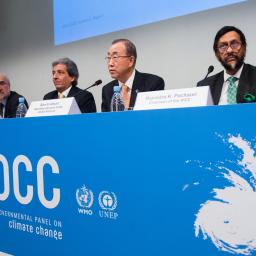 |
by Oliver Geden on (#8X9D)
To ensure scientific integrity in climate policy, advisers need to take a step back from politics. Continue reading...
|
 |
by Denis Campbell Health correspondent on (#8X8F)
Firms agreed to make their products healthier, for example by reducing amounts of salt, but few have done so, researchers say Continue reading...
|
 |
by Hannah Devlin, science correspondent on (#8X6X)
Increase in immune defences fights infections, but also raises risk of inflammation, causing heart attacks, stroke and diabetes during winter monthsThe increase in deaths during winter months is typically put down to icy weather, bouts of flu and the more sluggish lifestyles we adopt as the days draw in. Now scientists have suggested that our own immune systems may be to blame for the annual peak in conditions from heart attacks to diabetes and schizophrenia.A study has revealed that the immune system has a seasonal cycle, in which its activity is boosted during the winter and relaxes during the summer. Continue reading...
|
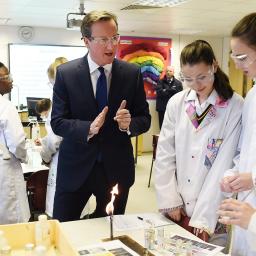 |
by Sarah Kendrew on (#8X3G)
Although they speak proudly of our achievements, Conservative policies pose a substantial risk to science and innovation Continue reading...
|
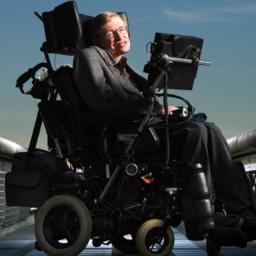 |
by Guardian music on (#8X13)
The scientist will take to the Kidz Field this summer alongside magician Dynamo, as well as Mr Yipadee and his friend Wonky Donkey Continue reading...
|
 |
by Dorothy Bishop on (#8WSZ)
Has the traditional format of the science journal had its day? Dorothy Bishop outlines an alternative model, based on consensual communication Continue reading...
|
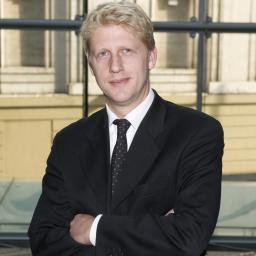 |
by Claire Shaw on (#8WN1)
The pro-European younger brother of Boris Johnson has replaced Greg Clark following the government’s cabinet reshuffle
|
by Daniel Hurst Political correspondent on (#8WN3)
‘Rationalising’ grant programs and preventative health research to cover first Medical Research Future Fund grants and new subsidised treatments Continue reading...
by Jon Butterworth on (#8W6Y)
CERN’s huge particle accelerator is working its way toward full operation and a new phase of exploration. But it is not only the accelerator that has been upgraded – the particle detectors have some new tricks tooOver the last few weeks the LHC - the gigantic particle accelerator at CERN, Geneva - has begun accelerating beams of protons up to record-breaking energies. It has also begun colliding them together again, although so far it has not done both at the same time. The only collisions so far are at lower energies. It is when the high energy beams collide that the physics really starts. Even so, there are some interesting data to look at already.The experiment I work on, ATLAS, has installed a new detector called the Insertable B Layer (IBL). This is right in the heart of ATLAS, as near as possible to the point where the protons smash into each other head-on. Continue reading...
by Athene Donald on (#8W60)
Sir Sam Edwards, who died last week, was a founding father of this still rather unfamiliar sub-discipline of physics Continue reading...
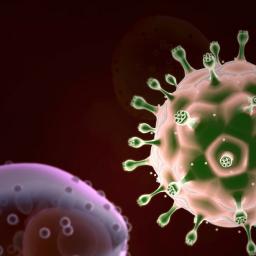 |
by David Cox on (#8W4B)
Seven years after the ‘Berlin patient’ was cured of HIV, scientists are looking to natural immunity through genetic variation to create vaccine and gene therapies Continue reading...
|
 |
by Agence France-Presse in Washington on (#8VNH)
Language that stresses co-operation, concern and trust found to be crucial to approval ratings, while just a few negative words can sharply worsen standings Continue reading...
|
by Pete Etchells on (#8TXD)
Philip Zimbardo is worried that excessive gaming or porn watching is crippling masculinity. But the evidence just doesn’t back up these sorts of claims
 |
by Alok Jha on (#8TZH)
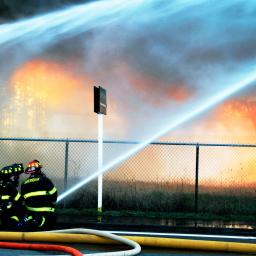
The more scientists examine H2O, the stranger it starts to seem. Water bends all the rules – but if it didn’t, ice would sink and firefighters’ hoses would be uselessWater is the only substance on Earth whose chemical formula has entered the vernacular. We all know H2O, even if we don’t understand precisely what it means. But if it sounds simple, the reality is different. This common, seemingly boring substance baffles and confuses anyone who peers at it for long enough.Water breaks all the rules. Since the 19th century, chemists have developed a robust framework to describe what liquids are and what they can do. Those ideas are almost useless at explaining the weird behaviour of water. Its strangeness underlies what happens every time you drop an ice cube into a drink. Think about it for a moment: in front of you is a solid, floating on its liquid. Solid wax doesn’t float on melted wax; solid butter doesn’t float on melted butter in a hot saucepan; rocks don’t float on lava when it spews out of a volcano. Continue reading...
|
 |
by Ian Sample, science editor on (#8TWR)
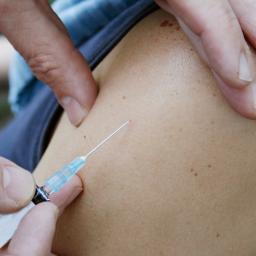
Landmark genetic study of typhoid has revealed a multidrug-resistant strain sweeping across Asia and Africa, killing 200,000 people a yearA silent epidemic of typhoid that is resistant to multiple antibiotics is spreading across Africa, posing a fresh threat to public health, according to a landmark genetic study of the organism.An international team of researchers analysed the DNA of nearly 2000 typhoid pathogens from countries across Asia and Africa and found that a single multiple- drug resistant strain had swept through Asia and crossed into Africa over the past 30 years.
|
by Karl Mathiesen on (#8TT4)
IPCC climate modelling proves right as scientists find a glitch in satellite led to inaccurate records in 1990s suggesting rate of sea level rise was slowing Continue reading...
by Stuart Clark on (#8TF4)
Woolf Works by the Royal Ballet takes its inspiration from Virginia Woolf and her fascination with the huge changes in scientific thought during her lifetimeVirginia Woolf lived and worked at a time of monumental change in our understanding of the universe. The initial decades of the 20th century saw the biggest revolution in our thinking since Isaac Newton in the seventeenth century and this generated a great deal of popular interest in the subject, too.Related: Who’s afraid of Virginia Woolf? Not the Royal Ballet Continue reading...
by Suzi Gage on (#8TEA)
Psychologist Philip Zimbardo believes society and technology are failing boys, but his views reek of old-school sexism Continue reading...
 |
by Steven Morris on (#8T9T)
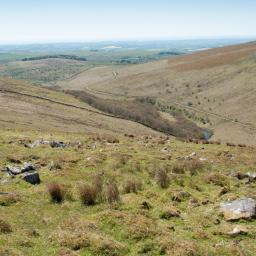
Archaeologists believe first stone circle to be found on Devon moorland for 100 years lends weight to idea of liaison between communities there 5,000 years ago
|
by Will J Grant on (#8SMW)
Bjørn Lomborg’s assessment of climate change isn’t just a ‘contrarian’ take. It’s at odds with peer-reviewed science and isn’t entitled to a platform at taxpayer expense Continue reading...
 |
by Press Association on (#8S1E)
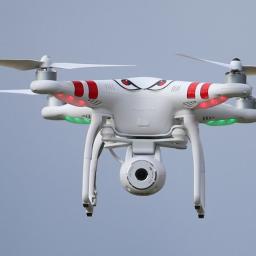
British Airline Pilots Association says half of those surveyed back training for drone operators and prison sentences for endangering aircraft Continue reading...
|
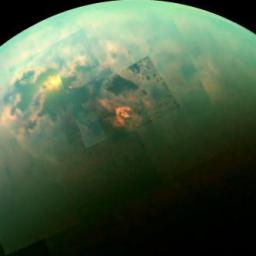 |
by Brendan Owens (Royal Observatory, Greenwich) on (#8TEB)
Continue reading...
|
 |
by Alex Renton on (#8QYD)
The source of our happiness is closer than ever to being located, measured and commodified. Alex Renton meets the ‘psychoeconomists’ and asks, have they created a monster?The happiest man in the world is a 67-year-old Buddhist monk called Matthieu Ricard. He starts his day sitting in a meadow in front of his hermitage in Nepal. He watches hundreds of miles of Himalayan peaks glowing in front of him in the rising sun. The scene “blends naturally and seamlessly with the peace he has withinâ€.Over the past 40 years Ricard has put in more than 10,000 hours of meditation: he is the supreme practitioner of what we now call “mindfulnessâ€. When not gazing at Himalayan peaks, Ricard is likely to be found in the boardrooms and at the dining tables of the rich and famous. Ever since his “happiest man†diagnosis in 2008 – made after days of brain scans at the Laboratory for Affective Neuroscience at the University of Wisconsin – he has been an object of fascination for the powerful. Continue reading...
|
 |
by Lenore Taylor Political editor on (#8QWB)
Agriculture minister suggests University of Western Australia’s decision to cancel ‘Australia consensus centre’ was because academics’ consultancy fees would be jeopardised Continue reading...
|