 |
by Zoë Corbyn on (#8QVZ)
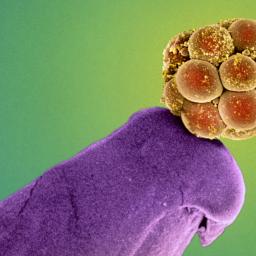
New genome-editing technology has the potential to eliminate genetic disease by making changes to our DNA that will pass down the generations. Such modification is currently banned in the UK but could that be about to change?Last year Tony Perry made mice that would have been brown-furred grow up white instead. That Perry, a molecular embryologist at the University of Bath, tweaked their coat colour isn’t new – scientists have been making so-called knock-out mice, in which certain genes are disabled, since the technique was invented in 1989. It is a long and cumbersome procedure that involves combining pieces of DNA in embryonic stem cells and mouse breeding.But Perry, who published his study in December, didn’t use this method. Instead he used a new genome-editing technology that has been taking the scientific world by storm since it was first developed from the bacterial immune system in 2012, and shown to work in human cells in 2013.Since the 70s there has been a consensus that human germ-line modification is off boundsRelated: The Guardian view on the latest genetic engineering techniques: we need to talk about this, Professor | EditorialSome may think it important to use Crispr to make better humans, not just stamp out disease Continue reading...
|
| Link | http://feeds.theguardian.com/ |
| Feed | http://feeds.theguardian.com/theguardian/science/rss |
| Updated | 2026-10-01 05:30 |
 |
by Robin McKie on (#8QFD)
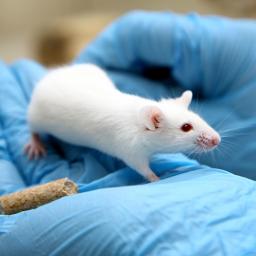
European parliament to discuss scrapping of all animal research in response to citizens’ initiative petition signed by 1.2 million peopleThe European parliament will on Monday debate a call – backed by a petition signed by 1.2 million people – to scrap animal research in the EU. The proposal has alarmed scientists, who worked for six years to set up the 2010 European directive that controls animal experimentation and welfare in the EU.Researchers fear that the petition, which was drawn up by the Italian-based Stop Vivisection European citizens’ initiative, could sway many newly elected MEPs who would then press the European commission into scrapping the directive which, in the UK, is enshrined in an amendment to the 1986 Animals (Scientific Procedures) Act. Continue reading...
|
 |
by Guardian Staff on (#8RWT)
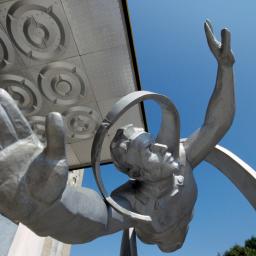
Fifty years ago, cosmonaut Alexei Leonov became the first person to walk in space, stepping out of the Voskhod-2 spacecraft
|
 |
by Robin McKie, science editor on (#8Q1Z)
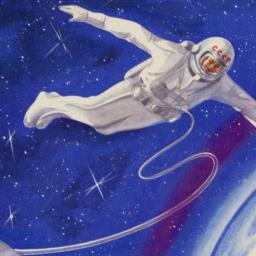
‘I was surrounded by stars, floating without control,’ recalls the cosmonaut who made history 50 years ago on a mission that nearly cost him his lifeFifty years ago, Alexei Leonov opened the airlock of his tiny space capsule, which was orbiting the Earth, and stepped into the void. For 12 minutes the Soviet cosmonaut floated above our planet, tethered to his ship by a 16ft cable. In doing so, Leonov became the first person to walk in space.Related: The first space walk – in pictures Continue reading...
|
 |
by Roger Pielke Jr on (#8PTX)
The electoral polls were wrong, as every election watcher in the UK knows. But sometimes it takes an American to tell us just how wrong. Roger Pielke Jr dissects the ‘science’ of polling.
|
by Alex Bellos on (#8PFS)
Hipster chronometer uses squares inside a golden rectangle to tell the time, and even doubles as a lava lamp. Continue reading...
 |
by Associated Press in Hartford, Connecticut on (#8NF1)
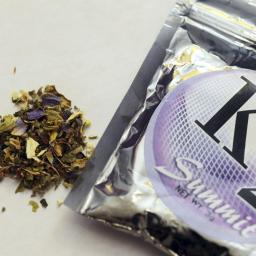
Over 1,500 cases have been reported in US since April, as overseas manufacturers circumvent regulations with dangerous new variations of legal highs
|
 |
by Will Storr on (#8NG2)
First the emphasis was on grades – now it’s all about character, with classes on empathy and respect. But can schools teach children how to be better people?Trouble comes to the educational psychologist in the shape of a lorry driven by a blue troll armed with a golden cutlass. The lorry’s owner is four-year-old Lucas. He’s made it out of oversized Lego bricks. It has wheels and is articulated. But it also has wings and a tailfin. Come to think of it, it might actually be some sort of plane.“Laura?†he says, to the psychologist, Dr Laura Warren. “Alfie said this was rubbish.†Continue reading...
|
 |
by Ian Sample, science editor on (#8N03)
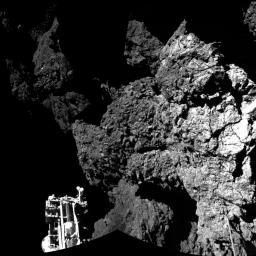
Spacecraft’s receivers activated early on Friday in the hope that probe will make contact during increased exposure to sunlight over coming monthsThe European Rosetta spacecraft began to listen out for its robotic lander this morning amid hopes that the comet-riding probe may soon have enough solar power to wake from hibernation.
|
 |
by Presented by Ian Sample and produced by Iain Chamb on (#8MMW)
Astronomy professor Chris Impey joins Ian Sample to discuss a future in which humans no longer view earth as their only home planet Continue reading...
|
 |
by Reuters on (#8M2G)
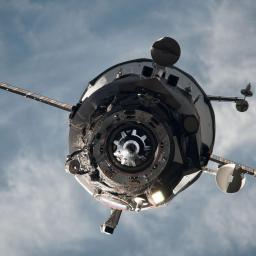
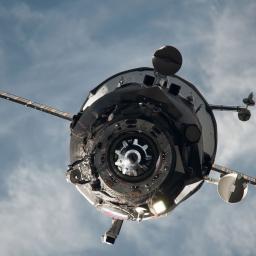
Stricken capsule loaded with more than three tonnes of food, fuel and supplies for the International Space Station falls out of orbit at 2.04am GMTAn unmanned Russian spaceship drifting in orbit after a failed cargo run to the International Space Station plunged into the Pacific Ocean on Thursday, Russia’s space agency reported.
|
 |
 |
by Ian Sample Science editor on (#8JGT)
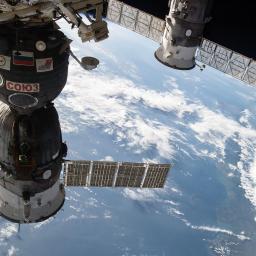
Scientists say only 20-40% of uncrewed cargo vessel likely to survive heat of re-entry and risk of people being hit is smaller than being hit by lightning
|
 |
by Alan Yuhas in the Milky Way on (#8KDM)
Galaxy EGS-zs8-1 has moved 30bn light-years away from Earth since it was born: ‘We’re actually looking back through 95% of all time to see this galaxy’A team of astronomers has measured a galaxy farther than any other ever seen by human beings, reporting this week that the ancient star system offers a glimpse of what the universe was like not all that long after the beginning of time.Astronomers from Yale University and the University of California Santa Cruz announced in the Astrophysical Journal that they had identified a galaxy that formed about 13.1bn years ago, making it the earliest measured galaxy known in the 13.8bn-year history of the universe since the big bang. Continue reading...
|
 |
by Eyal Winter on (#8N16)
Most of us have little idea about how much our feelings shape our politics. By understanding our craving for ideology maybe one day we can dispense with it Continue reading...
|
 |
by Ian Sample Science editor on (#8K2X)
Tissue grown from biopsies shown to closely mimic patients’ tumours, allowing researchers to study specific mutations and identify most promising drugsScientists have created the world’s first “living biobank†of patients’ tumours and used the tissue to identify the most promising drugs for each person’s disease.Tiny biopsies of the patients’ tumours were grown into clumps of cells and kept alive in the lab, so researchers could study their specific mutations and subject the tumours to more than 80 anti-cancer drugs.
 |
by Jessica Elgot on (#8JZJ)
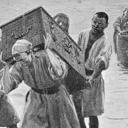
55kg bar of silver found in shallow waters off Saint Marie island may have belonged to notorious 17th-century Scottish pirate Continue reading...
|
by Stuart Clark on (#8JYA)
The dead Russian supply ship Progress 59 is predicted to fall to Earth sometime in the next 24 hours. How much of a danger will it pose? Continue reading...
by Michael Safi on (#8J84)
Industry welcomes reports about funding extension for more than two dozen research facilities, but say they will keep losing staff to secure jobs overseas Continue reading...
 |
by Michael Baker on (#8J0D)
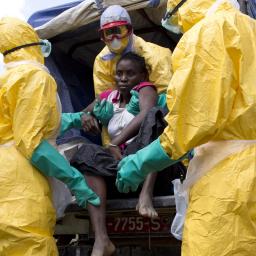
Scientific advances have helped us understand and limit the impact of pandemics but we still cannot deliver the simple measures needed to control them for the benefit of all Continue reading...
|
 |
by Julia Kollewe and Sean Farrell on (#8H0T)
Drugmaker decides to retain ViiV Healthcare as part of a plan to revive performance and boost growth in emerging markets Continue reading...
|
 |
by Guardian Staff on (#8GVC)
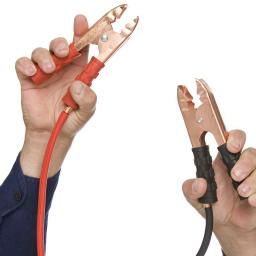
People have been doing it for more than 100 years, but it turns out that zapping your brain with an electric current might not be too good for your IQ Continue reading...
|
 |
by Adam Vaughan on (#8GN7)
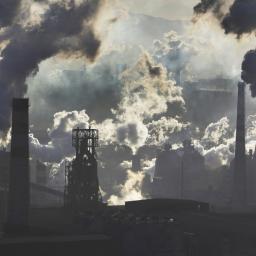
Concentrations of CO2 greenhouse gas in the atmosphere reached record global average in March, figures show, in a stark signal ahead of Paris climate talks• Extreme weather already on increase due to climate change, study finds Continue reading...
|
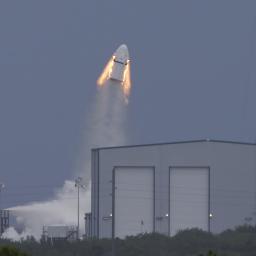 |
by Joanna Walters in New York on (#8JGW)
Test was of company’s ‘pad abort’ system designed to save lives of crew in case of emergency either upon launch or until rocket reaches orbit Continue reading...
|
 |
by Jon Butterworth on (#8GK9)
A public lecture and interactive webcast by Amanda Peet
|
by Martin Robbins on (#8G38)
The white, male European conquerors of the New World and 19th-century American pioneers of Manifest Destiny still colour the space age, so is it a myth that we’ll turn nice on Mars?
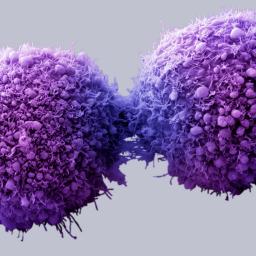 |
by Jenny Rohn on (#8FTT)
A pioneer in our understanding of cell shape and movement will be sorely missed – but his work lives on Continue reading...
|
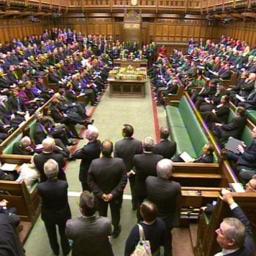 |
by Chris Chambers, Natalia Lawrence, Andrew Kythreoti on (#8FP8)
The results of our recent consultation suggest that many politicians would welcome a fast-track service for talking to a massive ‘hivemind’ of UK researchers Continue reading...
|
 |
by Rose George on (#8HT9)
Every day, millions of people ask Google some of life’s most difficult questions, big and small. In a new series, our writers answer some of the most common queries Continue reading...
|
 |
by Dean Burnett on (#8FJV)
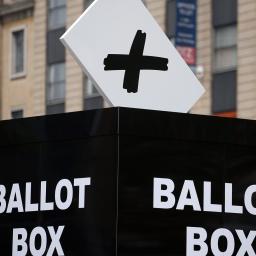
Even in an election where the outcome is so uncertain, it seems that over half the parliamentary seats in the UK are winnable only by one party. Why?Safe seats. The “dark matter†of the UK political system; rarely observed, but their presence and influence dictates how everything else works. Safe seats are parliamentary seats where there is little to no chance of anyone but the party that has held it for years actually winning it. Estimates state that over half the parliamentary seats in the UK are safe seats. That’s over half of the UK political landscape that is essentially frozen in place. But whereas dark matter seems to be an integral component of the structure of the universe, safe seats arguably hinder democracy, restricting the whole process of deciding a government to a narrower pool of more uncertain regions, like a dead sheep lodged in an irrigation channel.But this is arguably an unfair assessment, and not just for sheep. Safe seats are still elected by the local population, there’s no rule saying they can’t elect anyone else, however much those in power would like there to be. Safe seats are safe because thousands of people vote reliably and consistently each time the opportunity arises. Why would they do this? As with anything involving large groups of people, there are numerous possible explanations. Continue reading...
|
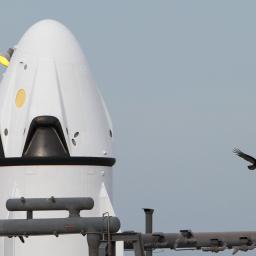 |
by Alan Yuhas on (#8EVQ)
|
 |
by Jules Montague on (#8FJX)
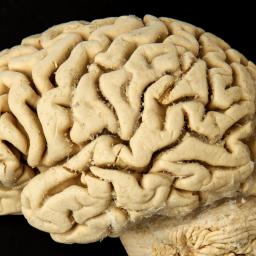
Research has revealed that so-called neurobabble is surprisingly convincing – here’s a quick guide to harnessing its persuasive powers Continue reading...
|
 |
by Ian Sample, science editor on (#8EHK)
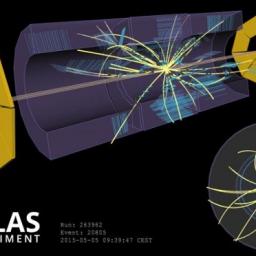
Low-speed test event was preparation for much higher-energy activity next month, which will mark the start of the accelerator’s search for new physicsThe Large Hadron Collider (LHC) has smashed its first particles together since the machine restarted after a two years hiatus for crucial maintenance and repair work.The giant subterranean accelerator at Cern near Geneva collided bunches of protons at low energy for several hours on Tuesday morning, spraying subatomic debris into the machine’s huge detectors.
|
 |
by Ian Sample, science editor on (#8E8N)
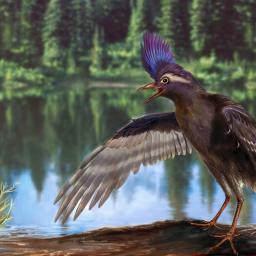
Archaeornithura meemannae is at least 130 million years old and was found with its feathers preserved, allowing comparison with modern-day birdsResearchers have stumbled upon the oldest known ancestor of all modern birds after breaking open a lump of ancient rock near a town in north-eastern China.They discovered the fossilised remains of the prehistoric bird, complete with exquisitely preserved plumage, in silt rock that formed 130 million years ago in the region.
|
by Alexander Irvine on (#8E49)
The use of facial averages can reveal more than you might think, including the worrying possibility that we vote for faces, not policies Continue reading...
 |
by Mo Costandi on (#8DYW)
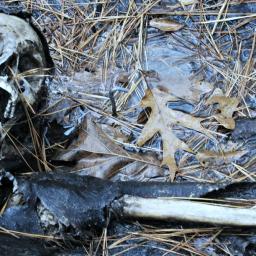
Far from being dead, a rotting human corpse is the cornerstone of a complex ecosystem. A better understanding of this ecosystem could have direct applications in forensic science Continue reading...
|
 |
by Henry Nicholls on (#8DHN)
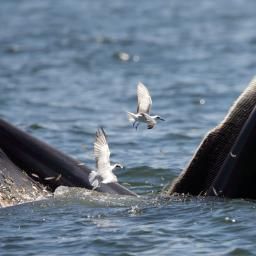
Baleen whales feed by rapidly sucking in vast quantities of prey-laden water. For this, they need elastic nerves Continue reading...
|
 |
by GrrlScientist on (#8DAN)
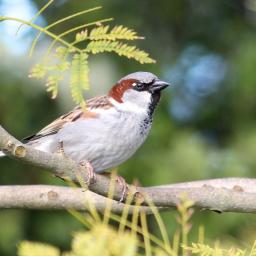
Feeding wild birds on bread and seed encourages high densities of introduced bird species at the expense of native species, thereby altering urban bird communities, according to a new study Continue reading...
|
by Monica Tan on (#8D9V)
Australian scientists first detected interference in 1998, which they assumed was from lightning strikes, but earlier this year they finally found the real culpritThe mystery behind radio signals that have baffled scientists at Australia’s most famous radio telescope for 17 years has finally been solved.The signals’ source? A microwave oven in the kitchen at the Parkes observatory used by staff members to heat up their lunch.Related: Dying star could be behind immensely powerful radio bursts 'heard' liveRelated: The telescope that beamed the moonwalk now faces a budget blackhole Continue reading...
 |
by Nicola Davis on (#8D67)
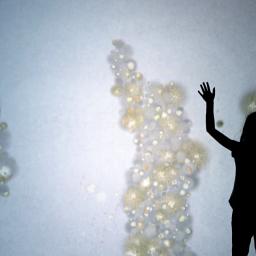
Eden Project in Cornwall opens Invisible You: The Human Microbiome, which reveals how and why we are colonised by bacteria and other microbes Continue reading...
|
 |
by Press Association on (#8CN4)
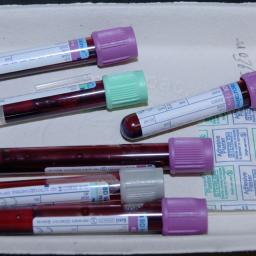
Fourteen-year global trial finds 86% of women can be diagnosed correctly by tracking level of protein in blood
|
by Ian Sample, science editor on (#8C9Y)
Brain scans of both pre-and full term infants showed striking differences in the salience network, which is disrupted in adults with ADHD and autismBrain scans of children who were born prematurely have revealed differences in the connectivity of key regions that may play a role in developmental disorders.Previous studies have already highlighted that children who are born preterm are more at risk of autism and other behavioural conditions, such as the poor attention that is associated with ADHD, or attention deficit hyperactivity disorder.
 |
by Associated Press in Cape Canaveral on (#8C5C)
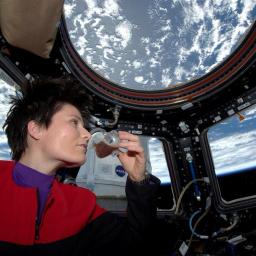
Samantha Cristoforetti becomes world’s first orbiting barista after firing up experimental ISSpresso coffee machine 250 miles above Earth Continue reading...
|
by Alex Bellos on (#8BW6)
Discover whether Dave, Ed, Nick, Nicola or Nigel has a pet with gills Continue reading...
 |
by Guardian Staff on (#8BED)
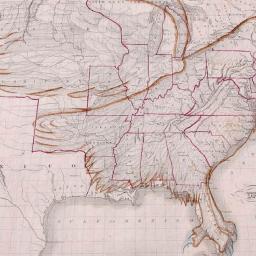
Smartphones may answer our navigation needs these days, but over the centuries, paper maps have done more than just get us from A to B Continue reading...
|
by Alex Bellos on (#8B28)
Nicola lives in the tartan house, but who owns the fish? Continue reading...
 |
by Julia Kollewe on (#8AH2)
Falling number of patents for renewable energy products risks governments missing carbon reduction targets Continue reading...
|
 |
 |
by Editorial on (#8A8K)
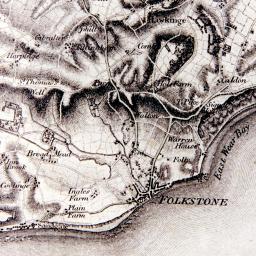
Reading a map is about so much more than getting from A to B Continue reading...
|