 |
by Karl Mathiesen on (#7KMX)
Bees have a preference for sugar solutions laced with the pesticides, scientists say, as a separate landmark field trial show neonicotinoids harm bee populationBees may become addicted to nicotine-like pesticides in the same way humans get hooked on cigarettes, according to a new study, which was released as a landmark field trial provided further evidence that such neonicotinoids harm bee populations.
|
| Link | http://feeds.theguardian.com/ |
| Feed | http://feeds.theguardian.com/theguardian/science/rss |
| Updated | 2026-10-01 05:30 |
 |
by Philip Hoare on (#7KRH)
Even more powerful than science’s capacity to explain is the human longing for mystery. So if Nessie is denied us, we’ll simply look elsewhere for fabled beasts Continue reading...
|
 |
by Guardian Staff on (#7JW0)
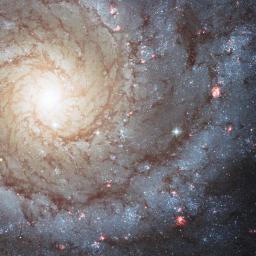
Readers answer other readers’ questions on subjects ranging from trivial flights of fancy to profound scientific conceptsGalaxies rotate. Do all spiral galaxies rotate in the same direction?A Grieve, West Parley, Dorset Continue reading...
|
 |
by Peter Forbes on (#7JX7)
Why sex? Why then only two sexes? Why do we age and die? It’s the energy, stupid! This thinking is as important as the Copernican revolutionThe “Origin of Life†is a conundrum that could once be safely consigned to wistful armchair musing – we’ll never know so don’t take it too seriously. You will probably imagine that it’s still safe to leave the subject in this speculative limbo, without very much in the way of evidence.You’d be very wrong, because in the last 20 years, and especially the last decade, a powerful new body of evidence has emerged from genomics, geology, biochemistry and molecular biology. Here is the book that presents all this hard evidence and tightly interlocking theory to a wider audience. Continue reading...
|
by Agence France-Presse on (#7JBX)
The ‘optical lattice’ device is now three times more accurate than previous incarnations Continue reading...
by Simon Jones on (#7JA1)
On the hundredth anniversary of the first fatal use of chemical weapons, we look back at the scientists who risked their lives to fight a new enemy Continue reading...
 |
by Guardian Staff on (#7HMN)
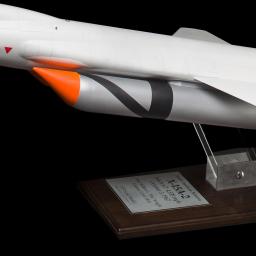
Items from the history of space and aviation went under the hammer at Bonhams, New York – including the first robotic probe to land on the moon Continue reading...
|
 |
by Ed Pilkington in New York on (#7H9E)
A ‘dirty bomb’ of pseudo-science wrapped up nearly 268 cases – perhaps hundreds more. Now begins the ‘herculean effort to right the wrongs’George Perrot has spent almost 30 years in prison thanks to a single hair. It was discovered by an FBI agent on the bedsheet of a 78-year-old woman who had been raped by a burglar in her home in Springfield, Massachusetts, in 1985.Perrot, then 17, was put on trial, despite the absence of physical evidence tying him to the crime scene. There was no semen. There was no blood. And so there was no way to conduct a conclusive DNA test. Continue reading...
|
 |
by Hannah Devlin, science correspondent on (#7H8Q)
Successful trial could pave the way for similar techniques to be used for conditions such as sickle cell disease and thalassaemiaChildren with a devastating immune condition appear to have been cured, after becoming the first to be given a new form of gene therapy.Without the treatment, the patients who suffer from a rare condition called Wiskott-Aldrich syndrome, faced short life expectancies and prolonged periods in hospital.Related: HIV gene therapy using GM cells hailed a success after trial Continue reading...
|
by Dean Burnett on (#7JR6)
It’s a useful tool, but an army of therapists and counsellors would be needed for mindfulness to have the reach and effectiveness of drug-based interventions. Don’t throw away the antidepressants just yet Continue reading...
 |
by Hannah Devlin, science correspondent on (#7GZF)
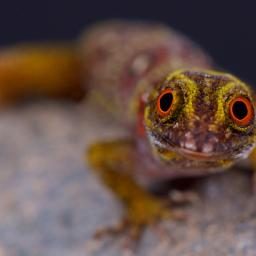
Reptiles were previously considered unable to play, but a Russian space experiment has overturned that view thanks to a loosely fastened collarThey can walk on walls with ease and shed their tails when they find themselves in a tight spot, but the one thing geckos were thought to lack was a capacity for playfulness. Now, a space experiment has overturned the view that geckos are entirely serious creatures, showing that they are open to a spot of fun after all.When given the opportunity, the Russian experiment found, geckos are happy to spend time batting an object around a tank at zero gravity. Continue reading...
|
 |
by Sarah Boseley Health editor on (#7GZH)
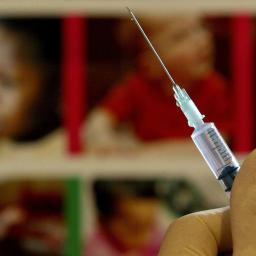
Research involving cohort of 95,000 children is latest research to contradict findings of discredited gastroenterologist Andrew Wakefield Continue reading...
|
 |
by Henry Nicholls on (#7GG3)
Google is not the first to take cameras into Loch Ness in search of the fabled monster. In 1972, the Loch Ness Investigation Bureau captured two frames that appeared to suggest the presence of two large, unidentified animals Continue reading...
|
 |
by Damien Gayle on (#7GQA)
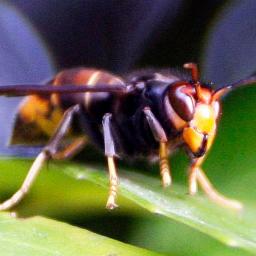
Vespa velutina, which preys on honey bees, is already spreading rapidly across mainland Europe and could pose a serious risk to the UK’s apicultureBeekeepers have been told to be alert for invading hornets that have killed six people in France and could pose to serious risk to Britain’s honey bees.The Asian hornet, which preys on honey bees, is spreading rapidly across France and other parts of mainland Europe, and there are fears its arrival in Britain is only a matter of time – particularly in light of the unusually warm spring weather. Continue reading...
|
 |
by Rory Carroll in Los Angeles on (#7GQ8)
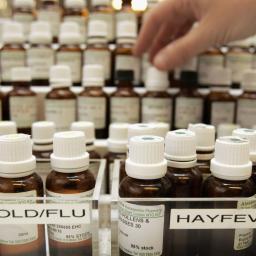
Hearings to conclude on Tuesday into whether reported concerns including loss of sense of smell are cause for greater regulation of booming industrySceptics consider homeopathy a joke, a bogus science that belongs in a punchline, not a pharmacy – but US government regulators are suddenly taking it seriously.The US Food and Drug Administration (FDA) is holding public hearings this week to explore whether it should toughen oversight of what has become a controversial, billion-dollar branch of the healthcare industry. Continue reading...
|
 |
by GrrlScientist on (#7GED)
In these fascinating videos, we see how one man’s quest to merge two passions -- bird watching and beatbox music – has created an experimental new form of music Continue reading...
|
 |
by Matthew Weaver on (#7GCT)
Researchers reviewing trials involving thousands of patients say taking extra vitamins and minerals does more harm than goodDietary supplements, such as over-the-counter multivitamins, do “more harm than good†and can increase the risk of developing cancer and heart disease, according to research in the US.The study by the University of Colorado, which reviewed several trials involving thousands of patients over a decade, showed that those who took extra vitamins and minerals were more likely to have health problems. Continue reading...
|
by GrrlScientist on (#7G3N)
Bodies of Light is a powerfully evocative exploration of the history of medicine, of feminism, and poverty in Victorian England Continue reading...
by Alex Bellos on (#7G0P)
Mathematician solves complicated puzzle of how best to get round the UK’s political hotspots.In the final weeks of the general election campaign, the party leaders are criss-crossing the country.But not the whole country. Their destinations are mostly the marginal constituencies, the ones that will decide the outcome on May 7. Continue reading...
 |
by Dean Burnett on (#7G0Q)
British chess master Nigel Short recently caused controversy by saying women’s brains aren’t ‘hard wired’ for chess. He also pointed out women have greater ‘emotional intelligence’. But this supposed praise reveals a great deal of cultural preconceptions and gender stereotyping, which suggests it’s not actually a compliment at all. Continue reading...
|
 |
by Reuters on (#7FXC)
Scientists at Oxford University say a world-first form of research shows infants may be far more sensitive to pain than adultsThe brains of babies “light up†in a similar way to adults when exposed to the same painful stimulus, suggesting they feel pain much like adults do, researchers said on Tuesday.
|
 |
by Australian Associated Press on (#7F78)
Infected patients have higher levels of certain chemicals in their breath, undetectable to the human nose Continue reading...
|
 |
by Daniel Freemanand Jason Freeman on (#7F38)
A new study examines the use of mindfulness-based cognitive therapy in the treatment of recurrent clinical depressionSomehow, somewhere, across those six weeks, something happened inside me – in my head? my body? my soul? – and I began to understand. Sitting still became a boon and a comfort, even a luxury, rather than a threat or an irritation. And the present moment, right here, right now, began to seem a very comfortable (and comforting) place to be, bereft of dread and full of the possibility of peace and calm.Julie Myerson, ‘How mindfulness based cognitive therapy changed my life’ Continue reading...
|
 |
by Christopher Riley on (#7EMY)
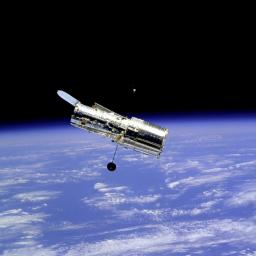
The director of a new documentary on the Hubble space telescope reflects on the craftsmanship behind the planet’s most celebrated science instrumentIn a darkened room at Nasa’s Goddard Space Centre in Maryland, I found a focused team of men and women, engrossed in their daily task of taking the pulse of the planet’s most celebrated science instrument: the Hubble space telescope. On the wall in front of them a live 3D rendering of Hubble is projected onto the wall – its orientation and position in orbit 550 kilometers above the Earth presented in real time for everyone in the room to see.Today Hubble was being harnessed to hunt for distant icy dwarf planets, which Nasa’s New Horizons mission might be able to aim for later this year, after its historic flyby of Pluto. Such objects, found in the remote Kuiper Belt, over 4 billion miles from Earth, are typically only half as big as Long Island, NY, and so dark in colour that only Hubble’s exquisite mirror has a chance of detecting them. Continue reading...
|
by Hannah Devlin, science correspondent on (#7EE3)
Scientists searching for an explanation for an unusually cool area of sky instead discovered a supervoid: an empty spherical blob 1.8 billion light years acrossAstronomers have discovered what they say is the largest known structure in the universe: an incredibly big hole.The “supervoidâ€, as it is known, is a spherical blob 1.8 billion light years across that is distinguished by its unusual emptiness.Related: Hubble at 25: the best images from the space telescope - in pictures Continue reading...
 |
by Congresswoman Carolyn Maloney on (#7DSQ)
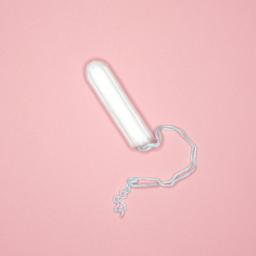
Millions of women will each use more than 16,800 tampons over the course of their lives. We have no data to tell us if that’s unequivocally safe Continue reading...
|
 |
by Dean Burnett on (#7DR7)
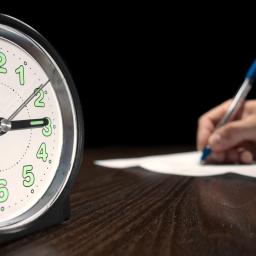
Everyone is currently urging people not to miss the voter registration deadline which is today. But why so much enthusiasm at the last minute when it’s always been as important? Deadlines, as much as we hate them, often prove to be very motivating, for various psychological reasons. Continue reading...
|
 |
by GrrlScientist on (#7DR9)
Today’s “Museum Monday†video is a short time-lapse that celebrates the glory of springtime at London’s Royal Botanic Gardens at Kew Continue reading...
|
 |
by First Dog on the Moon on (#7D96)
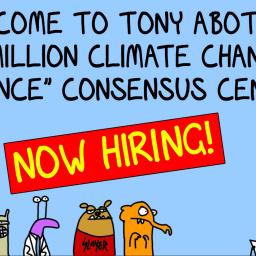
$4m for Bjørn Lomborg to lead the way on climate change? Not a problem for the Tony government, or for Australia’s ‘scientists’ Continue reading...
|
 |
by Robin McKie, science editor on (#7B8E)
The pendulum clock of Longitude hero John Harrison is tested and declared a masterpieceOne of Guinness World Records’ more unusual awards was presented at the National Maritime Museum yesterday. After a 100-day trial, the timepiece known as Clock B – which had been sealed in a clear plastic box to prevent tampering – was officially declared, by Guinness, to be the world’s “most accurate mechanical clock with a pendulum swinging in free airâ€.It was an intriguing enough award. But what is really astonishing is that the clock was designed more than 250 years ago by a man who was derided at the time for “an incoherence and absurdity that was little short of the symptoms of insanityâ€, and whose plans for the clock lay ignored for two centuries. Continue reading...
|
 |
by Robin McKie, science editor on (#7ACN)
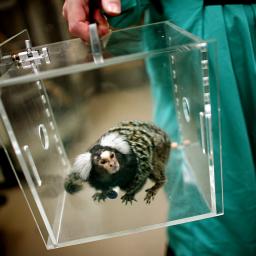
Bad experiments for stroke and cancer drugs produce poor results, say research chiefsResearch agencies have ordered UK scientists to improve the way they use animals in experiments. Too often poorly designed projects – to test new medicines for strokes, cancer and other conditions – have produced meaningless results and wasted animals’ lives, the organisations have warned.In some cases, researchers – desperate to control the costs of their work – have underestimated the number of animals needed to test a new medicine. As a result, their tiny studies have lacked the power to pinpoint biological effects in the drugs under scrutiny. These unreliable results mean the lives of the animals involved have been wasted, along with scientists’ time and resources. The over-use of animals in experiments has also led to unnecessary loss of their lives. Continue reading...
|
 |
by Dalya Alberge on (#7B62)
Lord Renfrew says artefacts in Iraq endangered by war would be protected under the Hague convention Continue reading...
|
 |
by Guardian Staff on (#7929)
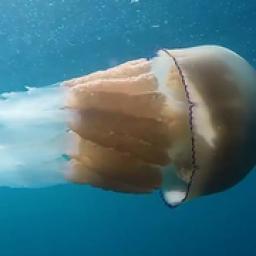
Footage shows swarms of barrel jellyfish (Rhizostoma pulmo) off the coast of Cornwall in the UK. The video, taken by a local wildlife enthusiast Ross Wheeler on Wednesday from a boat near Falmouth Harbour, shows the jellyfish gliding through calm water. This swarm of barrel jellyfish, which can grow up to six feet long, was reportedly a mile long Continue reading...
|
by Mark Lorch on (#78YP)
Chemicals compressed into pencils can be made to react with one another by drawing on paper, potentially making diagnostic tests quicker and easier Continue reading...
 |
by Iain Chalmers on (#78XN)
Like millions of other people, the drugs I take every day to live a normal life. But the amount of information we have on the risks is worryingly thin Continue reading...
|
 |
by Guardian staff and agencies on (#78DY)
|
 |
by GrrlScientist on (#78E0)
Before heading out to a tropical island for your summer holidays, you might be interested to learn more about the critical role that islands play in the evolution of new species. Today, I share two important books with you, both of which explore the importance of islands as “natural laboratories†of evolution and ecology Continue reading...
|
 |
by Produced by Simon Barnard and presented by Hannah on (#7877)
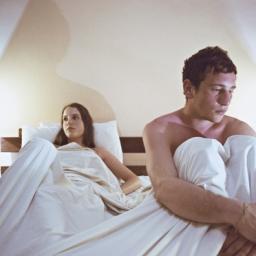
The team discuss the ins and outs of sex surveys, plus the secrets of knuckle-cracking are revealed at last Continue reading...
|
by Marc Burrows on (#7865)
Interview: Public Service Broadcasting’s frontman J. Willgoose Esq explores the history behind the band’s Cold War era-inspired album The Race For SpacePublic Service Broadcasting are as much a science project as they are a band. The duo create musical pieces exploring science, history and discovery using samples from vintage documentaries alongside more traditional instruments. Their latest album, The Race For Space, scavenges from the original Apollo transmissions, vintage Soviet documentaries and the actual signal broadcast by Sputnik 1 to tell the story of the 1960’s Cold War-driven mania for space travel.On the eve of the album’s launch at Leicester’s National Space Centre, we sat down with frontman J. Willgoose Esq to go through the historic and scientific inspirations behind each track. Continue reading...
 |
by Philip Hoare on (#7879)
What a curious beast we are, reducing the natural world to a petting zoo, then ceaselessly reinventing its threats Continue reading...
|
 |
by David Shariatmadari on (#783S)
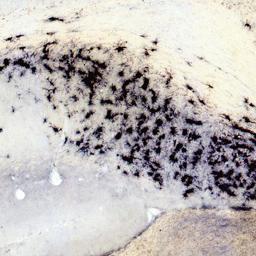
The latest reports of a dementia breakthrough illustrate the dangers of overhyping cutting-edge research into drugs and disease Continue reading...
|
by Lenore Taylor Political editor on (#7743)
Bjørn Lomborg has been given money from the hard-pressed federal budget to set up a ‘consensus centre’ at the University of Western Australia Continue reading...
 |
by Alan Yuhas on (#772Y)
|
 |
by Alan Yuhas in New York on (#76ZR)
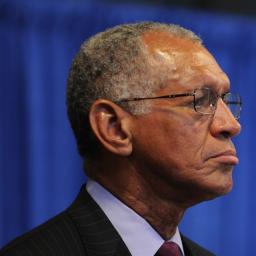
Charles Bolden countered criticism from House on agency’s ‘partisan environmental agenda’ and ‘uninspiring’ space work at budget hearingThe National Aeronautics and Space Administration’s mission to land on an asteroid and its Earth science division both drew angry criticism from lawmakers on Thursday, as administrator Charles Bolden defended the agency on Capitol Hill.At a House hearing on Nasa’s 2016 budget, space subcommittee chairman Lamar Smith criticized what he called “the disproportionate increase†in funding for Earth science research, saying that over eight years almost $2bn had been added to its budget. Smith and other Republicans argued that Nasa should not devote so many resources to studying the climate when it could work on space. Continue reading...
|
 |
by Ian Sample, science editor on (#76TS)
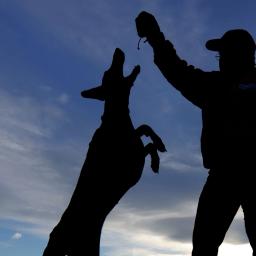
Scientists have found that dogs and owners experience surges in oxytocin, a hormone responsible for maternal caring, when they look into each other’s eyesA rush of hormone that helps people bond could explain why humans and dogs have been best friends for thousands of years, say researchers in Japan.
|
 |
by Peter Marsden on (#76R7)
Archaeologist responsible for raising the wreck of the Mary Rose, Henry VIII’s flagship, from the seabed Continue reading...
|
 |
by Hannah Devlin, science correspondent on (#76N8)
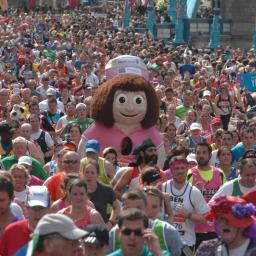
Analysis of fundraising pages shows men are competitively generous: a big donation early on, helped by an attractive picture, can be key to successWhen fundraising for charity, picking a cause close to people’s hearts and subjecting yourself to a sufficiently gruelling physical ordeal might help, but scientists suggest there could be an even easier way to swell the coffers. Picking a flattering photo and persuading a male friend or relative to make a hefty donation to your fundraising page early was found to significantly boost donations - for women at least.A study of fundraising pages from the 2014 London Marathon showed that men become competitively generous when they see another man has already given a large sum of money. The effect was especially striking when men stood to impress an attractive female, the study revealed. In these circumstances, men quadrupled their average donations from £10 to £40 when another man had already pledged a large sum.Related: Sex and the successful fundraiser | Richard P Grant Continue reading...
|
 |
by Richard P Grant on (#76K3)
A real-world study shows that in the art – and science – of fundraising, some of us have a natural advantage... Continue reading...
|
 |
by Guardian Staff on (#761Z)
Analysis of millions of audio files has led one US company to claim that their software can predict how a person’s voice will make a listener feel Continue reading...
|
 |
by Guardian Staff on (#75Z5)
Nasa's New Horizons spacecraft has sent back the first ever colour photo of Pluto and its moon Charon. The image shows a reddish dwarf planet and similarly coloured moon. No spacecraft has ever visited Pluto but scientists are hoping that will change on 14 July, when Nasa's New Horizons probe is expected to fly within 9,978km of the dwarf planet after a nine-year journey Continue reading...
|