 |
by Press Association on (#8A76)
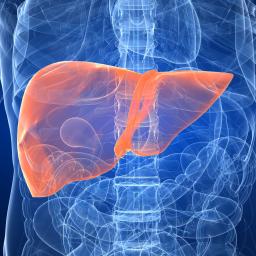
Expert warns that UK faces major and growing challenge in coming years as more Britons are diagnosed with non-alcoholic fatty liver disease
|
| Link | http://feeds.theguardian.com/ |
| Feed | http://feeds.theguardian.com/theguardian/science/rss |
| Updated | 2026-10-01 05:30 |
by Jean West on (#89VV)
A 93-year-old is among 13 volunteers constructing a replica of the pioneering 1½ Strutter, which they hope will be airborne next year to mark its centenary Continue reading...
 |
by Tamsin Edwards on (#89EC)
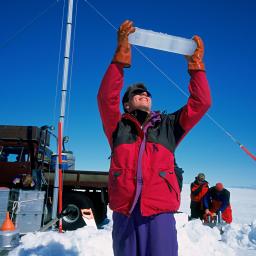
There are climate change sceptics, mainstream scientists – and a significant group in the middle. Whose voice is being heeded Continue reading...
|
 |
by Hannah Devlin on (#89K0)
The threat to our planet and the lives of billions of people – not to mention big business – has led to wild claims on both sides of the divide. Here are some facts Continue reading...
|
 |
by Rebekah Higgitt on (#89D2)
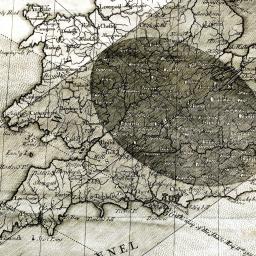
300 years ago, on the 3rd of May 1715, a rare solar eclipse occurred over England. It was an opportunity too good to miss for those promoting new astronomical theories – and their own careers.In 1715, 300 years ago today, a total solar eclipse was visible across a broad band of England. It was the first to be predicted on the basis of the Newtonian theory of universal gravitation, its path mapped clearly and advertised widely in advance. Visible in locations such as London and Cambridge, both astronomical experts and the public were able to see the phenomena and be impressed by the predictive power of the new astronomy.Wikipedia will tell you that this is known as Halley’s Eclipse, after Edmond Halley, who produced accurate predictions of its timing and an easily-read map of the eclipse’s path. Halley did not live to see the confirmation of his predictions of a returning comet – a 1759 triumph for the Newtonian system – but he was able to enjoy his 1715 calculations, which were within 4 minutes, and to improve on them with a corrected map (above). He observed the eclipse from the Royal Society’s building in Crane Court on a morning with a sky of “perfect serene azure blewâ€.
|
 |
by Ashley Cowburn on (#88JZ)
Only 65 of 49,000 prosecuted under outdated laws have so far had their records quashed Continue reading...
|
by Martin Robbins on (#88KA)
The number of baby deaths in the UK is still shocking, especially for poorer families. In a few days’ time you can do something about itPrince William and I were born 9 months apart, about half way back to the founding of the NHS. I could do a trite little line here. “The world was a different place back then,†I could quip, “when the Russians were threatening Europe and the media followed every moment of a royal princess’s pregnancy and all the music sounded like it was from the ‘80s.†It would be hilarious but tragically wrong, because it really was a different place.A September baby, I was born into the cold and dark of one of the most brutal winters ever seen in Britain. In the Midlands, temperatures plummeted to an astonishing (for England) -25.2C. The River Severn iced over, while commuters were trapped on trains when the doors froze solid. William missed all that because his parents planned better, but he had another big problem to contend with, a problem called ‘being born in the nineteen eighties.’ Continue reading...
 |
by Amy Westervelt on (#87Y0)
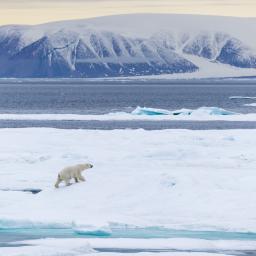
Police have called off the search for two Dutch scientists. Unusually thin ice likely played a role in their presumed death in the Canadian Arctic this weekIn a voicemail on Tuesday, Dutch researcher Marc Cornelissen, founder of Cold Facts, an organization supporting scientific research in polar regions, laughed at his predicament. He explained that unexpectedly warm weather had forced him and fellow explorer Philip de Roo to complete that afternoon’s skiing in the Canadian Arctic in their underwear.“I’m glad you guys don’t have pictures of us on the ice,†he said with a chuckle. “But it was the only way to deal with the heat.â€
|
 |
by Jessica Glenza in New York on (#87PQ)
CDC also says July 2014 outbreak in which three other patients were sickened after man contracted disease from his put bull terrier was largest in 88 yearsWhen a man in Colorado contracted the plague from his two-year-old pit bull terrier and spread it to four other people last summer, the resulting outbreak was the largest in 88 years – and the first known dog-to-human transmission of the disease, according to a new study released by the US Centers for Disease Control and Prevention.The first patient to be identified with plague, described as a previously healthy middle-aged man, was first wrongly diagnosed with pneumonia. It wasn’t until 10 days later, after the man’s condition had precipitously worsened, that doctors realized he had contracted pneumonic plague. The disease, which attacks the lungs, is caused by the same bacterium that causes the more common bubonic plague and is typically passed to humans through flea bites. Continue reading...
|
 |
by Associated Press in Cape Canaveral, Florida on (#87HC)
The crew capsule constitutes a launch abort system for crews of future space launches, something Nasa’s now-retired space shuttles lacked Continue reading...
|
 |
by Ian Sample science editor on (#87H8)
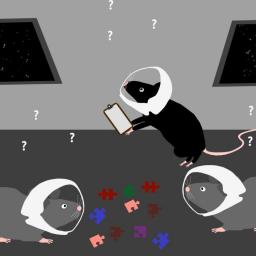
US researchers exposing mice to streams of high-energy particles similar to galactic cosmic rays discover damage to nervous system affecting cognition
|
 |
by Guardian Staff on (#87HA)
US researchers exposed mice to streams of high-energy particles, similar to those in galactic cosmic rays, and found they produced nervous system damage that caused the animals' performance to decrease. Similar cognitive problems could take a while to build in astronauts, but space-farers on a long-duration round-trip to Mars could be at risk, warn experts Continue reading...
|
 |
by Deborah Hyde on (#87BC)
New series The Enfield Haunting begins on Sunday night, and is based on supposed poltergeist activity. But what does science say about such phenomena?A couple of years ago I was asked to appear on ITV’s This Morning to discuss the Enfield ‘poltergeist’. It’s not an unusual request per se: as editor of The Skeptic I get to be the freethinker-du-jour in various media from time to time.But there were two things that made this one odd. The first was that the focus of the famous 1977-79 ‘poltergeist’ case – Janet Hodgson – was making a rare public appearance. (She has appeared in a documentary or two and had been filmed heavily in shadow for Jane Goldman Investigates but doesn’t make a habit of it.Related: Timothy Spall: dealing with ghostsRelated: Halloween special: the science of scary apparitions – podcast Continue reading...
|
 |
by Peter Toohey on (#86WN)
Because boredom is unpleasant, it encourages people to escape from it – just beware if no escape route is found Continue reading...
|
 |
by Henry Nicholls on (#86TG)
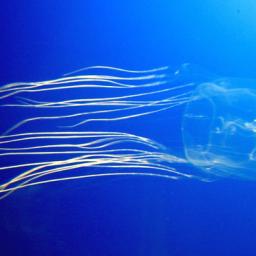
The box jellyfish has a deadly venom. It also has 24 eyes and sleeps Continue reading...
|
by Christopher Gyngell on (#873E)
Whoever first crosses the line to edited embryos will find a powerful new resource in the fight against disease. What we ought to do is use it responsiblyThe first study to modify the genes of a human embryo, conducted at Sun Yat-sen University in China, has caused a furious backlash. Nature and Science, the world’s most prestigious scientific journals refused to publish the study, at least partly on ethical grounds. Instead they published commentaries calling for such research to be stopped. On Wednesday, the US government’s National Institutes of Health (NIH) restated their position that it will “not fund any use of gene-editing technologies in human embryos.†The NIH views such editing of the “germline†in human embryos as “a line that should not be crossed.†The stance will essentially stifle any research on gene editing in embryos in the US.Related: Scientists genetically modify human embryos in controversial world firstRelated: Should we genetically engineer humans? – podcast Continue reading...
by Sam Jones on (#86N2)
Study warns that rising temperatures pose serious threat to global coffee market, potentially affecting livelihoods of small farmers and pushing up prices Continue reading...
 |
by Ellen Wishart on (#86SG)
From 12 days for an opossum to 22 months for an elephant – and with humans towards the longer end – the time parents wait for the next generation is a varied one Continue reading...
|
 |
by Guardian Staff on (#86F1)
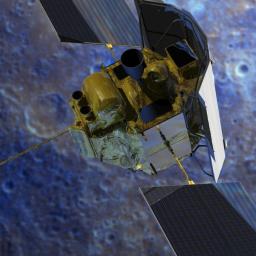
Watch a series of actual imagery and animation from Nasa documenting the work of the Messenger probe that crashed into the surface of the planet around 19.30GMT on 30 April. The probe had been orbiting Mercury since March 2011 and was the first probe to ever circle Mercury after being launched in 2004. The video was released as a tribute by Nasa to mark the work of the Messenger Continue reading...
|
 |
by Tom Lamont on (#86F4)
The star’s concern about the role business plays in the environment has led her to set up ethical companiesWhen did the climate change campaign start for you?I think it was a fairly gradual process. It wasn’t something I connected with when I was younger. Maybe it was some sort of lack of empathy, but I wasn’t able to relate to it. And then round about 16 or 17, I not only started travelling more, getting more of an appreciation for nature, I also simultaneously started learning more about the science around climate change. And the combination of falling in love with nature, with the realisation that there was a genuine threat to the natural world as we know it, kind of worked together. It went from being an issue that I wasn’t really that engaged with at all, to being probably the one I thought was the most important to try and address in some way – and continue to think is the most important. Continue reading...
|
by Carole Cadwalladr on (#86F3)
The Homeland star says first-world countries are protected from the realities of climate changeYou recently made a film with Cafod, the Catholic Agency For Overseas Development, to raise awareness about climate change. How did that come about?I’ve worked with Cafod for a number of years as an ambassador, and six years ago I travelled to northern Kenya to see the effects of climate change in the communities there. It was just mile after mile of complete devastation. There were just clouds of orange dust, and we went through village after village and all we saw was dead cattle and dead goats covered in orange dust. Because the entire economy is based on trading cattle it was almost like the equivalent of a stock market crash. There was nothing to trade. And so no money. It was very shocking and humbling. Those people had lived on that land for centuries. Generations had lived there and passed on their traditions and now it was uninhabitable. And it had happened almost overnight. Continue reading...
 |
by Michael Safi on (#869D)
Elon Musk claims at launch that two billion large batteries could provide enough electricity to meet the world’s needs Continue reading...
|
 |
by GrrlScientist on (#86B3)
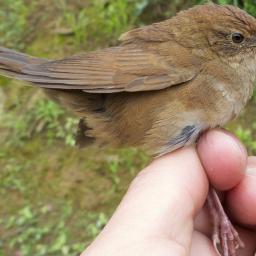
The Sichuan bush warbler was discovered after its insect-like song attracted the notice of researchers. 19 years on, it has finally been relocated and confirmed as a new speciesA new bird species has been discovered in central China by an international team of scientists. This shy brown bird, named the Sichuan bush warbler, Locustella chengi, breeds in the mountainous region of the Sichuan Basin at 1000-2300 m elevation. Its winter home is currently unknown. This bird was first noticed whilst singing its distinctive song in May 1992 by two members of the research team, who thought it might be something new. After nearly two decades of searching, they found the bird again. Extensive analyses of the bird’s DNA, physical measurements, plumage colour and vocalisations confirmed their hunch that this is indeed a new bird species to science. Continue reading...
|
 |
by Mo Costandi on (#86B5)
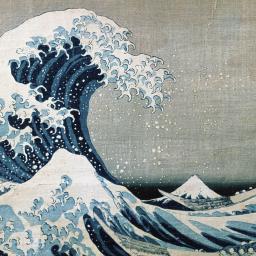
A new theoretical model describes the nervous impulse as an electromechanical wave
|
 |
by James Gaines on (#8695)
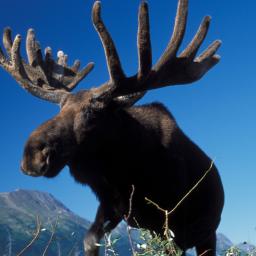
Minnesota moose population has gone from 8,000 to 3,450 since 2006 Continue reading...
|
 |
by Michael Halpern on (#867X)
Activists and corporations are increasingly using public information laws to intimidate scientists. Funding disclosures are fair game, argues Michael Halpern. But documents related to the research process should stay off limits. Continue reading...
|
by Monica Tan on (#8660)
Australian National University researchers enlisted an amateur stargazer to confirm the existence of the planet, which orbits a star 500 light years from Earth Continue reading...
 |
by Produced by Simon Barnard and presented by Ian Sam on (#8661)
The team look at the rapid rise of genome editing procedures and the power scientists now have to tinker with human DNA. Where's the technology going? And where should it stop? Continue reading...
|
 |
by Press Association on (#863X)
Parents’ fomo is justified as they are left behind by terms like fleek, bae and other neologisms their children are using online Continue reading...
|
 |
by Alan Yuhas in New York on (#8663)
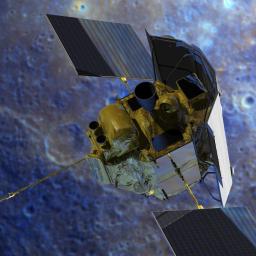
The probe, which was the first to orbit planet closest to sun, collected massive amounts of revelatory data before running out of fuel Continue reading...
|
by Amy Westervelt on (#85CF)
When it comes to health research, large gender gaps limit how much we know about the difference between women’s health and men’s
 |
by Raya Jalabi in New York on (#854J)
Newly disclosed emails reveal American Psychological Association coordinated with officials in CIA and White House to help ethically justify detainee program Continue reading...
|
 |
by Ian Sample, science editor on (#84MK)
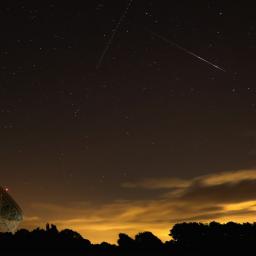
Site to host headquarters for the Square Kilometre Array, which will draw on over a hundred thousand dishes and antennae across Australia and South AfricaBritain has been chosen to host the permanent headquarters for the world’s largest radio telescope, an observatory that aims to delve deep into the early history of the universe.Members of the Square Kilometre Array (SKA) project decided on Wednesday that the Jodrell Bank site near Manchester would become the full-time home for the telescope’s operational centre, despite an impressive Italian counter-bid.Related: The Square Kilometre Array: big and lonely Continue reading...
|
 |
by David Shariatmadari on (#848W)
Ed Miliband has been pilloried for dropping his ‘t’s. But we should think twice before condemning this perfectly innocent linguistic tic Continue reading...
|
 |
by Martin Robbins on (#845R)
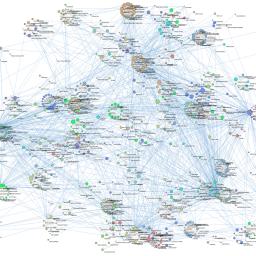
What are the most expensive kinks? Is porn keeping track with inflation, and is it possible to map ‘fetish-space’? Porn metadata could help find the answers to these and many other questions about human sexuality. Continue reading...
|
 |
by Ian Sample, science editor on (#82SF)
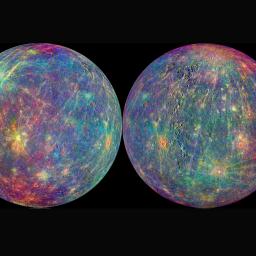
The probe, which has been mapping Mercury since 2011, is due to run out of fuel on Thursday and is expected to crash into the far side of the planetMercury, the innermost planet of the solar system, will acquire a fresh crater on Thursday when a half-tonne US spacecraft slams into the planet’s surface to end its spectacular four-year mission.The Messenger probe launched from Earth in 2004 and has been mapping Mercury in exquisite detail since it arrived in orbit in 2011. The spacecraft has beamed back a series of breathtaking images of the tiny, scorched world, which orbits so close to the sun that daytime temperatures reach 427 Celsius.Related: Mercury's 'dynamic and complex world' revealed by Nasa's Messenger Continue reading...
|
 |
by Dr Dave Hone on (#82M4)
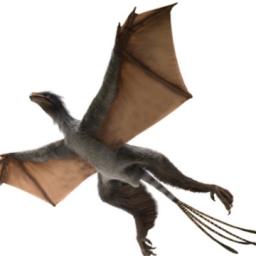
Incredible new find from China has both feathers and bat-like wingsResearchers today announced the discovery of a stunning new dinosaur fossil: a glider with wings similar to both birds and bats. It has been named Yi qi (meaning ‘strange wing’) and is a small feathered dinosaur from the Middle Jurassic age fossil beds of China that have yielded a host of important fossils in recent years. Yi qi, like so many other small dinosaurs, is preserved with a full coating of feathers and was a close relative of the lineage that ultimately gave rise to birds.However, what sets this animal apart from numerous other dinosaurian gliders and proto-birds is the composition of its wings. In addition to some unusual feathers that are positioned on the long arms and fingers, there is a truly gigantic bone on each wrist that extends backwards, and between this bone and the fingers is preserved a membrane-like soft tissue that would have given the animal something of a wing, like that of bats.Related: 'Bizarre' Jurassic dinosaur discovered in remarkable new find Continue reading...
|
 |
by Marcus du Sautoy on (#82GW)
A second mathematics curriculum in Britain’s schools should teach the exciting big ideas behind it, like the concept of infinity. More trigonometry is not enoughThe Labour party has made a commitment to ensure that every young person studies mathematics up to the age of 18. Of course, the people it will affect don’t have the vote – although if it was up to Labour they would: to give 16- and 17-year-olds the right to vote is one of their other promises. But what about all those people who do have the vote? Would they have appreciated the chance to carry on their mathematical education, or were they only too happy to give it up as soon as they could?Related: Labour plans for maths until 18 'best protection' against unemploymentMany of the best algorithms contain no numbers or equations at all, but are full of mathematical thinking Continue reading...
|
 |
by Jamie Grierson on (#824D)
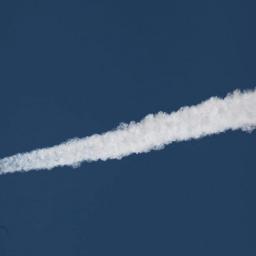
All the latest developments as Progress M-27M vessel, which was carrying supplies to the International Space Station, is said to be out of control5.09pm BSTThe Russian space agency has conceded its out-of-control cargo spacecraft will not be able to dock with the International Space Station.Because of this, the craft’s continued flight and its docking with the ISS is not possible.3.52pm BSTAstronauts Scott Kelly and Mikhail Kornienko, current crew members on board the International Space Station, have said flight controllers have given up trying to command the out-of-control cargo carrier.We should be OK.The program plans for these kinds of things to happen. They’re very unfortunate when they do. The important thing is hardware can be replaced.3.46pm BSTOur Moscow correspondent Shaun Walker says representatives of Roskosmos, the Russian space agency, are holding a press briefing in the Russian capital. We’re waiting for further details on who is speaking but we have these initial remarks from one of the representatives:It’s impossible to say who or what is responsible for this at this point. There will be a state commission which will meet to discuss all the issues around further launches. The next launch is due on 26 May.A safe docking with the ISS is not possible. We are working out different options for a water landing.3.34pm BSTThe total financial hit from the failed launch of Progress 59 could reach 5 billion rubles (£62 million), according to the Russian news agency Interfax, as quoted in the Moscow Times. It adds:This loss may only be partially covered: sources in major insurance companies told the agency that the ship was insured to the tune of 2 billion rubles (£25 million).3.12pm BSTMy colleague Ian Sample has more from ESA director Thomas Reiter.Reiter said he had instructed the space agency’s European Space Operations Centre in Darmstadt, Germany, to track the spacecraft so that teams can predict when and where the spacecraft will come down if it cannot be rescued.The spacecraft is 160 miles high and travelling at more than 16,000mph. That altitude is sufficiently below the space station to pose the crew no problems, but some satellites might need to take evasive manoeuvres. Such moves were becoming ever more necessary in space, said Reiter.3.02pm BSTNasa has just issued this brief update:Docking has been called off for the Progress 59 spacecraft. Russian flight controllers are continuing to assess the vehicle and what the plan going forward will be. Additional information will be provided as it becomes available.2.44pm BSTSo there’s a distinct possibility the Progress 59 spacecraft could be orbiting Earth for more than a week.I’m starting to wonder if I’m on course to set a new live-blogging record.2.40pm BSTMy colleague Ian Sample has more from ESA director of human spaceflight and operations Thomas Reiter. The former astronaut says:Re-entry is normally done over the south Pacific in order to avoid any debris falling on firm terrain.Not everything will burn up and if it’s an uncontrolled entry then there will be fragments that will hit the surface.2.16pm BSTThomas Reiter, director of human spaceflight and operations at the European Space Agency, just told me that if the Russians cannot regain control over the spacecraft, it could be up there for a week and a half max.Normally, these vessels are jettisoned on controlled re-entry paths over the south Pacific, so that any fragments that survive burnup land in the ocean. This would be an uncontrolled re-entry, so some pieces could make it to land.2.07pm BSTAn unmanned Russian cargo spacecraft plunging back to Earth and apparently out of control has passed over southern England. Here’s what we know so far:
|
 |
by Ian Sample and Shaun Walker in Moscow on (#8240)
Cargo vessel ferrying supplies to the International Space Station is said to be falling to Earth after contact was lost Continue reading...
|
 |
by Guardian Staff on (#825B)
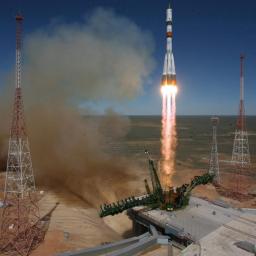
The launch of Russia's Progress spacecraft from the Baikonur Cosmodrome in Kazakhstan on Tuesday. The unmanned vessel, which was carrying supplies to the International Space Station, is said to be out of control and hurtling towards Earth. There were no technical issues reported upon its launch, but contact was lost with the craft on Wednesday Continue reading...
|
by Guardian film on (#824M)
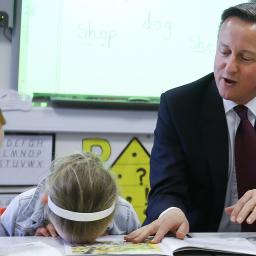
Creation Ministries International’s anti-evolution film on Darwin receives tax rebate from government agency, Screen Australia, thanks to legal loophole
 |
by George Arnett on (#82CV)
Candidates in the general election have signed up for a workshop aimed at brushing up their numeracy skills Continue reading...
|
 |
by Dean Burnett on (#82CX)
If being outraged and offended is such an unpleasant experience, why is it so common? And why do so many people jump at the chance to experience it? Continue reading...
|
 |
by Guardian Staff on (#822W)
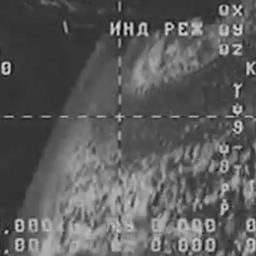
An unmanned Russian spacecraft is seen spinning out of control above Earth. Nasa published the footage on Tuesday, shortly before losing contact with Progress M-27M/59P. The capsule is carrying three tons of food and supplies for the astronauts living at the International Space Station. The nature of the technical glitch is unclear, but Nasa said a problem became apparent after Progress separated from its accompanying rocket Continue reading...
|
 |
by Amy Coats on (#81XT)
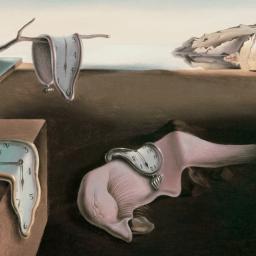
We, and the world around us, may have a more important role in determining our inner sense of time than we thought Continue reading...
|
by Amy Mount on (#81QV)
Insights from the humanities deserve greater attention in debates about the role of evidence and expertise in policy.
by Agence France-Presse on (#81FC)
Mission control loses contact with orbiting cargo capsule, which is carrying three tons of food and supplies for astronauts on the International Space Station Continue reading...
 |
by Jon Butterworth on (#81N1)
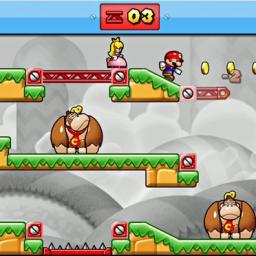
On bit rot, Donkey Kong and and old photographs Continue reading...
|
 |
by Ian Sample, science editor on (#80B1)
Tests on subjects who swapped a fatty, meat-heavy diet for foods rich in beans and vegetables found a drop in biological markers for cancer in just two weeksSwapping a western diet for traditional African meals may reduce the risk of colon cancer, scientists have found.Tests on African Americans who replaced their fatty, meat-heavy diets with rural African foods rich in beans and vegetables found that in just two weeks, biological markers pointed to a drop in their disease risk. Continue reading...
|