 |
by Produced by Simon Barnard and presented by Ian Sam on (#6SFN)
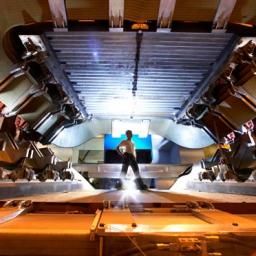
The greatest particle accelerator ever built is up and running again - but what will it find this time? Continue reading...
|
| Link | http://feeds.theguardian.com/ |
| Feed | http://feeds.theguardian.com/theguardian/science/rss |
| Updated | 2026-10-01 05:30 |
 |
by Jack Stilgoe on (#6SB3)
Two hundred years ago a volcanic eruption cooled the Earth. Could it help us tackle global warming today?The island of Sumbawa in what is now Indonesia began to crack apart 200 years ago this week. On 10 April 1815, an explosion that could be heard a thousand miles away announced the largest volcanic eruption in recorded history. Mount Tambora, once among the highest peaks in the East Indies, was blown in half. Thousands in the immediate vicinity were killed by lava, wind, ash, fire and tsunamis, but the volcano’s effects echoed far further and longer. The force of the explosion catapulted millions of tonnes of sulphur miles upwards into the stratosphere where it was held aloft. A haze encircled the planet, providing it with a temporary sunshade. Over the next three years, Tambora cooled the surface of the planet by a degree celsius.In Europe and America, crops failed, diseases flourished and riots and famine broke out. The year 1816 became known as the “year without a summerâ€. Farmers, philosophers, artists and writers struggled to make sense of their new weather. In a recent book Gillen D’Arcy Wood describes the indelible mark the volcano has left on our culture. In England, Constable and Turner used unusual quantities of red paint as they reproduced the vivid volcanic sunsets. In June 1816, as snow fell in New York, four friends on the shores of Lake Geneva were kept inside by relentless rain and storms. The ghost stories that they told one another led to Tambora’s most famous cultural offshoot, Frankenstein. Mary Shelley described in her introduction the “wet, ungenial summer†that inspired her parable of irresponsible science, which she subtitled “The Modern Prometheusâ€. Continue reading...
|
by Rowena Mason Political correspondent on (#6T1S)
Records reveal that Matthew Hancock has taken donations from Neil Record, who financially supports the Global Warming Policy Foundation thinktank Continue reading...
by Jon Butterworth on (#6RYF)
After successfully circulating beams at lower energies on Easter morning, CERN is now into new territory again
 |
by Nik Sultana on (#6SAD)
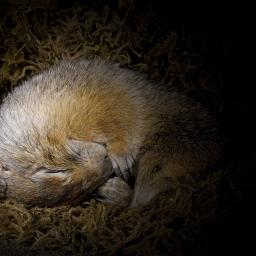
The processes in their brains during hibernation are exciting scientistsThis month, Arctic ground squirrels emerge in Alaska after eight months’ hibernation. It hasn’t been easy: during hibernation, their body temperature can drop as low as -2.9C, a record for mammals, and stay there for two to three weeks before they undergo a bout of shivering to warm up. Scientists are scrutinising this mechanism to see how temperature management can help humans to recover from cardiac arrests and strokes.“We and others have identified at least one mechanism that the [squirrel] brain uses to control this onset of hibernation,†says Professor Kelly Drew, who studies hibernation biology at the University of Alaska Fairbanks. “That mechanism has potential to guide development of drugs that uses the same mechanism to cool people.†Continue reading...
|
 |
by Nicola Davis on (#6RTS)
Nick Lane’s book The Vital Question attempts to solve one of the universe’s biggest conundrums: why life is the way it is Continue reading...
|
by Carole Jahme on (#6RAC)
An interview with controversial evolutionary psychologist Professor David Geary throws up questions about the role of gender in health and wellbeing Continue reading...
by Sarah Boseley Health editor on (#6SBC)
Research involving health records of 2 million people condradicts current thinking, sparking surprise among authors and health experts
 |
by Haroon Siddique and agency on (#6R7B)
Stress from serious events in first 14 years of life may be risk factor and one trigger for disease, finds Swedish study of 10,000 families
|
 |
 |
by Hannah Devlin, science correspndent on (#6QN9)
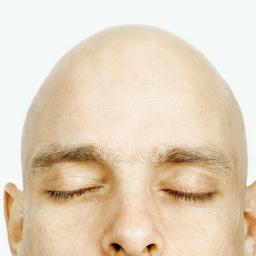
Although it seems counterintuitive, tests indicate that plucked follicles ‘communicate’, causing an immune response that leads to regrowthBaldness is often dreaded by men and there are few, if any, satisfactory options for reversing it. Now scientists have discovered a potential solution, after showing that plucking hair out could actually stimulate growth.The counterintuitive discovery, in mice, demonstrates a previously unknown method for triggering hair regeneration. Although the work is at an early stage, the authors believe the same process could be helpful for tackling hair loss in men or people with alopecia. Continue reading...
|
 |
by Mo Costandi on (#6QH0)
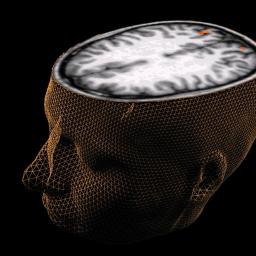
Researchers are facing up to methodological flaws that plague functional magnetic resonance imaging, but the interpretative problems might be harder to solve Continue reading...
|
 |
by GrrlScientist on (#6Q7M)
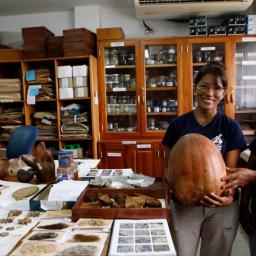
As an experiment in online book reading clubs, I will share a series of pieces about a group of scientists that is reading and discussing the book, Island Biogeography Revisited -- are you willing to join us? Continue reading...
|
by Dr Dave Hone on (#6Q10)
Bitten skull shows damage from both before and after death Continue reading...
 |
by Ian Sample, science editor on (#6PZJ)
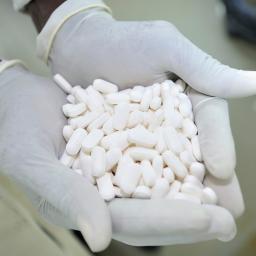
Although an effective therapy is still some years off, trial using high doses of antibody reduced HIV levels in patients’ blood systems 300-foldResearchers are a step closer towards an antibody treatment for HIV, after trials of an experimental therapy reduced the amount of virus in patients’ blood.A small trial in 17 HIV patients found that high doses of an antibody could slash levels of virus in patients’ bodies, though scientists warned that an effective therapy was still years off. Continue reading...
|
 |
by Alan Travis and Damien Gayle on (#6PWH)
Lynne Featherstone accepts advisory council’s recommendation of 12-month ban on substances including most widely used alternative to cocaineFive legal highs, including an alternative to cocaine that is one of the most common in Britain, are to be banned from midnight on Thursday, ministers have announced.The drug minister, Lynne Featherstone, said she had accepted a recommendation from the government’s official drug advisers that the five legal highs should face a temporary ban of 12 months while a full assessment of the harm they posed was undertaken.Related: The hidden dangers of legal highsEthylphenidate-based products are a growing issue and their use is associated with bizarre and violent behaviourRelated: Legal high drug deaths soar in UK Continue reading...
|
 |
by Sharon Darwish on (#6PQA)
Neuroscientists have come far in improving our understanding of the human brain. But just how far can the science take us? Continue reading...
|
 |
by Owen Bowcott Legal affairs correspondent on (#6PA8)
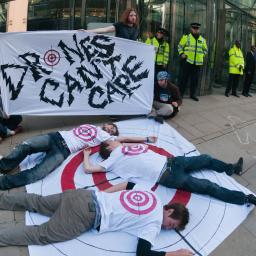
Fully autonomous weapons should be banned by international treaty, says a report by Human Rights Watch and Harvard Law SchoolFully autonomous weapons, already denounced as “killer robotsâ€, should be banned by international treaty before they can be developed, a new report urges the United Nations .Under existing laws, computer programmers, manufacturers and military commanders would all escape liability for deaths caused by such machines, according to the study published on Thursday by Human Rights Watch and Harvard Law School.
|
 |
by Hannah Devlin, science correspondent on (#6NZJ)
Male relatives of sex offenders five times more likely to commit similar crimes, and 40% of risk is genetic, study suggestsBrothers of men convicted of sexual offences are five times more likely than average to commit the same types of crimes, scientists have found.The study suggests that genetic factors are largely responsible for the effect and that environmental factors, such as sons learning from fathers, have only a minor influence. The authors urged authorities to consider interventions for the male relatives of sexual offenders, including counselling on appropriate sexual behaviour or even offering medications designed to lower sex drive. Continue reading...
|
 |
by Sarah Boseley Health editor on (#6NRX)
University of Leicester study finds that someone who is 5ft tall faces a 32% greater risk than someone who is 5ft 6in
|
 |
by Associated Press in Dallas on (#6NQ8)
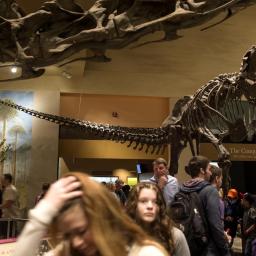
Zookeeper Tim Brys and his son Wylie excavate dinosaur fossil that could be a nodosaur, found behind a grocery store Continue reading...
|
by Ian Sample, science editor on (#6N9R)
Laureates, including former Wellcome Trust employee Sir John Sulston, argue that investments by charities conflict with their aims of improving public health Continue reading...
 |
by Mark Miodownik on (#6M9N)
It’s no surprise people have such strong feelings about chocolate Continue reading...
|
 |
by Suzanne Goldenberg in Longyearbyen on (#6N20)
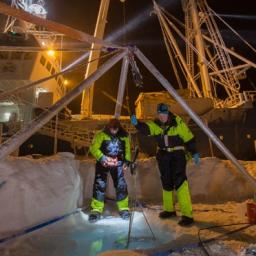
Scientists investigate why sea ice is retreating faster than expected as cover falls to new low, confounding predictions Continue reading...
|
 |
by GrrlScientist on (#6N29)
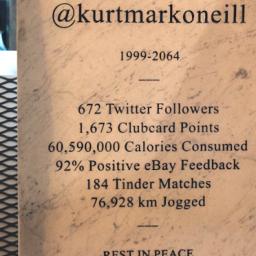
Lifelogging uses modern digital technologies to record, track, measure and share everything from heartbeats to heartbreaks. An exhibition at Science Gallery Dublin uses science, art and technology to explore the ethics, consequences and potential future uses of lifelogging Continue reading...
|
 |
by Nicola Davis on (#6MES)
The solar-powered plane that wings it without carbon output Continue reading...
|
 |
by Roger Pielke Jr on (#6M9Q)
In his pivotal contribution to the US-Iran nuclear negotiations, Ernest Moniz, US Secretary of Energy, offers a role model of how to integrate science and politics. Continue reading...
|
 |
by Agence France-Presse on (#6KSB)
Average height of a male in the Netherlands has gained 20 cm (eight inches) in the last 150 years, according to military recordsThe Netherlands is the land of giants: on average, its women stand almost 1.71 metres (5.6 feet) tall, and its men 1.84 metres.
|
by Agence France-Presse on (#6KRR)
Hundreds of bodies found in Dominican church help epidemiologists explain how disease spread in the pastSamples from mummies in a Hungarian crypt have revealed that multiple tuberculosis strains derived from a single Roman ancestor that circulated in 18th-century Europe, scientists said Tuesday.
|
by Associated Press in Bethesda, Maryland on (#6K29)
|
 |
by Damien Gayle on (#6JZ1)
Campaigners point finger at austerity as Public Health England report shows first decline across all age groups in nearly two decadesCuts to social care may have contributed to a shock fall in life expectancy for older women, campaigners have said.Life expectancies for women aged 65, 75, 85 and 95 all fell in 2012 compared with a year earlier, the first slip in all age groups in nearly two decades. Continue reading...
|
by Andrew Przybylski and Netta Weinstein on (#6JX8)
A recent letter from a group of headteachers claimed that allowing children to play some types of video game effectively constitutes parental neglect. But what is the scientific evidence for such claims? Continue reading...
 |
by David Shariatmadari on (#6JHP)
As I recently found out, donating money is as much about making ourselves feel good as it is helping others. But it’s something that we should embrace Continue reading...
|
 |
 |
by Hannah Devlin, science correspondent on (#6JDS)
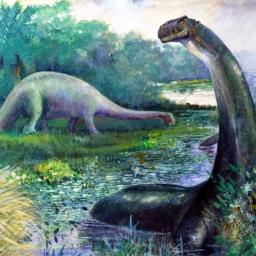
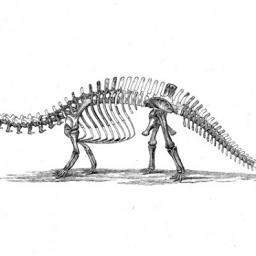
Despite its relegation to a subset of the Apatosaurus family in 1903, new research suggests that the Brontosaurus is distinct enough to be a genusThe Brontosaurus has been consigned to extinction not once, but twice – the second time when scientists concluded it was too similar to other long-necked dinosaurs to deserve its own genus.Now the “thunder lizard†looks set to make a comeback, after a new analysis suggests that Brontosaurus specimens are sufficiently distinct from other species after all. Continue reading...
|
 |
by Dr Dave Hone on (#6JBZ)
A new analysis restores Brontosaurus to the ranks of the dinosaurs, but why? Continue reading...
|
by Sheila Jasanoff, J. Benjamin Hurlbut and Krishanu on (#6J8E)
Expert calls for a moratorium on germline gene engineering are no substitute for richer public debate on the ethics and politics of our biotechnological futures. Continue reading...
 |
by Athene Donald on (#6HYP)
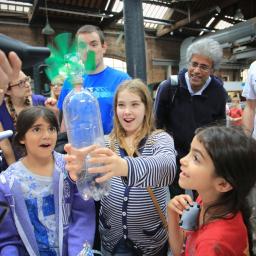
Across England, the education and outreach work of the four museums in the Science Museum’s Group covers far more than simply a casual afternoon’s entertainment Continue reading...
|
 |
by Jonathan Aitken on (#6HXE)
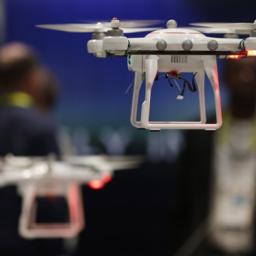
The rapid growth and interest in drones has outpaced the technology available to support effective regulation. Without it, the industry may remain grounded Continue reading...
|
 |
by Melissa Davey on (#6HPM)
Weizmann Institute of Science in Israel and Victor Chang Institute in Sydney make discovery which may have major implications for heart attack sufferersUnlike animals such as the salamander and the zebrafish, humans are unable to easily regenerate heart cells, making it difficult to recover from the permanent damage caused by heart attacks.But scientists from the Weizmann Institute of Science in Israel and the Victor Chang Institute in Sydney have discovered a way to stimulate heart muscle cells to grow, which could have major implications for heart attack sufferers in the future.Related: The spread of western disease: 'The poor are dying more and more like the rich' Continue reading...
|
 |
by Robert Cheke on (#6GY0)
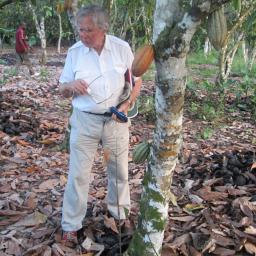
Plant pathologist who did much to ensure food security in Africa with his work on cassava virus pandemics Continue reading...
|
 |
by GrrlScientist on (#6G8P)
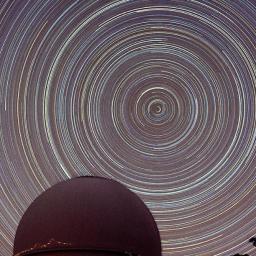
It might surprise you to learn that astronomers maintain collections, although these collections are quite different to those maintained by other departments in natural history museums, as we learn in today’s “Museum Monday†video Continue reading...
|
 |
by Richard Sugg on (#6G4H)
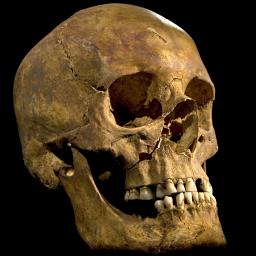
Don’t write-off corpse medicine – the remarkable discovery by Nottingham University shows what treatments can be extracted from a cow, or indeed a human Continue reading...
|
by Kevin Rawlinson on (#6FN1)
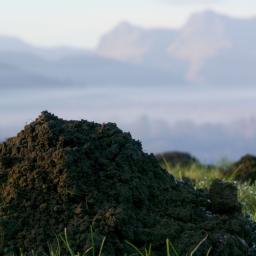
Forecast highlights danger of growth in antimicrobial resistance that could take surgery back to ‘19th-century’ mortality rates
 |
by Ian Sample Science editor on (#6FCS)
Physicists hope particle accelerator will explain dark matter, gravity and antimatter as it completes its test run following an upgrade Continue reading...
 |
by Jon Butterworth on (#6ENS)
Easter morning excitement as the CERN accelerator team send beams around the LHC for the first time in many months - a major milestone on the way to even higher energy collisions!
|
 |
by David Spiegelhalter on (#6EHZ)
Drawing on the widest survey of sexual behaviour since the Kinsey Report, David Spiegelhalter, in his book Sex By Numbers, answers key questions about our private lives. Here he reveals how Kinsey’s contested claim that 10% of us are gay is actually close to the markFor a single statistic to be the primary propaganda weapon for a radical political movement is unusual. Back in 1977, the US National Gay Task Force (NGTF) was invited into the White House to meet President Jimmy Carter’s representatives – a first for gay and lesbian groups. The NGTF’s most prominent campaigning slogan was “we are everywhereâ€, backed up by the memorable statistical claim that one in 10 of the US population was gay – this figure was deeply and passionately contested.Related: Gay Britain: what do the statistics say?The proportion of people with same-sex experience is higher than the proportion who identify as gay and bisexual Continue reading...
|
 |
by Press Association on (#6EG5)
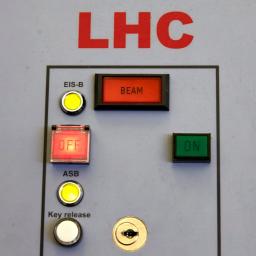
Cern confirms successful restart of world’s largest and most powerful atom smasher following upgrade, raising hopes of a ‘new era for science’ Continue reading...
|
 |
by Adam Rutherford on (#6EFV)
The underlying realities of the world – from Earth’s rotation around the sun to Darwin’s theory of evolution – are rarely obvious or expectedAll is not what it seems. Much of the universe – from the unimaginably small to the cosmological – is not how it appears to us, and our view is lamentably limited. The Earth’s rotation around the sun has been accepted for less time than it was not, and we still don’t yet know what makes up most of the cosmos. The knowledge that all life is built of cells is less than two centuries old, that all life is encoded in DNA has been known for just 50 years. When Darwin came up with evolution by natural selection, his loyal ally TH Huxley exclaimed “How extremely stupid, not to have thought of that!â€But evolution is not obvious at all, and it took thought and experiment and hard tenacious graft to reveal that truth. The real structure of the universe – the atomic, subatomic and quantum – was concealed from our eyes for all but the tiniest fragment of our tenure on Earth. We humans are awful at perceiving objective reality. We come with inbuilt preconceptions and prejudices. We’re dreadful at logic, and see patterns in things that are not there, and skip over trends that are. We attribute cause and agency to chance and coincidence, and blame the innocent as the root of all manner of evil. We use the phrase “common sense†as an admirable quality for scrutinising the world in front of us.Our senses and psychology perceive the world in very particular ways that are comically easy to fool.Related: Why racism is not backed by science Continue reading...
|