 |
by Patrick Barkham on (#1BD6F)
Scientists identify first tree to show strong tolerance to the disease raising hopes of developing a resistant strainShe has a silver-grey trunk, is 200-years-old and unusually resilient. Betty, a mature ash tree in Norfolk, is offering hope that ash dieback disease will not be as destructive as first feared after scientists identified her “strong tolerance†to the disease.Researchers from a government-backed consortium of universities and research centres have developed three genetic markers to enable them to predict whether a tree is likely to be tolerant to the disease, raising the possibility of using selective breeding to develop strains of disease-resistant trees. Continue reading...
|
| Link | http://feeds.theguardian.com/ |
| Feed | http://feeds.theguardian.com/theguardian/science/rss |
| Updated | 2026-10-02 03:45 |
 |
by Masuma Rahim on (#1BD2T)
Standing-only escalators can cut congestion by 30%, but persuading commuters of that wasn’t easy. How do you motivate people to engage in new behaviour?The British are, notoriously, sticklers for rules and order. Woe betide the person who jumps the queue, or he who throws litter in the street, for they will be punished with a litany of passive-aggressive tutting. The same is true of Underground users who ignore the command to “stand on the right and walk on the leftâ€, and rightly so – rules are rules, after all, and on the whole they help maintain social order. Or they did until staff at Holborn station turned one of those time-honoured rulings on its head.Related: The tube at a standstill: why TfL stopped people walking up the escalators Continue reading...
|
 |
by Rebekah Higgitt on (#1BCVG)
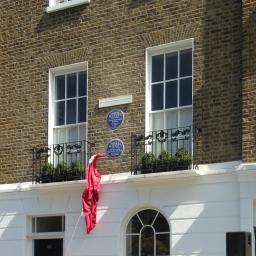
This week saw the first Blue Plaque unveiling of 2016, to physicist Patrick Blackett and writer Samuel Beckett. But is this parity for science and literature typical of the 150-year-old scheme?The first Blue Plaques to be unveiled in the 150th anniversary year of the London-based scheme were a “double blue†in Paultons Square, Chelsea. Most attention will probably be on the writer Samuel Beckett, who lodged at the address in 1934, but the physicist and government advisor Patrick Blackett, who lived at the same address between 1953 and 1969, is also commemorated.Blackett is undoubtedly the less famous but certainly meets the stiff criteria of significance demanded by the Blue Plaque panel (full disclosure: I am currently a member of the panel but was not at the time that these plaques were decided). He was, after all, a Nobel Prize laureate – awarded in 1948 “for his development of the Wilson cloud chamber method, and his discoveries therewith in the fields of nuclear physics and cosmic radiation†– and a President of the Royal Society. Continue reading...
|
 |
by Leonardo DiCaprio and Fred Krupp on (#1BCNN)
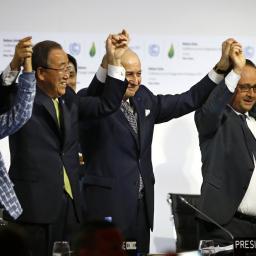
The Paris agreement was a breakthrough, but it is up to all of us to act as guardians of these new standards – and of our futureLast December, world leaders convened in Paris in an extraordinary effort to find a global solution for reducing destructive carbon emissions – the indisputable driver of climate change – and to prevent our planet from a destructive 2C increase in global temperatures. Today, leaders gather again – this time at the United Nations in New York – to sign the landmark agreement.Related: Paris climate deal to be signed by over 130 countries at UN ceremony Continue reading...
|
 |
by Reuters on (#1BC9H)
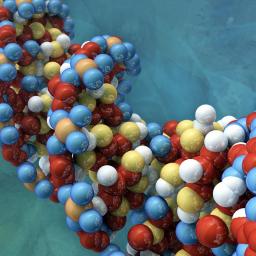
The UK pharma company is teaming up with pioneer Craig Venter in a huge project to discover new treatmentsAstraZeneca has teamed up with genome pioneer Craig Venter to launch a huge gene hunt in the most comprehensive bet yet by a pharmaceutical firm on the potential of genetic variations to unlock routes to new medicines.
|
 |
by Stuart Clark on (#1BBD8)
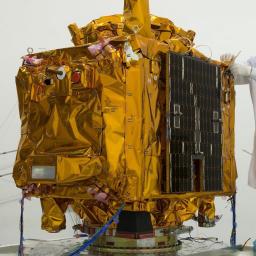
A Russian rocket carrying a French satellite to test a German theory is scheduled for launch on Friday. At 21:02 GMT, the Soyuz rocket will blast off from Kourou, Europe’s spaceport in French Guiana, carrying the experiment.Microscope, which stands for Micro-Satellite à traînée Compensée pour l’Observation du Principe d’Equivalence, is designed to test the very heart of Einstein’s 1915 theory of general relativity, which gives us our best description yet of gravity. Continue reading...
|
 |
by Oliver Balch on (#1BB03)
A startup has invented a DNA analyzer that could potentially revolutionize healthcare in the developing worldAdvances in disease diagnostics now offer clinicians a staggering degree of accuracy. But access to results generally requires a well-equipped lab and a few weeks’ waiting time.But that could soon change thanks to a new, low-cost diagnostic DNA analyzer the size of a smartphone. Continue reading...
|
 |
by Nicola Davis on (#1BASG)
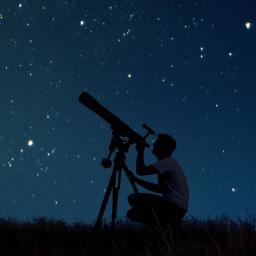
Thursday night and Friday morning are the peak of this year’s shower, so if you want to know where to look (and what you’re seeing), here’s a handy explainerWith the Lyrid meteor shower set to give its best show on Friday morning, we reveal everything you need to know about this astronomical event. Continue reading...
|
 |
by Ian Sample Science editor on (#1BAEV)
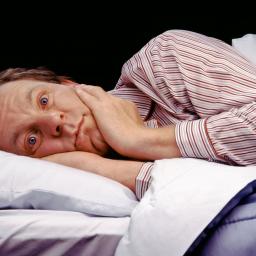
Just as birds and dolphins stay alert for predators whilst asleep, it seems that half of the human brain may remain similarly watchful in new surroundingsThe pillows are firm, the duvet is snug, and the sheets are pristine. But even in the comfort of a luxury hotel, your first night’s sleep can be dreadful compared to a night in your own bed.The phenomenon is so familiar to sleep researchers that it has its own name: the first night effect. For some reason, when we tuck ourselves up under a new roof, we often have a troubled night and wake up feeling groggy and tired. Continue reading...
|
 |
by Nicola Davis on (#1B9ZG)
The space telescope celebrates its anniversary on 24 April; this spectacular image of a cloud of gas and dust 8,000 light years away celebrates the occasionIt looks like a giant, glistening, soap bubble blown into the night sky. In reality, it’s a cloud of gas and dust 10 light-years across that exists around 8,000 light-years away in our Milky Way galaxy.Known as the Bubble Nebula, the wispy-looking shell surrounds an off-centred star whose mass is more than ten times that of our sun. The plasma thrown out by this star, its so-called stellar wind, is responsible for forming the “bubbleâ€, while its intense radiation causes the gas to glow. Continue reading...
|
 |
by Damian Carrington on (#1B9FB)
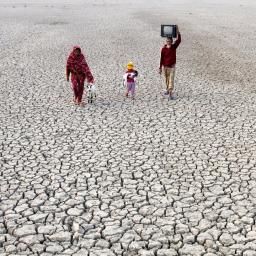
Analysis of difference between 1.5C and 2C of warming finds extra 0.5C would mean longer heatwaves, greater droughts and threats to crops and coral reefsA difference of half a degree centigrade may be barely noticeable day to day, but the difference between 1.5C and 2C of global warming is a shift into a new, more dangerous climate regime, according to the first comprehensive analysis of the issue.The scientists found the additional 0.5C would lead to longer heatwaves, greater droughts and, in the tropics, reduced crop yield and all coral reefs being put in grave danger. Continue reading...
|
 |
by Kathryn Harkup on (#1B8P5)
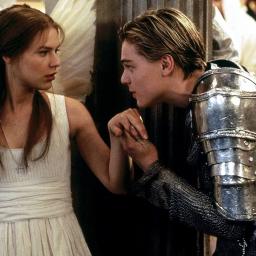
In celebration of the Bard, let’s forensically examine the curious substance that gave Juliet the appearance of death. Could a Japanese delicacy be a clue?
|
 |
by Graham Readfearn on (#1B8JA)
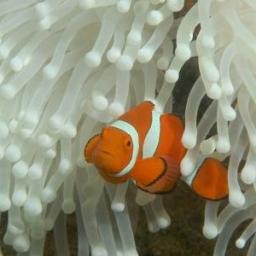
Corals on Loomis Reef are dying as one veteran scientist lets the “veil†of academia drop to reveal anger and frustrationStretching for half a kilometre or so, Loomis Reef is the place where the alarm bells started going off.Prof Justin Marshall has been diving this reef, about 270km north of Cairns, for 30 years. Right now he is, to say the least, angry. Continue reading...
|
 |
by Damian Carrington on (#1B8F2)
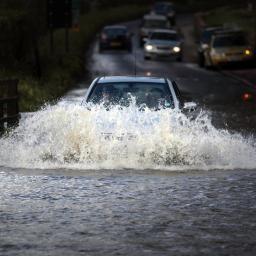
Newspaper is losing people’s trust on its global warming coverage, say group of UK’s leading climate advisers and top scientists in letter to the editorThe Times newspaper has been criticised for “poor quality†and “distorted coverage†of global warming by a group including some of the UK’s most eminent scientists, the chair of the government’s official advisers on climate change and a former chair of oil giant Shell.“If you lose trust, you lose everything; and on this issue, you are losing trust,†said the group, in a letter to the Times editor, John Witherow, seen by the Guardian. Continue reading...
|
 |
by Phil Gates on (#1B8BQ)
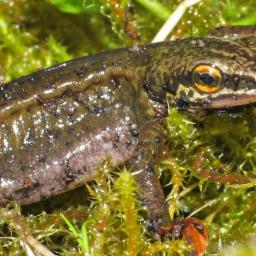
Crook, County Durham On dry land palmate newts are ungainly but in the pond they become water dragons, weaving about with an undulating wriggle of the tailIn the garden in spring the hour after sunset is sometimes the best. As the afterglow fades in the western sky the sounds of the day die away and even the rooftop blackbird, whose song echoes around the houses in late afternoon, falls silent. Then the creatures of the night begin to appear.We were hoping we might see the hedgehog that left droppings on the path the night before but the visitor this time was a palmate newt, making laborious progress on its short legs through the long grass. Continue reading...
|
 |
by Anthony Tucker, our Science Correspondent on (#1B8AM)
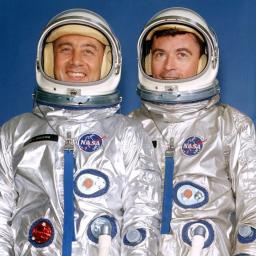
21 April 1965: Officials said the stunt went beyond minor clowning and could have disrupted scientific research
|
 |
by Nicola Davis on (#1B7KP)
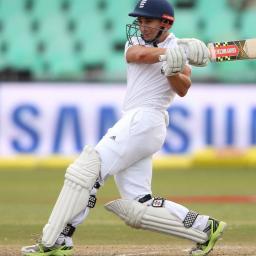
Cricketer James Taylor has been forced to retire due to a serious heart condition. But researchers argue that screening athletes would be detrimentalScreening of athletes to prevent sudden cardiac death does more harm than good, experts say.Sudden cardiac death is estimated to occur in around one in 100,000 people aged 12-35, often as a result of rare heart conditions that have not been diagnosed. Continue reading...
|
 |
by Guardian Staff on (#1B79T)
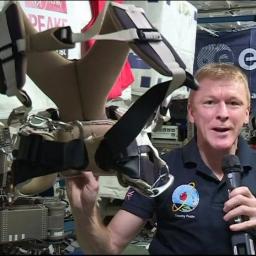
British astronaut Tim Peake says he will partake in the London Marathon, completing the race on a treadmill on board the International Space Station. Peake shows a harness which will keep him bolted on treadmill and says he’s been ‘putting in the miles’. The London Marathon will take place on Sunday Continue reading...
|
 |
by Ian Sample Science editor on (#1B6MK)
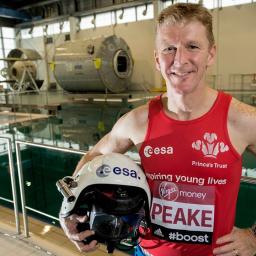
With no hot bath to ease his post-race muscles the astronaut will make do with warm water and wipes, but says he’s feeling good ahead of Sunday’s marathonYou could call it an unfair advantage. As tens of thousands of runners start the London marathon on Sunday, another competitor will take up the race unencumbered by endless queues for portable toilets, moving at 17,500mph high above their heads.But there is nothing unfair about Tim Peake’s marathon plans. The British astronaut who arrived at the International Space Station four months ago will run the 26.2 mile course on a treadmill in a cramped room that has no windows offering views on the blue-green world below. If he gets too hot, there is no fresh air to cool him, no water he can pour over his head. Continue reading...
|
 |
by Guardian Staff on (#1B6AE)
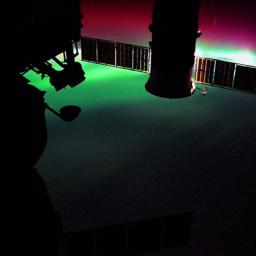
Nasa has released a timelapse video of the Aurora Borealis and Aurora Australis, as seen from an astronaut’s perspective. The footage, shot in ‘ultra high-definition’ from the International Space Station, shows the ethereal and hazy light formations passing across the night side of the planet. Nasa released the footage to commemorate the launch of Nasa TV UHD, a new television service operating in so-called ‘4K’ video resolution Continue reading...
|
 |
by Guardian Staff on (#1B65S)
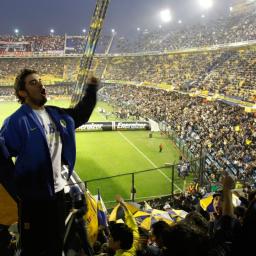
Readers answer other readers’ questions on subjects ranging from trivial flights of fancy to profound scientific conceptsStatistics show that there is such a thing as home advantage in team sports. Presuming that the (away) athletes’ skill levels don’t alter, their effort remains the same, and are professional enough not to be traumatised by the home fans’ noise, what could be the reason for this?
|
 |
by Jessica Aldred on (#1B5J8)
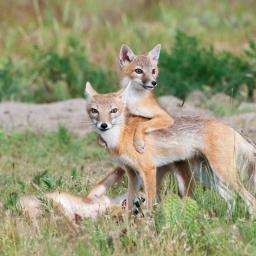
Animals and plants are increasingly being ‘translocated’ from their native areas to survive effects of climate change, poaching and habitat loss, says top conservationistMore than 1,000 species have had to be relocated because of climate change, poaching and humans taking their habitat, according to a top conservationist.Dr Axel Moehrenschlager said cases of “translocationâ€, such as India’s plan to relocate tigers to Cambodia or South Africa’s scheme to airlift rhinos to Australia, have increased exponentially in recent decades and will become more common due to human pressures driving species closer to extinction. Continue reading...
|
 |
by Kim Thomas on (#1B4VX)
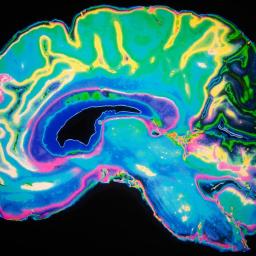
Greater understanding of genetics and characteristics of diseases are driving the development of new medicinesThe practice of medicine can be hit-and-miss: however good a drug is, it is unlikely to work well on everybody with that condition, whether it’s breast cancer or depression. But new treatments are emerging that are more able to respond to the particular characteristics a disease takes in an individual and that may, in the next 10 to 20 years, transform the way people are treated.While we can’t say for certain what drugs will be on the market in the next decade or so, basic research can provide some clues. In the treatment of cancer, basic research is focused on targeted therapies – treatments directed at the characteristics of a particular tumour, such as gene mutations or particular proteins. Tommy Dolan, director of Pfizer’s research and development site at Sandwich, says: “What we’re now seeing is things like ovarian cancer getting segmented into many different types of disease, and what that’s allowed us to do is target specific treatments with specific sub-segments of the cancer population.â€
|
 |
by Ben Quinn on (#1B3FH)
Researchers say analysis backs up public health concerns about importance of social contacts for health and wellbeingLoneliness and social isolation have been linked to a 30% increase in the risk of having a stroke or coronary artery disease, the two major causes of death and illness in wealthy societies.In findings which compared the effects of loneliness with recognised risk factors, such as anxiety and a stressful job, researchers said that their analysis backed up public health concerns about the importance of social contacts for health and wellbeing. Continue reading...
|
 |
by Melissa Davey on (#1B35A)
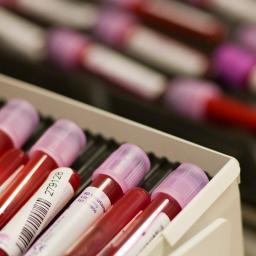
Australian researchers hope discovery can be used to diagnose disorder – now done through process of eliminationResearchers have developed the world’s first blood test that can detect the abnormal metabolism of blood cells in people with Parkinson’s disease, which means the blood test could be used to diagnose the disorder.At present the only way to diagnose Parkinson’s disease, a degenerative neurological condition, is through ordering a range of tests and scans to rule out other disorders, combined with examining symptoms. Continue reading...
|
 |
by Ian Sample Science editor on (#1B2XK)
Ban threatened to stop academics influencing government policy on subjects including energy and climate changeMinisters have exempted thousands of scientists from a controversial “gagging clause†that would have prevented the academics from trying to influence government on public policy matters.The move follows intense pressure from the scientific community to amend proposals drawn up by the Cabinet Office to stop organisations, mostly charities, from using taxpayer-funded grants to lobby the government or parliament.
|
 |
by Letters on (#1B2W9)
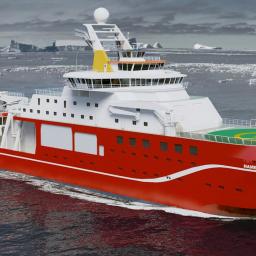
Science, like politics, is consumed by egos (Letters, 19 April). And none will have bigger egos than those securing a berth on this fantastic polar research vessel. The egos of scientists have prevented the furtherance of knowledge, bringing thought to a crashing halt, sometimes for hundreds of years. Because science is often considered to be fact, if these facts take hold with a fervour akin to religion, then all further questioning can become silenced. It should not be forgotten that all science rests precariously upon a complete unknowing of the absolute basics.That is not to say it is not useful. Rules are developed which allow a great deal of confidence in prediction. But all rules in science start from an approximation (often a series of approximations). These approximations are either things that we choose to neglect (with good reason), or things that are exceedingly complex and we choose to circumvent (the computer power may not be available), or we simply don’t understand. Most crucially, this last approximation always applies somewhere. So, in order to keep the scientists true to their science and not to their bloated egos for sailing aboard the Great NERC Endeavour, Boaty McBoatface is a perfect pride popper. It will also keep the politicians focused on the science produced and not their overwhelming need for success because they have thrown so much money at the problem. No photo opportunities on the ship’s prow.
|
 |
by Maev Kennedy on (#1B2J9)
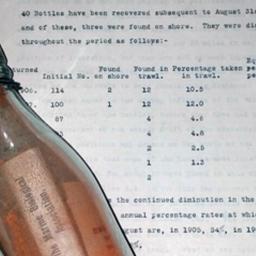
Communication thrown into sea by Plymouth biologist in 1906 and found by German woman confirmed as oldest in the worldWhen the distinguished marine biologist threw his message in a bottle into the sea, asking whoever found it to contact him, he wasn’t expecting a speedy response. Which is just as well, because it took just over 108 years – now officially confirmed by Guinness World Records as the oldest such message in the world.The German woman who found it has been given the reward promised in 1908, by the scientific institution which has inherited the debt of honour: a shilling. Continue reading...
|
 |
by Michael Cobden on (#1B2FY)
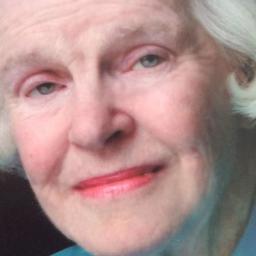
Throughout her life, first in apartheid-era South Africa and then in Canada, my stepmother Audrey “Bobbie†Cobden, who has died aged 92, fought against racism. She was also a great defender of the weak, the poor and the elderly.Bobbie was born and grew up in Johannesburg. Her father, Sydney Dodson, who managed the piano department of a furniture business in the city, and her mother, Olive (nee Hiles), divorced when Bobbie was in her teens. Continue reading...
|
 |
by Nic Fleming on (#1B286)
A new study suggests that some popular medicines – including allergy pills – could be harmful. But wait before you sneeze your way through the summer …Those planning a bathroom cabinet clear-out following headlines about a range of popular over-the-counter medicines causing brain shrinkage might want to reconsider.New research has concluded that people regularly taking popular drugs including Clarityn and Piriton for hay fever and other allergies, the sleeping tablet Nytol, and Night Nurse Liquid containing promethazine did worse in cognitive tests and showed signs of loss of brain cells and connections. Continue reading...
|
 |
by Nicola Davis on (#1B22K)
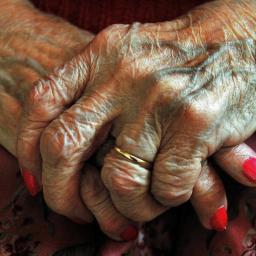
In the UK, dementia has fallen by a fifth over the past 20 years, possibly down to lifestyle and education changes, highlighting benefits of preventative actionThe proportion of older people suffering from dementia has fallen by a fifth over the past two decades with the most likely explanation being because men are smoking less and living healthier lives, according to new scientific research.
|
 |
by Richard P Grant on (#1B16K)
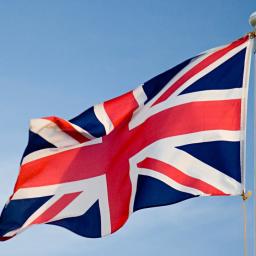
Does the EU referendum matter to the state of science in the UK? It depends on your perspectiveIt’s a matter of perspective.Like most people, there’s a set time by which I have to leave the house to catch a train. You get to see the same faces: the window cleaner with his ladder, the cyclist gamely puffing up the hill, the woman parking the red Renault.
|
 |
by Suzi Gage on (#1B127)
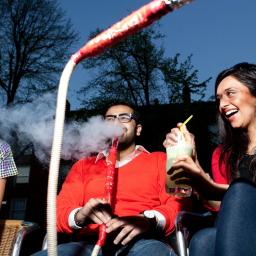
Shisha, hookah or waterpipes are thought by some to be a safer alternative to smoking cigarettes, but the evidence doesn’t necessarily agreeWaterpipe smoking is on the rise, particularly among teenagers and young adults. And one of the likely reasons for this is the belief that shisha is less harmful than cigarette smoking. But is this the case?Shisha (also known as hookah, waterpipes, hubble bubble) is the name for pipes containing water at the bottom, and a platform at the top where flavoured tobacco (or non-tobacco herbal mixtures) is covered with foil. Hot charcoal is then placed on top of the foil, and when a user breathes through a hose, a vacuum is created, drawing smoke through the water and into the mouth, where it is inhaled into the lungs. Shisha is a social activity, with one pipe sometimes having a number of hoses, or the hose being passed around. Continue reading...
|
 |
by Mark Brown Arts correspondent on (#1B0WZ)
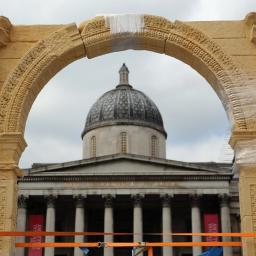
Faithful copy of ancient Syrian monument destroyed by Isis will stand in central London for three daysA monumental recreation of the destroyed Arch of Triumph in Palmyra, Syria, has been unveiled in London’s Trafalgar Square.The 1,800-year-old arch was destroyed by Islamic State militants last October and the 6-metre (20ft) model, made in Italy from Egyptian marble, is intended as an act of defiance: to show that restoration of the ancient site is possible if the will is there. Continue reading...
|
 |
by Petter Hellström on (#1B0DW)
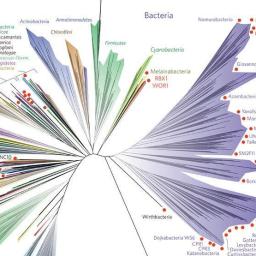
A new “tree of life†has prompted a re-evaluation of our place in evolution. But why are these diagrams named after the tree in the biblical Garden of Eden?Last week a team of scientists published a new “tree of life†in the journal Nature Microbiology. The evolutionary diagram, representing the interconnected family history of all life forms, deviates from earlier ones by granting significantly more space to bacteria, while eukaryotes – including fungi, plants, and animals – are relegated to one slender branch. But why is a multi-coloured, sprawling diagram like this one referred to as a tree in the first place? And why do scientists invoke the biblical image of immortality when they trace the course of evolution?Trees of life are often misread as chronologies of evolutionary history. However, because scientists cannot travel back in time, they cannot know with certainty how one species evolved into another. Instead they compare extant life forms and fossils to infer how closely related they are. In the past, trees of life were constructed by comparing visible physical characteristics. Following recent advancements in molecular biology, scientists can now calculate organisms’ degrees of affinity by comparing their genomes. The methods have been refined, yet even the most advanced representations remain approximations of life’s history. Trees are not records but models. Continue reading...
|
 |
by Bradley Busch on (#1B09D)
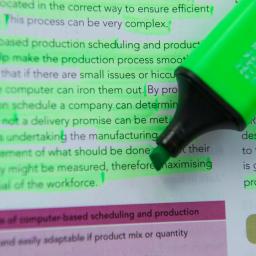
Ditch the highlighter and teach a friend. Psychology shows us a lot about how to improve our memory and avoid distractions – here are some dos and don’ts
|
 |
by Nicola Davis on (#1AYQS)
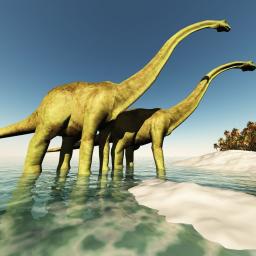
New research resolves longstanding controversy, showing dinosaurs were already heading for extinction before the asteroid strike that sealed their fateDinosaurs were in decline long before the asteroid struck that spelt their doom, new research suggests.Dinosaurs were on the up and up from the late Triassic about 220m years ago, with new species arising faster than others went extinct. But the study reveals their fortunes had begun to change long before the catastrophic six-mile-wide asteroid hit what is now the Gulf of Mexico, 66m years ago. Continue reading...
|
 |
by Letters on (#1AYDA)
Doing science in the cryosphere, especially in the Arctic and the Antarctic, is pretty demanding, even risky. The fact that lives have been lost in polar waters should dissuade us from naming the new NERC boat Boaty McBoatface, whose temporary jocularity would quickly fade from memory, while investigators carry on with their long-term work, essential at a time when ice-mass throughout the world is under multiple threats, especially by warming of the climate (Report, 18 April). A better choice would be the name of a young female researcher, Katherine Giles, certainly known to all aboard the new vessel. She was both a highly skilled ice analyst at University College London and a feet-on-the-ice investigator of Antarctica itself. Three years ago, clearly choosing a mode of transport in accordance with her environmentally focused professional practice, she lost her life while cycling in London traffic. No better acknowledgment of her stature could be made than by naming this ship after her.
|
 |
by Jessica Elgot on (#1AX45)
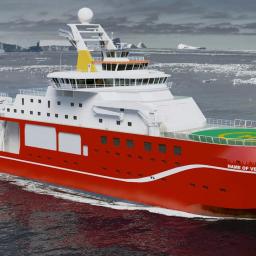
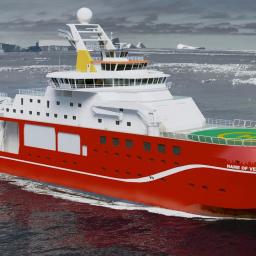
Name overwhelmingly backed in poll but government would prefer something that ‘captures the spirit of scientific endeavour’It might be the democratic will of the people, but RRS Boaty McBoatface will probably never weigh anchor, the government has signalled.The Natural Environment Research Council, which asked the public to vote on a name for its new £200m polar research vessel, confirmed on Sunday that the votes were overwhelmingly in favour of naming the state-of-the-art ship Boaty McBoatface. The suggestion received 124,109 votes, four times more than second-placed RRS Poppy-Mai, named after a 16-month-old girl with incurable cancer. Continue reading...
|
 |
by Colin Drury on (#1AY1T)
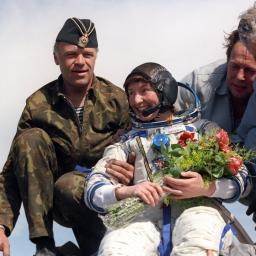
Helen Sharman became the first Brit in space 25 years ago. She talks about those incredible eight days, withdrawing from the public eye – and whether Tim Peake stole her thunderWhen she dreams of space – as she still does from time to time – Helen Sharman sees how blue the Earth looks from 200 miles up.“You can’t imagine how deep the colour is,†she says. “And the detail: you can see continents, but also the wake of a ship. And, at night, the lights of cities shine up to you. There was a window where I slept, and waking up to the world right outside ... wonderful.†Continue reading...
|
 |
by Ian Sample Science editor on (#1AY07)
Researchers discover extent to which DNA determines age of first sex; genetic link also found between risk-taking behaviour and early loss of virginityThe subtle impact of genetics on the age at which people lose their virginity has been teased apart by scientists and shown to have an effect on how well people fare at school.Though mostly driven by upbringing and peer behaviour, a person’s age when they first have sex is also shaped by biological factors where genes have a role to play.
|
 |
by Guardian Staff on (#1AXPV)
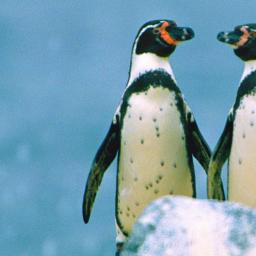
Penguins aren’t the only animals known to form same-sex relationships – but they are perhaps the most well-known (and adorable). King penguin couple Stan and Olli are moving to an all-male enclosure in Hamburg while also becoming a symbol for marriage equality campaign in Germany Continue reading...
|
 |
by Henry Nicholls on (#1AWAZ)
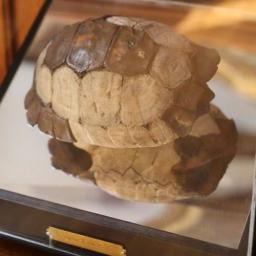
It’s not the longest-lived of tortoises, but with a provenance that stretches back over 400 years, the pet tortoise of Archbishop William Laud has got to be one of the most venerable
|
 |
by Robin McKie on (#1ASRS)
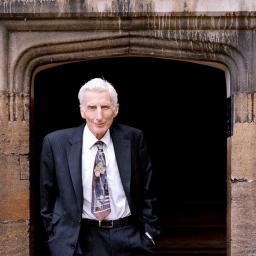
A ban on state-funded academics using their work to question government policy is to begin on 1 May. It’s either a cock-up or a conspiracyUnless government officials make a major U-turn in the next few days, many British scientists will soon be blocked from speaking out on key issues affecting the UK – from climate change to embryo research and from animal experiments to flood defences. This startling, and highly controversial, state of affairs follows a Cabinet Office decision, revealed by the Observer in February, that researchers who receive government grants will be banned, as of 1 May, from using the results of their work to lobby for changes in laws or regulations.The aim of the Cabinet Office edict was to stop NGOs from lobbying politicians and Whitehall departments using the government’s own funds. The effect, say senior scientists, campaigners and research groups, will be to muzzle scientists from speaking out on important issues. The government move is a straightforward assault on academic freedom, they argue. Continue reading...
|
 |
by Brian Christian and Tom Griffiths on (#1ASEB)
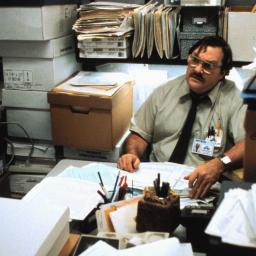
No time to sort all that paperwork? Brian Christian and Tom Griffiths have a solution that will come as a real surpriseIn the early 1990s, Japanese economist Yukio Noguchi was overwhelmed by the effort of organising the papers that crossed his desk every day, so he did something drastic: he stopped trying. He began throwing every file, regardless of its contents or type, into the same box. Any time he pulled out a file to use it, he didn’t even bother to put it back where he’d got it. He just put it back in the front of the box. And a strange thing happened – his life got easier.We think of tidiness as a virtue, and mess as a vice, but the reality is there is a powerful argument in the other direction. In fact, better than an argument, even, a proof. And it comes, perhaps unexpectedly, from computer science, a discipline we think of as one of the tidiest of them all. The algorithms that computers use to manage their time and space turn out to be surprisingly useful in human lives. Continue reading...
|
 |
by Ben Ambridge on (#1ASDD)
People associate red and green with particular outcomes – so performance may depend on the background colourGive yourself one minute to try to solve those in the green box (covering up the red box – this is important), then one minute with those in the red box (covering up the green box).How many did you get in each (answers at the bottom of the page)? A 2007 study found that exposure to red was associated with significantly worse performance than exposure to green (or black and white). In fact, if you did badly overall, this may well be because the mere presence of red somewhere on the page was sufficient to impair your performance. Continue reading...
|
 |
by Yvonne Roberts on (#1ARW4)
As the Queen celebrates her birthday, she joins a growing number of people living – and thriving – in very old age. So what makes a happy nonagenarian?On Thursday, the Queen celebrates her 90th birthday after 64 years of running the royal show. On 10 June, her official birthday this year, her husband Philip, Duke of Edinburgh, turns 95. Neither appear to be significantly slowing down. The Queen still embarks on royal visits, rides a horse, endures state banquets, walks nimbly backwards (from the Cenotaph), dresses stylishly and generally confounds the notion that ageing is one long continual slide into senility, if the Grim Reaper doesn’t claim you in your middle years.The Queen does, of course, have certain advantages when it comes to ageing. Income and class help. According to the charity Age UK, life expectancy at 60 for those from a higher income bracket is 23.3 years; those living on a lower income are likely to live almost six years less. Continue reading...
|
 |
by Robin McKie on (#1ARVR)
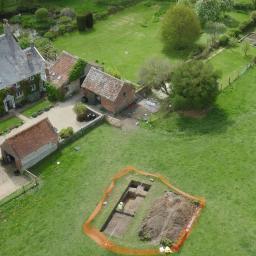
‘Incredible’ archaeological site was unearthed when electricians laying cables at a Wiltshire home exposed a mosaicIt was the urge to avoid playing ping-pong in the dark that led Luke Irwin to make one of Britain’s most extraordinary archaeological discoveries in recent years. Without that compulsion, he might never have found out that he lives on the site of one of the biggest Roman villas ever built in the British Isles.Irwin, a rug designer, and his wife had decided to convert an old barn on their newly purchased Wiltshire property into a room where they and their children could play table tennis, so they hired electricians to lay cables for lights. Continue reading...
|
 |
by Michael Slezak on (#1ARR0)
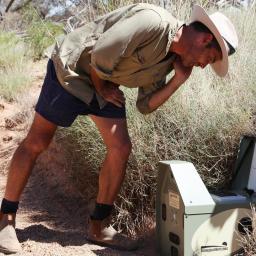
A trial of ‘grooming traps’ is aiming to eradicate one of the biggest threats to Australian wildlife – feral felines Continue reading...
|
 |
by Jon Butterworth on (#1AQX6)
A competent politician gives a good answer to a sensible, if sarcastically posed, question. This should be normal.
|