 |
by Press Association on (#1AN3F)
Young children should learn about reproduction or risk future chances of parenthood through a lack of knowledge, conference hearsChildren as young as three should be taught about sex and fertility before starting at primary school or risk future chances of parenthood through a lack of knowledge, experts have warned.Young adults receive only 20% of information about fertility from official sources and often do not learn about their reproductive health until they are trying to conceive, it was revealed. Continue reading...
|
| Link | http://feeds.theguardian.com/ |
| Feed | http://feeds.theguardian.com/theguardian/science/rss |
| Updated | 2026-10-01 02:00 |
 |
by Damian Carrington on (#1AMM4)
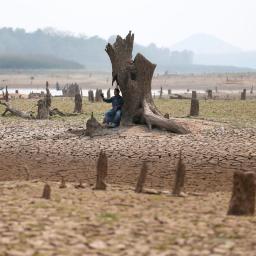
Average global temperature was 1.07C hotter - beating last month’s previous record increaseThe global temperature in March has shattered a century-long record and by the greatest margin yet seen for any month.
|
 |
by Ian Sample Science editor on (#1AM8F)
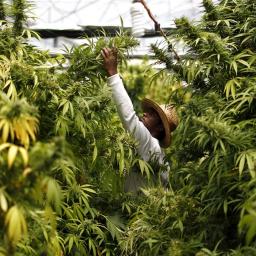
Can I get addicted, what are the short- and long-term effects and what can make cannabis harmful? Key questions answeredNot easily. Scientists estimate that the lethal dose of the drug is somewhere in the range of 15-70g. That is far beyond the daily consumption of even the most enthusiastic user.
|
 |
by Ian Sample Science editor on (#1AMJK)
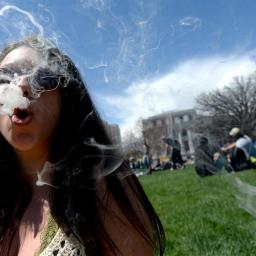
Warning reflects growing consensus that frequent use of the drug raises the risk of psychotic disorders in vulnerable peopleThe risks of heavy cannabis for mental health are serious enough to warrant global public health campaigns, according to international drugs experts who said young people were particularly vulnerable.
|
|
by Ian Sample Science editor on (#1AM6E)
Warning reflects growing consensus that frequent use of the drug raises the risk of psychotic disorders in vulnerable people• Q&A: the risks and effects of cannabisGlobal public health campaigns are needed to make clear the risks of heavy cannabis use, particularly for young people who are more susceptible to mental health problems, senior drugs researchers have said.The call for action from scientists in the UK, US, Europe and Australia reflects a growing consensus among experts that frequent cannabis use can increase the risk of psychosis in vulnerable people and lead to a range of other medical and social problems. Continue reading...
|
 |
by Lee Ravitz on (#1AM6G)
With more than 7 billion people in the world since 2011, and the recent release of JG Ballard’s apocalypic novel High Rise as a film, writers’ concerns about a population explosion were at even greater height more than 40 years ago
|
 |
by Ian Sample and Iain Chambers on (#1AM6J)
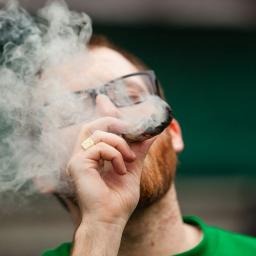
What has convinced some researchers that the risks of heavy cannabis use now warrant public health campaigns to warn people of potential harm?What has convinced some researchers that the risks of heavy cannabis use now warrant public health campaigns to warn people of potential harm?How real is the risk of psychosis among vulnerable users of the drug? Continue reading...
|
 |
by Marc Lewis on (#1AM6M)
Our brains, with their intrinsic tendency to segregate, are designed to veer toward over-control. Psychedelics blow all that apart – and we can learn from themI was in San Francisco last week, visiting my brother and revisiting the years we spent there as young men. We walked through Golden Gate park, two guys in their sixties, admiring the giant sequoias, exotic gardens, and gold-green pastures cascading westward to the ocean. And we reminisced about our epic acid trip back in 1969, in that very place, when we were primed for adventure and self-discovery.I wouldn't encourage anyone to soothe existential discomfort with heroin or amphetamine. But psychedelics have a value Continue reading...
|
 |
by Dean Burnett on (#1AM6P)
Barely a day goes by without the publication of dozens of articles about millennials. But what is it and who are they? Does everyone agree, or is it a term that’s just used to fit a narrative?Some facts about me; I presently work as a tutor/lecturer for a psychiatry programme (as well as, self-evidently, a science writer and author), but my PhD is in Behavioural Neuroscience, so I could be described as a neuroscientist, someone who scientifically studies the brain and nervous system (or is at least qualified to do so).However, given my various contributions to other publications and platforms, I’ve been referred to as a psychiatrist, a clinical psychologist, a neurologist, a neurosurgeon, and more. I’m none of these things; I cannot assess and treat patients with mental health problems, I don’t work closely with particular groups of patients to improve their wellbeing, I don’t study and treat those with nervous system disorders, I don’t perform surgery on people’s brains. It’s not just a preference, I’m genuinely unable/legally not allowed to do any of these things. Continue reading...
|
 |
by Sam Jones on (#1AJVN)
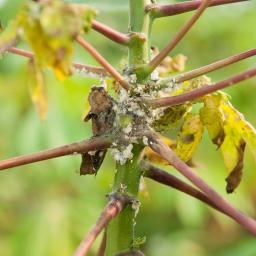
Climate change menacing yet another food crop by fuelling explosion in pests and diseases that are attacking cassava plantsClimate change and globalisation are fuelling an explosion in the pests and diseases that afflict south-east Asia’s cassava crops, threatening a multi-billion dollar industry and the staple food of millions of people, a report warns.Related: Bananas facing a bleak future as staple African crops decline Continue reading...
|
 |
by David Hambling on (#1AM6R)
There can be few more exotic jobs than cloud herding in the Tibetan Himalayas. Shamans in the Amdo region keep watch from the mountain peaks and warn villagers when storms are coming.Their predictions are based on a combination of weather experience and trusted formulae such as “when the clouds over Ami Kodtse are like sheep’s hair, it will hail in the villageâ€. Continue reading...
|
 |
by David Shariatmadari on (#120AX)
As Oxford Dictionaries comes under fire for sexist definitions, the history of terms that refer to women shows how deep negative attitudes goLinguists call it collocation: the likelihood of two words occurring together. If I say “popâ€, your mental rolodex will begin whirring away, coming up with candidates for what might follow. “Musicâ€, “song†or “starâ€, are highly likely. “Sensation†or “diva†a little less so. “Snorkel†very unlikely indeed.
|
 |
by Suzanne Goldenberg on (#11YAX)
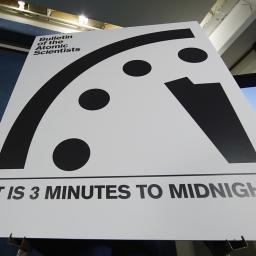
The symbolic countdown to humanity’s end remained stuck at three minutes to the brink of the apocalypse for a second year in a row on TuesdayThe Doomsday Clock, the symbolic countdown to humanity’s end, remained stuck on the brink of the apocalypse for a second year on Tuesday, because of the continued existential threats posed by nuclear war and climate change.The Bulletin of the Atomic Scientists, the group which created the clock in 1947, said it was keeping the clock hands set at three minutes to midnight – the closest the clock has come to destruction since the throes of the cold war in 1984. Continue reading...
|
 |
by Amber Jamieson on (#11Y56)
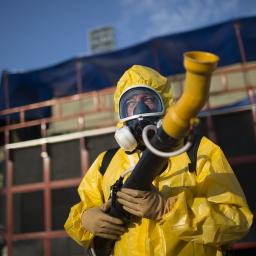
All it takes is for an already infected person to be bitten by a species of carrier mosquito, which thrive in the south. Two entomologists discuss the potential of a US public health crisis and the challenges of eradicating the mosquitoesAs Brazilian authorities admit they are “badly losing the battle against the mosquitoâ€, local insect experts say it would be remarkably easy for the Zika virus to begin spreading in the US.Related: Zika virus: its effects, how it is spread, and the possible threat to women Continue reading...
|
by Mark Tran on (#11Y2R)
As this week’s flat earth furore has shown, conspiracy theories are widespread, but a new study uses maths to examine the viability of large-scale collusionThe US moon landings were a hoax, a cure for cancer exists but is being suppressed by drugs companies, vaccinations are harmful, the Earth is actually flat and climate change is a fraud.
 |
by Ellen Brait on (#11Y2S)
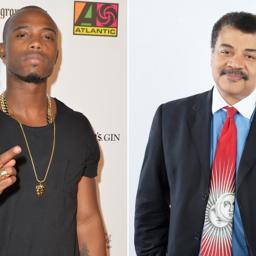
In response to the astrophysicist taking issue with his claim that earth is flat, rapper releases track larded with conspiracy theories and a shoutout for Holocaust denier David IrvingAmerican rapper BoB has taken his claims that the Earth is flat and written a rap, in which he restates his views and disses award-winning astrophysicist Neil deGrasse Tyson who refuted the singer’s arguments on Monday.When the singer repeatedly tweeted that the Earth was flat, Tyson pointed out some flaws in his logic. BoB claimed that the New York City skyline shouldn’t be visible from 60 miles away at Harriman State Park’s Bear Mountain. He said it would be hidden behind 170 feet of curved Earth, if the planet were not flat. Continue reading...
|
 |
by Emine Saner on (#11XT5)
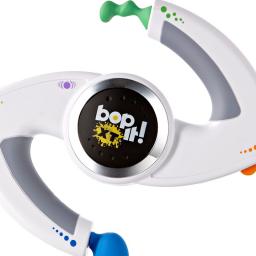
Uber is trialling children’s toys and mirrors in a bid to prevent drunk customers becoming aggressive. But do such simple techniques really work?As anyone with a toddler, terrier or a black belt in karate will know, distraction techniques can work wonders. The latest to realise this is the taxi company Uber, which is hoping distraction will protect its drivers from being assaulted by drunken fares. In one US city, Uber drivers are taking part in an experiment in which they leave a Bop It – a noisy, electronic children’s toy – on the back seat, for their tipsier passengers to play with. Drivers, the company hopes, will be safer from physical attacks, though not, presumably, from intense irritation.“An intoxicated rider who is engaged in something interesting is less likely to be irritable and aiming aggression at the driver,†said Joe Sullivan, Uber’s chief security officer. It is not the only behaviour-modification experiment the company is trying. In a rather less infantilising move, it has also advised drivers to install mirrors on the back of seats so passengers can see themselves – the thinking is that this is more likely to make them aware of their actions. Continue reading...
|
 |
by Mark Tran on (#11XTN)
University of Helsinki study says use of antibiotics in early years ‘may have long-term effects on the metabolic and immunological health of the child’The use of antibiotics in young children may alter the natural populations of gut microbes in a way that leaves them predisposed to weight gain and asthma in later childhood, according to new research.The study of 236 children aged between two and seven, with a median age of five, backs earlier research on mice and children indicating the negative consequences of early antibiotic use. Antibiotics are the most commonly used drugs in childhood populations of western countries. Continue reading...
|
 |
by Joanna Ferguson on (#11XRN)
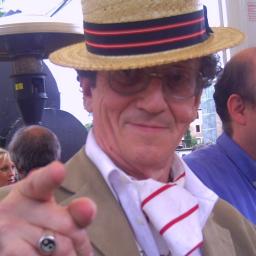
My father, Tony Buffery, who has died aged 76, was a notable neuropsychologist once described by Clive James as having “a mind from outer spaceâ€. While at Cambridge University in the 1960s, he was a member of the Footlights and Beyond the Fringe revues, and began a career as a writer and performer.The younger son of Winifred, a typist, and George, who worked on the railways, Tony was born in Birmingham, weighing an astonishing 14lb. He gained a place at Mosley grammar school, where he excelled not only academically but in the javelin. He went to Hull University, then Cambridge to do his PhD with a thesis entitled Baboons I Have Known. Continue reading...
|
 |
by Emer O'Toole on (#11WXJ)
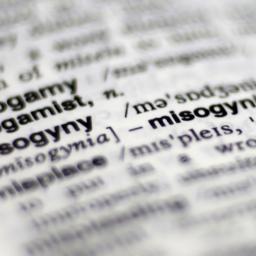
Objectionable phrases may be widely used, but Oxford Dictionaries has a responsibility to define them by other meansA Canadian anthropologist, Michael Oman-Reagan, tweeted Oxford Dictionaries last week to ask it why “rabid feminist†is its Oxford Dictionaries Online (ODO) usage example for the word “rabidâ€. Oxford Dictionaries responded by suggesting Oman-Regan may be a rabid feminist. It has since apologised for the “flippant†response and is reviewing the example sentence.Other sexist ODO sample sentences, according to Oman-Regan, include those for words such as shrill, nagging and bossy. Oxford Dictionaries has explained that these sentences reflect common usage – which I do not doubt – and do not represent the views of the publisher Oxford University Press. But they also, of course, reflect an editorial decision. Continue reading...
|
 |
by Dean Burnett on (#11WPV)
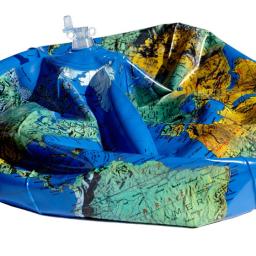
Rapper B.o.B. has been criticised for publicly insisting the Earth is flat. You may think his claims are ludicrous, but the truth is: they don’t go far enoughRapper B.o.B. has caused a furore by tweeting that the Earth is in fact flat, and you only need to look at the evidence to come to the same conclusion. Obviously, prominent scientists have openly mocked this claim, showing the many ways in which it is ludicrous, no matter how many people insist otherwise. They’re right though; sadly. B.o.B. is wrong. His nonsense claims, such as the idea that Earth’s curvature should be visible at certain distances but isn’t, are just that: nonsense. His comments and insistent statements are little more than childish naivety. In truth, the conspiracy goes much, much deeper than that.Related: 'I didn't wanna believe it either': Rapper BoB insists the Earth is flat Continue reading...
|
 |
by Martin Robbins on (#11WKQ)
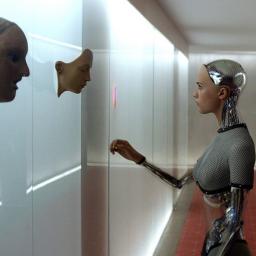
Even with its flaws, last year’s Ex Machina perfectly captured the curious relationship between artificial intelligence, God and ego. A tiny change in its closing moments would have given it an intriguing new dimension.It’s taken me a year and a several viewings to collect my thoughts about Ex Machina. Superficially it looks like a film about the future of artificial intelligence, but like most science fiction, it tells us more about the present than the future; and like most discussion around AI, it ends up reflecting not technological progress so much as human egos. (Spoilers ahead!)
|
by Josh Halliday North of England correspondent on (#11WHA)
Lincolnshire whales likely to have entered North Sea with those washed up on north European islands, says lead scientist
by Sian Townson on (#11VYD)
Ingrained cognitive biases play a role, as does inverted snobbery about educational privilege. But we must battle on, says this scientistPseudoscience is everywhere – on the back of your shampoo bottle, on the ads that pop up in your Facebook feed, and most of all in the Daily Mail. Bold statements in multi-syllabic scientific jargon give the false impression that they’re supported by laboratory research and hard facts.Magnetic wristbands improve your sporting performance, carbs make you fat, and just about everything gives you cancer. Continue reading...
 |
by Melissa Davey on (#11VHZ)
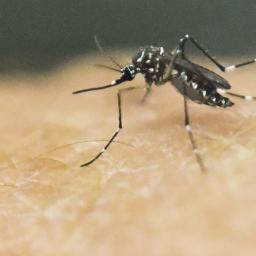
Department of Foreign Affairs and Trade issues travel warning for outbreak areas, including Micronesia, French Polynesia and Latin AmericaThe Department of Foreign Affairs and Trade has advised pregnant women to reconsider travel to any area where outbreaks of the mosquito-transmitted Zika virus has occurred, including Micronesia, French Polynesia and Latin America.Related: City at centre of Brazil's Zika epidemic reeling from disease's insidious effects Continue reading...
|
 |
by Guardian Staff on (#11VEQ)
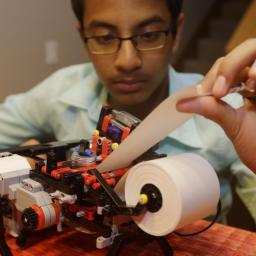
In this YouTube video Shubham Banerjee explains his low-cost Braille printer created from Lego. He designed the printer at the family kitchen table in Santa Clara, an hour south of San Francisco. The idea is to print Braille reading materials from a personal computer or electronic device on to paper using raised dots. His startup, Braigo Labs, has received undisclosed seed capital from backers who think it could shake up the market for the visually impaired Continue reading...
|
 |
by Haroon Siddique and agencies on (#11S0A)
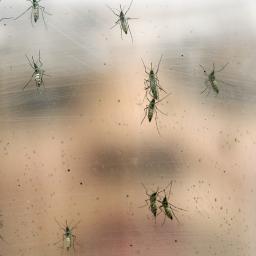
Drug companies evaluate existing vaccine technology as only Canada and Chile expected to be free of mosquito-borne diseaseTwo of the world’s biggest drug companies are evaluating whether existing vaccine technology could be used against the Zika virus, as the World Health Organisation warned the mosquito-borne virus was likely to spread to all countries in the Americas except for Canada and Chile.The WHO director general, Margaret Chan, told the organisation’s executive board that she had asked Carissa Etienne, head of the WHO in the Americas, to brief the board later this week on its response to the outbreak. The mosquito-borne Zika virus has been linked to brain deformities in babies. Continue reading...
|
 |
by Michael Slezak on (#11SVJ)
Emissions of reactive nitrogen have increased more than 10-fold over the past 150 years, contributing to deaths from air and water pollutionYou’ve heard of managing your carbon footprint. But how about your nitrogen footprint? Emissions of reactive nitrogen into the environment have increased more than 10-fold over the past 150 years, contribute to deaths from air pollution and water pollution, and have countless other impacts including acid rain and degradation of ecosystems such as the Great Barrier Reef.Now, for the first time, researchers have calculated the average nitrogen footprint of people from 188 countries, as well as where exactly they cause that pollution, helping pave the way to policy that could help the world reduce its emissions of reactive nitrogen. Continue reading...
|
 |
by Ian Sample Science editor on (#11SWG)
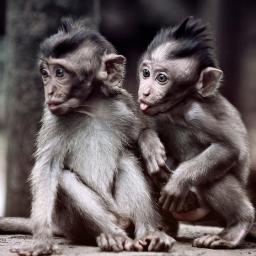
Monkeys that develop autism-like symptoms could be used to identify brain circuits involved in common autistic behaviours and test new treatmentsGenetically modified (GM) monkeys that develop symptoms of autism have been created to help scientists discover treatments for the condition.The macaques carry a genetic fault that causes a rare disorder in humans called MeCP2 duplication syndrome. This produces a wide range of medical conditions, some of which mirror those seen in autism, such as difficulties with social interactions.
|
 |
by Written by Oliver Burkeman, read by Andrew McGrego on (#11STP)
Cheap and effective, CBT became the dominant form of therapy, consigning Freud to psychology’s dingy basement. But new studies have cast doubt on its supremacy – and shown dramatic results for psychoanalysis. Is it time to get back on the couch? Continue reading...
|
by Stuart Clark on (#11SNQ)
A unique evening at the Science Museum celebrated the acclaimed Cosmonauts exhibition with a PSB concert about the space race – what’s not to love?It was partway into the gig when, with the press of a computer keyboard, Public Service Broadcasting’s retro-sounding recorded announcement said, “We’ve always wanted to play the Science Museum.†Another press: “And not many groups can say that.â€How gloriously, unashamedly true. Continue reading...
 |
by Adam Brereton on (#11SA8)
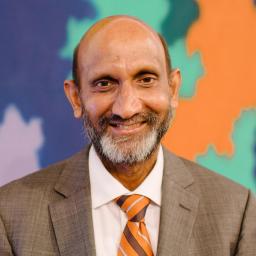
Physics professor recognised in Australia Day honours, now working on lasers and lightweight solar cells, says science education is critical for the country’s futureChennupati Jagadish, a physics professor and neurotechnologist, was not aware he had been nominated for a companion of the order of Australia (AC) when he received a letter telling him he would receive it on Australia Day.“When I received the letter I felt very humbled, grateful and honoured,†he says. Continue reading...
|
 |
by Melissa Davey and Adam Brereton on (#11SA5)
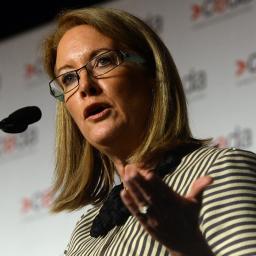
Philanthropists Maria Myers and Susan Alberti, scientists Chennupati Jagadish and Mary O’Kane, and paediatrician Robert Ouvrier receive highest honourEminent women in engineering, philanthropy and sport were among those to be recognised with the highest accolade in the 2016 Australia Day honours. However, women comprised just 183 of the 604 Australians to receive honours.Among those to receive admission as companions of the Order of Australia (AC), were the philanthropist Maria Myers, the vice president of the Western Bulldogs AFL club, Susan Alberti, and the engineer and scientist Mary O’Kane.
|
 |
by Michele Hanson on (#11S0M)
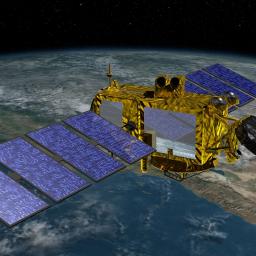
Why is everyone so excited about the latest news from space? There’s more than enough to worry about on planet Earth alreadyLots of news from outer space last week. Somewhere at the back end of the solar system, a huge, icy new planet is lurking, behind Pluto, which, according to the panic merchants, may come crashing by around the end of April – yes, this coming April – and wipe us out. Worse still, we are filling space with a gazillion bits of debris and satellites, which will eventually start colliding, until one day, said Nasa employee Donald Kessler, back in 1978, anything that we send up there will be “sandblasted into smithereensâ€.What is so thrilling and romantic about space travel and exploration? I am bored stiff with it, and fairly terrified, and what good does it do me if there’s another planet out there? I am stuck on this one. Soon there are going to be squabbles about whose space junk smacked into whose satellite/spaceship/chunk of outrageously expensive equipment at 30,000mph; was it an accidental bit of whirling crap, or did the Russians/Chinese/Americans do it on purpose? Then it will be armed conflict and the third world/space war, as if we didn’t have enough trouble down here already, with our relatively small wars, displaced millions, nuclear risks, mishaps and general wreckage. Continue reading...
|
 |
by Damian Carrington on (#11RSF)
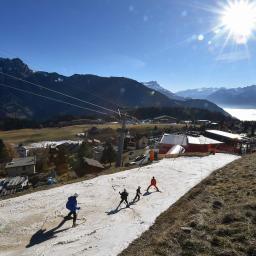
New calculations shows there is just a 0.01% chance that recent run of global heat records could have happened due to natural climate variationsThe world’s run of record-breaking hottest years is extremely unlikely to have happened without the global warming caused by human activities, according to new calculations.Thirteen of the 15 hottest years in the 150-year-long record occurred between 2000-14 and the researchers found there is a just a 0.01% chance that this happened due to natural variations in the planet’s climate. Continue reading...
|
 |
by Bob Ward on (#11RRW)
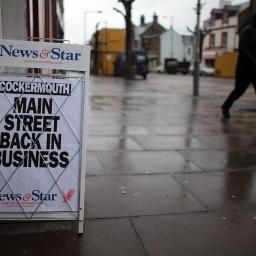
Editors of the Mail, Express, Times, Sun and Telegraph should put the interests of their readers first by reporting the real facts about global warmingWhy are so many British newspaper editors still serving up unscientific climate change denial to their readers, even though the governments of more than 190 countries - including the UK - agreed in Paris last month that urgent action is required to avoid dangerous impacts from rising greenhouse gas levels?
|
 |
by Stephen Curry on (#11P2B)
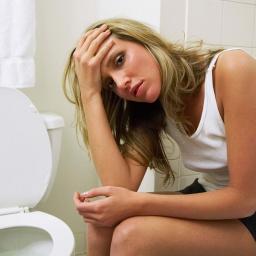
The process of scientific discovery is far from mysterious, even if it is often more convoluted than you might imagine“A virus,†wrote the celebrated immunologist Peter Medawar, “is a piece of bad news wrapped in protein.â€The bad news from norovirus, one of the main preoccupations of my research group, is that you will soon be scuttling to the toilet for two days of misery. Its other name – winter vomiting bug – doesn’t do this tiny pathogen justice because, as well as throwing up, you will have to endure a prolonged dose of diaorrhea. Continue reading...
|
 |
by Nicola Davis on (#11NT4)
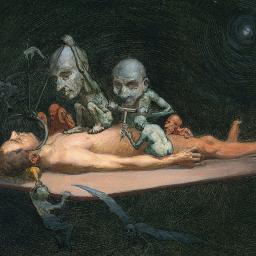
The Wellcome Collection’s new exhibition States of Mind uses science and art to unravel mysteries from memory loss to sleepwalkingOn a crumpled sheet of tin foil in the Wellcome Collection’s conservation studio lies an odd assortment of plasticine forms. One looks suspiciously like the footprint of a chicken, another like a deformed pot, while a large, red lump bears more than a passing resemblance to a gammon joint. But the comparisons are hopelessly wide of the mark. For these are, in fact, part of a determined effort by a great scientist to explore one of the most curious facets of being: consciousness. Yet while Francis Crick revealed the hidden secrets of DNA through a model, his attempts at applying similar techniques to neuroanatomy in an exploration of our inner sense of “self†were less successful. “We brought a couple of neuroscientists in to look at them and bafflement was the result of that encounter too,†admits Emily Sargent, curator of the Wellcome Collection’s latest exhibition States of Mind: Tracing the Edges of Consciousness. Nevertheless Crick’s wide-ranging work in the field was influential, not least in breaking the taboo of tackling the topic in scientific circles.Although Crick was pivotal in bringing the study of consciousness into the scientific arena, he wasn’t the only one to be captivated by its mysteries. From Descartes on the separation of mind and body to modern musings on whether consciousness is an illusion, many have struggled to tease the phenomenon apart. Yet progress is being made. “I think we understand a lot more about what makes us conscious and what we are conscious of, but we still don’t really know how consciousness happens at the deepest levels of explanation,†says the exhibition’s scientific adviser, Professor Anil Seth. “It is still a bit of a mystery.†Continue reading...
|
 |
by Dara Mohammadi on (#11NRW)
There are only two ways the human body can deal with the invading pathogens and infections that can cause colds and other illnesses – and neither involves vitamins or ‘superfoods’ that claim to offer protectionWalk through the aisles of any health food shop and you’ll see pots of echinacea or zinc that promise to “support your immune system†or “maintain its healthy functionâ€. Read new age health blogging sites and you’ll find posts on how drinking hot lemon water or knocking back a shot of wheatgrass juice or the current green goo du jour will “boost your immune system†and make you less likely to get ill. These are tempting prospects at this time of year, but ones that are foiled by an inconvenient truth: they don’t work. The idea that any dietary supplement can boost your immunity makes very little scientific sense. And because of the way your immune system works, even if they did what they say they did, you definitely wouldn’t want them to.“People have this idea that the immune system is some kind of internal force field that can be boosted or patched up,†says Charles Bangham, a professor of immunology and infectious diseases at Imperial College London. “This couldn’t be further from the truth. As the name suggests it’s not a single thing but a system incorporating many organs and biological functions.†Continue reading...
|
 |
by Ben Ambridge on (#11NNM)
Measure your behavioural inhibition system to find out if you avoid things that are boring, painful, new and scaryWe can measure a key aspect of your personality with just seven questions. Please rate the following on a scale from 1 (very false) to 4 (very true):1) If something bad is about to happen, I’m usually afraid or nervous.
|
 |
by Todd Rose on (#11NM7)
Poor results can wreck people’s lives, but the thinking behind exams is crude and simply out of dateWhen I was in high school I took the ACT, a college aptitude exam used as an admissions criterion by most American universities. My score was in the lowest third of all students. That was painful enough but, adding insult to injury, the ACT score report informed me that, based on my score, my expected probability of succeeding at my hometown college, the University of Utah, was around 15%. As I remember it, my chance of success at my dream school of Harvard University was less than 3%.I felt pretty hopeless about my future. After all, these stark percentages were endowed with the sober authority of mathematics. Before I took the exam, I had thought that one day I might become a scientist or neurologist, but no – what a silly fantasy that was. Continue reading...
|
 |
by Melissa Davey on (#11NDW)
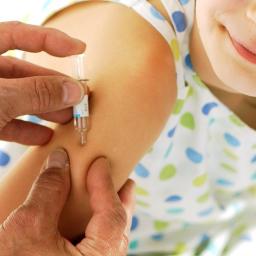
Pilot study investigates why parents choose not to vaccinate and why many do not to disclose that their children aren’t immunised, potentially putting others at riskThe health of pregnant women and their babies is at risk from parents who refuse to disclose that their children have not been vaccinated, according to researchers in Western Australia who have launched a pilot study to investigate the motivations of anti-vaccinators.Dr Bronwyn Harman, a families researcher with Edith Cowan University’s school of psychology and social science in Western Australia, said unvaccinated children could be carrying diseases such as rubella and whooping cough that are dangerous to pregnant women and newborns. Continue reading...
|
 |
by Guardian staff and agencies on (#11NCB)
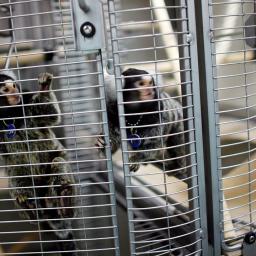
New South Wales hospitals and universities are conducting secret surgical experiments using government funding, media reports allegeSydney hospitals and universities are conducting secret medical experiments on hundreds of primates, according to media reports.Related: Scientists told to stop wasting animal lives Continue reading...
|
 |
by Guardian Staff on (#11N3K)
Secrecy and the Conservative governmentThe country simply cannot go on like this over the question of official secrecy. The fundamental problem is easy to spell out: because the present administration of Mrs Thatcher tries to make everything secret, there is no national consensus over what should properly be kept secret and what the public has a right to know. The Government, aware it is going against the grain of public and press opinion, uses erratic tactics, depending on what it thinks it can get away with: ranging from the prison cell under the Official Secrets Act for the hapless – and harmless – Miss Sarah Tisdall, to wretched dithering over the forceful, left-wing journalist Duncan Campbell and his well-advertised plans last week to expose the Zircon satellite project.Meanwhile basic civil liberties go by the board. The BBC is leant on behind the scenes; the High Court is asked to grant injunctions against MPs. The Prime Minister herself set a very bad example to us all by conniving at the leak of a classified letter by her own law officer during the Westland affair. Continue reading...
|
 |
by Jamie Doward on (#11N3N)
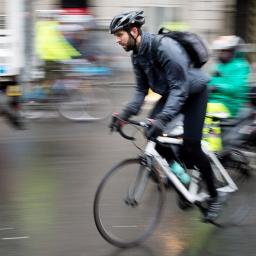
Wearing safety equipment boosts appetite for danger, even in unrelated activities, a study has foundPerhaps safety helmets should carry a health warning. Wearing them, it appears, encourages dangerous risk-taking. In an extraordinary study, Dr Tim Gamble and Dr Ian Walker, from the University of Bath’s department of psychology, have shown that wearing a helmet is likely to increase sensation-seeking and make people less safe – even in situations where headgear is not required.The academics believe that their findings, published in the journal Psychological Science, call into question the effectiveness of safety advice, notably about the wearing of helmets for leisure activities such as cycling. But they also suggest that their conclusions help shed light on far wider issues, such as decision-making in conflict zones. Continue reading...
|
 |
by Robin McKie on (#11N30)
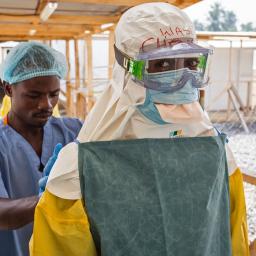
Committee also attacks failure to allow vital diagnostic test to be released in west AfricaBritain’s response to the Ebola emergency, which claimed more than 11,000 lives in west Africa between 2014 and 2015, was inadequate and flawed, MPs will reveal on Monday.The House of Commons science and technology committee will publish a report on the lessons to be learned by the UK from the way it responded following the outbreak. Continue reading...
|
by Jon Butterworth on (#11MJC)
‘Holistic’ is a much abused word. Like ‘quantum’ and ‘paradigm’, it is beloved of snake-oil sellers of many types. But some kind of interconnectedness forms a key part of science’s defence against spurious results and crackpots. Two new scientific results got me thinking this week
 |
by Dawn Foster on (#11KEE)
It’s the relaxation technique of choice, popular with employers and even the NHS. But some have found it can have unexpected effectsI am sitting in a circle in a grey, corporate room with 10 housing association employees – administrators, security guards, cleaners – eyes darting about nervously. We are asked to eat a sandwich in silence. To think about every taste and texture, every chewing motion and bite. Far from being relaxed, I feel excruciatingly uncomfortable and begin to wonder if my jaw is malfunctioning. I’m here to write about a new mindfulness initiative, and since I’ve never to my knowledge had any mental health issues and usually thrive under stress, I anticipate a straightforward, if awkward, experience.Then comes the meditation. We’re told to close our eyes and think about our bodies in relation to the chair, the floor, the room: how each limb touches the arms, the back, the legs of the seat, while breathing slowly. But there’s one small catch: I can’t breathe. No matter how fast, slow, deep or shallow my breaths are, it feels as though my lungs are sealed. My instincts tell me to run, but I can’t move my arms or legs. I feel a rising panic and worry that I might pass out, my mind racing. Then we’re told to open our eyes and the feeling dissipates. I look around. No one else appears to have felt they were facing imminent death. What just happened? Continue reading...
|
by Press Association on (#11JK9)
National Physical Laboratory and UCL study reveals that lactoferrin kills bacteria, fungi and virusesAn antibiotic developed from human breast milk could combat certain drug-resistant bacteria, British scientists have found.Tackling antibiotic-resistant bacteria, known as superbugs, is a priority for the government. A panel set up by David Cameron forecast that they would cost 10 million lives and £700bn a year worldwide by 2050 if the problem went unchecked.
 |
by James Gupta on (#11KB2)
Using spaced repetition as a study technique is effective because you are deliberately hacking the way your brain works
|