Sophie Lewis was so annoyed about the way science was ignored in the political debate about climate change she went to work to disprove the mythsClimate scientists are regularly infuriated by the things politicians say. But it’s not often they publish a scientific paper tearing a politician’s comments to shreds.Related: Abbott considered investigation into 'exaggerated' Bureau of Meteorology temperature data Continue reading...
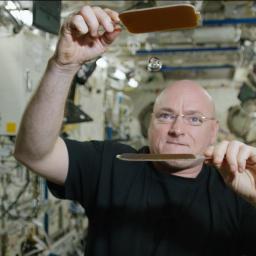
Nasa astronaut Scott Kelly, who marked his 300th day aboard the International Space Station on 21 January, displays another fascinating feature of life in microgravity by playing ping pong with a water droplet. Kelly explains that the hydrophobic paddles repel water and allow him to move the ball of water back and forth Continue reading...
For some birds, feeding at waste sites seems preferable to long migrations to warmer climates, but researchers warn of risks to ecosystems and healthIt ranks as one of the more uncomfortable impacts that humans have on wildlife. Massive rubbish dumps and sprawling landfills have led some birds to give up on migration. Instead of flying thousands of miles in search of food, they make the waste sites their winter feeding grounds.Researchers in Germany used miniature GPS tags to track the migrations of 70 white storks from different sites across Europe and Asia during the first five months of their lives. While many birds travelled along well-known routes to warmer climates, others stopped short and spent the winter on landfills, feeding on food waste, and the multitudes of insects that thrive on the dumps.
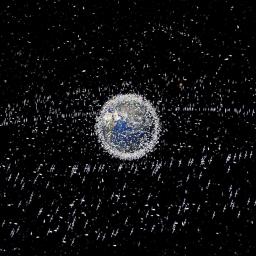
Fragments of spent rockets and other debris orbiting the Earth pose ‘special political danger’ of damage to satellites being misconstrued as attackThe steady rise in space junk that is floating around the planet could provoke a political row and even armed conflict, according to scientists, who warn that even tiny pieces of debris have enough energy to damage or destroy military satellites.Researchers said fragments of spent rockets and other hurtling hardware posed a “special political danger†because of the difficulty in confirming that an operational satellite had been struck by flying debris and had not fallen victim to an intentional attack by another nation.
Chtonobdella tanae named after the Joy Luck Club author because of her longstanding support for the American Museum of Natural History, joining a host of wildlife, asteroids and dinosaurs named after authorsAmy Tan is happy. Not because of booming sales or critical acclaim, but because the author of books including The Bonesetter’s Daughter and The Joy Luck Club has just had a species of leech named after her.Chtonobdella tanae is a tiny Australian leech, and is, said the researchers announcing its name, “the first new species of invertebrate without chitinous or calcified tissues (like a shell or exoskeleton) to be described with computed tomography (CT) scanningâ€. Continue reading...
The new discovery may be 10 times the size of our Earth, but surely our own home is still the most planety thing in the solar system. Let’s not put ourselves downWhen great discoveries are made about the universe, journalists always hope scientific experts will use language everyone can understand. A new, ninth planet in the solar system has been discovered: it’s 10 times the size of Earth and takes between 10,000 and 20,000 years to orbit the sun – and astronomers at the California Institute of Technology have startled the world by announcing that it is “the most planety planet of the solar systemâ€.Whoa! Bold statement, guys. It reminds me of when, in my second year at university, I experimented with smoking a joint, and rashly claimed to be looking at “the most door-handley door handle everâ€. Continue reading...
Himalayan forest thrush’s distinctive, musical song sounds like ‘Adele’ compared to the similar-looking Alpine thrush’s rasping ‘Rod Stewart’, say researchersAn exceptionally secretive thrush’s distinctive song has helped scientists identify it as a new bird species.The Himalayan forest thrush, which lives in north-eastern India and China, was given away by its song which is richer and more musical than the similar-looking Alpine thrush’s rasping, grating, scratchy voice.
A Shakespearean cannonball and a Victorian plate that survived 100 years in a rubbish dump are among relics photographed for Museum of London showIf the history of the world can be told in 100 objects, the lives and deaths of Londoners can be documented in 10, on the evidence of a new collaboration between National Geographic magazine and the Museum of London.From an axe head shaped about 6,000 years ago, which resurfaced at the Olympics site in Stratford, to a cheap Victorian souvenir plate that survived more than a century in a Bermondsey rubbish dump with barely a chip, each object has been captured in a meaningful location by the photographer Simon Norfolk.
The comedian talks us through why Freud was was wrong, Isaac Newton’s brain capacity and why thinking of the brain as a ‘wet computer’ is an errorI discovered Rob Newman’s comedy when I was 16. His shows were relentless: packed full of quotes, arguments, anger, history, philosophy and, above all, bladder-ruining laughs. Oil, urban angst, war, climate change and capitalism – Newman tore into all of these subject and more with verve, wit, and what must have been a well-used library card.Twenty years on his latest piece, The Brain Show, finds Newman on good form. He’s less angry young man, more genial, worried uncle. The laughs are still very much there, perhaps a shade gentler. One thing is still guaranteed: you’ll leave with a brain significantly fuller than before and a long reading list.
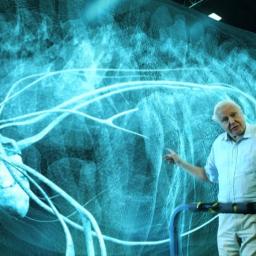
He will be 90 in May, but David Attenborough has no intention of retiring – his latest film, about the world’s biggest dinosaurs, is broadcast this weekend, and his excitement and concern about the natural world remain undimmedYou cannot meet David Attenborough without reflecting on the lottery of life. He bounces into the room unaccompanied, a little stiff in the lower back perhaps, but otherwise breezy and lithe. He is sound in wind and limb, vision and hearing, his eyes sparkle, his face is scarcely rumpled by time. Yet in three months he will celebrate his 90th birthday.While other people’s worlds tend to shrink with age, his seems to expand. His curiousity ranges as widely as ever. His ability to understand and assimilate new information seems unabated. “Oh, I forget things,†he claims. When I press him for examples, he tells me, “Well, where I put my glasses – I had them about three minutes ago and they have simply evaporated, they’ve dematerialised. Oh yeah, and I forget engagements.†Continue reading...
by George Monbiot; produced by John Domokos and Phil on (#11GG8)
Sir David Attenborough tells George Monbiot that the British public is better informed about the environment than ever before, in part thanks to television. He discusses his new programme on the titanosaur – a subset of dinosaurs that can reach 37m in length. He also talks about Monbiot’s proposal for ‘rewilding’, and says that despite nearing 90 he has no plans to retire
by Ian Sample, Iain Chambers and Bruce Keogh on (#11FKY)
We look at the innovations that are changing the NHS today and asks what science on the horizon will transform the health service in the next decadeIt employs 1.6 million people, spends more than £4,000 a second, and performed 10m operations last year in England alone. Millions more visit emergency units, have outpatient care, and receive help for mental health problems. This week we’re focusing on the NHS and how science and technology underpin the care doctors can give to patients.Ian Sample talks to Professor Sir Bruce Keogh, NHS England’s Medical Director and professional lead for NHS doctors. Bruce is responsible for promoting clinical leadership, quality and innovation, having previously been a surgeon and physician who specialised in cardiac surgery.
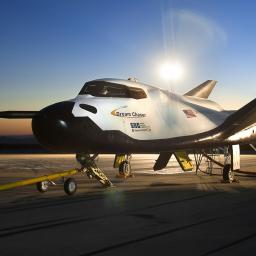
A privately operated reusable spaceplane based on a Russian cold war design has been chosen by Nasa to fly at least six re-supply missions to the International Space Station (ISS). The Sierra Nevada Corporation’s Dream Chaser will launch on a rocket but land on a runway like the space shuttle.Nasa currently use Boeing’s ATK Cygnus module and Space-X’s Dragon capsule to re-supply the ISS. While Cygnus is designed to burn up on re-entry, carrying rubbish for disposal, Dragon splashes down for retrieval and re-use. Continue reading...
In the era of the smartphone, London cabbies are going to keep committing every last alley to memory. It might seem pointless, but we gain insight as well as information by exercising the memoryThe Knowledge has been saved, for now. Despite the fact that a smartphone can get you around London with very little skill required, licensed taxi drivers will still have to spend years learning streets by heart. This can seem like an absurd luddite fantasy, of a piece with the cabbies’ resistance to any less-guild-like competition, from the likes of Uber.What’s not to like about outsourcing to technology the tedious facts that clutter our brains? We now use calculators for mental arithmetic, Wikipedia instead of libraries, and – most fundamentally – we read the written word instead of memorising epic poetry. Who could object to such progress? Socrates, for one. He would have detested Wikipedia. In a passage of unsurpassed irony, Plato wrote into the Phaedrus Socrates’s objection to the written word: that it allowed people to parrot facts without understanding and assimilating them. He even put in a word for the poor texts themselves, helpless to defend themselves against misunderstanding when the author was not there to clarify. Continue reading...
The oil billionaire’s departure was cheered by climate scientists who have campaigned for the natural history museum to cut ties with fossil fuel companiesThe oil billionaire David Koch has stepped down from the board at the American Museum of Natural History, after 23 years and more than $20m in donations to the New York museum.Related: Dark Money review: Nazi oil, the Koch brothers and a rightwing revolution Continue reading...
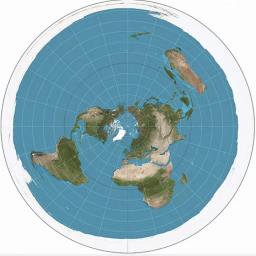
Any mention of flat-Earthers brings out the insults – and historical blundersAn article on this site yesterday on modern “flat-Earthers†gained plenty of interest. Most of the comments joined in with general hilarity about the gob-smacking stupidity of other people. The existence of (several) flat-Earth societies is certainly fascinating, but I was also slightly gobsmacked by the comparison drawn between those who today believe the Earth is flat and “Galileo’s 17th century criticsâ€.I mean, really? Are there really people out there who believe that Galileo showed that the Earth was round and that his critics denounced this view, “outraged by his heresyâ€? Especially people who like to laugh at others for getting their facts wrong. Are they stupid or something? Continue reading...
The Beach Boys film Love and Mercy portrays Brian Wilson as experiencing music playing constantly in his head. A growing body of research suggests that this rare phenomenon might have been behind his creative talentThere’s a memorable scene in the Beach Boys film Love & Mercy, where the band are on a plane and Brian Wilson has a panic attack. Later on, Brian is back at home, recounting the experience to his brothers, and he says: “Before it happened, there was music in my head – like always – and then threatening voices started.†As a psychologist who specialises in musical memory, those two little words – “like always†– really stood out for me.It tells us that Brian Wilson had music going through his head almost continuously. Of course, many of us are able to activate a musical memory when required – for instance, if I asked you whether the third note in Happy Birthday was higher or lower than the fourth, you would probably be able to summon up the tune – but to have it playing constantly like that is rare: one survey we did suggests that less than 5% of people experience it. Continue reading...
From Calvin Klein to Y-3, astronauts are currently all the rage on planet FashionWhen Tim Peake’s spacesuit curtailed his spacewalk this month, because of fears that it might spring a leak, designers – the fashion, not the Nasa kind – were no doubt itching to have a go at making him a new one. Blame it on Peake or David Bowie’s Starman, but space – the final frontier – is on fashion’s radar once again. Continue reading...
Computer simulations show the mystery planet, if it exists, would orbit about 20 times farther away from the sun than Earth, according to astronomers with the California Institute of Technology in Pasadena. Nicknamed Planet Nine, it moves on an extremely elongated orbit and takes 10,000 to 20,000 years to swing once around the sun. Caltech researchers say the planet would be about 10 times bigger than Earth. The planet is so large that with sensitive enough telescopes astronomers should be able to see it crossing the night sky Continue reading...
Weardale, County Durham If only they’d reveal those folded wings, translucent and iridescent, shaped like Chinese fansIt’s not unusual for earwigs to be active on mild days mid winter but they are, by nature, nocturnal. This one, a male, was grazing on algae from the fence post in broad daylight. He would be easy prey for a passing bird.No matter. His biological destiny was fulfilled. Somewhere, probably concealed in a cavity excavated under a stone, his consort would already be tending her eggs, soon to be nymphs, with a level of parental care that is unusual among insects. Continue reading...
Australian scientists say discovery shows honeybees have a sophisticated immune system and could possibly be bred to be resistant to specific pathogensScientists have discovered antibodies in bee semen that could help protect commercial hives from a potentially deadly sexually transmitted disease.The immune proteins, which protect queen bees from the fungus after mating, were identified by researchers at the Western Australian Centre for Integrative Bee Research. Continue reading...
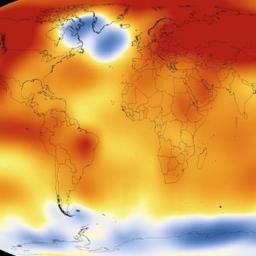
Deke Arndt of the US National Oceanic and Atmospheric Administration says 2015 was the warmest year since records began and climate trends have severe implications for 2016. Human-made global warming and a boost from El Niño have contributed, say scientists. Data released on Wednesday by Britain’s Met Office shows the average global temperature in 2015 was 0.75C higher than the long-term average between 1961 and 1990, much higher than the 0.57C in 2014, which itself was a record. The Met Office also expects 2016 to set a new record, meaning global temperature records will have been broken for three years running Continue reading...
Australian researcher finds the nasal spray analgesic drug fentanyl results in less nausea and sedation, shorter labour and fewer babies admitted to the nurseryWomen may soon be able to use a nasal spray for pain relief during childbirth following successful trials by an Australian midwifery researcher.Related: The obsession with ‘natural’ birth is just another way to judge a woman | Hadley Freeman Continue reading...
Tim Peake answers one of the most frequently asked question about space exploration, how do astronauts go to the toilet in space? Speaking from the International Space Station (ISS), the British astronaut explains how he and his colleagues manage the bodily function using a machine with a suction tube. Peake assures us that the air flow keeps everything going down the pipe Continue reading...
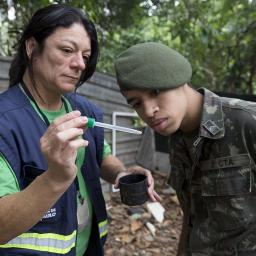
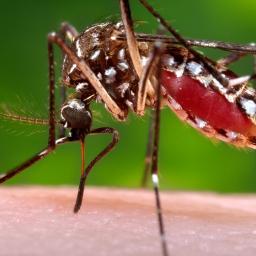
Brazil’s health officials say the jump in cases of microcephaly is linked to mosquito-borne disease, and the best prevention is to remove stagnant waterThe suspected number of cases of microcephaly, a rare brain defect in babies, has continued to rise in Brazil, reaching 3,893 since authorities began investigating the surge in October, according to health ministry officials.Fewer than 150 cases of microcephaly were seen in the country in all of 2014. Brazil’s health officials say they’re convinced the jump is linked to a sudden outbreak of the Zika virus, a mosquito-borne disease similar to dengue, though the mechanics of how the virus might affect babies remain murky. Continue reading...
Astronomers investigating the odd alignment of rocks beyond Pluto have concluded that an undetected icy planet four times the size of Earth must existAs science often does, it began with a “huh?†Some distant objects far beyond Pluto were behaving very oddly. The orbits of a handful of space rocks had aligned for no apparent reason. Though stumped at first, astronomers now have an explanation: a huge ninth planet at the edge of the solar system.If the researchers have their sums right, the mysterious new world is 10 times more massive than Earth and up to four times the size. Nicknamed Planet Nine, it moves on an extremely elongated orbit, and takes a staggering 10,000 to 20,000 years to swing once around the sun. Continue reading...
Named Dracoraptor hanigani, meaning ‘dragon robber’, the dog-sized meat-eating predator is ‘the best dinosaur fossil Wales has ever had’It died nearby on a prehistoric island, was washed out to sea, and became encased in a cliff face near the Glamorganshire Golf Club.The small, meat-eating dinosaur, the first from the Jurassic to be found in Wales, was discovered in 2014 by local amateurs, who spotted its bones amid the debris of a recent rock fall.
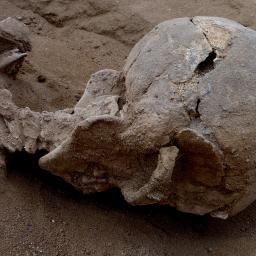
Researchers say remains of 27 murdered tribespeople in Kenya prove attacks were normal part of hunter-gatherer relationsSome 10,000 years ago a woman in the last stages of pregnancy met a terrible death, trussed like a captive animal and dumped into shallow water at the edge of a Kenyan lagoon. She died with at least 27 members of her tribe, all equally brutally murdered, in the earliest evidence of warfare between stone age hunter-gatherers.The fossilised remains of the victims, still lying where they fell, preserved in the sediment of a marshy pool that dried up thousands of years ago, were found by a team of scientists from Cambridge University. Continue reading...
YouTube videos and spiffy websites espouse the conspiracy theory – but is the movement doomed to once again fall flat over countless schisms?YouTube user TigerDan925 shocked his 26,000 followers recently by conceding a shocking point: Antarctica is a continent. It’s not, as he previously thought, an ice wall that encircles the flat disc of land and water we call earth.For most of us, that’s not news. But TigerDan925’s followers, like Galileo’s 17th century critics, are outraged by his heresy. Welcome to the contentious universe of flat-Earthers – people who believe the notion of a globe-shaped world orbiting the sun is a myth. Continue reading...
Study of fairy story origins traces some back thousands of years, with one tale dating back as far as bronze ageFairy stories such as Beauty and the Beast and Rumpelstiltskin can be traced back thousands of years to prehistoric times, with one tale originating from the bronze age, academics have revealed.Using techniques normally employed by biologists, they studied common links between 275 Indo-European fairy tales from around the world and found some have roots that are far older than previously known, and “long before the emergence of the literary recordâ€. Continue reading...
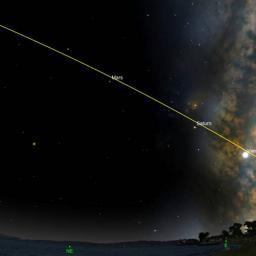
Stuart Clark, author of the Guardian’s astronomy blog, explains the coming month’s astronomical occurance – the apparent alignment of the planets Mercury, Venus, Mars, Jupiter and Saturn. Clark says the event is a coincidence, since all the planets move at different speeds and with different orbits
Researchers hope to develop a high-bandwidth, implantable neural interface to open the channel between the human brain and modern electronicsThe US government is researching technology that it hopes will turn soldiers into cyborgs, allowing them to connect directly to computers.The US military’s Defense Advanced Research Projects Agency (Darpa) has unveiled a research programme called Neural Engineering System Design (NESD) which aims to develop an implantable neural interface, connecting humans directly to computers. Continue reading...
The Shot Show held in Las Vegas is the world’s largest annual trade show for shooting, hunting and law enforcement professionals, featuring 1,600 exhibitors showing off their latest products to more than 62,000 attendees Continue reading...
Every day millions of internet users ask Google some of life’s most difficult questions, big and small. Our writers answer some of the commonest queriesWell, why don’t you, you ungrateful wretch?Appreciation seems such a half-hearted emotion, the sort of declaration you’d expect to see on a barrel-scraping greeting card: “I appreciate you.†Which would be a good card to send, when that’s the best that can be said. Appreciation is the anaemic, weakling cousin to the chest-bursting emotions of love and anger. Appreciation never moved mountains, and no one ever cried into their pillow listening to a song about appreciation. Continue reading...
Music festival strongly denies research which shows noise disturbs the koalas and forces them to move, ultimately resulting in their deathsMusic from Byron Bay Bluesfest is stressing and possibly killing koalas, according to a scientist who has studied the population – a claim that is vigorously denied by the festival and its consulting ecologists.Dr Stephen Phillips from Biolink ecological consultants told Guardian Australia that of 20 surveyed koalas initially found close to the site of the northern NSW festival in 2010, none were alive today. He said the noise from the festival, which stressed the animals and forced them to move, was the main cause of the deaths. Continue reading...
The Deep Down Under investigation of Osprey Reef in the Coral Sea, north-east of Queensland, studies marine life to a depth of 787 metres. Footage from the expedition includes silvertip sharks 350 metres below the surface. One of the marine species uncovered by researchers is a variety of sponge new to science that uses silicon to create its form. ‘They’re made of glass,’ the lead author of the expedition’s study, Dr Rob Beaman, says. ‘If you look at them through a microscope … [there’s] living flesh embedded with these little glass spicules’ Continue reading...
Tests by British company found that introducing sterilised males reduced the number of disease-transmitting female larvae by 82% in a yearGenetically modified mosquitoes could help Brazil combat the Zika virus, tests results released on Tuesday by a British biotech company suggest.Related: Brazil downplays threat from zika virus in run up to Carnival and Rio Olympics Continue reading...
Scientists say the reason for the unusual sight is that Mercury, Venus, Mars, Jupiter and Saturn will be on the same side of the sun at the same timeFor the next month, Earthlings will be treated to a spectacular sight, with all five planets visible to the naked eye lining up together, stretching from the horizon to the moon. But just don’t call it a “planetary alignmentâ€.
University of Southampton research finds public places can feature high frequency sounds beyond occupational health limitsExposure to high frequency sounds beyond the range of human hearing from public address systems, loudspeakers and door sensors in public places could be making people feel ill, research suggests.Increasing exposure to ultrasound in the air was recorded in railway stations, museums, libraries, schools and sports stadiums in which it is claimed people have complained of nausea, dizziness, migraine, fatigue and tinnitus. Continue reading...
There’s a new prime number towering above all the others - until the next one is discovered.New year. New largest prime.A computer in Missouri has discovered the largest known prime number, 2– 1. It is about 22 million digits long, 5 million digits longer than the previous largest known prime, which was discovered in January 2013. Continue reading...
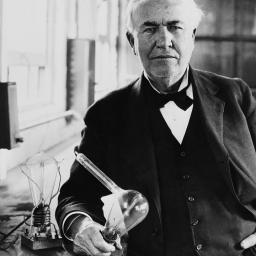
Your article on a new design of incandescent lightbulb (G2, 13 January) perpetuates the common myth that the original was invented by Thomas Edison. While a number of people were working on this at the time, it was the British scientist Joseph Swan who demonstrated the first viable incandescent electric bulb in 1878, some 18 months before Edison did. Edison, however, had the perspicacity to file his patents before Swan (and before he’d produced a working example).
My friend John Chubb, who has died aged 82, made a huge contribution to the study and understanding of electrostatics, a branch of physics that deals with the build-up of electric charges created by objects coming into contact with other surfaces – for instance, when a balloon is rubbed on to someone’s hair.John was responsible for many papers and conference presentations on the topic, and wrote an influential book, An Introduction to Electrostatic Measurements (2010), which provided many insights from his work over a 50-year period. He also created measuring instruments that are still commonly used in studies of electrostatic phenomena, including in the fields of industrial safety and lightning prediction, selling them through his own company, John Chubb Instrumentation. He took a great deal of interest in how his instruments were used, and was always ready to share his knowledge and experience with people who bought them. Continue reading...
Since nature is universal, and physics is the language, maybe we can reach out to refugees through physics. Does this work in practice? And if so, how? Guest post from Herbi Dreiner
Scientists reveal that headless men believed to be gladiators have descendants in Wales – and one hailed from Middle EastThe origins of a group of men whose decapitated corpses were discovered in a Roman cemetery in York have been traced through genome technology. It has been revealed that one man came from as far away as modern Syria or Palestine, and that the descendants of others now live in Wales.The 1,800-year-old skeletons of more than 80 individuals, all aged under 45 when they died, have been puzzling archaeologists since they were excavated more than a decade ago by the York Archaeological Trust. The men – many of whom were taller than average and well built – may have been gladiators, soldiers or criminals whose violent deaths were arena entertainment. Continue reading...
Quick fixes such as abstinence and detox diets often do more harm than good – the magic bullet is appealing, but there’s no such thing’Tis the season to be abstemious. Christmas is over, most of us over-indulged, and now we need to recover. Enter the period of good intentions, characterised by a surge in gym-going and dieting before most of us fall off whichever bandwagon we jumped on and revert to our old patterns of eating and (in)activity, often with an added sense of guilt and failure. Happy New Year, indeed.There’s a lot of debate about the merits of enforced abstinence. Initiatives such as dry January may feel virtuous but they won’t necessarily do a lot to help you understand your relationship with alcohol and the factors that influence your consumption. And, of course, there’s the possibility that you’ll feel so good about your teetotal month that you overcompensate for it in February. Two-thirds of those who participate in dry January report a reduction in consumption that is sustained six months later, but the evidence is not conclusive. We know that asking people how much alcohol they drink typically results in under-reporting by some 40%-60%. No wonder even the BMJ is asking, “Could campaigns like dry January do more harm than good?†Continue reading...
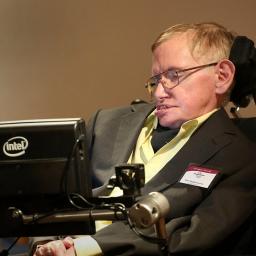
Falling into a black hole is a bit like going over Niagara Falls in a canoe – there is no way back, says Professor Stephen Hawking. He is giving this year’s BBC Reith Lecture exploring these collapsed stars. They challenge the very nature of space and time, as they contain a singularity - a phenomenon where the normal rules of the universe break down. Photograph: Philip Toscano/PA Wire
Any human interaction was tortuous to me. I felt suicidal, but then I got a job in the City and my life started to changeSocial anxiety disorder seems to be rooted, as Sartre plausibly pointed out, in the fact that most of what we are is a projection of what others think of us. We should all be afraid of “the look†of another person because it’s an unfathomable abyss into our very essence. And yet, despite its roots in our imagination, social anxiety is an unremittingly “physical†disease. You can have long-term therapy, or read as much philosophy on the subject as you like, but your body won’t care. The next time you interact with another human being on the bus, at the checkout, or on the phone, waves of adrenaline flood your body all the same, resulting in a racing heart, faltering voice and glowing red cheeks.Current scientific opinion attributes all this to serotonin imbalances and overactive amygdalae. There are also genetic factors at work which try to explain why social anxiety tends to run in families. Whatever the ultimate cause, the stubbornly physical basis of social anxiety suggests that there is no immediate cure. One doctor informed me that it’s just something that has to be lived with. A harsh conclusion indeed, and one that I and other social anxiety sufferers have found to be made much harsher by the nature of the modern world. Continue reading...