 |
by Mo Costandi on (#114XE)
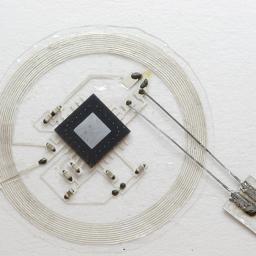
Researchers have developed biocompatible brain implants that can monitor brain injury before completely dissolvingAn international team of researchers has developed a miniaturized wireless electronic device that can monitor temperature and pressure when implanted into the brains of mice, and then dissolve to be naturally resorbed into the soft tissue once they are no longer needed.Electronic implants are used widely in the treatment of numerous medical conditions, ranging from pacemakers and defibrillators given to cardiac patients, electrode arrays used for deep brain stimulation in patients with Parkinson’s Disease, and devices used to monitor intracranial temperature and pressure inside the skulls of people with severe traumatic brain injuries. Continue reading...
|
| Link | http://feeds.theguardian.com/ |
| Feed | http://feeds.theguardian.com/theguardian/science/rss |
| Updated | 2026-10-01 02:00 |
 |
by Daisy Buchanan on (#114TB)
Do you and your partner fight about your finances, or dodge the issue at every opportunity? Here’s how couples can start to discuss it calmlyThis afternoon I have to undertake a secret mission. The object? Two dresses and two glass tumblers that I purchased online in the Anthropologie sale. The destination? Greenwich post office. The challenge? To sneak out of the flat, pick up the goods, then sneak back in and get the dresses into my wardrobe without my husband seeing me and saying: “Woman, what is wrong with you? You could wear a different dress every day and not have to do any laundry until November! After Christmas, you now have more Bella Freud jumpers than I have jumpers full stop! Stop spending money!â€
|
by Lenore Taylor, Political editor on (#114KW)
Chubb also says hostility towards climate science may be easing but scientists still have a duty to offer unflinching adviceAustralia’s chief scientist through the bitter “climate wars†has some advice for scientists denigrated and disparaged by those who do not like their evidence-based advice: “don’t flinchâ€.And as he prepares to leave the job on Friday, Ian Chubb has some unflinching parting advice – Australia will inevitably have to adopt tougher greenhouse gas reduction targets. Continue reading...
 |
by Lauren Smith on (#114JX)
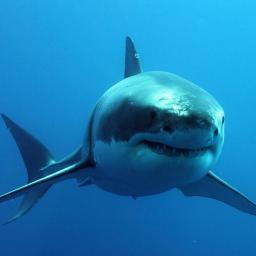
Diving off Guadalupe Island was a biologist’s paradise for shark specialist Lauren Smith. The best bit? Seeing the drama of a great white shark defecating ...The shampoo bottle skittered away from my grasp and looped around the shower tray for the umpteenth time. I had never taken sea sickness medication, but I was beginning to think perhaps now might be a good time to start. I was aboard the Southern Sport, leaving behind the port of Ensenada, Mexico and with it the calm of All Saints Bay, and was now several hours into the journey heading south-west into the north Pacific.
|
 |
by Australian Associated Press on (#1142E)
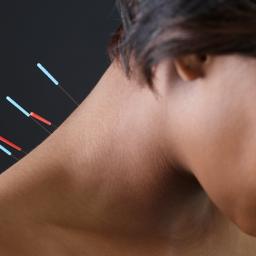
Women with thin needles inserted into body had same results as those who had their skin stimulated with blunt-tipped needlesTraditional Chinese acupuncture is no better than a fake version for treating menopause symptoms, says a new study.But, after eight weeks of treatment, both led to a 40% improvement in the severity and frequency of hot flushes, which was sustained six months later. Continue reading...
|
by Guardian Staff on (#11406)
Physicist and cosmologist Prof Stephen Hawking, at his first Australian public lecture, appears at the Sydney Opera House from Cambridge University in England via hologram technology. Hawking reflects on the state of the universe and why he believes we need to set up colonies in outer space. Before his BBC Reith Lecture on black holes, Hawking discusses the danger inherent in progress and the chances of disaster on Earth Continue reading...
 |
by Ian Sample Science editor on (#113PZ)
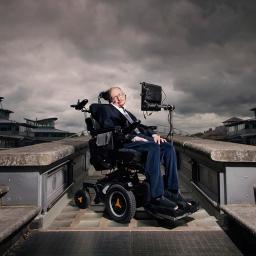
Speaking ahead of his BBC Reith Lecture on black holes, Stephen Hawking discusses the danger inherent in progress and the chances of disaster on EarthThe human race faces one its most dangerous centuries yet as progress in science and technology becomes an ever greater threat to our existence, Stephen Hawking warns.The chances of disaster on planet Earth will rise to a near certainty in the next one to ten thousand years, the eminent cosmologist said, but it will take more than a century to set up colonies in space where human beings could live on among the stars.
|
 |
by Press Association on (#11369)
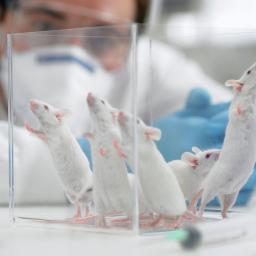
Study of mice finds that the drug can trigger out-of-control ‘autophagy’ – a process by which cells digest themselvesHigh doses of cocaine can cause the brain to eat itself, research suggests.A study of mice found that the drug can trigger out-of-control “autophagyâ€, a process by which cells digest themselves. Continue reading...
|
 |
by Alex Bellos on (#112PT)
The truth about Alf, Bert, Charlie, Derek, Ethel and Freda.Earlier today I set you the following puzzle: Continue reading...
|
 |
by Angela Saini on (#112MZ)
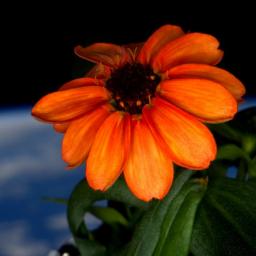
A blooming zinnia follows a successful lettuce harvest at the International Space Station, taking astronauts a step closer to their aim of growing fresh food for a future manned mission to MarsWhen there is no “upâ€, which way does a flower grow? Astronauts on the International Space Station (ISS) have answered this and other zero-gravity gardening conundrums by growing the first flower in space.The orange zinnia looks like a daisy and has a reputation for being one of the easiest flowers to grow on Earth. In space, though, it was a challenge getting it to sprout. The flowers seemed doomed in December after four plants developed mould. But at the weekend, US astronaut Scott Kelly, who has been taking care of them, tweeted a photo of a solitary blooming zinnia with the Earth in the distance behind it, with the hashtag #SpaceFlower and the words: “Yes, there are other life forms in space!†Continue reading...
|
 |
by Oliver Milman on (#11237)
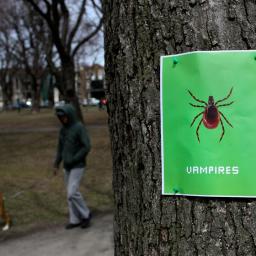
Black-legged tick inhabits twice as many counties as in 1998, CDC reports, with 320% increase in number of north-eastern counties seen as high risk for diseaseTicks that can carry the debilitating illness Lyme disease have significantly spread across the US over the past 20 years and are now found in nearly half of all American counties, including areas where they’ve never previously been documented, a new analysis has found.
|
 |
by Dean Burnett on (#111Z1)
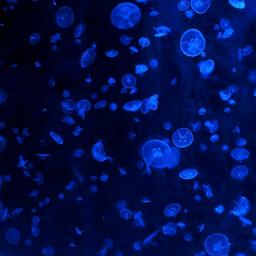
Vegetarianism may seem straightforward, but when you get down to the scientific details, it becomes less clear. With advancements in food technology, it’s likely to get even more confusingWould you eat a jellyfish? The most likely answer would be “no; they look disgusting. And they’re probably poisonous. Shall I wash it down with a nice glass of chilled urine?†But, inevitably, some people do eat them. They might even enjoy them, the maniacs.But Cnidaria cookery methods aside, consider this; would it be OK for a vegetarian to eat jellyfish? If not, why not? Continue reading...
|
 |
by Vahé Ter Minassian on (#111EZ)
Researchers at France’s Haute-Touche nature reserve develop techniques to aid the conservation of threatened speciesIt’s 9am and the rush is already on in the animal operating theatre at Haute-Touche nature reserve in central France. Seven operations on Japanese Sika does (Cervus nippon) are scheduled between now and lunchtime. With each procedure lasting 20 to 30 minutes, there’s no time to be lost.Assisted by two technicians, Katia Ortiz, one of the team’s vets, carries an anaesthetised deer into the theatre where biologist Yann Locatelli and his assistant are waiting in full surgical gear. Continue reading...
|
 |
by Alex Hern on (#111EG)
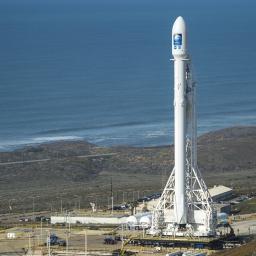
Re-usable space rocket owned by Elon Musk experiences another ‘rapid unscheduled disassembly’ crash while trying to landElon Musk’s SpaceX has experienced another example of “rapid unscheduled disassembly†– which is Musk jargon for “my rocket explodedâ€.The spaceflight company has been testing a re-usable version of its Falcon 9 rocket, the sub-orbital rocket which it uses, among other things, to deliver supplies to the International Space Station (it started in 2012, making it the first private company to visit the ISS). Continue reading...
|
 |
by Fiona Buckland on (#111AK)
The belief that anything can be flawless is a mirage. Embracing imperfection is the best way to truly improve our work and relationshipsA little perfectionism can be a good thing. It generates an image of a future we care about and the energy to strive for it. But too much and we can quickly become overwhelmed, lose confidence, frustrate others and underperform. So it’s crucial to be able to tolerate, and even embrace, imperfection at work, at home and in relationships.Related: Perfectionists relax: we’re good enough as we are | Laya Maheshwari Continue reading...
|
 |
by Alex Bellos on (#11143)
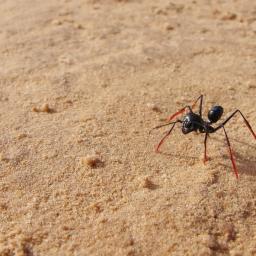
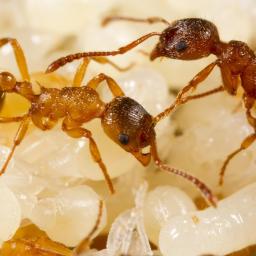
Six ants are on a stick. Will you twig what happens next?Hello guzzlers.Many classic puzzles involve animals, such as the ones about a bird flying between trains, a fox and a goose crossing a river and four dogs chasing each other. Continue reading...
|
 |
by Guardian Staff on (#110YE)
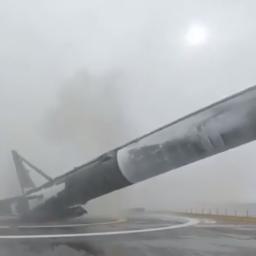
SpaceX’s attempt to land its Falcon 9 rocket on a barge appears successful until the rocket tips over and explodes into a ball of flames. The company’s founder, Elon Musk, posted this footage to his Instagram page, captioning it: ‘Falcon lands on droneship, but the lockout collet doesn’t latch on one [of] the four legs, causing it to tip over post landing. Root cause may have been ice buildup due to condensation from heavy fog at liftoff.’ Although it appears to be a setback for the private spaceflight company, SpaceX did manage to land the rocket on solid ground in December Continue reading...
|
 |
by Bonnie Malkin on (#110N1)
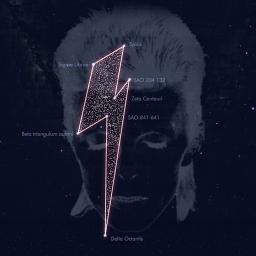
Scientists have registered a constellation shaped like a lightning bolt in honour of David Bowie and his out-of-this-world talentDavid Bowie has been given his own constellation, consisting of seven stars that shine in the shape of the lightning bolt.Belgian astronomers announced the registration of the constellation, which appropriately sits in the vicinity of Mars, following the artist’s death last week. Continue reading...
|
 |
by Associated Press on (#110FB)
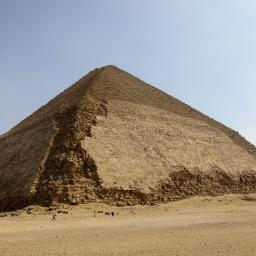
Researchers will soon begin analysing radiographic particles collected inside Egypt’s Bent Pyramid to search for clues about its originAn international team of researchers they will soon begin analysing cosmic particles collected inside Egypt’s Bent Pyramid to search for clues as to how it was built and learn more about the 4,600-year-old structure.Mehdi Tayoubi, president of the Heritage Innovation Preservation Institute, said on Sunday that plates planted inside the pyramid last month have collected data on radiographic particles known as muons that rain down from the Earth’s atmosphere. Continue reading...
|
 |
by Alan Yuhas on (#11011)
|
 |
by Kim Willsher in Paris on (#10ZN9)
Five other men are still in a stable condition after testing the pain-relief drug, although doctors fear three may have suffered irreversible brain damageA French man in his 20s who volunteered to take part in a drug trial has died after serious side effects left him brain dead.Five other men are still in hospital “in a stable conditionâ€, but doctors fear three of them may have suffered irreversible brain damage.
|
 |
by Agence France-Presse in Rennes on (#10ZD0)
Five other volunteers in stable condition after testing pain and mood disorder drug for Portuguese company BialA man who was left brain dead after suffering serious side effects during a drug trial in north-west France has died, according to the hospital that had been treating him.Five other volunteers, hospitalised a week ago when the drug trial went wrong, were in a stable condition, the Rennes hospital said in a statement on Sunday. Continue reading...
|
 |
by Georgia Dehn on (#10YQA)
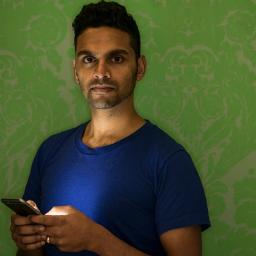
Overhauling your life, whether it’s your home, job or your relationship, can seem an impossible task. But these five self-help gurus are here to get you startedWhatever you know or even think you know about mindfulness, Rohan Gunatillake wants you to consider his perspective. “Mindfulness needs to be normalised,†he says. “Why have we been trying to import a system designed for medieval Asian monastics into our culture?†Continue reading...
|
by Guardian Staff on (#10YN4)
The American Museum of Natural History in New York unveiled a new gigantic 37 metre long dinosaur exhibit on Friday. Paleontologists have inferred that the dinosaur, a giant herbivore that belongs to a group known as titanosaurs, weighed about 70 metric tons. The species was discovered in Argentina’s Patagonia region in 2014. Photographer: William Hicklin Continue reading...
 |
by Francesca Kay on (#10YJR)
Put your iPad down, ditch the phone and pick up a book. It could boost your circle of sympathyFortunate owners of working fireplaces in my neighbourhood have their chimneys swept by a father-and-son team of great kindliness and charm. Once every couple of years is enough, they say, unless you keep a fire burning every day. So they were surprised when a new customer called them back after only a month. Had they done something wrong? No, not at all. Eventually they realised that she wanted company so badly she was prepared to pay for quite unnecessary work.What have we become? A society in which someone can have hundreds of online friends and yet go for days without human contact. Where the face-to-face encounters that once punctuated daily lives – and gave opportunities for the sort of casual conversation which, no matter how banal or weather-centred, makes real connections between one person and another – have largely been replaced by automaton. We swipe and scan; we click; we text people in the next room instead of speaking to them; we even check our library books out by ourselves when once we might have chatted to a friendly person with an ink pad and a date stamp. Continue reading...
|
 |
by Shane Hickey on (#10YHG)
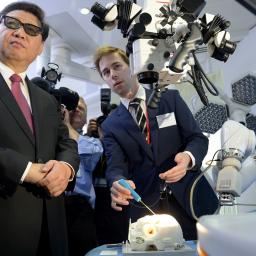
An Imperial College London team is pioneering nanoscale robotic surgical instruments which can, among other uses, better target cancer cells with chemotherapy drugsWhen Chinese president Xi Jinping visited Britain last October, one of the more unusual gifts he received was one he couldn’t actually see – a model of the Great Wall of China which was the same width as a human hair.Researchers at Imperial College had used advanced 3D printing techniques to make the model. But the more practical use of the technology is for the development of advanced surgical instruments. The detail of these precision surgery instruments cannot be seen by the human eye, but they are expected to replace the large robotic instruments used in operating theatres at present. Continue reading...
|
 |
by Ben Garrod on (#10YEJ)
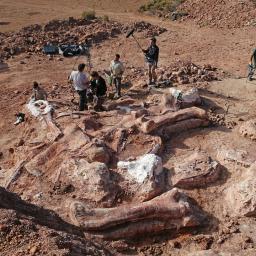
A new species of dinosaur discovered in Argentina is forcing scientists to tackle some improbable questionsHow do you eat a skip full of food every day without ever chewing? How do you walk on tiptoes when you’re the length of four London buses? How do you have sex when you weigh 70 tons? While the answers to these three questions is probably “with great difficultyâ€, scientists are tackling such improbable questions after uncovering what is undoubtedly the biggest dinosaur excavation of all time.In the spring of 2014, a lone farmer scanned his land, looking for a lost sheep. He thought there was something odd about the rocky ledge his grizzled old sheep was perched on. Dinosaur finds aren’t uncommon in the area but the outcrop was huge – could it really be a bone? He called in the scientists. When they determined that the ledge was in fact the 8ft thigh bone of a dinosaur, this sleepy Argentinian farm became the most important dinosaur dig site for more than 100 years. Continue reading...
|
 |
by Robin McKie on (#10YAM)
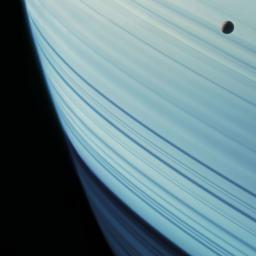
When Nasa first sent lunar probes into space, the world got a glimpse of the moon and Earth in orbit. Recently enhanced, the images star in a new exhibition celebrating five decades of planetary photographyFor more than half a century, robot spaceships have swept through our solar system, returning data that has transformed our knowledge of our sister planets. We now know that Venus is an acid-drenched, scorching hell, Mars is desolate and virtually airless, while several of Jupiter’s moons may have liquid oceans below their surfaces.These missions have provided science with some remarkable revelations, matched only by the equally striking photographs of these alien worlds that have been beamed back to Earth: the braided rings of Saturn; the plumes of water being ejected into space from its moon, Enceladus; and great volcanoes of Jupiter’s moon, Io. Continue reading...
|
 |
by Dr Sarah Main on (#10XQ0)
For Britain to remain a world leader in science and engineering, researchers need to have proper resourcesThere’s a hair care advert that says “There’s more to life than hair… but it’s a good place to start.†I have been pondering the science equivalent in recent weeks. There surely is more to life than science. But, my goodness, it’s a good place to start. This very week, in 1986, British scientists were so worried about the fate of science in this country that they placed a full page ad in the Times calling on the public to “ask your Member of Parliament to help save British science before it is too lateâ€. The advert was paid for by contributions from 1,500 scientists across the country, long before the notion of crowdsourcing. This extraordinary uprising was prompted by a dire situation. The advert spoke of “science in crisisâ€, “opportunities missedâ€, “scientists emigrateâ€, “whole areas of research in jeopardyâ€. In a time of swingeing cuts to universities and a falling science budget, scientists felt they needed a voice to stand up for science in parliament. The pressure group Save British Science was founded, later renamed the Campaign for Science and Engineering, and we have strived to provide that voice ever since. So was science saved? Does it still need saving?Related: Science is vital if Britain is to prosper – make sure your MP knows that Continue reading...
|
 |
by Catherine Bennett on (#10XQ2)
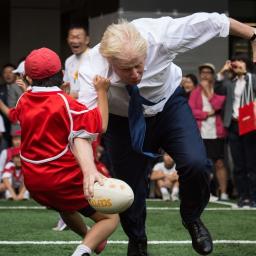
Discretion and reserve were once admired. Now the extroverts are exalted and the quiet seen to be flawedThanks to a Freedom of Information request, following a trip to Iraq, newly revealed Foreign Office emails have indicated the lengths to which the mayor of London – also, allegedly, the MP for somewhere or other – will go to get himself noticed.Since no mayoral word has emerged, to advise why Johnson needed to sprawl on a mountainside with a Kalashnikov, it looks as if this level of visible farce has simply become essential to his role as the country’s premier show-off. Albeit he is now competing principally against himself. Photographs of Johnson belly down in the dirt, purporting to “strengthen economic ties between London and Kurdistanâ€, had to outshine all his earlier public performances: knocking over a 10-year-old Japanese boy, giving his wife a lift on his bicycle, mussing his hair on Have I Got News for You, dancing like a loon at the Olympics. Continue reading...
|
 |
by Chris Johnston on (#10WDK)
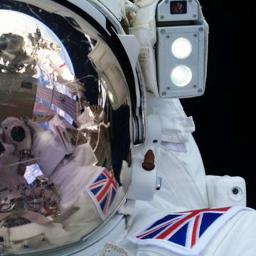
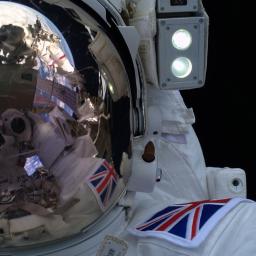
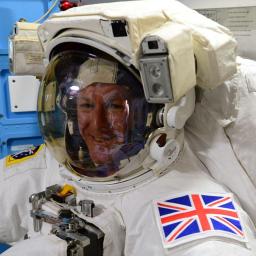
Astronaut thanks ground teams for ‘exhilarating’ spacewalk, which ended early after water discovered in colleague’s helmetThe selfie will never be the same again. Tim Peake has beaten the likes of Kim Kardashian at their own game by posting the ultimate self-portrait on Twitter during his historic spacewalk on Friday.About four hours after becoming the first Briton to walk in space, Peake tweeted three pictures – including one of himself – as he shared his feelings on the landmark occasion. Continue reading...
|
 |
by Tim Peake/ESA on (#10W10)
Photographs from the Eyewitness series Continue reading...
|
 |
by Associated Press in Philadelphia on (#10V3Q)
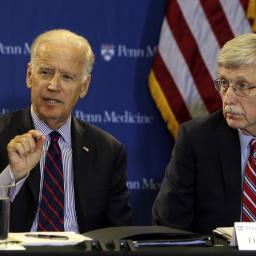
The vice-president said he would push for more funding and use his influence to ‘break down silos’ to cure the disease, which took his son’s life last year
|
 |
by Guardian Staff on (#10TN5)
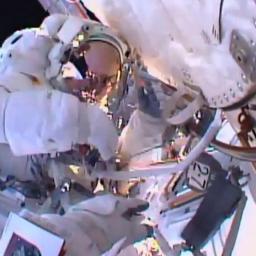
Two spacewalking astronauts – including Britain’s first, Tim Peake – successfully restored full power to the International Space Station on Friday. But the spacewalk was cut short after water leaked into one of the men’s helmets in a scary repeat of a near-drowning two-and-a-half years ago. Kopra and his spacewalking partner, British spaceman Timothy Peake, took care of their main job early on in the spacewalk before returning to the station
|
 |
by Associated Press in Salem, Massachusetts on (#10TKK)
The team used historical documents and modern archaeological techniques to determine that Proctor’s Ledge is where 19 people were hanged in 1692A team of researchers using historical documents and 21st-century archaeological techniques has confirmed the exact site where 19 innocent people were hanged during the Salem witch trials more than three centuries ago.The site, known as Proctor’s Ledge, is a small city-owned plot of woods nestled between two residential streets and behind a Walgreens pharmacy, said Salem State University history professor Emerson “Tad†Baker, a member of the seven-person team, which announced its findings this week. Continue reading...
|
 |
by Angelique Chrisafis in Paris on (#10TDR)
Government promises to investigate ‘unprecedented’ accident as six volunteers remain in hospital after trial for pharmaceutical company BialOne man is brain dead and three others could face irreversible neurological damage after they volunteered to take part in a drugs trial in western France.Six volunteers remain in hospital in Rennes, Brittany, after taking part in the Phase 1 trial for a new experimental medication designed to treat mood disorders such as anxiety, which was under development by the Portuguese pharmaceutical company Bial. Continue reading...
|
 |
by Ian Sample Science editor on (#10TBS)
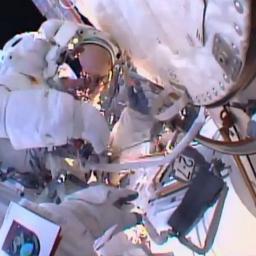
Friday’s main task was completed successfully, but water in Tim Kopra’s helmet meant the astronauts were ordered back into the ISS, leaving work undoneThe moment was hardly lost on him. As Tim Peake clambered out of the International Space Station he nodded to the union flag emblazoned on his shoulder. To wear the patch was, he said, “a huge privilege, and a proud momentâ€.Britain’s first European Space Agency astronaut began his maiden spacewalk shortly before 1pm on Friday as the orbiting station soared 250 miles above Australia. By the time he returned inside, he had circled the planet at least three times and witnessed six stunning sunsets or sunrises.
|
 |
by Ian Sample on (#10RXH)
The main task was completed right on schedule, but both astronauts were ordered to return inside after water appeared in Tim Kopra’s helmet6.50pm GMTI think that’s enough spacefaring excitement for one day. There you have it: Britain’s first ESA astronaut has completed his first spacewalk. It may have ended early, but when Scott Kelly, the station commander, got Peake out of is spacesuit, the man from Chichester was grinning like a Cheshire cat. Good to see both Tims safely back inside.Thanks to all of you who joined us for what turned out to be a truly exhilarating day.6.08pm GMTScott Kelly and Yuri Malenchenko have just pulled Tim Peake inside what’s called the equipment lock. Time for Tim Peake to doff his spacesuit now. Sergey Volkov has taken a picture and I’ll bet he caught Peake grinning from ear to ear. Continue reading...
|
 |
by Guardian Staff on (#10T47)
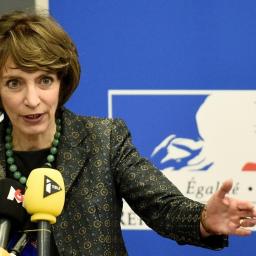
French health minister, Marisol Touraine, and Rennes university neurology professor Gilles Edan speak to the press on Friday afternoon after six people fall critically ill in Rennes after taking part in a drug trial from Portuguese pharmaceutical company Bial. Touraine confirmed that the victims were men between 28 and 49, confirming that one of the six is reported as brain deadFrench drug trial leaves one brain dead and five critically ill Continue reading...
|
 |
by Angelique Chrisafis in Paris on (#10RS0)
Ninety people took some dosage of experimental drug being tested for Portuguese pharmaceutical company BialOne person is brain dead and five others are seriously ill after taking part in a drug trial for Portuguese pharmaceutical firm Bial at a clinic in north-west France.The French health ministry said the six male patients aged 28 to 49 had been in good health until taking the oral medication. They started taking the drug on 7 January. One person started feeling ill on Sunday and the other five afterwards. The brain dead volunteer was admitted to hospital in Rennes on Monday. Other patients went in on Wednesday and Thursday. Continue reading...
|
 |
by Oliver Milman on (#10SYA)
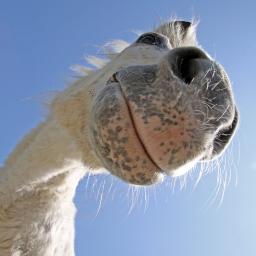
Cute internet videos and animals in children’s entertainment with human-like intentions can be useful, harmful or both – depending on whom you askHumans have long attempted to portray the natural world as reflections of us, from giving storms names such as Desmond or Katrina to putting tasteful blue clothing on Donald Duck and Peter the Rabbit. But the science of how much humans actually share with other animals is still keenly contested.
|
 |
by Guardian Staff on (#10SW3)
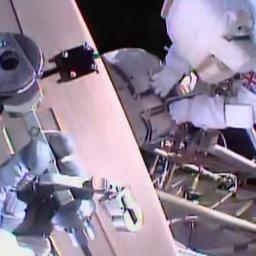
Two astronauts - including Britain’s first spacewalker - venture outside on Friday morning to restore full power to the International Space Station. British astronaut Timothy Peake and NASA’s Timothy Kopra work to replace an electronic box that failed two months ago, slashing station power by one-eighth
|
by Guardian Staff on (#10SWK)
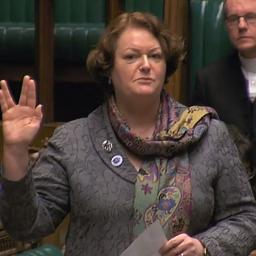
SNP MP Philippa Whitford gives the Vulcan salute during a Commons debate about the UK’s space industry. Star Trek stars William Shatner and George Takei have backed the SNP’s goal to have the first European spaceport in the UK in Whitford’s constituency, Central Ayrshire
 |
by Frances Perraudin on (#10SGC)
SNP MP gives Vulcan salute during debate on UK space industry as William Shatner and George Takei voice their supportThe Star Trek stars William Shatner and George Takei have backed the Scottish National party’s ambition to establish Europe’s first spaceport in the UK.The SNP MP Philippa Whitford led a debate in the House of Commons on Thursday on the future of the UK space industry, which she concluded by giving the Vulcan salute. The MP made the case for a spaceport to be established in her constituency of Central Ayrshire. Continue reading...
|
 |
by Michael Halpern on (#10SF2)
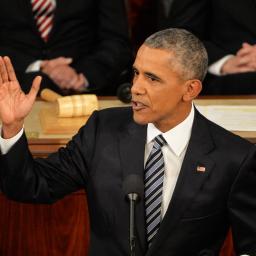
Obama’s address was relevant to how knowledge and evidence are used in democracy. Politicians need to spell out how science will inform their decisions
|
 |
by Guardian Staff on (#10SEN)
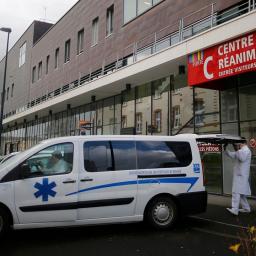
France’s health minister Marisol Touraine says that ‘serious accident’ seems to have occurred during a drugs trial. One person has been left brain dead and five others are seriously ill after taking part in the trial for an unnamed pharmaceutical firm at a clinic in the north-west of the country
|
 |
by David Smith on (#10SA8)
Measures to tighten the US visa waiver programme passed through Congress last month, impacting hundreds of thousands of Iranian AmericansDr Firouz Naderi has served America for 35 years, climbing the ranks at Nasa, landing spacecraft on Mars and meeting Michelle Obama at the White House. But lately, he feels he has been treated like a second-class citizen in the country he calls home.Iranian-born Naderi, a senior scientist at America’s space agency, fears that new visa regulations passed in the wake of the Paris and San Bernardino terror attacks will unfairly discriminate against himself and hundreds of thousands of Iranian Americans – even those born in the US. Continue reading...
|
 |
by Guardian Staff on (#10SAA)
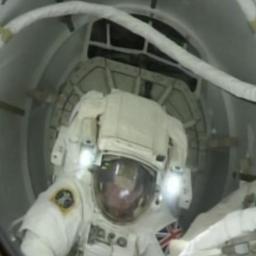
British astronaut Tim Peake takes his first spacewalk on Friday. Peake’s Stint outside the International Space Station (ISS) will last more than six hours, and will involve him and his Nasa partner Tim Kopra traversing almost the entire length of the space station to replace a broken power unit, fit a new valve, and lay tens of metres of cable
|
by Pete Etchells on (#10S39)
A new initiative published this week outlines how scientists can make a change to open science practices at an individual levelOpen science – broadly, the idea that scientific papers, data and materials should be freely available and accessible to all – is an easy concept to talk about, but a difficult one to put into practice. That’s because it requires effort; individual scientists have to invest extra time and money in making code readable and data accessible, and be ready to deal with criticisms of – and in extreme cases, attacks on – their work. It’s made all the more difficult by the fact that sharing data and materials isn’t the current de facto standard across many scientific disciplines. So why bother going against the grain, if all it’s going to cause is grief and extra work?It’s important, because transparency is fundamental to good scientific practice. No scientist is perfect, and it’s entirely normal to expect that genuine mistakes can creep into analysis scripts, or in data files themselves. By allowing others to access these sorts of materials, errors can be identified - or in extreme cases, academic fraud can be uncovered – and the scientific record can be corrected. But there’s more to open science than this. Allowing other scientists access to your data might result in new avenues of research to be uncovered, and for unanticipated discoveries to be made. And in some situations, it can even help avoid bizarre run-ins with the legal system. Continue reading...
 |
by Damien Walter on (#10S04)
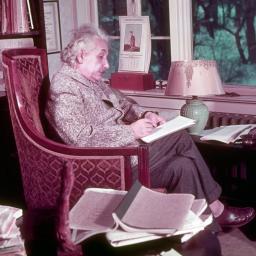
A century after the publication of the general theory of relativity, sci-fi is still grappling with its implications, and still trying to explain it to the rest of usA century after Albert Einstein formulated general relativity, the theory holds a profoundly strange place in modern life. On one hand, it underwrites all the marvels of technology today, from smartphones to space probes. We wouldn’t be tweeting from orbit around Mercury without the physics Einstein published in 1915. On the other hand, while a fair number of people can tell you what special relativity’s E=MC stands for, a vanishingly small number can claim to really understand the universe as Einstein’s famous equation reveals it to us.The popular understanding of relativity comes almost entirely from science fiction. A crew of astronauts crash land on a planet populated by apes, where humans are mutes kept as cattle. But it’s only when Charlton Heston screams “You maniacs, you blew it up!†at Lady Liberty that the other moon boot drops: we’re on Earth after a nuclear apocalypse, transported into the future as a result of time dilation, an effect of relativity predicted by Einstein’s theory. Continue reading...
|