 |
by Agence France-Presse in Beijing on (#10RGS)
State media reports Chinese mission to survey previously unexplored far hemisphere in 2018China will launch a mission to land on the dark side of the moon in two years’ time, state media has reported, in what will be a first for humanity.
|
| Link | http://feeds.theguardian.com/ |
| Feed | http://feeds.theguardian.com/theguardian/science/rss |
| Updated | 2026-10-01 02:00 |
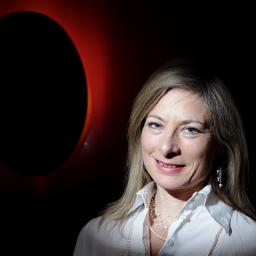 |
by Nicola Davisand Iain Chambers on (#10RBV)
We look at the science of uncertainties, taking in meteoroid impacts and gravity, to ask what role dark matter may have played in the demise of the dinosaurs
|
by David Klein on (#10RAX)
Lots of songs have numbers in their titles: from 5-4-3-2-1 to 99 Luftballons. But what makes a great “number song� Music journalist and self-appointed rock numerologist David Klein has spent years researching this very question for his new book If 6 was 9. Here he lists his all time top ten.10. “One†– Nilsson (1968) Continue reading...
by Ian Sample Science editor on (#10R5E)
It’s ‘like mending a watch while wearing oven gloves and falling off an infinitely tall building,’ says one veteran. Here’s what the astronauts will be doingRelated: The scientific research Tim Peake will carry out in spaceFor Tim Peake, the view is about to get a whole lot better. After a month confined to the tubular compartments of the International Space Station, the British astronaut is to step outside for the first time on Friday for a spectacular, gruelling spacewalk far above the world. Continue reading...
 |
by Associated Press on (#10QB7)
Astronomers find brightest star explosion ever, located 3.8bn light-years away, which is more luminous than entire Milky WayAstronomers have discovered the brightest star explosion ever, a super supernova that easily outshines our entire Milky Way.An international team revealed “the most powerful supernova observed in human history†Thursday in the latest Science journal. The astronomers used a network of telescopes around the world to spot the record-breaking supernova last year. Continue reading...
|
 |
by Amber Jamieson on (#10Q9V)
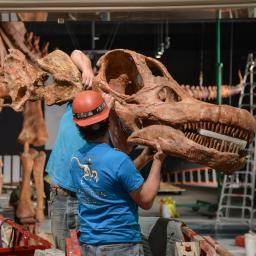
The as yet unnamed Titanosaur species was found in Patagonia and stands 122ft long – too big for the gallery at the American Museum of Natural HistoryPaleontologists at New York’s American Museum of Natural History unveiled a cast skeleton of the world’s biggest dinosaur, a new species of Titanosaur, to a packed crowd of media on Thursday morning.“There’s nothing like finding a great new fossil. Especially a big one, like this one,†declared Michael Novack, the museum’s senior vice-president. Continue reading...
|
 |
by SciDev, part of the Guardian development network on (#10P5W)
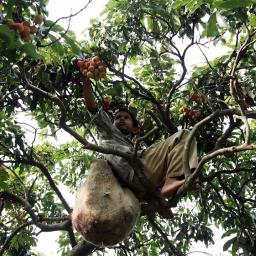
Investigation of deaths in Bihar state indicates children with low blood sugar are vulnerable because toxins in lychee interfere with food metabolismResearchers confirmed that a toxic chemical in the fruit of the Asian lychee tree is responsible for outbreaks of a fatal brain sickness in children in India’s Bihar state, where the fruit is commercially grown.
|
 |
by Stephen Moss on (#10P2C)
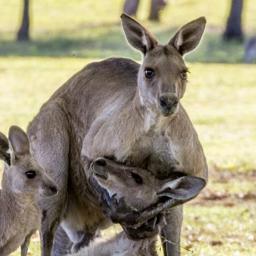
Whatever the animal was demonstrating – empathy, sexual exploitation or something else – one certainty is the human impulse to anthropomorphiseIt was a photograph that touched the world. An intimate portrait of a dying mother kangaroo being gently cradled by her mate, while with her last breath she reached out to caress her innocent baby.Yet, as it turns out, that is not what the photo shows at all. As an Australian expert swiftly pointed out, rather than protecting the female, the male appears to be trying to mate with her, holding her close to fend off any rivals. Indeed, his unwanted attentions may even have led to her death. Continue reading...
|
 |
by Claire Mokrysz on (#10NX0)
My recent research has shown that differences other than cannabis use might be causing the much-discussed disparities in cognitive functionWhether or not using cannabis can lead to cognitive impairment is a hot topic of research and public interest. Given the extensive media attention granted to findings that suggest detrimental effects of cannabis on cognition, brain function and mental health, you would be forgiven for thinking smoking a spliff was akin to repeatedly bashing yourself over the head with a giant bong. However, since much of the work to date is cross-sectional (that is, measurements are taken only at one time in a person’s life), we cannot know whether cannabis users would have performed any differently before they started using cannabis. In short, we’re faced with a classic “chicken or egg†problem.Cannabis use does not occur in a vacuum. And teenagers who start using cannabis from a young age will almost certainly differ from those who will never try, it or who delay until they are older. The evidence suggests that those who start using cannabis from a young age often have less stable backgrounds and more behavioural problems than their non-using peers. Teenage cannabis use also typically goes hand in hand with other drug use and risky lifestyle choices in general. The poorer cognitive performance of cannabis users may therefore result from other factors associated with cannabis use, rather than cannabis use itself. However it is of course very difficult to control for all these other factors. Continue reading...
|
 |
by Damian Carrington on (#10NM1)
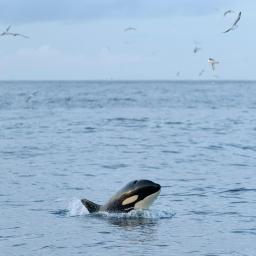
Western European waters are a global hotspot for lingering toxic PCB pollution, research reveals, damaging the reproduction of orcas and dolphinsThe UK’s last pod of killer whales is doomed to extinction, with new research revealing western European waters as a global hotspot for the lingering legacy of toxic PCB pollution.The persistent chemicals, used in electrical equipment but banned in the 1980s, are still leaking into the oceans and were also found in extremely high levels in European dolphins, whose populations are in decline. Continue reading...
|
 |
by Agence France-Presse on (#10NDJ)
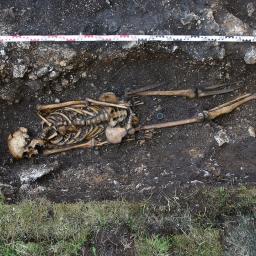
Archaeologists in Austria say their findings about discovery in grave of man with one foot are ‘very, very surprising’Archaeologists in Austria believe they have found Europe’s oldest prosthetic implant – a sixth-century wooden foot.The discovery was made in the grave of a man missing his left foot and ankle at Hemmaberg, southern Austria. At the end of his leg was an iron ring and remnants of a clump of wood and leather. Continue reading...
|
by Melissa Davey on (#10M21)
Search for treatments during or before pregnancy as childhood food allergies become more common and more severe in Australia
 |
by Elle Hunt on (#10KYS)
Dr Derek Spielman, a senior lecturer in veterinary pathology, says it is ‘gross misunderstanding’ to think kangaroo was cradling dying mateFar from “mourning the loss of his mateâ€, the male kangaroo pictured in “heartbreaking†viral photographs with its injured female “companion†might have been responsible for her death while attempting to mate with her, experts say.The images, taken on a bushland property in River Heads, Queensland, Australia, show a male eastern grey kangaroo holding the head of a dying female, in front of her joey. Continue reading...
|
 |
by Agence-France Presse on (#10KRY)
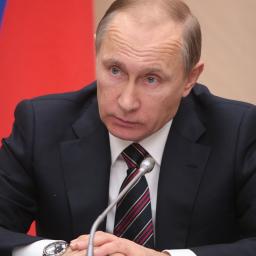
Russian president announces vaccine for disease that has killed 11,000 in west Africa, but does not go into detail about how it works or any clinical trialsRussian President Vladimir Putin has claimed that his country has developed a vaccine for the Ebola virus which has killed thousands of people in west Africa.But Putin, who is famed for his talent for headline-grabbing announcements, did not divulge the vaccine’s name, nor did he say how it worked, who was developing it or give details of any trials. Continue reading...
|
 |
by Sally Weale Education correspondent on (#10KRA)
Sutton Trust research suggests link between wealthier upbringing and qualities such as assertiveness as well as personality and career successPeople with character traits thought of as extrovert tend to come from wealthier backgrounds than their less extrovert peers as well as being more likely to have well-paid jobs, a new study suggests.The research, published by the Sutton Trust educational charity, found that traits such as being assertive, talkative and enthusiastic are associated with higher earnings in adult life. Continue reading...
|
 |
by Dr Dave Hone on (#10KQ8)
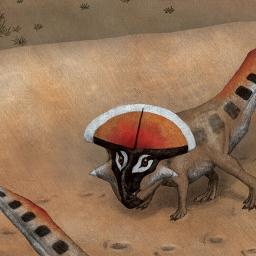
A new study shows that Protoceratops used its crest for sexual or social displaysThe incredible array of horns, frills, helmets, crests and other generally excessive and unusual structures that adorn dinosaurs have been a puzzle to palaeontologists back to the earliest discoveries of these animals. Huge numbers of hypotheses have come and gone about what they might have been used for though recently one idea has (re)emerged from the pack – sexual selection and social dominance. This is the aspect of evolution that produces features like the train of a peacock or the antlers on deer – structures that essentially advertise the health and ‘quality’ of the bearer and help them find suitable mates and / or take a dominant position in a social situation.This is an area of research I have been working on (and writing about) for several years but it’s a frustrating issue as naturally the behaviour of long extinct species is rather hard to test. One productive line is that socio-sexual dominance structures typically only grow late in an animals’ life. When they are young, their efforts are focussed on surviving and growing and getting to sexual maturity to reproduce, so growing large and heavy structures (or things that are brightly coloured and might give you away to predators) are eschewed. Then as maturity nears, these are important and suddenly grow quite quickly. Continue reading...
|
 |
by Kate Ravilious on (#10KBG)
Here in the UK we are all too familiar with rain, and this winter we seem to be having more than our fair share. In recent weeks it has been frontal rain – formed where cold air meets warm tropical air – that has repeatedly flooded northern areas. Its process of formation is well understood.Other kinds of rain are less straightforward. In particular, the sudden downpours that spring from innocent looking fluffy cumulus clouds don’t seem to obey the laws of physics. Inside a typical cumulus cloud the average droplets are about 20 micrometres wide. But to become raindrops that can fall to the ground they need to grow to about 2mm – which equates to a millionfold increase in volume. Continue reading...
|
 |
by Letters on (#10K01)
The “civilised Romansâ€, despite their baths and sewage system, have been assessed as no freer from disease than the barbarians they scorned (Lice, fleas and tapeworms: the horrible history of the Romans, 8 January). I wonder whether modern Britain would fare any better if judged by academics in a couple of thousand years. Will they find that our obsession with cleanliness, evidenced by myriad shampoos, cleansers and deodorants, left us prey to the fearful ravages of the ubiquitous trisclosan; that the sewage sludge which found its way on to agricultural land exposed us to the noxious effects of heavy metals; or that gender mutations caused by synthetic hormones had undreamt-of implications for our fertility? We shall never know.
|
 |
by Letters on (#10JZ7)
I’ve been looking out for an example of when the indefinite article, “aâ€, can legitimately be pronounced “ayâ€, ie when it’s to be stressed. I found one in your article on the TV series Girls (8 January): “I may be the voice of my generation – or at least the voice of a generation.†What is driving me crazy is that nowadays everybody, including professionals all over the BBC and other channels, says “ay†all the time, instead of the correct short “aâ€. What is going on here? The other night I even heard somebody stress “an†when there was no earthly need to. Has anybody else noticed this? Kids are beginning to do it too. It sounds awful!
|
 |
by Damian Carrington on (#10JN9)
Climate change is altering global cycles to such an extent that the next ice age has been delayed for at least 100,000 years, according to new research identifying Earth’s deep-freeze tipping pointHumanity’s burning of fossil fuels is postponing the next global ice age for at least 100,000 years, according to new research that has discovered the tipping point which plunges the planet into deep freezes.Showing that human activity, via climate change, can alter global processes like ice ages is compelling evidence that the planet has entered a new geological epoch, dubbed the Anthropocene, according to the scientists. Continue reading...
|
by David Cox on (#10JJ0)
He was written out of Tom Hooper’s The Danish Girl, but doctor and sexual rights campaigner Magnus Hirschfeld has a legacy even the Nazis couldn’t destroyIn the spring of 1930, Danish artist Einar Wegener arrived in Berlin for a consultation that he hoped would both save and change his life.Wegener had spent the previous twenty years dressing as a woman, Lili Elbe. In public, his wife, painter Gerda Gottlieb, introduced Elbe as Wegener’s sister . But by 1930 he could not bear his double life any longer. He resolved to commit suicide, even naming a date – May 1. Continue reading...
 |
by Ian Sample Science editor on (#10JFP)
Researchers awaiting approval to use gene editing in embryos, which they hope will help them understand early stage life and improve fertility treatmentScientists in Britain are ready to genetically modify human embryos for the first time as part of a research effort to shed light on the root causes of recurrent miscarriages.Researchers at the Francis Crick Institute in London could receive approval for the controversial work as early as Thursday when the government’s fertility watchdog meets to consider the proposal.
|
 |
by David Ferguson on (#10JBQ)
The odds of being rich, famous and happy are even worse than actually winning the $1.5bn jackpot
|
 |
by Henry Nicholls on (#10HBC)
Puff adders are masterful ambush predators. Coiled up in a pile of leaves, they are almost invisible. New research suggests they hide their smell tooPuff adders lie in wait for their prey. Their patient approach to sustenance should make them vulnerable to becoming dinner themselves. Except they have appear to have evolved a suite of adaptations that renders them virtually undetectable.Most obviously, the puff adder’s beautiful pattern make them incredibly hard to see. When confronted by danger, they tend to freeze too, making them still harder to detect.
|
 |
by Arthur Neslen Brussels on (#10GZF)
Dispute over possible carcinogenic effects of the widely used weedkiller comes ahead of an EU decision on its continued useA bitter row has broken out over the allegedly carcinogenic qualities of a widely-used weedkiller, ahead of an EU decision on whether to continue to allow its use.At issue is a call by the European Food and Safety Authority (Efsa) to disregard an opinion by the WHO’s International Agency for Research on Cancer (IARC) on the health effects of Glyphosate. Continue reading...
|
 |
by David Smith and Dan Roberts in Washington on (#10GAE)
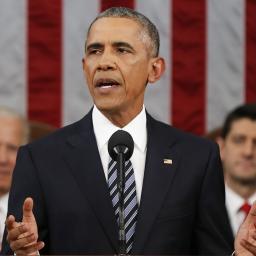
President says it’s biggest regret of presidency but appeals to America’s better self in calling for rejection of hostile rhetoric: ‘We can’t afford to go down that path’Barack Obama admitted his regret that he will leave the US more, not less, polarised when he departs office a year from now, using his final State of the Union address to urge the nation not to succumb to demagogues.
|
by Calla Wahlquist on (#10GFF)
Unlikely alliance says specialised disease will transform rivers and protect native fish species after exponential growth in numbers of the European invaderConservationists and recreational fishers have joined forces to support the release of a specialised herpes virus targeting carp in the Murray river.Scientists at the Commonwealth Scientific and Industrial Research Organisation have been testing the koi herpes virus in Australian native fish species, birds, amphibians and other animals found along the river for seven years to see if it is safe to release into the ecosystem. Continue reading...
by First Dog on the Moon on (#10GEG)
We’ve had varying success over the years eradicating dangerous creatures. It worked with Kevin Rudd and flag-caped bogans but we’re still working on David Leyonhjelm and the baby boomers
 |
by Guardian Staff on (#10G7N)
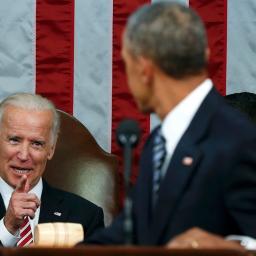
In his final address, Barack Obama on Tuesday said he would launch a new national effort to cure cancer, with Joe Biden leading the mission: ‘Let’s make America the country that cures cancer once and for all’ Continue reading...
|
 |
by Scott Bixby in New York on (#10G70)
In State of the Union address, president calls for US to ‘cure cancer once and for all’, with Joe Biden at the helm of ‘a new moonshot’Barack Obama has channeled John Kennedy’s space race with the Russians to pledge a new “moonshotâ€, led by vice-president Joe Biden at “mission controlâ€, for the United States to win a new global health race and find a cure for cancer.Related: State of the Union 2016: Obama calls for 'new moonshot' to cure cancer – live Continue reading...
|
 |
by Alan Yuhas on (#10FQE)
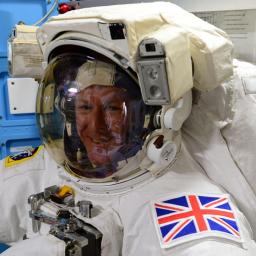
Walk to last more than six hours and is being conducted during an eclipse of International Space Station to avoid the danger of the sun activating panelsBritish astronaut Tim Peake’s first spacewalk will take him to the far end of the International Space Station on Friday, as he and another astronaut repair a power unit before the sun makes it too dangerous to work on the solar panels.The spacewalk, scheduled for 12.55pm GMT (7.55am EST) and expected to last more than six hours, is the first for a British astronaut with the European Space Agency. Continue reading...
|
 |
by Alan Yuhas on (#10FBN)
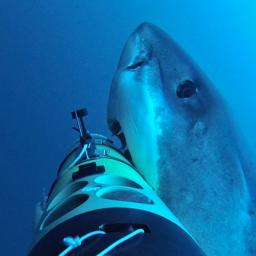
A team of marine biologists discovered that great white sharks ambush prey from ocean’s dark depths, as they attacked drones recording their movementsGreat white sharks appear to use darkness and depth to ambush prey, marine biologists have learned, thanks to unprecedented footage by an undersea drone that was attacked nine times by four sharks.In the 13 hours of footage, the sharks cruise low above the sand, swim up to the robotic vehicle and inspect it from all sides, bump it curiously, and burst out of the blue to seize the drone in their jaws. In research published on Monday in the Journal of Fish Biology, the scientists described the first great white predatory behavior filmed from under the surface. Continue reading...
|
 |
by James Bullock on (#10F48)
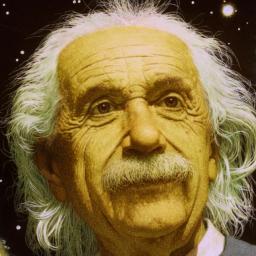
Professor Lawrence Krauss, cosmologist at Arizona State university, speaks to the Guardian about the possible discovery of gravitational waves. The professor explains what a gravitational wave is, what this means for astronomy and Einsteins general theory of relativity. He added that the excitement surrounding the possible discovery is good for science but is clear that the news must not be read into too deeply. The paper from the Advanced Laser Interferometer Gravitational-Wave Observatory (Ligo) on the potential findings is still to be published Continue reading...
|
 |
by Letters on (#10F3A)
Oliver Burkeman’s article (Therapy Wars, The long read, 7 January) provides an excellent overview of the history and current debates within the psychological therapy world. Thankfully “the war†is ending and it is increasingly recognised that it is not a binary debate between cognitive behavioural therapy and psychoanalysis.CBT is an effective intervention for some people at certain times in their lives, and proponents such as Richard Layard (Tony Blair’s “happiness tsarâ€) and Professor David Clark should be congratulated for ensuring its increasing availability within the NHS. Continue reading...
|
 |
by Letters on (#10F24)
Oliver Burkeman (Therapy Wars, The long read, 7 January) falls into the trap of polarising the wrong point about contemporary psychotherapy. Like any pioneer, Freud made many assumptions that have since turned out to be self-interested, culture-specific or just wrong. But to write him off as a charlatan is facile. What he revealed on behalf of clients then and now is the immense transformative value of being listened to: of having our emotional histories taken seriously, empathically inquired about and ascribed an appropriate level of relevance in the balance of who we are and who we are capable of becoming.I too am sceptical about the claims made for traditional psychoanalysis, with its power-base located in the “expert†interpretations of the analyst. I have encountered former analysis clients who have retrospectively come to regard their analytic experience as exploitative, even abusive. But I am no more enamoured by the idea that reducing our emotional challenges to a series of left-brain box-ticking exercises is of lasting value either. A number of my clients have reported similar reactions to those of “Rachel†in Burkeman’s article. Continue reading...
|
 |
by Leo Benedictus on (#10EM5)
A new study concludes that older people can’t tell when others are being a bit sarky. However will they cope?People over 65 are less able to detect and understand sarcasm, according to an immensely valuable study just published in Developmental Psychology. You might think it is obvious when somebody is saying the opposite of what they mean for comic effect. Indeed, you probably find the device so funny that you never tire of it. However, quite a lot of research now suggests that ageing tends to make people less good at perceiving emotional cues and understanding the intentions of others, thereby excluding some in later life from sarcasm’s playfulness and charm.For this study, led by Professor Louise Phillips of the University of Aberdeen, 116 participants were shown a series of videos and written stories, then asked to explain them. “For example,†the study says, “in one simple sarcasm video, a woman is busily doing a domestic task while a man reads a book and she says (sarcastically): ‘Are you busy? I know you’ve got a lot on.’†Participants were then required to answer yes or no to the questions: Is she is trying to pressure him into helping her? Is she trying to say it’s OK if he doesn’t help? Is she annoyed with him? and so on. When all the tests were marked, the 36 people who were older than 65 were just as good as the rest at understanding non-sarcastic conversations, but around seven percentage points worse on the sarcastic ones. “Older adults have problems in decoding different types of sarcasm,†the study concluded. Continue reading...
|
by Stuart Clark on (#10E0G)
Caution is needed over claims that gravitational waves have been found. It could be a fake to test the detectors and scientists involved – it has been beforeThere is a strong rumour that gravitational waves – one of astronomy’s holy grails – have been found. Rumours have been circulating since November that ‘something’ was detected in September 2015. Analysis is currently ongoing and if everything checks out an announcement is expected in February.The rumour of this possible detection was first mentioned in The Guardian on 7 December by Paul Davies. Now the story has now taken on a life of its own, thanks to a tweet by the physicist and author Lawrence Krauss. Continue reading...
 |
by Oliver Milman in New York on (#10DVN)
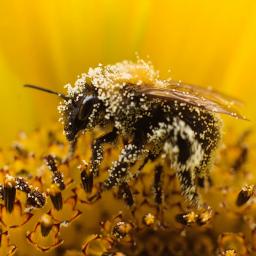
The pharmaceutical giant had initially accused the EPA of overstimating the impact of pesticide on pollinators but now admits report is ‘scientifically sound’Pharmaceutical giant Bayer has said it has put forward proposals for extra protections for bees after initially accusing the Environmental Protection Agency of overestimating the harm caused to the vital pollinators by a widely used pesticide.A preliminary risk assessment released by the EPA last week found that that imidacloprid, one of the world’s most common pesticides, can cause honeybee populations to fall in some circumstances. Continue reading...
|
by Guardian Staff on (#10DQJ)
Archaeologists in Cambridgeshire reveal a bronze age site that is so well preserved it’s being compared with the Roman city of Pompeii. The settlement in Whittlesey consists of of large circular wooden houses built on stilts. The buildings collapsed in a fire and plunged into a river, where they were preserved in silt. Exotic glass beads, rare small cups, bowls and jars are among the items found. Photograph: Chris Radburn/PA Wire
by Ann Robinson on (#10DN3)
The self-testing genetics kit claims to provide affordable information on potential health conditions but critics fear it could have negative implicationsHow do you fancy spitting into a tube and finding out about your genes? You can buy one online now and get details of your ancestry, carrier status of various inherited diseases, risk of common conditions and random wacky facts such as whether you’re likely to develop male-pattern baldness. Not bad for £124.99 from Superdrug.Related: ‘Genetic testing is a responsibility if you’re having children’ Continue reading...
by Maev Kennedy on (#10DBK)
Silty fen preserved burning houses and domestic objects inside them to reveal unprecedented view of life 3,000 years agoAlmost 3,000 years after being destroyed by fire, the astonishingly well preserved remains of two Bronze Age houses and their contents have been discovered at a quarry site in Peterborough.It doesn’t feel like archaeology, it feels like somebody’s house has burned down and we’re picking over their goods Continue reading...
 |
by Nicola Davis on (#10D4S)
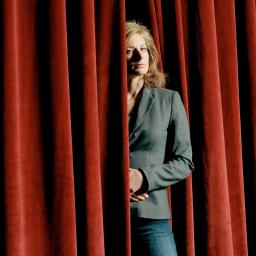
Harvard professor’s radical theory of dark matter wiping out the dinosaurs and enigmatic research on extra dimensions has made her a true trailblazerIt’s a bright, chilly winter morning in Cambridge, Massachusetts, and in Peet’s cafe, just around the corner from Harvard University, the coffee grinders are going hell for leather. Hunched over their laptops, students peer at seemingly never-ending dissertations while the edge is taken off their caffeine spikes by a soundtrack of soporific crooning.I bag two chairs and wait for Lisa Randall to walk through the door. America’s superstar scientist turns up a little late, negotiates the throng and perches her petite figure on a stool. But while the surroundings are humdrum, our discussion is anything but. Because Randall is here to talk about dark matter – and dinosaurs. Or, more precisely, how a putative disc of dark matter in our galaxy could potentially be responsible for dislodging lumps of rock from the distant Oort cloud which then hurtle towards Earth – possibly leading to events as catastrophic as the planet’s fifth mass extinction – every 35 million years, or so. Continue reading...
|
by Ian Sample Science editor on (#10BE2)
Pair are first to benefit from the 100,000 Genomes Project, launched in 2014 to improve diagnosis and treatment of rare genetic disorders and cancerDoctors feared something was wrong the moment Georgia Walburn-Green was born. Her head was slightly larger than normal, but tests offered no explanation. The hospital’s advice to her parents was not encouraging. “We were just told to go home and see if our baby developed abnormally,†said her mother, Amanda.Now aged four, it is clear that Georgia is not developing properly. As a baby, she struggled to hold her head up, look around the room, and sit upright. She has a kidney condition, growths in her eyes, and a disorder that means she may never speak. On top of this, despite dozens of invasive tests and scans, doctors could not diagnose her condition.
 |
by David Robert Grimes on (#10B4Y)
Over 90% of cervical cancers are caused by HPV. But squeamishness about sex and unsupported safety fears are threatening vaccination programmesHuman papillomavirus (HPV) has long haunted humankind; almost all sexually active adults carry some of HPV’s 170 strains. And although many of these are harmless, amongst the myriad mutants there are those whose effects are anything but benign: subtypes 6 and 11 can lead to genital warts; subtypes 16 and 18 (amongst others) can lead to cervical, vulvar, vaginal, penile, anal and oral cancers. This is not some mere hypothetical risk – over 90% of cervical cancers are caused by HPV, a cancer which claimed the lives of 270,000 women in 2012 alone.Luckily, the HPV vaccine Gardasil is extraordinarily effective at preventing infection, being at least 99% effective against the four most odious subtypes (6,11,16,18) in young women. Yet despite this, it has been the subject of dogged opposition - in the US, vaccination rates have stagnated far below the optimum levels for protection, while a number of legal challenges against the vaccine have been mounted across Europe. But why is this the case? Continue reading...
|
 |
by Damian Carrington on (#10AYV)
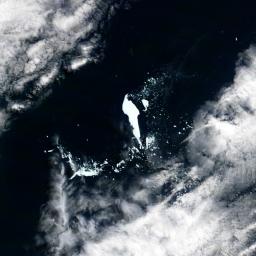
Known more as a symbol of global warming, the nutrient-rich plumes that trail melting giant icebergs are in fact sinking carbon deep into the oceanGiant melting icebergs may be a symbol of climate change but new research has revealed that the plumes of nutrient-rich waters they leave in their wake lead to millions of tonnes of carbon being trapped each year.Researchers examined 175 satellite photos of giant icebergs in the Southern Ocean which surrounds Antarctica and discovered green plumes stretching up to 1,000km behind them. The greener colour of the plumes is due to blooms of phytoplankton, which thrive on the iron and other nutrients shed by the icebergs. Continue reading...
|
 |
by Guardian Staff on (#10AQZ)
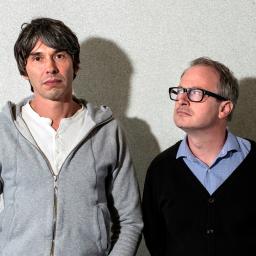
This week we’ll be speaking to the physicist and the comedian ahead of the latest series of The Infinite Monkey Cage and we want to ask them your questionsHow big is the universe? What causes supernovas? What’s the food like in the BBC canteen? How much does Things Can Only Get Better earn in royalties each year?These are the mysteries you can finally get to the bottom of with our readers’ Q&A with Brian Cox and Robin Ince, co-presenters of Radio 4’s award-winning science and comedy show The Infinite Monkey Cage. Continue reading...
|
 |
by Olivier Lebleu on (#10A2T)
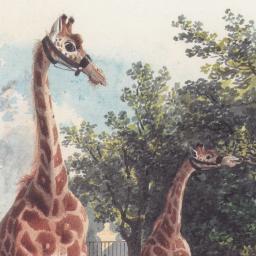
In the 21 century, it’s pandas. But in the 1820s, the diplomatic gift du jour was a giraffe. Historian Olivier Lebleu tells the story of a very special animal sent to Austria, a giraffe that inspired cakes and pastries.Name: The Emperor’s giraffe
|
 |
by Sarah Allinson for the Conversation on (#109Y7)
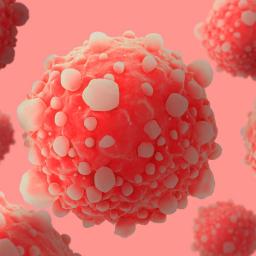
Recent research suggested that most cancers arise for intrinsic reasons that cannot be prevented. But a newer study suggests external factors play a vital roleA study published in Science in early 2015 reported that most cancers aren’t preventable and are simply a case of “bad luckâ€. A year on, however, and a study published in Nature has come to the opposite conclusion: that external factors such as tobacco, sunlight and human papilloma virus play a greater part in whether or not a person gets cancer.So what does cause cancer: bad luck or avoidable lifestyle choices and environmental factors? Continue reading...
|
 |
by Bob Ward on (#109P3)
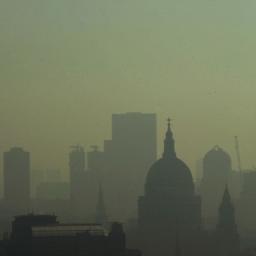
Boris Johnson appears to favour the views of friends and associates on issues such as pollution and climate change. The next mayor needs specialist advice
|
 |
by Gil Reich on (#109KJ)
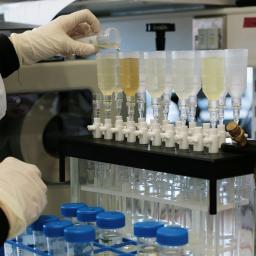
As the cheats become more sophisticated, we ask experts about detecting gene and protein abuseBiotechnology researcher at Queen Mary, University of London Continue reading...
|